ShodhKosh: Journal of Visual and Performing ArtsISSN (Online): 2582-7472
|
|
Future of Creativity: Human Cognition and Artificial Imagination
Floradel Adoma 1
 ,
Maylane Mateo 2
,
Maylane Mateo 2 ,
Rolando Cabutaje 3
,
Rolando Cabutaje 3 ,
Edward Viscarra 4
,
Edward Viscarra 4 ,
Jennifer Cabanting Danao 5
,
Jennifer Cabanting Danao 5 , Arpita Singh 6
 ,
Damodaran B. 7
,
Damodaran B. 7
1 Northeastern
College, Philippines
2 Northeastern College, Philippines
3 Northeastern College, Philippines
4 Northeastern College, Philippines
5 Northeastern College, Philippines
6 MBA, MKSSS'S Smt. Hiraben Nanavati Institute of Management and
Research for Women, India
7 Associate Professor, Meenakshi College of Arts and Science, Meenakshi
Academy of Higher Education and Research, Chennai, Tamil Nadu 600113, India
|
|
|
ABSTRACT |
|
|
Abstract
Creativity is considered to be one of the hallmarks of human cognition, and
it is based on the complex processes in the neural and cultural as well as in
the experience aspect. However, recent developments in the area of artificial
intelligence have presented systems that can create images, music, text, and
design products that contradict the classic separations between human
creativity and machine production. The paper will discuss the future of
creativity by looking at it through the prism of human cognition and
artificial imagination and provide an integrative approach to creativity that
places creative intelligence on a human machine spectrum, instead of it being
a two-pole conceptualization. Based on classical creativity theories, such as
Gestalt, psychoanalytic, and cognitive theories, the study describes the
emergence of divergent and convergent thinking based on neural networks
developed as a result of cultural influences, embodiment, and lived
experience. The restrictions and biases of the data-based systems are
specifically addressed and the essence of the differences in biological
cognition and algorithmic creation is pointed out. The paper also examines
human-AI co-creativity models, whereby creativity is created by collaborative
processes, inter-retrospective processes, and collective agency between human
will and machine production. In addition to technical issues, the study is
operating within the ethical, philosophical, and social concerns of
authorship, originality, ownership, and cultural influence of creative AI.
Lastly, it also describes future directions, which are neuro-symbolic
systems, affective and embodied AI, and personalized creative agents that
respond to individual cognitive styles. The paper is a synthesis of insights
on cognitive science, artificial intelligence, and creative practice, which
is why it provides a conceptual framework to understand how creativity can be
developed in a world of more intelligent machines. |
|||
|
Received 11 September 2025 Accepted 08 December 2025 Published 17 February 2026 Corresponding Author Floradel
Adoma, drfloradeladoma@gmail.com DOI 10.29121/shodhkosh.v7.i1s.2026.7122 Funding: This research
received no specific grant from any funding agency in the public, commercial,
or not-for-profit sectors. Copyright: © 2026 The
Author(s). This work is licensed under a Creative Commons
Attribution 4.0 International License. With the
license CC-BY, authors retain the copyright, allowing anyone to download,
reuse, re-print, modify, distribute, and/or copy their contribution. The work
must be properly attributed to its author.
|
|||
|
Keywords: Human Creativity, Artificial Imagination, Cognitive
Science, Generative AI, Human–AI Co-Creativity |
|||



1. INTRODUCTION
The traditional perspective on creativity has been taken as the ability of human beings as the result of a complex interaction of cognition, emotion, culture, and the lived experience. In philosophy, psychology, neuroscience, and arts, the concept of creativity has been defined in terms of the capacity to come up with an idea or a product that has never been done before and is also significant in the current context. Since ancient theories that stressed insight and unconscious actions to the present-day thinking that starts with problem-solving and conceptual combination, creativity has been at the center of the human conception of intelligence, self-expression and cultural development. Over the past few decades, though, the artificial intelligence has been developing at an unprecedented pace which has started to topple this traditionally anthropocentric perspective and has given some serious doubts to the very nature, limits, and future of creativity as such. With the introduction of generative AI art systems, which can generate text, pictures, music, and designs on par with or even competing against human labor, creative practice is being revolutionized in any field. Trained on large volumes of data, and exerted by the developments in the field of machine learning, these systems seem to display some imagination, stylistic consciousness and even innovation. Although these may be caused by algorithmic processes and not by human intervention, they are becoming sophisticated enough to challenge the conventional difference between the work of human creativity and machine automation Rao et al. (2023). Consequently, creativity is more and more regarded as a process that does not necessarily lie in the realm of biology, but rather is a distributed phenomenon that can occur when human cognition and artificial structures interact. To explain this change, it is important to take a closer look at human and non-human processes of creativity. Human creativity lies in the complicated circuitry of the neural networks that comprise perception, memory and emotion as well as executive control. Figure 1 is a combination of cognition and computation in building future systems of creativity. These activities are informed by the cultural realities, direct experiences, and socialization so that human beings can find meaning through symbols, narrations, and common values.
Figure 1
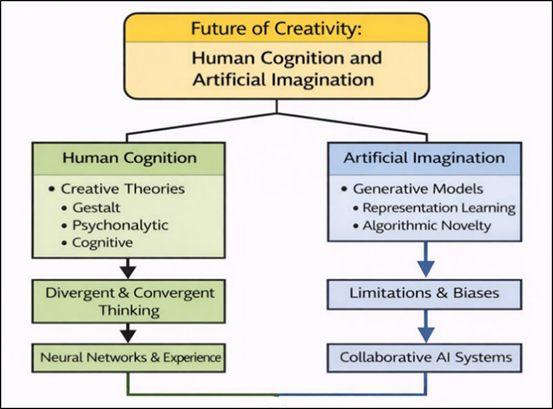
Figure 1 Cognitive and Computational Foundations of Future
Creative Systems
In humans creative thinking tends to go back and forth between divergent exploration (generation of a variety of possibilities) and convergent refinement (choosing and developing ideas that can be fitting a given goal or constraint). This balance is dynamic so that creativity, as well as a means of creative expression, can also serve as a mental adaptive and problem-solving strategy. Artificial imagination on the other hand is a result of computational framework of learning patterns, representations, and associations based on data Rudolph and Tan et al. (2023). Generative models are not being used in a human sense of imagining; however, they are learned structures recombined to generate outputs that are statistically consistent with learned distributions but bring about controlled novelty. In spite of this underlying distinction, artificial systems are becoming increasingly involved in areas of creativity, either as a tool, partner or even a semi-autonomous generator. Their participation raises serious doubts: Is it possible to decrease creativity to computation? Is creative authorship a necessary condition? And what does originality mean in a situation where either human beings or machines produce creative outputs in collaboration with machines? Outside of the issues of theory, the overall convergence of human mind and artificial imagination has a considerable amount of ethical, philosophical and social consequences King and ChatGPT (2023). Authorship, intellectual property, culture, and creative work are renegotiated concerning AI-assisted work. Simultaneously, innovative AI systems provide possibilities of democratization of creativity, technical reduction, and fresh modes of expression to people and groups that have hitherto been marginalized within the bounds of traditional creative infrastructures.
2. Theoretical Frameworks of Creativity
2.1. Classical theories of human creativity (Gestalt, psychoanalytic, cognitive)
Classical creativity theories have attempted to describe how humans come up with new and significant ideas by studying the phenomenon of perception, unconsciousness and higher-order thinking. Gestalt theories focus on the creative process as the reorganization of perception and the resultant insight that is produced by the reorganization of a problem space. In this perspective, creativity is not a retrospective process that builds up associations but a quantitative change of frameworks- generally referred to as the aha effect Spennemann and Orthi (2023). A resourceful answer will be obtained when people view the relationships between things in a different order, and this explains why holistic perception is essential instead of linear thinking. Conversely, the psychoanalytic theories, which are based on the Freudian and post-Freudian ideas, place entity of creativity in the unconscious mind. Creativity is regarded as a manifestation of subliminal desires, internal struggles, as well as metaphorical conversion of instinctual urges. Creative and artistic actions serve as mechanisms of sublimation since they provide a socially acceptable way of expressing other subconscious desires. Criticized to have weak empirical foundation, the psychoanalytic approaches put emphasis on the emotional depth, symbolism richness and personal meaning within creative work. Cognitive approaches toward creativity are more systematic and empirical oriented Castro et al. (2023). They hypothetically define creativity by referring to the result of mental procedures that include retrieval of memory, combining concepts, analogical thinking, and problem solving. Divergent thinking allows taking up many possibilities and convergent thinking tests and narrows down ideas to valid solutions.
2.1. Computational Creativity and Machine Imagination Paradigms
Computational creativity aims to model, simulate or assist creative actions with algorithmic frameworks making creativity a matter of computation instead of human characteristic. The earlier models used rule-based systems and symbolic AI whereby creativity was coded by explicit heuristics, grammars or generative rules. These systems had exhibited constrained types of novelty in narrow scopes, like in music composition or in visual pattern generation, but not flexibility and scalability Surameery and Shakor (2023). The recent progress of machine learning has produced substantial growth in the ability of computational creativity. Deep neural networks and other generative models are trained on large datasets to learn latent representations and sample latent learned distributions to produce new artifacts. Instead of using set rules, these systems are emergent, meaning that they behave in styles, transfer abstraction, and are probabilistic novelty. Creativity in this paradigm is operationalized as the capacity to produce outputs which are statistically plausible as well as distinct enough of training data Grünebaum et al. (2023). Machine imagination is therefore not based on subjectivity experience or purpose, but through representational learning and optimization processes. The novelty comes about by stochastic variation, exploration of latent space and recombination of learned features. Of significance, computational creativity models typically have some form of evaluation, be it human-in-the-loop or algorithmic, to determine usefulness, coherence, or aesthetic quality. This makes creativity a system level attribute that entails creation, testing and refinement. On one hand, machine creativity is not connected with consciousness and intrinsic motivation, but, on the other hand, it is not an easy thing to accept because it proves that creative-like results can be produced through the use of entirely algorithmic procedures at scale only Qi et al. (2023).
2.2. Comparison Between Biological Cognition and Algorithmic Generation
The origins, mechanisms and experiential basis of biological cognition and algorithmic generation are fundamentally different, and nevertheless, they are becoming more and more intersectional in creative situations. Embodied thinking brings forth human creativity, which is formed by neural plasticity, emotions, cultural learning, and agency. The biological systems are adoption of perception, memory, affect and social meaning, which allow human beings to construct artifacts that are not only inventive, but also deeply contextual and value laden Currie et al. (2023). Purpose, curiosity, or expression of emotion often drives creative acts in human beings, and are enacted in a lived experience. On the other hand, algorithmic generation uses formalised representations, statistical learning and optimization goals. Artificial systems lack objective awareness and embodiment, and have no inherent purpose or goal; their output is a product of mathematical manipulations on data. New AI systems are often defined in probabilistic or structural aspects but not in experiential sense Spennemann and Orthia (2023). Algorithms are based on training data and external evaluation criteria, although they can recombine patterns at a scale and speed that people can hardly dream of. Table 1 provides a summary of relationships between models of human cognition and artificial imagination. Nevertheless, there are significant parallels despite such differences. Representation, abstraction, and recombination are critical in both the biological and artificial systems to generate creative results. The human cognition can be considered as dynamic adaptive system, and the algorithmic models are more and more widely based on the feedback loops and adaptive learning.
Table 1
|
Table 1 Summary on Human Cognition and Artificial Imagination |
||||
|
Domain / Discipline |
Theoretical Basis |
AI / Cognitive Approach |
Key Contribution |
Limitations |
|
Psychology |
Divergent thinking theory |
Cognitive psychology |
Introduced creativity as measurable cognitive
ability |
Lacks computational perspective |
|
Philosophy of AI Beets
et al. (2023) |
Conceptual spaces |
Symbolic & computational creativity |
Defined combinational, exploratory,
transformational creativity |
Limited neural grounding |
|
Psychology |
Systems model of creativity |
Socio-cognitive |
Linked creativity with culture and social
validation |
Non-computational |
|
Cognitive science Spennemann
and Orthia (2023) |
Geneplore model |
Cognitive generative–exploratory |
Structured stages of creative cognition |
Human-only focus |
|
AI |
Computational creativity |
Rule-based & hybrid AI |
Formalized evaluation of creative systems |
Domain-specific |
|
AI theory Makhortykh
et al. (2023) |
Artificial curiosity |
Algorithmic novelty |
Linked creativity to intrinsic motivation |
Abstract formulation |
|
AI & linguistics |
Creative language theory |
NLP-based creativity |
Metaphor and narrative generation |
Language-centric |
|
Computer vision Trichopoulos
et al. (2023) |
Aesthetic theory |
GAN-based art models |
Demonstrated AI-generated art novelty |
Limited explainability |
|
Neuroscience & AI |
Cognitive neuroscience |
Deep learning inspiration |
Bridged brain-inspired AI models |
Not creativity-specific |
|
Creative AI |
Co-creativity theory |
Human–AI interaction |
Defined co-creative systems |
Lacks ethics focus |
|
Philosophy [15] |
Extended mind theory |
Embodied cognition |
Creativity beyond the brain |
No AI implementation |
|
Ethics of AI |
Information ethics |
Socio-technical AI |
Addressed agency and responsibility |
Abstract ethics |
|
Multidisciplinary |
Hybrid cognitive–AI |
Diffusion, LLMs |
Large-scale creative generation |
Bias & data dependence |
3. Human Cognition in Creative Processes
3.1. Role of neural mechanisms and brain networks
The interaction among several neural mechanisms and macrobrain networks supports human creativity instead of the existence of a single hub of creativity. Research on neuroscience implies that creative thinking is the result of coordination across the networks involved in uncontrolled idea generation, evaluations, and emotional salience. Mental processes that are critical in the generation of novel ideas are the default-mode network that is involved in internally oriented process like mind wandering, imagination, memory retrieval, and mental simulation. In creative thinking, this network provides the recombination of previous experiences into a new conceptual representation Spennemann and Orthia (2023). To supplement this process, the executive control network serves to aid goal directed attention, working memory and cognitive control. It enables one to test ideas, avoid extraneous associations and filter creative work based on the task requirements or aesthetics. Creativity is therefore dependent on a loose interplay between free associative and conscious control. This balance is also mediated by the salience network which alternates between spontaneous and evaluative modes according to the contextual relevance of a situation and motivational importance. Notably, the creative abilities are developed with time through neural plasticity. The processes of re-using artistic activities or problem-solving activities reinforce functional connectivity within these networks to boost creative fluency and flexibility.
3.2. Influence of Culture, Experience, and Embodiment
Cultural context, personal experience and embodied interaction with the environment are very much aspects that influence human creativity. Culture offers symbolic systems, norms, stories, aesthetic conventions through which versions of something new, valuable, or meaningful are perceived as such. These creative ideas seldom occur in a vacuum; they utilize the common cultural repertoires, traditions, and common memory. Meanwhile, creativity is usually about reworking these cultural structures or making them subvert in order that innovation may be created out of continuity, as opposed to rupture. Creative cognition is also individualized through individual experience. These factors, life events, education, social interactions, and emotional histories, affect the memory structure and conceptual associations and shape the way the ideas are formed and appraised. Professionals in a field create highly structured knowledge networks which allow greater levels of abstraction and more advanced levels of creative work, whereas amateurs can use unconventional associations which allow originality. Another very important dimension is embodiment. Creative thinking is not absolutely abstract but it is based on the bodily perception, action, and experience of the senses. Gestures, movement, material interaction, and spatial interaction affect the creation of ideas, especially in the areas of visual art, music, and design. Embodied cognition theories affirm that thinking is dispersed through brain, body and environment and thus, creativity is a place-based process. Human creativity has depth, intentionality and richness of context beyond mere symbolic manipulation through the incorporation of cultural meaning, lived experience and bodily interaction. Alalaq (2025)
3.3. Divergent and Convergent Thinking Patterns
Creative cognition is an interaction of the divergent pattern of thought with convergent pattern of thought resulting in originality and utility. Divergent thinking is the ability to come up with several, different, and unorthodox concepts based on a single stimulus. It focuses on fluency, flexibility, and associative breadth, where people have the ability to travel in a large conceptual space. This way of thinking is invaluable especially at an initial phase of creativity where much attention is to broaden the possibilities instead of determining the feasibility. Convergent thinking, however, is more concerned with eliminating alternatives to find the solutions that can best meet certain criteria or constraints. It is the process of analytical thinking, decision-making, and appraisal to make sure that the creative ideas are logical, applicable, and relevant. Instead of contrary forces, divergent and convergent thinking is used in working cycles of productive thinking. People tend to switch between broad-minded brainstorming and narrow-minded narrowing, refining loose ideas, until they are formed into high-level results. The equilibrium of these modes depends on individuals, fields and activities. During exploration of art, divergence may be desirable and convergence may be desirable during engineering or scientific innovation. The ability to be metacognitive enables creators to decide freely when to be creative, and when to be judgmental. Cognitive interaction between divergent exploration and convergent creative decision making is shown in Figure 2 This dynamic co-ordination is the reason why human creativity is both novel and purposeful, which emphasizes creativity as a regulated but adaptable thinking process as opposed to uninspired creativity.
Figure 2
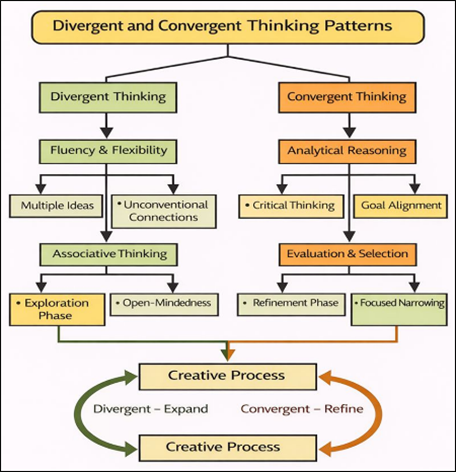
Figure 2 Cognitive Structure of Divergent and Convergent
Thinking in Creativity
4. Artificial Imagination and Creative AI Systems
4.1. Generative models and creative algorithms
AI-based creative systems that achieve artificial imagination are mainly achieved with the help of generative models and algorithms that generate new artifacts based on learned data patterns. Initial creative algorithms were based on rule based or evolutionary models, in which generation was guided by pre-defined heuristics, grammars or fitness functions. As these systems displayed low creativity in small areas, the results were mostly limited by clear rules that were created by humans. Modern creative AI systems progressively use data-driven generative models which learn probabilistic models of intricate domains like language, images, songs and design. These models produce outputs based on sampling learned distributions, which allows them to provide wide variations, which closely resemble, but not directly similar, training examples. In this regard, creativity is operationalised as the ability to combine acquired structures into meaningful, contextually relevant products. Notably, generative models operate as a successive pipeline which can be supplemented by conditioning, prompting and post-generation selection. The human element is extremely important in influencing the creative direction, whether it is a statement of constraints or an exhibition of the outcome. Consequently, creative algorithms are not often autonomous in actuality, but they are subsystems of a larger socio-technical systems. Instead of eliminating human creativity, generative models expand creative power by increasing the speed at which it can explore, prototyping at large design spaces, and experimenting. They are not valuable in creative imagination in themselves, but in the ways that they can supplement and modulate human creative processes.
4.2. Learning Representations, Abstraction, and Novelty Generation
The most fundamental creative AI systems consist of the capability to learn internal representations of data structure, style, and relationships. Such representations make it possible to do abstraction, whereby the systems can generalize beyond particular cases and are able to act upon concept levels, like style, theme, or form. New products are generated through exploration of such learned representational spaces. AI systems can be used to produce outputs different to existing ones by sampling, interpolating, or perturbing latent variables and still retain internal consistency. This kind of novelty is not intentional but statistical and is due to mathematical variation and not intentional deviation. However, these mechanisms are capable of delivering unexpected and useful results especially under human prompts or limitations. Cross-domain transfer is also made possible by abstraction, that is, representations gained in one context are used to inform generation in another context. It promotes some creative techniques like style mixing, hybridization and analogical generation. Nevertheless, the novelty generated by AI systems is also limited to the training data. The patterns existing in a data distribution are the only possible forms of abstraction with no lived experience or semantic grounding. Consequently, AI generated newness is a recombination and transformation as opposed to conceptual invention and this highlights the complementary contribution of human sense-making to creative interpretation.
4.3. Constraints, Biases, and Limitations of AI Creativity
Although the generated capabilities are impressive, there are other technical, conceptual, and ethical limitations to AI creativity. A significant limitation is caused by the dependence of data. Existing datasets teach the creative AI systems, which encode the past patterns, prevailing styles, and cultural biases. Consequently, the products created can be duplicative of stereotypes, belittle minority viewpoints, or even uphold the traditional aesthetic instead of pushing creativity boundaries in real ways. The use of algorithms also constrains innovation. The functions of optimization are placed more on coherence, plausibility, or similarity to learned distributions and they tend to discourage radical deviation. In contrast to humans, AI systems do not inherently have an intrinsic motivation, curiosity or even being emotional, which are important factors in human creative risk-taking. AI novelty is thus limited to mathematical limits and not exploration. The other constraint is the assessment and significance. AI systems will not be able to evaluate the cultural, emotional or symbolic value of the generated output unless it is externally pointed out. The system does not assign creative value, it is given by human users, critics, or markets. Moreover, AI does not have contextual awareness based on anything other than encoded inputs, and thus it may be hard to generate creativity based on lived experience or ethical judgment.
5. Human–AI Co-Creativity Models
5.1. Collaborative creativity workflows
Co-creativity between humans and artificial intelligence is becoming actualized as people and smart systems work collaboratively to generate creative results. In these processes, creativity is spread out among processes like ideation, exploration, refinement, and evaluation. The use of AI systems can also help explore at an early stage by quickly producing changes, modifications, or stylistic manipulations that increase the creative search space. Man then directs, chooses, and contextualizes these outputs according to an intention, taste and domain knowledge. These workflows focus more on augmentation and not on automation. The human inventor remains the author of objectives, constraints and essence whereas AI serves as a facilitator of experimentation and discovery. Selective curation, parameter tuning and iterative prompting enables creators to encounter the system in dialogic interaction, which can be viewed as a responsive creative medium. This interaction has the capability of lessening mental strain, defeating imaginative blockages, and the exploration of potentials that would otherwise have been unfeasible to create by hand. Notably, successful co-creativity requires transparency and controllability, which allows the user to know the links between system outputs and inputs and constraints. Instead of being in a linear pipeline, human-AI cooperation is cyclic and adaptive, combining human judgement with computer generation in order to generate results that neither of the parties can generate on their own.
5.2. AI as Tool, Collaborator, and Autonomous Creator
The role of artificial systems along the spectrum of human-AI co-creativity may be conceptualized. On the one hand, AI is regarded as a tool, which gives aid to activities like generation of ideas, their variations, optimization, or visualization. During this mode, the system is still subsidiary to human control as it increases efficiency whilst maintaining creative decision making squarely in human control. In this case, the interaction becomes more dialogic and human beings react and develop on what the machine has generated. The creative agency is distributed but not equally because the human being retains the meaning, evaluation and moral judgment. On the extreme right, is the concept of AI as an independent producer, in which systems produce artifacts with little input of human cooperation. In the sense that such systems are capable of generating amazing results, their autonomy is subject to a predefined goal, training data, and evaluation standards. They are unintentional, unaware of themselves and unaccountable of their culture. As a result, the argument of wholesale machine authorship is philosophically and practically debatable. The recognition of these functions makes it clear that co-creativity is not a model, but a loose continuum. The creative worth of AI does not exist in autonomy but in terms of how such roles are bargained in human-oriented creative activities.
5.3. Feedback Loops Between Human Intention and Machine Output
The main feature of human-AI co-creativity lies in the presence of feedback loop that ties human intention and the machine-generated output in recursive cycles. Co-creative systems offer more than just one-off generation because every output can be used as input to further refinement. The responses of machines are influenced by human intentions, in the form of prompts, constraints, or evaluative judgments, which cause an alteration on human perceptions, interpretations and consequential decisions. Figure 3 illustrates that it has iterative feedback loops that allow adaptive human-AI co-creation. These feedback loops contribute to reflective innovativeness.
Figure 3

Figure 3 Iterative Human–AI Feedback Loop Architecture for
Co-Creative Systems
New ideas, assumptions or redirection of creative goals can be prompted by unexpected or emergent outputs. AI, in this regard, acts as a cognitive re-framing stimulus and prompts human beings to go into new directions that they might not explore by themselves. With every subsequent iteration, creators evolve a mental representation of the system and tendencies and constraints of the model and can interact with the system more accurately and expressively. Notably, feedback is both cognitive and emotional in nature, as well as being technical. Subjective judgments are built into the process of creativity through human reactions to the system as they are surprised, proud, or displeased, which leads to selection and revision. This relationship is reflective of human-human cooperation, in which ideas are developed by exchanging ideas and criticizing them.
6. Future Directions and Emerging Trends
6.1. Neuro-symbolic and cognitively inspired AI models
Inspired by human cognitive architectures, future creative AI systems are starting to be expected to be inspired, resulting in neuro-symbolic and cognitively inspired models. Neuro-symbolic methods aim to integrate the merits of neural networks based on data analysis with symbolic systems of reasoning, which encode rules, concepts and associations. The integration will be a solution to important deficiencies of purely statistical models, such as their inability to be interpreted, reasoned in a causal way, and understood in concepts. Neuro-symbolic models may assist in creative use: in higher-level abstraction, thematic consistency, rule-conscious generation and allow systems to reason about their own structure, style, and limitations, instead of depending on the ability to replicate the patterns. The cognitive inspired AI also strives to simulate the creative behaviors that have been captured in human cognition including analogical reasoning, conceptual mix, and goal oriented exploration. Such systems can more effectively represent the iterative and reflective processes of human creativity by integrating the processes that are similar to memory, attention, and metacognitive control. Notably, these models also provide a better level of transparency, which enables users to comprehend the reason behind some creative outputs to be generated. In the case of co-creative applications, neuro-symbolic systems are capable of mediating between the intuit of generation and explicit human intent, and can thus permit more controllable and significant interaction. These approaches view creativity as a flexible and structured cognitive process, as opposed to viewing creativity as an opaque emergence. With further advances in research, AI models that are cognitively based could help close the conceptual divide between human imagination and artificial generation and retain the separation between agency and consciousness.
6.2. Personalized and Adaptive Creative AI Systems
Personalization is one of the significant future trends in creative AI, which is not about generating something generic, but about the systems that could adjust to the styles, preferences, and cognitive patterns of each particular user. Custom creative AI agents evolve to learn with user interactions and build profiles that reflect aesthetic interest, habitual processes and creativity objectives. This allows outputs that are more consistent to the identity of a creator, which factor out friction and improve the expressiveness coherence. Adaptive systems are also dynamic systems, altering the level of novelty, constraint or guidance in response to feedback by the user and task demands. To the novice creators, AI can offer systematic suggestions and scaffolding, whilst professionals might want little intervention and great liberation. This flexibility serves to facilitate creativity as an evolutional process which facilitates learning, experimentation and intent evolution. Nevertheless, there are ethical and creative risks presented by personalization. Excessive adaptation can result in creative echo chambers, which adds to the preferences and reduces exposure to new ideas. Designers are thus left with a duty of balancing between personalization and processes that bring about controlled diversity and serendipity. Clear adaptation policies and the ability to customize the parameters of personalization needs to be present. Properly constructed, creative AI, in its personalized approach, can act as a creative ally in the long term, helping achieve sustained practice instead of generation. This tendency re-defines AI as a personalized form of an extension of human creative thinking.
6.3. Integration of Affective Computing and Embodied AI
Affective computing and embodied AI are some important steps towards more human-friendly creative systems. Affective computing helps AI to identify, represent, and react to emotions using signaling information in the form of language, facial expression, voice, or physiological data. Emotional sensitivity in creative settings enables systems to vary the output with regard to mood, motivation or expression purpose, and is related to generation as opposed to a strictly formal constraint. In embodied AI, creativity is extended even farther than manipulation of abstract symbols, in that interaction inherently takes place in physical or simulated bodies. Embodied systems are involved in creative processes through gesture, movement, spatial interaction and material engagement that are also reflected in human sensorimotor experience. This applies especially in areas like performance art, music, architecture and design where the creativity cannot be isolated of the act of the body and space. Integrating affective and embodied strategies helps in enriching the feedback loops between human beings and the machines. Creative systems do not only react on direct instructions but also on the emotional and physical non-verbal signals that result in more intuitive and expressive teamwork. However, privacy, emotional manipulation, and consent issues are ethical issues that should be handled.
7. Conclusion
The integration of human minds and artificial imagination is becoming more dominant in the future of creativity, and the process neglects the established views on creativity as a human only process. It is this paper that has presented the argument on creativity being not a binary classification between creativity and imitation by machines, but rather a spectrum of creative intelligence that emerges as a result of biological, computational, and hybrid systems. Neural dynamics, embodied experience, cultural sense, and purposeful agency are all foundations of human creativity to create subjectively meaningful ideas and artifacts that have social, communal worth. In comparison, artificial imagination functions based on algorithmic learning, abstraction and probabilistic generation generating creative like productions without awareness or inherent drive. Instead of reducing the creativity of humans, creative AI broadens the circumstances in which creativity may take place. Human-AI co-creativity models do show that significant creative results can be achieved through collaboration with machines being used as tools, collaborators or scouting engines in a human-directed process. Repeatable feedback processes between human will and machine responses allow diverse types of reflection, trial, and discovery reinventing creative processes in art, design, science, and learning. Meanwhile, there are urgent ethical, philosophical and social questions when it comes to the introduction of AI in the sphere of creativity.
CONFLICT OF INTERESTS
None.
ACKNOWLEDGMENTS
None.
REFERENCES
Alalaq, A. S. (2025). Ai-Powered Search Engines. Shodhai: Journal of Artificial Intelligence, 2(1), 49–62. https://doi.org/10.29121/shodhai.v2.i1.2025.31
Beets, B., Newman, T. P., Howell, E. L., Bao, L., and Yang, S. (2023). Surveying Public Perceptions of Artificial Intelligence in Health Care in the United States: Systematic Review. Journal of Medical Internet Research, 25, e40337. https://doi.org/10.2196/40337
Castro Nascimento, C. M., and Pimentel, A. S. (2023). Do Large Language Models Understand Chemistry? A Conversation with ChatGPT. Journal of Chemical Information and Modeling, 63, 1649-1655. https://doi.org/10.1021/acs.jcim.3c00285
Currie, G., Singh, C., Nelson, T., Nabasenja, C., Al‑Hayek, Y., and Spuur, K. (2023). ChatGPT in Medical Imaging Higher Education. Radiography, 29, 792-799. https://doi.org/10.1016/j.radi.2023.05.011
Grünebaum, A., Chervenak, J., Pollet, S. L., Katz, A., and Chervenak, F. A. (2023). The Exciting Potential for ChatGPT in Obstetrics and Gynecology. American Journal of Obstetrics & Gynecology, 228, 696-705. https://doi.org/10.1016/j.ajog.2023.03.009
King, M. R., and ChatGPT. (2023). A Conversation on Artificial Intelligence, Chatbots, and Plagiarism in Higher Education. Cellular and Molecular Bioengineering, 16, 1-2. https://doi.org/10.1007/s12195-022-00754-8
Makhortykh, M., Zucker, E. M., Simon, D. J., Bultmann, D., and Ulloa, R. (2023). Shall Androids Dream of Genocides? How Generative AI can Change the Future of Memorialization of Mass Atrocities. Discover Artificial Intelligence, 3, 28. https://doi.org/10.1007/s44163-023-00072-6
Qi, X., Zhu, Z., and Wu, B. (2023). The Promise and Peril of ChatGPT in Geriatric Nursing Education: What we know and do not know. Aging and Health Research, 3, 100136. https://doi.org/10.1016/j.ahr.2023.100136
Rao, A. S., Pang, M., Kim, J., Kamineni, M., Lie, W., Prasad, A. K., Landman, A., Dryer, K., and Succi, M. D. (2023). Assessing the Utility of ChatGPT Throughout the Entire Clinical Workflow. medRxiv. https://doi.org/10.1101/2023
Rudolph, J., Tan, S., and Tan, S. (2023). ChatGPT: Bullshit Spewer or the end of Traditional Assessments in Higher Education? Journal of Applied Learning & Teaching, 6, 242-263. https://doi.org/10.37074/jalt.2023.6.1.9
Spennemann, D. H. R. (2023). Exhibiting the Heritage of COVID‑19-A Conversation with ChatGPT. Heritage, 6, 5732-5749. https://doi.org/10.3390/heritage6080302
Spennemann, D. H. R., Biles, J., Brown, L., Ireland, M. F., Longmore, L., Singh, C. J., Wallis, A., and Ward, C. (2023). ChatGPT giving Advice on how to Cheat in University Assignments: How Workable are its Suggestions? Research Square. https://doi.org/10.21203/rs.3.rs-XXXXXX
Spennemann, R., and Orthia, L. (2023). Creating a Market for Technology Through Film: Diegetic Prototypes in the Iron Man Trilogy. Arbeiten aus Anglistik und Amerikanistik, 47, 225-242. https://doi.org/10.24053/AAA-2022-0013
Subaveerapandiyan, A., Sunanthini, C., and Amees, M. (2023). A Study on the Knowledge and Perception of Artificial Intelligence. IFLA Journal, 49, 503-513. https://doi.org/10.1177/03400352231180230
Surameery, N. M. S., and Shakor, M. Y. (2023). Use ChatGPT to Solve Programming Bugs. International Journal of Information Technology and Computer Engineering, 3, 17-22. https://doi.org/10.55529/ijitc.31.17.22
Trichopoulos, G., Konstantakis, M., Alexandridis, G., and Caridakis, G. (2023). Large Language Models as Recommendation Systems in Museums. Electronics, 12, 3829. https://doi.org/10.3390/electronics12183829
Trichopoulos, G., Konstantakis, M., Caridakis, G., Katifori, A., and Koukouli, M. (2023). Crafting a Museum Guide Using GPT‑4. Big Data and Cognitive Computing, 7, 148. https://doi.org/10.3390/bdcc7030148
|
|
 This work is licensed under a: Creative Commons Attribution 4.0 International License
© ShodhKosh 2026. All Rights Reserved.