ShodhKosh: Journal of Visual and Performing ArtsISSN (Online): 2582-7472
|
|
Application of Data Mining Based on Image Feature Fusion Model in Teaching Evaluation
Yongqiang Ma 1
 ,
Dexi Chen 2
,
Dexi Chen 2 ,
Wei Sun 3
,
Wei Sun 3 ,
Feng Liu 4
,
Feng Liu 4
1 School
of Computer and Big Data, Jining Normal University, Ulanqab 012000, Inner
Mongolia, China
2 School
of Computer and Big Data, Jining Normal University, Ulanqab 012000, Inner
Mongolia, China
3 School
of Computer and Big Data, Jining Normal University, Ulanqab 012000, Inner
Mongolia, China
4 School
of Computer and Big Data, Jining Normal University, Ulanqab 012000, Inner
Mongolia, China
|
|
|
ABSTRACT |
|
|
Nowadays, the
modernization of education information is also an inevitable development
path, and education management information systems have been widely used. The
TQ and comprehensive evaluation of education and classrooms from the
perspective of students and teachers. However, the traditional teaching
assessment system has imperfect aspects. For example, the content of teaching
assessment is too broad and the students' evaluation attitude is not
objective, etc., which may cause the teaching assessment to lose its meaning.
Using the methods of literature, mathematical statistics and questionnaire,
this paper deeply studies the application of data mining theory and Image
Feature Fusion technology. An application experiment of data mining based on
Image Feature Fusion technology in teaching assessment is designed,
established a decision table of key factors affecting teaching assessment,
through the data preprocessing process and attribute reduction teaching
method, the important factors affecting teaching evaluation are analyzed,
preparation before class, etc. Finally, through the analysis of these
factors, it is learned that students’ dissatisfaction with the current
teaching assessment system accounts for 47.87%, and the dissatisfaction of
teachers accounts for 31.28%. Therefore, teachers also should strive to
improve their professional skills and teaching quality. |
|||
|
Received 31 January 2026 Accepted 09 March
2026 Published 11 April 2026 Corresponding Author Yongqiang
Ma, nsd-myq@126.com DOI 10.29121/shodhkosh.v7.i4s.2026.7066 Funding: This work was
supported by PhD Innovation Research Fund Project of Jining Normal University
and Higher Education Research Project of the Inner Mongolia Autonomous Region
Higher Education Association (Number: jsbsjj2335, jsbsjj2336, jsbsjj2413, NMGJXH-2025XB160);
Intelligent Recognition and Image Processing Research Center (Number:
jskypt2436). Copyright: © 2026 The
Author(s). This work is licensed under a Creative Commons
Attribution 4.0 International License. With the
license CC-BY, authors retain the copyright, allowing anyone to download,
reuse, re-print, modify, distribute, and/or copy their contribution. The work
must be properly attributed to its author.
|
|||
|
Keywords: Image Feature Fusion, Technology, Teaching
Assessment, Data Mining, Data Collection |
|||



1. INTRODUCTION
Talent training is the basic work of universities, and TQ is a basic indicator reflecting the level of universities and a key factor that every university should pay attention to. Classroom teaching is the main form for schools to achieve educational goals, and its effect directly affects students' learning quality. Therefore, the research and improvement of the teacher quality evaluation system is one of the hotspots and key points of the current university reform. Higher education quality management is very important.
Teaching evaluation is a process of making value judgments about the teaching process and outcomes in relation to the teaching objectives, and it is used to make teaching decisions. It's a method for determining the actual or potential worth of instructional activities. The process of assessing the worth of a teacher's teaching and students' learning is known as teaching evaluation. Instructors, students, teaching material, teaching techniques, teaching environment, teaching management, and other aspects in the teaching process are all evaluated, but the evaluation of students' learning effect and the evaluation of teachers' teaching work process are the most important. We may comprehend the status of all areas of teaching by evaluating the teaching effect, and so judge its quality and degree, effect, and flaw.
The previous education quality evaluation system was subjective and one-sided. Teacher managers only increase the evaluation of students based on the results of the teacher's evaluation, which will lead to the irrationality of the evaluation results and lead to the wrong decisions of the managers. The establishment and effective use of a scientific evaluation system is also very important in teaching management.
Villanueva K AT eaching evaluation is an important aspect of higher education. They found that when educators recognize and choose methods that have been proved to improve teaching and students' learning, the teaching evaluation system in engineering projects can be improved Villanueva et al. (2017). Xuehui utilize BPFourier basis function accelerates the computational convergence of BP neural network algorithm, and a new BP Fourier algorithm is proposed for the evaluation of complex systems Pei and Pei (2017). Li w proposed an Image Feature Fusion model based on neighborhood decision theory under the framework of Image Feature Fusion model. Their experiments show that the classification method they proposed is effective. However, in practical application, this method is restricted by many factors and is difficult to be applied smoothly Li et al. (2016).
The innovation of this paper lies in the combination of theoretical research and empirical research, the combination of the actual background of teaching evaluation and the theoretical background of data mining, and the current situation of empirical investigation.
2. Application method of data mining based on image feature fusion model in teaching evaluation
2.1. Data Mining
1) The
definition of data mining
Data mining, also known as data mining, its main task is to discover potential knowledge and useful information that people cannot know in the database. It is generally considered that data mining is an important link, which is an important step in using specific data mining algorithms to effectively extract useful patterns from the database Cho and Cho (2016).
There are many definitions of data mining. Since 1989, as people's research continues to deepen, the definition of data mining has been continuously improved Lara-Subiabre and Angulo-Brunet (2020). At present, the more commonly accepted definition is a method of digging out a large amount of data that is effective and potentially useful for people, and does not need to undergo complex processing to carry out certain data analysis Xu (2017). In short, data mining is a new and wide-ranging interdisciplinary problem. Its development and application involve various scientific fields, especially databases, parallel computers, mathematical statistics, data warehouses, artificial intelligence and other fields have a close relationship Han (2017). Determining the mining object, data preparation, data mining, result analysis, and the unique mining process are the essential steps in the data mining process.
2) Objects
of data mining
In principle, data mining can process any type of data information, including relational databases, distributed databases, transaction databases, and so on. There are no restrictions on the structure of the data to be mined, whether it is structured or semi-structured, or even heterogeneous data on the network Huang (2017). Several important objects commonly used in data mining are introduced below:
A relational database is a type of database that stores information in A relational database is a set of linked tables. A table is a relationship, and each table has its own name Mei (2017). Each tuple in the table represents an item identified by a unique key, and it contains a set of attributes or fields and stores a huge number of tuples. In relational databases, the structured query language can be used to query and access the database. The query language can realize the main operations of data connection, selection, projection, etc., and can realize data processing such as grouping and sorting of data Henry (2017), Karthik et al. (2016). 2) Data warehouse. Data warehouse, abbreviated as data warehouse, is to better realize the analysis of data, establish a warehouse of valid data, and then process the data systematically, statistics, and summarize the data obtained to ensure that the information in the data warehouse can be better Support decision analysis A et al. (2016). The comprehensive data processing environment effectively compensates for the shortcomings of traditional databases. The data warehouse is based on a comprehensive and complete information application environment, not a replacement for the database. It is mainly used for data analysis and more comprehensive support for high-level decision analysis. Nowadays, data warehouse and data mining are gradually combined to provide a unified and complete mass of information for data mining, and effectively solve the problems caused by independent databases, knowledge bases, and model libraries. Defective issues Ju et al. (2017). 3) Transaction database. The transaction database is composed of a collection of transactions, and each entry in the database represents a transaction Chakhar et al. (2016). Usually, a transaction includes a unique transaction identifier (student identifier, etc.) and a list of transaction elements (student name, etc.). There may be additional tables associated with transaction databases containing other transaction information. Transaction databases are usually used to extract data from related rules, such as "basketball data analysis", which is very effective Luan et al. (2016).
3) Classification
of data mining
The accuracy of data extraction results mainly depends on the technology adopted by the data mining system Wen et al. (2016). In addition, it also includes the type and scale of data mining. The more technology used, the higher the accuracy. Data mining is related to multiple industries and multiple fields, so there are many classification methods Lu et al. (2016).
According to different classification standards, there are many ways to classify data mining. Data mining can be classified according to database types, according to discovery patterns, and according to technology used.
1) According to the type of database, related databases and transaction databases are the most general databases. Therefore, data mining can be classified into relational, transactional, object-oriented, activity, space, time, text, multimedia, etc. Buczak and Guven (2017), Carmichael et al. (2016).
2) Classification according to the discovery mode: (1) Association rule mining. (2) Summary rule mining: It is mainly based on mining the database at different levels from various angles to obtain summary data such as the number, average, maximum, and minimum of items. The mining results are expressed as feature rules, crosstabs or statistical charts, etc. (3) Classification rule mining: It is mainly through mining the known training set to obtain the model for the known training set, and then apply these models to the new data to classify the new data. (4) Clustering rule mining: It is mainly to classify items by mining their characteristic attributes. The clustering rules do not need a known training set, and can directly mine items. (5) Predictive analysis. (6) Trend analysis. (7) Deviation analysis: mainly to find a series of discriminants to distinguish different types set by users.
3) Classified according to the technology used: (1) Artificial neural network: This is a model with independent learning function and self-adaptation function. It can be trained through input and output data sets, analyze basic laws, and use these rules to predict and generate new the input. Artificial neural networks can simulate neural networks to deal with the dispersion of parallel information and complete mining tasks such as pattern recognition. (2) Decision tree: Use a tree to represent the decision set, generating rules similar to what conditions get what value, which is very suitable for mining classification rules, and decision trees can directly process non-numerical data, compared with artificial neural networks, Reduce the workload of the pretreatment part to a certain extent. (3) Genetic algorithm: a computer model that simulates Darwin's biological evolution theory is a technology that simulates the physical process and explores the best solution to biological evolution. (4) Nearest neighbor technique: It is also known as K nearest neighbor method by combining with the most similar K records to determine a new record. Mainly used for tasks such as clustering and deviation analysis. (5) Rule induction: find useful rules through statistical methods. The import of rules is a very widely used technique in data extraction.
2.2. Data Mining of Image Feature Fusion Model
In the multi-data
mining method, the image feature fusion theory is a new type of intelligent
information processing method. The favorable information is synthesized into a
high-quality image to improve the utilization of image information, improve the
accuracy and reliability of computer interpretation, improve the spatial
resolution and spectral resolution of the original image, and facilitate
monitoring. It is an effective data way of mining.
Definition 1.1
Given a decision table , for each attribute subset
 , define an unclear relationship IND(A),
namely
, define an unclear relationship IND(A),
namely
 (1)
(1)
Obviously, the
unclear relation is an equivalence relation.
Definition 1.2
Given a decision table , for each subset
  and unclear relationship IND(A), then,
according to the basic set relationship of A, the upper and lower approximate
set of X can be expressed as:
and unclear relationship IND(A), then,
according to the basic set relationship of A, the upper and lower approximate
set of X can be expressed as:
 (2)
(2)
 (3)
(3)
Definition 1.3
Suppose V is a universe of discourse, M and N are two equivalence relation
families defined on V, and the M positive range of N is denoted as , defined as:
 (4)
(4)
Definition 1.4
Suppose V is a universe of discourse, and there are two equivalence relation
families of M and N in the domain of V, then the independent subset of N of M Q
has
 (5)
(5)
Then Q is called
N reduction of M.
Definition 1.5
Define the decision table, the attribute set is , the condition attribute and the decision
attribute set are defined as subsets C and D respectively, then the credibility
, the condition attribute and the decision
attribute set are defined as subsets C and D respectively, then the credibility
 of the decision rule
 is
defined as:
is
defined as:
 (6)
(6)
Definition 1.6
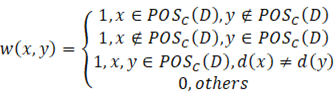
Define the decision table. Let the improved Skowron discernibility
matrix be L, and the discernibility matrix elements in L can be defined as:
 (7)
(7)
among them,
 (8)
(8)
In order to
illustrate the correctness of the existing information in V, the concept of
approximate correct rate is proposed. The rough accuracy A is defined as
follows.
 (9)
(9)
Use AR(X) to
define the roughness of X:
 (10)
(10)
Roughness is the
opposite of accuracy, and roughness reflects the degree of incomplete
knowledge.
There are the
following types of parameters for measuring specification attributes:
 (11)
(11)
Confidence is
used to measure the reliability of related rules. The expression is:
 (12)
(12)
Expected
confidence is the expected support rate of the project. Excluding other
influencing factors, the probability is expressed by the following formula:
 (13)
(13)
The degree of
interest is also called the degree of relevance, which is the ratio of the
degree of trust to the expected degree of confidence, and represents the effect
of the object group used to display the Q object combination.
 (14)
(14)
In the research
of image feature fusion model, the three aspects of decision table
discretization, attribute reduction and value reduction cover the core content
of image feature fusion model. Attribute reduction mainly completes the
simplification of decision table, from From the perspective of constant
classification ability, it can be roughly divided into attribute reduction
algorithms based on algebraic view (keep the positive area of the decision
table unchanged) and attribute reduction algorithms based on the information
view (keep the conditional entropy of the decision table unchanged). Figure 1 shows the form of data mining (this figure
is borrowed from Baidu Gallery: https://wenku.baidu.-com/view)
Figure 1

Figure 1 Data Mining form Diagram
2.3. Teaching Assessment
Educational evaluation is an evaluation index that measures the educational process and educational results. It refers to the process of making value judgments based on educational goals, referring to scientific benchmarks, and using effective technical means. Educational evaluation: it is the measurement, analysis and evaluation of education quality. Education evaluation generally includes evaluation elements such as teacher quality, education process, education content, education methods, education quality, education effect, education management, etc., mainly the evaluation of the impact of student learning and the evaluation of the education process. Teacher evaluation has two main aspects: evaluation of teacher education activities and evaluation of students' learning achievements.
is accompanied by classroom teaching. Its functions are as follows: (1) Diagnostic function: The evaluation of classroom teaching effect can determine the quality and level of teaching, as well as the effectiveness and defects of all aspects of teaching. Comprehensive and objective evaluation items can explain the reasons for the poor academic performance of most students and find out the main reasons. Therefore, educational evaluation is equivalent to the educational function of strict scientific diagnosis. (2) Motivation: Through educational evaluation in the classroom, the educational results can reflect the academic performance of teachers and students, can effectively promote learning in the classroom, and strengthen the specific supervision and influence of teachers and students. (3) Moderating effect: Through educational evaluation in the classroom, teachers and students can clearly know their own education and learning situation, so the review plan can educate based on feedback information and adjust teaching actions to achieve the set goals. (4) Teaching function: teaching assessment itself is also a kind of teaching activity. Through this activity, the development of students' knowledge, skills, intelligence and morality can be promoted.
The development trend of educational evaluation: (1) In the subject of evaluation, the situation of passive evaluation has changed with the combination of self-evaluation and others' evaluation as the center. (2) The educational purpose of evaluation is emphasized in the evaluation function. The goal of educational evaluation is to assess and steer teacher training. (3) Pay attention to practice in the evaluation process.
The Importance of Classroom Teaching Evaluation: (1) The centralized teaching method is used in the classroom to maximize the teaching effect. Evaluators and teachers can have a better understanding of a student's entire performance and basic conditions, such as scientific thinking, basic abilities, learning attitude, knowledge base, and so on, through educational evaluation in the classroom. In this approach, it is possible to properly examine the pupils' current position and choose a teaching method that is appropriate for them.(2) Able to better improve and develop classroom teaching reform. We can use classroom teaching assessment to view the shortcomings and advantages of classroom teaching from multiple angles. And timely research and analysis of unreasonable parts, and find solutions. Continuously develop and improve the reformed educational experiment in the process of continuous experiment to make it play a better role in education.
3. Application experiment of data mining based on image feature fusion model in teaching evaluation
On the one hand, it can effectively promote the improvement of education and teaching evaluation; . Design an application model of data mining based on image feature fusion model in teaching evaluation. Through the data mining method of the image feature fusion model, the key factors affecting the TQ evaluation results are found out, so as to propose ways and methods to improve TQ in a targeted manner, and promote the improvement of teaching quality.
3.1. Determine the Mining Object and Target
By analyzing the data and data of the evaluation feedback of teachers in the first semester of the 2018-2019 academic year of Y University, we have given the evaluation levels of all teachers according to the situation, including "very satisfied", "satisfied", "indifferent", " Dissatisfied", "very dissatisfied". In this example, we analyze the grade evaluation and indicators in the teaching assessment table, hoping to discover the implicit relationship, and determine the key factors, and finally draw a meaningful conclusion.
3.2. Data Collection
There are many aspects that affect teaching assessment. Exploring from the teacher’s personal factors, possible influencing factors include: gender, age, educational background, title, published papers, etc.; from the perspective of teacher teaching, the possible influencing factors are: teaching attitude, Teaching content, teaching methods, teaching skills, etc., so as to determine whether the teaching effect reaches the goal, whether the students are satisfied, etc.
3.3. Data Preprocessing
The data mining of the image feature fusion model must first express these influencing factors in the decision table and carry out discretization processing.
3.4. Attribute Reduction
Attribute reduction is to filter these influencing factors on the basis of not affecting the whole system, so as to leave the key or main factors, so as to simplify the original system to the greatest extent. The image data collected by multi-source channels about the same target is processed by image processing and computer technology to maximize the extraction of favorable information in each channel, and finally synthesized into a high-quality image, which is the core content of the image feature fusion model. . The attribute reduction in this paper adopts the discriminative matrix reduction algorithm.
The reduced decision table has the same function as the one before reduction, but the reduced decision table has fewer conditional attributes, which is very beneficial for the next step of rule generation. This article discretizes the above data collection the latter teacher evaluation table performs attribute reduction. The algorithm can be implemented in Matlab. Figure 2 is a technical roadmap.
Figure 2

Figure 2 Technology Roadmap
4. Application analysis of data mining based on image feature fusion model in teaching evaluation
4.1. Research status of data mining based on image feature fusion model in education evaluation analysis
There are many methods of data mining, the most commonly used is data cluster analysis. Therefore, the application research of image feature fusion model data mining is still relatively small, but the application in medicine, education and other industries is relatively slow. This paper adopts the literature comparison method to better understand the application and research status of image feature fusion model data mining in classroom evaluation. Table 1 and Figure 3 reveal the results.
Table 1
|
Table 1 The Number Distribution of the Literature on the Application of Data Mining in Teaching Assessment |
||
|
Years |
Number of related literatures |
Growth ratio |
|
2010 |
42 |
- |
|
2011 |
86 |
44.25 |
|
2012 |
198 |
1.21 |
|
2013 |
243 |
30.35 |
|
2014 |
273 |
16.23 |
|
2015 |
278 |
2.79 |
|
2016 |
317 |
16.86 |
|
2017 |
315 |
3.58 |
|
2018 |
345 |
12.24 |
|
2019 |
335 |
4.42 |
|
2020 |
367 |
11.98 |
Figure 3
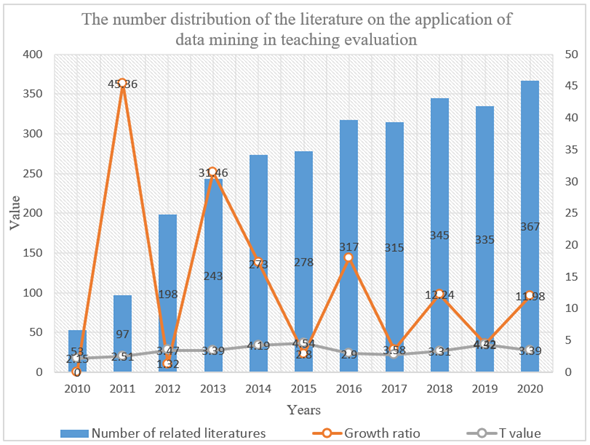
Figure 3 The Number Distribution of the Literature on the Application of Data Mining in Teaching Assessment
4.2. Recognition Algorithm Research Data Rate Image Feature Fusion Model Mining
Table 2
|
Table 2 The Correct Recognition Rate of the Four Algorithms on the Data Set |
||||
|
Data set |
KNN |
SVM |
CART |
Method of this article |
|
Zoo |
0.9218 |
0.9604 |
0.9109 |
0.9207 |
|
Iris |
0.9601 |
0.9468 |
0.9534 |
0.9466 |
|
Wine |
0.9719 |
0.4886 |
0.8653 |
0.9606 |
|
Machine |
0.8462 |
0.6491 |
0.8174 |
0.8895 |
|
Average recognition rate |
0.8818 |
0.7425 |
0.8386 |
0.8849 |
Figure 4
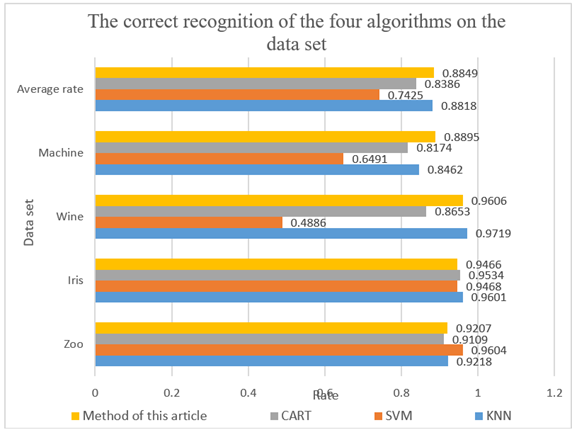
Figure 4 The Correct Recognition Rate of the Four Algorithms on
the Data Set
From the test results of the four data sets in Table 2 and Figure 4, the method in this paper, KNN and CART are equivalent in the average correct recognition rate of the UCI data set, and the correct recognition results are slightly better than KNN and SVM, It fully shows that the image feature fusion model data mining method proposed in this paper is an effective method.
4.3. Application research and analysis of data mining based on image feature fusion model in teaching evaluation
Table 3
|
Table 3 TQEvaluation Form |
||
|
Evaluation index |
Evaluation Criteria |
Code |
|
Preparation before class |
The teaching materials have novel ideas and can reflect the latest
academic trends |
A1 |
|
The teaching plan is comprehensive and strictly implements the
requirements of the syllabus |
A2 |
|
|
Focused, clear logic |
A3 |
|
|
Teaching content |
The teaching content is not promulgated according to the text, and the
teaching content can be supplemented in time according to the academic
dynamics |
A4 |
|
Explain the important and difficult points in a simple way, easy to
understand |
A5 |
|
|
Teaching closely integrated with current hot spots |
A6 |
|
|
Reasonably analyze the application of theoretical knowledge in
practice |
A7 |
|
|
Classroom organization |
The course content is distributed evenly and organized |
A8 |
|
The teaching time is tight and reasonable |
A9 |
|
|
Heuristic teaching |
A10 |
|
|
Teacher-student interaction |
A11 |
|
|
Teaching attitude |
Able to go to school on time |
A12 |
|
The lectures are rigorous and not exaggerated |
A13 |
|
|
Proactively seek student questions and answer patiently |
A14 |
|
|
Teacher's length of service |
Less than 5 years |
A15 |
|
5-10 years |
A16 |
|
|
More than 10 years |
A17 |
|
|
Teacher title |
primary |
A18 |
|
intermediate |
A19 |
|
|
advanced |
A20 |
|
|
Teaching effect |
The correct rate of answers to teachers' classroom teaching knowledge
reached 80% or more |
A21 |
|
Most students can listen carefully |
A22 |
|
|
Classroom is in good order |
A23 |
|
Table 3 is the evaluation form of teaching quality. TheTQevaluation table in this article is mainly selected from the three aspects of teachers, students, and teaching. From the perspective of teachers, the length of service of teachers, the professional titles of teachers, etc.; from the perspective of students and teaching, The teaching effect, the teacher's teaching attitude and other aspects are evaluated.
After image feature fusion model attribute reduction,the remaining key indicators that affect teaching assessment can be: pre-class preparation, teaching content, classroom organization, teaching attitude and teaching effect. The following article will conduct in-depth research and analysis on these aspects..
Table 4
|
Table 4 Teaching Assessment Results of Four Teachers |
|||||
|
Evaluation factors |
Preparation before class |
Teaching content |
Classroom organization |
Teaching attitude |
Teaching effect |
|
A |
8.85 |
7.67 |
5.54 |
8.59 |
6.55 |
|
B |
6.58 |
7.03 |
8.59 |
6.66 |
5.58 |
|
C |
8.22 |
7.89 |
8.49 |
8.34 |
7.89 |
|
D |
7.68 |
6.32 |
5.48 |
6.34 |
5.54 |
Figure 5
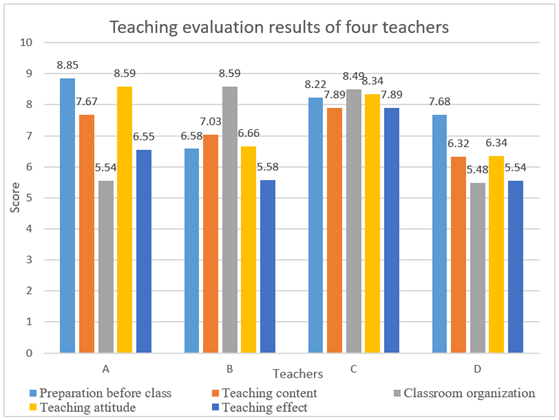
Figure 5 Teaching Assessment Results of Four Teachers
This article randomly selects four teachers’ teaching assessment results, as shown in Table 4. From Table 4 and Figure 5, it can be seen that the teacher A with the best preparation before class scores 8.85 points, and the total score is 10 points; the best teaching content is teacher C with 7.89 points, the highest score in classroom organization It is 8.59 points for teacher B and 8.59 points for teaching attitude of teacher A. Taken together, the best teaching effect is the C teacher, with a score of 7.89.
Table 5
|
Table 5 Common Problems in theTQEvaluation System |
||||
|
Evaluation problems |
Number of people |
Percentage/% |
T Value |
Alpha |
|
Insufficient understanding of evaluation |
22 |
12.58 |
2.57 |
0.8862 |
|
Insufficient evaluation |
12 |
5.67 |
2.36 |
0.8315 |
|
Random evaluation |
28 |
13.76 |
1.83 |
0.8154 |
|
Evaluation content is too broad |
26 |
13.55 |
1.83 |
0.7863 |
|
Incomplete evaluation system |
31 |
15.98 |
1.89 |
0.7265 |
|
Unfair course evaluation |
25 |
14.32 |
2.57 |
0.7765 |
Figure 6
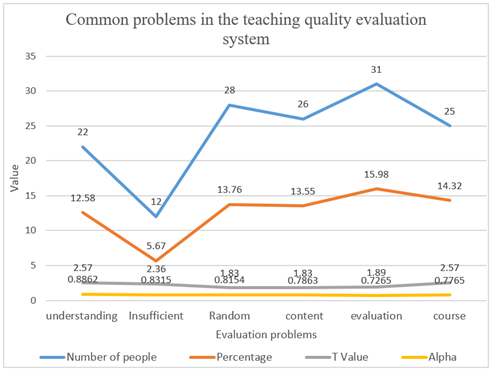
Figure 6 Common Problems in theTQevaluation System
It can be seen from Figure 6 and Table 5 that there are many problems in traditional teaching assessment. In summary, the main problems are: students’ lack of understanding of evaluation, insufficient breadth of evaluation, and poor attitude towards evaluation., The content of the evaluation is too broad, the evaluation system is not perfect, and so on. From the specific data, 15.98% of the students think that the evaluation system is not perfect, indicating that the students have realized that the traditional evaluation system is problematic. Therefore, a major innovation in teaching assessment is imminent.
Table 6
|
Table 6 The attitudes of Students and Teachers Towards Traditional Teaching Assessment |
|||||
|
Object |
Very dissatisfied |
Not satisfied |
Doesn't matter |
satisfaction |
very satisfied |
|
Student |
32(25.68) |
22(22.19) |
15(15.51) |
65(45.69) |
28(35.98) |
|
Teacher |
22(19.18) |
10(12.10) |
13(13.52) |
58(46.79) |
19(32.15) |
Figure 7

Figure 7 The Attitudes of Students and Teachers Towards Traditional Teaching Assessment
As can be seen from Figure 7 and Table 6, students and teachers are mostly dissatisfied with traditional teaching assessment. From the perspective of students, teaching assessment is mainly based on scores, and does not fully pay attention to the students’ personal growth, students’ mental health, and living conditions. From the perspective of teachers, students’ random evaluation will also lead to teachers’ loss Confidence in teaching.
5. Conclusion
The image feature fusion model is the product of the fusion of computer technology and network technology. It is a strategic technology leading the innovation of the information industry in the future, and has attracted widespread attention at home and abroad.
Use literature method, mathematical statistics and other methods to deeply study the theoretical knowledge of data mining and image feature fusion model, understand the advantages and disadvantages of existing teaching assessment, and propose targeted improvements. This paper designs an application experiment of data mining based on image feature fusion model in teaching evaluation, and analyzes it from the perspectives of teachers and students.
The key factors that affect teaching assessment mainly include pre-class preparation, teaching attitude, teaching content and teaching methods, which all affect the teaching effect. Therefore, teachers should improve their own teaching ability and improve work efficiency, but also pay attention to teaching methods and teaching content. In addition, we should also pay attention to the students' learning and living conditions, and should not be limited to academic performance.
The data source and data volume selected in this paper are relatively small, and the knowledge obtained by mining.may not be able to meet the needs of university officials. TQimprovement and evaluation are a long-term process. The evaluation data and related data will continue to be accumulated as the TQmonitoring system is improved and TQevaluation is deepened. Further research in the following areas can be carried out in the future: (1) Incorporate evaluation data into the system, such as teacher mutual evaluation and supervision group expert assessment, create a multi-dimensional data model, and conduct data mining. (2) Improve the efficiency of data mining in practical applications through the improvement of data mining algorithms.
6. Author's Contribution
All authors listed have made a substantial, direct, and intellectual contribution to the work and approved it for publication.
CONFLICT OF INTERESTS
None.
ACKNOWLEDGMENTS
None.
REFERENCES
A., C. B., B., D. D., and C., J. S. (2016). Complex Investment Decisions Using Rough Set and Fuzzy C-Means: An Example of Investment in Green Supply Chains. European Journal of Operational Research, 248(2), 507–521. https://doi.org/10.1016/j.ejor.2015.07.059
Bai, Z., Xia, F., Liu, J., and Teng, J. (2016). Attribute Reduction in Decision-Theoretic Rough Set Model Based on Minimum Decision Cost. Concurrency and Computation: Practice and Experience, 28(15), 4125–4143. https://doi.org/10.1002/cpe.3830
Buczak, A., and Guven, E. (2017). A Survey of Data Mining and Machine Learning Methods for Cyber Security Intrusion Detection. IEEE Communications Surveys and Tutorials, 18(2), 1153–1176. https://doi.org/10.1109/COMST.2015.2494502
Carmichael, L., Stalla-Bourdillon, S., and Staab, S. (2016). Data Mining and Automated Discrimination: A Mixed Legal/Technical Perspective. IEEE Intelligent Systems, 31(6), 51–55. https://doi.org/10.1109/MIS.2016.96
Chakhar, S., Ishizaka, A., Labib, A., and Saad, I. (2016). Dominance-Based Rough Set Approach for Group Decisions. European Journal of Operational Research, 251(1), 206–224. https://doi.org/10.1016/j.ejor.2015.10.060
Cho, D., and Cho, J. (2016). Does More Accurate Knowledge of Course Grade Impact Teaching Assessment? Education Finance and Policy, 12(4), 1–31. https://doi.org/10.1162/EDFP_a_00197
Du, X., Zhang, Q., Wang, J., Chen,
W., and Li, Y. (2017). The Study of Global Seamount
Basalt Data Mining. Scientia Geologica Sinica, 52(3), 668–692.
Han, J. (2017). Empirical Analysis of Undergraduate Students' Learning Satisfaction in College Teaching Assessment: A Case Study of H University. Boletin Tecnico/Technical Bulletin, 55(8), 592–599.
Henry, H. B. (2017). A Robust Interpretation of Teaching Assessment Ratings. Assessment and Evaluation in Higher Education, 43(1), 79–93. https://doi.org/10.1080/02602938.2017.1295301
Huang, N. (2017). Analysis and Design of University Teaching Assessment System Based on JSP Platform. International Journal of Education and Management Engineering, 7(3), 43–50. https://doi.org/10.5815/ijeme.2017.03.05
Ju, H., Li, H., Yang, X., Zhou, X., and Huang, B. (2017). Cost-Sensitive Rough Set: A Multi-Granulation Approach. Knowledge-Based Systems, 123, 137–153. https://doi.org/10.1016/j.knosys.2017.02.019
Karthik, S., Priyadarishini, A., Anuradha, J., and Tripathy, B. K. (2016). Classification and Rule Extraction Using Rough Set for Diagnosis of Liver Disease and Its Types. Advances in Applied Science Research, 38(3), 4370–4374.
Lara-Subiabre, B., and Angulo-Brunet, A. (2020). Reflections of Chilean Teachers in Contexts of Teaching Assessment. Perspectiva Educacional, 59(3), 24–44. https://doi.org/10.4151/07189729-Vol.59-Iss.3-Art.1083
Li, W., Huang, Z., and Jia, X. (2016). Neighborhood Based Decision-Theoretic Rough Set Models. Acoustic Bulletin, 69, 1–17. https://doi.org/10.1016/j.ijar.2015.11.005
Lu, H., Setiono, R., and Liu, H. (2016). Effective Data Mining Using Neural Networks. IEEE Transactions on Knowledge and Data Engineering, 8(6), 957–961. https://doi.org/10.1109/69.553163
Luan, X. Y., Li, Z. P., and Liu, T. Z. (2016). A Novel Attribute Reduction Algorithm Based on Rough Set and Improved Artificial Fish Swarm Algorithm. Neurocomputing, 174, 522–529. https://doi.org/10.1016/j.neucom.2015.06.090
Mei, W. (2017). Study on the Teaching Assessment and Optimization of College English Flipped Classroom Based on O2O Platform Model. Boletin Tecnico/Technical Bulletin, 55(18), 194–200.
Pei, X., and Pei, G. (2017). A New BP Fourier Algorithm and Its Application in English Teaching Assessment. AIP Conference Proceedings, 1864(1), Article 020193. https://doi.org/10.1063/1.4993010
Villanueva, K. A., Brown, S. A., Pitterson, N. P., Hurwitz, D. S., and Sitomer, A. (2017). Teaching Assessment Practices in Engineering Programs: Current Approaches and Usefulness. International Journal of Engineering Education, 33(4), 1317–1334.
Wen, B., Qing, F., and Hu, W. (2016). Probabilistic Graded Rough Set and Double Relative Quantitative Decision-Theoretic Rough Set. International Journal of Approximate Reasoning, 74, 1–12. https://doi.org/10.1016/j.ijar.2016.03.004
Xu, L. (2017). Study on the Application Effect of Multimedia CAI Technology in University Physical Class and Teaching Assessment. Boletin Tecnico/Technical Bulletin, 55(18), 331–337.
|
|
 This work is licensed under a: Creative Commons Attribution 4.0 International License
© ShodhKosh 2026. All Rights Reserved.