ShodhKosh: Journal of Visual and Performing ArtsISSN (Online): 2582-7472
|
|
The Politics of Color in Historical Films: Cultural Dualities in Padmaavat and Bajirao Mastani
Tanmay Samanta 1
 ,
Ramesh Kumar Rawat 2
,
Ramesh Kumar Rawat 2

1 Research
Scholar, Department of Journalism and Mass Communication, Faculty of Liberal
Arts, Parul University, Vadodara, Gujarat, India
2 Research
Supervisor, Department of Journalism and Mass Communication, Faculty of Liberal
Arts, Parul University, Vadodara, Gujarat, India
|
|
|
ABSTRACT |
|
|
Historical
cinema in India frequently transcends mere amusement, serving as a conduit
for the formation of cultural memory, political identity, and social values.
Sanjay Leela Bhansali's Bajirao Mastani (2015) and Padmaavat (2018) are two
great instances of films where visual grandeur is interwoven with ideological
narratives. The significance of this study lies in its focus on color as a
cinematic language that both preserves and reimagines history. This study
examines the impact of chromatic choices on the portrayal of cultural
dualities, thereby contributing to broader discussions regarding politics,
religion, and identity in Indian cinema. The study is based on Postcolonial
Theory, which looks at how the self and other are made in cultural texts, and
Social Semiotics, which examines color as a way of communicating that has
many meanings. The study aims to examine how Bhansali uses color to depict
ideological conflicts, to analyze how visual palettes create cultural
dualities, and to evaluate the influence of clothing and set design on the
construction of historical narratives. The method uses both descriptive
analysis and discourse analysis. The results show that color in Bhansali's
films is more than just decoration; it is a political and cultural code that
reinterprets history, shapes identities, and embeds ideological stances in
spectacle. |
|||
|
Received 08 December 2025 Accepted 25 February 2026 Published 27 March 2026 Corresponding Author Tanmay Samanta, bandhutanmay@gmail.com DOI 10.29121/shodhkosh.v7.i2s.2026.7054 Funding: This research
received no specific grant from any funding agency in the public, commercial,
or not-for-profit sectors. Copyright: © 2026 The
Author(s). This work is licensed under a Creative Commons
Attribution 4.0 International License. With the
license CC-BY, authors retain the copyright, allowing anyone to download,
reuse, re-print, modify, distribute, and/or copy their contribution. The work
must be properly attributed to its author.
|
|||
|
Keywords: Color Symbolism, Politics of Color, Historical Cinema,
Cultural Dualities, Sanjay Leela Bhansali |
|||



1. INTRODUCTION
Color in cinema has never been a neutral element. It constructs mood, directs attention, and frames identity. However, the use of color in historical films serves purposes beyond visual appeal. It becomes political. The phrase politics of color refers to the ways visual palettes embody ideological meanings, marking distinctions between power, morality, community, and cultural memory Basu (2023). It functions as a semiotic code that conveys political messages. In South Asian cinema, where history is frequently retold through spectacle, color choices are not simply decorative but act as a language of representation. They help filmmakers in reinterpreting history while also reflecting contemporary worries and hopes Pathak et al. (2022). The color design of a film thereby organizes the audience's emotions through visual strategies, becoming a subtle yet powerful form of political discourse.
Historical films, by their nature, are not simple reconstructions of previous occurrences. They are cinematic interpretations that amalgamate fact, folklore, and imagination. These films frequently convert history into a visual allegory, influencing national identity through chosen aesthetics. The refurbishments encourage viewers to both visualize and experience history through architecture, costumes, and, most significantly, color Qureshi (2018). Historical films function as cultural texts that illustrate how societies reconcile the past to express their contemporary beliefs. In this context, the concept of cultural dualities is crucial. Historical cinema frequently establishes dichotomies—tradition versus modernity, self versus other, dedication versus desire. Often manifested through contrasting color palettes, these dualities are not coincidental; they are embedded within the narrative and visual form Roy (2018).
This study examines two of Sanjay Leela Bhansali's most acclaimed films, Padmaavat (2018) and Bajirao Mastani (2015). These films are ideal case studies due to their strategic use of color and their extraordinary reliance on spectacle. While Padmaavat foregrounds an external cultural binary by opposing Rajput and Sultanate identities, Bajirao Mastani explores an internal conflict between tradition and passion. Both films utilize color codes that influence spectator perceptions of history and identity. The primary objective of this research is to examine how Bhansali uses color as a political instrument to create cultural dualities and how these visual tactics shape collective perceptions of history.
The significance of this research lies in its interdisciplinary value. First, it contributes to film studies by offering a systematic reading of color as a political text in Indian historical cinema. Secondly, it enhances cultural studies by elucidating the intersection of visual strategies with discussions on religion, nationalism, and gender. Third, it enriches postcolonial studies by illustrating how colonial legacies of color symbolism have been transformed into new hierarchies of representation. The study contends that color transcends conventional cinematic aesthetics and serves as a symbolic medium for ideological expression.
1.1. Color as Cultural Sign
Color in cinema is not merely decorative; it is a symbolic language that conveys meaning beyond the confines of dialogue. Film theorists have long argued that visual elements operate like signs, capable of producing cultural and emotional associations that shape how audiences interpret stories Eisenstein (1988). Jung (1964) also said that colors connect with archetypal patterns in the subconscious, which gives them psychological and cultural weight. Color, in this sense, is a semiotic resource that films can use to either amplify or undermine their ideological messages.
Within the Indian context, the symbolic resonance of color is especially pronounced. According to Dwyer (2006), cinema relies significantly on cultural codes, wherein colors such as saffron, red, and white are intricately connected to religious practices, ceremonial, and national identity. Bollywood uses costume, set design, and lighting to bring these connotations to life, creating visual environments that people may easily recognize as culturally significant Wilkinson-Weber (2014). When utilized wisely, colors make narratives of honor, purity, or devotion feel more natural by putting them in a larger cultural context.
Historical films make this dynamic even stronger by turning chromatic design into an important part of cultural memory. According to Bellantoni (2005), carefully chosen color palettes can convey political stances or complicated emotions that words alone cannot express. Similarly, Street (2012) shows that color in film always reflects social and cultural contexts rather than standing as neutral ornamentation. To comprehend how films such as Padmaavat and Bajirao Mastani transform historical facts into ideologically motivated and emotionally charged cinematic spectacles, it is essential to examine color as a cultural indicator.
2. LITERATURE REVIEW
The literature on the politics of color in Indian historical cinema illustrates a complex interaction among aesthetic decisions, ideological impacts, and the construction of cultural identity. Researchers have said that color in Indian films is never neutral; it is a key way to show authority, tradition, and hierarchy, especially in historical stories. Bhansali’s films, in particular, have been foregrounded as cinematic spaces where spectacle and ideology converge. According to current research, his lavish sets and intricate visual design are more than just pretty pictures; they convey cultural significance and create believable worlds that speak to people's emotions and reveal larger social and political stories Shrivastava and Ghauraiya (2025). The opulence of palaces and intricate interiors in films like Padmaavat and Bajirao Mastani establishes architecture and design as semiotic codes that represent lineage, tradition, and authority.
Some have argued that the films' reliance on color is too dominant. Sharma and Goswami (2021) contend that Bhansali utilizes color as a symbolic language to establish dichotomies of good and evil, particularly in Padmaavat, where saffron, white, and gold represent Rajput valor, while darker shades are designated for the Khilji court. Such distinctions not only advance narrative clarity but also reinforce cultural stereotypes. This symbolic use of color fits with larger ideas about semiotics, which look at how signs and symbols work in movies to create complex meanings Swarnakar (2025).
Recent research places these visual methods in postcolonial contexts, which go beyond semiotics. Dootson and Gaur (2025) examine the historical evolution of color in Indian cinema, emphasizing how chromatic technologies perpetuate colonial legacies by favoring specific skin tones and aesthetic standards. This raises questions about how contemporary directors adapt or resist such legacies. Critics contend that Bhansali's films frequently fluctuate between aesthetic resistance and cultural conformity, employing spectacle to amplify nationalist imaginations. Roy (2018) also emphasizes that these narratives incorporate cultural dualities, which result in the glorification of Hindu valor, the demonization of Muslim authorities, and the reduction of women to symbolic bearers of honor and sacrifice.
The interaction between gender and religion is a persistent motif. Singh (2022) observes that Bhansali's portrayal of women in Bajirao Mastani and Padmaavat frequently conforms to conventional ideals of chastity and sacrifice, while also depicting them as agents within constrained contexts. This dual representation highlights the ideological conflict between empowerment and restriction.
3. THEORETICAL FRAMEWORK
This study is grounded in two complementary theoretical perspectives: Postcolonial Theory and Social Semiotics. These theories provide the conceptual tools to interpret the politics of color in Bollywood historical films.
Edward Said's book Orientalism (1978) was the first to use postcolonial theory. Homi K. Bhabha's book The Location of Culture (1994) and Gayatri Chakravorty Spivak's book (1988) further developed it. The theory examines the influence of colonial histories on cultural identity, representation, and the formation of the concepts of “Self” and “Other.” It emphasizes that cultural resources often perpetuate hierarchies and ideological remnants of colonial authority. Postcolonial theory is especially pertinent to this topic, as Padmaavat and Bajirao Mastani reinterpret India's precolonial history in ways that reflect current political discourses surrounding nationalism, religion, and cultural pride, utilizing color as a medium for these discursive conflicts.
Social Semiotics was developed in the 1990s by Gunther Kress and Theo van Leeuwen in Reading Images: The Grammar of Visual Design (1996). They based it on Michael Halliday's systemic functional linguistics. This approach views meaning as socially constructed through signs and modes, including images, gestures, and colors. It argues that colors are not neutral; rather, they are culturally encoded, influenced by historical contexts, and utilized to convey specific ideas. For this research, social semiotics offers the analytical lens to treat Bhansali’s visual palettes as semiotic resources that actively construct cultural meaning and shape audience interpretation of historical narratives.
4. RESEARCH OBJECTIVES
1) To analyze how color operates as a political tool in Padmaavat and Bajirao Mastani.
2) To explore the representation of cultural dualities through the use of cinematic color.
3) To evaluate the significance of color palettes in shaping historical and cultural narratives.
5. MATERIALS AND METHODS
This research adopts a qualitative approach, focusing on descriptive analysis and discourse analysis to examine how color operates as a political tool in historical films. Descriptive analysis offers a methodical examination of visual details in cinema, documenting elements such as chromatic patterns, costume styles, set design, and lighting to establish a clear overview of the aesthetic choices made by the filmmaker. Krippendorff (2018) argues that descriptive methodologies in media studies are crucial for accurately documenting texts' surface features. This, in turn, allows for interpretations to be based on facts rather than subjective impressions. By using this approach, the study lays the groundwork for further in-depth cultural interpretations. In addition, discourse analysis can shed light on the role that those visual aspects play in broader ideological constructions. According to Fairclough (2013), discourse encompasses not only language but also all representational behaviors, such as images, symbols, and cultural codes. Using discourse analysis, this study investigates how color choices in films are woven into stories about identity, power, and cultural memory.
As a case study, the research examines two iconic Bollywood historical films by Padma Shri award–winning director Sanjay Leela Bhansali: Bajirao Mastani (2015) and Padmaavat (2018). These films are the primary sources, and they have been watched multiple times to find motifs in the way things seem that happen over and over again. In order to contextualize the results and match the interpretations with current scholarly discussions, secondary materials have been reviewed to enhance the analysis. These materials include academic articles on Indian film, theoretical discussions, media reviews, and reports.
6. DATA ANALYSIS
Bajirao Mastani is adapted from Rau, a Marathi novella by N.S. Imandar (1972). This historical drama chronicles the enduring love story between the Maratha general (Peshwa), Bajirao I (1700-1740), and Mastani. She is widely believed to have been the daughter of a Bundela Rajput king and his Iranian Muslim mistress Roy (2018). Despite the protests of his traditional Brahmin family and the local Brahmins, he maintains his relationship with Mastani. Despite facing fierce opposition from his family and the Maratha court, their passionate relationship is portrayed as an unbreakable bond that transcends societal rules. Ultimately, the film establishes their tragic fate as a powerful testament to their love, which defies the very boundaries that sought to divide them.
The film Padmaavat is based on the 16th-century epic poem of the same name, written by Sufi poet Malik Muhammad Jayasi in the Awadhi dialect of Hindi Roy (2018). It tells the story of Queen Padmavati of Mewar and her husband, Maharawal Ratan Singh. The story starts when Princess Padmavati accidentally wounds Maharawal Ratan Singh while hunting. This leads to their marriage. A banished priest, seeking revenge, informs Sultan Alauddin Khilji of Padmavati's famed beauty. This ignites Khilji's obsession, compelling him to besiege her kingdom. When Khilji captures Ratan Singh, Padmavati masterminds his escape. Ultimately, Ratan Singh is killed in combat. As the invaders take the fort, Padmavati and her women perform the jauhar ritual, a tragic act of self-immolation to protect their honor. Padmaavat shows a collision of civilizations between Rajput dignity and Sultanate alterity, while Bajirao Mastani shows a different kind of cultural negotiation: the conflict between duty and desire, tradition and transgression.
6.1. Bajirao Mastani (2015)
Color analysis can start with the dialogue where Mastani confronts criticism for offering a green dress to Kashi’s newborn son. She is told that she should have chosen saffron, a color aligned with the Maratha tradition, instead of bringing a green outfit. Mastani replies, “Har dharm ne ek rang chun liya hai par rang ka to koi dharm nahi hota” (“Each religion has chosen a color, yet color itself has no religion”). She then adds, “Haan kabhi kabhi insaan ka man kala zaroor ho jata hai jo use rang mein bhi dharm dikhai deta hai” (“At times a person’s mind turns dark, and then even color is seen as religion”). Her words create a striking contrast between perception and essence. And her second statement challenges the narrow view of color as a fixed religious marker. She reminds those around her that the same green is used to adorn the goddess Durga, just as saffron cloths are draped at Sufi shrines. Through this, she blurs the strict lines that separate traditions and instead highlights the overlapping cultural codes that color can embody.
This scene reveals Bhansali’s visual politics with clarity. The green dress becomes more than fabric. It becomes a contested sign within a charged atmosphere. From a social semiotic perspective, the color green works as a symbol whose meaning is shaped by context. To some, it is a marker of religious difference. To Mastani, it is a sign of universality and devotion. The discourse uncovers how colors are not neutral but carry ideological weight, shifting value depending on who uses them and in what setting. Viewed through postcolonial theory, the tension over green and saffron reflects wider anxieties about identity and belonging. Mastani’s defense suggests that symbols cannot be monopolized by one tradition. Her words and actions assert hybridity, a refusal to accept the narrow boundaries of community.
Figure 1
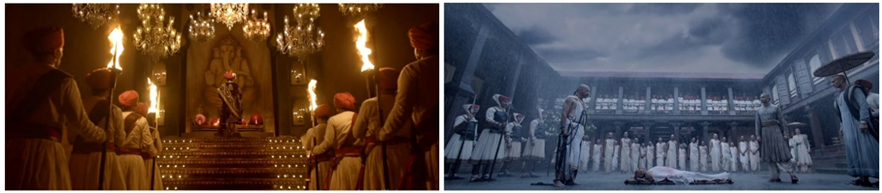
Figure 1 Two Different Color
Grading in "Bajirao Mastani" (Streaming/Source: #EROS)
In this film color palette is dominated by shades of Saffron and brown. The warmth of saffron tones appears throughout the film and becomes a defining visual marker of the Peshwa era. Saffron, or kesari, recalls Maratha history and its religious as well as political symbols. It gives forth energy and authority, which makes the Peshwa's power seem like it comes from God. In Hinduism, saffron is the most sacred color. It symbolizes fire, which burns away impurities Sharma and Goswami (2021). Brown is utilized to make these bold colors softer and more stable. By blending with Saffron, its neutrality promotes harmony rather than excess. The colors work together to make everything look balanced while still being strong. The placement of the Peshwa before a statue of Ganesha reinforces this reading, since the deity embodies prosperity and legitimacy within Maratha tradition. In contrast to this golden palette, moments of conspiracy and conflict appear in cool blue tones Figure 1. This change of grading separates tension from harmony. It also highlights how visual codes are carefully structured to carry meaning, transforming color into a discourse of power and identity Shorted (2020).
Sometimes, color sets the scene, allowing myth and history to meld into a single visual tapestry. Bhansali uses golden and Saffron gradients to bind the tale of Bajirao and Mastani with the eternal memory of Radha and Krishna. Mastani compares herself to Radha and insists that love, even outside marriage, can achieve recognition. Her Bundelkhand-to-Pune journey might recall Radha's 'Avisar'. In this scene, color is transformed into discourse. The Saffron glow of the palace scenes recalls the aura of divine love and strengthens the mythical connection. Even after that, the Holi sequence expands this symbolism. Mastani sings “Mohe rang do laal” and invites to cover her with red. The color red works as a semiotic sign of passion, but also as a bridge between devotion and desire. Within social semiotics, red becomes a resource that encodes love while situating it in a cultural narrative. This blend of myth and politics transforms history from a rigid set of facts into an emotional and symbolic memory. Bhansali also incorporates motifs of betel leaves, lotuses, and peacocks. All of these details add to Krishna's semiotic field. Color and symbol are thus depicted in the film as strong metaphors that express affiliation and identity Sachdeva (2015).
Figure 2
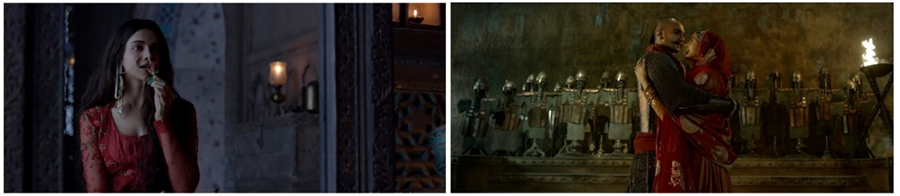
Figure 2 Symbolic use of Red in
"Bajirao Mastani" (Streaming/Source: #EROS)
Red carries the powerful symbolic weight in this film. The character of Mastani (Deepika Padukone) typically wears light-colored clothing. However, she wears a striking red dress in two specific instances Figure 2. When Bajirao prepares to leave Bundelkhand, Mastani is dressed in red before a mirror, holding a rose. The scene suggests longing, but also foreshadows separation. This choice can be better understood through the lens of social semiotics. Red represents a sign that encodes both emotion and imminent loss. It becomes a marker of love under threat. The second time Mastani wears red is inside the armory as Bajirao departs for war. The color recalls a visual echo from Padmaavat, where Padmavati, played by the same actress, is also clad in red before her husband’s departure. The resonance links two stories of sacrifice. In both, love ends in tragedy yet finds permanence through death. It shows how Bhansali reworks historical narratives to fuse love, devotion, and death into a new cultural memory. Red dominates another sequence during Ganesh Puja. The room glows in crimson as Mastani faces an attack. Kashi Bai enters in white with a red sash, further layering meanings of purity and peril. Here, red heightens tension, making visible the danger that surrounds Mastani.
Figure 3
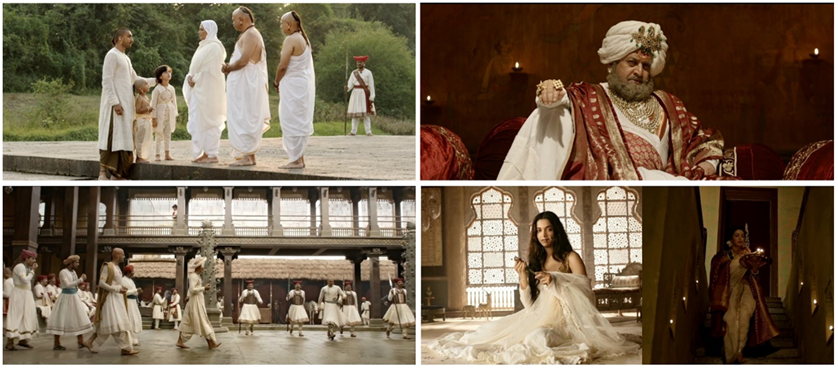
Figure 3 Symbolic use of white in
"Bajirao Mastani" (Streaming/Source: #EROS)
White also emerges in the film as a powerful sign that speaks across cultures, traditions, and emotions Figure 3. Maa Saheba is always in white, which recalls the cultural code of widowhood in the Hindu practice. Chattrapati combines white with red, a union that signals both heritage and authority. Bajirao himself appears repeatedly in all-white attire, which becomes his visual identity. It signifies responsibility, status, and the enduring weight of Peshwa tradition. The same color moves across different contexts, proving that meaning is not fixed but socially constructed. When Mastani appears in white after the Bundelkhand battle, the shade signals intimacy rather than mourning. The exchange of a dagger turns the color into a sign of union and emotional depth. Kashi Bai wears a white bordered with red and gold. This combination is seen as sacred in Hindu culture. It conveys purity, renewal, and devotion. During Ganesh Puja, this attire links faith with loyalty, showing how ritual reinforces cultural memory.
Costume colors in this film are central to character construction. Mastani is repeatedly seen in lighter tones such as soft green, gold, yellow, or white. These delicate shades form a visual harmony that underscores her devotion and vulnerability. She lives through danger, from the battlefield to abandoned ruins, yet her choices remain tied to love. Her light attire signals purity of intention, while her rare appearance in red amplifies emotion, turning color into a symbol of passion and sacrifice. On the other hand, Kashibai’s costumes tell a different story. Her sarees are vivid, with purple, violet, blue, and yellow creating bold contrasts. These rich hues embody her layered emotions—love, loyalty, fear, and dignity. The violet stole, often draped across her, reflects authority as well as depth of feeling. Unlike Mastani’s uniform palette, Kashibai’s clothing embraces complexity.
The Deewani Mastani sequence transforms spectacle into discourse. Mastani enters the Ayna Mahal in a golden green lehenga and a Peshwa topi. The mirror walls multiply her image just as they once reflected Anarkali in Mughal-E-Azam, creating a dialogue between past and present. Gold dominates the scene, not just as ornament but as a sign of endurance, stitching Mastani’s story into the very palace walls. Her words, “Mashoor mere ishq ki kahani ho gayi,” announce love as legend, preserved in memory like a golden letter Sachdeva (2015).
The Pinga sequence presents Kashibai and Mastani in almost identical attire, yet subtle color contrasts reveal their inner worlds. Mastani wears deep red, a shade tied to passion and determination. It reflects her willingness to risk everything for love, her devotion overriding all social boundaries. Kashibai appears in red-purple, a color linked with dignity, respect, and royalty. It conveys her regal position as Peshwa’s wife and her quiet strength in the face of betrayal. The similarity of their costumes reinforces their shared love for Bajirao, while the slight difference highlights individuality within that bond. Lyrics deepen this semiotic play. Kashibai greets Mastani as if the moon has entered her courtyard. This image is enriched by the chandrakor, the metaphor of the moon and long tied to custom and faith. While Kashibai wears it on her forehead throughout, Mastani adopts it here for the first time. It binds celestial imagery with cultural identity. Set in warm yellow tones, the imagery binds the scene to celebration while also encoding rivalry, devotion, and cultural identity in a single visual language.
Nature becomes an active participant in Bajirao Mastani. The Navagraha ring that Bajirao wears ties his destiny to the cosmic order. When he accepts Mastani as his wife, the elements themselves appear as witnesses. Rain pours heavily, skies darken, and the lovers wear black. Within social semiotics, black here works as a sign of uncertainty and trial, but also as a container of hidden strength. The storm becomes a metaphor for the obstacles they must face, binding their intimacy to natural forces rather than human approval. Before leaving for war, Bajirao foretells that he will meet Mastani amidst changing skies, restless winds, thunder, and untimely rain. These images are not confined by ritual or community. They present love as a force that transcends social and religious lines.
Figure 4

Figure 4 Significance of Nature
Color in "Bajirao Mastani" (Streaming/Source: #EROS)
War victories appear less significant when compared with the battle for personal love, which Bajirao ultimately cannot win. The final lake sequence completes this cycle. Bajirao, weakened by fever, enters the lake holding his sword Figure 4. He sees a spectral army of soldiers dressed in black, riding black horses and carrying black flags. The color black here becomes a sign of death and destiny. It reflects the weight of his family legacy and the inevitability of his fall. The scene is graded in cool blue tones that intensify the feeling of delirium and isolation. As the vision unfolds, the sky changes suddenly. Dark clouds break into fiery shades, and meteors fall across the frame. The transition from black to flame works as a metaphor for passage. Blue grading intensifies the mood before the sky bursts into fire and meteors. Through social semiotics, the sequence shows how colors and natural elements become signs of closure. Here, characters merge with universal nature, suggesting an eternal togetherness beyond mortality.
6.2. Padmaavat (2018)
In Padmaavat, saffron and yellow dominate the Rajput world. The saffron hue is carried over into the opening credits as well. These shades, linked with purity and renunciation, also serve as battle colors of the warrior caste. Padmavati, Gora Singh, Badal Singh, and the Rajput soldiers wear them often. Through costume, the film encodes valor and piety, turning color into a cultural sign of identity and faith. Even the color grading of this film operates as a semiotic code that separates cultural spaces. Chittor is consistently framed in warm yellow, which conveys harmony, devotion, and sacred order. In contrast, Delhi is shaded in cooler blues, highlighting distance, suspicion, and disorder. A rare exception occurs in the forest scene where Padmavati accidentally wounds Ratan Singh. Here, blue dominates to reflect mistrust and uncertainty. As the narrative moves from conflict to intimacy, the palette shifts toward yellow, visually translating reconciliation into cultural memory.
Figure 5

Figure 5 Two Different Colors of
the Rajput and Alauddin Khilji Flags in “Padmaavat” (Streaming/Source: #Prime)
The flags in Padmaavat carry crucial symbolic meaning Figure 5. Ratan Singh’s realm is marked with red, a color tied to purity, sacrifice, and sacred fire. In contrast, Alauddin Khilji’s empire is identified by a black flag. Black here is not neutral but a sign of evil, otherness, and corruption. The duality creates a clear moral boundary between kingdoms, reinforcing the film’s theme of good against evil. Yet the depiction is not historically accurate. Records suggest a green banner with black bands for the Sultanate. Bhansali’s decision highlights cinema as interpretation rather than history. Through social semiotics, the flags become signs that project ideology. They transform political struggle into a visual battle coded through color. Furthermore, just like in Bajirao Mastani, colors in Padmaavat also make political statements when we see Alauddin and his soldiers constantly dressed in black. Although the imperial army of medieval India was multi-ethnic and multi-religious, Alauddin's warriors are portrayed as being exclusively Muslim. The Rajput army, believed to be entirely Hindu, emerges as a vast expanse of saffron. Similar to Pakistan's flag, the Khilji banner features a crescent moon on a deep green background. Early 20th-century Bengali adaptations of the Padmavati mythology employed similar symbolism, using images such as the crescent moon engulfing the sun to depict the conflict between the Hindu Rajputs and the Pathan Tar troops of Alauddin.
Figure 6
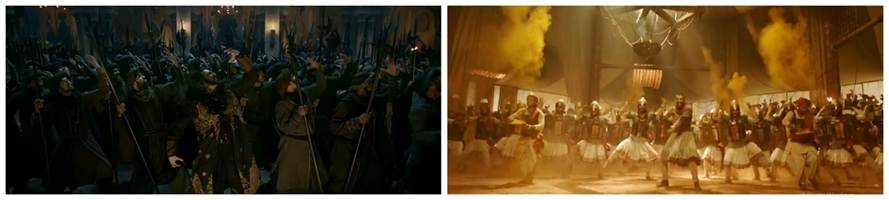
Figure 6 Cultural Influence of Color in "Padmaavat"
and "Bajirao Mastani" (Streaming/Source: #EROS)
The songs Malhari in Bajirao Mastani and Khalibali in Padmaavat provide a striking example of how Bhansali uses color to mark cultural difference Figure 6. Both dances feature Ranveer Singh, yet his costumes and the palettes around him convey entirely separate worlds. As Alauddin in Padmaavat, Singh performs against a cool blue background, surrounded by soldiers dressed in black. The tones emphasize conquest, desire, and excess. In contrast, as Bajirao in Bajirao Mastani, he leads warriors clad in white dhotis, red turbans, and red waistbands. The scene is saturated with yellow gulal and warm grading, suggesting valor, triumph, and Hindu ritual energy. Critics argue that such contrasts glorify Hindu valour while reducing Muslims to villainous figures, with saffron and black functioning as communal markers of identity Roy (2020). Other scholars add that Padmaavat intensifies these binaries, presenting Khilji’s world in dark tones, while Bajirao Mastani allows limited nuance through Mastani, who still remains framed as the cultural Other Iqbal and Iqbal (2020).
Although there are many debates about the portrayal of Hindu and Muslim communities and their color associations, the material aspects of costume design also deserve attention. In Padmaavat, clothing is not simply an ornament. It operates as a semiotic code that communicates identity, culture, and power. Queen Padmavati’s attire, rich in saffron, red, and gold, reinforces her position as a Rajput queen. The use of saffron recalls rituals of marriage and war robes, signifying both purity and valor. Embroidery, block-printing, and hand-stitching create visual authenticity, aligning her with tradition and continuity. These colors make her body a canvas of Rajput memory.
Figure 7
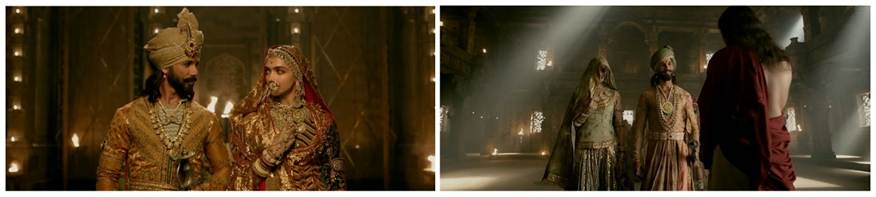
Figure 7 Ratan Singh and Padmavati's Royal Wedding Costumes in
“Padmaavat” (Streaming/Source: #Prime)
The pairing of colors between Padmavati and Ratan Singh is carefully staged to express unity and royal stature Figure 7. Their costumes often mirror each other, turning clothing into a visual language of love and power. After their wedding, Padmavati, in red and gold, walks beside Ratan Singh in saffron and gold, creating harmony between passion and valor. Later, when they meet Raghav Chetan, both appear in lighter shades with green headgear. The green highlights prosperity and balance, while the matching tones symbolize their shared identity. Through social semiotics, these choices frame the couple as inseparable, embodying dignity, devotion, and cultural continuity.
By contrast, Alauddin Khilji’s costumes carry darker palettes—black, grey, and muted earth tones—crafted from Ottoman references, manuscripts, and motifs like Chinar Butti and sacred geometry. The subdued palette signals barbarism, desire, and excess. His introduction in Afghanistan sets the tone, where furs and heavy textures present him as crude and uncultured. Through social semiotics, this visual scheme encodes Khilji’s otherness, positioning him outside refinement and morality. Such decisions also illustrate how Bhansali rewrites history within a postcolonial framework. The Sultanate, in reality, was vast and multi-ethnic, stretching from Afghanistan to the Deccan. Yet in the film, its cultural breadth narrows to dark interiors and exoticized fabrics. This visual reduction reinforces binaries: the Rajput world is light-filled, ritualistic, and sacred, while the Khilji world remains shadowed, primitive, and dangerous. Color becomes an ideological tool, shaping not only individual characters but also the larger imagination of Hindu-Muslim duality in historical cinema.
Figure 8

Figure 8 Color Scheme of Rajput Durbar Contrasted with Khilji's
Courtroom in “Padmaavat” (Streaming/Source: #Prime)
Padmaavat builds its narrative through deliberate contrasts in color that extend beyond costumes into architecture, interiors, and battlefields Figure 8. Chittor’s court is consistently framed in luminous hues, its bright walls and decorated durbar reinforcing an image of virtue and moral clarity. By contrast, Khilji’s spaces are steeped in shadow and muted tones, casting his rule as dark and threatening. This opposition is not subtle; it frames Rajputs as idealized figures while rendering the Sultanate devoid of virtue. Critics may question the historical accuracy of this binary, yet the design choices clearly function as signs of identity politics. Even the first meeting between Alauddin and Ratan Singh in Chittor illustrates this chromatic coding. Alauddin remains in black and grey, while Ratan Singh appears in red, a color of bravery and defiance. Padmavati and Ratan Singh’s differing attire in the same moment further underlines marital discord, echoing visual tensions also staged between Alauddin and Mehrunnissa. Alauddin first glimpses Padmavati through her reflection while she is dressed in white. The costume conveys purity, dignity, and wisdom, but also evokes dissidence between Padmavati and Ratan Singh.
Figure 9

Figure 9 Transitions from White to Black in Malik Kafur's Costume
in “Padmaavat” (Streaming/Source:
#Prime)
The introduction of Malik Kafur demonstrates how color codes deepen character construction. His first appearance in white suggests innocence and virtue, but this impression is quickly unsettled. The same white cloth he wears is later used to clean the blood of his victims, exposing the tension between outward purity and inner violence. This transition functions as a sign of duplicity, reminding viewers that appearances often mask truth. Kafur’s later allegiance to Khilji is marked visually by a shift to black Figure 9. Bhansali repeats this strategy with Alauddin himself. When Ratan Singh visits Khilji’s camp, Alauddin dresses in white but covers himself with a black shawl, a subtle signal of hidden treachery and his intent to abduct the Rajput king. In another scene, after killing Jalaluddin, Alauddin abandons his usual black and dons dark red, symbolizing blood, conquest, and authority. Mehrunnissa appears in matching red, and Kafur later follows this palette, visually placing him close to Alauddin. Such coordinated shifts expose how power, sexuality, and allegiance are intertwined.
Figure 10

Figure 10 The Significance of the Saffron Gulal in
“Padmaavat” (Streaming/Source: #Prime)
In the Holi sequence, Alauddin appears in white. Instantaneously, he puts saffron gulal on his face Figure 10. This shift is politically charged. White briefly suggests calm, saffron is tied to valor and purity, but here it becomes a tool of disguise, foreshadowing his plans to overpower Chittor. The transformation demonstrates how color can distort meaning, turning ritual celebration into political strategy and reinforcing the role of color as ideological communication.
Red in Padmaavat functions across different layers of narrative and culture. It is at once sacred, sensual, and political. In Hindu culture, red is tied to marriage, fertility, and purity, and Bhansali uses this tradition as a narrative tool. At the beginning, Mehrunnisa appears in striking red within the otherwise dim Khilji court. This contrast sets her apart from the roughness of her surroundings, presenting her as refined yet bound by tradition. Red here represents allure, dignity, and her difference from the clan.
Figure 11
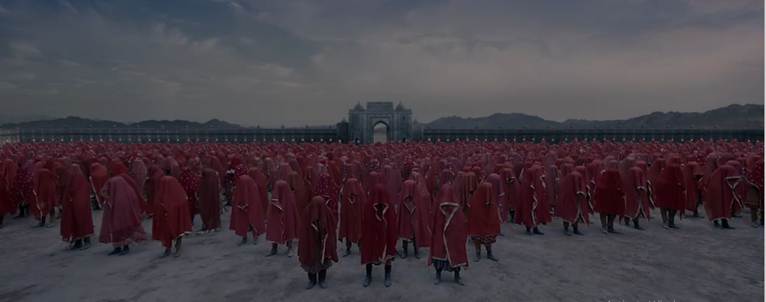
Figure 11 Rajput Warriors Covered with Red Odhnis in
“Padmaavat” (Streaming/Source: #Prime)
When Padmavati travels to Delhi after Ratan Singh’s capture, the visual language shifts. She covers herself with a black shawl, and the choice marks her intelligence and careful planning. Black becomes a sign of strategy rather than evil, signaling her determination to manipulate circumstances to secure Ratan’s release. Alongside her, Mehrunnisa again appears in dark red, this time as part of a visual opposition to Padmavati’s restraint. The 800 Rajput warriors who accompany Padmavati wear saffron-red odhnis as they disguise themselves as ‘sevadasis’ Figure 11. The choice of red is both camouflage and code. It allows them to enter Khilji’s fort in secrecy while visually preparing for sacrifice. Once revealed, their red-saffron robes mark renunciation of worldly ties, binding them to duty and death. In a remarkable strategic move, Padmavati plans a strike on the Khilji fort by covering its map with red gulal. She emphasizes that victory will come through a clever plan, not just with swords. When Padmavati finally meets Ratan Singh inside the palace, she is dressed in a combination of red and black. This fusion carries deep meaning. Red conveys her passion and loyalty, while black signals resistance and resolve.
Figure 12

Figure 12 In the Jauhar segment, all women wear red costumes
in “Padmaavat” (Streaming/Source: #Prime)
The Jauhar sequence marks the emotional and visual climax of Padmaavat. Alauddin returns to Chittor in black, his soldiers also draped in darkness. Against this, Padmavati prepares for Jauhar wearing saffron, the same shade carried by Rajput warriors. Here, saffron is more than ritual cloth. It becomes a sign of renunciation and sacrifice, placing Padmavati at the center of a collective act of resistance. Her choice of color elevates her beyond the ordinary queen, aligning her with a divine presence who guards the honor of Chittor. In their final meeting, both Padmavati and Ratan Singh wear red. For Ratan Singh, red continues to represent valor on the battlefield. For Padmavati, it becomes a bridal shade of devotion as she walks toward the fire. Together, their red garments symbolize reconciliation and unity of purpose. He embraces death in combat, and she embraces death in fire, both framed as acts of moral victory. Padmavati leads hundreds of women, each adorned in red with red-violet veils Figure 12. The widow guardian, usually marked by greys and blues, also takes on red, showing that in this moment, all identities dissolve into one act of defiance. Bhansali heightens this with slow-motion shots, the glow of saffron flames, and the merging of bodies into fire. The spectacle is not merely visual but symbolic. Through social semiotics, red and saffron act as cultural signs
From the detailed analysis of both films, the following table summarizes how specific colors operate as cultural signs. In Bajirao Mastani and Padmaavat, colors not only create character identities and emotional registers, but they also work within larger postcolonial and semiotic frameworks, generating cultural dualities and reinforcing ideological meanings.
Table 1
|
Table 1 Color Politics and Cultural Dualities in “Bajirao Mastani” and “Padmaavat” |
||||
|
Film |
Color(s) |
Associated Characters / Spaces |
Symbolic Meaning |
Cultural / Political Function |
|
Bajirao Mastani |
Saffron, Orange, Yellow |
Bajirao, warriors, rituals |
Valor, sacrifice, religious devotion |
Projects Maratha pride and Hindu ritual
symbolism |
|
White |
Bajirao’s attire, Maa Saheba |
Tradition, widowhood, loyalty, duty |
Reinforces responsibility, lineage, and
cultural codes |
|
|
Red |
Mastani, Kashibai, Ganesh Puja |
Passion, love, sacrifice, spiritual
intensity |
Embodies personal devotion and conflict
with social order |
|
|
Purple |
Kashibai |
Royalty, dignity, emotional complexity |
Marks Kashibai’s nuanced character and
silent endurance |
|
|
Nature (blue, dark) |
Final lake sequence, storms |
Transience, mortality, cosmic witness |
Elevates personal love into mythic
universality |
|
|
Padmaavat |
Saffron, Yellow |
Rajput army, Padmavati, rituals |
Purity, sacrifice, sacred fire |
Frames Rajput identity as righteous and
divine |
|
Black |
Alauddin, Khilji soldiers, flags |
Evil, otherness, corruption |
Constructs binaries of Hindu virtue vs.
Muslim villainy |
|
|
Red |
Padmavati, Mehrunnisa, soldiers |
Love, courage, strategy, sacrifice |
Conveys power in weddings, war, and the
Jauhar sequence |
|
|
White |
Padmavati’s reflection, Alauddin’s
disguise |
Purity, deception, hidden intentions |
Highlights the contrast between
appearance and reality |
|
|
Dark Blue / Grey |
Khilji court, weddings |
Somberness, manipulation, despotism |
Associates Khilji’s realm with
suppression and fear |
|
7. CONCLUSION
This study has demonstrated that color in Sanjay Leela Bhansali's Padmaavat and Bajirao Mastani is not a mere aesthetic choice but a potent political instrument that constructs and reinforces cultural dualities. It operates as a semiotic code, shapes perceptions of identity, and reinforces or challenges communal boundaries. In Bajirao Mastani, the negotiation between saffron, green, white, and red visualizes tensions between devotion, love, and tradition, while nature itself becomes a participant in marking the inevitability of sacrifice. In Padmaavat, the sharp binaries of saffron and black, light and darkness, position Rajput valor and Khilji’s alterity within a contested ideological framework. Researchers have demonstrated how Bhansali employs color palettes to reinterpret historical narratives via a modern ideological perspective by establishing the analysis in Postcolonial Theory and Social Semiotics. The visual language of the films doesn't show history as a neutral timeline of events; instead, it shows it as a symbolic landscape where people talk about and deal with their present worries about religion, identity, and nationhood. The findings of this study indicate that although these films may seem like grand historical epics, their intentional use of color and spectacle actively influences collective perceptions of history, frequently aligning them with current socio-political narratives.
CONFLICT OF INTERESTS
None.
ACKNOWLEDGMENTS
None.
REFERENCES
Basu, A. (2023). Re-Texturing the Past: The Digital Image and the Contemporary Bollywood Historical. In S. Gopinath and R. Deshmukh (Eds.), Historicizing Myths in Contemporary India (57–73). Routledge. https://doi.org/10.4324/9781003363149-4
Bellantoni, P. (2005). If It’s Purple, Someone’s Gonna Die: The Power of Color in Visual
Storytelling. Focal Press.
Bhabha, H. K. (1994). The Location of Culture. Routledge.
Dootson, K. S., and Gaur, P. (2025). A History of Colour Cinema That Can Account for Indian Cinema: The Bombay Film Laboratory, Kashmir’s Climate and Gevacolor’s Pamposh. BioScope: South Asian Screen Studies, 16(1), 10–47. https://doi.org/10.1177/09749276251321449
Dwyer, R. (2006). Filming the Gods: Religion and Indian Cinema. Routledge. https://doi.org/10.4324/9780203088654
Eisenstein, S. (1988). Film Form: Essays in Film Theory (J. Leyda, Trans.). Harcourt Brace. (Original work published 1942)
Fairclough, N. (2013). Critical Discourse Analysis: The Critical Study of Language (2nd ed.). Routledge. https://doi.org/10.4324/9781315834368
Gopinath, S., and Deshmukh, R. (Eds.). (2023). Historicizing Myths in Contemporary India: Cinematic Representations and Nationalist Agendas in Hindi Cinema (1st ed.). Routledge India. https://doi.org/10.4324/9781003363149
Jung, C. G. (1964). Man and His Symbols. Aldus Books.
Kress, G., and van Leeuwen, T. (1996). Reading Images: The Grammar of Visual Design. Routledge.
Krippendorff, K. (2018). Content Analysis: An Introduction to Its Methodology (4th ed.). Sage. https://doi.org/10.4135/9781071878781
Pathak, D. N., Das, B., and Roy, R. K. (Eds.). (2022). Seeing South Asia: Visuals Beyond Borders (1st ed.). Routledge India. https://doi.org/10.4324/9781003276753
Qureshi, B. (2018). The War for Nostalgia: Sanjay Leela Bhansali’s Padmaavat. Film Quarterly, 71(4), 46–54. https://doi.org/10.1525/fq.2018.71.4.46
Roy, B. (2018). Visual Grandeur, Imagined Glory: Identity Politics and Hindu Nationalism in Bajirao Mastani and Padmaavat. Journal of Religion and Film, 22(3), 1–23. https://doi.org/10.32873/uno.dc.jrf.22.03.09
Roy, B. (2020). Valorous Hindus, Villainous Muslims, Victimised Women: Politics of Identity and Gender in Bajirao Mastani and Padmaavat. In Transcript Verlag eBooks (247–266). https://doi.org/10.1515/9783839447253-011
Sachdeva, P. (2015, December 25). Bajirao Mastani-Of Rukmini, Krishna, Radha. Dichotomy of Irony.
Said, E. W. (1978). Orientalism. Pantheon.
Sharma, S., and Goswami, R. (2021). Beautification of Cinema With Colours and Codes: A Study of Padmaavat. IIS University Journal of Arts, 10(2), 264–270.
Shorted. (2020, August 22). Color Theory-Bajirao Mastaani. Shorted.
Shrivastava, A., and Ghauraiya, B. (2025). Visual Aesthetics and Cultural Representation in the Set Designs of Sanjay Leela Bhansali’s Films. Journal of Communication and Management, 4(2), 58–64. https://doi.org/10.58966/JCM2025427
Singh, K. (2022). Idyllic History: The Role and Agency of Women and Religion in Contemporary Bollywood (Undergraduate thesis, University of Central Florida). STARS Institutional Repository.
Spivak, G. C. (1988). Can the Subaltern Speak? In C. Nelson and L. Grossberg (Eds.),
Marxism and the Interpretation of Culture (271–313). University of Illinois
Press.
Street, S. (2012). Colour Films in Britain: The Negotiation of Innovation 1900–55. Palgrave Macmillan.
Swarnakar, S. (2025). Interpreting the Language of Cinema: Analyzing the Role of Semiotics in Enhancing Visual Storytelling and Character Dynamics. International Journal of Advanced Research, 13(2), 309–316. https://doi.org/10.21474/IJAR01/20379
Wilkinson-Weber, C. M. (2014). Fashioning Bollywood: The Making and Meaning of Hindi Film Costume. Bloomsbury Publishing. https://doi.org/10.5040/9781350051188
|
|
 This work is licensed under a: Creative Commons Attribution 4.0 International License
© ShodhKosh 2026. All Rights Reserved.