ShodhKosh: Journal of Visual and Performing ArtsISSN (Online): 2582-7472
|
|
Visual Narratives in Constructing Indian Womanhood: Visualisation of Sita in Amar Chitra Katha and Early 20th-Century Indian Calendar Art
Lakshmi Nair U. 1
 ,
Dr. M. Angkayarkan Vinayakaselvi 2
,
Dr. M. Angkayarkan Vinayakaselvi 2
1 Research
Scholar, Department of English, Bharathidasan University, Tiruchirappalli, Tamil
Nadu, 620024, India
2 Associate
Professor and Head, Department of English, Bharathidasan University,
Tiruchirappalli, Tamil Nadu, 620024, India
|
|
|
ABSTRACT |
|
|
The paper
explores how the visual art forms, particularly the Amar Chitra Katha and the
early 20th-century calendar art, contribute to the gendered perception of
Indian womanhood. Using the illustrations of Sita as pre-text, the study
investigates how these visual narratives construct the notion of womanhood
through three dimensions: Sita as a pious and divine, sensually idealised
woman subject, and an intellectual figure with voice and agency. This
changing representation of Sita can thus be understood as a part of a broader
cultural paradigm shift which challenges the gendered patriarchal notions and
opens spaces for reconstruction, negotiation, embodiment and agency. Building
on Rudolf Arnheim’s theory on ‘Visual Thinking’ and Geetha Kapur (2000) theoretical notions regarding visual culture, the analysis
focuses on how attire, postures, body movements, curves, positioning, colour,
and tone are used to convey the changing perception of womanhood. The study
hypothesises that these visual illustrations have contributed to the dynamic
visual codification of womanhood, which brings socio-cultural attitudinal
shifts in readership in terms of gendered perception and inclusivity. |
|||
|
Received 28 January 2026 Accepted 25 March 2026 Published 16 April 2026 Corresponding Author Dr. M.
Angkayarkan Vinayakaselvi, avs@bdu.ac.in DOI 10.29121/shodhkosh.v7.i1.2026.7050 Funding: This research
received no specific grant from any funding agency in the public, commercial,
or not-for-profit sectors. Copyright: © 2026 The
Author(s). This work is licensed under a Creative Commons
Attribution 4.0 International License. With the
license CC-BY, authors retain the copyright, allowing anyone to download,
reuse, re-print, modify, distribute, and/or copy their contribution. The work
must be properly attributed to its author.
|
|||
|
Keywords: Gendered Perception, Indian Womanhood, Amar Chitra
Katha, Calendar Art, Visual Analysis |
|||



1. INTRODUCTION
The visual representation emerging through the cultural narratives plays a crucial role in moulding the gendered perception of womanhood, as it reflects and reinforces the society and cultural norms about femininity, virtue and female identity. These gender representations are deeply entrenched in cultural symbols, myths and iconographies which influenced the notion of how womanhood is constructed and propagated across diverse periods. Womanhood is often identified as a social construct, a matter of norm relevancy, shaped by historical, cultural, and social norms defining what it is to be a woman. Jenkins (2016), Jackson (2010). Butler (1990), Butler (2004) defined gender and the norms of femininity and womanhood as performative acts framed through repeated actions, roles and behaviours carved out from the stereotypical social order and cultural institutions against women, prefiguring the passivity and fluidity of the construct. The mythological characters like Sita, Savitri, and other archetypes have often been used to idealise the virtues of Indian womanhood. Among them, Sita is always considered the ideal of virtue, morality, dedication, sacrifice, and strength. Her reflection and representation in the visual narrative, culture and history manifest the changing ideologies concerning Indian womanhood.
Visualisation of womanhood in the Indian literature, popular culture and the art has played the key role in shaping social perception, concepts and values about gender roles and femininity. According to Chakravarti (2018), the meaning of womanhood in the contemporary environment should be defined as a place where women can demonstrate their agency and oppose the rules of patriarchy. Mohanty (2003) further critiques the gendered, traditional, passive and objectified view of Indian womanhood in the conventional and stereotypical narratives and endorse for a more inclusive approach that embraces the shifting perspectives as time goes by. This change in perspective is accentuated by the right of women to define themselves, to make independent choices and opinions, rather than being a perfect fit for the traditional gender roles. This shifting view is reflected in twentieth-century visual representations, such as Calendar art and Amar Chitra Katha. Amar Chitra Katha (ACK) by Anant Pai, created in the 1960s and the Indian Calendar Art, which thrived in the early twentieth century, is an influential cultural artefact that shaped the social outlook towards the gendered conceptualisation of womanhood. The comic book series, ACK by Pai, retells history, myths and epics and commonly involves female characters who are part of the popular culture and religious concepts. Meanwhile, the calendar art, which now constitutes a renowned commercial art representing the peculiarity of the Indian womanhood, is often represented by Hindu goddesses, mothers and female figures connected with Indian traditions, virtues, morals and values.
2. Review of Literature
Amar Chitra Katha (ACK), the renowned comic book series by Anant Pai, has remarkably moulded the visual narratives of Indian folklore, history and mythology through comic representations. Kapur (2007) underscores the importance of the developing comic genre, and its rich future in India, “I see the future.... The new cult, the new religion is comprised of comic book characters, both traditional and electronic (p. 18). Historians such as Karline (2009) have studied the ways in which ACK introduced simplified versions of Hindu Mythology and heroes with much emphasis on how it has influenced the Indian cultural identity. The series was extremely popular in the 1970s, as Thacker (2018) described, women were often depicted through the prism of the existing social norms and expectations of the time. According to Ramaswamy (2010), the women characters that were presented in the 1970s versions of ACK tended to be self-sacrificing, submissive and morally good, as they stood by the conventional ideals of Indian womanhood. But other female characters like Shakuntala remained in the series with their agency and personhood Chandra (2010) and defied their traditional patriarchal relationship.
The Indian calendar art has been a major influence in shaping the visual culture and religiosity in India. The term calendar art was mostly used in the mass production of colour prints, as Uberoi (2006) marks that, “the term calendar art primarily refers to mass-produced colour prints, encompassing a variety of other forms like cinemas, advertising hoardings, film stars cut-outs, decorative prints, postcards, greeting cards etc.” (p. 49-50). Jain (2007) examines the manner in which the calendar art deified gods and brought them into the hearts of the public and masses by eliminating the mythological distance between Sita and Rama, making religious images objects related to middle-class identity and laced with patriarchal politics. Mitter (1994) and Uberoi (2005) have identified the ways in which the calendar art took its influence from the portraits produced in Ravi Varma's lithographs, which consciously combined the local Indian aesthetics with the colonial visual arts creating a hybrid style that resonates in cultural settings. Critics like Kapur (2000) indicate that the orientation of majority of calendar artworks was to place women in the submissive role of chaste and obedient women. The calendar art experienced an amazing growth in the mid-nineteenth century that exemplified the artistic sensibilities and socio-cultural emotional landscape of the country. Ramaswamy (2010) demonstrates how these unnamed and mostly amateur artists have created lithographs, letterheads, postal cards, calendars, and labels of merchandise featuring the picture of Bharat Mata or the Mother India that echoes the modern understanding of Indian women. Navigating on these visual constructions of womanhood in the select genres, the mythological figure Sita functions as a critical site through which the notions of femininity and gendered imaginations are closely evaluated, allowing for a deeper interrogation of how the dominant ideals of womanhood are reproduced, negotiated and transformed across the ages. Through the employment of textual, visual, and comparative analysis, by considering Sita as the pretext for the critical interrogation, the study analyses the shifts in the visual and cultural imagination of women across three interrelated registers: Idealised and Chaste, the sensualised and objectified, and the Wise and intellectual. The study thereby offers insights into how the select visual medium like Calendar art and Amar Chitra Katha, reflect evolving ideologies of femininity and societal expectations across time.
Figure 1
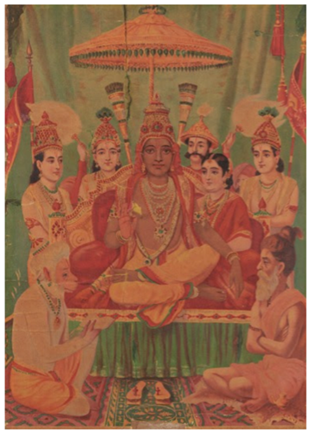
Figure 1 Varma, R. R (1900). Ram Pattabhishekam. Copy right by
https://artsandculture.google.com/asset/ram-pattabhishek-raja-ravi-varma/HQGZFLloGR4PnA?hl=en
Figure 2
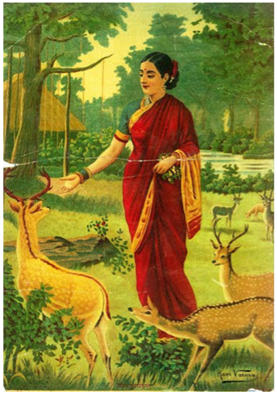
Figure 2 Varma, R. R (1900). Sita and the Golden Deer.
Copyright by
3. Idealized and Chaste
Within the Indian cultural framework, Sita and her imagery encapsulate the notion of a perfect womanhood, regularly depicted as the embodiment of piety, devotion, moral virtue and excellence. The origin of calendar art, which was in the early 1920s, primarily selected and featured mythological characters to perpetuate the contemporary image of Indian women, as ethically good and morally sacrificing like Sita Gamberi (2014). This reflects the concept of 'aesthetic iconicity' stated by Kapur (2000), where a female body is employed to visually represent the cultural and spiritual concepts, thus creating an archetype that resonates with the metaphorical character in the social structure. This section analyses the Figure 1, Figure 2, and Figure 5 by Ravi Varma, which embody the visual narration of Sita as a chaste and idealised figure in Indian mythological art, where she becomes an archetype of purity, devotion and femininity adhering to the norms of socio-patriarchal and religious ethos of India.
The figures, such as Ram Pattabhishekam (1900) and Sita and the Golden Deer (1900), both produced by Ravi Varma, were later used as the calendar art images produced in 1923 and 1927, respectively. Both these figures highlight the principles of balance and symbolic clarity, thus underlining Sita’s divine beauty and moral strength, which resonates with the contemporary ideals of Indian womanhood. Kapur (2000) marks certain insights regarding the narrative and performative aspects of the character of visual culture, rendering these portraits to fit well in the sense of nationalistic and patriarchal imagination, whereby the women were both idealised and situated in the framework of the normative ideals.
Figure 1 and Figure 2 embody this concept, where Varma emphasises Sita’s sanctity through her compositional placement and gestures that align her with divine virtues and the cultural ethos of ‘dharma’. As an example, in Figure 1, Sita is positioned alongside Rama during the coronation ceremony, highlighting her position as a consort embodying familial responsibilities, and carries out spiritual and governing duties. Her modest behaviour towards Rama is portrayed, which is in line with the theory of visual equilibrium Arnheim (1974) and thus adds more value to the analysis, as it explains how the artists adjust visual elements to centralise Sita’s role, reflecting her adherence to patriarchal expectations. In the process of coronating Rama, Varma depicts Sita as a divinity of divine beauty and a wife by the side of Rama. When the standing sages are drawn smaller than Rama, and the prostrating command of Hanuman and the kings, Sita is drawn a little smaller than Rama and placed subordinate to him to indicate her role as Rama’s wife and queen. The placement of Sita is slightly lower than Rama, indicating the hierarchical arrangement with other figures like the Sages and Lord Hanuman kneeling before Rama mirrors traditional power structures, where the woman’s identity is defined through her proximity to male authority, grounding the gender roles in divine typology. Sita is placed and composed as the righteous dharmapatni, who complements the king. This work explicitly shows how Uberoi (2006) unmasks such visually performative practices by how the iconography nurtured from the Hindu epics sustained nationalist projects within colonial India by grounding gender roles in divine typology.
In Figure 2, Sita and the Golden Deer, the vibrant palette and Sita’s interaction with nature convey her moral, innocent and nurturing qualities. The positioning of Sita as a "central perspective foreshadows and initiates a fundamental development in the Western conception of nature and man” Arnheim (1974). Meanwhile, the golden deer is used as a metaphor for the false hopes and illusory desires that she overcame. The tranquil and rustic setting elevates Sita to a goddess like status, blending divinity with cultural femininity. Kapur (2000) continues to suggest that these kinds of aesthetic decisions create a fertile ground in moulding the notions of an ideal of womanhood, which is not dynamic, and Sita remains a constant symbol of devotion and sacrifice. The fact that her silhouette is in an hourglass figure with a sari-covered body rings true to the feminine motif of the arts that Kapur (2000) suggests was inspired based on the colonial artworks of beauty and frailty. It is the golden deer or a representation of temptation that also contributes to the dramatic quality of the tale, anchoring Sita as an absolute embodiment of goodness. Kapur points out that women subjects in the visual tradition of Indian mythology are aestheticised to regularise and codify cultural norms and ideals. The representation of Sita aligns with this critique, where she is both sanctified and romanticised, highlighting her allure while maintaining her chastity and devotion. The golden deer is a stylistic tool that brings out the tendency of Sita to believe her place and accept her role as an archetype of feminine virtue in patriarchal constructs in the machismo of the world. According to Mitter (2007) and Uberoi (2006), Varma works on the border of indigenous as well as colonial gaze, and at the same time, it glorifies Indian womanhood and commodifies it.
Figure 5, Death of Jatayu, employs vulnerable representation of Sita, as a helpless but a chaste woman, caught in the violent abduction of Ravana. Her hands cover her face; she associates herself with submissiveness towards the active aggression of Ravana and emphasises her powerlessness. Her modest attire, and veiled gestures and expressions accentuate her purity and moral uprightness amid odd adversity. This aligns with the concept of 'dynamic tension' as portrayed by Arnheim (1974) in the aspect of composition, where the intimidating figure of Ravana, the weary and exhausted figure of Jatayu, compared to the passive figure of Sita, who is the embodiment of 'dharma'. The definition of the 'performative iconography of chastity' by Kapur (2000) is pertinent here, as passive Sita has sanctified moral upliftment. She noted that all such portrayals evoke sympathy and empathy, thus reinforcing the patriarchal hypocritical concern about women as the ones who need to be ‘protected’ and ‘possessed’ Chakravarty (2018), compartmentalising Sita. The central positioning of Sita as a symbolic character in this chaotic scenario further makes her a touchstone of morality, while her vulnerability restores and reaffirms her chastity and divine essence. In addition, Pinney (2004) effectively critiqued the popular Indian visual culture to some extent, where Varma simplifies the mythological event as a gallery of emotions.
The emotional intensity of these select figures depicts the gendered perception of womanhood in the pre-independence era. As identified by Chakravarty (2018), it reinforces Sita’s purity, devotion, loyalty, and perseverance, which are basic to forming the ideal gendered notion of femininity according to the patriarchal construct. These mythological and cultural narratives not only mirror the norms of dominant gender norms, but actively play a crucial role in shaping the socio-cultural and political attitudes towards constructing the notion of femininity in Indian visual discourse.
Figure 3
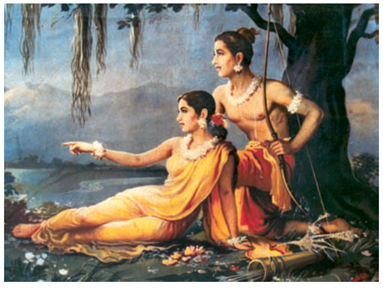
Figure 3 Pandit, S. M. (1953). Ram and Sita. Copyright by
Figure 4
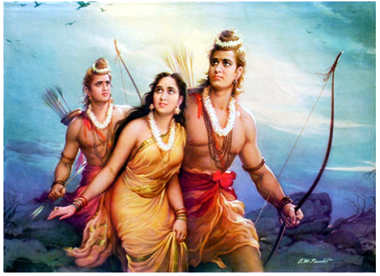
Figure 4
Pandit, S.M (1965).
Ram Sita Laxman in Vanavas (exile) Copyright by
https://www.tumblr.com/hinducosmos/664637636206592000/ram-sita-laxman-in-vanvas-exile-1965-artist
4. Sensualized and Objectified
The three figures: Ram and Sita, by S. M. Pandit in 1953, Ram Sita Laxman in Vanavas by S. M. Pandit in 1965, and Rama Retold from the Ramayana, Amar Chitra Katha, 1979, highlight the representations of Indian female form in a new sensuous appeal, especially in the visual and media realms after the 1960s. This shift corresponds with changing culture and its acceptability to “materialize and commercialize women subjects”, emphasising the look and appeal to a contemporary viewer Uberoi (2006). The works demonstrate how Sita’s representation is sensualised and contained within images of purity, obedient to patriarchal norms and tastes while appealing to new artistic sensibilities.
Being a mid-twentieth-century creation, Figure 3 would perhaps be the first instance of blending sensuality with divinity in the portrayal of Sita. Covered in a richly adorned saree with minimal and appealing garlands, it highlights her curves, soft posture and tranquil expression with a calm face that idealises her as a symbol of beauty and devotion. Arnheim (1974) concept of visual equilibrium employs the symmetrical positioning of Sita and Rama, where Sita’s figure is a visual counterbalance to Rama’s masculinity, highlighting the contemporary gendered ideals of femininity Uberoi (2006). Her adorned presence and appearance appeal to a romanticised version of Indian womanhood, emphasising physical beauty as an addition to virtue. In addition, Pandit’s painting is part of mid-twentieth century nationalism that aimed at both deification and demystification of the country's mythological characters. Mitter (1994) states that such representations refigure nationalist pride but require women to be figured in subordinate visual and ideological terms.
In Figure 3 and Figure 7, Sita is throwing her hand in need of something; she might be pointing towards the golden deer and asking Ram if she wants it. As Kapur (2000) mentions,
The decked-up women throw their limbs about as they gobble fruit or fondle their arch and cocky pets. There is an array of objects; each one preened to captivate the mistress in the form of a fetish. These are scenarios of an erotic business. In the following sets, the sensual life takes over: from grotesque representations of follies to an orgiastic display of energy that pushes familiar iconography far afield into social iconoclasm. (p. 126)
This identification of Kapur aligns with the depiction of Sita in Figure 3 and Figure 7, mainly in an eroticized form. The visual style of Pandit is erotic and is a testament to Sita, yet hers is a beauty that remains enchased in the framework of the conventional, beautiful wife. The subtle details in her attire and jewellery sensualise and objectify her. Feminist art historians such as Dehejia (2002) have pointed out that “such depictions of women transform them into mere objects of aesthetic desire and pleasure” (p. 216). In Figure 3, Sita’s sexuality is emphasised with the help of her relationship towards nature. A flowing sari, curvaceous body, and a calm posture in front of the forest set her as a mere sensual symbol but enjoying a divine story. Another principle illustrated here by Arnheim (1974) is the dynamics in the composition, Sita is perfectly integrated into the environment around her, further emphasising her beauty.
Jain (2007) points out that, starting with independence, mythological characters such as Sita began to be used deliberately to cater to consumers from the newly formed middle class. This is excellently depicted by diminishing Sita’s figures and romanticising her as an ordinary woman to emulate and an extraordinary woman to admire. The ‘social iconicity’ concept proposed by Kapur emphasises that such representations support patriarchal institutions by aligning sexuality with divinity; hence, they continue to make women icons of desire as well as virtues. The ACK of the 1970s depicts Sita in a modernised visual style, emphasising clean lines and vibrant colours while retaining her sensual and idealised image. Sita in Figure 7 has tender facial features, beautiful eyes, and an adorned sari that can be ornamented in the conventional pattern, though painted in the modern style. The symbolic resonance of an image is revealed when Arnheim analyses gestures, postures, and poses. Here, the poised gestures indicate grace and composure but also pointedly enlarge her physical appeal. ACK’s portrayal of women subjects in the 1970s reflects the broader cultural shift in the 1970s, where visual and print media sought to popularise mythological narratives through accessible yet engaging representations appealing to the general public. As Pinney (2004) observes, such representations were a combination of moralised images and images for sales. Indeed, Kapur is critical of this development, arguing that the semiotics of popular art reduce women to objects of desire, deleting the question of agency.
In this image, Sita renews the projection of patriarchal sensibilities, where the embellishment of her beauty defines her virtue. Sreenivas (2010) points out that ACK demeans womanhood by portraying mythological women as passive objects of male mythology. However, their availability as visuals guarantees their enduring effect on the culture that the media presents concerning femininity. The representations of Sita in these figures highlight the post-1960 trend of emphasising beauty and sensuality, capturing chastity in the visual construction of womanhood Uberoi (2006). This duality reflects Kapur's description of ‘performative iconography’, where women are idealised as both objects of spiritual ‘worship’ and, at the same time, objects of beauty aesthetics. Arnheim (1974) principles of visual analysis further reveal how compositional balance, colour harmony, and spatial arrangement underscore Sita’s appeal, placing her as both divine and desirable. However, as Jain (2007) notes, the spread of these images also extends the availability of ‘storytelling about the culture’, and the deposition of myths in new social fields re-instantiates the value of texts in the context of culture.
This section demonstrates that the post 1960 portrayal of Sita gradually shifts to a sexually exaggerated icon, which approximately reflects the evolving cultural aesthetics, yet continues to reinforce patriarchal gender norms regarding the female body. As the ‘beautiful’ female body visually amplifies moral tales, it recreates and reinforces patriarchal ideas of femininity and gendered perception of womanhood, even as art continues to define India’s imagery and iconography.
Figure 5
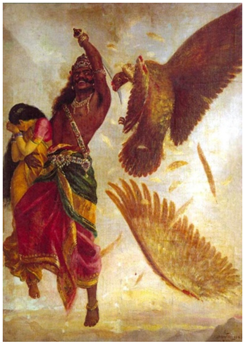
Figure 5 Varma, R. R (1906). Jatayu Slain’’ or ‘‘Death of
Jatayu’’ Copyright by
Figure 6
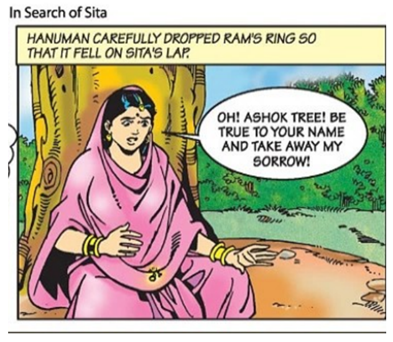
Figure 6 Pai, Amar Chitra Katha, (2010). 1001, In Search of Sita.
P. 125.
Figure 7
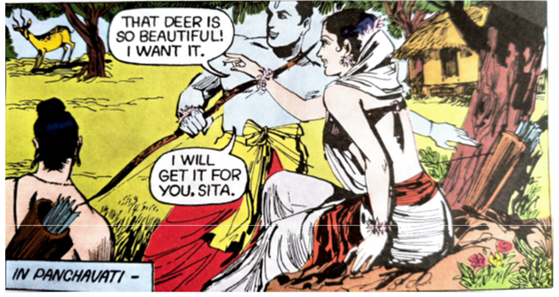
Figure 7 Pai, Amar Citra Katha. (1979), 1001, Rama, Retold from the Ramayana. P. 15.
5. Wise and Intellectual
In Figure 6, In Search of Sita Amar Chitra Katha (2010), Sita is depicted as a woman who is learned, intelligent and defiant in the face of the epic Ramayana. Symbolically, this representation marks a change from the qualitative representation of Sita as a docile queen to an empowered Sia, who is also endowed with the ability to have an independent mind and think and act for herself. Her calm, resolute expression conveys confidence and intellectual clarity, signifying her ability to engage in critical reasoning and assert her perspective. Her clear eye contact, subtle gestures, and placing her as a central figure present Sita as more than a passive figure of devotion, emphasising her active engagement in shaping her destiny. Sita’s posture with her hand raised mimics a gesticulation of speaking, which suggests her position as a valid speaker and also as a thinker. This follows her experiences in the Ramayana, where she rebels against conventions, just as during Agni Pariksha. Despite her beauty, and posture and facial look represent confidence and moral stability, implying that she can reason and even stand for her opinion. Her positioning within the entire image scheme means establishing the audience’s focus on her subjectivity as central to the mise-en-scene. Switching between the two extremes of Arnheim’s principle of visual dynamics, we can analyse her body language within her environment. For instance, as Arnheim (1974) mentions, “in a group of actors, the one farthest left dominates the scene, [t]he audience identifies with him and sees the others, from his position, as opponents” (p. 35), Sita is mostly placed in the left side (from the audience's view), making her as a more assertive personality.
Kapur (2000) concept of performative agency in visual culture argues that Sita’s intelligence and wisdom are portrayed in this picture. She voices her opinion according to which preconceptions are often attached to mythological characters representing particular cultural paradigms, however, a contemporary interpretation may subvert these tropes by granting agency to characters. According to Sreenivas (2010), the essentialist discourse erases agency, diminishing Sita's portrayal as a paragon of virtue and a female martyr. However, recent retelling, like those depicted by Amar Chitra Katha, brings back Sita’s voice and tries to portray her as rational and sinless. Figure 6 demonstrates how Sita’s representation in modern Indian picture galleries has changed from focus to agency. Jain (2007), noticed that many modern representations of mythological women are in a position of transition between the conventional roles of women in Indian society and the shifting new roles. In this regard, Sita appears to be a role model or reference to intellectual enlightenment, which the target audience needs regarding aspiration figures. Accordingly, In Search of Sita attempts to rewrite Sita’s story with greater emphasis on her experiences. Peculiarities of her personality can be described as dynamic, and the comic format helps to convey her intelligence and feelings. This aligns with Christopher Pinney (2004) argument that myths which form the bedrock of any given visual culture make available a repertoire amenable to the reinvention of newer and more suitable values. In Figure 6, there is a clear representation of this change- Sita’s depiction emphasises her empowering aspects. This woman can make decisions, guide people and challenge the power of the rulers. However, she remains a loyal representation of the traditional Indian woman: dressed in a sari, with a calm and passive look. This aligns with feminist reinterpretations of the Ramayana, which highlight Sita’s active role in shaping her journey. In Search of Sita attempts to rewrite Sita’s story with greater emphasis on her experiences. Her resolute commitment to dharma, her ability and capacity to challenge societal norms, and her willingness to speak up for herself disrupt the traditional notion of the feminine ideal and reframe the dominant notion of womanhood Bhat (2021). Peculiarities of her personality can be described as dynamic, and the comic format helps to convey her intelligence and feelings. This reflects Pinney (2004) argument that myths which form the bedrock of any given visual culture make available a repertoire amenable to the reinvention of newer and more suitable values.
Unlike the submissive Sita that preoccupied a dominant paradigm in Ramayana, Figure 6 provides a new image of Sita as a wise and intellectual woman. Instead, by depicting Sita as calm, rational, and internally strong, the artwork redeems her character and her agency, challenging the dominant hegemonic and conservative notions of gendered perception of Indian womanhood. Through the effective usage of symbolic, compositional balance and performative agency, these artworks are directly involved in reshaping the cultural narratives by reclaiming Sita’s agency in forming towards a newer notion which dissolves the gendered notion of femininity and the construct of womanhood.
6. Conclusion
The visual representations of the mythological character Sita through the lens of calendar art and Amar Chitra Katha reveal the shift in the portrayal of gendered perception of Indian womanhood that was defined by the alterations in cultural, social and aesthetic paradigms. As exemplified by Raja Ravi Varma, Calendar Art predominantly portrayed Sita as an archetype of purity, chastity, devotion, and a passive subject that alludes to the traditional notions of ideal womanhood. These depictions focused on her as a queen and a mother as dominant male traditions prescribe women as iconic beauty confined to their domestic spheres, underscoring the gendered perception of femininity at that time. These representations of beauty, grace, and submissiveness were idealised and reinforced through societal expectations of Indian womanhood during the colonial and early post-independence periods. However, later in the mid-twentieth century, Pandit, through Calendar art, drew another sensualised image of Sita. Meanwhile, the modern depiction of Sita in ACK is qualified, and there are progressive changes towards the mythological age. Instead of focusing on her intelligence, ethics, and passive rebellion, ACK makes Sita an intellectual character who can control her story. This change can also be connected to the general women’s emancipation movement of the middle of the twentieth century, which attempted to restore the voice of mythological women. A new visual identity is clearly and confidently introduced in the series, corresponding to a progressive audience but also warm and friendly, it preserves the air of time-honoured values. Thus, it has the element of familiarity for a mature audience. This shift from the ‘eternal’ representation of women as depicted in the art on the calendar to the active, provocative, intellectually progressed feminine representation in ACK marks a shift in the culture. It reflects the emerging trends in social culture in a modernising India, the assertion of women’s individual agency and ability to reason. By placing these two forms of visualisation side by side, the changing attitudes toward Sita as a signifier continue and, in turn, illuminate how mythical figures are continually ‘culturalized’ by shifting constructions of gender and identity. To this extent, both the calendar art and ACK contribute to the evolving Indian visual culture, offering a distinct yet historically rooted gendered perception of Indian womanhood that reflects and restructures the attitudinal shifts of their respective periods.
CONFLICT OF INTERESTS
None.
ACKNOWLEDGMENTS
None.
REFERENCES
Arnheim, R. (1974). Art and Visual Perception: A Psychology of the Creative Eye. University of California Press. https://doi.org/10.1525/9780520351271
Bhat, S. D. (2021). Sita-Centric Revisionism in Sita’s Ramayana: Androcentric Encoding and Conceptualizing the Diasporic Abla Nari. Journal of Graphic Novels and Comics, 13(2), 193–210. https://doi.org/10.1080/21504857.2021.1885459
Butler, J. (1990). Gender Trouble: Feminism and the Subversion of Identity. Routledge.
Butler, J. (2004). Undoing Gender. Routledge. https://doi.org/10.4324/9780203499627
Chakravarti, U. (2018). Gendering Caste: Through a Feminist Lens. Sage Publications. https://doi.org/10.4135/9789353287818
Chandra, N. (2010). The Amar Chitra Katha Shakuntala: Pin-up or Role Model? South Asia Multidisciplinary Academic Journal. https://doi.org/10.4000/samaj.3050
Dehejia, V. (2002). Discourse in Early Buddhist Art: Visual Narratives of India. Munshiram Manoharlal Publishers.
Gamberi, V. (2014). Escaping from Rama: Portraits of Indian Women. Culture and Religion, 15(3), 354–372. https://doi.org/10.1080/14755610.2014.945469
Jackson, E. (2010). Feminism and Contemporary Indian Women’s Writing. Palgrave Macmillan. https://doi.org/10.1057/9780230275096
Jain, K. (2007). Gods in the Bazaar: The Economies of Indian Calendar Art. Duke University Press. https://doi.org/10.2307/j.ctv1131bjr
Jenkins, K. (2016). Amelioration and Inclusion: Gender Identity and the Concept of Woman. Ethics, 126(2), 394–421. https://doi.org/10.1086/683535
Kapur, G. (2000). When was Modernism: Essays on Contemporary Cultural Practice in India. Tulika Press.
Kapur, S. (2007). Interview with Shekhar Kapur. In Devi (No. 1,15).
Karline, M. (2009). India’s Immortal Comic Books: Gods, Kings, and Other Heroes. Indiana University Press.
Mitter, P. (1994). Art and Nationalism in Colonial India, 1850–1922. Cambridge University Press.
Mohanty, C. T. (2003). “Under Western Eyes” Revisited: Feminist Solidarity Through Anticapitalist struggles. Signs, 28(2), 499–535. https://doi.org/10.1086/342914
Pinney, C. (2004). Photos of the Gods: The Printed Image and Political Struggle in India. Reaktion Books.
Ramaswamy, V. (2010). Perspectives on Women and Work in Pre-Colonial South India. International Journal of Asian Studies, 7(1), 51–79. https://doi.org/10.1017/S1479591409990404
Sreenivas, D. (2010). Sculpting the Middle Class: History, Masculinity, and the Amar Chitra Katha (1st ed.). Routledge India. https://doi.org/10.4324/9780203136041
Thacker, M. (2018). New Energy for Indian Comics: A Qualitative Study at Comic Con India. Inks: The Journal of the Comics Studies Society, 2(2), 160–177. https://doi.org/10.1353/ink.2018.0011
Uberoi, P. (2006). Freedom and Destiny: Gender, Family, and Popular Culture in India. Oxford University Press.
|
|
 This work is licensed under a: Creative Commons Attribution 4.0 International License
© ShodhKosh 2026. All Rights Reserved.