ShodhKosh: Journal of Visual and Performing ArtsISSN (Online): 2582-7472
|
|
The Evolution of Gender Fluidity and Performativity in Postmillennial Indian Hindi Cinema
Prerna Srivastava 1
 ,
Kiran Shekhawat 2
,
Kiran Shekhawat 2 , Sangeetha
Noval 3
, Sangeetha
Noval 3
 , Ritu
Raj Choudhary 4
, Ritu
Raj Choudhary 4 , Sangeeta
Jhajharia 5
, Sangeeta
Jhajharia 5
1 Associate
Professor, Faculty of Management and Commerce, Poornima University, Jaipur,
Rajasthan, India
2 Assistant
Professor, Faculty of General Education, Bhartiya Skill Development University,
Jaipur, Rajasthan, India
3 Associate Professor, Faculty of General Education, Bhartiya Skill
Development University, Jaipur, Rajasthan, India
4 Associate Professor, Faculty of Management and Commerce, Poornima
University, Jaipur, Rajasthan, India
5 Assistant Professor, Department of English, College of Agriculture,
Fatehpur-Shekhawati, Sri Karan Narendra Agriculture University, Jobner,
Rajasthan, India
|
|
|
ABSTRACT |
|
|
Over time,
contemporary post-modernist writers and directors have begun to interrogate
authority, stereotypes, and sexist values, challenging the foundations of
social practices that underpin the old binary model of sex or gender. This
study examines the development of gender fluidity and performativity in
postmillennial Indian Hindi Cinema, evaluating how contemporary filmmakers
are interrogating gender binaries and presenting more comprehensive
depictions, dismantling the gender distinctions, emotional perceptions, and
emotional facilitation of thoughts and understanding. The paper examines the
cinematic elements of costume design, character growth, visual elements, and
plot, finding out how they support to the explanation of non-binary
characters and gendered spaces. The paper is based on the theory of gender
performativity as by Judith Butler and the concept of gendered space, but it
critically evaluates the films that challenge the heteronormative conventions
by redefining masculinity, femininity and queer identities. It also examines
the intersection of gender, class, and caste, exploring how cinema converts
power constructions and social hierarchies through developing gender
depictions. By analysing revolutionary films such as Lipstick Under My Burkha
and Kapoor & Sons, this study underscores Bollywood’s rising role in
analysing gender standards and nurturing inclusivity. The study contributes
to the broader discourse on gender inclusivity, cinematic revolution and the
role of media in determining progressive social attitudes in India and beyond. |
|||
|
Received 18 November 2025 Accepted 24 February 2026 Published 27 March 2026 Corresponding Author Prerna
Srivastava, prerna.srivastava1@poornima.edu.in
DOI 10.29121/shodhkosh.v7.i2s.2026.7042 Funding: This research
received no specific grant from any funding agency in the public, commercial,
or not-for-profit sectors. Copyright: © 2026 The
Author(s). This work is licensed under a Creative Commons
Attribution 4.0 International License. With the
license CC-BY, authors retain the copyright, allowing anyone to download,
reuse, re-print, modify, distribute, and/or copy their contribution. The work
must be properly attributed to its author.
|
|||
|
Keywords: Gender Fluidity, Gender Performativity, Indian Hindi
Cinema, Gendered Space, Socio Cultural Transformation, Cinematic Activism |
|||



1. INTRODUCTION
The depiction of gender in Indian Hindi Cinema has dramatically evolved within the postmillennial context. It has long been the usual case that Indian films emphasise binary and normative gender performance that precisely fixes patriarchal frames and ideals of heteronormativity Bhattacharya (2020). However, increasingly, several Indian filmmakers have started pricking these mainstream norms when they explore more fluid and diverse forms of gender and sexuality Bharat (2019). This trend is commensurate with broader social changes and surging public awareness of gender non-conforming people and LGBTQ+ communities, at least in India Dasgupta and Baker (Eds.). (2017).
This study critically addresses the emergent discourses of gender fluidity and performativity in postmillennial Hindi Cinema in India. The article, through an imposition of conceptual frames drawn from gender performativity Butler (1990) and "gendered space" McDowell (1999), engages with the various strands of filmmaking elements, including costume design, character development, and narrative structure, through which the acts and transmutations of gender are performed within contemporary Indian media productions.
It also aims to place such change within the larger and expanded sociocultural context of India and think through how cinematic renderings of gender and sexualities reflect on, and in turn perhaps influence, social attitudes Gopinath (2005). This paper is part of the growing body of literature which is devoted to the issue of gender representation in Indian media by observing the shifting gender image in the postmillennial Indian Hindi Cinema and therefore has the possible impending consequences on the larger social discussions on gender and sexuality. This paper explores how Indian Hindi Cinema has become more gender fluid and performative in the post millennium and how the various cinematic elements have helped to enact gender and transform same in the contemporary Indian narratives in the media.
2. REVIEW OF LITERATURE
The concept of Ardhanarishvara, depicting the union of masculine and feminine energies, has been explored by various Indian authors, offering insights into non-binary identities. Alka Pande, in her book Ardhanarishvara, the Androgyne: Probing the Gender Within, examines the Ardhanarishvara theme in Indian art, suggesting that, "As contemporary society comes to terms with gender roles, sexuality and repression/liberation, the Ardhanarishvara theme in Indian art can guide us in formulating questions and seeking answers." Pande (2004) Ellen Goldberg: In the Lord Who Is Half Woman: Ardhanārīśvara in Indian and Feminist Perspective, provides a critical analysis of the Ardhanarishvara image, saying, "The hermaphrodite form of the Ardhanarishvara, above all else, represents this concept of Oneness or wholeness, which goes far beyond all perceptions of duality and from whose womb all existence emerged" Goldberg (2002). The famous picture of Ardhanarishvara itself is a perfect example of gender fluidity, where lord Shiva is painted as a half male and half female figure. An artistic representation of Ardhanarishvara, which is a composite form being the synthesis of masculine and feminine energies into one being, is shown in Figure 1 (i.iheart.com). This symbol portrays a sense of balance and unity of its dualities, as a deep cultural metaphor of harmony and its unity. The image reaffirms the theme of duality and integration from this study through its sensitive detailing of the expressive form.
Figure 1

Figure 1 The Artistic Depiction of Ardhanarishvara,
Symbolizing the Union of Masculine and Feminine Energies
Current scholarly discourse on Indian Hindi Cinema and gender representation offers a coherent view of a continued insistence on reinforcing traditional gender roles, patriarchalism, and the marginalisation of non-heteronormative identities. Mathur (2018) said mainstream films in India traditionally reflected the consideration of binary gender norms as it projects male characters to be authoritative and female characters to be submissive and yielding. Kapur and Kathuria (2014) argue that the kind of representation cements patriarchal structure, thus rendering very thin viewpoints on women's agency and autonomy. They argue that the traditional representation has deeply structured societal expectations of gender roles in India.
Latest research points out a radical shift in the representation of gender, especially in the postmillennial era. Chatterjee (2019) claims the growth of female-centred narration where female characters are free and defy societal norms, which symbolise further evolution of Indian society as increasingly more gender-balanced. Anjaria (2019) follows through on how globalisation has pushed elements of Western culture into Bollywood, and that this has resulted in increased difficulty in gender and sexuality. The Western and Indian perspectives that get merged help explain the possibilities of different gender expressions, which come under non-binary and LGBTQ+ labels.
The movie Article 15 by Desai (2004) discusses how diaspora and transnationalism affect Bollywood cinema, and he says that the growing taste for culturally hybrid stories has provoked Bollywood into transnational themes like gender fluidity. According to Roy (2020), Bollywood now expresses unnatural masculinity and femininity, which is a step away from binary gender constructs. This change aligns with Judith Butler's ideology on gender performativity, which explains identity through social performance as the reason for identity rather than being based on intrinsic traits Butler (1990).
In women's emancipation, Ahluwalia and Oza (2021) explore the transformation of female protagonists from passive characterisations to assertive and multidimensional characters. In cinematic production, like Lipstick Under My Burkha and Gangubai Kathiawadi, for instance, female independence with resistance to patriarchal norms is often seen Shrivastava (2017). The role of cinema in the bettering of gender equality is underlined by Arora (2019), who argues that the positive portrayal of women and LGBTQ+ individuals can bring about changes in society toward inclusivity.
In Indian Hindi Cinema, director Mahesh Bhatt, in his movie Tamanna, presented a perfect example of shifting narratives from Heteronormativity to Fluidity and Non-Binary Identities through the story of Tikku, a eunuch who was a perfect example of compassion and humanity, who adopted an infant girl who was abandoned by the mother. This eunuch, despite the societal complexities and prejudices, raised the girl well. This story highlights that humanity, kindness and compassion are not restricted by any gender. The portrait of the traditional role of eunuchs as aggressive and abnormal has been questioned in this movie to ponder on the fact of what should be the definition of being normal in society, and tagging them as non-normal or queer. Another movie, Parched, directed by Leena Yadav in 2015, presents the lives of orthodox Rajasthani families whose four women dared to challenge the oppressive patriarchal norms in marriage and sexuality. The movie challenges the intersections of patriarchy and gender, shedding light on the conditions of women in rural India. This is not confined to femininity only, but gender dichotomy has created a crisis for masculinity and non-hegemonic male identities, too. Highlighting these issues, director Neeraj Ghaywan in his movie Masaan (2015) presented the unusual love story of a low-caste boy who was presented as vulnerable. Such a portrayal was against the normative presentation of masculinity. The movie presents how difficult it is even for males to break the hypermasculine portrayals and caste stigma. In another movie, Aligarh (2015), directed by Hansal Mehta, Professor Siras, being gay was suspended from Aligarh Muslim University. The movie not only interrogates societal orientation towards sexuality but also towards the individual right to privacy.
Similarly, interrogating the female agency and stenography of protest, the movie Thappad (2020) by Anubhav Sinha shows the taken-for-granted approach in marriage and gender roles. It is the story of a wife who appeals for a divorce after her husband slaps her publicly at a party. The movie was directed to make people aware not to normalise gender violence. The wife challenges the comments of her relatives, who think that just because the slap was not that physically harmful, it should not be highlighted, calling it a drama, ignoring the emotional and mental damage it had created on that woman. In case the same incident must have been done with role reversal, the husband would have never let go of the same matter so easily. Globalisation and Cultural Hybridity are also other issues highlighted in the way we present Gender. The movie Margarita with a Straw (2014), directed by Shonali Bose, is the story of a young female with an intersectional identity on the path of self-exploration. She, with cerebral palsy, explores her bisexuality, breaking the usual norms.
Altogether, this expanding research corpus makes up a move from those traditional, patriarchal portrayals towards more sophisticated and varied representations of gender by Bollywood. The research puts greater emphasis on Bollywood in contesting mainstream social norms and thus proposes novel frames through which gender identity, agency, and resistance are to be understood. So long as globalisation endures, these studies claim that Indian Hindi Cinema has a tremendous potential role to play in transforming the perceptions people make about gender and sexuality.
3. THEORETICAL FRAMEWORK
This research draws upon the theory of gender performativity. Judith Butler, the influential philosopher and gender theorist, has taken the stand for this kind of idea. In this seminal work, "Gender Trouble: Feminism and the Subversion of Identity," Butler contests this common perception of gender as necessarily provided or constructed and instead concretises gender as a performative construct or something produced or caused to be brought into being through the widest possible range of cultural and social practices Butler (1990). Butler postulates that gender is not an essence thought of as something stable and consistent, but rather an act that is performed and reiterated by bodily stylization, by the performing of certain gestures, and by aligning with social norms and expectations. This particular dimension, grounded in performative grounds, thus transcends the individual action but also can be seen in how people exist in and move through their world, whether real or metaphorical.
3.1. CONCEPT OF GENDERED SPACE IN CINEMA
Another critical constituent within the theory devised for this work is the concept of "gendered space," studied by researchers Doreen Massey (1994) and Gillian Rose (1993). Gendered space refers to the modes in which both public and private spaces become imbued with meanings and expectations of genders, thus shaping and being shaped by gender norms and relations of power. Introduction and narration of these gendered sites in any cultural productions, like cinema, can provide any amount of insight into the performative aspects of gender and how people or groups resist or subscribe to the norms. Using these theoretical frameworks, the current study delves into the representation of gender fluidity and performativity in contemporary Indian Hindi Cinema, pointing out ways through which it reflects and impacts the ongoing dynamic change in gender norms, along with the constantly changing debates surrounding gender and sexuality in the Indian context.
3.2. GENDER FLUIDITY AND CINEMATIC NARRATIVES
This is a prominent feature of postmillennial Indian Hindi Cinema in the portrayal of gender: presenting gender fluidity with the erosion of the distinction between masculinity and femininity. The characters of "Kapoor & Sons " in 2016 and "Laxmii" in 2020 have risen and tried to break all the critical definitions of binary gender, exploring this fluidity of gender expression and then showing masculine as well as feminine features
3.3. DECONSTRUCTING MASCULINITY AND FEMININITY IN BOLLYWOOD
The depiction of Rahul, in "Kapoor & Sons," played by Fawad Khan, presents a confusing and highly androgynous idea of masculinity that deconstructs and subverts the assumption of common Bollywood heroisms generally associated with hyper-masculinity. Already, from the first introduction of Rahul's character, his dressing holds a foremost deviation from the traditional masculine look. At the family home, Rahul is dressed in a fitted, flowered shirt paired with skinny jeans. This is the strongest visual contrast in the coarser clothing sported by his brother Arjun, played by Sidharth Malhotra. Concentration on sartorial choices made by Rahul does lay the groundwork for the development of the film character's non-conforming gender expression. At one juncture, Rahul is attired with detail as he impeccably applies makeup to his eyes and smoothes the contours of his face (Kapoor & Sons, 2016, 0:23:42-0:24:10). The self-grooming, which is linked to female care practices, breaks the preconceived notions in the mind of the audience regarding acceptable male presentation. Seeing both masculine and feminine features in Rahul's looks puts into question the rigid male-female dichotomy, forcing the audience to revise their thinking on gender fluidity.
Figure 2

Figure 2 Poster from the Movie Kapoor and Sons Portraying the
Decked-Up Images of the Two Heroes
As seen in Figure 2, the poster of Kapoor and Sons presents the two male protagonists in a perfectly groomed and stylish manner. This is further challenged by being an image directly associating self-grooming (traditionally linked to female care practices) with male characters (Kapoor and Sons, 2016). Most importantly, this blending of masculine and feminine traits depicted in Rahul especially encourages the audience to reexamine rigid gender binaries in media. However, by portraying gender fluidity visually, the poster beguiles a more complex idea of gender fluidity and challenges the conventional conventions of what forms a male identity. Furthermore, the visual character sketch of Rahul fights against the conventional notions of masculinity. All along, he is portrayed as emotionally sensitive and vulnerable. Such attributes have been labelled "unmanly" in the hegemonic structure of masculinity. A very poignant scene depicts Rahul with tears gushing down his cheeks as he tells the story of his problematic relationship with his father, articulating candidly his sorrow and vulnerabilities (Kapoor & Sons, 2016, 1:07:15-1:09:04). This exhibition of emotional transparency, starkly contrary to the stoic and subdued forms of masculinity, which are recurrently revered within Indian Hindi Cinema, reinforces Rahul's gender-fluid identity. Rahul, for instance, exemplifies how character development unravels through Judith Butler's concept of gender as a performative act, where individuals can contest and redefine prescriptive boundaries of masculine and feminine expression Butler (1990). The choices in his wardrobe and grooming practices, as well as in emotive expression, bring out a fluid gender identification that resists the rigid binaries that have traditionally framed Bollywood's explorations of gender
3.4. QUEERING THE FRAME: PORTRAYALS OF NON-BINARY IDENTITIES
Similarly, the movie "Laxmii" deals with the complicated nature of gender identity and expression through its protagonist Asif, played by Akshay Kumar. At a particular point in the climactic plot shift, Asif undergoes gender transformation to become a woman called Laxmii. By the presentation of the change, the movie negates the understanding of the fixed and immobile nature of gender but expresses the fluid and performative aspect of personal identity, gender. Asif dons the avatar of Laxmii, and this transition to femininity is very performative. While Laxmii is for a moment seen applying makeup, colouring in each strand of her eyebrow, filling her lips with a deep red lipstick as if it were to enhance, beautify, and almost like instructing how a feminine self should be (Laxmii, 2020, 0:53:12-0:53:45). In other words, this self-performance of a feminine self is not something that falls from instinctive projections of gender, but something acquired as a gendered subject.
Figure 3
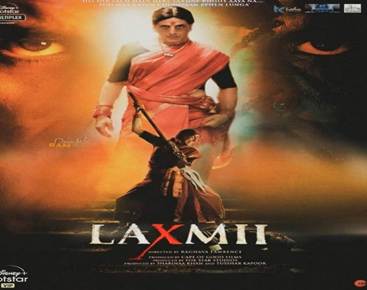
Figure 3 Poster from the Movie Laxmii Presenting Akshya Kumar
in Queer Identity
Figure 3 is a poster from the movie Laxmii, where Akshay Kumar attempts to present himself as queer within the realm of a film through his character. The poster, it illustrates the many roles that the character of Lakshmi plays, particularly the bold and intense face, and the expression of a significant look in her eyes (Laxmii. 2020). This would serve as a very strong way of depicting the willingness of the character to stand up against, challenge, social evils, themes of strength, resilience, and defiance within a marginalised identity framework. It further explores the performance aspect of Laxmii's gender identity through her interaction with others in the film. In a confrontational moment, Laxmii bellows out, "I am a woman, and I have the right to live with dignity" (Laxmii, 2020, 1:05:23-1:05:33). This declaration sings in resonance to the Butlerian concept, which states that gender is performed-where the repeated practice and citation of social norms and expectations give room to naturalise gender identities Butler (1990). Cinematically, "Laxmii" is the epitome of a more dominant tendency inside postmillennial Indian film productions: filmmakers who challenge rigid binary understandings of gender and search for more fluid and diverse expressions of gender identity. Films like "Ek Ladki Ko Dekha Toh Aisa Laga" (2019) and "Badhaai Do" 2022 took part in the same trend, transforming the cinematic landscape, including space for non-normative gender performances and identities.
In "Ek Ladki Ko Dekha Toh Aisa Laga," the protagonist character, Sweety (played by Sonam Kapoor), negotiates same-sex-ness, dodging heteronormative presuppositions that have always controlled Bollywood's construction of love and intimacy. By working through gender identity and sexual orientation in the movie in the productive complex of queering, it opens up new territories for the representation of LGBTQ+ subjects within Indian Hindi Cinema (Dudrah, 2002; Gopinath, 2005). On the contrary, "Badhaai Do" revolves around the issue of Shardul (Rajkummar Rao), an out gay policeman who gets into a wedding of convenience with Suman (Bhumi Pednekar), an out lesbian physical education teacher. The story not only recognizes the existence of non-heteronormative sexual orientations but also underlines the performative nature of heteronormative institutions, most importantly, marriage, which, in the past, had been tied up with societal expectations Vanita (2005a), Puri (2016). Such cinematic works, "Kapoor & Sons " and "Laxmii," for example, are part of this system of transformation of the Indian Hindi Cinema system and pertain to recognition and embracing fluidity in the means of identification of gender fluidity as a legitimate and fluid means. Such films carry with them the potential for deconstruction and social change toward greater acceptance and understanding of multiple genders as they break down historical dichotomous thinking and scrutinise abject aspects of a gendered identity.
3.5. ROLE OF COSTUME, MAKEUP, AND VISUAL AESTHETICS IN GENDER PERFORMATIVITY
According to Judith Butler, gender is performative, not only in personal actions but also in the manner through which people interact with and travel across various spaces, material or symbolic Butler (1990). The "gendered space," as discussed by scholars Doreen Massey (1994) and Gillian Rose (1993), would add immensely to the assessment of gender representation in postmillennial Indian Hindi Cinema. Kapoor & Sons " is just one of those examples where the domestic home, while playing its traditional role, is being referred to as a space of conflict and debate about gendered expectations. Under this roof, Rahul's actually embodied alternative to more traditional masculinity challenged the views of what makes one a man and how one should dress. His selection of attire, demonstration of emotion, and passive resistance to hegemonic masculinity challenge the normative gender roles that are commonly linked to the home, thus creating new modes of gender performance.
In "Laxmii" too, negotiation of the self by the protagonist unfolds from public as well as private domains as she transforms from a male to a female. The way Laxmii interacts with her home environment and professional spaces, and more generally with society at large, explains how gender is constantly negotiated and expressed within the particular contexts of gender appropriate settings.
For instance, when Laxmii first presented her womanly self to her husband Asif, their shared living space became the stage of tensions and negotiations of already existing gender roles and expectations (Laxmii, 2020, 0:55:18-0:57:12). Asif's initial refusal and bewilderedness are the deeply set social norms that have been used traditionally to legitimise a binary notion of gender. However, as the plot unfolds, the relationship dynamics of this couple evolve and portray a possibility for gender fluidity within the confines of the conventionally gendered domestic environment. It is within this scope that the cinematic productions in question exhibit a significant dimension of gender performativity change within postmillennial Indian Hindi Cinema, where the story of gendered landscapes presents an important aspect, plus strategies with which characters negotiate and subvert dominant gendered impulses inherent within such landscapes. In threatening to erase the old regimes between gender and both physical and metaphorical spaces, the stories present new pathways for investigation and resolution of divergent gendered identities and expressions.
The cinematic works discussed here, in combination with many others that have come out of the postmillennial period, reflect an important shift in the presentation of gender within Indian Hindi Cinema. By dancing beyond rigid dichotomies characteristic of masculinity and femininity, these narratives recognize and affirm the fluidity of expression related to gender as well as the performativity that characterises gendered identity. Thus, the complex characterisation of Rahul and Laxmii challenges hegemonic and pervasive stereotypes and expectations associated with gender and thus enables the emergence of a more inclusive and diverse cinematic space as reflective of the changing attitudes toward gender and sexuality within India.
4. INTERSECTION OF GENDER, CLASS AND CASTE IN CINEMA STUDIES
Relationships of class and caste form a significant part of the representation of gender within Indian Hindi Cinema. Gender identity within the social context of India is thus not isolated but something that constantly intersects with the socioeconomic status and caste assigned to the person, making intersectionality the major perspective applicable for the analysis of cinematic representations. Postmillennial Indian Hindi Cinema has started to acknowledge these interfaces, as characters walk through expectations of gender but are also controlled by class and caste. An example is Lipstick Under My Burkha (2016), which revolves around four women from different socioeconomic backgrounds, each fighting against societal restrictions set up by their gender, economic condition, and, in some cases, caste Kapur (2000) Roy (2020). Lipstick Under My Burkha, shedding light on caste and class hierarchies, presents the story of four women from different socio-economic backgrounds in a conservative society. Ratna Pathak Shah as Usha Buaji belongs to an upper caste who is economically secure but still not free to live her life on her own conditions because of her age, status and gender. The second character, Leela, played by Aahana Kumra, being a lower-middle-class beautician, has to deal with a business clash with societal expectations. Rehana (Plabita Borthakur), a young Muslim woman, has to struggle with religious orthodoxy, gender restrictions, and economic barriers. Even the petty issues like what to wear, what to listen to, were a matter of criticism for her. The same issue was faced by Shireen (Konkona Sen Sharma), who belonged to a lower economic class, where her husband controls her reproductive rights and dismisses her financial independence.
Figure 4
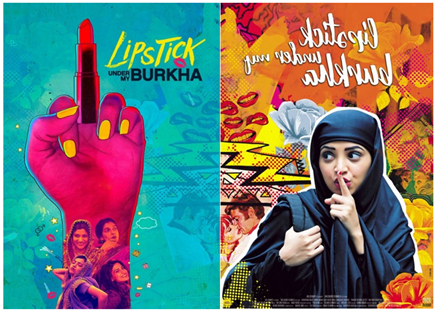
Figure 4 The controversial Poster from the Movie Lipstick
under my Burka
In Figure 4, the controversial poster of the movie was being criticized of having a bold sign in its sketch. Together, the raised middle finger of the poster symbolizes an act directly counteracting patriarchal norms. Because of its provocative visuals, this subverts traditional expectations and also serves as a token of the entire film’s central idea of female resistance and empowerment, compelling spectators to face uncomfortable social realities (Lipstick Under My Burkha, 2016).
Article 15 (2019) exposes the brutal realities of Dalit women who are vulnerable before the upper-caste officers within the feudal structure. They had to face not only economic and social marginalization but also sexual violence. It also presents the contrast between the women of the upper and lower classes. Aditi (Isha Talwar), as a Brahmin girl, enjoys the privileges of caste and class. Another woman, Gaura (Sayani Gupta), who is a Dalit, emerges as a powerful voice of resistance against caste and gender-based oppression. Through its unflinching depiction of caste and gender inequality, the film impels audiences to challenge universal inequalities. Explaining about the power discourse Dr. Ritu Raj Choudhary states that “power discourse provides scope of challenging and shaping norms to reidentify normative paradigms by looking at the hegemony, with critical thinking and creating social discipline and conformity. This discourse was easily manipulated according to the convenience of the patriarchy” (166). Figure 5 is the poster from the movie Article 15 with the tagline “Fark Bahut Kar Liya, Ab Fark Laayenge” (“We have discriminated enough, now we will bring change”) is presented in Figure 5 (Article 15, 2019). The serious visual tone of the poster, with this powerful statement, points out the film’s commitment to dealing with deep-rooted social injustice. The imagery relates to the call for collective action in current society and urges the viewers to question the problems of inequality and discrimination in society.
Figure 5

Figure 5 Poster from the movie
Article 15
The theory of intersectionality adds depth to the characterization of people who either resist or comply with gender standards according to their limitations in terms of socio-economic and societal progress. Women of marginalised castes or economically weaker sections of society often suffer from both patriarchy and societal constraints. Films like Article 15 (2019) explore those aspects where all these strands weave into crafting personal experiences for characters. In these stories, female and queer lower-caste characters face different forms of systemic oppression, usually more vulnerably, with fewer resources, and greater powerlessness than the characters in the upper castes. Additionally, the notion of intersectionality lies at the heart of understanding the portrayal of resistance among these protagonists. For instance, women belonging to oppressed backgrounds may face the mandates of society not only because of personal choice but also as a survival strategy where they claim their rights inside an oppressive system. From this angle, movies like Thappad (2020) exemplify how women navigate their roles across the confluence of class, caste, and gender. They reject oppressive norms to preserve their dignity, thus making them epitomise gender-oriented resistance in such a culturally complex and multifaceted context Desai (2004), Ray (2000).
Therefore, in the framework of intersectionality, any cinematic analysis is better understood to understand gender representation, indicating that gender performativity varies with different forms of socioeconomic and caste divisions. This method makes further exploration of postmillennial Indian Hindi Cinema better because it throws light on the spectrum of experience and challenges faced by gender-fluid and non-normative individuals within a hierarchical social framework.
5. CRISIS OF MASCULINITY IN POSTMILLENNIAL CINEMA
Emotional Vulnerability and the New Masculine Archetype in Indian Hindi Cinema challenges the Hegemonic Masculinity, which has been in trend for so many eras in India. This mainstreaming of contemporary masculinity-that is to say, male emotionality and vulnerability-is significantly becoming more conventionally represented in the postmillennial era in contemporary Indian Hindi Cinema. All this is symptomatic of the "masculinity in crisis" phenomenon, whereby the old archetype of masculinity is a rock of steadiness and hypermasculinity, and that, in this emerging landscape, is increasingly being abandoned for more emotional characters.
This modern masculinity was best depicted in films such as Kapoor & Sons (2016), which use brutally honest characters to discuss personal insecurities, relationships, and societal expectations Dasgupta and Baker (Eds.). (2017). In Kapoor & Sons, Fawad Khan brings Rahul, a form of masculinity not represented by the typical Bollywood heroes. Here, Rahul has open feelings, warmth, and even vulnerability in contrast with traditional male strength and invulnerability presented in films. Rahul's androgynous presentation and good sartorial choices, accompanied by sensitive emotional responses, capture an emerging masculinity where strength can sit easily alongside sensitivity within one character. This representation is in tandem with what scholars like Judith Butler argue: gender is a performative construct; thus, people have the means to subvert or deconstruct hegemonic constructs of masculinity Butler (1990), Dudrah (2002).
Shubh Mangal Zyada Saavdhan (2020), through the same-sex relationship, relishes depth into masculinity, which defies the heteronormative conventions and redefines male vulnerability and affection as approved behaviours. Validating the presentations of intimacy and affection among the men, the film negates strict norms associated with masculinity, indicating that the contemporary Indian Hindi Cinema symbolises a break in the traditional gender roles and presents novel ways of understanding masculinity. This constructed masculinity provokes viewers to rethink the mythologized masculine-feminine duality, particularly in a cultural circle that has always idealised the stoic male. The new millennium Indian Hindi Cinema questions the solitary view on gender and offers strength and emotion within the characters portrayed, resulting in the empowerment of men as they are free to express their emotions without fear of social reprisal. These films enable in-depth discussion about male identity changes in India since social norms pertaining to masculinity are constantly evolving and keeping themselves abreast of the consistent story line.
6. GENDER FLUIDITY AND VISUAL AESTHETICS
It's one of the manifestations of gender fluidity in postmillennial Indian Hindi Cinema that can often occur through creative visuality, like costumes, makeup artists, and a setting; these elements act as tools for gender performativity to let characters enact fluid identities of genders which deconstruct dominating binary oppositions. Some examples of how costumes and makeup help portray and redefine gender come from films like Kapoor & Sons (2016) and Laxmii (2020), bolstering Judith Butler's school of thought suggesting that gender is the stylized repetition of acts, which are performed through bodies and aesthetics Butler (1990).
In Kapoor & Sons, while Rahul's androgynous style and careful attention to self-presentation compel him to defy conventional masculine aesthetics, his sartorial choices like a floral shirt, fitted jeans, and light makeup-starkly contrast with the rugged presentation typically associated with male protagonists in Indian Hindi Cinema. Similarly, the protagonist in Laxmii transforms from the screen male to the female identity, in which costume and makeup played a central role in this transformation. He did on purpose use makeup and female clothing to show his transition of identity as Asif becomes Laxmii, thereby teasing the concept of gender- fluidity that can be derived through external appearance Nair (2005).
Relevant to this aspect is the "gendered space," whereby in certain settings, they either perpetuate traditional gender ideals or disrupt them. Rahul, through the movie Kapoor & Sons, experiences such a space that is generally associated with feminine idealism-the domestic space. Here, his actions refute traditional masculine ideas. The portrayal of domestic spheres as spaces of contention and negotiation with respect to gender and public arenas enforcing traditional gender expressions significantly enhances the film on gender fluidity Massey (1994). According to Choudhary, “The concept of gender dictum elucidates the notion of socially constructed gender and its re-production at personal and institutional levels and the way it creates typical hierarchies of power and discrimination. There cannot be a fixed criterion to evaluate gender. Physiological and biological, both factors should be taken into consideration while designating an individual’s gender. Peculiar gender dimensions should be treated as acceptable in terms of an individual’s self-identity and its relationship with society” (166). Using costume, makeup, and spatial dynamics, these films successfully translate fluidity intrinsic to gender well enough to provoke the audience to question established binaries. Rather than giving in to such expectations, postmillennial Indian Hindi Cinema turns standards on presentation around to flag an expansive range of identities and expressions that transcend the limits set for them.
7. FEMALE AGENCY AND CINEMATIC PROTEST
Postmillennial Indian Hindi Cinema has been drastically changing in the aspect of female character portrayal and their growing expressions against patriarchal standards. Some of the notable films that came on the silver screen are "Lipstick Under My Burkha" (2016), "Gangubai Kathiawadi" (2022), and "Maja Ma" (2022). Some of these have come out as significant media for powerful, diversified female protagonists challenging normative gender roles and social expectations.
7.1. THE RISE OF FEMALE PROTAGONISTS CHALLENGING PATRIARCHY
In the film "Lipstick Under My Burkha," by Alankrita Shrivastava, the story runs with the interrelated narratives of four women from divergent socio-economic backgrounds: Sunita, Leila, Rehana, and Shireen. The film is centred on how those characters navigate their paths through the circumscription of patriarchy while assuming control over individual rights and aspirations against patriarchal oppression Kapur (2000), Pande (2014).
A very expressive scene is the moment where a young girl Leila is enacted by Aahana Kumra, who harbours dreams of swimming practising in secret inside a community swimming pool (Lipstick Under My Burkha, 2016, 0:38:45-0:41:15). There is a depth of defiance to this scene because Leila rips off her burkha and jumps into the water, so emancipated and liberated is the act of swimming pool symbolism. This act of reclaiming her own body and desires, in direct opposition to the societal norms that constrain her, exemplifies the film's broader exploration of female resistance and self-actualisation. The second lead character, Sunita, portrayed by Konkona Sen Sharma, also undergoes the struggles of her marriage and sexual life while setting it against the expectations placed upon her as a good wife and mother. It is a power-packed scene in which Sunita tells her husband that she is entitled to physical intimacy but also to emotional intimacy (Lipstick Under My Burkha, 2016, 1:04:30-1:05:45).
This particular scene depicts the extent to which this movie opposes limiting actresses to empty stereotypes from tradition: instead, the girls in this movie are empowered to speak about their dreams and exercise self-autonomy. The director, Alankrita Shrivastava, publicly declared her will to challenge the pervasive patriarchal frames that are seen in Indian Hindi Cinema. In an interview, she said, "I wanted to tell stories of women who are often invisible, who are not the protagonists of their own stories. I wanted to give them a voice and a space to explore their desires and dreams" Shrivastava (2017).
The female characters are proper persons in the movie, with their own desires and control over their sexuality, which contrasts with the stereotypical passive and submissive females characterising earlier Indian films. Director Ratna Kapur refers to "Lipstick Under My Burkha" as "subverting the dominant discourse of the subjugated woman and opens new channels of articulation of female desire and resistance" Kapur (2000).
7.2. STENOGRAPHY OF PROTEST IN FILMS
In a similar vein, "Gangubai Kathiawadi," directed by Sanjay Leela Bhansali, features a female protagonist who challenges social mores and strongly claims her right to independence. The eponymous protagonist, Gangubai (played by Alia Bhatt), is an adult sex worker who gains power and influence in the Kamathipura red-light district in Mumbai. In a very telling scene, Gangubai confronts a gang of patriarchal male politicians who aim to terrorise and exploit her (Gangubai Kathiawadi, 2022, 1:28:15-1:30:45). With unwavering determination and strength, she asserts her dominance, proclaiming, "I am not just a sex worker. I am Gangubai, the queen of Kamathipura." This powerful example represents the film's tribute to female empowerment and resistance against the patriarchy that has wronged women, particularly those from less privileged backgrounds.
Portraying the character of Gangubai, Alia Bhatt has put in enough richness and complexity to defeat the course simplifications characteristic of the portrayal of sex workers in most genres of Indian Hindi Cinema; therefore, as film critic Anupama Chopra observes: "Alia Bhatt imbues Gangubai with a quiet dignity and an uncompromising sense of self that commands respect" Chopra (2022). Movies like "Lipstick Under My Burkha" and "Gangubai Kathiawadi" mark important milestones signalling a critical shift for the Indian film industry itself: new wave filmmakers will all continue building narratives challenging established gender roles and empowering women as the agents of defiance against patriarchal authority. This can be viewed more colourfully in the film "Maja Ma" directed by Anand Tiwari. The movie revolves essentially around Pallavi, a middle-aged home-maker who goes through an incredible journey of self-discovery and coming up from her status. At one instance, Pallavi shares to her husband, Manohar (Gajraj Rao), how he is dealing with her in a condescending and dominating manner (Maja Ma, 2022, 1:14:00-1:16:30). With resolute determination, she declares her own right to independence and self-goals; she refuses the gender-specific values that for centuries have defined her role in the private sphere.
Earlier this year, the director confirmed the immediacy of such changes in a more recent interview. She said: "Through powerful, multidimensional female characters who will not be reduced to their gendered pedestals, we are reflecting on the changing realities of women's lives in India and participating in shaping the very discourse around gender and empowerment." Shrivastava (2017).
Increased numbers of powerful female protagonists in the Indian silver screen within the post-millennium age can be considered a reflection of massive changes occurring in the country. As summarised by Gayatri Reddy, the presentation of women in mainstream media has been a tool for understanding the "nationalisation of the global Indian woman" as well as the new stories regarding the concepts of gender and identity in India Reddy (2006). As Indian Hindi Cinema continues to expand, the importance and complexity of the female subjects will undoubtedly play an important role in furthering issues of better gender equality as well as social change
8. QUEER REPRESENTATION IN INDIAN HINDI CINEMA
Growing acknowledgements and representations of non-normative sexualities in Indian Hindi Cinema have been seen in the postmillennial period. Films like "Fire" (1996), "Margarita with a Straw" (2014), and "Shubh Mangal Zyada Saavdhan" (2020) are some of the stories that have been told on screens to question the heteronormative assumptions perpetuated by Indian media over the years.
"Fire," a movie directed by Deepa Mehta, is often considered one of the first Indian films that seemed to break the stereotypical mould by depicting a queer same-sex relationship openly, thus sparking public debate and discussion over the possible presentation of queer identity. The cinematic portrayal by both Shabana Azmi, as Radha, and Nandita Das, as Sita, of how closely these two women were emotionally and physically attached, was challenged by the existing heteronormative norms that characterised the Indian film industry for decades Patel (2002), Vanita (2005a).
A very dramatic moment brings the amorous embracing of Radha and Sita on their roof, where Sita lovingly caresses the face of Radha and leans forward to kiss her (Fire, 1996, 1:08:45-1:09:15). The camera zooms close to these tender moments so that the viewers will no longer be able to let these two women's emotional and physical intimacy slide. Depicting same-sex love and passion when the LGBTQ+ identity was still in limbo, poorly represented in Indian society, this was an act of bold assertion.
The entire narrative of simplistic stereotypes and clichés that have cropped up historically in depicting portrayals in Indian media through cinematic inquiry into the psychic landscapes of the protagonists and complexities in interpersonal dynamics is critically interrogated. Days of mere surface-level representations are lost forever: positioning Radha and Sita at the centre, their stories humanised to grant them agency and independence.
As scholar Geeta Patel further elaborates, "Fire" is a film that "challenged dominant constructs of heteronormativity, opening up new ways of thinking about the relationship between gender, sexuality, and the nation" Patel (2002). The sensationalised depiction of same-sex relations and the film's reluctance to comply with the threshold conditions of heteronormativity created the explosive public discussions and debates surrounding the film, making its impact on India's cultural landscape much more critical.
Whereas "Fire" had many criticisms and issues with censorship when dealing with the cinema of the time, its impact helped to allow more Indian films into more subtle and diverse storytelling with LGBTQ+ themes. The recent productions "Margarita with a Straw" and "Shubh Mangal Zyada Saavdhan" are, in fact, pushing the boundaries of queer representation far beyond the limitations of limited stereotypes that hint at an individual being merely a caricature or even just a subplot actor Dudrah (2002), Gopinath (2005). Directed by Shonali Bose, "Margarita with a Straw" is a portrayal of the journey of a young girl, Laila (Kalki Koechlin), who has cerebral palsy. The film caught up with the exploration of her sexuality and an SSO. The film's storytelling about Laila's search for sexual discovery, therefore, is a great departure from the limited representations of LGBTQI characters that were available in earlier Indian films.
Perhaps most poignantly, Laila struggles with the complexity of her relationship with Khanum (Sayani Gupta), another student activist. When embracing each other passionately, the camera captures their closeness to highlight the fragility of the relation between them (Margarita with a Straw, 2014, 1:26:15-1:26:45). The nuanced emotional performances by the characters humanise the depiction of their queer relationship, moving forward from sensationalised or exoticised portrayals that had dominated Indian Hindi Cinema all this time. In a similar way, "Shubh Mangal Zyada Saavdhan," directed by Hitesh Kewalya, explores the lives of Kartik (Jitendra Kumar) and Aman (Ayushmann Khurrana), same-sex couples who face resistance from their own families and society with respect to their relationship. Thus, while the film's narrative speaks to the fact that gays do exist in this country, it also challenges the heteronormative assumptions that have been embedded in society as well as the cultural makeup of the nation.
One such significant scene features Kartik and Aman conversing deeply, during which Aman expresses fear of confessing his sexual orientation to his family (Shubh Mangal Zyada Saavdhan, 2020, 0:37:45-0:39:10). Compared with that, we are pretty normal, Kartik consoles Aman in one instance of unconditional support. The dialogues depict how the film makes an attempt to vindicate the lives of LGBTQ people in a humane manner and how they deserve love and should be given love in the purest of forms, with no shame or stigma attached.
8.1. PROBLEMATICS AND TRIUMPHS IN QUEER PORTRAYALS
Increasingly visible, complex portrayals of non-normative sexual identities in Indian Hindi Cinema since the start of this century offer informative insights not only into changing social attitudes toward LGBTQ+ communities but also potentially inspiring increased tolerance and understanding in the wider social conversation Nair (2005), Pandey (2010). Academic Gayatri Gopinath suggests that queer narratives in Indian Hindi Cinema have the potential to serve as a strong site of contestation against hegemonic, assumed heteronormative thought as well as on a larger platform for discussions surrounding issues of gender and sexuality Gopinath (2005). By focusing on the experiences and perspectives of LGBTQ+ individuals, such films participate actively in subverting the heterosexual paradigm that has traditionally occupied the cultural field of India. Queer stories in Indian Hindi Cinema may be very useful in shaking up the lives of the LGBTQ+ subjects of India. Representing non-normative sexualities within mainstream media will "queer the air," especially when social silences and taboos have framed identities as LGBTQ+ historically, according to Sheila Nair (2005).
The cinematic works available for analysis within this discussion, along with the burgeoning lines of stories reflective of the complexities of queer lives in India, represent a move forward in dismantling the heteronormative assumptions that have defined the Indian film industry for so long. These films open up the avenues to expand on LGBTQ+ stories, humanising and therefore validating their claims to self-determination and love, contributing to increased sensitivity, understanding, and inclusivity within the all-social discourse. But then, representation of asexual sexual orientation in Indian Hindi Cinema is followed by huge challenges and limitations. Despite an increase in the recognition of queer stories from post millennium, queer identities were still represented with complexities, subtleties, and unrelenting acts for visibility and acceptance within society.
Secondly, there is a huge issue in that most of these queer films within India are made by cis heterosexual filmmakers. Questionable credibility of such representations for the greater part, and indeed, the dangers of reinforcement of harmful stereotypes and exclusivist attitudes for the erasure of entire sections of society; Bose and Bhattacharya (2007); Vanita (2005a). In fact, queer identities within Indian Hindi Cinema have often been framed in the context of censorship and the imperative to speak to a largely heterosexually inclined audience. As a result, what scholar Rajinder Dudrah might term "the secret politics of gender and sexuality," queer stories often find their representation in veiled forms, metaphorical or implicit; this limits their visibility to the audience, thereby curtailing their accessibility Dudrah (2002).
At the same time, the growing corpus of films that overtly express non-conforming sexualities and gender identity in the post-millennial landscape points towards a rather significant shift in the landscape of Indian Hindi Cinema. Ideal scenario - they do increase overall visibility and acceptance of LGBTQ+ groups; however, they may just inspire and empower those communities by giving them a voice and a sense of affirmation.
This increasing diversity and nuance in the visual representations of non-normative sexualities in postmillennial Indian Hindi Cinema suggest a broader cultural shift toward greater understanding and acceptance of LGBTQ+ identities. And yet, this remains an ongoing work in progress, where the landscape through which LGBTQ+ Indians in India are included and have equal rights remains complicated and hard.
The large visibility and complex articulations of non-normative sexualities in Indian Hindi Cinema after the turn of the millennium mark a huge milestone in the larger struggle for LGBTQ rights and social mobilisation within the country. At the very least, such films have the potential to create empathy, understanding, and social change while challenging dominant heterosexual ideologies and giving voice to queer sensibilities in the narrative.
9. GLOBALIZATION AND THE SHAPING OF GENDER NARRATIVES
Globalisation has actually remoulded the gender narratives of Bollywood. Increased exposure through Western media and ideology is creating more inclusive and complex portrayals of gender and sexuality. This indeed overlaps with India's economic liberalisation in the 1990s. International influences began to open up the nation's media landscape then. According to Anjaria (2019), this period saw the transnational themes in Indian films evolve and merge the Indian cultural principles with the Western liberal ideologies and thus embrace increasingly more progressive theories of gender and queer identities.
Confrontation with Western queer cinema has also been compelling Indian filmmakers to open up their minds toward stories that break heteronormativity and other binary gender prescriptions. An example is assimilation into this idea, Ek Ladki Ko Dekha Toh Aisa Laga (2019), exploring the journey of the lesbian protagonist within the confines of the traditional Indian family. Of late, with the incorporation of Western narrative structures, Ghosh (2007) notes that although non-binary and queer identity themes seem to contest very deep-set societal norms, Bollywood has begun to portray these identities with greater sensitivity and more strongly.
According to Desai (2004), this heightened cultural influence fuses through the Indian diaspora and growing Bollywood appeal transnationally, as diasporic viewers seek narratives that reflect both their Indian heritage and experiences in Western contexts. The double cultural identity is seen in Kapoor & Sons (2016) with its depiction of Rahul's open homosexuality, represented with the subtlety typical to Western cinema as an indicator of change in Bollywood handling masculinity and queerness. Indeed, according to Roy in 2020, these representations open up the cinematic lexicon to include different expressions of gender: "Long tradition of Bollywood's traditional conservatism on gender roles.".
These changes indicate more profound cultural shifts in India where younger generations, exposed to transnational media, increasingly embrace fluidity in gender and other non-traditional relationships. According to Kishore (2014), globalisation has not only expanded the scope of representation of gender in Bollywood films but has also normalised narratives that help to demystify negative stigmas associated with LGBTQ+ identities. Along with these international inputs, Bollywood is changing the social norms in India and extending a wider range of complex representations about gender and sexuality Anjaria (2019), Desai (2004), Roy (2020).
10. AUDIENCE RECEPTION AND CULTURAL IMPACT
The entry of gender-fluid characters into Bollywood was received in a very mixed manner. While, on the one hand, films like Shubh Mangal Zyada Saavdhan (2020), normalising LGBTQ+ identities-is celebrated by progressive viewers and critics; on the other hand, very conservative audiences resist them. For Jyotika Virdi (2003), "since Bollywood is the significant cultural institution of India, its social attitudes can really be influenced; and in showing gender fluidity, overthrew itself the very traditional norms that have existed for centuries". In Ek Ladki Ko Dekha Toh Aisa Laga (2019), Saibal Chatterjee of NDTV describes the film as "a whiff of fresh air," highlighting its "restrained performances" and the "quality of the writing" those challenges "ingrained biases." Regarding Shubh Mangal Zyada Saavdhan (2020), Ayushmann Khurrana, in an interview with The New Indian Express, stated that the film was designed to "penetrate the masses and reach out to the homophobes."
This change in attitudes of the country toward gender and sexuality can be reflected in the response of audiences to films like Kapoor & Sons (2016) and Ek Ladki Ko Dekha Toh Aisa Laga (2019). According to Basu (2003), new generations in cities tend to approach such representations positively as a reflection of their own progressive orientations. Conversely, Arora (2019) analyses how rural and geriatric populations often cite the cultural values as valid reasons to negate gender-fluid myths they believe are Western intrusions aimed at undermining the traditional values of Indians.
These representations influence society beyond entertainment alone. Challenging existing gender roles, Bollywood makes disparate representations the norm by offering movies that respond to the identities of audiences who are unlikely to be validated by other ministries in Indian society. According to Bose and Bhattacharya (2007), the more these representations multiply, the greater is the chance that they will foster empathy and tolerance, the hallmarks of social transformation. Movies like Laxmii (2020), despite some criticism for stereotypical portrayals, opened the discussion of gender fluidity in public space and de-stigmatised LGBTQ+ identities.
The diversity in the reaction is serving as evidence for the transforming role of Bollywood in aiding societal change. While there are critics arguing that Bollywood should make the representation of more fluidity around gender richer and truer, the movies have generated enough conversations about gender inclusivity (Virdi, 2003). The representation of non-binary personas marked by depth and ambiguity is changing the social mindset and offering acceptance towards LGBTQ+ individuals, as well as providing a supportive space for diversity in gender expressions Basu (2003), Arora (2019); Bose and Bhattacharya (2007).
11. CONCLUSION
The significant outcome of gender fluidity and performativity in postmillennial Indian Hindi Cinema portrays a broader cultural transformation by dispelling traditionalistic gender constructs and embracing much more versatility of identities. Through costume and character construction and using narrative devices, Indian directors portray gender as malleable and performative, offering audiences complex representations of LGBTQ+ and non-conforming identities. The above representation reflects the change in sociocultural ethos of India and contributes extensively to shaping social perceptions related to gender and sexuality, hence situating Indian Hindi Cinema as a social actor. However, for the study, it has confined itself to only some mainstream Bollywood productions, which do not do justice to the heterogeneity of regional cinema's approach toward the depiction of gender. Extensive research can be performed on other languages and regional movies, expanding its scope. Furthermore, the study relies largely on Western theoretical constructs that may fail to understand India's contexts. But one cannot deny the extraordinary attraction of Indians towards westernisation. In fact, most of the Western traditions are blindly followed both in real and reel lives. Extensive research needs to be done on audience reception and regional cinema’s approach to gender fluidity. Also, the cultural impact of gender fluidity in Indian Hindi Cinema is an area to be explored more. Another emerging area to be explored is the role of OTT platforms in diversifying gender narratives. Female protagonists and articulation of resistance are not only cinematic phenomena but also reflections of nationwide transformations in the sphere of sociocultural changes. Stories discussed here cut across the long-standing patriarchal structures that have been ruling Indian society, placing women at the helm of proactive change and empowering action. By depicting the powers of women and knitting appropriate story lines, these movies have the capacity to empower women, yet at the same time assume a critically pivotal role in transforming greater societal discourse about gender and power.
Transparency Statement
The authors confirm that the manuscript is a sincere, precise, and transparent description of the study and all-important aspects have not been left out.
CONFLICT OF INTERESTS
None.
ACKNOWLEDGMENTS
None.
REFERENCES
Agarwal, R. (2014). Changing Roles of Women in Indian Hindi Cinema. Silpakorn University Journal of Social Sciences, Humanities, and Arts, 14, 145-160.
Ahluwalia, S., and Oza, A. (2021). Devi to Diva: A Transformational Journey Portraying Women in Mainstream Bollywood. https://doi.org/10.13140/RG.2.2.25425.25443
Anjaria, U. (2019). Reading India now: Contemporary Formations in Literature and Popular Culture. Temple University Press.
Arora, S. (2019). Role of Cinema in Promoting Gender Equity to Achieve Sustainable Development Goals in India. Mass Communicator: International Journal of Communication Studies, 13(4), 4-6. https://doi.org/10.5958/0973-967X.2019.00020.6
Basu, A. (2003). The Music of Intolerable Love: Political Conjugality in Mani Ratnam's
Dil Se. In R. Dudrah & J. Desai (Eds.), The Bollywood reader (155-168).
Open University Press.
Batra, S. (Director). (2016). Kapoor & Sons [Film]. Dharma Productions.
Bhansali, S. L. (Director).
(2022). Gangubai Kathiawadi [Film]. Bhansali
Productions.
Bose, B., and Bhattacharya, S.
(2007). The Phobic and the Erotic: The Politics of
Sexualities in Contemporary India. Seagull Books.
Butler, J. (1990). Gender Trouble: Feminism and the Subversion of Identity. Routledge.
Chatterjee, A. (2019). Reimagining Female Agency in Indian Hindi Cinema. Indian Journal of Gender Studies, 26(3), 365-381. https://doi.org/10.1177/0971521519863242
Chopra Dhar, S. (Director). (2019). Ek Ladki Ko Dekha Toh Aisa Laga [Film]. Vinod Chopra Films.
Choudhary, R. R. (2022). Exploring the Queer Contrast Between Self and Society in Selected Reinterpretations of the Mahabharata (Doctoral dissertation, Manipal University Jaipur). http://hdl.handle.net/10603/388395
Dasgupta, R. K., and Baker, S. (Eds.). (2017). Popular Masculine Cultures in India: Critical Essays. Routledge. https://doi.org/10.4324/9781315207032
Desai, J. (2004). Beyond Bollywood: The Cultural Politics of South Asian Diasporic
Film. Routledge.
Dudrah, R. (2002). Queer as Desis: Secret Politics of Gender and Sexuality in Bollywood
Films in Diasporic Urban Ethnoscapes. Cinémas: Revue d'Études
Cinématographiques, 12(2), 139-161.
Ghosh, S. (2007). The Troubled Existence of sex and Sexuality: Feminists engage with Censorship. In B. Bose & S. Bhattacharya (Eds.), The Phobic and the erotic: The politics of Sexualities in contemporary India (99-125). Seagull Books.
Gopinath, G. (2005). Impossible Desires: Queer Diasporas and South Asian Public Cultures. Duke University Press. https://doi.org/10.2307/j.ctv11smg4c
IMP Awards. (2016). Lipstick Under My Burkha - Movie Poster. https://www.impawards.com/intl/india/2016/lipstick_under_my_burkha.html
Kapur, J. (2000). Too hot to handle: The Cultural Politics of Fire. Meridians, 1 1), 38-59. https://doi.org/10.1080/014177800338963
Kapur, R., and Kathuria, S. (2014). Erotic justice: Law and the New Politics of Postcolonialism. Cavendish.
Kishore, V. (2014). Bollywood Vamps and Vixens: Representations of Negative Women Characters in Bollywood Films (Doctoral dissertation). https://nova.newcastle.edu.au/vital/access/manager/repository/uon:17852
Massey, D. (1994). Space, Place, and Gender. University of Minnesota Press.
Mathur, D. (2018). Reinforcing Gender Norms in Indian Hindi cinema. Journal of South
Asian Studies, 16(2), 201-220.
Mehta, D. (Director). (1996). Fire [Film]. Kaleidoscope Entertainment.
Nair, S. (2005). Queering the Air: Women's Sexualities on Indian Television. In R.
Parameswaran (Ed.), South Asian feminisms (255-273). Duke University Press.
Pande, I. (2014). Sex, law, and the Politics of Age: Child Marriage in India, 1891-1937. Cambridge University Press.
Pandey, A. (2010). Constructing Otherness: A Linguistic Analysis of the Politics of Representation and Exclusion in Freshwater. Journal of Postcolonial Writing, 46(2), 188-200. https://doi.org/10.1080/17449851003621060
Patel, G. (2002). On Fire: Sexuality and its Incitements. Journal of the History of Sexuality, 11(4), 733-741.
Ramasubramanian, S., adn Oliver, M. B. (2003). Portrayals of Sexual Violence in Popular Hindi Films, 1997-1999. Sex Roles, 48(7-8), 327-336. https://doi.org/10.1023/A:1023589818742
Ray, S. (2000). The Nation in Performance: Bhabha, Mukherjee, and Rushdie. Economic and Political Weekly, 35(49), 4345-4353.
Reddy, G. (2006). The Nationalization of the Global Indian Woman. Interventions, 8(1), 20-34. https://doi.org/10.1080/13698010600559844
Rose, G. (1993). Feminism and Geography: The Limits of Geographical Knowledge. Polity
Press.
Roy, P. (2020). The Objectification of Women in Bollywood Item Songs: A Semiotic Study. Journal of Xi'an University of Architecture & Technology, 12(2), 2912-2919.
Shrivastava, A. (2017). The Female Gaze in Bollywood [Interview]. Film Companion. https://www.filmcompanion.in/interviews
Shrivastava, A. (Director). (2016). Lipstick Under My Burkha [Film]. Prakash Jha Productions.
Straight From a Movie. (n.d.). Kapoor and Sons Review. https://straightfromamovie.com/kapoor-and-sons-review/
Vanita, R. (2005a). Love's rite: Same-Sex Marriage in India and the West. Palgrave
Macmillan.
Vanita, R. (2005b). Thinking Beyond Gender in India. In R. Vanita (Ed.), Queering India: Same-Sex Love and Eroticism in Indian Culture and Society (1-18). Routledge.
Virdi, J. (2003). The Cinematic Imagination: Indian popular Films as Social History. Rutgers University Press.
|
|
 This work is licensed under a: Creative Commons Attribution 4.0 International License
© ShodhKosh 2026. All Rights Reserved.