ShodhKosh: Journal of Visual and Performing ArtsISSN (Online): 2582-7472
|
|
FORMATION OF MUSICAL IDENTITY DURING VOCAL TRAINING BASED ON MACHINE INTELLIGENCE TOOLS
Liubov Kaniuka 1
 ,
Tamara Koval 2
,
Tamara Koval 2 ,
Olha Vasylenko 3
,
Olha Vasylenko 3 ,
Svitlana Borovyk 4
,
Svitlana Borovyk 4 ,
Volodymyr Humeniuk 5
,
Volodymyr Humeniuk 5
1 Senior
Teacher, Department of Singing and Choral Conducting, Faculty of Singing and
Jazz Art, R. Glier Kyiv Municipal Academy of Music, Kyiv, Ukraine
2 Docent,
Department of Singing and Choral Conducting, Faculty of Singing and Jazz Art,
R. Glier Kyiv Municipal Academy of Music, Kyiv, Ukraine
3 Associate PhD
in Art Studies, Associate Professor, Head of the Department of Music History,
Faculty of Performing Arts and Musicology, R. Glier Kyiv Municipal Academy of
Music, Kyiv, Ukraine
4 Honored
Artist of Ukraine, Professor, Associate Professor, Head of the Department of
Academic Singing and Choral Conducting, Faculty of Singing and Jazz Art, R.
Glier Kyiv Municipal Academy of Music, Kyiv, Ukraine
5 Senior
Lecturer, Department of Humanitarian and Musical and Innovative Disciplines, R.
Glier Kyiv Municipal Academy of Music, Kyiv, Ukraine
|
|
|
ABSTRACT |
|
|
Modern technologies contribute to the gradual development of vocal skills, which affects the rethinking of traditional learning. Digital algorithms are aimed at obtaining individual musical experience, which affects the formation of musical identity. The purpose of the research is to determine the advantages of artificial intelligence for the development of musical identity, which is associated with taking into account the challenges and prospects for vocal and theoretical schools. The research strategy involved the use of systems analysis methods, observation, the R. Likert scale, ANOVA analysis of variance, and the method of analysis of hierarchies. In the course of the research, it was found that the formation of musical identity using digital instruments is associated with a change in the structure of the educational process, assessment methods and planning of the educational approach, the development of vocal technique, planning of song performance methods and repertoire development. The analysis showed that digital instruments influence the formation of musical identity skills, which are related to creativity and aesthetics of performance, cognitive-analytical and performance capabilities. Adaptation of Vocal Pitch Monitor, Spectra Layers AI, and AI Artistic Evaluation into the educational process allowed for developing the technique, expressiveness of singing, and focus on creating musical improvisations. Based on the students’ results, it was found that the formed level of musical identity was significantly higher after training (4.9 and 4.8 points) than before the start of the study (3.0 and 2.7 points). Observations showed that the prospects of machine intelligence in education are associated with an individual approach to learning (0.36) and receiving systematic feedback (0.33). Among the challenges of such training were the formation of a unified sound (0.28) and the development of technocratization of education (0.26). The practical direction of the research is associated with the selection of effective tools for the formation of musical identity in the process of vocal training of second-year students. |
|||
|
Received 18 January 2026 Accepted 12 February 2026 Published 25 March 2026 Corresponding Author Liubov
Kaniuka, аcаdemiq@ukr.nеt DOI 10.29121/shodhkosh.v7.i1.2026.7031 Funding: This research
received no specific grant from any funding agency in the public, commercial,
or not-for-profit sectors. Copyright: © 2026 The
Author(s). This work is licensed under a Creative Commons
Attribution 4.0 International License. With the
license CC-BY, authors retain the copyright, allowing anyone to download,
reuse, re-print, modify, distribute, and/or copy their contribution. The work
must be properly attributed to its author.
|
|||
|
Keywords: Digital Age, Music Pedagogy, Subjectivity,
Algorithmic Composition Techniques, Musical Style, Symbiosis of Creativity
and Technology in Musical Art |
|||



1. INTRODUCTION
In the digital era, the education system is undergoing a rapid restructuring, including musical pedagogy. The transition to a new education system is due to the prevalence of digital tools, which are aimed at the general development of musical skills or the improvement of individual ones. The use of modern technologies in the course of musical training contributes to the development of musical identification of students. Musical identification is defined by the concept of cognition of musical works, their classification according to musical features (harmony, musical style, timbre, etc.). The development of musical identity is necessary for improving professional skills, expanding creative opportunities, understanding the value and cultural significance of music. Current research directions are aimed at the formation of musical identity through the creative development of students Shpyrka et al. (2021), Şakalar and Gürel (2024), Wang (2024). The practical implementation of this approach occurs through the symbiosis of creativity and technology in musical art.
A common approach to developing musical identity has been the use of artificial intelligence (AI), which has contributed to the depth of work with musical repertoire Chang et al. (2021), Bai (2025), Zhang (2025b). The positive impact of machine technologies is associated with the possibility of creating contextual feedback, which allows adapting the selection of musical exercises to the level of musical perception of students. The approach stimulates the creation of algorithmic composition techniques that influence the creation or editing of musical works to demonstrate one’s own creative skills. Computer technologies allow influencing the algorithms for making musical decisions for an updated sound of the composition.
However, some scientific works are aimed at analyzing the challenges in music pedagogy when using AI O'Leary and Bannerman (2025), Al-Khleifat (2025). First of all, the challenges are manifested in the presence of curricula that exclude the consideration of ways to modernize the educational process using digital technologies. This restrains vocalists from musical expression and the search for their own uniqueness, which is associated with the limitations of the student’s subjective opinion when choosing a musical work for performance. The digital approach to learning can affect the standardization of performance approaches, the perception of performance techniques. These challenges are most often associated with the lack of digital skills of teachers (students), which affects the settings of learning programs.
However, scientific works are more focused on studying the specifics of the general development of musicians than on the possibility of forming a musical identity using digital instruments. The aspects of the development of the musical identity of vocalists during the performance of musical works of small genres are poorly studied. The purpose of the research is established by evaluating how AI affects students’ musical identity development while considering the opportunities and difficulties facing the theoretical and vocal schools. Research hypothesis: the confluence of creativity and technology in musical art allows for the development of musical identity through the application of machine technologies.
2. Literature Review
The consideration of musical identity in the digital age is the focus of scientific studies. The emphasis is on the search for the musical style of vocalists and ways to achieve it based on the symbiosis of creativity and technology in musical art. The function of musical identity is associated with the perception of personality through music, the development of one’s own style. Musical identity is formed in the process of manifesting one’s own characteristics through music. Scientific findings confirm the need to develop the musical identity of vocalists to achieve a professional level of performance Wang (2022), Gobinath et al. (2024), Irianti et al. (2024), Stevens (2025), Konovalova et al. (2025).
The need to change the traditional teaching system in the digital age is highlighted in the following studies: Lv (2023), Li and Wang (2023), Concina (2023), Merchán et al. (2024), Perakaki (2025). The scientific achievements of Lv (2023) reflect the need to use intelligent systems in music pedagogy. The advantages of this method are associated with the creation of integrated curricula for the development of student motivation, and regulation of mental load. Emphasis on students’ autonomy improves students’ outcomes by understanding the uniqueness of music and choosing their own performance style. Li and Wang (2023) found that using digital technology in the learning process provides an easy way to understand music and increases students’ academic performance by 15% compared to traditional learning. The results are related to the intensity of learning, which contributes to the creation of musical variations in accordance with the vocal capabilities of students Li and Wang (2023). The change from traditional learning to digital tools is associated with the development of student autonomy and motivation. During such training, it is possible to expand professional experience, focusing on algorithmic composition techniques, taking into account the characteristic features of music Concina (2023). The transformation of the traditional music education system should be associated with a change in focus from music theory to practical classes. The use of machine intelligence contributes to the development of students’ creative skills, which reflects the features of constant communication between teachers and students and the ability to choose variable strategies for performing a particular composition Perakaki (2025). The improvement of traditional learning with the help of digital tools occurs through the development of artistic skills of musical performance. The use of intelligent tutoring systems affects individual learning, which allows for understanding the conceptual meaning of compositions to choose effective ways to perform a musical composition Merchán et al. (2024).
Therefore, the benefits of AI for the development of vocal skills and the formation of musical identity were considered in the following group of studies: Zhang (2025a), Jude (2025), Genelza (2024). Zong (2025) states that the academic manner of singing with the help of digital instruments is formed on the basis of increased emotional perception. The development of emotionality of performance occurs on the basis of the development of timbral uniformity, sound dynamics, orientation to verbal imagery, originality of melody, intonation pattern. The development of vocal skills is possible on the basis of the joint use of the platforms Meet Evita, OpenAI MuseNet, DeepSinger. In Jude (2025) study, the analysis was focused on another technology – Vocaloid, which made it possible to synthesize the voice to search for technical differences in the performance of different compositions. In order to form a musical identity, Vocaloid contributed to the processing of natural language, vocal timbre, which forms its own style during the performance of compositions Jude (2025). The use of computer technologies allows for analyzing the characteristics of the voice to control the quality of vocal performance. This allows for automatically identifying errors in vocal singing and adjusting the selection of musical repertoire Genelza (2024).
The features of the formation of vocalists’ musical identity and ways of expressing themselves through music were studied in the works of Forbes et al. (2024), Konovalova et al. (2025), Mínguez and Bobowik (2025). The authors of Forbes et al. (2024) note that musical identity is formed on the basis of independent perception of music and understanding of methods of vocal performance. The process involves listening to music, its comprehension, which affects the understanding of the value of music, methods of its performance. In contrast, the study of Mínguez and Bobowik (2025) indicates that musical identity is formed on the basis of musical preferences. This allows for a more correct understanding of the emotions and moods of the composition for further performance. Based on the selected repertoire, one can develop one’s own musical values and musical style for self-expression. It is possible to form a musical identity based on understanding not only the technical features of performance but also artistic specificity. This provides the opportunity to perceive music through artistic images, composer’s ideas, which affects the reflection of aesthetic consciousness. Paying attention to the structure of performing culture allows one to convey the depth and content of the performance, taking into account the vocalist's inner experiences Konovalova et al. (2025).
However, the introduction of AI for the development of musical identity is associated with certain challenges, which are considered in the studies of Metin et al. (2024), Rui (2024). The scientist Rui (2024) notes that the use of digital technologies has a large number of limitations for teaching vocal music. The results are related to the complexity of adapting virtual technologies into the educational process. The lack of mechanisms for adapting technologies complicates the processes of processing sounds, tone, rhythm of performance since there is no modeling experience to improve the vocal skills of each student. Metin et al. (2024) stated that the problems of integrating modern technologies for music education are related to the lack of algorithms for taking into account the emotional state of vocalists, since stress factors affect the quality of performance. Therefore, it is necessary to ensure a combination of interactive classes with traditional ones, which will allow controlling the processes of voice tremor.
Based on studying published research materials, the importance of integrating modern technologies in music education was established. However, aspects of developing musical identity using AI are not sufficiently studied from a practical point of view. Attention should be paid to the possibility of using existing digital tools in music education, and taking into account their advantages and disadvantages for the combined study of musical identity.
3. Methods
The results of the research were obtained based on a combination of qualitative analysis and experimental methods. System analysis was used to assess the features of the transformation of vocal training in the age of machine intelligence and the skills of musical identity that can be developed when using machine intelligence. The analysis process included studying the features of vocal training with and without the use of digital technologies, which was reflected in the optimization of volumetric information. The process included assessing the relationship between all elements. The significance of the developed musical identity skills that can be formed during vocal development was identified using the R. Likert scale, with a 7-point scale (5.5 – 7.0 points – high level; 3.5-5.4 – medium level; below 3.4 – low level). The process included comparing the importance of the skills according to the author and based on existing research Borkowski et al. (2023), Alsaleh (2024), Canyakan (2024), Maychyk et al. (2024), Fox et al. (2024), Wang (2024), Singer (2025) Musical identity skills, according to the author, were established in general, taking into account the functionality of interactive tools and the achievement of possible student performance. Based on existing studies, an analysis of the materials was conducted to prioritize the skills that can be formed when using machine intelligence. One-way analysis of variance (ANOVA) was chosen for comparison. When the calculated critical value (5.99) is exceeded, a difference between the indicators will be observed Pandey and Sinha (2023).

 – mean square value between groups;
 – mean square value within groups.
In order to form students’ musical identity using modern technologies, it was planned to include VocalPitchMonitor, SpectraLayers AI, AI Artistic Evaluation in vocal training. For the purpose of selecting technologies, an analysis of technological capabilities and their availability for use in the educational process was conducted. The emphasis was on the possibility of processing vocal sounds, artistic expressiveness and creating vocal improvisations, which was focused on students’ understanding of music and the possibility of independent creative expression. In order to assess the level of musical identity formation, 37 students from. Students studied vocal performance in the 2nd year, which allowed them to understand general vocal techniques and expand their own vocal capabilities during their studies. In order to determine the level of formed musical identity, it was planned to compare the features of the students’ performance of Ukrainian and world songs of small genres. The criteria for assessing musical identity were selected based on its general features, focusing on the materials Chang (2022), Liang (2024), Casebourne et al. (2025), Noufi et al. (2025). Therefore, 12 expert teachers assessed the transmission of the emotional and semantic content of the composition, adherence to vocal academic culture, and consideration of individual approaches to interpretation. The maximum score that students could receive was 5 points. The final scores of students before and after the research were formed during the exam, which was held in a practical format, namely, it involved the performance of musical works of small genres. The duration of the exam was 8 hours. The list of 20 compositions before and after the research was the same, which allowed us to assess the level of understanding by students of the methods of performing songs to preserve musical identity (Appendices 1-2). The comparison of the results before and after the study was carried out using ANOVA analysis calculations.
The prospects and challenges of using AI for the development of musical identity were determined by the authors of the research on the basis of observation of the implementation of the educational process. The data obtained on the basis of observation became the basis for determining their significance, taking into account the score from 0 to 1. Additionally, the authors took into account the adaptability index (from 0 to 1), which provided to determine the level of adaptation of individual perspectives and the prospects for eliminating challenges in the process of vocal training. Comparison of the results of observation and assessment of the adaptability index became possible on the basis of taking into account the confidence interval. Using the method of analysis of hierarchies, it was possible to evaluate the importance of the advantages of the presented training. The matrix was built taking into account the average value (W) and the normative value (Wstandard) Yang and Xiangming (2025).
 ,
(2)
,
(2)
 – average value of that advantage;
 – the sum of calculated average values
formed based on the weight of the advantages.
– the sum of calculated average values
formed based on the weight of the advantages.
4. results
Approaches to music education are being transformed by the use of interactive tools. They have an impact not only on changing traditional teaching reforms but also on the features of vocal performance. The development of vocal skills should be based on a structured approach, which is associated with understanding the features of general vocal techniques and the formation of individual characteristics. Scientific studies Cipta et al. (2024), Tian (2025) reflect the importance of using artificial intelligence (AI) in the theoretical and practical training of vocalists, the development of individual methods of vocal performance. Intelligent systems have the advantage of controlling each approach to vocal performance, which allows taking into account the correctness of singing and correcting possible errors directly during classes. The development of basic vocal skills provides priority areas for the development of vocal mastery. However, another group of scientists Aliksiichuk et al. (2025), Burnard and Mackinlay (2025), Mygdanis (2025), Fan and Shi (2025) notes that the priority value of smart technologies lies in the possibility of forming a musical identity. In practice, it is implemented through work with vocal improvisations, taking into account the techniques for developing musical creativity. Changing approaches to the formation of vocal identity under the influence of interactive systems can contribute to the development of the timbre of sound, taking into account the development of sound shades. The development of flexibility of intonation, metrorhythmic principles, clarity of articulation affects the observance of the algorithmic technique of performing the composition for the development of one's own vocal style.
Changing approaches to the formation of vocal identity under the influence of interactive systems can contribute to the development of the timbre of sound, taking into account the development of sound shades. The development of flexibility of intonation, metrorhythmic principles, clarity of articulation affects the observance of the algorithmic technique of performing the composition for the development of one's own vocal style. As indicated in Table 1, the change in the traditional reform of education is also associated with ensuring the flexibility and dynamism of the educational process, combining various musical disciplines for the development of analytical and creative musical skills. AI has also influenced the features of the development of vocal singing technique Shiyao and Noordin (2024), Lulu et al. (2024), Qian and Jiang (2024), Zhang et al. (2024), Frytsiuk et al. (2025). Thus, the educational process has become local and aimed at taking into account the features of the performance of each vocal sound. The selection of vocal warm-ups and exercises has become individual, taking into account the performance style of an individual student. Table 1 provides more detailed features of the development of vocal skills under the influence of algorithmic systems Table 1.
Table 1
|
Table 1 Features of the Transformation of Vocal Training in the Age of Machine Intelligence |
||
|
Change criteria |
The educational process
before the start of AI implementation |
The educational process
after the implementation of AI |
|
Structure of the educational
process |
The process is aimed at
classroom learning for all students in the classroom at once |
The process is aimed at
individual vocal training |
|
Evaluation system |
Emphasis on the subjectivity
of assessing students based on completed test and exam tasks Lack of constant individual
feedback and episodic feedback when solving general tasks |
Emphasis on receiving
personalized assessment during vocal tasks in real time Availability of constant
information about the level of knowledge of students based on receiving
continuous reports |
|
Planning a training approach |
Training is conducted in
accordance with the approved program, maintaining the repertoire and sequence
of topics |
The training is based on the
principles of flexibility and dynamism, taking into account the performance
of students in the analyzed period |
|
Development of vocal
technique |
Emphasis on the gradual
development of vocal technique with the performance of general exercises |
Emphasis on the specific
study of vocal singing details, focusing on the performance of individual
exercises |
|
Planning execution methods |
Attention is paid to vocal
exercises for the overall development of vocal technique |
The development of vocal
technique is aimed at freedom of performance, which promotes individual and
non-standard singing |
|
Repertoire development |
Giving preference to
original performances of musical works |
Searching for approaches to
individual performance, taking into account the peculiarities of singing |
|
Source: Compiled by the Authors Based
on Studies of Cipta et al., 2024; Johansen, 2024; Liu, 2024; Sai, 2024;
Shiyao & Noordin, 2024; Tian, 2025; Aliksiichuk et al., 2025; Burnard
& Mackinlay, 2025; Mygdanis, 2025; Fan & Shi, 2025; Jiayu, 2025; Lulu
et al., 2024; Frytsiuk et al., 2025 |
||
Interactive approaches to vocal training are aimed at developing musical identity, which opens up new opportunities for vocalists. The development of musical identity is associated with students’ understanding of their own capabilities at each stage of training, which is associated with the individualization of the educational process. Conditions are created for students to form a unique manner of performance, taking into account their strengths. The variety of machine learning strategies contributes to the expanded perception of vocal approaches, methods of emotional performance. They also provide the creation of optimal technical methods of vocal performance. Focusing on the algorithms of machine tools for vocal production, it is possible to provide spectral analysis of the voice, taking into account dynamics, emotional expression to expand the flexibility and uniqueness of singing. Sequential performance of exercises, depending on the formed skills of students, forms stable singing, which is reflected in the musical identity.
At the same time, the importance of interactive technologies in the formation of vocal skills is more significant for the development of creative skills, which are the basis of musical identity Wang (2024), Maychyk et al. (2024), Singer (2025). The development of creative skills occurs on the basis of the development of physiological, aesthetic methods of performance. The symbiosis of creativity and technology affects the consideration of the strengths and weaknesses of students’ vocal performance for the possibility of performing extraordinary techniques of academic performance. The development of creative skills occurs on the basis of students’ interest in working with various musical works, developing confidence during performance. Creative skills develop under the influence of available approaches to vocal performance, which allows for understanding musical compositions to create new vocal arrangements. Digital tools affect the understanding of the performance process and the choice of approaches to emotional performance, which forms musical identity. Analysis of scientific articles showed that the possibility of developing musical identity based on AI is higher Borkowski (2023), Canyakan (2024), Fox et al. (2024). Achieving vocal individuality is possible on the basis of creating appropriate conditions for creative thinking, which is associated with the processing of timbre, intonation, rhythm, etc. to understand the level of one’s own singing and the selection of effective tools for its improvement. The manifestation of one’s own individuality also occurs through interactive technologies providing the opportunity to choose the level of emotionality of performance, which forms aesthetic flexibility. Constant control over the performance technique ensures an understanding of the value of music, its subtleties for the formation of musical identity. Table 2 shows the musical identity skills that can be developed during vocal training using intelligent systems. The data in Table 2 reflect the general skills that should be developed by vocalists during the formation of musical identity. The scores were given on a 7-point Likert scale, where scores of 5.5 – 7.0 reflect a high level of possibility of a certain skill based on musical identity due to the use of digital tools. The data in Table 2 are not related to student performance but reflect the possibility of development when using AI tools. The author’s assessment was taken into account, based on the definition of the relationship between the capabilities of digital tools and the impact on the acquisition of possible skills. The author’s assessment involved an analysis of the features of digital technologies not as separate technical means but as a complex educational environment. This provided an analysis of the logic of music education, taking into account artificial intelligence as an indicator of the development of musical competencies. The assessment, formed on existing studies, reflects the results of other works from the point of view of the various skills studied that were developed during the period of musical training using modern technologies.
Table 2
|
Table 2 Musical Identity Skills that Vocalists Can Develop When Using Machine Intelligence |
||||
|
Developed
skills |
Impact
on musical identity |
Author’s assessment |
Assessment
based on existing studies |
F(5.99,
p=0.05) |
|
Cognitive
and analytical skills |
Provide
understanding of the characteristics of a particular sound Creating sound
models for an updated vocal sound |
6.8 |
6.3 |
0.7 |
|
Performance
capabilities |
Creation
of various vocal techniques based on control of vocal physiological
(breathing, articulation) and sound (intonation, pitch) parameters |
6.5 |
6.7 |
|
|
Creative
opportunities |
Creating
vocal improvisations Changing existing vocal performance styles |
6.5 |
6.4 |
|
|
Aesthetic
performance |
Analysis
of vocal performance techniques helps to choose the most effective strategies
for artistic and emotional performance. Comparison of vocal performance
methods helps to choose the most expressive approaches |
6.3 |
6.2 |
|
|
Source: Compiled by the Authors Based
on Studies of Borkowski (2023), Alsaleh (2024), Canyakan (2024), Maychyk et al. (2024), Fox et al (2024), Wang (2024), Singer (2025) |
||||
Based on the features of vocal singing indicated in Table 2, a musical identity is formed, which allows students to focus on certain musical styles to achieve uniqueness of performance. Cognitive and analytical skills, according to the authors of the research (6.7 points), have an impact on the development of musical identity through understanding the features of performance based on continuous control. In the future, the approach provides the possibility of independent control of performance based on the analytical information obtained. The positive impact of AI on performance capabilities, which, based on the analysis of published research, have priority importance (6.7 points), is associated with the formation of a unique singing style, taking into account the individuality of the performer’s voice. The development of creative possibilities has an impact on the development of musical identity through individual self-expression; aesthetics of performance – artistic self-expression. Therefore, the use of AI tools with creative approaches to performance contributes to the development of musical art individually for each vocalist. The obtained ANOVA results of 0.70 do not exceed the critical value of 5.99, which shows the absence of a difference between the author’s assessment and the assessment obtained on the basis of existing studies. Thus, the research confirmed the possibility of developing musical identity skills using artificial intelligence.
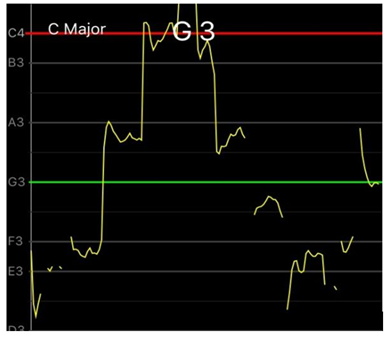
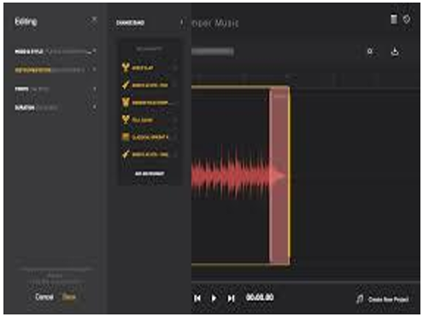
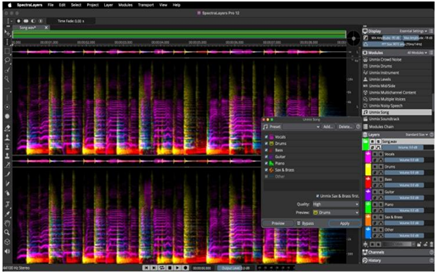
In order to understand the challenges and prospects in the formation of the musical identity of vocalists, the authors selected the tools of intelligent systems for the formation of vocal skills. The use of interactive tools in the educational process was aimed at the development of cognitive-analytical skills, performance capabilities, creative capabilities, and aesthetics of performance. The development of the specified criteria of musical identity became possible through the implementation of specialized vocal exercises offered by digital tools. The educational process provided for the use of Ukrainian and world music of various genres, which expanded the vocal capabilities of vocalists. The training was implemented for 2nd year students from, who had fundamental academic singing skills but did not have the appropriate level of in-depth knowledge for a high level of musical competence. The educational process was implemented for 10 weeks, which included classes four times a week Figure 1.
Figure 1
a)
b)
c)
Figure 1 AI Technologies for Developing Vocal Skills
Note: a) VocalPitchMonitor; b)
SpectraLayers AI; c) AmperScore AI
Source: AmperScore AI, 2025;
SpectraLayers AI (2025); VocalPitchMonitor, 2025
The choice of VocalPitchMonitor, SpectraLayers AI, AI Artistic Evaluation allowed for adhering to the vocal academic culture during the development of vocal skills. The combination of different tools made it possible to form not only the complexity of the educational process but also influenced the development of a diverse repertoire, namely, Ukrainian and world music of small genres. The use of Voice Analysis AI allowed for controlling the sound specificity, which was manifested in tracking the purity of intonation, compliance with the necessary dynamics and sound support. The development of vocal skills using VocalPitchMonitor was ensured through the formation of graphs, which provided visual perception. The graphs allowed for tracking the accuracy of singing in accordance with the specified vocal parameters.
The use of SpectraLayers AI for the development of musical identity was aimed at achieving intonation-dynamic expressiveness. The program allowed students to achieve balance in vocal performance, which was associated with maintaining the correct level of emotional performance. The processing of musical information was based on spectral diagrams, which allowed students to independently analyze vocal performance. With the help of the program, it became possible to take into account vocal nuances, the style of compositions, and eliminate extraneous noise for better sound processing.
AmperScore AI technology was used to process the aesthetic component that affects the uniqueness of vocal performance. The technology was applied to achieve a harmonious sound, which allowed for combining the specificity of the musical work and individual performance methods. The platform contributed to the creation of musical improvisations to achieve unique vocal singing.
After the completion of the students’ vocal training, it was planned to determine the level of the formed musical identity. To assess the parameters of identity, indicators of the transmission of the emotional and semantic content of the composition, the preservation of vocal academic culture, and taking into account individual approaches to interpretation were selected. Ukrainian and foreign songs of small genres were selected for analysis. The selection of works was random from 20 proposed for performance, which were characterized by the same level of complexity (Appendix 1). During the exam, 37 students were required to perform one Ukrainian and one world song, which were indicated in the exam ticket. The grades were given from 1 to 5 by expert teachers (12 people), who did not participate in the research, which excluded their interest in providing the expected results. Expert teachers were qualified to provide a reasoned assessment of the level of song performance, as they had more than 10 years of experience in teaching vocalists and preparing them for competitive performances. Appendix 2 provides data on each of the 37 students, taking into account the grades before vocal training and after vocal training. The assessment did not use a specialized methodology; the results were obtained during observation by expert teachers. The transfer of the emotional and semantic content of the composition was assessed based on the transmitted mood of the original musical work, the level of preservation of the main dynamics. The assessment was also influenced by the emotionality indicator, which included the reflection of the emotions existing in the musical work and the students’ own experiences. Compliance with vocal academic culture was associated with taking into account musical vocal rules (intervals, intonation, rhythm, etc.), students’ control of the performance technique, and clarity of pronunciation. Individual approaches to interpretation were assessed from the point of view of the harmonious combination of the author's style of performing individual elements with original interpretations. Table 3 presents the summarized final results regarding the determined level of musical identity of students, which was observed before the beginning of the research and after vocal training using digital technologies. Comparison of results before and after vocal training was carried out using ANOVA (F). If the calculated values exceed the critical value (5.99), the level of musical identity differs before and after the study.
Table 3
|
Table 3 Features of the Formed Level of Students’ Musical Identity During the Performance of Ukrainian and World Songs |
|||
|
Type
of music |
Before
vocal training |
After
vocal training |
F(5.99,
p˂0.05) |
|
Ukrainian
songs |
|
|
|
|
Conveying
the emotional and semantic content of the composition |
3.3 |
4.9 |
121.1 |
|
Adherence
to vocal academic culture |
3.1 |
5 |
|
|
Taking
into account individual approaches to interpretation |
2.5 |
4.8 |
|
|
Average
value |
3 |
4.9 |
|
|
World
songs |
|||
|
Conveying
the emotional and semantic content of the composition |
2.8 |
5 |
97.96 |
|
Adherence
to vocal academic culture |
2.4 |
4.3 |
|
|
Taking
into account individual approaches to interpretation |
3 |
5 |
|
|
Average
value |
2.7 |
4.8 |
|
|
Source: Compiled by the Authors |
|||
Comparison of the features of the performance of Ukrainian and world music of small genres showed that machine intelligence contributed to the development of musical identity in students. During the performance of Ukrainian songs (romances, humorous songs), students maintained a high level of vocal academic culture, which was reflected in the voice production, preservation of the purity of performance, intonation, and artistic singing. During the performance, poeticity and intimacy were preserved, which influenced the transmission of emotionality and semantic load of the composition. The performance of world songs was characterized by taking into account individual approaches to interpretation, which was associated with understanding the depth of the compositions not only through the text, but also through the melody. The emotional and semantic content of the songs was conveyed through the observance of correct articulation, timbre, and breathing, which influenced the development of the artistry of the performance.
After the training, an assessment of its prospects and general challenges that were formed during the training was carried out. The results were presented directly by the authors of the research, taking into account the approaches to organizing training, the features of its implementation and the perception of materials by students. The information was formed on the basis of observation of the training process, which allowed assessing the significance of the criteria and the index of adaptability of prospects and challenges in the further training process. In the research, the significance of the criteria was determined based on the features of the influence of possible prospects on improving the quality of music training and the influence of individual challenges without taking them into account on the deterioration of the training process. The significance of the criterion (gradation from 0-1 with the distribution limits 0-0.1 – low impact; 0.11-0.3 – medium impact; more than 0.33 – high impact) was considered high if taking into account individual prospects or challenges in learning ensured a change in the overall result of the learning process. The adaptability index is an indicator of the complexity of integrating an individual indicator of prospects into the learning process or the complexity of avoiding a certain challenge in music pedagogy. The adaptability index was estimated from 0 to 1, where the interval 0.1-0.3 – corresponds to low adaptation of advantages or challenges to the learning process; 0.4-0.7 – medium adaptation; 0.7-1.0 – high adaptation. The final results are presented in Table 4 Additionally, the correlation between the indicators of prospects was revealed based on the method of analysis of hierarchies.
Table 4
|
Table 4 Assessment of the Benefits and Challenges of Music Pedagogy Using Digital Tools |
||
|
Prospects
and challenges |
Significance
of criteria |
Adaptability
index |
|
Prospects |
|
|
|
Individual
learning approach |
0.36 |
0.82 |
|
Obtaining
systematic feedback based on intelligent algorithms |
0.33 |
0.91 |
|
Formation
of expanded creative approaches to vocal performance |
0.31 |
0.92 |
|
Challenges |
||
|
Possibility
of ethical violations |
0.24 |
0.73 |
|
Development
of technocratization of education |
0.26 |
0.79 |
|
Lack
of specialized training programs with AI application |
0.22 |
0.86 |
|
The
risk of forming a unified sound |
0.28 |
0.81 |
|
Source: Compiled by the Authors |
||
Taking into account the results of the observation, it was found that AI has significant advantages for the educational process, which consists in forming the individuality of performance and expanding vocal skills based on creative approaches. Musical competence is formed under the influence of constant control, which corrects the technical features of performance and the possibility of achieving creative approaches to performance. The advantages of vocal training using AI are formed on the basis of developing students’ motivation, which allows students to experiment with vocal styles, combining different approaches to performance. The challenges of using AI are related to the lack of thoughtful approaches to their adaptation to existing vocal strategies. More attention is paid to ethical and legal aspects, which should be associated with rethinking the ways of changing existing musical works for vocal performance by respondents. Comparison of indicators with each other, focusing on the value of the confidence interval, showed the absence of significant deviation between the values. The importance of the advantages was presented in Table 5 based on the use of the method of analysis of hierarchies. The method of analysis of hierarchies allowed the authors to identify the most influential advantages of training. The assessment was carried out based on the indicator of the importance of the criteria. In accordance with the hierarchy analysis matrix, the most important advantage was assigned a score of 4, the less important one – 1. The method used is conditional, but justified by the importance of the criteria, which was determined by the authors in Table 4 The scoring depends on the quantitative determination of the weight on the basis of a numerical scale. The method was used to assess the most effective advantage in comparison with others for initial adaptation to the educational process.
Table 5
|
Table 5 Hierarchy Analysis Method for Determining the Advantages of Digital Tools in the Educational Process |
|||||
|
Advantages |
Individual
learning approach |
Obtaining
systematic feedback based on intelligent algorithms |
Formation
of expanded creative approaches to vocal performance |
W |
Wstandard |
|
Individual
learning approach |
1 |
04-Feb |
03-Jan |
3.36 |
0.41 |
|
Obtaining
systematic feedback based on intelligent algorithms |
02-Apr |
1 |
02-Jan |
1.38 |
0.33 |
|
Formation
of expanded creative approaches to vocal performance |
01-Mar |
01-Feb |
1 |
0.69 |
0.26 |
|
Sum |
1.83 |
3.5 |
6 |
3.05 |
1.0 |
|
Source: Compiled by the Authors |
|||||
The applied method of analysis of hierarchies showed the greatest impact on ensuring quality learning by providing an individual approach (Wstandard = 0.41) and receiving systematic feedback based on intelligent algorithms (Wstandard = 0.33). Such advantages are aimed at the ability to form one’s own performance style, to understand music more deeply for improved interpretation.
5. Discussion
The results obtained correlate with the hypothesis regarding the positive impact of computer systems on the development of musical identity. The obtained research results reflect that machine intelligence had an impact on changing the vocal education system. First of all, this was manifested in the peculiarities of the structure of the educational process, which was aimed at individual vocal training, monitoring the level of students’ knowledge, and ensuring flexibility and dynamism of learning. The changes also affected the approaches to the development of vocal technique, which included taking into account individual vocal details, respecting freedom of performance, and searching for an individual singing style based on the existing repertoire. Therefore, the use of VocalPitchMonitor, SpectraLayers AI, AI Artistic Evaluation technologies in the educational process within the framework of the research made it possible to form fundamental academic singing skills. The need to use modern intellectual capabilities for the development of vocal skills was also noted in the study of Tang (2024). The author indicated that AI allows for focusing on individual vocal approaches, which improves the experience of perceiving music. Smart education contributes to the creation of personalized learning for the independent development of vocal skills. Similar results are considered in the work of Kojima et al. (2024), but on the example of specific platforms. The use of TensorFlow and Create ML influenced the possibility of correcting vocal data and individual processing of sounds.
Our research was based on the development of musical identity using AI. The study indicates that musical identity skills using AI can manifest themselves in cognitive-analytical development (6.8 points), development of performing (6.5 points) and creative (6.5 points) capabilities, and aesthetics of performance (6.3 points). The results obtained are similar to the study by Yang (2022). The author states that digital instruments affect the development of practical musical skills, developing rhythmic abilities. Noufi et al. (2025) stated that musical identity is formed on the basis of a context-sensitive set of vocal behavior patterns. This is due to the processing of different vocal compositions for expressive performance, which ensures the reproduction of musical individuality. Alsaleh (2024) emphasized that musical identity is formed on the basis of understanding the cultural characteristics of music. Understanding cultural diversity contributes to the analytical perception of music to take into account its value during further performance.
However, the author Zong (2025) believes that musical identity can be formed by improving individual vocal skills. Therefore, when using digital instruments, attention should be paid to the accuracy of pitch, rhythmicity of singing, and specific timbre. Our research also took into account the possibility of using digital platforms to develop vocal skills and form musical identity. However, attention was paid not only to the development of technical singing skills (VocalPitchMonitor) but also to artistic expressiveness (SpectraLayers AI) and the creation of musical improvisations (AmperScore AI).
Taking into account the results of the scientific work of Zhang et al. (2024), the need to use AI for the development of vocal skills was established. The use of technology affects the ability to analyze students’ vocal activity, taking into account the accuracy of performance. The use of EarSAVAS technology provides an analysis of one’s own singing and a depth of understanding of musical works. According to Casebourne et al. (2025), the use of algorithmic tools can affect the loss of one’s own identity. This occurs based on the choice of untested platforms, which affect the avoidance of a unique style and are oriented towards the choice of a mixed performance format. Challenges in learning can be associated with the lack of depth of the musical work and the individuality of the approach to its performance.
Digital technologies help to avoid discrepancies between practical and theoretical classes, but create new challenges in teaching Boltsi et al. (2024). Along with this, they do not focus on the relevance of the curricula, which limits the possibility of choosing the appropriate repertoire.
The analysis of published studies with our research showed the transformation of music pedagogy using digital tools. However, our research was focused on the development of students’ musical identification in the process of using AI. The academic paper presented a justification of the challenges and advantages of such training, focusing on student assessment. Future studies will be focused on determining the features of musical identity formation under the influence of traditional and interactive learning, taking into account the characteristics of different musical styles.
6. Conclusions
The conducted research demonstrated that artificial intelligence influences the creation of favorable conditions for the development of musical identity. A new aspect of the research is aimed at creating practical conditions for the development of the musical identity of vocalists under the influence of machine intelligence. The conducted research demonstrated the features of the transformation of vocal training using digital technologies that contribute to the formation of musical identity in the individual. Thus, the structure of the traditional educational process, which was represented by collective training, changed to the organization of individual vocal training. Assessment took place during the performance of tasks, which provided the possibility of flexibility and dynamism of the educational process. Interactive training during vocal training was focused on the development of vocal details, freedom of performance and taking into account individual approaches to the performance of musical works. It was found that such training influenced the development of cognitive-analytical skills, performing and creative abilities, and aesthetics of performance, which reflect the basic skills of musical identity. Based on the skills formed, vocalists are oriented towards understanding musical works and choosing creative approaches for their performance. Empirical data contributed to confirming the effectiveness of the platforms VocalPitchMonitor, SpectraLayers AI, and AI Artistic Evaluation in vocal training for the development of musical identity. The process was implemented on the basis of control during vocal training for the peculiarities of sound formation, artistry of performance and creation of musical improvisations. It was established that the level of musical identity of students improved, which was associated with adherence to the stylistics of performance of Ukrainian and foreign music and the manifestation of one’s own individuality.
The use of computer technologies in the educational process has affected the prospects of such training, which was initially assessed from the point of view of obtaining an individual approach to learning, the formation of expanded creative approaches to vocal performance and the possibility of receiving feedback to correct errors. However, the challenges of such training are associated with the risk of technocratization of education and the formation of a unified sound that does not ensure the individuality of performance. The limitations of the results obtained are related to the analysis of the features of the development of musical identity using AI, which excludes the consideration of traditional approaches. However, comparing the results of students before and after the research partially allowed for resolving this research gap and establishing the impact of AI on the development of the musical identity. The prospects of the academic paper can be aimed at analyzing the specifics of the development of musical identity of vocalists who have an initial level of vocal skills and a developed level of vocal capabilities. Additional attention will be paid to the interaction between the level of development of musical identity and existing musical genres.
Transparency
The authors confirm that all data, methods, and materials are presented transparently in the manuscript. No relevant information has been omitted.
Author Contributions
Liubov Kaniuka: Conceptualization, methodology, supervision, writing–original draft preparation, and project administration.
Tamara Koval: Data collection, formal analysis, and validation.
Olha Vasylenko: Investigation, resources, and data curation.
Svitlana Borovyk: Writing–review and editing, visualization, and literature review.
Volodymyr Humeniuk: Methodological support, critical revision of the manuscript, and final approval of the version to be published.
CONFLICT OF INTERESTS
None.
ACKNOWLEDGMENTS
None.
REFERENCES
Aliksiichuk, O., Borysova, T., Kartashova, Z., Priadko, O., Kuziv, M., and Chaban-Chaika, S. (2025). Modern Digital Approaches to Training Music Teachers: Evolution From Classical to Interactive. International Journal on Culture, History, and Religion, 7(SI1), 273–296. https://doi.org/10.63931/ijchr.v7iSI1.201
Al-Khleifat, K. (2025). The Effects of Vocal Training on the Cognitive and Emotional Development of Young Children. Scientific Bulletin of Mukachevo State University. Series Pedagogy and Psychology, 11(1), 113–124. https://doi.org/10.52534/msu-pp1.2025.113
Alsaleh, A. (2024). The Impact of Technological Advancement on Culture and Society. Scientific Reports, 14(1), 32140. https://doi.org/10.1038/s41598-024-83995-z
AmperScore AI. (2025). AmperScore AI. https://aithenas.com/tools/amper-score
Bai, Y. (2025). How Does the Use of Modern Technologies Affect Students' Perception of Information? The Effectiveness of Holographic Projection Technology in Music Education. Technology, Pedagogy and Education, 34(1), 35–47. https://doi.org/10.1080/1475939X.2024.2402274
Boltsi, A., Kalovrektis, K., Xenakis, A., Chatzimisios, P., and Chaikalis, C. (2024). Digital Tools, Technologies, and Learning Methodologies for Education 4.0 Frameworks: A STEM-Oriented Survey. IEEE Access, 12, 12883–12901. https://doi.org/10.1109/ACCESS.2024.3355282
Borkowski, A. (2023). Vocal Aesthetics, AI Imaginaries: Reconfiguring Smart Interfaces. Afterimage, 50(2), 129–149. https://doi.org/10.1525/aft.2023.50.2.129
Burnard, P., and Mackinlay, E. (2025). Performing Ethical Response-Ability in Music Education Research: Who Cares and What Matters? Action, Criticism, and Theory for Music Education, 24(4), 110–127. https://doi.org/10.22176/act24.4.110
Canyakan, S. (2024). The Role of AI in Creative Processes: Ethical and Legal Perspectives in the Music Industry. Journal of Music Theory and Transcultural Music Studies, 2(2), 143–158. https://doi.org/10.5281/zenodo.15031855
Casebourne, I., Shi, S., Hogan, M., Holmes, W., Hoel, T., Wegerif, R., and Yuan, L. (2025). Using AI to Support Education for Collective Intelligence. International Journal of Artificial Intelligence in Education, 35(3), 1597–1629. https://doi.org/10.1007/s40593-024-00437-7
Chang, S., Li, D., and Qi, Y. (2021). Pearson's Goodness-of-Fit Tests for Sparse Distributions. Journal of Applied Statistics, 50(5), 1078–1093. https://doi.org/10.1080/02664763.2021.2017413
Chang, Z. (2022). The Use of Online Vocal Training Programs as a Means to Develop Creative Thinking and Vocal Prowess. Interactive Learning Environments, 31(10), 7214–7225. https://doi.org/10.1080/10494820.2022.2064514
Cipta, F., Sukmayadi, Y., Milyartini, R., and Hardini, T. I. (2024). Optimizing AI-Powered Music Creation Social Media to Amplify Learning Content. Jurnal Kependidikan, 10(3), 881–892. https://doi.org/10.33394/jk.v10i3.12332
Concina, E. (2023). Effective Music Teachers and Effective Music Teaching Today: A Systematic Review. Education Sciences, 13(2), 107. https://doi.org/10.3390/educsci13020107
Fan, C., and Shi, L. (2025). Technological and Managerial Aspects of the Digital Transformation in Music Education: A Big Data Perspective. Journal of Computational Methods in Sciences and Engineering, 25(1), 1075–1086. https://doi.org/10.1177/14727978251322025
Forbes, M., Goopy, J., and Krause, A. E. (2024). Becoming Singular: Musical Identity Construction and Maintenance Through the Lens of Identity Process Theory. Psychology of Music, 53(5), 746–761. https://doi.org/10.1177/03057356241267863
Fox, M., Vaidyanathan, G., and Breese, J. L. (2024). The Impact of Artificial Intelligence on Musicians. Issues in Information Systems, 25(3). https://doi.org/10.48009/3_iis_2024_121
Frytsiuk, V., Kshyvak, I., Baranovska, I., Teplova, O., Novosadova, A., and Khilya, A. (2025). Digital Ecosystems for Music Teacher Training: ICT, Social Media, and Online Learning Environments. Environment. Technology. Resources. Proceedings, 2, 137–144. https://doi.org/10.17770/etr2025vol2.8598
Genelza, G. G. (2024). A Systematic Literature Review on AI Voice Cloning Generator: A Game-Changer or a Threat? Journal of Emerging Technologies, 4(2), 54–61. https://doi.org/10.57040/ag587791
Gobinath, A., Manjula Devi, C., Suthan Raja, S. J., Prakash, P., Anandan, M., and Srinivasan, A. (2024). Voice Assistant With AI Chat Integration Using OpenAI. In Proceedings of INCOS 2024 (1–6). IEEE. https://doi.org/10.1109/INCOS59338.2024.10527726
Irianti, L., Faridi, A., Pratama, H., and Suwandi. (2024). Flipped Classroom and Critical Thinking on Public Speaking Class. Cogent Education, 11(1). https://doi.org/10.1080/2331186X.2024.2315815
Jiayu, O. (2025). Performing Abilities of a Student Vocalist and Their Classification. Paradigm of Knowledge, 1(65). https://doi.org/10.26886/2520-7474.1%2865%292025.4
Johansen, G. (2024). School Music Education and the Society of Tomorrow: The Necessity of Navigating in Chaos. In The Sage Handbook of School Music Education. SAGE. https://doi.org/10.4135/9781529674842.n2
Jude, G. (2025). Future Voices to Come: AI Singing After Miku. In How Vocaloid Works (pp. 63–86). Palgrave Macmillan. https://doi.org/10.1007/978-3-031-92727-0_4
Kojima, T., Fujimura, S., Hasebe, K., et al. (2024). Objective Assessment of Pathological Voice Using Artificial Intelligence Based on the GRBAS Scale. Journal of Voice, 38(3), 561–566. https://doi.org/10.1016/j.jvoice.2021.11.021
Konovalova, I., Breslavets, H., Riabukha, N., et al. (2025). The Evolution of World Music Pedagogy in the Information Society. BRAIN, 16(S1), 99–116. https://doi.org/10.70594/brain/16.S1/9
Li, P., and Wang, B. (2023). Artificial Intelligence in Music Education. International Journal of Human-Computer Interaction, 40(16), 4183–4192. https://doi.org/10.1080/10447318.2023.2209984
Liang, Y. (2024). Collaborative Music Making in the Digital Age: Fostering Creativity in Vocal Ensembles. Interactive Learning Environments, 33(1), 615–630. https://doi.org/10.1080/10494820.2024.2353195
Liu, L. (2024). Current Situation and Innovative Methods of Brass Music Teaching Based on Network Information Technology. Journal of Electrical Systems, 20(1). https://doi.org/10.52783/jes.683
Lulu, W., Sensai, P., and Homhuan, W. (2024). Education and Literacy Transmission of Chinese Pansori in Chaoxian Ethnic Group. International Journal of Education and Literacy Studies, 12(4), 185–192. https://doi.org/10.7575/aiac.ijels.v.12n.4p.185
Lv, H. Z. (2023). Innovative Music Education: Using an AI-Based Flipped Classroom. Education and Information Technologies, 28, 15301–15316. https://doi.org/10.1007/s10639-023-11835-0
Maychyk, O., Slyusar, T., Voitovych, O., Katrych, O., and An, L. (2024). Development of the Technique of Forming the Professionalism of a Pop Artist: Vocal Discourse. Convergences: Journal of Research and Arts Education, 17(33), 89–104. https://doi.org/10.53681/c1514225187514391s.33.239
Merchán Sánchez-Jara, J. F., González Gutiérrez, S., Cruz Rodríguez, J., and Syroyid Syroyid, B. (2024). Artificial Intelligence-Assisted Music Education: A Critical Synthesis of Challenges and Opportunities. Education Sciences, 14(11), 1171. https://doi.org/10.3390/educsci14111171
Metin, E., Uygur, K., Okur, E., Metin, B., and Gündüz, B. (2024). Temperament and Voice Quality in Patients With Vocal Fold Nodules. Journal of Voice. https://doi.org/10.1016/j.jvoice.2024.08.005
Mínguez-Alcaide, X., and Bobowik, M. (2025). Social Identity, Collective Self-Esteem, and Musical Preferences in Electronic Dance Music Culture: The Role of Emotions. Psychology of Music. https://doi.org/10.1177/03057356251361754
Mygdanis, Y. (2025). Design-Based Research in Music Education: Theoretical Foundations, Methodological Perspectives, and Practice Implications. Futurity Education, 5(2), 90–114. https://doi.org/10.57125/FED.2025.06.25.05
Noufi, C., May, L., and Berger, J. (2025). A Model of Vocal Persona: Context, Perception, Production. Frontiers in Computer Science, 7, 1575296. https://doi.org/10.3389/fcomp.2025.1575296
O'Leary, E. J., and Bannerman, J. K. (2025). Online Curriculum Marketplaces and Music Education: A Critical Analysis of Music Activities on TeachersPayTeachers.com. International Journal of Music Education, 43(1), 39–53. https://doi.org/10.1177/02557614241307242
Pandey, S., and Sinha, K. (2023). Developments in Analysis of Variance (ANOVA) and Experimental Design: A Comprehensive Overview. Journal of Advanced Research in Applied Mathematics and Statistics, 8(3–4), 8–13. https://journals.indexcopernicus.com/api/file/viewByFileId/2037033
Perakaki, E. (2025). Exploring Flipped Learning Practices in Piano and Music Theory: A Case Study of Two Music Teachers in Greece. Research Studies in Music Education. https://doi.org/10.1177/1321103X251342708
Qian, C., and Jiang, M. (2024). Exploring the Effects of Digital Game-Based Learning on Music Education. Studies in Social Science and Humanities, 3(5), 6–9. https://doi.org/10.56397/SSSH.2024.05.02
Rui, Y. (2024). Simulation of E-Learning in Vocal Network Teaching Experience System Based on Intelligent Internet of Things Technology. Entertainment Computing, 50, 100711. https://doi.org/10.1016/j.entcom.2024.100711
Sai, Y. (2024). Online Music Learning Based on Digital Multimedia for Virtual Reality. Interactive Learning Environments, 32(5), 1751–1762. https://doi.org/10.1080/10494820.2022.2127779
Sakalar, A., and Gürel, S. (2024). Academic Perspectives on the Use of Digital Platforms and Mobile Applications in Vocal Training. Online Journal of Music Sciences, 9(2), 389–404. https://doi.org/10.31811/ojomus.1564925
Shiyao, W., and Noordin, Z. M. (2024). The Influence and Impact of the Orff-Music Method on Teaching and Learning in Music Education Course in Higher Education in China. International Journal of Academic Research in Business and Social Sciences, 14(6), 1805–1817. https://doi.org/10.6007/IJARBSS/v14-i6/21971
Shpyrka, A., Bondarenko, L., Kondratenko, G., and Shpyrka, A. (2021). Emotional Expressiveness of the Vocalist: A Cross-Sectional Study. Rast Musicology Journal, 9(2), 2893–2916. https://doi.org/10.12975/rastmd.20219211
Singer, J. B. (2025). Podcasting in Social Work Education for Clinical Skill Development. In M. Fox and J. B. Singer (Eds.), Podcasting in Social Work Education (51–72). Routledge. https://doi.org/10.4324/9781003530275-6
SpectraLayers AI. (2025). SpectraLayers AI. https://www.steinberg.net/spectralayers/
Stevens, C. (2025). Teachers and Teaching: Pedagogy, Digital Skills and Professional Development. Open Learning: The Journal of Open, Distance and e-Learning, 40(1), 1–3. https://doi.org/10.1080/02680513.2024.2436665
Tang, K. H. D. (2024). Implications of Artificial Intelligence for Teaching and Learning. Acta Pedagogia Asiana, 3(2), 65–79. https://doi.org/10.53623/apga.v3i2.404
Tian, J. (2025). Digital Transformation Perspective on Art-Science Integration' Empowering Innovative Talent Cultivation in Vocational Music Education. Journal of Sociology and Education, 1(7). https://doi.org/10.63887/jse.2025.1.7.35
VocalPitchMonitor. (2025). VocalPitchMonitor. https://play.google.com/store/apps/details?id=com.tadaoyamaoka.vocalpitchmonitor
Wang, Y. (2022). Vocal Education in Higher Educational Institutions in China: Student Motivation and Creativity. Interactive Learning Environments, 32(3), 813–823. https://doi.org/10.1080/10494820.2022.2098778
Wang, Y. (2024). Vocal Creativity: Analyzing Students Song Making Processes in Blended Learning. Interactive Learning Environments, 32(5), 2196–2206. https://doi.org/10.1080/10494820.2022.2141267
Yang, G., and Xiangming, L. (2025). Graduate Socialization and Anxiety: Insights via Hierarchical Regression Analysis and Beyond. Studies in Higher Education, 50(7), 1365–1381. https://doi.org/10.1080/03075079.2024.2375563
Yang, X. (2022). The Perspectives of Teaching Electroacoustic Music in the Digital Environment in Higher Music Education. Interactive Learning Environments, 32(4), 1183–1193. https://doi.org/10.1080/10494820.2022.2115080
Zhang, L. (2025a). Compositional Tools Based on Artificial Intelligence for Choral Artistic Education: Enhancing Creative Skills in Choral Arrangements. Thinking Skills and Creativity, 56, 101768. https://doi.org/10.1016/j.tsc.2025.101768
Zhang, X., Wang, Y., Han, Y., Liang, C., Chatterjee, I., Tang, J., and Shi, Y. (2024). The Earsavas Dataset: Enabling Subject-Aware Vocal Activity Sensing on Earables. Proceedings of the ACM on Interactive, Mobile, Wearable and Ubiquitous Technologies, 8(2), 1–26. https://doi.org/10.1145/3659616
Zhang, Y. (2025b). Increasing Emotional Perception in Academic Singing During Vocal Performance: The Use of AI Solutions. International Journal of Human-Computer Interaction, 41(19), 12086–12094. https://doi.org/10.1080/10447318.2025.2452213
Zong, L. (2025). Evaluation on the Effect of Enhancing Vocal Music Training Experience With Virtual Reality Technology. International Journal of Web-Based Learning and Teaching Technologies, 20(1), 1–20. https://doi.org/10.4018/IJWLTT.382590
APPENDIX 1
List of musical works for students to perform before
and after vocal training
Ukrainian songs:
Oh in The Cherry Orchard (lyrical song)
God Eternal (religious song)
Oh, the Little Well Out in the Field (domestic song)
Oh, Under The Cherry Tree (humorous song)
A Cossack Rode Across the Danube (historical song)
Hey Girl, Where Are You Going? (domestic song)
Little Cossack (humorous song)
Verbychenka (lyrical song))
Oh, Hryts, Don’t Go to The Youth Evenings (lyrical song)
Oh, The Reapers Are Working On the Hill (humorous song)
World songs:
La Paloma (lyrical song)
Twinkle Twinkle Little Star (cradle song)
La Marseillaise (patriotic song)
Silent Night (ritual song)
Greensleeves (domestic song)
Rock-a-bye Baby (cradle song)
Loch Lomond (domestic song)
Unchained Melody (lyrical song)
Yankee Doodle (patriotic song)
Clair de Lune (lyrical song)
APPENDIX 2
Clear primary data on student performance
Table 6
|
Table 6 Primary Data of Students Before Training |
||||||||||||||||||||||||||||||||||||||
|
Features of musical identity |
1 |
2 |
3 |
4 |
5 |
6 |
7 |
8 |
9 |
10 |
11 |
12 |
13 |
14 |
15 |
16 |
17 |
18 |
19 |
20 |
21 |
22 |
23 |
24 |
25 |
26 |
27 |
28 |
29 |
30 |
31 |
32 |
33 |
34 |
35 |
36 |
37 |
Average value |
|
Ukrainian songs |
||||||||||||||||||||||||||||||||||||||
|
Conveying the emotional and
semantic content of the composition |
3.2 |
3.5 |
3.7 |
3.2 |
3.8 |
3.8 |
3.4 |
3.1 |
3 |
2.9 |
3.3 |
3 |
3.2 |
3.3 |
3.8 |
3.4 |
3.5 |
3 |
3.2 |
3.1 |
3.1 |
3 |
3.3 |
3.5 |
3.4 |
3 |
3.2 |
3.7 |
3.2 |
3 |
3.1 |
3.8 |
3.2 |
3.1 |
3.6 |
3 |
3.7 |
3.3 |
|
Adherence to vocal academic
culture |
3 |
2.9 |
2.7 |
3.3 |
3.2 |
3.3 |
3.5 |
3.1 |
3.4 |
3.1 |
3 |
3.3 |
2.9 |
3 |
3.2 |
3.1 |
3.8 |
3.2 |
2.9 |
3 |
3.4 |
2.7 |
2.9 |
3.6 |
3.1 |
3.2 |
3.2 |
3 |
3.2 |
3.1 |
2.8 |
3.1 |
3.2 |
3.5 |
3.7 |
3 |
2.9 |
3.1 |
|
Taking into account
individual approaches to interpretation |
2.2 |
2.7 |
2.9 |
2 |
2.5 |
3.1 |
2.8 |
3.5 |
3 |
3.1 |
2.6 |
2.2 |
2.4 |
3 |
2.9 |
2.7 |
2.5 |
2 |
2.3 |
2.7 |
2.4 |
2.2 |
2.9 |
3.2 |
2.5 |
2.4 |
2 |
2.7 |
2.9 |
2.2 |
2.5 |
2.1 |
2 |
2.3 |
2.2 |
2.5 |
2.1 |
2.5 |
|
World songs |
||||||||||||||||||||||||||||||||||||||
|
Conveying the emotional and
semantic content of the composition |
3.2 |
3.3 |
2.8 |
2.5 |
3.4 |
2.6 |
3.9 |
3.7 |
2.5 |
2.1 |
2.6 |
2.7 |
2.8 |
3 |
3.2 |
2.7 |
2.9 |
3 |
2.2 |
2.8 |
3.2 |
2 |
2.8 |
2.9 |
3 |
3.4 |
3.1 |
2.5 |
2.2 |
3 |
2.4 |
2.9 |
2.3 |
2.3 |
2.8 |
3 |
2.4 |
2.8 |
|
Adherence to vocal academic
culture |
2.5 |
2.7 |
2.2 |
2.1 |
2.3 |
2.5 |
2.9 |
2.1 |
2.4 |
2.6 |
3 |
2.1 |
2 |
2.2 |
2.2 |
2.3 |
2.1 |
2 |
2.5 |
3 |
2.2 |
2.1 |
2.2 |
2.6 |
2.7 |
2.8 |
2.9 |
3 |
2.9 |
2.7 |
3 |
2.2 |
2.4 |
2.1 |
2.3 |
2.5 |
2.3 |
2.4 |
|
Taking into account
individual approaches to interpretation |
3.5 |
3 |
3.2 |
3.3 |
3.7 |
3.8 |
3 |
2.3 |
2.8 |
3.4 |
3.2 |
2.9 |
3 |
3.9 |
2.4 |
2.2 |
3 |
2.7 |
3.3 |
2.5 |
3.3 |
3.7 |
3 |
2.8 |
2.6 |
3.1 |
3 |
3.2 |
2.4 |
2.7 |
3 |
2.7 |
2.8 |
3.1 |
3.2 |
2.5 |
3 |
3 |
Figure 7
|
Table 7 Primary Data of Students After Training |
||||||||||||||||||||||||||||||||||||||
|
Features
of musical identity |
1 |
2 |
3 |
4 |
5 |
6 |
7 |
8 |
9 |
10 |
11 |
12 |
13 |
14 |
15 |
16 |
17 |
18 |
19 |
20 |
21 |
22 |
23 |
24 |
25 |
26 |
27 |
28 |
29 |
30 |
31 |
32 |
33 |
34 |
35 |
36 |
37 |
Average
value |
|
Ukrainian
songs |
||||||||||||||||||||||||||||||||||||||
|
Conveying
the emotional and semantic content of the composition |
5 |
5.2 |
5.3 |
4.8 |
4.7 |
4.6 |
5 |
4.9 |
5 |
4.7 |
4.8 |
5 |
5 |
4.9 |
5 |
4.7 |
4.5 |
5 |
4.9 |
5 |
5 |
4.7 |
4.8 |
5 |
4.7 |
4.6 |
5 |
4.7 |
4.8 |
4.9 |
4.5 |
5 |
5 |
4.9 |
4.7 |
7.8 |
5 |
4.9 |
|
Adherence
to vocal academic culture |
5 |
4.9 |
5 |
5 |
4.8 |
4.7 |
5 |
5 |
5 |
4.9 |
5 |
4.6 |
5 |
5 |
5 |
5 |
4.9 |
5 |
5 |
5 |
4.9 |
4.9 |
5 |
5 |
5 |
4.9 |
5 |
4.9 |
5 |
5 |
5 |
4.9 |
4.8 |
5 |
5 |
4.9 |
5 |
5 |
|
Taking
into account individual approaches to interpretation |
4.7 |
5 |
5 |
4.8 |
5 |
4.9 |
4.7 |
5 |
5 |
4.9 |
4.7 |
4.8 |
5 |
5 |
4.5 |
4.6 |
4.5 |
4.8 |
4.7 |
4.9 |
5 |
4.8 |
5 |
4.9 |
4.7 |
4.8 |
4.7 |
4.8 |
5 |
5 |
4.7 |
4.8 |
4.9 |
4.9 |
5 |
5 |
4.9 |
4.8 |
|
World
songs |
||||||||||||||||||||||||||||||||||||||
|
Conveying
the emotional and semantic content of the composition |
4.9 |
5 |
5 |
5 |
4.8 |
5 |
5 |
5 |
5 |
4.9 |
5 |
5 |
4.7 |
5 |
4.9 |
5 |
5 |
5 |
5 |
5 |
4.7 |
5 |
5 |
4.9 |
4.9 |
5 |
4.7 |
5 |
5 |
5 |
4.8 |
4.9 |
5 |
4.8 |
5 |
5 |
5 |
5 |
|
Adherence
to vocal academic culture |
4.2 |
4.5 |
4.7 |
4.3 |
4.5 |
4.6 |
4.7 |
4.3 |
4.2 |
4.3 |
4.4 |
4.6 |
4.2 |
5 |
4.3 |
4.1 |
4 |
4.2 |
4.1 |
4.1 |
4.5 |
4.7 |
4.4 |
4.3 |
4.2 |
4.7 |
4.3 |
4.1 |
4.2 |
4.2 |
4.7 |
4.6 |
4.2 |
4 |
4.1 |
4.3 |
4 |
4.3 |
|
Taking
into account individual approaches to interpretation |
4.9 |
5 |
5 |
4.7 |
5 |
5 |
4.9 |
5 |
4.8 |
4.8 |
5 |
5 |
4.6 |
5 |
5 |
5 |
4.8 |
4.9 |
5 |
4.7 |
4.5 |
4.8 |
4.7 |
5 |
5 |
5 |
4.9 |
5 |
5 |
4.9 |
5 |
5 |
4.7 |
5 |
5 |
4.8 |
5 |
5 |
|
|
 This work is licensed under a: Creative Commons Attribution 4.0 International License
© ShodhKosh 2026. All Rights Reserved.