ShodhKosh: Journal of Visual and Performing ArtsISSN (Online): 2582-7472
|
|
Rhythms of Heritage: Preserving and Recontextualizing Folk Music Through Modern Jazz Improvisation
Dr. Tina Porwal 1
 ,
Leena Deshpande 2
,
Leena Deshpande 2 ,
Swati Srivastava 3
,
Swati Srivastava 3 , Damodaran B. 4
 , Vinit Khetani 5
 , Vilas Palkhe 6
1 Co-Founder,
Granthaalayah Publications and Printers, India
2 Associate
Professor, Department of Computer Engineering - Software Engineering,
Vishwakarma Institute of Technology, Pune, Maharashtra, 411037, India
3 Associate
Professor, School of Business Management, Noida International University,
Greater Noida 203201, India
4 Associate
Professor, Meenakshi College of Arts and Science, Meenakshi Academy of Higher
Education and Research, Chennai, Tamil Nadu 600116, India
5 Researcher
Connect Innovation and Impact Pvt. Ltd, Nagpur, Maharashtra, India
6 Assistant
Professor, Department of Visual and Performing Arts, Mangalayatan
University, Aligarh, India
|
|
|
ABSTRACT |
|
|
Folk music is
a cultural reminiscence, social ideals, and historical records of people, but
numerous traditions are struggling with the issue of continuity in the
environment of globalization and shifting musical realities. This article
discusses how modern jazz improvisation has been used as a creative and
culturally sensitive tool to maintain and recontextualize folk music
traditions. Instead of seeing preservation as a conservation that is
unchanging, the study conceptualizes heritage as a living process that
continues to survive by changing. Using ethnomusicological viewpoints, jazz
improvisation theory, and intercultural theory the study examines how
rhythmic patterns, modal systems and performance practices of folk music can
be incorporated in the modern jazz environment without the erosion of
cultural identity. The paper shows that improvisation makes it possible to
have a dynamic dialogue between tradition and modernity and the folk elements
can keep the symbolic and emotional meaning they have and broaden their
expressive opportunities that are achieved through harmonic reinterpretation,
rhythmic adaptation, and group performance. The problematization of jazz
improvisation as a cultural negotiation and sustainability points to the
research as a means of heritage preservation through a living archive and
pedagogical tool, as well as an ethical platform. The results provide a
wider-ranging discourse on the field of musicology and performance studies by
establishing preservation through transformation as a possible paradigm of
maintaining traditional music in the context of the
contemporary artistic practice. |
|||
|
Received 09 September 2025 Accepted 05 December 2025 Published 17 February 2026 Corresponding Author Dr. Tina
Porwal, sethiya.tina@gmail.com DOI 10.29121/shodhkosh.v7.i1s.2026.7006 Funding: This research
received no specific grant from any funding agency in the public, commercial,
or not-for-profit sectors. Copyright: © 2026 The
Author(s). This work is licensed under a Creative Commons
Attribution 4.0 International License. With the
license CC-BY, authors retain the copyright, allowing anyone to download,
reuse, re-print, modify, distribute, and/or copy their contribution. The work
must be properly attributed to its author.
|
|||
|
Keywords: Folk Music, Jazz Improvisation, Cultural Heritage,
Musical Recontextualization, Intercultural Music, Improvisation Theory,
Ethnomusicology, Musical Hybridity |
|||



1. INTRODUCTION
Folk music is one of the most ancient cultures of expression and it carries with it the history, social ethics and experiences of the people between generations. Being based on oral traditions, regional identities and community practices, folk music has historically developed as a form of communal engagement instead of notation or institutional structure. Nevertheless, the modern world presents a world of fast globalization, urbanization, and commercialization of music genres has become a major threat to the survival and popularity of folk music. Most local and native musical styles are at risk of not becoming marginal, watered down, or extinct with the newer generation becoming attracted to globalized musical languages Garcia (2024).
At the same time, jazz music (especially modern jazz) has turned into a resiliant and versatile musical language that is defined by improvisation, hybridity, and cross-cultural transparency. Over the years of its development, jazz has proven to be remarkably adaptable, receptive, and transformative of various musical influences and stay focused on its original priorities of spontaneity, individuality, and dialogue. Such elasticity brings jazz improvisation as an interesting tool in the continuation, re-invention, and re-presentation of folk music in modern settings Singh and Mehta (2025). This research is inspired by the fact that folk traditions and various practices of modern jazz are increasingly intertwining, that the heritage is not only preserved as an immobile object but is reinterpreted in a new context through the creative improvisation.
Figure 1

Figure 1 The Evolution of Folk and Jazz Music
1.1. Folk Music as Cultural Memory
Folk music acts as cultural memory, a code of historical stories of work, ritual, immigration, resistance, spirituality, social solidarity. Folk songs and instrumental traditions (as opposed to written histories) pass knowledge to the future with melody, rhythm, language, and context of performance. The ecological, social, and spiritual surroundings of their communities of origin are common in such elements as cyclical rhythms, modal framework and call-and-response structures Schmidt (2025). This has ensured that folk music is very much engrained in the daily lives, rituals and group identity.
Nevertheless, the struggle to preserve folk music is not without essential problems because of its connection to oral tradition and the performance in context. Out of context Folk music is not going to be deprived of its symbolic richness and experience. Modern preservation, like archival records or museum collections, though useful, have a difficult time recording the dynamic nature of folk traditions as they exist in life Al-Mansour (2023). This paper does not only consider folk music as a historical piece of art that needs protection but as a dynamic cultural practice that can remain pertinent by reinterpreting and interacting with contemporary music.
1.2. Jazz Improvisation as a Transformative Medium
The improvisation of jazz music takes a different dimension in the world of music since it focuses on the immediate creativity, freedom of interpretation, and communication between the performers. Jazz improvisation is not an unconditional action but a very knowledgeable process, which is formed under the influence of harmonic structure, rhythm, vocabulary, and listening together. In jazz, especially modern jazz does not follow traditional tonal and rhythmic patterns and often ventures into non-Western scales, odd meters and non-experimental textures Rossi (2025).
This improvisational spirit is in line with the adaptive and communal spirit of folk music traditions. Both forms favor expressive finesse, performer agency and performance responsiveness. Introducing folk melodies, rhythms, or motifs in a jazz improvisational environment is not reproduced but rather modified, enlarged by harmonic reinterpretation, displacing the rhythms, and improvising in collaboration. Jazz therefore plays a transformational role where folk music can find its way into the performance arenas without losing its emotive and cultural essence. The paper considers jazz improvisation as the process of cultural translation and not cultural replacement.
1.3. Scope and Significance of the Study
The focus of the research paper will be on folk music traditions that have been chosen and reinterpreted in the context of the contemporary jazz performance and composition. Instead of providing a broader view of world folk jazz-fusion, the research takes a narrower analytical methodology in the form of representative case studies and musical reviews. There is an accentuation on rhythmic, melodic, and improvisational levels, which is justified by a qualitative contribution of performers and audiences.
The study is valuable because it may be applied to ethnomusicology, studies of jazz, and discussion of cultural preservation since the study is interdisciplinary. The study interferes with the conservative idea of heritage preservation by presenting preservation as something creative, generative. It demonstrates that current jazz improvisation can be considered as a culturally sensitive instrument of preservation of folk culture and promotion of innovation and cross-culturation. Lastly, the research paper can incorporate itself into the debates about the larger field of ways of how traditional arts can remain relevant and powerful in the stronger musical world of a more interdependent world.
2. Framework
2.1. Ethnomusicological Perspectives on Heritage Preservation
Ethnomusicology provides a background view of perceiving folk music as a breathing cultural system rather as a rigid piece of art. In this area, music is regarded as referring to the organization of society, ritualism, continuation of the past, and the identity of the group. Imitatory custom is the typical support of folk music culture, and participatory performance and local knowledge systems, which endows folk music culture a dynamic and adaptive nature. Here, preservation is not related to fossilization, but continuation through transformation Nguyen (2024). The ethnomusicological in the literature emphasizes the fact that the mere existence of maintaining the traditions implies that they are altered in order to fit the currently changing social and cultural conditions.
In that sense the maintenance of the folk music through the modern reinterpretation is equivalent to the concept of the living heritage, where the continuation is raised through the creative reinterpretation. Improved in a tactical way, the jazz improvisation, however, can be viewed as a contemporary vessel, which, despite the lack of connection to its original geographical and cultural environment, allows the folk idioms to still run out of their context and retain the symbolic and sentimental significance. The paper assumes ethnomusicological approach, which values the concept of contextual integrity, performer agency and cultural respect, in the recontextualization of folk traditions of the modern jazz performances.
2.2. Improvisation Theory in Jazz Studies
The most crucial thing about jazz aesthetics is improvisation, which constitutes acting out and composition. Jazz improvisation works within these structured systems-harmonic progression, patterns of modal, rhythmic patterns, stylistic patterns and simultaneously encourages individuality of expression and improvisational style and ability Muller (2025). The theoretical approaches in studying jazz focus on improvisation as a form of communication, where the participants are responding to one another at that particular time, and they are creating a shared story of music as they are created by listening, waiting, and playing.
With the modern jazz improvisation, in particular, there is a lot more than just tonal harmony and homogeneous meters since the modal experimentation, the flexibility of rhythm, cross-cultural influences are embraced Dubois (2025). This openness allows jazz to engage positively with folk cultures with non-Western scale and irregular time rate as well as cyclical rhythmic modes. This paper is a superb move towards making jazz an ideal vehicle of fusing folk to music, without reducing it to a form of pathetic alluding to styles, by insisting on demonstrating improvisation as a strict yet pliable art. Improvisation thus turns to be a tool of methodology of cultural interpretation and creative continuity.
2.3. Cultural Recontextualization and Musical Identity
We refer to the re-positioning of works in the artistic expression by cultural recontextualization, the inscription whereby the works have been redefined within new social, aesthetic or historical contexts with some relation to its original meanings. Under music recontextualization refers to the tradition forms to the new genres, the performance space or audience. This will rebrand musical identity, and project authenticity, ownership and representation into doubt Tanaka (2024).
It is more constructivism rather than cultural displacement since this study is intended at seeking the recontextualization as negotiated and fluid musical identity. After folk music is injected into the Zones of jazz improvisations, it becomes re-configured in the facet of elaboration of harmony, muting of rhythm as well as interactive performance. These transformations do not destroy the cultural identity but reconsider it with the help of some other language of expression Peterson (2025). The resulting hybrid forms logically symbolize the stratified identities and equally conservative and oriented towards the discourse of art of the time modern. With this paradigm, one can regard folk music as a phenomenon that may guarantee the cultural integrity and be involved in the creative change simultaneously.
2.4. Interculturalism and Musical Hybridity
In music, interculturalism brings out dialogue, reciprocity and moral participation between the different musical traditions. Unlike superficial fusion, the intercultural musical practice would preclude a well-informed attitude toward the customs of source, and commitment to respectful co-operation. The so-called musical hybridity is constructed on the basis of the further interaction, where the features of other traditions influence each other on the structural, aesthetical, and ideational level.
Jazz has been historically functioning as a cross-cultural instrument adopting the impact of the African, Caribbean, Latin American, European, and Asian musical paradigms. It is the presence of transparency in history that provides a theoretical explanation when studying the folk-jazz assimilation as an intercultural verbal and not as a uni-directional assimilation. Here the folk rhythms, modes and melodic lines, besides performing the decorative role also perform the active role in the improvisational dialogue. The paper employs intercultural theory to evaluate how modern jazz improvisation art may be applied with the aim of achieving effective hybridity in creating a balance of power relations, cultural responsiveness and responsibility to art.
3. Musical Characteristics of Folk Traditions
3.1. Rhythmic Structures and Time Cycles
Most folk music traditions are based structurally upon rhythm and tend to convey the social, occupational and ritualistic purposes of the societies in which they are created. In contrast to the Western classical music where most of the music often uses standardized meters, folk traditions often use cyclical rhythms, additive meters, and asymmetric time structures. These rhythmic patterns relate much to the movement of the body, collective involvement and repetitive social procedures like harvesting, dancing or processions Ibrahim (2025). Continuity and collective memory are supported by the cyclic character of folk rhythm, which enables performers and listeners to have shared time together.
In most traditions, rhythm is not just a metrical structure, but a dynamic energy which is created by variation, emphasis and interaction. Accent can be drifting, tempo can be changing due to the expression of the performer, and rhythmic patterns can be changing throughout the performance. This flexibility has much in common with jazz improvisation, in which rhythmic displacement, syncopation, and layers of polyrhythm are the primary expressive means. These rhythmic foundations are crucial to any successful recontextualization of folk music in jazz because improvisers can maintain the pulse and cultural purpose inherent in the material they are using.
3.2. Modal Systems and Melodic Patterns
The folk music of the melodic construction is usually based on modal systems that are a great contrast to Western major-minor tonal structures. A variety of folk traditions use scales based on regional tuning systems, microtonal inflections and modal structures that emphasize melodic contour more than harmonic development Fernandez (2026). These modes are often full of emotional, spiritual, or symbolic connotation with particular intervals and phrases generating particular moods or narrative roles in the cultural background.
Folk music melodies are usually focused on repetition with some slight variation, which allows them to be easily recalled and often invoked by the community. Ornamentation: Slides, grace notes, bends, vocal inflections, etc., are very important in the creation of melodic identity. These modal and melodic features provide a wealth of improvisational material when applied to jazz improvisation especially in modal jazz and post-bop Zhao (2024). By harmonic reharmonization, jazz musicians can expand the folk melodies whilst maintaining the modal nature of the folk melodies and enable the historical melodic identities to exist alongside the modern improvisational language.
3.3. Oral Transmission and Performance Practices
Another characteristic of folk music is that it is transmitted not by writing but orally. The imitation, repetition, and embodied practice are some of the ways through which knowledge is transferred between one generation and another. The process focuses more on listening, memory, experience in learning as opposed to formal theoretical teaching. Consequently, single performers tend to leave their own stylistic innuendos on common musical content resulting in local diversity in the same tradition.
In folk music, all the performance is highly situational, which is influenced by space, event, and interpersonal interaction. The lack of strict notation opens it to spontaneous alteration so that every performance is a unique actualization of a collective concept of music. This flexibility of performance bears a strong resemblance to jazz improvisation where learning takes place through listening, transcription and live performance Williams (2025). Jazz improvisers are able to interact with folk traditions by being aware of these common pedagogical and performative principles so that they defer to the organic, community-based ways that folk traditions are transmitted.
3.4. Cultural and Social Context of Folk Expression
Without dealing with the cultural and social settings where folk music is situated, it is impossible to make a complete understanding of it. Songs and instrumental genres can have practical purposes: as a life-cycle marker, as a social norm, as a historic experience, or as a community strength. Localized knowledge, linguistic identity and shared emotion is oftentimes coded in lyrics and rhythmic gestures, and the melodic phrases.
When the folk music is taken out of context there is the danger of abstraction of aesthetics wherein sound and meaning become separated Wright (2024). These dimensions of culture must be known in recontextualization through jazz improvisation therefore. This paper does not view folk material as raw musical data but rather as a contextual sensitivity of such reinterpretation, which means that the source tradition provides social narratives and symbolic meaning of improvisational reinterpretation. This can allow folk-jazz fusion not just to be an artistic innovation but also an informed preservation act in terms of culture Kim (2025).
3.5. Implications for Folk–Jazz Integration
The rhythmic fluidity of the musical aspects of the folk tradition, modal melody, oral transmission and contextual performance represent good grounds on which the musical direction of folk traditions can be combined with modern jazz improvisation. These aspects are inherently consistent with jazz focus on rhythmic intricacy, modal investigation, as well as interactive performance Moretti (2024). The process of integration should however be more selective than total transformation. The preservation of the basic rhythmic patterns, modal essences, and expressive movements also guarantees the folk music to be recognizable even when they are extended to a jazz frame Brooks (2025).
It is in this section that the musical grounds on which jazz improvisation can significantly interact with a folk heritage is founded. The research lays the analytical groundwork by determining certain structural and expressive principles, which were shared by most of the improvisational techniques and case studies, to analyze particular improvisation techniques and case studies later on.
4. Jazz Improvisation Techniques Relevant to Folk Integration
Figure 2
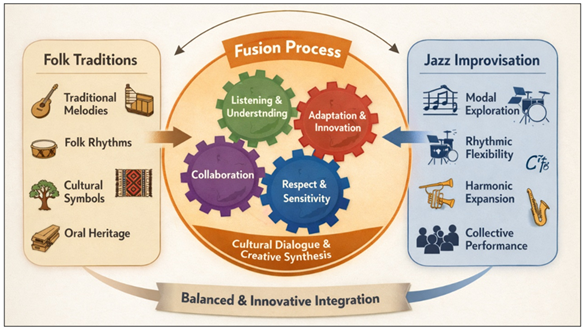
Figure 2 Integration Strategies for Folk and Jazz Music
4.1. Modal Improvisation and Folk Scales
Modal improvisation is an essential connection between jazz and folk music. Contrary to the functional harmony based improvisation, modal jazz lays stress on the scale based exploration, tonal centers that are maintained, and development of the melodies over longer periods of time. This style is consistent with folk conventions, which are based on modes instead of chordal progressions as their major organization form. Folk scales is a category of scale that in many cases can be quite easily translated into jazz by addressing it as an improvisational scale but not a harmonized melody.
Improving through folk-based modes helps jazz artists to interact with the melodic identity of the source tradition directly. Unobtrusive embellishment, intonation, and phrasing borrowed with folk performance habits may be introduced into jazz improvisation, enabling the improviser to avoid cultural loss but to be free of creativity. The modal improvisation therefore allows an expansion, diversification, and reinterpretation of folk melodies without being absorbed into heavy harmonic frameworks and thus distorting their original nature.
4.2. Rhythmic Syncopation and Polyrhythmic Adaptation
Rhythm is one of the major expressive elements of jazz and folk music but it is expressed differently in both traditions. Among the different features of jazz improvisation are the application of syncopation, swing feel, and rhythmic interaction among the members of the ensemble. These methods give a loose system of introducing folk rhythmic patterns such as asymmetric cycle and repetitive rhythmic patterns.
Polyrhythmic adaptation enables the musicians in jazz to superimposition several rhythmic patterns based on folk traditions so as to develop sophisticated temporal textures without losing the underlying pulse. As an example, a traditional folk rhythm can be preserved in the rhythm section as the soloists add syncopated changes or cross-rhythms. This style values the rhythmic nature of folk as a cycle but complements it with the improvisational nature of jazz. The rhythmic play creates the folk rhythms to be alive, dynamic and not fixed structures.
4.3. Harmonic Reinterpretation of Folk Melodies
Harmonic reinterpretation is one of the most unusual additions of jazz to the recontextualization of folk music. A great deal of folk music is traditionally monophonic or minimally harmonic, with the melodic deep-line and rhythmic stress as the major sources of musical expression. Expansion of harmonic possibilities in jazz improvisation is achieved by methods like harmonic substitution of chords, interchange of modes and reharmonization, where folk melodies can be placed into more enriching harmonic settings.
But reinterpretation of harmony needs to be restrained and culturally sensitive. Excessive harmonization may swallow the melodic simplicity with which folk music acts as an expressive medium. One approach used by jazz musicians to address this difficulty is to use open harmonies, pedal points or modal vamps to facilitate melodic improvisation without providing too much harmonic complexity. Jazz harmony through such strategies adds to, and does not substitute, the melodic and emotional content of folk material.
4.4. Collective Improvisation and Call-and-Response
Another of the pillars of the early jazz is collective improvisation, which has been an effective tool of expression in modern practice. Such an approach reflects the participatory and collective essence of most folk cultural practices, where music is not created by a virtuosity vacuum. Patterns of call and response, where folk music usually features, are easily converted to jazz ensembles, and the dialogue between soloists and rhythm sections and supporting instruments.
Collective improvisation in folk-jazz integration provides the possibility to have several voices of different cultures within one performance. Every musician also adds his or her interpretation when reacting to the similar musical signals, resulting in an overlay of sound and interaction. Such a participatory practice supports the concept of music as social practice, which corresponds to folk traditions that underline the importance of collective expression and collective ownership of musical accounts.
4.5. Improvisation as Cultural Negotiation
In addition to technical performance, improvisation as a cultural negotiation in the folk-jazz fusion. Jazz artists have to be constantly aware of the need to adhere to the norms and the urge to innovate. In this negotiation, there comes decisions that are to retain elements, reform in others and how to conceive folk material in contemporary performance circumstances.
In this regard, improvisation is not only an ethical but also an artistic practice. Through the experience of the tradition of source, its rhythms and modes, and cultural connotations, musicians are able to produce hybridized manifestation, respecting tradition yet adopting expression through contemporary means. This paper takes jazz improvisation not as a musical method, but as a reflective inquiry where continuity and innovation in culture is vigorously perpetuated.
5. Recontextualizing Folk Music Through Jazz
5.1. Adaptation of Folk Themes into Jazz Forms
Recontextualization of folk music in jazz will start with the modification of the traditional themes into the contemporary jazz. The folk melodies, rhythmic motives or lyrical forms are frequently preserved as the central thematic content and are embedded in jazz forms like head-solo-head or modal vamps or open-ended improvisational forms. This arrangement of structure enables folk material to serve as an identifiable point of reference and a point of creative experimentation.
Instead of utilizing folk themes as fixed quotations, jazz artists frequently cut, transposed or played rhythmically with them in improvisation. This has changed the melodic nature of the folk origin and allows flexible interplay with the modern jazz idioms. In this procedure, folk music gets replicated rather than duly reproduced as a form of musical narration that is changed over time through an improvisational discourse.
5.2. Improvisational Dialogues Between Tradition and Modernity
Jazz improvisation defines recontextualization and provides a continuity of dialogue between tradition and modernity. Based on continuity, rather than creation in history and community, folk music is faced by jazz, which focuses on the individuality of expression and improvisation. It is in the area of improvisation that these aspects of time overlap and musicians can negotiate the domain between traditional musical languages and new artistic sensibilities.
This dialogic process can be used in performances in which folk motives arise, subside and surface in new forms during an improvisation. Musicians can switch between following traditional phrasing and alternatively abstracting it by harmonic or rhythmic change. This oscillation is indicative of a larger cultural bargain, in which heritage is not viewed as something ideal and is not eroded into contemporary stylistic norms. Rather (tradition) is a resource of the creative expression of life.
5.3. Case-Oriented Approaches to Folk–Jazz Fusion
The recontextualization can be best seen in the form of certain musical realizations and not in the abstract theory as such. Case-based approaches enable one to examine in detail the way folk elements are incorporated into jazz performances and compositions. The cases can be regional folk traditions viewed in the prism of jazz bands, joint work of folk artists and jazz improvisers, or using traditional sources to create original works.
There is a difference in the extent of transformation in every instance, based on artistic intent, cultural context and performance setting. Others focus on the melodic faithfulness and preservation of rhythm where others focus on exploratory improvisation and style blending. The examination of these differences offers an understanding of the various ways in which musicians compromise legacy conservation and innovation in jazz situations.
5.4. Balancing Authenticity and Innovation
One of the main problems with folk-jazz recontextualization is the necessity to be authentic and creative at the same time. In this work, authenticity is seen not as strict adherence to original forms but rather as an approach that is respectful towards the cultural, historical and expressive aspects of folk music. On the other hand, the improvisational freedom and style experimentation of jazz is what innovation expresses.
Recontextualization can only succeed in avoiding cultural stagnation and excess abstraction. The key to this balance lies in the fact that musicians retain recognizable folk elements, like rhythmic cycles, modal contours, or narrative motifs, and then leave these elements to be reorganized through improvisation. This equilibrium makes folk music still culturally readable during its development in the performance of the modern jazz.
5.5. Recontextualization as Contemporary Heritage Practice
The assimilation of folk music to the modern jazz improvisation can be regarded as a contemporary heritage practice when viewed in the broader cultural context. Instead of preservation of tradition through archives or institutions, recontextualization inserts folk music back into active circulation in the contemporary artistic life. Jazz improvisation makes this circulation possible through promoting flexibility, discussion, and artistic regeneration.
The practice redefines preservation as a process and not an endpoint. Folk music will always live on through performance, reinterpretation, and issues of interaction to make it remain relevant to its audience across generational and cultural lines. By establishing the folk traditions as the part of the contemporary jazz, artists make cultural heritage more sustainable as well as they broaden the spectrum of the expressiveness of the contemporary improvisational practice.
6. Preservation Through Transformation
Figure 3

Figure 3 Preservation Through Transformation
6.1. Improvisation as a Tool for Cultural Sustainability
The maintenance of musical heritage is usually equated with recording, storing and exact reproduction of traditional forms. Although these methods are necessary, they might not be quite applicable to the cultural continuity requirement of shifting social and artistic conditions. This paper progresses the view that change - based on respect and comprehension - can serve as an effective form of preservation. Even the nature of jazz improvisation is in favour of such an active approach, which makes folk music traditions not lose their connection to their roots.
With the aspect of improvisation, folk heritage can be maintained as performative, adaptive and socially active. Repeated reinterpretation helps in introducing folk melodies and rhythms to different audiences and performances situations, thus guaranteeing their survival that goes beyond the local or the historical. This is what the principle of cultural sustainability is also about, in which traditions survive not through preservation, but through adaptation in a process of dialogue with modern forms and practices.
6.2. Transformation Without Cultural Dilution
A key issue in the evolving of folk music is that it is highly likely that one will end up with a watered-down culture because of the over-adaptation or the stylistic takeover of contemporary styles. The transformation of the core musical and cultural elements in order to preserve them must be done delicately where the bottom layer should not be lost along the way as the new expressive layers are introduced. The jazz improvisation provides mechanisms of sustaining this balance especially by modal continuity, rhythmic integrity, and thematic reference.
Preservation of recognizable folk patterns, including cyclical rhythmic patterns, modal scheming, and standard wording, helps musicians to make sure that change does not lead to cultural loss. Rather, jazz is a contextual magnifier, broadening the expressive potential, but retaining the identity of the folk point of origin. And this method supports the notion that innovation and authenticity do not exclude each other, but rather enhance one another, as long as this is guided by cultural sensitivity.
6.3. Documentation, Recording, and Living Archives
Jazz improvisation is also a way of transformation that results in preservation by the modern practice of documentation. Modern archives of folk music are made in the form of live performances, studio recordings, and audiovisual media. These living archives are in contrast to the traditional archival records, which represent continuing creative practice, highlighting how traditions evolve over time, by performers and circumstances.
This kind of documentation is important in teaching, research and passing of knowledge between generations. The reinterpretations of folk music in the style of jazz can motivate new learners, promote cross-genre cooperation and grow the pedagogical scope of traditional forms. Cultural memory is elaborated to encompass continuity and change by recording transformation instead of maintaining it in its initial form.
6.4. Educational and Pedagogical Implications
Conservation by revolution has important consequences to music education and pedagogy. Inclusion of folk music in the jazz improvisation curriculum promotes the student to be immersed in the cultural background as they acquire the skills in creativity. This practice promotes critical listening, cultural sensitivity and improvisational competency, which interconnects between the old and new musical education.
The educational systems, which focus on transformative preservation, enable students to encounter folk music as a living activity as opposed to a historical phenomenon. In the course of improvisation, learners become a direct subject of the cultural continuity and develop an understanding of technical and symbolic aspects of the heritage music. The model is inclusive and interdisciplinary, which facilitates the significance of folk traditions in the education of modern music.
6.5. Ethical Considerations in Transformative Preservation
Ethical reflection is also required in order to preserve folk music by transformation. Cultural representation, appropriation and authorship issues have to be considered so that reinterpretation is not offensive and hostile. Jazz performance out of the cultural context, can easily strip folk themes to ornamental patterns that are empty of semantics.
This paper recommends intelligent participation, consultation with carriers of traditions, and recognition of cultural roots. The preservation of folk music in an ethical transformative manner is characterized by transparency, reciprocity and being sensitive to the sociocultural contexts that the folk music is produced. Through the principles of this kind of adoption, jazz improvisation would serve as a responsible and inclusive system of perpetuating musical and heritage.
7. Conclusion
This paper has examined the dynamic interdependence between folk music traditions and modern jazz improvisation, with the interaction between the two being seen as a preservation process that takes place through transformation. Instead of perceiving heritage as a static or delicate object, the study does prove that folk music is able to maintain cultural relevance when practised in an adaptive and creative way. Jazz improvisation and its focus on modal experimentation, rhythmic plasticity, and act of collectivity comes out as a rather potent tool of recontextualizing folk content without obliterating its cultural identity. As the analysis shows, meaningful integration is a matter of maintaining the core folk features, including rhythmic patterns, modal patterns, performative finesse, and letting improvisational reinterpretation bring new dimensions of expressiveness. With the help of this balance, the folk music is not only preserved but restored, being able to operate in the contemporary performance space and still preserving its symbolic and emotional richness. The main value of this study is its cross-disciplinary definition of folk-jazz integration as a musical and cultural activity. The study provides a conceptual model that places improvisation as a cultural sustainability mechanism, by bridging ethnomusicology, jazz studies, and intercultural theory. It prolongs the current discussion of musical hybridity in terms of ethical involvement, awareness of circumstances, and responsibility of the performer. What the paper highlights, in terms of the performance studies, is the concept of improvisation as a reflective action, i.e., a process of the mediation between the historical legacy and the modern inventiveness. This view disrupts the conventional dichotomy between conservation and innovation, which implies that transformation may be a valid and fruitful way of conserving heritage. The results are also useful in the current arguments on the ways that traditional arts can still be susceptible in globalized musical ecosystems. Finally, this study confirms that the beats of heritage can not be restricted to the past. Individually, folk music may still grow, thrive, and inspire in the present cultural realms through the modern jazz improvisation. The concepts of tradition and innovation can be used in a constructive relationship as long as preservation is perceived as an active and inventive process. As a continuity through transformation, the musicians and scholars, alike, will be able to make folk music a living and expressive process which, though located in the heritage, will still be able to look to the future.
CONFLICT OF INTERESTS
None.
ACKNOWLEDGMENTS
None.
REFERENCES
Al-Mansour, S. (2023, September). Maqam and Blue Notes: A Comparative Analysis of Arabic Folk and African American Jazz Improvisation. World Music Quarterly, 31(3), 204–219.
Brooks, J. (2025, September). Recontextualizing the Blues:
Folk Origins and Modern Improvisational Complexity. American Music Perspectives, 33(3), 301–318.
Dubois, E. (2025, February). Oral Traditions in the Digital Age: Preserving French Folk Songs Through Jazz Reinterpretation.
Cultural Heritage Innovation, 9(1), 156–170.
Fernandez, R. (2026, January). Flamenco-Jazz: Analytical
Perspectives on Phrygian Mode Improvisation. Spanish Musicology Review, 48(1), 12–28.
Garcia, J. M. (2024, February). Preserving Heritage:
The Integration of Balkan Folk Rhythms into Modern Jazz Improvisation. Journal of Ethnomusicology Research, 18(2),
45–59.
Ibrahim, B. (2025, May). West African Poly-Rhythms
and the Evolution of Modern Jazz Drumming Patterns (2020–2025). African Rhythm Studies, 11(2),
89–104.
Kim, S. (2025, January). Arirang Variations:
South Korean Folk Themes in
Contemporary Big Band Jazz. East Asian Performance Studies, 27(1), 66–82.
Moretti, L. (2024). The Mediterranean Sound:
Italian Folk Polyphony as a Basis for Jazz Collective Improvisation. Mediterranean Musicology Journal,
10(2), 19–35.
Muller, H. (2025, November). Harmonizing the Traditional: Advanced Modal Substitution in Folk-Jazz Orchestration. Journal of Jazz Studies, 22(5), 77–94.
Nguyen, T. (2024). Pentatonic Parallelism: Vietnamese Folk Elements in Contemporary Jazz Fusion. Asian Music Journal, 56(2), 15–30. https://doi.org/10.1353/amu.2024.0012
Peterson, G. (2025, December). The Role of Improvisation in the Survival
of Dying Folk Dialects. Sociomusicology Today, 19(4),
210–225.
Rossi, M. (2025, January). The Ethno-Jazz Movement in Europe: Sustaining Regional Identity in a Globalized Market. European Music Review, 14(6), 33–47.
Schmidt, L. (2025). Digital Archives and Live Performance: Using Folk Field Recordings as Improvisational Prompts. Computer Music Journal, 49(1), 88–102. https://doi.org/10.1162/COMJ_a_00612
Singh, A. K., and Mehta, R. (2025, May). Raga-Jazz: Recontextualizing
Indian Folk Melodies Through
Modal Jazz Frameworks. International Journal of Musicology Studies, 12(4),
112–128.
Tanaka, K. (2024). Shakuhachi Techniques in Modern Jazz Saxophone Improvisation:
A Case Study. Journal of Intercultural Music
Performance, 7(3), 41–55.
Williams, O. (2025, August). Sustainability in Jazz:
Incorporating Indigenous
Folk Narratives. Journal of Sustainable Arts, 13(2),
45–60.
Wright, C. (2024, October). The Influence of Celtic Fiddle Styles on Contemporary Jazz Violin Improvisation. Folklore & Jazz
Performance, 6(4), 134–150.
Zhao, Y. (2024). Reimagining the Silk Road: Chinese Folk Pentatonicism in New York Jazz Scenes. Global Sonic Transit, 5(3), 201–215.
|
|
 This work is licensed under a: Creative Commons Attribution 4.0 International License
© ShodhKosh 2026. All Rights Reserved.