ShodhKosh: Journal of Visual and Performing ArtsISSN (Online): 2582-7472
|
|
Design and Evaluation of a Management Framework for Online Visual Art Education Platforms
Dr. Shreyas Dingankar 1
 ,
Dr. Rajita Dixit 2
,
Dr. Rajita Dixit 2 , Dr. Seema Tarnekar 3
 , Dr. Jayashree Patil 4
 ,
Dr. Ketaki Anay Pujari 5
,
Dr. Ketaki Anay Pujari 5 , Dr. Devendra Puntambekar 6
1 Institute
of Management and Entrepreneurship Development, Bharati Vidyapeeth Deemed to be
University Pune, India
2 Assistant
Professor, Centre for Distance and Online Education, Bharati Vidyapeeth Deemed
to be University Pune, India
3 Assistant Professor, Centre for Distance and Online Education,
Bharati Vidyapeeth Deemed to be University Pune, India
4 Assistant Professor, Centre for Distance and Online Education,
Bharati Vidyapeeth Deemed to be University Pune, India
5 Centre for Distance and Online Education, Bharati Vidyapeeth Deemed
to be University Pune, India
6 Director (E-Learning and Skill Development), Centre for Distance and
Online Education, Bharati Vidyapeeth Deemed to be University Pune, India
|
|
|
ABSTRACT |
|
|
During and
after the COVID-19 pandemic, online visual art education has grown, but most
platforms do not have adequate governance and operational infrastructure. The
courses in art demand studio-like work, critique and handling of huge media
files. The generic learning management systems are generally ineffective, as
it prioritizes the text-based courses and fails to consider intellectual
property or community safety. The given paper suggests a management system
applicable to online platforms of visual art education. The framework was
created based on the existing platforms analysis, stakeholder needs and gaps
in literature analysis. It consists of governance systems, curriculum-level
lifecycle management, studio orchestration, quality assurance, community
moderation, learner support, analytics and privacy protection. A pilot study
on a medium art website was analyzed in terms of user interaction and
performance indicators. Quantitative findings indicate that course completion
(71.2 to 83.6 percent), the number of learners who are active weekly, and the
critique and system usability are improved, whereas feedback and support
response time significantly drop. The qualitative feedback was marked with
more distinct roles, faster moderation and increased learner satisfaction.
The results imply that the quality of learning and operational efficiency of
visual art platforms can be improved by organizing management processes. It
has implications that guide administrators aiming to professionalize
art-oriented platforms, and provide policy-makers with information about
digital studio pedagogy. The adaptive analytics in creativity evaluation and
cross-platform accreditation should be studied in the future. |
|||
|
Received 27 June 2025 Accepted 10 October 2025 Published 28 December 2025 Corresponding Author Dr.
Shreyas Dingankar, shreyas.dingankar@bharatividyapeeth.edu DOI 10.29121/shodhkosh.v6.i5s.2025.6982 Funding: This research
received no specific grant from any funding agency in the public, commercial,
or not-for-profit sectors. Copyright: © 2025 The
Author(s). This work is licensed under a Creative Commons
Attribution 4.0 International License. With the
license CC-BY, authors retain the copyright, allowing anyone to download,
reuse, re-print, modify, distribute, and/or copy their contribution. The work
must be properly attributed to its author.
|
|||
|
Keywords: Visual Art E-Learning, Studio Pedagogy, Platform
Governance, Learning Analytics, Quality Assurance, Community Moderation,
Accessibility |
|||


1. INTRODUCTION
Online visual art education has grown steadily over the last decade, accelerated by the COVID‑19 pandemic. Art schools and community programs shifted to remote instruction using video conferencing, asynchronous tutorials and digital critique. This shift ensured continuity but revealed significant challenges. Unlike courses with text‑centred content, art lessons rely on hands‑on creation, studio feedback and display of high‑resolution images or videos. The sudden transition exposed logistical issues such as access to materials, digital recording equipment and reliable broadband Grushka et al. (2022).
1.1. Background of online visual art education
Art education has historically been delivered through studio classes where learners observe and practise techniques under expert guidance. Digital tools for drawing, painting, sculpture and media arts have expanded the field. Learning communities formed around forums, blogs and video platforms long before formal online courses. Massive open online courses introduced structured art courses, but they often relied on peer review and lacked instructor involvement. During the pandemic, distance learning became a necessity. A study of art students in Saudi Arabia reported that 79 % found distance learning lacked excitement, adequate practical methods and accurate evaluation. Students highlighted the need for art‑specific online environments and better support for both teachers and learners Lamar (2022).
1.2. Growth of digital platforms for art instruction
The proliferation of digital platforms dedicated to teaching art is evidence of the need for remote learning. Platforms like Skillshare and Udemy have thousands of classes on art; universities are using Zoom and Canvas to offer studio classes. Social media networks (Instagram, TikTok) became informal learning spaces, where artists share process videos and feedback is given to them. The "Internet +" initiative in China focused on integration of the internet and education. Research by Zhang and Li showed that the number of colleges that do not have the official curriculum for art courses was quite large; about 40 % of the selected institutions did not have the syllabus for aesthetic education majors. This gap highlights the importance of managing art programs in a digital setting in a structured way.
1.3. Managerial and operational challenges in visual art platforms
Running an online art education platform requires a variety of tasks: finding qualified instructors, curating courses, managing intellectual property, supporting student critiques and moderating the interactions in the community. Platforms have to cope with large media files and offer tools for drawing, painting or sculpting. Generic learning management systems tend to be quite text centered and are sometimes not capable of uploading high-resolution images or 3D models. They also do not have specialized workflows for iterative critique and portfolio development. Limited clarity of roles results in delayed decisions; poor moderation can result in inappropriate access to content; lack of strong versioning can result in artists losing their work. Research on distance learning in art education stresses that a proper digital teaching process is of utmost importance when it comes to the ability to maintain engagement and evaluation quality Zhang and Li (2023).
1.4. Need for stronger management than generic LMS
Studio-based approaches to art education are based on the culture of critique, in which students present work and receive feedback. These sessions involve scheduling, documenting and policies for respectful discourse. Generic LMS tools have primitive forums which are not optimal for image-centric critiques. Art projects can contain huge multimedia files, without proper version control, students can potentially lose work. Intellectual property issues come into play when students put original works on the Internet. There is also need for community moderation to ensure protection from plagiarism or misuse of work. The complexity of these issues requires a management framework to deal with more than standard course administration issues, but with studio workflow issues, content licensing and community safety. Gao and Xing's work on virtual sculpture highlights that the fusion of AI and wireless networks can make art teaching more interesting and effective, which allows the teacher to demonstrate works in different media and assess quality in a digital manner Gao and Xing (2023), Lin et al. (2023).
1.5. Research gap and contributions
Existing studies about online art education have been focused on pedagogical strategies, technological tools and student experiences. Few have provided comprehensive management frameworks that address issues of governance, curriculum lifecycle, quality assurance, moderation, learner support and analytics. Surveys of art students reveal dissatisfaction with how they are evaluated as well as lack of art-specific online environments. Investigations into the digital art platforms show gaps in curriculum design and teacher support with significant numbers of colleges not having formal art syllabi. Studies about virtual sculpture education indicate that AI and wireless network provide opportunities for exciting art teaching, but they do not deal with the governance of the teaching platform. Thus, there is a need to design and validate an integrated management framework.
1.6. Problem statement and motivation
The problem addressed in this paper is the absence of a systematic management framework for online visual art education platforms. Inadequate management leads to inconsistent quality, poor learner engagement, delayed feedback, intellectual property risks and administrative inefficiencies. Without clear roles, policies and processes, platforms struggle to support studio workflows and maintain community standards. The motivation for this work arises from observed issues during the pandemic and from studies indicating the need for art‑specific digital environments. An effective management framework should improve course quality, streamline operations and provide a safe, supportive environment for creativity.
1.7. Objectives and contributions
The overall goals in this study are also to (1) propose a robust management framework tailored to online visual art education platforms; (2) implement a pilot version of the management framework in a mid-sized online platform; (3) have it tested in terms of its effects on learner engagement, rates of course completion, quality of critiques, resolving of support requests and system usability; and (4) obtain practical insights and recommendations for platform administrators. The contributions consist of a detailed model of governance, curriculum management, orchestration of studio workflow, quality assurance, community moderation, learner support, analytics and privacy. The pilot evaluation is a source of evidence that structured management produces improving learning outcomes and enhanced operational efficiency.
2. Background and related work
Online art education research in pedagogy, technology & management. Early research into digital gallery. Studio critique and videoconferencing. Emergency remote teaching was the subject of many evaluations during the pandemic. It was highlighted in the research the importance of maintaining studio culture and being given opportunities to interact with peers and instructors Cutcliffe et al. (2024).
One study interviewed with visual arts educators regarding online teaching and found the tension between accepting the use of digital tools and maintaining tactile learning. Another case study focused on the remote learning of emergency intervention that impacted studio curricula and saw the necessity of adapted assessment methods. Research on digital art platforms under 'Internet +' initiative used deep learning algorithms that combined data from several sources and identified gaps in curriculum provision Cutcliffe et al. (2024). A work on virtual sculpture discussed using AI and wireless networks to increase the level of engagement, allowing teachers to present works in multiple media and automate quality evaluation. Investigations into virtual studios focused analyse learners building data practices in art based learning environments. There were other studies of instructional transitions during the pandemic with documentation of pragmatic strategies of studio-based courses Tangredi et al. (2024), Sutherland et al. (2024).
More recent research has taken into account creativity in the home and via online instruction strategies for art education students. Humanistic data art visualization has been used to examine the learner growth in challenge-based programs, showing the promise of data analytics in art education Mack and Pritchard (2024). Studies of online arts platforms for older people during Covid-19 focused on the role of participatory arts in wellbeing. Virtual museum tours have been implemented in art history courses in order to engage students with the subject, with increased engagement of learners Burke and Pavlou (2024). Additional work on the teaching of the visual arts online has been concerned with ways of promoting studio practices in the remote environment. Systematic reviews on virtual reality in art education report an increase in interest in immersive technologies. Peer feedback with the use of digital spaces have been studied in schools with an emphasis on the power of visual feedback systems Xie (2024), Forslind et al. (2025). Research into technology acceptance in regard to learning creative arts online, in teacher education, suggests that attitudes and support are critical. Design and implementation of digital art education platforms through artificial intelligence and cloud technologies show improvements in automation and consistency Pavlou and Burke (2025), Xie et al. (2025).
The literature identifies many themes: importance of continuing studio practices online; need for ordered evaluation and quality assurance; technology's role for deeper involvement; and need for conducive settings for learners and instructors. However, most studies focus on different individual aspects (e.g. AI tools, virtual museums) and not on general management. Only a few deal with governance structures, control of content lifecycle or community moderation. Reports of dissatisfaction of students with online art courses and the absence of formal art courses taught in universities suggest systemic issues. Consequently, a holistic management framework that combines operational processes, governance and analytics is underdeveloped.
This research attempt addresses this gap by combining research findings from literature into a coherent framework. It responds to calls for improved methods of evaluation, targeted digital environments and enhanced governance. By validating the framework by means of a pilot implementation and measuring its impact, the paper adds empirical evidence of the benefits of structured management for online visual art education platforms.
3. Problem definition and requirements
Online visual art education platforms involve a number of stakeholders: learners, instructors, mentors, administrators, content teams and moderators. As such, learners need a supportive environment for skills development, timely feedback and clear criteria for evaluation. Instructors need tools to create the assignments, deliver the demonstrations, critique student work and follow progress. Mentors work with learners one-on-one and provide individual support. Administrators are responsible for platform policies, resources and community standards. Content teams build and curate curricula, create rubrics & maintain learning materials. Moderators ensure that the interactions in the community are respectful and that intellectual property is safeguarded. The platform must meet a number of requirements:
1) Content lifecycle control: There should be processes for creating, reviewing, updating and archiving the course materials. Versioning is important for keeping historical records, as well as enabling instructors to perfect lessons.
2) Critique workflow; Student should be able to upload images, videos or 3D models of work. The platform should facilitate the provision of structured feedback templates, and facilitate synchronous/ asynchronous critique sessions.
3) Integrity of assessment: Rubrics need to be transparent and consistent. Systems should include mechanisms for encouraging and supporting peer assessment while guarding against plagiarism and abuse. Secure submission of work is needed for protection of the original content.
4) Intellectual property management: The work produced by students is personal creative work. Policies need to be in place regarding ownership, licensing and reuse rights. Mechanisms of watermarking, or consent, are available to protect works.
5) Accessibility: Platforms should adhere to accessibility standards including captions and text and interface options for a variety of people.
6) Performance: Dealing with high-resolution images and videos has to do with performing storage and delivery mechanisms. Scalability is necessary when the number of users increases.
7) Community safety: Moderation tools are needed to detect and process inappropriate content, harassment or copyright infringement. Clear rules of conduct and reporting channels need to be in place
8) Data privacy: Privacy for personal data and creative works needs to be ensured. Access controls and consent management should correspond to data protection regulations.
Defining these requirements informs the design of a management system/ framework that is capable of enabling creative learning but also fair, safe and efficient in its operation.
4. Proposed management framework
The proposed framework has eight components together addressing the areas of governance, curriculum management, studio workflow, quality assurance, community moderation, learner support, analytics and privacy. Each component contains processes, roles and tools that are specific to the needs of visual art education.
4.1. Governance and operating model
It is important to have clear governance for decision-making and accountability. The framework specifies roles such as Platform Director, Curriculum Coordinator, Studio Manager, Support Lead and Moderator Lead. Decision rights are assigned to these roles. For example, the Platform Director approves any new courses and policies, and the Curriculum Coordinator focuses on the syllabus development. A policy catalogue includes guidelines on such topics as intellectual property, conduct, accessibility and data privacy. An escalation matrix defines how issues go through support, moderation, and leadership so as to support quick resolution of reports of misuse or technical problems. Periodic governance meetings are held to review the performance metrics, feedback from users and changes in the policies.
4.2. Curriculum and content lifecycle management
This component addresses the issues around course material creation, review, versioning and archival. Rubrics: Standardized rubrics are set criteria for defining learning outcomes and criteria against which they will be assessed. The calibration of rubrics is performed by periodical review sessions. Versioning: There is version control for each course and each assignment to overcome this condition by keeping record of these and making those ready for the rollback. Review cycles: Instructors and peer reviewers review content for clarity, accuracy and alignment with learning objectives. Media standards: Guidelines are provided for resolution, format and file size of images and videos, to ensure consistent quality and efficient delivery Archival: Completed or outmoded courses are archived with metadata for future reference or retrieval.
4.3. Studio workflow orchestration
Studio workflows are interpretations of the relentless iterative process of art making in a physical studio. Assignment pipelines define stages from brief publication, to submission, critique and revision. Students hand in work in supported formats (JPEG, PNG, MP4, OBJ). Submissions formats are passed automatically to standards check for media compliance. Critique windows for providing feedback for peers and instructors Technical content of feedback templates help guide the reviewers to provide feedback on technique, concept and originality, to get constructive and respectful critiques. The iterations are tracked in the platform by which learners can compare versions and record their progress.
4.4. Quality assurance and evaluation controls
Quality assurance ensures courses are of a certain standard and that the assessments are consistent. Course QA checklist Selections to Cover: Course Structure Accessibility Media Quality and Alignment with Rubrics Rubric calibration sessions are used for instructors and mentors to estimate samples of works to agree on interpretation of the criteria. Sampling-based review periodically audits a subset of submissions to ensure that submissions conformed to rubrics and if there are any anomalies in the grading. The QA team reports back to the Curriculum Coordinator and makes recommendations for improvement.
4.5. Community, moderation and academic integrity
Community wellbeing is of utmost importance to creative expression. Conduct rules recognize expected behaviours to discourage plagiarism, harassment and discrimination. Reporting mechanisms, so that users can report inappropriate content or behavior. Moderation service-level agreements (SLAs) set response times for example; urgent reports for harassment must be dealt with within 24 hours. Plagiarism and AI-generated content policies define the consequences for using others work without their permission or for a misuse of the generative tools. Moderators are trained on art specific issues such as derivative works and fair use. Appeals processes to appeal contested moderation actions.
4.6. Learner support and instructor enablement
A multi‑tier help desk addresses technical issues, course enrolment questions and policy inquiries. Tier 1 handles common issues; Tier 2 escalates technical or policy‑related questions; Tier 3 involves specialists for complex cases. Onboarding sessions introduce new students and instructors to platform tools, studio workflows and policies. Faculty development programs offer workshops on online pedagogy, digital media techniques and rubric design. A resource hub contains tutorials, template assignments and best‑practice guides.
4.7. Analytics and continuous improvement
An integrated analytics module collects data on engagement, completion, critique participation, turnaround times and system performance. A KPI tree links operational metrics (e.g., feedback turnaround) to strategic goals (learner satisfaction). Dashboards provide real‑time insights for administrators and instructors. Feedback loops gather learner and instructor input through surveys and forums. Intervention playbooks define actions when metrics fall below thresholds; for example, if critique participation drops, the platform may send reminders or offer incentives. Analytics also inform content updates and training needs.
4.8. Security, privacy and IP protection
Security measures include role‑based access controls, encryption of personal data and secure storage of media. Watermarking options allow learners to mark uploaded images to assert authorship. Licensing options enable students to choose Creative Commons or custom licenses when sharing work. Consent and takedown processes ensure that students can request removal of their work and control sharing. Compliance with data protection laws (e.g., GDPR equivalents) is monitored. Regular security audits assess vulnerabilities and incident response preparedness.
5. Implementation blueprint
The framework was implemented on a mid‑sized online art education platform serving approximately 500 learners and 20 instructors. The implementation involved designing system modules, establishing data flows and setting operational cadence.
5.1. System modules
1) Content module: Hosts course materials, stores rubrics and manages versioning. It integrates with a media processing service that automatically compresses images and videos to platform standards. It includes metadata fields for licences and tags.
2) Studio submission module: Provides user interfaces for assignment submission, file uploads and version tracking. It validates file formats and ensures uploads comply with size limits. It links to the critique module.
3) Critique module: Enables reviewers to view submissions and provide feedback. It supports text, audio or video comments, reference marking and side‑by‑side comparison of versions. Templates guide reviewers through structured feedback.
4) Moderation module: Aggregates reports, flags content, and tracks resolution. It includes dashboards showing pending cases and SLA timers. Moderators can review content without altering original files.
5) Analytics module: Collects interaction data from other modules. It generates reports on completion rates, engagement, feedback turnaround and support tickets.
5.2. Data flow and logging strategy
Data flows begin with content creation. Instructors upload materials, which are reviewed and approved by the Curriculum Coordinator. Approved content is versioned and stored. When assignments are released, students submit work through the submission module. Each submission triggers logging of metadata such as timestamp, file size and licence choice. Critiques generate logs of reviewer ID, time and feedback length. Moderation actions record the type of issue, handling time and outcome. Support tickets log issue category, resolution time and satisfaction rating. Logs feed into the analytics module, enabling cross‑module analysis. Audit trails ensure transparency and accountability.
5.3. Operational cadence
Operations are structured around weekly, monthly and termly cycles. Weekly quality assurance: The QA team reviews a sample of assignments and moderation cases, ensuring compliance with rubrics and conduct policies. Findings are discussed with instructors. Monthly content review: The Curriculum Coordinator convenes a committee to review course materials, update rubrics and consider new course proposals. Term audits: At the end of each term, a comprehensive audit analyses key metrics, surveys students and instructors, and reviews policy adherence. Recommendations feed into the next cycle.
5.4. Pilot deployment and training
The platform team configured roles according to the framework and trained staff on new procedures. Workshops were held for instructors on rubric calibration and feedback templates. Moderators received training on conduct rules and IP policies. Students attended orientation sessions. Feedback was collected after each training to refine materials. The pilot ran for one term (16 weeks), during which the platform was monitored closely and support was provided to users. Metrics were recorded throughout the term to evaluate impact.
6. Evaluation methodology
The evaluation aimed to assess whether the management framework improved learning outcomes and operational efficiency. The methodology covered pilot setting, instruments, baselines and statistical tests.
6.1. Pilot setting
The pilot involved six courses across painting, design and digital media. There were 125 learners (undergraduate and continuing education) and nine instructors. The duration was one academic term (16 weeks). All participants consented to the study. Data were anonymized.
6.2. Instruments
Quantitative instruments included:
1) System Usability Scale (SUS): A standard ten‑item questionnaire measuring user perception of the platform.
2) Satisfaction survey: Custom questions on content quality, critique experience and support.
3) Completion rates: Percentage of enrolled learners who completed all assignments.
4) Engagement: Weekly active learners divided by total learners.
5) Critique participation: Average number of peer comments per learner per week.
6) Feedback turnaround time: Median hours between submission and instructor feedback.
7) Support ticket resolution: Median hours from ticket creation to resolution.
6.3. Qualitative data were gathered from open‑ended survey responses and interviews.
Baselines
Two baselines were used:
1) Ad‑hoc management: Data from the same platform before framework implementation, when processes were informal and relied on instructors’ discretion.
2) Standard LMS: Data from a parallel course run on a generic learning management system with no specialised studio workflows.
6.4. Statistical tests
To assess differences between the framework and baseline,
paired sample t‑tests were conducted for key metrics. Let  denote the mean of a metric before and after
the framework. The test statistic is:
denote the mean of a metric before and after
the framework. The test statistic is:

Where is the mean of differences and  is the standard deviation of those differences.
The degrees of freedom are n−1. A second
equation expresses the confidence interval for the mean difference:
is the standard deviation of those differences.
The degrees of freedom are n−1. A second
equation expresses the confidence interval for the mean difference:
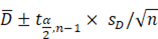
where  is the critical value from the t‑distribution.
A significance level of 0.05 was used. Qualitative responses were coded and
thematically analyzed to complement quantitative findings.
is the critical value from the t‑distribution.
A significance level of 0.05 was used. Qualitative responses were coded and
thematically analyzed to complement quantitative findings.
7. Results
7.1. KPI improvements
The Table 1 below summarizes key performance indicators (KPIs) before and after framework rollout.
Table 1
|
Table 1 KPI Comparison |
|||
|
KPI (Platform
Management) |
Baseline (Before
framework) |
After framework
rollout |
Relative change |
|
Course completion rate
(%) |
71.2 |
83.6 |
+17.4 % |
|
Weekly active learners
(%) |
58 |
74.5 |
+28.4 % |
|
Critique participation
(avg. peer comments / learner / week) |
1.6 |
3.1 |
+93.8 % |
|
Median feedback
turnaround time (hours) |
62 |
28 |
−54.8 % |
|
Support ticket median
resolution time (hours) |
38 |
14 |
−63.2 % |
|
Community reports
resolved within SLA (%) |
64 |
91 |
+42.2 % |
|
System Usability Scale
(SUS /100) |
72.4 |
84.1 |
+16.2 % |
The data show that implementation of the management framework led to notable improvements across operational and learning metrics. The completion rates have increased by 17.4% points which makes us think the structured workflows and support improved learner persistence. Weekly active learners increased by 28.4 % which indicated increased engagement. Critique participation almost doubled where there were templates and some defined time windows for critique. Feedback turnaround time was reduced from 62 hours to 28 hours and the resolution for support decreased from 38 hours to 14 hours, which shows that responsiveness is better now. Community reports resolved within service level agreements increased by 42.2 %, which represents the impact of moderation processes. System Usability score was found to increase by around 12 points, leading to an improved user experience. The framework seems to increase both user satisfaction, as well as the efficiency of the operation.
7.2. Comparative results vs baseline approaches
The Table 2 compares the proposed framework with ad‑hoc management and a standard learning management system (LMS). Values are averages across similar courses.
Table 2
|
Table 2 Comparative Result |
|||
|
Metric |
Ad‑hoc
management (no formal controls) |
Standard LMS setup |
Proposed management
framework |
|
Completion rate (%) |
69.5 |
76 |
83.6 |
|
Critique depth (avg.
words per peer feedback) |
42 |
68 |
103 |
|
Rework cycles
supported (structured iterations per project) |
1 |
1–2 |
3 |
|
Moderation SLA
compliance (%) |
55 |
73 |
91 |
|
IP complaints per
1,000 uploads |
4.8 |
3.1 |
1.2 |
|
Instructor admin time
(hrs/week/course) |
6.5 |
5.2 |
3.4 |
Completion rates are the highest under the framework (83.6 per cent), an example of the value placed on structured processes. The level of peer feedback is noticeably heightened in this way (whereas on a regular LMS, students write an average of 68 words about each of their critiques, they instead write a mean of 103 words each). Structured management allows for up to three rework cycles per project for iterative improvement of artwork. Moderation service level agreement compliance is higher, due to better and quicker handling of reports and enhanced community health. Intellectual property complaints are reduced (suspected to be because of clear licensing policies and watermarking options) Less instructor administrative time per course, implying that automation and defined workflows mean less administration time. These results indicate that the application of a specialised management framework is able to provide superior results to online art education.
The pilot results show that officiating management processes improves both learning and operational outcomes. Increased completion and engagement indicate motivating work flows, proper rubrics and feedback. Improved critique participation and depth This use of structured critique windows and templates has shown to grapple with students to ensure they participate thoughtfully in each other's critiques. Quicker reduction of feedback and support time is a symptom of the efficient role definitions and escalation matrices. Moderations in improvements and reduced IP complaints emphasize the significance of clear rules of behaviors and licensing options. Trade offs would be more moderation workload and more time spent on calibration of rubrics. Initial onboarding takes extra work from the instructors and learners, and creating analytics dashboards involves technical work. However, these costs are far outweighed by quality and efficiency gains. The flexibility of the framework makes it possible to adapt to various art disciplines and institutions.
8. Limitations and threats to validity
The study has limitations. The pilot for it involved one medium sized platform and a small number of courses and participants. Results may not generalize to the larger platform and diverse cultural context. Different disciplines within visual arts are extremely variable; for example, painting, design and media arts may react differently to management changes. The study was based on self-reported measures of satisfaction, which are prone to bias. Pilot was a one-term program; long term of sustainability and retention are unknown. While paired t tests were used, the sample size for some metrics was small and this lowers statistical power. The framework involved a motivated team; in less prepared institutions that may be more difficult to adopt. Future studies should repeat the research in multiple platforms, disciplines and cultural settings and involve longitudinal assessments.
9. Conclusion and future work
The proposed work examined a management framework for online visual art education platforms. The framework deals with governance, curriculum management, studio workflows, quality assurance, community moderation, learner support, analytics and privacy. A pilot implementation had significant gains in learner engagement, completion rates, participation of critiques and operational efficiency. The findings highlight the need to focus on how to put in place structured processes and clear policies in supporting creative learning online. Future work will involve advanced analytics to help measure creative growth and incorporating immersive technology like virtual reality into studio process and creating standards for cross platform accreditation of art classes. Further investigations in various cultural setting and disciplines will help refine the framework and drive widespread adoption.
CONFLICT OF INTERESTS
None.
ACKNOWLEDGMENTS
None.
REFERENCES
Burke, K., and Pavlou, V. (2024). Teaching Visual Arts Online: Strategies for Fostering Studio-Based Practices in Remote Learning Environments. Interactive Learning Environments. https://doi.org/10.1080/10494820.2024.2326588
Cutcliffe, A., Price, M. J., Kiriakos, A. V., Block, M. K., and Knochel, S. A. (2024). Pragmatic Instructional Transitions: Art Education During and Beyond the Pandemic. Studies in Art Education. https://doi.org/10.1080/00393541.2023.2285208
Forslind, E.-L., Hrastinski, S., and Forsler, I. (2025). Visual Peer Feedback using a Digital Space: A Study of Sixth-Grade Students in the Visual Arts Classroom. Learning Environments Research, 28, 171–186. https://doi.org/10.1007/s10984-025-09527-2
Gao, G., and Xing, K. (2023). Virtual Sculpture for Art Education Under Artificial Intelligence Wireless Network Environment. International Journal of Web-Based Learning and Teaching Technologies. https://doi.org/10.4018/IJWLTT.334234
Grushka, K., Buchanan, R., Whittington, M., and Davis, R. (2022). Postdigital Possibilities and Impossibilities Behind the Screen: Visual Arts Educators in Conversation About Online Learning and Real-World Experiences. Video Journal of Education and Pedagogy, 7(1), 1–23. https://doi.org/10.1163/23644583-bja10027
Lamar, T. A. M. (2022). The Impact of Emergency Remote Learning on a Studio Curriculum Analyzed Via Case Studies. Journal of Textile Design Research and Practice. https://doi.org/10.1080/20511787.2022.2086389
Lin, T.-C., Hovey, A. A., Watkins, R., Poppe, A., Tatar, A. L., and Zhang, J. T. (2023). Developing Data Practices in Arts-Based Learning Through a Virtual Studio. In Proceedings of the 17th International Conference of the Learning Sciences (ICLS) (1338–1341).
Mack, M., and Pritchard, S. G. (2024). Virtual Museum Tours for an Online Art History Course: Outcomes of Learning Engagement. Education and Information Technologies. https://doi.org/10.1007/s10639-024-12749-5
Pavlou, V., and Burke, K. (2025). Understanding Technology Acceptance Towards Online Creative Arts Learning in Teacher Education. Teaching and Teacher Education, 162, Article 105085. https://doi.org/10.1016/j.tate.2025.105085
Sutherland, N. J., et al. (2024). Evaluation of an Online Arts-Based Platform To Support The Health and Well-Being of Older Adults During the COVID-19 Pandemic: A Cross-Sectional Survey. BMC Public Health. https://doi.org/10.1186/s12889-024-18720-6
Tangredi, D., Katics, G., and Perna, S. (2024). Humanistic Data Art Visualization for Analyzing Learner Growth in Challenge-Based Learning Programs. Frontiers in Psychology, 15, Article 1441175. https://doi.org/10.3389/fpsyg.2024.1441175
Wonowidjoyo, C., Hall, E. K., Mintz, S., Duncum, P. W., Roland, B. A., and Hill, J. M. (2024). Creativity at Home: Online Instruction for Art Education Students. Art Education. https://doi.org/10.1080/00043125.2024.2352294
Xie, J., Xie, K., and Lin, Z. (2025). Design and Implementation of a Digital Art Education Platform Based on AI and Cloud Technologies. In Proceedings of EDCS 2025 ( 671–676). https://doi.org/10.1145/3746469.3746574
Xie, T. (2024). A Systematic Review on Integration and Innovation of Virtual Reality (VR) Technology in Higher Art Education. In Proceedings of ISAIE 2024. https://doi.org/10.1145/3700297.3700322
Zhang, C., and Li, L. (2023). Construction of Digital Art Education Platform Under The “Internet Plus” System Based on Deep Learning. Mobile Information Systems, 2023, Article 8453791. https://doi.org/10.1155/2023/8453791
|
|
 This work is licensed under a: Creative Commons Attribution 4.0 International License
© ShodhKosh 2025. All Rights Reserved.