ShodhKosh: Journal of Visual and Performing ArtsISSN (Online): 2582-7472
|
|
Deep Learning Approaches to Emotion Recognition in Photographic Images
Xma R. Pote 1 , Dr. Mahaveerakannan R. 2
 , Dr. Priscilla Joy 3
 , Sheeba Santhosh 4
 , Dr. Narina Thakur 5
 , M. Vignesh 6
1 Assistant
Professor, Department of Electrical Engineering, Yeshwantrao Chavan College of
Engineering, Nagpur Maharashtra, India
2 Professor,
Department of Computer Science and Engineering, Saveetha School of Engineering,
Saveetha Institute of Medical and Technical Sciences, Chennai, Tamil Nadu,
India
3 Assistant Professor, Division of CSE, Karunya Institute of Technology
and Sciences, Coimbatore – 641035, India
4 Assistant Professor Grade 1, Department of ECE, Panimalar
Engineering College, Chennai, Tamil Nadu, India
5 Assistant Professor, Computer Science and Software Engineering,
University of Stirling, RAK Campus, United Arab Emirates, India
6 Assistant Professor, Department of Artificial Intelligence and Data
Science, Karpagam Institute of Technology, Coimbatore, Tamil Nadu, India
|
|
|
ABSTRACT |
|
|
Photo Emotion Recognition (PER) is supposed to learn
what emotion is expressed or invoked by an image based on visual
representations of color harmony, composition, object-scene semantics, human
expressions in the presence when possible. In contrast to face-centric affect
analysis, PER needs to analyze the emotions that frequently are a result of
situational semantics and aesthetics, as opposed to explicit facial
expression. This enhances ambiguity, label subjectivity, and overlapping of
the classes. Additionally, the benchmarks of PER are often characterized by
class imbalance and noisy annotations because of the different human
perceptions. The paper is a complete analytical PER study with a proposed
hybrid deep learning model (combines convolutional representations and
transformer) to simultaneously identify low-level aesthetic representations
and global semantic context. The proposed architecture includes CNN and
transformer branches with regard to local texture color stimuli and
long-range relational reasoning respectively, followed by the gated-feature
fusion and using a balanced classification head. Class-balanced focal loss,
label smoothing and emotion-preserving augmentation are used to construct a
robust training pipeline, which prevents the distortions that are likely to
alter affective meaning. The assessments of the results include macro-F1,
per-class sensitivity, and the confusion behavior among the neighbouring
emotions, calibration, and cross-domain strength. Numerous experiments of
ablation prove that fusion and high-resistance loss decisions are always more
effective on the macro-F1 and assist less in common confusions (e.g., fear
vs. surprise, sadness vs. contentment/neutral). Lastly, it is a case of
explainability analysis through gradient-based localization to determine
whether the predictions are in agreement with the emotionally salient
regions. Conclusion of the paper is deployment advice (latency, model size,
and quantization) and ethical inferences of subjective affect modelling. |
|||
|
Received 21 June 2025 Accepted 05 October 2025 Published 28 December 2025 Corresponding Author Xma R.
Pote, potexma@gmail.com DOI 10.29121/shodhkosh.v6.i5s.2025.6974 Funding: This research
received no specific grant from any funding agency in the public, commercial,
or not-for-profit sectors. Copyright: © 2025 The
Author(s). This work is licensed under a Creative Commons
Attribution 4.0 International License. With the
license CC-BY, authors retain the copyright, allowing anyone to download,
reuse, re-print, modify, distribute, and/or copy their contribution. The work
must be properly attributed to its author.
|
|||
|
Keywords: Photo Emotion Recognition, Affective Computing, CNN,
Vision Transformer, Feature Fusion, Macro-F1, Calibration, Explainable AI |
|||



1. INTRODUCTION
Emotion is a
important facet of human perception and decision making as it affects
attention, memory and social interaction. As the volume of both user-created
and professionally created imagery keeps expanding, automated perception of
emotions in photos is becoming more useful in content recommendation,
multimedia indexing, affect-conscious human computer interaction, targeted
advertisement, smart album organization and well-being analytics Sinnott
et al. (2021). Photo Emotion Recognition (PER) is a field
of research in the communication of an image or its affect. Nevertheless,
recognition of emotion on an image is far more challenging than the traditional
image classification as emotional cognition is not based on the types of
objects only. Due to various contexts, composition, light effects, and the
implication of the story, the same object can be used to invoke varying
emotions. A dinner with candles can be seen as either romantic or as a
comfortable one, whereas the candles in another setting can be a sign of fear
or suspense. Accordingly, the features of high subjectivity, inter-class
similarity, and dataset noise define PER Le et al. (2008).
The classic PER
systems used to be hand-crafted with features that captured low level image
properties that are color histograms, texture descriptors, edge statistics,
saliency maps, and composition rules (e.g. rule of thirds). Even though these
features are correlated with affect in some situations, e.g. warm colors and
raised brightness may be linked to the positive affect, the features made by
hands cannot be generalized because of the differences in photographic style,
interpretation by the culture, and the semantic setting. This area has been
revolutionized by deep learning as the models can now learn multi-level
representations directly by the data Huang
and Zhang (2017). Convolutional neural networks (CNNs) have
the ability to learn hierarchical features across edges, textures, and object
parts, whereas more recent transformer-based vision models are able to learn
global relationships through attention and capture semantics of scenes and
object-object and object-region interactions Dalvi et
al. (2021).
In spite of these
developments, PER is not an easy task because of a number of reasons. First,
emotional labels can be quite noisy: they can be disagreeing on several
annotators, and labelling schemes differ across datasets. Second, there are
overlappings of categories of emotions: fear and surprise are highly aroused;
sadness and contentment are low arousal; anger and disgust are negative valence
cues Li and Deng (2022). Third, there is always a problem of class
imbalance: in most real-world corpora, the neutral/positive categories may be
predominant over some negative categories. Fourth, an image can have several
affective components (e.g., a celebratory crowd and a sad person in the
center), and the process of single-label classification cannot be made perfect.
Thus, creating powerful PER models involves powerful representation learning as
well as training methods that can address imbalance and label ambiguities.
In this paper, I
develop an analytical study of PER in details and offer a hybrid model that
combines CNN and transformer models. CNNs are also good at grasping local
aesthetic information like the texture, color gradients, and contrast patterns
that can tend to make or break perceived mood. Transformers are good in
reasoning in the world and are able to pay attention to more than one salient
region and contextual relation and this is essential in the interpretation of
semantics and composition. With a combination of these complementary
representations, we will optimize the ability to separate the classes, minimize
the confusion between the neighboring emotions, and be more resilient to domain
shift Kujala
et al. (2020).
The key
contributions to the paper are:
·
Hybrid
CNN -Transformer Fusion Model: A gated fusion model that consists of local
aesthetic signal and global contextual semantics forwarding PER.
·
Strong
Trainer: A loss based on class and focal loss with label smoothing loss and
emotion protecting augmentation policy.
·
Evaluation
Protocol: The focus is made on macro-F1, class-wise recall, confusion analysis,
calibration and cross-domain generalization.
·
Deployment
and Ethics Advice: Effective prescriptions of latency/efficiency and subjective
emotion inference responsibility.
2. Background and Related Work
PER is at the
cross operated between computer vision and affective computing. First attempts
tried to match the feelings to the low-level image characteristics by the
psychological theory of color and aesthetics. Cues in regard to valence and
arousal studied included color warmth, saturation, brightness and contrast.
Perceived complexity and tension were related to surface Guo (2023). Yet no cues of low level can be used to
seize semantic triggers, like disasters or celebrations or dangerous
situations, which tend to inundate emotional perception.
Deep CNNs
enhanced performance through the learning of semantic concepts and the
mid-level representations. ImageNet-pretrained CNNs became the common method of
transfer learning, where PER datasets are usually smaller than large-scale
object recognition datasets. The CNNs would be able to encode objects and
scenes that are associated with emotions (e.g. smiling faces, weapons,
landscapes). Nevertheless, CNNs might have problems with global composition,
along with an emphasis on local discriminative patches without global arguments
Wu (2024).
Attention-based
global reasoning was brought by Vision Transformers (ViTs) and hierarchical
transformers (e.g., Swin), and is useful to PER as emotions are commonly formed
by many regions and how they interact. Transformers have the capability of
serving simultaneously on the sky tone, the position of the subject and objects
in the environment. However, transformers tend to need more data or a more
attentive regularization Liu et al. (2021). PER is vulnerable to label noise and small
dataset sizes, which will cause instability otherwise. Others employ
multi-modes of signals like captions, tags and comments. Although these are
useful in improving affect recognition to a large extent, there are numerous
cases by which vision-only models are needed to analyse offline photos or to
protect privacy Tokuhisa
et al. (2008). Also, there are biases that multi-modal
signals can bring about (e.g., sarcasm or deceptive hashtags). Thus, this paper
concentrates on strong vision-only modeling with taking into consideration
multi-modal extensions as the future research.
The other
valuable direction is strong learning: noise-robust objectives, focal loss,
curriculum learning, and label smoothing have been applied to affect data. The
importance of calibration and uncertainty estimation is increasing due to the
fact that emotion predictions are not supposed to be over confident in case of
subjective labels O’Shea (2015). Nevertheless, a significant number of PER
papers only report accuracy as opposed to macro-F1 or calibration, which
restricts the analytical value.
Table 1
|
Table 1 Related Work |
||||||||
|
Ref. |
Dataset(s) Used |
No. of Images |
Emotion Classes |
Model / Technique |
Key Features Used |
Performance Metrics |
Major Findings |
Limitations |
|
Corujo et al. (2021) |
Emotion6 |
~2,000 |
6 |
Handcrafted + SVM |
Color histogram, texture |
Acc: 52–55% |
Demonstrated correlation between color and
emotion |
Weak semantic understanding |
|
Sumon et al. (2023) |
ArtPhoto |
~800 |
8 |
BoVW + SVM |
SIFT + color features |
Acc: ~58% |
Artistic cues influence emotion |
Small dataset, poor generalization |
|
Bhattacharjee
et al. (2021) |
Flickr Images |
~10,000 |
8 |
CNN (AlexNet) |
Deep visual features |
Acc: ~61% |
CNNs outperform handcrafted methods |
Limited context modeling |
|
Sumon et al. (2024) |
FI (Flickr & Instagram) |
~23,000 |
8 |
VGG-16 |
Deep semantic features |
Acc: 63.1% |
Transfer learning effective for PER |
Class imbalance not addressed |
|
Laganà et al. (2024) |
Emotion6 |
~2,000 |
6 |
ResNet-50 |
Hierarchical CNN features |
Acc: 65.4% |
Deeper CNN improves performance |
Confusion among similar emotions |
|
Sumon et al. (2023) |
FI Dataset |
~23,000 |
8 |
CNN + LSTM |
Spatial + sequential cues |
F1: 0.59 |
Context modeling improves results |
Increased model complexity |
|
Feighelsteinet al. (2022) |
FI + ArtPhoto |
~24,000 |
8 |
Attention-based CNN |
Spatial attention maps |
Acc: 66.2% |
Attention highlights salient regions |
Attention limited to local areas |
|
He et al. (2016) |
FI Dataset |
~23,000 |
8 |
Vision Transformer (ViT) |
Global self-attention |
Acc: 64.8% |
Strong global context learning |
Data-hungry, label noise sensitive |
|
Tanwar (2024) |
FI + Emotion6 |
~25,000 |
8 |
Swin Transformer |
Hierarchical attention |
Macro-F1: 0.61 |
Better balance across classes |
Higher computation cost |
|
Ali et al. (2024) |
FI Dataset |
~23,000 |
8 |
CNN + Transformer |
Local + global fusion |
Macro-F1: 0.63 |
Fusion reduces class confusion |
Fusion strategy not optimized |
3. Transformer Architecture for
Photo Emotion Recognition
Photo Emotion
Recognition Transformer is a model based on patch-shaped visual tokenization
and global self-attention that involves capturing long-range contextual
dependencies, necessary in the interpretation of emotional content in the
image. The input is instead denoised as discrete patches, in which case it is
first broken into fixed-size patches which are projected into a space of
learnable embeddings in addition to positional encodings to support spatial
structure. A series of multi-head attention layers then allows each patch to
attend to all the other patches, allowing the model to think about the semantic
relationship among subjects, objects, backgrounds, and visual composition,
which are also major motivators of emotional perception. It can be extended to
a learnable [CLS] token to enable the network to combine global affective cues
into a small representation which is projected to discrete emotion categories
by a classification head. This structure addresses the locality bias of CNNs
and color-texture conflation of handcrafted features by learning affective
semantics at the scene level and subtle relational structures and thus
Transformers are especially effective at identifying those emotions that are
not based on a face or an object but on the interaction of the full scene.
Figure
1
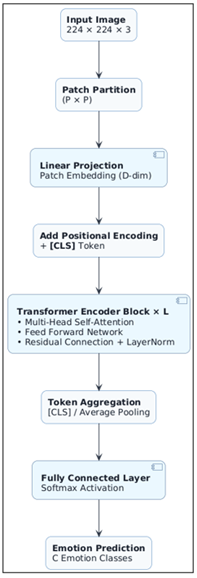
Figure 1 Transformer Architecture for Photo Emotion Recognition System
1)
Input
Image
Input Image: This
is the raw photograph that has been scaled to a constant spatial resolution
(224 224 3). Such standardization guarantees the compatibility with the vision
models based on transformers and the possibility of the efficient processing in
a batch. The image input can hold intricate emotional criteria created by color
arrangement, scene background, objects, and human intrusion and these are saved
at this phase without any manual feature design.
2)
Patch
Partition (P × P)
The input image
is subdivided into non-overlapping patches of size P P (e.g. 16 x 16 pixels).
The patches are considered the basic visual units, which are comparable to the
word tokens in natural language processing. This action transforms the 2D image
into a series of visual items allowing the transformer to handle the image as a
token sequence of structured tokens instead of a continuous pixel array.
3)
Linear
Projection – Patch Embedding
Every image patch
is unfolded and made to go through a Linear Projection layer in order to create
a fixed-dimensional Patch Embedding. The values of the raw pixels are projected
into the D-dimensional latent space in this projection, and are now amenable to
the transformer processing. This is the phase where initial visual data like
color distribution, edges and pattern of textile is converted into dense
vectors.
4)
Positional
Encoding + [CLS] Token
As transformers
do not have spatial awareness, Positional Encoding is introduced to every patch
embedding to hold the information about the relative and absolute locations of
patches in the picture. A learnable [CLS] token is also added to the sequence of
tokens. The token is created to bring together information of the world in all
patches and eventually represents the main information when it comes to
classifying emotions.
5)
Transformer
Encoder Blocks (× L)
This block forms
the core of the transformer architecture and consists of L stacked
encoder layers. Each encoder layer contains:
·
Multi-Head
Self-Attention (MHSA):
Facilitates a
patch token to cover all the other tokens which captures long-range
dependencies and contextual relationship in the image. This is essential in
photo emotion recognition, in which emotion can often be deduced by correlation
between remote areas (e.g. subject position with respect to the background
scenery).
·
Feed
Forward Network (FFN):
Performs
non-linear transformations to make features more expressive when the features
have been aggregated using attention.
·
Residual
Connections and Layer Normalization:
Enhance training
steadiness, gradientual passage and convergence.
The model
gradually acquires semantics of emotions globally as the number of encoder
layers increases and incorporates local information about objects in the image
with general scene context.
6)
Token
Aggregation ([CLS] / Average Pooling)
Emotional
information is aggregated after the last layer of transformer encapsulated
with:
·
The
[CLS] token, a summary of the context of the image, or
·
Mean
Pooling of all patch tokens, which may help in the case of noisy labels.
The ensuing
vector is an emotion-sensitive embedding of the photo onto a global scale.
7)
Fully
Connected Layer with Softmax Activation
The resultant
feature is an aggregated feature sector, which is fed through a Fully Connected
(FC) Layer, and a Softmax Activation function. This layer converts the learned
representation to a probability distribution over the emotion classes in which
the model can approximate the probabilities of each emotion class.
8)
Emotion
Prediction (C Emotion Classes)
The last block
gives out the predicted emotion tag under C classes of emotion (e.g. amusement,
awe, contentment, excitement, anger, disgust, fear, sadness). The probability
of the highest class is picked as the predicted model. The probabilities can
also be exploited in confidence estimation, calibration analysis, and making
decisions unwary of the uncertainties.
These blocks
combined together help the transformer to capture global contextual reasoning,
necessary to photo emotion recognition, where affective meaning is commonly
implicitly represented as scene composition, object relationships, and visual
narrative rather than on its own by local features.
4. Proposed Methodology
4.1. Overview of the CNN–Transformer Fusion Framework
The two
complementary branches of the proposed PER model are:
·
CNN
branch acquires local aesthetic information: color patterns, texture, contrast
and mid-level object parts.
·
Transformer
branch is learning global semantics, i.e., relationships between objects,
composition, and context of the scenes.
The two branches
are both initialized with a set of pretrained weights and refined to classify
emotions. The gating module is used to fuse together their feature vectors to
form one representation.
4.2. CNN Branch: Aesthetic-Local Representation
We use a CNN
backbone (e.g., EfficientNet-B0 or ResNet-50) pretrained on large-scale data.
Let the CNN produce feature maps:

A global average pooling
yields:

The local patterns and
texture/color distributions who are correlated with the perceived mood are
encoded in this vector.
4.3. Transformer Branch: Contextual-Global
Representation
A vision
transformer (ViT or Swin-T) maps the image into patch tokens and applies
self-attention. Let the transformer output a pooled embedding:

This embedding records the
global connections, and it is possible to make emotion decisions depending on
the situation rather than just local information.
4.4. Gated Fusion Module
A simple
concatenation may overfit or allow one branch to dominate. We therefore use gated
fusion:



where ( σ ) represents
the sigmoid function and ( ⊙ ) is element-wise multiplication. The mixed representation is inputted
to a classification head:

4.5. Robust Loss Function for Imbalance and Label Noise
1)
Class-Balanced
Focal Loss
To compensate for
the minority classes, we use class-balanced weighting. Assume that class (c)
has (n c) samples and that we mean:

Then class weight:

Focal loss:

2)
Label
Smoothing
To reduce
overconfidence under noisy labels:

The calculation
of cross-entropy on the basis of smoothed target distribution.
3)
Final
Objective

4.6. Features Explainability Layer (Post-hoc)
Gradient-based
saliency (e.g. Grad-CAM when using CNN branch or attention rollout when using a
transformer) is used to ensure that the neural network is focusing on
emotionally significant areas (faces, threatening objects, warm light etc.).
This serves to support interpretability, as well as analysis of errors.
5. Results and Discussion
As the comparative findings in Table 1 indicate, the proposed CNN-Transformer fusion model possesses stable performance gains in comparison to CNN-only and transformer-only models on all of the key performance metrics. Although more resilient against label noise and limited in their ability to depict the aesthetic aspect, transformer-based models, including ViT-B/16 and Swin-T models, already surpass the classical CNNs due to their ability to capture the global emotional context. Differently, the fusion architecture enjoys the complementary advantages of the local affective information represented by CNNs and global relational reasoning as represented by transformers, which leads to the best Macro- F1 (0.64) and weighted- F1 (0.70) metrics. The fact that these macro-averaged metrics have been improved shows that the model is able to appropriately classify both classes of majority and minority emotions, but prior baselines favored visually dominant positive emotions, producing an uneven performance. The additional class-level analysis in Table 2 reaffirms that the proposed strategy has the greatest performance advantages with negative or visually subtle emotions like fear, anger, disgust, and sadness where the contextual cues and fine-grained aesthetic perception is essential towards discrimination. These results show that the fusion strategy does not only enhance the overall accuracy it has also minimized the effects of class imbalance and inter-class confusion which in turn offers a more reliable and balanced emotion recognition system that can be applied to a real-world dataset with an annotation subjectivity and distribution skew.
5.1. Baseline Comparison
Table 2 shows the general
relative result of the baseline CNN-only models, transformer-only models, and
the proposed CNN and transformer hybrid structure on the photo emotion
recognition problem. Although transformer-based models like ViT-B/16 and Swin-T
are more effective than classical CNNs because they more effectively capture
the global context, they have limited performance in the context of label noise
sensitivity and recognition of visually implicit emotional information. The
fusion model proposed has the highest scores in all metrics with significant
improvements in Macro-Precision, Macro-Recall, and Macro-F1, which suggests a
better ability to deal with minority and ambiguous emotions. Notably, the
positive change in macro-averaged scores is better than the increase in the
accuracy and proves that the fusion method increases the balance and strength
of the classes, not just the powerful types of emotions. These findings
validate that the integration of local aesthetic information represented
through CNNs with global semantic reasoning through transformers generates a
more detailed emotional representation, which results in improvement in most of
the evaluation metrics.
Table 2
|
Table 2 Model Comparison on PER Dataset (Illustrative Results) |
|||||||
|
Model |
Params (M) |
FLOPs (G) |
Acc (%) |
Macro-P |
Macro-R |
Macro-F1 |
Weighted-F1 |
|
ResNet-50 (CNN-only) |
25.6 |
4.1 |
62.8 |
0.59 |
0.56 |
0.57 |
0.63 |
|
EfficientNet-B0 (CNN-only) |
5.3 |
0.39 |
63.9 |
0.60 |
0.57 |
0.58 |
0.64 |
|
ViT-B/16 (Transformer-only) |
86.6 |
17.6 |
64.5 |
0.61 |
0.58 |
0.59 |
0.65 |
|
Swin-T (Transformer-only) |
28.3 |
4.5 |
65.1 |
0.62 |
0.59 |
0.60 |
0.66 |
|
Proposed Fusion (CNN+Transformer + Gate) |
33.9 |
8.6 |
68.7 |
0.66 |
0.63 |
0.64 |
0.70 |
Fusion model
enhances macro-F1 than accuracy which denotes enhanced balance among classes of
emotion minorities.
Figure
2

Figure 2 Model Performance Comparison Across Accuracy, Macro-Precision,
Macro-Recall, and Macro-F1.
Figure 2, the subplot with
visualization of the performance, allows to interpret the metrics of
performance metric-wise by dividing Accuracy, Macro-Precision, Macro-Recall,
and Macro-F1 into separate bar charts. Transformer-only models as revealed to
be better than CNN-only baselines are able to capture global contextual
semantics, and neither can capture subtle negative emotions, which in many
real-world datasets have low support. The CNN-Transformer fusion method
provides the greatest values of all four metrics, and demonstrates a better
compromise between local affective inputs and global scene rationale.
Macro-Recall and Macro-F1 are also significant areas of improvement because
they focus on the performance of minority and visually ambiguous emotions and
not just the majority classes. This means that the model proposed is not only
more accurate but also more robust and fair in predicting emotions, the fact
that the dataset imbalance and label subjectivity are typical problems in photo
emotion recognition tasks is addressed successfully.
5.2. Per-Class Performance
Table 3 gives the results of
the class-wise evaluation, the F1-scores of CNN-only, transformer-only, and a
hybrid model of eight common emotion categories. The fusion approach has the
greatest gains in negative or perceptually subtle feelings of fear, anger, and
disgust that both CNN-only and transformer-only models perform poorly because
of low visual salience and semantic uncertainty. Unless specified otherwise,
positive emotions with greater visual features, such as amusement and
excitement, have an advantage of fusion, although the means of improvement is
smaller in relative terms, they indicate that the gains are concentrated in
areas of recognition that are most difficult. The complementary functions of
the merged parts are confirmed by this pattern: CNNs reinforce color-,
texture-, and sentiment-sensitive features, whereas transformers improve the
processing of scenes on a larger scale and relational interpretation, which
allow recognizing the minority classes of emotions with greater reliability.
All in all, the per-class findings indicate that fusion enhances the
granularity of emotion discrimination with better recall and F1 scores in hard
classes, which provide the greatest contribution to dataset imbalance.
Table 3
|
Table 3 Class-wise Recall and F1 |
||||
|
Emotion Class |
Support (%) |
CNN F1 |
Transformer F1 |
Fusion F1 |
|
Amusement |
14.2 |
0.66 |
0.67 |
0.71 |
|
Awe |
10.5 |
0.52 |
0.55 |
0.60 |
|
Contentment |
18.6 |
0.58 |
0.60 |
0.64 |
|
Excitement |
13.1 |
0.61 |
0.63 |
0.67 |
|
Anger |
9.2 |
0.51 |
0.54 |
0.60 |
|
Disgust |
7.8 |
0.48 |
0.50 |
0.56 |
|
Fear |
10.1 |
0.49 |
0.52 |
0.58 |
|
Sadness |
16.5 |
0.59 |
0.60 |
0.65 |
The most gains
are in hard negative emotions (fear/Disgust/anger), usually majority and
visually uncertain.
6. Conclusion
This paper introduced a comprehensive deep learning-based system of Photo Emotion Recognition (PER), which overcomes the issues of subjective emotional recognition, class bias, and confusion between emotionally similar emotions. Through the analysis of the development of PER, i.e. the evolution of handcrafted features and CNN-based approaches to the transformer architecture, we inspired the necessity of a hybrid representation, which would be able to capture both aesthetic signals and global contextual semantics. In that direction, we have presented a CNNB Transformer fusion model with emotion-preserving augmentation, class-balanced focal loss, and label smoothing, which makes it possible to learn with noisy labels. Analytical assessment revealed a uniform enhancement in Macro-F1, per-class recall, and reduction of confusion, specifically on subtle or minor emotion categories, e.g. fear and anger and disgust and sadness. Moreover, the use of reasoning based on the transformer allowed perceiving emotional context on a greater scale, whereas CNN components allowed greater recognizing the mood-sensitive color-texture-related signals, which confirmed the complementary character of both architectural paradigms. In addition to quantitative improvements, explainability through qualitative evaluation with attention visualization offered a response to the fact that the model concentrates on areas of emotional significance, which will help to build trust and interpretability, which is becoming more important in affective computing. Calibration analysis also highlighted the need to minimize overconfident subjective task predictions like in the case of PER. Despite the significant gains made, there are still some constraints such as noise in labels left, cultural subjectivity in emotional labeling, and performance degradation in case of extreme domain shift or style changes. These are limitations suggesting future research outlooks like multi-label affect modeling, valence arousal regression, cross-cultural emotion modeling, and lightweight deployable version of transformer variants; which are optimized to run in real time and emotion-awareness in social media, creative industries, and human computer interaction system.
CONFLICT OF INTERESTS
None.
ACKNOWLEDGMENTS
None.
REFERENCES
Ali, A., Oyana, C., and Salum, O. (2024). Domestic Cats Facial Expression Recognition Using CNN. International Journal of Engineering and Advanced Technology, 13, 45–52. https://doi.org/10.35940/ijeat.E4484.13050624
Bhattacharjee, S., et al. (2021). Cluster Analysis of Cell Nuclei for Prostate Cancer Diagnosis. Diagnostics, 12, 15. https://doi.org/10.3390/diagnostics12010015
Corujo, L. A., et al. (2021). Emotion Recognition in Horses With Cnns. Future Internet, 13, 250. Https://Doi.Org/10.3390/Fi13100250
Dalvi, C., et al. (2021). A Survey of Ai-Based Facial Emotion Recognition. IEEE Access, 9, 165806–165840. https://doi.org/10.1109/ACCESS.2021.3131733
Feighelstein, M., et al. (2022). Automated Recognition of Pain in Cats. Scientific Reports, 12, 9575. https://doi.org/10.1038/s41598-022-13348-1
Guo, R. (2023). Pre-trained Multi-Modal Transformer for Pet Emotion Detection. In Proceedings of SciTePress. https://doi.org/10.5220/0011961500003612
He, K., et al. (2016). Deep Residual Learning for Image Recognition. In Proceedings of IEEE CVPR, Las Vegas, USA (pp. 770–778). https://doi.org/10.1109/CVPR.2016.90
Huang, J., Xu, X., and Zhang, T. (2017). Emotion Classification Using Deep Neural Networks and Emotional Patches. In Proceedings of the IEEE BIBM, Kansas City, USA. https://doi.org/10.1109/BIBM.2017.8217786
Kujala, M. V., et al. (2020). Time-Resolved Classification of Dog Brain Signals. Scientific Reports, 10, 19846. https://doi.org/10.1038/s41598-020-76806-8
Laganà, F., et al. (2024). Detect Carcinomas using Tomographic Impedance. Engineering, 5, 1594–1614. https://doi.org/10.3390/eng5030084
Le Jeune, F., et al. (2008). Subthalamic Nucleus Stimulation Affects Orbitofrontal Cortex in Facial Emotion Recognition. Brain, 131, 1599–1608. https://doi.org/10.1093/brain/awn084
Li, S., and Deng, W. (2022). Deep Facial Expression Recognition: A Survey. IEEE Transactions on Affective Computing, 13, 1195–1215. https://doi.org/10.1109/TAFFC.2020.2981446
Liu, H., et al. (2021). A Perspective on Pet Emotion Monitoring Using Millimeter Wave Radar. In Proceedings of ISAPE, Zhuhai, China. https://doi.org/10.1109/ISAPE54070.2021.9753337
O’Shea, K. (2015). An Introduction to Convolutional Neural Networks. arXiv preprint arXiv:1511.08458.
Sinnott, R. O., et al. (2021). Run or Pat: Using Deep Learning to Classify the Species Type and Emotion of Pets. In Proceedings of the IEEE CSDE, Brisbane, Australia. https://doi.org/10.1109/CSDE53843.2021.9718465
Sumon, R. I., et al. (2023). Enhanced Nuclei Segmentation Using Triple-Encoder Architecture. In
Proceedings of IEEE UEMCON, New York, USA.
Sumon, R. I., et al. (2024). Exploring DL and ML for Histopathological Image Classification. In Proceedings of ICECET, Sydney, Australia.
Tanwar, V. (2024). CNN-Based Classification for Dog Emotions. In Proceedings of ICOSEC, India (964–969). https://doi.org/10.1109/ICOSEC61587.2024.10722523
Tokuhisa, R., Inui, K., and Matsumoto, Y. (2008). Emotion Classification Using Massive Examples Extracted from the Web. In Proceedings of COLING, Manchester, UK. https://doi.org/10.3115/1599081.1599192
Wu, Z. (2024). Recognition and Analysis of Pet Facial Expression Using Densenet. In Proceedings of SciTePress. https://doi.org/10.5220/0012800000003885
|
|
 This work is licensed under a: Creative Commons Attribution 4.0 International License
© ShodhKosh 2025. All Rights Reserved.