ShodhKosh: Journal of Visual and Performing ArtsISSN (Online): 2582-7472
|
|
Experiential Aesthetics in Visual Arts Consumption: Fantasy, Emotion, and Enjoyment in Contemporary Art Experiences
Dr. Geetali Tilak 1
 ,
Dr. Nilesh Anute 2
,
Dr. Nilesh Anute 2 , Sagar Popat Suke 3
 , Dr Tanaji Dinkar
Dabade 4
, Dr Tanaji Dinkar
Dabade 4 , Dr. Nilesh Vitthal
Limbore 5, Dr. Priyanka Pawar 6
, Dr. Nilesh Vitthal
Limbore 5, Dr. Priyanka Pawar 6 , Dr. Sanjay
Dharmadhikari 7
, Dr. Sanjay
Dharmadhikari 7
1 Professor
and Vice Chancellor, Tilak Maharashtra Vidyapeeth, Pune, India
2 Associate
Professor, Balaji Institute of Management and Human Resource Development, Sri
Balaji University, Pune, India
3 Assistant Professor, Navsahyadri
Group of Institutes, SPPU, Pune, Maharashtra, India
4 Director, Navsahyadri Group of
Institutes, Savitribai Phule Pune University, Pune, Maharashtra, India
5 Associate Professor, Navsahyadri
Education Society’s Group of Institutions, Faculty of Management, Pune, India
6 Associate Professor, Indira College
of Engineering and Management, Pune, Affiliated to Savitribai Phule University,
Pune, India
7 Director, Institute of Business
Management and Research Development, Ahilyanagar, Maharashtra, India
|
|
|
ABSTRACT |
|
|
Experiential
aesthetics has become a key point of focus in attempting to comprehend how
modern viewers approach visual arts outside of the frame of formal analysis
in a way that focuses on experience, emotion, and engagement of the
imagination. The paper examines the inter-relationship between fantasy,
emotion, and enjoyment in determining visual art consumption as a part of
contemporary art experiences. The study uses phenomenological aesthetics and
cognitive-affective theories, in which the conceptualization of aesthetic
engagement is an embodied process with an interpretive and emotionally
situated process. Fantasy is explored as one of the most important
experiential forces that allow the viewers to immerse in the story, create
symbolic meaning and imaginary worlds of art, creating their own meanings and
speculative worlds as they engage with works of art. The paper also examines
the emotional aspects of visual art viewing, such as emotion eliciting
mechanisms, empathic resonance, mood, and affective bonding, and the
moderating role of cultural, social and contextual factors. Pleasure is
conceptualized in the context of hedonic enjoyment and eudaimonic
satisfaction and it emphasizes flow, absorption, and reflective pleasure as
the keys to long-term aesthetic values and recurring interest and
involvement. The paper is methodologically designed in terms of a
mixed-methods approach that incorporates both qualitative interviews,
observational and narrative analyses with quantitative survey instruments and
psychometric modeling to produce both subjective depth and the quantifiable
patterns. |
|||
|
Received 23 March 2025 Accepted 27 July 2025 Published 20 December 2025 Corresponding Author Dr.
Geetali Tilak, geetali.tilak@gmail.com
DOI 10.29121/shodhkosh.v6.i3s.2025.6968 Funding: This research
received no specific grant from any funding agency in the public, commercial,
or not-for-profit sectors. Copyright: © 2025 The
Author(s). This work is licensed under a Creative Commons
Attribution 4.0 International License. With the
license CC-BY, authors retain the copyright, allowing anyone to download,
reuse, re-print, modify, distribute, and/or copy their contribution. The work
must be properly attributed to its author.
|
|||
|
Keywords: Experiential Aesthetics, Fantasy and Imagination,
Emotional Engagement, Aesthetic Enjoyment, Visual Art Consumption |
|||



1. INTRODUCTION
Experiential aesthetics has emerged as a characteristic paradigm of perception of the way modern viewers perceive visual art in a manner that goes beyond the formal analysis, stylistic classification, or historical explanation. Consumption of visual arts has gradually been more focused on lived experience, affective response and imaginative participation in the last decades due to the wider cultural movement towards immersion, interaction and personalization. Modern art venues, including museums and galleries, digital spaces and installations in-between, have become experiential spaces, the audience is no longer a passive spectator but an active meaning-maker. In this setting, fantasy, emotion, and enjoyment become key areas that dictate the perception of art and interpretation along with the remembrance of an art. Aesthetic theories of tradition tended to give preeminence to disinterested contemplation as well as formal characteristics, e.g., composition, harmony and technique. Although these views are still useful, they cannot be used to explain why modern audiences want to experience emotionally charged, narrative provocative, and experience-filled encounters with art. Experiential aesthetics re-qualifies the appreciation to art as an embodied and relational experience which is based on perception, emotion, imagination and contextual interpretation. The aesthetics experiences are turned into subjective but meaningful experiences as viewers perceive the artworks in the light of personal memories, cultural allusions and speculative associations Cotter et al. (2022). In the modern day consumption of visual art, fantasy plays a very important role. Artworks encourage the viewers to move beyond the normal reality and explore the imaginative space where narratives are formed and the interpretations are free through symbolism, surreal imagery, and speculative visual languages Godovykh et al. (2022). Figure 1 displays how fantasy, emotion and enjoyment are all coming together to create crafting immersive and meaningful engagement in the visual art. Fantasy is a way of projecting beyond the perceivable and, therefore, enabling viewers to close the perceptual gaps, play with alternative realities, and interact with figurative meanings.
Figure 1
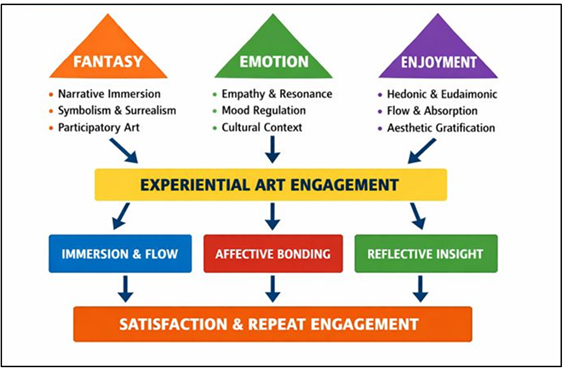
Figure 1 Conceptual Block Diagram of Experiential Aesthetics in
Visual Arts Consumption: Interplay of Fantasy, Emotion, And Enjoyment
Fantasy is even exaggerated with participatory and interactive artworks, where audience members actively determine results, stories, or sensory stimulations. This playful interaction produces not only a more aesthetic participation but also an agency and a sense of the individual within the art object. Another of the underlying dimensions of experiential aesthetics is emotion. The visual art can provoke a great variety of emotions, such as wonder, empathy, nostalgia, discomfort, and joy Qi et al. (2023). Such affective responses are not the consequences or by-products of perception but are essential processes as a result of which meaning is created. Emotional involvement has an impact on attention, memory and depth of interpretation, which affect judgments and valuation of artworks. Besides, cultural background, social context and situational framing mediate emotional responses which underlines the variability and subjectivity of art experiences. Emotional comprehension of people in visual art consumption will thus entail the need to have an integrative orientation that not only considers the universal affective processes but also the contextual adjustment. Experience and aesthetic pleasure are the results and driving forces of experience Nunkoo et al. (2020). In modern art, there is a growing intermingling of hedonistic and eudaimonic enjoyment, of instantaneous pleasure and the sensual and mental stimulation, with the embodiment of reflection, wisdom, and personal development. Flow, absorption and immersion states help to promote long-term visitation and repeated attendance, which supports the connection between pleasure, satisfaction and lasting audience loyalty.
2. Theoretical Foundations of Experiential Aesthetics
2.1. Aesthetic experience theories and phenomenological perspectives
Theories of aesthetic experience have traditionally attempted to describe how people are exposed to, view, and derive meaning out of artistic objects. Classical approaches placed more emphasis on form and interest-free contemplation, and the suggestion of aesthetic value in perceptual harmony and independent appreciation. Nevertheless, phenomenological approaches reconfigured this perception greatly by prefiguring experience, embodiment, and intentionality. Phenomenologically, aesthetic experience is not an objective observation but rather a psychological experience that involves being present in the experience by perception, body presence, memory, and the context of the situation Godovykh and Tasci (2020). The art is perceived as a process or as a process of interaction between the viewer and the aesthetic object instead of an object, which has a predetermined meaning. Phenomenological aesthetics focuses on sensory involvement, space perception, and time passage as things that make art experiences rich. Viewers are actively engaged in creating meaning through attending, moving and attuning the emotional experience, which makes aesthetic experience per se subjective but organised by a commonality of perceptuality Godovykh et al. (2022). This view acknowledges ambiguity, openness and indeterminacy as the key characteristics of a work of art where several sources of meaning may exist without a hierarchical closure.
2.2. Cognitive–Affective Models of Art Perception
The cognitive-affective theories of art perception theorize the aesthetics experience as the outcome of a continuous interaction between the perception process, the cognitive interpretation, and the emotional reaction. These models do not focus on cognition and emotion as distinct realms, but instead, tend to integrate the two in helping to form the way in which artworks are perceived, understood and appreciated. The perception is initially elicited by visual features of color, form, texture and composition Godovykh et al. (2023) and this is immediately followed by associative thinking, memory removal and emotional appraisal. All these processes lead to attention, meaning-making, and aesthetic judgment. In this context feelings dominate as the mediating cognitive interaction with art. Affective responses determine the duration within which viewers will stay on a piece of art, the specifics that they observe and their thoughts about the potential meaning of the art piece. Affecto has been identified as a primary source of aesthetic impact by virtue of the fact that emotional intensity is widely known to improve memorability and interpretive richness. At the same time, emotional experience is founded on cognitive activities including categorization, narrative creation, and symbolical interpretation, defining what the piece of art signifies or alludes to. The individual differences in the perception of art are also explained by cognitive-affective models Godovykh (2024).
2.3. Fantasy and Imagination in Aesthetic Engagement
Fantasy and imagination are basic processes where viewers are able to lengthen aesthetic participation past immediate perception. The imagination enables people to move beyond the literal visual image of a piece of art in the context of experiential aesthetics and offer symbolic, narrative, and speculative levels. Fantasy is a mental-emotional mechanism that plugs holes in perception, creating alternative realities as well as making possible interpretation through metaphor. Instead of passively receiving the meaning, the viewers, rather, take the initiative of projecting concepts, feelings, and stories onto the artworks, and convert them into their own personal experience. Imaginative engagement is specifically relevant when it comes to artworks that are ambiguous, abstract or surreal, i.e. indeterminate forms that allow various interpretations. This openness prompts the audience to use their own recollections, cultural legend, and fictional creation, which creates an intimate subjective engagement Sigala (2019). Table 1 is a summary of theoretical and empirical research on the connection of fantasy, emotion, and aesthetic enjoyment. Emotional resonance is also furthered through fantasy since it enables the audience to rehearse feelings, hypothetically explore possible worlds, as well as empathize with or imagined characters or worlds which the artwork hints at. Imagination in participatory and interactive art forms is a participatory and dramatized process.
Table 1
|
Table 1 Comparative Analysis of Related Work on Experiential Aesthetics, Fantasy, Emotion, and Enjoyment in Visual Art Consumption |
|||||
|
Research Focus |
Art Context |
Key Theoretical Basis |
Methodology |
Core Variables Examined |
Major Findings |
|
Art as experience Simeone et al. (2018) |
Traditional and modern art |
Experiential aesthetics |
Conceptual analysis |
Experience, perception,
meaning |
Art understood as lived
experience |
|
Flow in aesthetic engagement |
Museums and galleries |
Flow theory |
Surveys, observation |
Flow, absorption, enjoyment |
Optimal experience enhances
engagement |
|
Cognitive–affective model Baradaran et al. (2022) |
Visual artworks |
Information-processing model |
Experimental studies |
Cognition, emotion,
appraisal |
Emotion mediates aesthetic
judgment |
|
Emotional appraisal in art |
Visual and abstract art |
Appraisal theory |
Experiments |
Interest, surprise,
confusion |
Complex emotions deepen
engagement |
|
Empathy and aesthetic
response Kaur et al. (2024) |
Representational art |
Empathy theory |
Psychometric surveys |
Empathy, affect, meaning |
Empathy predicts aesthetic
pleasure |
|
Narrative and imagination |
Visual narratives |
Cognitive narratology |
Theoretical synthesis |
Narrative, fantasy, emotion |
Fantasy drives immersion |
|
Transformative art
experience |
Contemporary art |
Model of aesthetic change |
Mixed-methods |
Emotion, insight, enjoyment |
Art can trigger emotional
transformation |
|
Participatory aesthetics Li and Lv (2024) |
Interactive art |
Relational aesthetics |
Conceptual analysis |
Participation, agency |
Viewers co-create meaning |
|
Emancipated spectator Sepe et al. (2024) |
Contemporary art |
Spectatorship theory |
Philosophical analysis |
Interpretation, agency |
Active viewers shape
experience |
|
Immersion and presence |
Media art |
Media psychology |
Experiments |
Presence, enjoyment |
Immersion increases pleasure |
|
Social participation in art Hennig-Thurau et al. (2023) |
Community art |
Participatory theory |
Qualitative studies |
Social interaction, emotion |
Engagement shaped socially |
|
Digital and immersive art
experiences |
VR/AR, installations |
Experiential and affective
models |
Mixed-methods |
Fantasy, emotion, enjoyment |
Immersion predicts
satisfaction |
3. Fantasy as a Driver of Art Experience
3.1. Narrative immersion and imaginative projection
One of the most important mechanisms of experiential engagement in visual art is narrative immersion as a result of fantasy. Art pieces can even without explicit storytelling imply discontinuous narratives, characters, or events that leave the viewer to speculate on what is outside the frame. Imaginative projection allows the audience to actively create plots, motivations and time sequences, to transform the inanimate visual appearance into moving experience. The process enables people to get psychologically absorbed and their mind is diverted to an internally created world created by the artwork. Fantasy makes narrative immersion possible allowing viewers to disconnect with the real world and conjoin into speculative or symbolic worlds. The visual clues that can be seen in unusual juxtaposition, suggestive symbols, or vague scenes are not a predetermined meaning, but a trigger. The artwork becomes a location of personalized narrations as viewers transfer their personal memories, emotions and cultural reference to these cues. This creative engagement enhances investment of emotions because a story created in fantasy tends to appeal to individual interests, hopes, or fears.
3.2. Symbolism, Surrealism, and Speculative Visual Languages
The symbolism, surrealism and speculative visual languages are powerful artistic techniques of activating the fantasy in the visual art experiences. These modes are intentional forms of interfering with the traditional image, substituting the actual description with metaphor, dream logic, and distortion of the imagination. Symbols are compact vessels of meaning that enable one to view artworks in associative thinking as opposed to being explained. This symbolic openness welcomes fantasy by allowing several, and often most personal interpretations that go beneath the surface. Surrealism enhances the power of imagination by opposing known things in uncommon or unreasonable forms and disturbing reasonable perception, triggering subconscious associations. These visual techniques provoke fantasy by disrupting the normal reality and making the audience seek other psychological or metaphysical levels. Speculative visual languages also broaden this possibility by envisioning futures, hybrid identities, or altered environment and are frequently a combination of science fiction, mythology, and cultural criticism. The tactics make viewers think about the possible realities instead of the existing conditions.
3.3. Role of Fantasy in Participatory and Interactive Artworks
Fantasy has a notably large role in participatory and interactive art, in which the audiences are challenged to go beyond just looking and to actively create the aesthetic experience. In these situations, fantasy operates as a guiding structure, and the participants perceive the rules, possibilities and outcomes. Interactive artworks have been shown to offer open-ended forms that involve the use of imagination to engage in the process of activating meaning and encourage viewers to experiment, speculate, and co-construct in the artistic space. Participatory art makes fantasy a performance. Figure 2 demonstrates that fantasy allows taking part, engaging, being agency-driven, and getting an emotional response to artworks. The audience can assume perceived roles, experiment with hypothetical characters or shape shifting visual or sensory aspects by their activity.
Figure 2
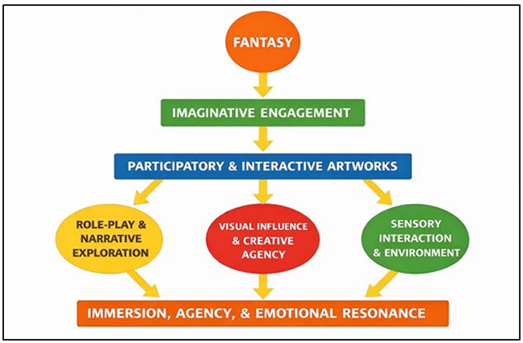
Figure 2 Flowchart of Fantasy-Driven Engagement in
Participatory and Interactive Artworks
By doing so, it creates a feeling of agency and immersion because the participants feel like they are part of the piece of art and not outsiders. Fantasy therefore mediates between the personal desire and artistic reaction, allowing one to express himself or herself in a common experience. In addition, interactive fantasy is a better way to stimulate emotional engagement through playful, exploratory or transformative experiences. The encounter between the imaginative expectation of participants and system feedback or participation may be characterized by curiosity, surprise, and delight. Fantasy is also augmented in digital and hybrid installations with virtual environments, augmented realities or responsive technologies, which deconstruct the distinction between real and imaginary spaces.
4. Emotional Dimensions of Visual Art Consumption
4.1. Emotion elicitation mechanisms in visual stimuli
Visual art is an emotion-provoking stimulus of a blend of perceptual, mental, and associative processes at play using a set of simultaneous mechanisms of aesthetic experience. The simplest visual properties like color, contrast, light, texture, and spatial composition can become arousing affective reactions as they activate the perceptual and sensory lines of perception. Color can be arousing or soothing and contrasting colors or dissonance can be discomforting or uncomfortable. Other than these base characteristics, representational content, facial expression, and body movement, and implied movement are also involved in emotional recognition and appraisal. The higher-order cognitive processes such as interpretation, symbolism and narrative inference are further involved in emotion elicitation. The viewers are known to react emotionally to the implications of an artwork instead of the literal representations and use their own memories, cultural connotations, and acquired emotional patterns. Emotional involvement could be heightened when ambiguity and openness in visual stimuli is promoted as it provokes viewers to complete the uncertainty with imaginative and affective interpretation. Emotional responses in such cases are dynamic in nature as the meaning develops with time. Notably, emotional responses towards visual art are seldom fixed. First impressions of affect might change as the audience pays attention to new details, situational context or framing of the exhibition.
4.2. Empathy, Mood Regulation, and Affective Bonding with Artworks
Empathy is very important in the development of emotional response to visual art because it allows viewers to identify themselves with the objects represented by the works, pictorial characters or the gestures portrayed through the art. By processes of empathy, people can actually feel the emotions proposed by posture, face expression, or symbolic representation in a vicarious manner. Evoking empathy can even be done in abstract or non-figurative works of art whose affective tone is achieved by movement, rhythm, or visual tension, and the viewer can empathize without necessarily having narrative information. Mood regulation is also performed by the help of visual art. People tend to demand experiences in art that resonate, enhance or alter their moods. This can be done through working with art, which can be quite comforting, catharsis, stimulating, or even thought-provoking and help keep the sense of balance in the emotional and self-reflective. This controlling role adds to the therapeutic and well-being levels of art consumption, especially during an immersive or reflective context. During the course of time, the experience of repetitive emotional involvement may result in the feeling of the affective bonding with certain artworks, artists or styles. They are typified by familiarity, attachment and personal importance which add to the enjoyment and long term appreciation. The connection to art experiences through affective bonding enhances memory and identity-related relationship, rendering the experience of art of more than the direct experience. In the context of the experiential aesthetics, empathy and mood regulation is seen as a relational process that enhances emotional commitment and changes the consumption of visual art into a personal, lasting, resonant experience.
4.3. Cultural, Social, and Contextual Moderators of Emotional Response
Cultural, social and contextual influences have a strong implication on emotional responses to visual art as they shape the interpretation and affective appraisal. The cultural background gives the symbolic constructions, aesthetic standards, and emotive codes that serve to instruct the processing of visual uses and experiences. Colors, patterns and visual stories can have different emotional connotations in various cultures, and so they elicit different emotional responses to the same piece of art. Emotional resonance may be increased by the use of familiarity to culture, whereas familiar references may create curiosity or ambiguity. Emotional experience is also moderate in social context. The experience of experiencing art individually and collectively, in an institution or unofficial area, might change the intensity of emotions and meaning. The collective reactions, common discussions, and social cues tend to increase or alter the emotional responses, which demonstrates the social nature of aesthetic experience construction. Also, social identity variables that include age, education, and artistic knowledge are some of the factors that lead to the variation in emotional sensitivity and evaluative depth. Emotions are also preconditioned by contextual components, such as exhibition design, lighting, space organization, and curatorial discourses.
5. Enjoyment and Aesthetic Pleasure
5.1. Hedonic and eudaimonic enjoyment in art experiences
Visual art consumption has both hedonic and eudaimonic elements of enjoyment, as the experience of aesthetic pleasure is complex. Hedonic pleasure is directly related to direct sensual delight and emotional satisfaction of being exposed to visual stimuli. This leisure is usually connected with bright colors, melodious tunes, whimsical imagery, or a type of immersion that leads to pleasure, sensation, or reprieve. Hedonic reactions are normally spontaneous and available, which makes them significant in appealing and maintaining early attention of the audience. By comparison, Eudaimonic enjoyment is founded on more reflective and meaning-based experiences. It includes a sense of wisdom, self development, emotional richness and existential resonance that occur during contemplation and interpretation involvement. The art that offers a challenge to the assumptions, provokes multi-layered emotions, or deals with a deep subject matter tend to provide eudaimonic pleasure because they induce introspection and cognitive investigation. Although these experiences might involve discomfort or ambiguity, they are appreciated on their transformational potentiality and not their immediate delight. Hedonic and eudaimonic enjoyment are not alternative ways of experiencing things in the context of experiential aesthetics but often go hand in hand.
5.2. Flow, Absorption, and Aesthetic Gratification
Flow and absorption can be viewed as elevated levels of engagement that play a major role in aesthetic satisfaction during the visual art experience. Flow is defined by high concentration, feeling of easy engagement and reduced time and external interference awareness. In the arts, flow is achieved when an artwork is complicated enough and the viewer has the capacity to perceive and think without overextension or tediousness. Absorption is also an extreme state of mental and emotional immersion, in which viewers have been immersed in visual, symbolic or narrative details. Such states increase aesthetic satisfaction by means of bringing perception, emotion and thinking to an integrated whole experience. At the time of flow or absorption, viewers will tend to comment on the feeling of clarity, contentment, and inner gratification. These experiences can make interpretive experiences more memorable and richer, and emotionally more intense. The aesthetic pleasure as a result of flow does not only end with pleasure but also promotes a sense of competence, intrigue, and personal relation to the piece of art. In experiential aesthetics, flow and absorption can be conceived as the best states of aesthetic satisfaction in which pleasure is derived as a result of prolonged interaction instead of being forced by any extrinsic stimulus or appraisal factor.
5.3. Relationship Between Enjoyment, Satisfaction, and Repeat Engagement
Pleasure serves as a mediating mechanism in the aesthetic encounter and the long-term viewing of the visual art. Hedonic and eudaimonic immediate enjoyment are part of the overall satisfaction as it satisfies either the emotional, cognitive, or experiential expectation. The satisfaction is a retrospective assessment of the art experience including the perceived value, emotional connection and personal relevance. In case the viewer is satisfied, he or she will tend to have positive attitudes towards certain artworks, artists, or cultural venues. The consistency and intensity of enjoyment in experiences are very strong influencing factors in the repeat engagement. Experiences of art that create a memorable pleasure impel a repeat visit, continued concern, and increased engagement in the long run. Emotional attachment, contemplative introspection and vicarious satisfaction are all supportive of the need to re-immersify, be it through repetitive watching, searching of related materials or taking part in analogous encounters. This cycle promotes culture engagement and the loyalty of the audience. Notably, pleasure is not a surety of a subsequent interaction because the situational factors, including availability, social support, and curatorial novelty contribute.
6. Methodological Framework
6.1. Research design and philosophical orientation
The research design of the study is based on the methodological framework of a mixed-methods study that is consistent with the interdisciplinary quality of the experiential aesthetics. The study takes the interpretivist orientation in terms of philosophy because aesthetic experience is subjective, context-specific, and socially constructed. This position stresses interpretation of meaning based on the eyes of participants as opposed to definition of universal or pure facts. Simultaneously, practical reasons favor the incorporation of the quantitative strategies to find patterns and correlations among various audiences. Its research design is more of the sequential exploratory nature in which the qualitative inquiry will inform the quantitative measurement and modeling. The preliminary qualitative investigation enables a comprehensive analysis of fantasy, emotion, and enjoyment experienced, which facilitates the refinement of the theory and development of instruments. Figure 3 shows that mixed-methods design incorporates the philosophy of interpretivism with empirical analysis. The relationships are then tested using quantitative methods to test relationships and confirm emerging constructs in larger samples.
Figure 3
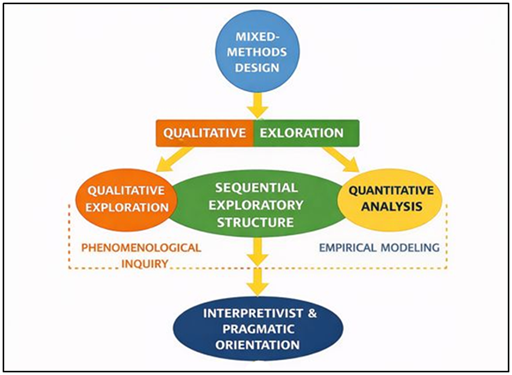
Figure 3 Research Design and Philosophical Orientation in
Experiential Aesthetics Studies
Such a design allows experiential and empirical rigor. In epistemology, there are various modes of knowing in the framework which synthesizes phenomenological understanding and empirical analysis.
6.2. Qualitative Methods: Interviews, Observation, and Narrative Analysis
Qualitative approaches play the key role of eliciting the richness and subtlety of experiential aesthetics, especially when it comes to fantasy, emotion, and pleasure. Semi-structured interviews will be used to provide the participants with a description of the aesthetics experience, in terms of emotions, imagination, and interpretation. Open-ended questions will enable the respondents to describe personal meanings, memories and fantasies related to visual works of art and give a considerable amount of description information. Observation techniques make the interviews complementary since it involves analyzing the physical and behavioral interaction of the viewers with the art pieces on-site. The focus is on the movement patterns, viewing time, gestures and engagement with exhibition space or interactive installations. Through such observations, there are embodied and situational contents of the aesthetic experience that cannot be effectively captured with words. Contextual interpretation is accomplished by support in field notes and visual documentation. Interpretation of interview transcripts and observational data is carried out through narrative analysis, which is concerned with how participants make their experience a story, or a sequence of themes. This strategy emphasizes the contribution of immersion in the narrative, emotional plot, and projection in art consumption. The combination of these qualitative techniques allows an interpretive apprehending of experiential aesthetic, prefiguring the viewpoints of the participants and the subjective richness that constitutes the experience of engaging with the designs of visual art in the present day.
6.3. Quantitative Methods: Surveys, Psychometric Scales, and Modeling
Quantitative solutions are used to supplement qualitative information and study experiential aesthetics in larger groups of the population. The structured surveys will aim at gauging following key constructs; fantasy engagement, emotional intensity, enjoyment, satisfaction and repeat engagement intentions. The questionnaire will be based on the qualitative results and the existing aesthetic and psychological literature to provide conceptual relevance and clarity. Psychometric scales are used to measure emotional response, immersion, flow and aesthetic pleasure taking into consideration reliability and validity. Likert-type scales allow standardizing the measurement and meanwhile, letting the participants say how much of the subjective experience they have had. Pilot testing and factor analysis is performed to improve scales and establish correct structure of constructs. Such measures support comparison between demographics and contexts of art. The statistical modeling methods such as the regression analysis, structural equation modeling are used to analyse the relationships between fantasy and emotion, enjoyment and behavioural outcomes. Mediating and moderating effects can be tested using such models and provide information on the interactions of the experiential dimensions.
7. Limitations and Future Research Directions
7.1. Subjectivity and variability of aesthetic experience
One of the core constraints of the study of experiential aesthetics is the fact that aesthetic experience is a subjective and variable experience. Personal backgrounds, emotional conditions, thinking patterns, and imaginations influence the reactions of individuals on visual art hence the impossibility of applying the results to the audience. The experience of one spectator does not necessarily have to be shared by another as engrossing or emotionally stirring. This variability raises the problem of the unification of explanatory models, and makes it difficult to compare across participants and contexts. The subjectivity is also subjected to interpretation and articulation. Complex emotional or imaginative experiences may not be described fully and accurately because of the inability of the participants to express their feelings or imaginative experiences verbally. Biases of memory and retrospective reconstruction also affect the manner in which experiences are recounted especially in a research that involves an interview. Also aesthetics may vary with time, depending on mood, situational conditions, or repetition, and so measurements are not very stable. Subjectivity is not a limitation that should be adopted in the future research but should be used as an analytical tool.
7.2. Cross-Cultural and Demographic Considerations
The cross-cultural and demographical diversity is both a challenge and the opportunity of the research into the experiential aesthetics. The cultural values, systems of symbols, and traditions of view are very strong in shaping emotional receptances, imaginative associations, and aesthetic interests. Consequently, the results of the culturally homogeneous samples can not be extrapolated to other regions or to other populations. The variations in education, age, socioeconomic status, and exposure to arts also influence the viewer perception and enjoyment of visual art. The age and expertise are demographic attributes that have an impact on cognitive processes and emotional sensitivity, which determine the fantasy engagement and pleasure. As an example, ambiguity and conceptual sophistication might be enjoyable to more sophisticated art observers, whereas more straightforward or emotionally resonant pieces might be more appealing to the beginner viewers. Unless well sampled and analyzed, these variations are likely to be neglected or mistaken.
7.3. Methodological Constraints and Measurement Challenges
The methodological constraints are problems of a great challenge to research on experiential aesthetics, especially when one tries to strike a balance between subjective richness and empirical inquiry. The qualitative approaches provide in-depth information but are constrained in terms of small sample size and interpretive bias whereas the quantitative approaches run the risk of simplifying complex emotional and imaginative processes. Fantasy, immersion, or aesthetic pleasure as some of the experiential constructs are difficult to quantify anyway. Measurement tools do not necessarily reflect the flowing and changing quality of aesthetic experience. Social desirability bias, introspective limits and contextual effects often affect psychometric scales, as this is based on self-report. In addition, the time of an outcome, i.e., during, right after, or a long time following art exposure, can have a profound influence on the outcomes that the listeners report. The use of technology can also pose specific technological issues that can reduce the possibility of collecting data in real time within an exhibition environment.
8. Conclusion
This work has gone to an extent of offering an experiential aesthetics approach through which fantasy, emotion and enjoyment collaboratively influence the use of visual art in the contemporary setting. Going past the object-centered and formalist studies, the research locates the aesthetic experience as dynamic, embodied and interpretive that arises out of interplay between the viewer, artworks and contextual environments. The combination of something phenomenological with something cognitive-affective shows that attendance at the visual art does not just have a perceptual aspect but is much more emotional and imaginative, based on the lived experience and creation of personal meanings. Fantasy is introduced as one of the main forces of the experience depth that allows indulging deeply into the narrative, projecting imagination, and speculative understanding. Fantasy offers viewers a chance to move beyond literal representation and engage in a process of co-creation of aesthetic meaning, through symbolic, surreal and participatory visual languages. The process is further enhanced by emotional involvement which influences attention, memory and interpretive commitment. The following emotions can be described as empathy, curiosity, wonder, and reflective discomfort that are not only the reactions to visual stimuli but also processes according to which works of art become personal and culturally meaningful. Fantasy and emotion in combination produce the conditions of continued immersion and emotional attachment to art. The enjoyment as a conceptual phenomenon is seen as a major outcome and driving force behind aesthetic participation in both hedonic and eudaimonic sense. The pleasure of senses and flow, absorption is mixed with reflective insight and emotional resonance to give satisfaction and motivate repeated participation. The results reveal that significant pleasure may be experienced when pleasure and challenge, familiarity and ambiguity interplay, and not as a result of instant satisfaction.
CONFLICT OF INTERESTS
None.
ACKNOWLEDGMENTS
None.
REFERENCES
Baradaran Rahimi, F., Boyd, J. E., Eiserman, J. R., Levy, R. M., and Kim, B. (2022). Museum Beyond Physical Walls: An Exploration of Virtual Reality–Enhanced Experience in an Exhibition-Like Space. Virtual Reality, 26, 1471–1488. https://doi.org/10.1007/s10055-022-00643-5
Cotter, K. N., Fekete, A., and Silvia, P. J. (2022). Why do People Visit Art Museums? Examining Visitor Motivations and Visit Outcomes. Empirical Studies of the Arts, 40, 275–295. https://doi.org/10.1177/02762374211011740
Godovykh, M. (2024). Transformative Experiences in Tourism: Where, When, with Whom, and How Does Tourists’ Transformation Occur? Frontiers in Sustainable Tourism, 3, 1377844. https://doi.org/10.3389/frsut.2024.1377844
Godovykh, M., and Tasci, A. D. (2020). Satisfaction vs Experienced Utility: Current Issues and Opportunities. Current Issues in Tourism, 23, 2273–2282. https://doi.org/10.1080/13683500.2020.1769573
Godovykh, M., and Tasci, A. D. (2022). Developing and Validating a Scale to Measure Tourists’ Personality Change After Transformative Travel Experiences. Leisure Sciences, 1–19. https://doi.org/10.1080/01490400.2022.2060882
Godovykh, M., Baker, C., and Fyall, A. (2022). VR in Tourism: A New Call for Virtual Tourism Experience Amid and After the COVID-19 Pandemic. Tourism and Hospitality, 3, 265–275. https://doi.org/10.3390/tourhosp3010018
Godovykh, M., Ridderstaat, J., and Fyall, A. (2023). The Well-Being Impacts of Tourism: Long-Term and Short-Term Effects of Tourism Development on Residents’ happiness. Tourism Economics, 29, 137–156. https://doi.org/10.1177/13548166211041227
Hennig-Thurau, T., Aliman, D. N., Herting, A. M., Cziehso, G. P., Linder, M., and Kübler, R. V. (2023). Social Interactions in the Metaverse: Framework, Initial Evidence, and Research Roadmap. Journal of the Academy of Marketing Science, 51, 889–913. https://doi.org/10.1007/s11747-022-00908-0
Kaur, J., Mogaji, E., Paliwal, M., Jha, S., Agarwal, S., and Mogaji, S. A. (2024). Consumer Behavior in the Metaverse. Journal of Consumer Behaviour, 23, 1720–1738. https://doi.org/10.1002/cb.2298
Li, J., and Lv, C. (2024). Exploring User Acceptance of Online Virtual Reality Exhibition Technologies: A Case Study of Liangzhu Museum. PLOS ONE, 19, e0308267. https://doi.org/10.1371/journal.pone.0308267
Nunkoo, R., Teeroovengadum, V., Ringle, C. M., and Sunnassee, V. (2020). Service Quality and Customer Satisfaction: The Moderating Effects of Hotel Star Rating. International Journal of Hospitality Management, 91, 102414. https://doi.org/10.1016/j.ijhm.2019.102414
Qi, X., Shi, D., Huang, Z., and Chang, W. (2023). Fostering Customer Loyalty Across Countries in Hospitality and Tourism: A Meta-Analysis of Cultural Values as Moderators. International Journal of Contemporary Hospitality Management, 35, 1602–1619. https://doi.org/10.1108/IJCHM-04-2022-0496
Sepe, F., Luongo, S., Gioia, L. D., and Corte, V. D. (2024). Cultural Heritage Experiences in the Metaverse: Analyzing Perceived Value and Behavioral Intentions. European Journal of Innovation Management. Advance Online Publication. https://doi.org/10.1108/EJIM-05-2024-0557
Sigala, M. (2019). Managing and Marketing wine Destinations with and Through Art: A Framework for Designing Wine Experiences. In Wine Tourism Destination Management and Marketing: Theory and cases (221–243). Springer. https://doi.org/10.1007/978-3-030-00437-8_15
Simeone, L., Secundo, G., and Schiuma, G. (2018). Arts and Design as Translational Mechanisms for Academic Entrepreneurship: The Metalab at Harvard Case Study. Journal of Business Research, 85, 434–443. https://doi.org/10.1016/j.jbusres.2017.10.021
|
|
 This work is licensed under a: Creative Commons Attribution 4.0 International License
© ShodhKosh 2024. All Rights Reserved.