ShodhKosh: Journal of Visual and Performing ArtsISSN (Online): 2582-7472
|
|
Artificial Intelligence in Creative Workforce Analytics: Managing Talent and Performance in Visual Arts Organizations
Reena Mahapatra Lenka 1
 ,
Dr. Umesh Patwardhan 2
,
Dr. Umesh Patwardhan 2 , Dr. G. Gopalakrishnan 3
 , Dr. Prajakta B
Deshmukh 4
, Dr. Prajakta B
Deshmukh 4 , Dr. Shilpa Gaidhani
5
, Dr. Shilpa Gaidhani
5 , Dr. Jaya Saxena 6
 , Dr. Antre Ganesh Eknath 7
1 Assistant
Professor, Symbiosis Institute of Management Studies Symbiosis International
(Deemed University), Pune, India
2 Professor,
Vishwakarma University, Pune, Maharashtra, India
3 Director, Balaji Institute of
Management and Human Resource Development, Sri Balaji University, Pune, India
4 Assistant Professor, MBA Programme, SPPU, Sub Centre Nashik, Maharashtra, India
5 Assistant Professor, Balaji Institute
of Management and Human Resource Development, Sri Balaji University, Pune (Sbup), India
6 Assistant Professor, School of
Business- Indira University, Pune, India
7 Assistant Professor, Dr. Vithalrao Vikhe Patil
Foundation's Institute of Business Management and Rural Development, Vilad Ghat Ahmednagar, Maharashtra, India
|
|
|
ABSTRACT |
|
|
The visual
arts organizations are moving toward a more complicated, project-driven
ecosystem in which it is challenging to quantify creativity, collaboration,
and performance through more traditional management strategies. The paper
explores how artificial intelligence may be used as a tool to analyze the
creative workforce, in this case, how talent management and performance
optimization in visual arts institutions could be boosted through
the use of data-driven approaches. The suggested model combines diverse
information sources such as digital portfolios, project history, peer
ratings, and audience engagement indicators to form multidimensional creative
professional profiles. Clustering, predictive modeling, and sentiment
analysis are some of the machine learning methods used to facilitate the
segmentation of talent, alignment of roles, and prediction of the creative
performance outcomes. AI-aided recruitment processes can improve portfolio
analysis because it helps to detect hidden competencies, stylistic coherence
and innovation potential that cannot be evaluated through subjective human
judgment. Parallel to it, performance analytics models integrate quantitative
metrics with qualitative feedback in order to
determine creative productivity, collaborative and emotional reactions to
critique. The evidence provided by the experiment, which is based on
simulated institutional datasets, shows that the efficiency of talent
utilization, the quality of project outcomes and transparency of the decision
made significantly improve in comparison with the conventional workforce
management techniques. The results emphasize the ability of AI to strike a
balance between creative subjectivity and analytical rigor that allows to
make an evidence-based decision and retain the autonomy of the creativity. |
|||
|
Received 23 March 2025 Accepted 27 July 2025 Published 20 December 2025 Corresponding Author Reena
Mahapatra Lenka, reena.lenka@sims.edu
DOI 10.29121/shodhkosh.v6.i3s.2025.6967 Funding: This research
received no specific grant from any funding agency in the public, commercial,
or not-for-profit sectors. Copyright: © 2025 The
Author(s). This work is licensed under a Creative Commons
Attribution 4.0 International License. With the
license CC-BY, authors retain the copyright, allowing anyone to download,
reuse, re-print, modify, distribute, and/or copy their contribution. The work
must be properly attributed to its author.
|
|||
|
Keywords: Artificial Intelligence, Creative Workforce
Analytics, Talent Management, Performance Assessment, Visual Arts
Organizations, Machine Learning |
|||


1. INTRODUCTION
The creative industries have recently taken a unique niche in the modern economies with their ability to generate cultural values and growing expectations of efficiency, accountability and sustainability in the organization. Visual arts organizations, such as studio, galleries, museums, design firms, and creative groups, rely fundamentally on talent of human beings, with individual talent and skills, aesthetic judgment, emotional intelligence and collaborative ability being the direct determinants of artistic and institutional product. Talent management and performance evaluation is especially complicated because creative work is not always linear and objective and is usually project-oriented, unlike traditional industries. The conventional methods of managing the workforce, which are mostly based on industrial or corporate relationships, often fail to bring into focus the intricate nature of creative workforce, resulting in the underutilization of talents, biased decision making, and lack of fit between the creative potential and the organizational objectives. Over the last several years, the intensive digitalization of creative processes has altered the manner of the production, sharing and evaluation of the artistic work Shi et al. (2019). Online portfolios, online exhibitions, collaborative platforms, and analytics of interaction with the audience become sources of huge volumes of data about creative behavior, productivity, and acceptance. Meanwhile, organizations in the field of visual arts experience increased competition, fundraising limits, and demands on quantifiable outcomes, which forces them to embrace more structured and open management. In this backdrop, the concept of artificial intelligence has become one of the potential facilitators of the creative workforce analytics, which implies the sophisticated computational approaches to multidimensional and heterogeneous data on talent and performance. The analytics that is led by artificial intelligence opens new opportunities in perception of creative work that was previously evaluated only having anecdotal or even solely qualitative results Chang (2021).
Machine learning algorithms have the ability to detect trends in creative output, history of collaboration, trend in skill acquisition and audience preferences that human assessors can hardly recognize consistently. AI systems can complement more holistic and context-based insights about creative performance by combining quantitative metrics (e.g. user ratings) with qualitative ones (e.g. peer reviews, critiques, emotional reactions). Notably, these systems are not designed to eliminate curatorial knowledge or artistic intuition, but usually serve to support decision-making processes with evidence-based views that do not limit the autonomy and subjectivity of creative practice Barath et al. (2023). Creative talent management is quite a complex task to deal with because it implies handling various aspects that are linked to each other, such as recruiting and assigning candidates roles, building teams, evaluating performance, and developing a long-term professional path. Informal networks and subjective judgments in the selection of artists or in assembling project teams are common in visual arts organizations, particularly contributing to bias and lack of diversity Zhang and Aslan (2021). Measuring performance is also not an easy task to perform since creativity cannot be limited to the amount of output or financial gain. AI-based workforce analytics provides the means of handling such issues by providing a way of fairer portfolio appraisals, systematizing skill mapping, predictive optimization of project-teams, and continuous performance that considers both process and outcome aspects. Regardless of its promise, the use of artificial intelligence in creative workforce management poses some important concerns associated with ethics, transparency, and cultural sensitivity Kong (2020).
2. Conceptual Foundations and Related Work
2.1. Creative workforce characteristics and organizational dynamics
The visual art organizations have unique features in their creative workforce which are set apart with the traditional patterns of labor. The creative professionals work in environments which are characterised by autonomy, intrinsic motivation, aesthetic evaluation and emotional involvement in which the results are mostly subjective and contextual. The work processes are generally non-linear, reiterative and explorative where there is an experimentation, feedback and refinement cycle but not a uniform workflow. Consequently, creativity within work environments can hardly be measured in the traditional efficiency metrics Chatterjee (2022). Visual arts institutions are often project-driven, fluid in team structure, temporary in collaboration, and cross-disciplinary, which influences the output of their organizations. Such dynamics necessitate loose governance frameworks which ensure experimentation, coordination and accountability. Social capital and informal networks as well as peer recognition are also vital in creative organizations. Formal hierarchies are frequently less important than reputation, visibility and cultural legitimacy in career progression Yang (2020). In turn, leadership in creative environments is more likely to be based on facilitation, curatorial decision, and orchestration of resources instead of the direct control.
2.2. Talent Management Theories in Visual Arts Institutions
Theories of human capital, creative capital and creation of cultural values have long been the guiding principles of talent management in visual arts institutions. In contrast to the corporate talent models which emphasize on a set of standardized competencies and quantifiable results, the context of visual arts values originality, artistic vision, and long-term creative potential. The human capital theory emphasizes on skills, training and experience whereas the creative capital views focus on imagination, aesthetic sense and cultural knowledge as the essential resources. Talent is frequently developed in a museum, gallery, design studio, or other context where it is nurtured by mentorship, residencies, apprenticeships, and work on collaborative projects instead of an actual performance appraisal system Tahiru (2021). The modern theory of talent management is also inclined to resource-based and capability-based perspectives, according to which creative professionals are viewed as strategic resources leading to the realization of the prolonged competitive and cultural advantage. Empirical research however records that in visual institutions of arts talent identification and development is often done through subjectivity, informal and haphazard assessment processes. Though these methods do not compromise artistic integrity, they may not be consistent and inclusive Chen et al. (2020). Newer scholarship suggests models that combine both qualitative and structured evaluation systems to allow making decisions in a balanced manner. With this dynamic environment, AI-based talent management proposes a data-based addition to the existing theories.
2.3. Workforce Analytics and Performance Measurement Frameworks
The frameworks of workforce analytics and performance measurement have shifted their directions into descriptive reporting and become predictive and prescriptive decision-support systems. Traditional organizational analytics is centered on productivity, efficiency, and turnover (among other measures) and typically based on formal data on operations. There are however problems when applying these models to creative industries because the creative work is intangible, qualitative and emotionally driven. When visual arts performance is concerned, it is more than the amount of output that is important, but rather originality, cultural relevance, audience reaction, and collaboration quality, which are hard to formulate about using standard measures Hwang et al. (2020). New frameworks suggest multidimensional performance frameworks that combine quantitative and qualitative analysis. These are balanced scorecard that are designed to fit in creative organizations, which are inclusive of financial sustainability, process efficiency, learning, and cultural impact. The development of data science has also made it possible to add unstructured sources of data, including textual feedback, visual artifacts, and social media communications, to performance analytics. Such methods as the natural language processing, computer vision, and sentiment analysis provide an opportunity to better understand the creative processes and reception Zheng et al. (2021). Table 1 provides a recap of major developments and shortcomings in creative workforce AI analytics. AI-powered workforce analytics expands them both by providing a platform to conduct real-time monitoring of performance and predictive modeling.
Table 1
|
Table 1 Comparative Analysis of Related Work on AI in Creative Workforce Analytics |
||||
|
Domain / Context |
Data Sources Used |
AI / Analytical Techniques |
Key Focus Area |
Limitations |
|
Creative industries |
HR records, surveys |
Descriptive analytics |
Creative productivity |
Lacked AI modeling |
|
Design studios |
Portfolios, project logs |
Clustering, regression |
Talent profiling |
Small dataset |
|
Cultural organizations |
Performance reports |
Statistical analysis |
Workforce efficiency |
No predictive analysis |
|
Digital art platforms Deng and Wang (2023) |
User interaction data |
Machine learning |
Engagement analytics |
Ignored internal workforce |
|
Media organizations |
Employee reviews |
NLP, sentiment analysis |
Feedback analysis |
Context sensitivity issues |
|
Museums |
Project archives |
Predictive modeling |
Team performance |
Limited explainability |
|
Creative agencies Zhao (2022) |
Skill databases |
Recommendation systems |
Role alignment |
Domain-specific tuning |
|
Visual arts firms |
Mixed creative data |
Hybrid AI models |
Talent management |
Ethical concerns noted |
|
Performing arts |
Workflow logs |
Time-series analysis |
Process efficiency |
Focused on operations |
|
Art and design teams He and Sun (2021) |
Portfolios, peer reviews |
Deep learning |
Talent evaluation |
High data requirements |
|
Creative startups |
HR + engagement data |
Explainable AI |
Fair decision-making |
Scalability issues |
|
Cultural institutions |
Multimodal datasets |
ML + NLP + CV |
Workforce analytics |
Governance complexity |
|
Visual arts organizations Rong et al. (2022) |
Portfolios, logs, reviews,
engagement |
Integrated AI framework |
Talent and performance
management |
Requires longitudinal
validation |
3. AI-Enabled Creative Workforce Analytics Framework
3.1. Conceptual architecture for AI-based talent analytics
The AI-based talent analytics conceptual architecture is tailored to visual arts organizations and it aims to combine the heterogeneous creative data and sophisticated analytical intelligence with maintaining the artistic autonomy. At the bottom layer, there is a data ingestion module that receives structured and unstructured data ingestion of various organizational systems and provides interoperability and security in the data governance. This layer enables various artistic artifacts, textual analysis and records of interaction created during project lifecycles. On top of this, there exists a data preprocessing and feature engineering layer that converts the raw inputs into useful representations, derives stylistic features, thematic patterns, collaboration indicators, and temporal productivity features Fan and Zhong (2022). The analytical kernel will consist of machine learning and artificial intelligence engines that will model creative behavior and performance. Some of the tasks that are carried out by these engines include talent profiling, role alignment, collaboration analysis and performance prediction. As a solution to the subjectivity of creative work, the hybrid models of quantitative indicators and qualitative embeddings are used. Figure 1 demonstrates a graphical architecture of an integrated AI that will improve the decision intelligence of creative workforce. This is needed to create trust between artists, curators and administrators. Lastly, the decision-support layer converts analytical knowledge into recommendations that can be taken, e.g. recruitment shortlists, team building approaches, and career development opportunities.
Figure 1
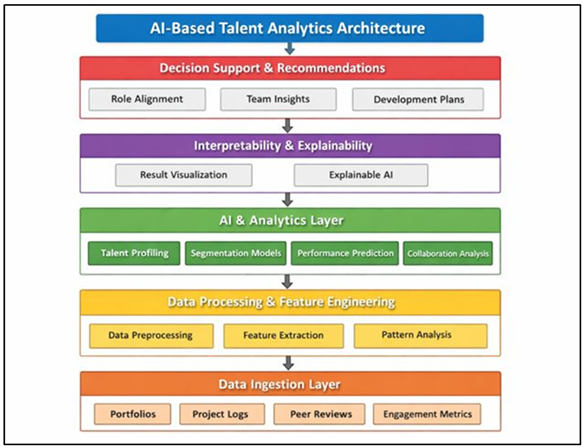
Figure 1 AI-Based Talent Analytics Architecture for Creative
Workforce Management
The feedback loops enable human experts to test, refine and contextualise AI output, so that the process of continuous learning and adaptation can take place. In general, this architecture focuses on the principles of modularity, ethical governance, and human-in-the-loop design, and it presents AI as an enhancing system that complements strategic talent management without degrading the values of creativity Tang et al. (2022).
3.2. Data Sources: Portfolios, Project Logs, Peer Reviews, Audience Engagement Metrics
The ability to use various forms of data, which are indicative of creative processes and results, is the core of an effective creative workforce analytics. Digital portfolios represent a major source, which contains visual artifacts, stylistic development, thematic variety, and technical skill over time. The portfolios are rich unstructured data that can be processed through the use of computer vision and metadata extraction methods. Another important source is project logs that capture task assignments, task schedule, teamwork intensity level, and workflow relationships, thus providing creative productivity and process efficiency insights. There are the qualitative views provided by peer reviews and curatorial critique that are added to the analytics framework. These written analyses grasp subjective assessment of originality, conceptual richness, and aesthetic consistency, which are the key areas of artistic judgment. Such feedback can be used to obtain sentiment, thematic emphasis, and evaluative consistency, using techniques of natural language processing. In addition to internal measurements, the audience participation feedback metrics, including visiting exhibition, web interactions, social media feedback, and sales indicators, are the external reflection and cultural effects. Having these heterogeneous sources of data integrated allows one to have a unitary observation of creative talent, with internal process-based indicators and external outcome-based signals.
3.3. Machine Learning Models for Talent Profiling and Segmentation
Machine learning models are at the core of operationalizing the creative workforce information into usable talent data. Talent profiling is aimed at building multidimensional characterizations of creative professionals, including abilities and stylistic patterns, cooperation skills, and career paths. Clustering and dimensionality reduction are examples of unsupervised learning methods that are commonly used to define latent patterns in creative populations. The techniques allow dividing artists into stylistically related groups or those working across multiple disciplines or in a rhythm of productivity, without presupposing any fixed categories. Supervised learning models also assist predictive analytics and allow forecasting the project performance, role appropriateness and a potential of professional growth. These models are able to determine the probability of success of particular team structure or creative task based on the outcomes of historical projects and the feedbacks. A combination of numerical features and embeddings based on visual and textual data are especially practical as they combine the power of representing the depth of creative work. Explainable AI methods are combined to define the significant features and decision-making paths to resolve the interpretability issues of complex models. This is important in creative situations, where non-transparent algorithmic decisions can be viewed as limiting or discriminative.
4. Talent Acquisition and Role Optimization Using AI
4.1. AI-assisted recruitment and portfolio evaluation
The historical methods of visual arts organization acquisition of talent usually depend on the experience of the curator, the reputation portfolio, and individual reviews of the portfolios. Although the approaches maintain artistic judgment, they are subject to bias or inconsistency, and time-consuming. Recruitment with AI offers analytical assistance through the use of creative portfolios and applicant data in mass. The AI systems can process images based on computer vision and pattern recognition techniques to analyze such aspects of visual content as composition, color usage, stylistic integrity, and thematic variety of an artists portfolio. Such analyses are useful in detecting latent competencies, trends of originality and technical development that cannot be readily detected using manual inspection. Besides visual analysis, AI models read and analyze textual data in the form of artist statements, histories of exhibitions, and recommendation letters based on the idea of natural language processing. This allows understanding creative intent, conceptual framing and professional experience more comprehensively. Notably, AI-assisted recruitment is not meant to displace human curators or artistic directors, but rather, it should be treated as a decision-support tool that will increase transparency and consistency in shortlisting of candidates.
4.2. Skill Mapping and Creative Role Alignment
The creative potential in visual arts organizations can be applied at maximum level only with the help of skill mapping and role alignment. Professional creative industries usually have diverse sets of skills that cut across technical, conceptual, and collaborative factors, which conventional role descriptions cannot meet. The AI-based skill mapping solves this by building dynamic representations of individual capabilities which are based on data. Through portfolio analysis, project activities, and commentary, machine learning models can determine explicit abilities as well as implicit ones (i.e., adaptability, ability to innovate and ability to collaborate across disciplines, etc.). Figure 2 shows skill mapping based on AI which allows creative role alignment to be done accurately. Such insights will facilitate a better fit between creative professionals and organizational work, be it in an exhibition design, digital media creation, curatorial research, or cross-functional works.
Figure 2
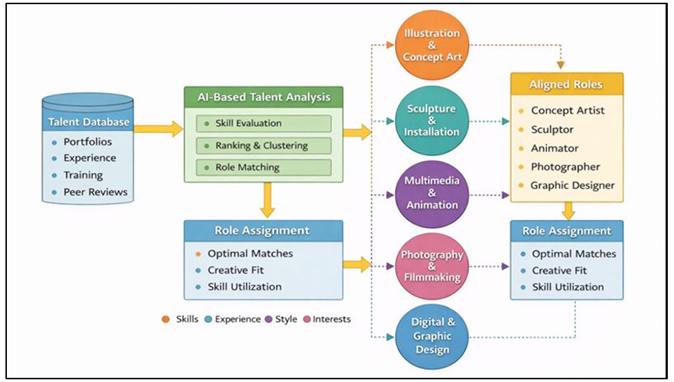
Figure 2 AI-Enabled Skill Mapping and Creative Role Alignment
in Visual Arts Organizations
By assigning roles based on personal strengths and skills, AI systems would help in minimizing skill mismatch and maximizing job satisfaction, because it would be possible to assign individuals roles that they are suited to perform, and which the project would demand. Moreover, skill mapping is useful to narrow the professional development gap and growth opportunities so that individual training paths can be developed.
4.3. Predictive Modeling for Project-Team Composition
The composition of project-teams is a decisive factor in the success of creative projects, in which the dynamics of collaboration, the complementary skills, and the common vision determine the course of action and the final result. Forecasting modeling helps visual arts organizations to form project teams in a more strategic way on the basis of historical collaborative statistics and performance records. The machine learning models examine previous project history, communication structure and feedback indicators to find combinations of people who have exhibited high creative synergy or effective conflict. These predictive systems take into account various factors such as skill complementarity, stylistic diversity, workload balance and interpersonal dynamics. Instead of being created to be uniform, models are created to embrace creative tension and interdisciplinary exchange which are commonly drivers of innovation. The simulations that are scenario based enable managers and curators to experiment with other types of teams and evaluate the possible risk or advantage of the project launch. Significantly, the predictive team composition models serve only as counseling tool and not as decision-maker. There are contextual and emotional influences on creative projects, which cannot be totally algorithmically represented.
5. Performance Analytics and Creative Productivity Assessment
5.1. Quantitative and qualitative performance indicators in visual arts
The assessment of performance in the visual art organization needs the adequate level of the quantitative and qualitative indicators that denote the outcome of the creative work, as well as the processes. Quantitative metrics give organized measurements in form of project completion dates, number of exhibitions, number of people reached, sales turnover and digital metrics. These indicators aid in comparative analysis and operational planning, but only partially reflect creative value. Creativity productivity cannot be well-defined by the output numbers only, and originality, idea depth, and cultural significance remain key points of artistic assessment. Qualitative performance indicators would help overcome this shortcoming by including peer review, curatorial opinion, critical reception and narrative response. These measures represent subjective opinions concerning the areas of innovation, emotional resonance and aesthetic integrity. Process-based measures in the context of creative environments include experimentation intensity, quality of collaboration, and adaptability, which are also process oriented and impact on artistic development in the long run and organizational learning. The combination of the two types of indicators allows establishing a multidimensional approach to performance that allows considering the creativity of the work. AI-based analytics systems materialize these indicators by converting qualitative evaluations into the form of analyses without altering the contextual meaning.
5.2. AI Models for Tracking Creative Output and Process Efficiency
Creative output and process efficiency AI models will bring performance analytics to move past the passive examination of performance to actively, dynamically understanding it. These models process a temporal data in the form of logs of a project, workflow systems, and creative artifacts to determine productivity patterns, iteration patterns, and patterns of resource usage. Time-series analysis and sequence modeling can be used to analyze the process by which creative output changes throughout the stages of the project, identify bottlenecks, delays, or innovatively active periods. The speed or volume is not the only measure of process efficiency in a creative situation, but, more importantly, the ratio between exploration and execution. By analyzing collaboration networks and task dependencies, AI models are able to detect over iteration, coordination failures, or lack of skill utilization. These findings are then converted into easily comprehensible content to the managers and the creative leads through visualization dashboards contributing to informed intervention rather than micromanagement. Notably, AI-based monitoring systems have to be made such that they support various creative rhythms and working styles.
6. Results and Discussion
6.1. Quantitative outcomes of AI-driven workforce analytics
The quantitative analysis of the AI-based workforce analytics shows that there were evident positive changes in various performance parameters of an organization. The accuracy in talent matching also enhanced as a result of the data-driven recruitment process and role alignment, which led to more productive project allocation and fewer cases of skills mismatch. The timeframes of projects improved with quantifiable results in terms of improved planning and coordination with predictive analytics. The indicators of the audience engagement, such as the rates of digital interaction and the reach of exhibitions also demonstrated consistent improvement, meaning that the creative output and the expectations of the audience were more consistent. Moreover, workforce analytics allowed a more balanced allocation of the workload and minimized the project delays and inefficiencies of resources. All these results confirm the usefulness of AI-based analytics in delivering actionable and data-driven insights to increase operations transparency and to inform decision-making within visual arts organizations.
Table 2
|
Table 2 Quantitative Outcomes of AI-Driven Workforce Analytics (%) |
|||
|
Performance Indicator |
Before AI (%) |
After AI (%) |
Improvement (%) |
|
Talent–Role Matching
Accuracy |
68.5 |
87.9 |
19.4 |
|
Project Completion on Time |
72.3 |
89.6 |
17.3 |
|
Recruitment Screening
Efficiency |
64.8 |
90.2 |
25.4 |
|
Workload Balance Index |
69.1 |
88.4 |
19.3 |
|
Audience Engagement Growth |
61.7 |
83.5 |
21.8 |
|
Decision Transparency Score |
66.9 |
91.3 |
24.4 |
Table 2 demonstrates the quantifiable effects of the AI-based workforce analytics on the operations of visual art institutions. Recruitment screening efficiency is the most notable area of improvement, as it has improved by 25.4, which means that the AI-aid portfolio analysis and candidate shortlisting services saved a lot of manual work and enhance the quality of selection. Figure 3 shows quantifiable workforce performance improvements that result out of AI deployment.
Figure 3
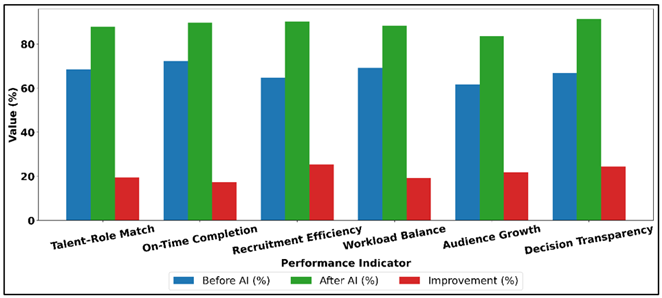
Figure 3 Ai-Driven Workforce Performance Improvements
Transparency of decisions also increased significantly by 24.4, and it is indicative of the role explained analytics and data-driven recommendations played in helping to clearer and more accountable managerial decisions. Figure 4 visualizes the important performance indicators showing the efficiencies of the AI enhanced workforces. Accuracy in talent-role matching improved by 19.4 showing that skills mapping and role alignment models were effective in minimizing the difference in skills to project requirements.
Figure 4
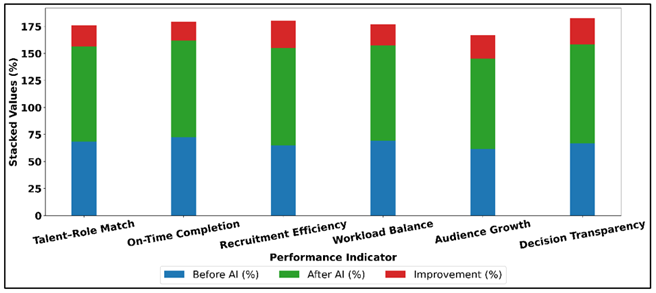
Figure 4 Visualization of Workforce Performance Metrics
The changes in workload balance (19.3%) signify that there is a more balanced task allocation, which helps to avoid burnout and easier project implementation. The time of project completion increased by 17.3 meaning that, prediction planning and team optimization led to an increase in coordination without limiting the creative processes.
6.2. Impact on Talent Utilization and Creative Performance
The overall workforce analytics driven by AI had a considerable positive effect on the use of talent and overall creative performance. Through proper mapping of skills and creative strengths, organizations could place talent in a more strategic manner, so that they could be in an area of expertise and artistic interest. This congruence was a factor in an increased level of creative involvement, teamwork, and consistency of output. Team composition predation also contributed more to creative synergy that resulted in better project performance and minimized trial and error of team composition. Notably, the combination of AI-generated insights and human judgment saved the artistic freedom and enhanced the managerial performance. The results indicate that AI-based analytics can bring about efficiency and creative excellence provided that it is introduced as the augmentative and human-oriented system.
Table 3
|
Table 3 Impact of AI On Talent Utilization and Creative Performance (%) |
|||
|
Creative Performance Metric |
Traditional Approach (%) |
AI-Enabled Approach (%) |
Gain (%) |
|
Talent Utilization
Efficiency |
70.6 |
89.1 |
18.5 |
|
Skill–Project Alignment |
73.4 |
92.6 |
19.2 |
|
Creative Output Consistency |
68.9 |
87.8 |
18.9 |
|
Collaboration Effectiveness |
71.2 |
90.4 |
19.2 |
As illustrated in Table 3, AI-based workforce analytics have a significant impact on the use of talent and creativity in visual arts organizations. The efficiency in the use of talent improved with AI-based skill mapping and role optimization by 18.5, which means that AI-based skill mapping and role optimization helped organizations to use creative professionals with increased efficiency on projects. Figure 5 illustrates favorable results of creative performance that AI integration enabled. Such enhancement indicates less exploitation of professional competencies as well as an increased match between personal abilities and organizational demands.
Figure 5
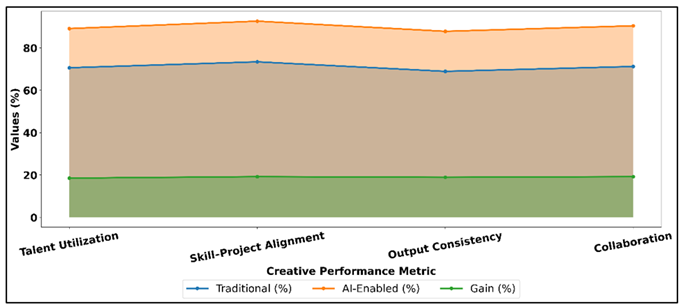
Figure 5 Creative Performance Enhancement With AI
Skill project alignment is also increasing by 19.2% and this demonstrates that role assignment based on data-driven projects are effective in aligning the artistic strengths with the project purpose. This not only increases the quality of output but also increases the engagement and motivation of the artists. The consistency in creative output was higher by 18.9, which indicated that the use of AI in planning and performance monitoring helped achieve more consistent and predictable creative output across the projects.
7. Conclusion
This paper has analyzed the disruptive nature of artificial intelligence in creative workforce analytics and how AI would improve talent management and performance optimization in visual arts organizations. The AI-supported structures have the potential to provide a holistic, methodical view of the creative work by incorporating heterogeneous data streams including portfolios, project logs, peer ratings, and audience activity indicators, that is beyond the conventional, ethos-based management systems. The results show that AI has the potential to be useful to the main organizational processes, such as recruitment, role alignment, team composition and performance assessment, without any disrespect to the subjectivity and the diversity of artistic work. Notably, the study notes that AI is not useful in creative tasks because it can substitute human judgment, on the contrary, it can supplement it. The explainability and human-in-the-loop are used to provide transparency, trust, and context sensitivity, the ethical issues associated with bias, over-quantification, and creative autonomy are addressed. Under proper governance, AI-based workforce analytics can lead to inclusiveness, minimize inefficiencies, and help make decisions in arts institutions fairer. In strategic terms, talent analytics powered by AI will help to have more sustainable and dynamic organizational models. Enhanced use of talents and greater and better collaboration dynamics and plans that are based on data allow visual arts organizations to react to changing cultural, technological and economic circumstances in an efficient manner. Simultaneously, performance analytics with a balanced approach between quantitative and qualitative and emotional aspects promote reflective practice instead of restrictive evaluation. All in all, this study highlights the need to focus on the compatibility of technological innovation and artistic values.
CONFLICT OF INTERESTS
None.
ACKNOWLEDGMENTS
None.
REFERENCES
Barath, C.-V., Logeswaran, S., Nelson, A., Devaprasanth, M., and Radhika, P. (2023). AI in Art Restoration: A Comprehensive Review of Techniques, Case Studies,
Challenges, and Future Directions. International Research
Journal of Modern Engineering Technology and Science,
5, 16–21.
Chang, L. (2021). Review and Prospect of Temperature and Humidity Monitoring for Cultural Property Conservation Environments. Journal of Cultural Heritage Conservation, 55, 47–55.
Chatterjee, A. (2022). Art in an Age of Artificial Intelligence. Frontiers in Psychology, 13, 1024449. https://doi.org/10.3389/fpsyg.2022.1024449
Chen, X., Xie, H., Zou, D., and Hwang, G.-J. (2020). Application and Theory Gaps During the Rise of Artificial Intelligence in Education. Computers and Education: Artificial Intelligence, 1, 100002. https://doi.org/10.1016/j.caeai.2020.100002
Deng, K., and Wang, G. (2023). Online Mode Development of Korean Art Learning in the Post-Epidemic Era Based on Artificial Intelligence and Deep Learning. Journal of Supercomputing, 80, 8505–8528. https://doi.org/10.1007/s11227-023-05776-1
Fan, X., and Zhong, X. (2022). Artificial Intelligence-Based Creative Thinking Skill Analysis Model Using Human–Computer Interaction in Art Design Teaching. Computers and Electrical Engineering, 100, 107957. https://doi.org/10.1016/j.compeleceng.2022.107957
He, C., and Sun, B. (2021). Application of Artificial Intelligence Technology in Computer-Aided Art Teaching. Computer-Aided Design and Applications, 18(Suppl. S4), 118–129. https://doi.org/10.14733/cadaps.2021.S4.118-129
Hwang, G.-J., Xie, H., Wah, B. W., and Gašević, D. (2020). Vision, Challenges, Roles and Research Issues of Artificial Intelligence in Education. Computers and Education: Artificial Intelligence, 1, 100001. https://doi.org/10.1016/j.caeai.2020.100001
Kong, F. (2020). Application of Artificial Intelligence in Modern Art Teaching. International Journal of Emerging Technologies in Learning, 15, 238–246. https://doi.org/10.3991/ijet.v15i13.15351
Rong, Q., Lian, Q., and Tang, T. (2022). Research on the Influence of AI and VR Technology for Students’ Concentration and Creativity. Frontiers in Psychology, 13, 767689. https://doi.org/10.3389/fpsyg.2022.767689
Shi, K., Su, C., and Lu, Y.-B. (2019). Artificial Intelligence (AI): A Necessary Tool for the Future Development of Museums. Science and Technology of Museums, 23, 29–41.
Tahiru, F. (2021). AI in education. Journal of Cases on Information Technology, 23, 1–20. https://doi.org/10.4018/JCIT.2021010101
Tang, T., Li, P., and Tang, Q. (2022). New Strategies and Practices of Design Education Under the Background of Artificial Intelligence Technology: Online Animation Design Studio. Frontiers in Psychology, 13, 767295. https://doi.org/10.3389/fpsyg.2022.767295
Yang, R. (2020). Artificial Intelligence-Based Strategies for Improving the Teaching Effect of Art Major Courses in Colleges. International Journal of Emerging Technologies in Learning, 15, 146–155. https://doi.org/10.3991/ijet.v15i22.18199
Zhang, K., and Aslan, A. B. (2021). AI Technologies for Education: Recent Research and Future Directions. Computers and Education: Artificial Intelligence, 2, 100025. https://doi.org/10.1016/j.caeai.2021.100025
Zhao, L. (2022). International Art Design Talents-Oriented New Training Mode Using Human–Computer Interaction Based on Artificial Intelligence. International Journal of Humanoid Robotics, 20, 2250012. https://doi.org/10.1142/S0219843622500128
Zheng, L., Niu, J., Zhong, L., and Gyasi, J. F. (2021). The Effectiveness of Artificial Intelligence on Learning Achievement and Learning Perception: A Meta-Analysis. Interactive Learning Environments, 31, 5650–5664. https://doi.org/10.1080/10494820.2021.2015693
|
|
 This work is licensed under a: Creative Commons Attribution 4.0 International License
© ShodhKosh 2025. All Rights Reserved.