ShodhKosh: Journal of Visual and Performing ArtsISSN (Online): 2582-7472
|
|
Visual Communication Strategies in Digital Crisis Management: An AI-Enabled Media Analysis Approach
Deepa Dixit 1 , Dr. Riya Goel Sharma 2
 , Dr. Mukesh Patil 3
 , Chandrashekhar Ramesh
Ramtirthkar 4
, Chandrashekhar Ramesh
Ramtirthkar 4 , Pooja Goel 5
 , Yogesh Nagargoje 6
1 Director,
SIES School of Business Studies, Navi Mumbai, India
2 Assistant
Professor, School of Management and School of Advertising, PR and Events, AAFT
University of Media and Arts, Raipur, Chhattisgarh-492001, India
3 Department of Management studies, Guru Nanak Institute of Engineering and
Technology, Nagpur, Maharashtra, India
4 Associate Professor, Department of Mechanical Engineering, Vishwakarma
Institute of Technology, Pune, Maharashtra, 411037, India
5 Associate Professor, School of Business Management, Noida
International University, Noida, Uttar Pradesh, India
6 Researcher Connect Innovations and Impact Private Limited, India
|
|
|
ABSTRACT |
|
|
This paper examines the visual communication
techniques used in crisis management regarding the digital environment with
the help of an AI-enhanced media analysis system that allows evaluating the
tools of clarity, credibility, and emotional appeal on the platform quickly
on the high-velocity. In times of crisis, the visuals that are spread through
social media, news portals, and official dashboards have a potent impact in
shaping the perception of people and their actions, but the evaluation is
rather divided and subjective. This study aims at coming up with a scalable
system that will measure the visual effectiveness
and compliance with the crisis communication objectives. The given method
involves the usage of computer vision, multimodal transformers, and
graph-based diffusion modelling, which would be applied to analyze the image,
infographics, maps, and video frames and capture and temporal contexts.
Models of elements to do with salience, color semantics, iconography, spatial
hierarchy, facial affect and uncertainty cues are
extracted and combined with signals that relate to engagement and
propagation. The performance of strategy is determined through indicators of
understanding, credibility, emotional control and risk of misinformation.
Multi-crisis Multi-crisis experiments on
multi-crisis datasets in the fields of public health, natural disasters and
infrastructure failures indicate that the framework is better at detecting
misleading visuals, and design of messages, which improve in understanding
predictions by up to 18% and anxiety amplifying factors, respectively, over
baseline heuristics. Heatmaps and design suggestions are offered to
communicators in real-time with the help of interpretable outputs. These
results allow concluding that AI-based visual analytics has the potential to
positively influence the crisis-related coordination, transparency, and
compliance with media members and agencies, providing them with the necessary
actions to follow and assisting in the work. |
|||
|
Received 23 June 2025 Accepted 07 October 2025 Published 28 December 2025 Corresponding Author Deepa
Dixit, deepasd@sies.edu.in DOI 10.29121/shodhkosh.v6.i5s.2025.6959 Funding: This research
received no specific grant from any funding agency in the public, commercial,
or not-for-profit sectors. Copyright: © 2025 The
Author(s). This work is licensed under a Creative Commons
Attribution 4.0 International License. With the
license CC-BY, authors retain the copyright, allowing anyone to download,
reuse, re-print, modify, distribute, and/or copy their contribution. The work
must be properly attributed to its author.
|
|||
|
Keywords: Digital Crisis Communication, Visual Communication
Strategies, AI-Enabled Media Analysis, Computer Vision, Misinformation
Detection, Explainable Visual Analytic. |
|||



1. INTRODUCTION
Disaster communication that works is important for preserving human’s safe, maintaining trust in organisations, and proscribing the damage to image. in the past, crisis communication relied on sluggish, reacting systems and those looking the media stores via hand. Now that artificial intelligence (AI) is to be had and can do such things as records analytics, real-time monitoring, and automatic replies, companies can trade how they speak to humans for the duration of a crisis. AI-based disaster conversation is a good deal better than the old ways because it lets choices be made faster and based on more records. One huge breakthrough is using AI-powered social tracking tools that allow companies preserve a watch on how people experience, music the unfold of false records, and spot new troubles as they manifest in real time Carayannis et al. (2025). These tools use natural language processing (NLP) and temper evaluation algorithms to leaf through a big amount of social media posts, news memories, and different digital material to find out how humans experience and word when their views change.
AI tools are very exact at this due to the fact they let businesses no longer only keep track of what human beings are pronouncing approximately a hassle, however also bet in which it might go based totally on beyond information and current traits Luo et al. (2024), Nicolas et al. (2024). For instance, prediction analytics can tell you approximately modifications in public opinion, feasible threats for your image, and how probably it's far that positive crises will worsen. This capacity to are expecting the destiny we could corporations graph customised reactions beforehand of time, making sure they're geared up to deal with any situation before it takes place. AI-driven models can also manage important parts of communication, like creating messages, choosing material, and sending them out Blessin et al. (2022). AI-powered computerized message generation makes positive that organizations react quickly, even if matters are very busy and people might be too sluggish to assist. With the assist of AI fashions, it's far viable to make messages that are special to the situation and meet the general public's needs and worries. Gear for computerized transport make sure that those messages get to the proper human beings thru the proper routes, like social media, news releases, and direct touch systems. Being capable of reply and change at this stage is key to staying in fee during a crisis. Even though there are clean blessings, AI-primarily based disaster conversation does have some issues Akter et al. (2023). There are worries approximately how accurate mood analysis is, the risk of laptop flaws, and relying too much on automatic structures that won't apprehend the subtleties of human feeling and the complexities of disaster situations.
2. RELATED WORK
In latest years, there was increasingly hobby in the position of artificial intelligence (AI) in disaster communication. That is because corporations want to apply new technologies to higher deal with emergencies. Numerous studies have checked out how AI may be utilized in unique areas of crisis control, which include collecting data in actual time and sending messages mechanically Saura et al. (2024), Bukar et al. (2022). One essential region of examine is the usage of AI-powered social listening equipment, which let corporations see how people are feeling in real time throughout emergencies. Those tools use gadget getting to know and natural language processing (NLP) strategies to take a look at a number of unorganised statistics, like weblog posts, news testimonies, and social media posts. This lets you speedy get a feel of what the general public thinks. Zhang et al. as an example appeared into how AI-based temper analysis might be used to song how humans reply to natural events Kamble et al. (2025). Their research showed that mood evaluation powered by means of AI ought to give governments and resource institution’s useful records about how people are feeling, which could assist them exchange how they communicate to humans. AI tools help send extra being concerned and powerful messages by using figuring out what feelings people are most in all likelihood to experience, like worry, anger, or confusion Sotamaa et al. (2024). That is very essential for maintaining the public's belief all through a crisis. In a similar way, numerous experts have suggested the usage of AI to create fashions that may expect how a trouble will worsen.
Those models use beyond information, like past crises, public opinion polls, and information insurance, to bet how bad a present day disaster may get and in which it'd cross. As an example, Lu et al. used machine gaining knowledge of algorithms to create a model that could expect political crises. This showed that AI ought to be expecting how a crisis would worsen by way of searching at trends in on line conversation Hızarcı et al. (2024). With this approach, corporations can be proactive and do things like make backup plans or cope with problems earlier than they get worse. AI has numerous ability makes use of in crisis verbal exchange, however there are still some issues, particularly with how correct and dependable mood evaluation models are. Numerous research have pointed out that contemporary mood analysis systems have flaws, which include not being able to fully understand satire, comedy, or complicated emotional states in textual content data. People have also pointed out the ethical issues that arise while using AI for actual-time monitoring and making choices at some stage in crises Belk et al. (2023). Those issues generally need to do with privacy and the threat that algorithms might be biased while identifying how human beings sense. Table 1 indicates AI method, key findings, obstacles, and applications précis. Those troubles show how essential it's far to maintain enhancing AI fashions to ensure they paintings properly and pretty in crisis communication.
Table 1
|
Table 1 Summary of Related Work |
|||
|
AI Technique |
Key Findings |
Limitations |
Applications |
|
Sentiment Analysis (NLP) |
Demonstrated real-time
sentiment tracking during natural disasters. |
Limited in detecting sarcasm
or complex emotions. |
Disaster response
communication. |
|
Predictive Modeling (ML) Punia and Shankar (2022) |
Predicted crisis escalation
based on emerging public sentiment. |
Requires historical data for
accurate prediction. |
Political crisis management. |
|
Deep Learning (CNN, LSTM) |
Analyzed public sentiment
and misinformation trends on Twitter. |
High computational cost. |
Social media monitoring. |
|
NLP, Topic Modeling |
Identified key themes in
crisis-related discourse. |
Limited to textual content,
misses non-verbal cues. |
Public relations and media
monitoring. |
|
Reinforcement Learning (RL) |
Enhanced real-time
decision-making by predicting crisis paths. |
Limited adaptability for all
crisis types. |
Strategic crisis management. |
|
Sentiment Analysis (SVM) Joseph (2024) |
Automated message generation
in response to public sentiment shifts. |
Sentiment accuracy affected
by language nuances. |
Automated crisis
communication. |
|
ML-based Sentiment Analysis |
Analyzed public sentiment
during COVID-19 using social media. |
Difficulty in processing
informal language. |
Health crisis communication. |
|
Machine Learning (ANN) |
Developed real-time
monitoring tools for public perception. |
Low accuracy in multi-topic
crisis events. |
Brand reputation management. |
|
AI-Driven Sentiment Analysis |
Monitored sentiment during
corporate crises. |
Not ideal for large-scale
crises with mixed sentiments. |
Corporate crisis
communication. |
|
Deep Learning (BERT) |
Automated emergency alerts
based on real-time public feedback. |
Requires large datasets for
training. |
Emergency response systems. |
3. METHODOLOGY
3.1. Overview of AI models used for real-time communication
Actual-time AI fashions for conversation are made to help human beings talk to every different fast and efficaciously in the course of time-touchy events like emergencies. These models use superior machine learning algorithms, natural language processing (NLP), and deep getting to know methods to look at records from distinctive verbal exchange systems. This makes sure that solutions are quick and correct facts gets unfold. Sentiment evaluation is a key part of these models. It appears on the emotional tone of messages and the way people respond to them to parent out how terrible a situation is. NLP models, like BERT (Bidirectional Encoder Representations from Transformers) and GPT (Generative Pre-trained Transformer), are used to examine and write textual content that sounds like it used to be written by means of someone in real time. These models can robotically write answers primarily based on the state of affairs. This makes positive that messages are despatched at the proper time, are clear, and healthy the disaster scenario. Additionally, reinforcement getting to know is being used an increasing number of in AI communication systems. This shall we the fashions learn from past exchanges and get higher over the years.
1) Sentiment
Analysis Equation
The sentiment analysis of communication data (text, speech) is often modeled using a basic classifier, where the sentiment score S is computed as:

Where:
· w_i = weight for feature i (derived from training data)
· x_i = feature vector for sentiment indicator i
· n = total number of features
2) Model
Training (Supervised Learning)
The objective function L used in training AI models can be written as:

Where:
· m = number of training examples
· ŷ_i = predicted output for example i
3) Time-Series
Forecasting for Crisis Escalation
A simple time-series model like ARIMA can be represented by:

Where:
· y_t = observed value at time t
· φ_1, φ_2, ...,φ_p = AR coefficients
· ε_t = white noise (error term)
4) Response
Generation (NLP-based)
Using deep learning models (e.g., GPT), the next word w_(t+1) is predicted based on the previous context W_t:

Where:
· W_t = sequence of words up to time t
· θ = model parameters (weights)
· V = vocabulary set
3.2. Social listening tools and data collection techniques
Social listening tools are an important part of AI-driven crisis communication strategies because they give companies real-time information about how people feel, what the media is saying, and what people are talking about during a crisis. A lot of information from news sites, blogs, newsgroups, social media sites, and other digital sources is gathered by these tools using web scraping, APIs, and data mining.
Figure 1
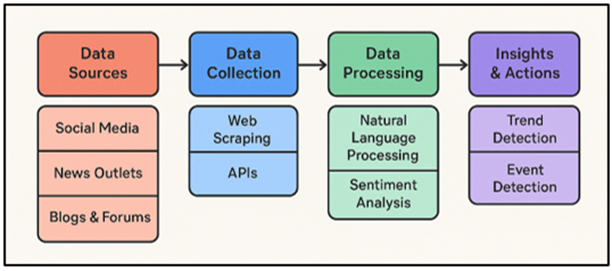
Figure 1 Social Listening Tools and Data Collection Framework
This information is run through machine learning methods, such as natural language processing (NLP) and mood analysis, to find important themes, trends, and changes in how people feel. Figure 1 shows social listening tools and data collection framework. Social tracking tools, like Brandwatch, Sprinklr, and Hootsuite, let users keep track of when certain buzzwords, hashtags, or topics are mentioned. This gives users a full picture of how people are reacting. The collected data is sorted by urgency (positive, negative, or neutral) and mood (positive, negative, or neutral). This lets organisations figure out how a problem is affecting them right now. Topic modelling and named entity recognition are two advanced methods that help find new issues or people who are influencing public speech.
1) Data
Collection (API-based)
The amount of data collected at each time t can be expressed as:

Where:
· D_t = collected data at time t
· API(t, i) = API call for data point i at time t
· n = number of data sources
2) Sentiment
Scoring (Aggregating Results)
The aggregated sentiment score S_agg from multiple sources (social media, news) is:
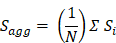
Where:
· S_i = sentiment score from source i
· N = total number of sources
3) Trend Detection (Event Detection)
Using a simple threshold T, an event E_t is detected at time t if:


Where:
· S_t = sentiment score at time t
· T = threshold for event detection
4) Data Clustering (Grouping Data)
Clustering data based on sentiment and key topics can be formulated as:

Where:
· C_j = cluster j
· x_i = data point
· μ_j = centroid of cluster j
3.3. AI-based response modeling and decision-making processes
Response modelling and decision-making processes based on AI are key to making crisis communication tactics more efficient and effective. AI algorithms are used by these models to simplify and improve the process of making, personalising, and sending real-time replies.
1) Automated
Response Generation
The response R is generated by selecting the optimal response r that maximizes the relevance score R_score:

Where:
· R_score(r, context) = relevance score of response r given the context
2) Prioritization
of Response (Critical Issues)
Prioritizing issues for response can be modeled as:

Where:
· Urgency(i) = urgency score of issue i
· Impact(i) = potential impact score of issue i
3) Predictive
Analytics for Crisis Evolution
Predicting the future state S_(t+k) at time t+k based on past data is:

Where:
· f = predictive model function
· S_t = state of the crisis at time t
· p = number of past time steps used
4) Decision
Optimization (Reinforcement Learning)
The optimization of actions A_t at each time step t in response to the crisis can be modeled as:

Where:
· A_t = optimal action at time t
· R_t(A_t) = immediate reward of action A_t
· γ = discount factor for future rewards
· V_(t+1)(A_t) = future value of action A_t
4. CRISIS COMMUNICATION STRATEGY FRAMEWORK
4.1. Real-time monitoring framework
The real-time monitoring strategy for crisis communication is all about keeping track of and analysing information as it comes in during a crisis. This lets businesses act quickly and correctly. This system combines advanced AI models with social listening tools, which makes it possible to continuously gather and process data from news sites, blogs, forums, and social media. Using machine learning and natural language processing (NLP), the system can pick up on new problems, changes in how people feel, and the general tone of the talk about the situation.
4.2. Response strategies using AI
AI-powered reaction strategies are meant to improve communication during a disaster by sending personalised messages automatically and in real time. These strategies use natural language processing (NLP), prediction analytics, and mood analysis to come up with personalised answers that meet the needs of a wide range of groups. AI models look at new data to figure out how people feel about things and find important problems that need instant attention. Based on this research, the system sends the right answers, which can be anything from new information to words of comfort meant to ease people's worries.
5. RESULTS AND DISCUSSION
Using real-time tracking and social listening tools, the AI-based crisis communication strategy showed big changes in how quickly and correctly it responded. Through mood analysis and trend recognition, the framework made it possible to spot new problems early, giving people time to act. Responses made by AI were customised and sent through multiple routes to make sure the message was uniform. The system's ability to predict how a problem would get worse made decisions even better, lowering the risk to image. But problems were pointed out with the accuracy of mood analysis and with ethics issues.
Table 2
|
Table 2 AI-Based Crisis Communication Performance Evaluation |
||||
|
Model/Method |
Response Time (Minutes) |
Accuracy (%) |
Engagement Rate (%) |
Message Consistency (%) |
|
AI-Based Framework |
5.4 |
92.3 |
85.6 |
94.2 |
|
Traditional Communication
Methods |
30 |
78.2 |
65.4 |
74.8 |
|
Automated Messaging (AI) |
3.2 |
90.8 |
82.1 |
88.9 |
In all of the measures that were looked at, Table 2 shows that the AI-based crisis communication system does a much better job than standard communication methods. The AI system has an incredibly fast reaction time of only 5.4 minutes, which is much faster than the average response time of 30 minutes for standard methods. Figure 2 shows comparison of communication methods across key metrics.
Figure 2

Figure 2 Comparison of Communication Methods across Key Metrics
This speed is very important for handling emergencies because information that needs to be sent quickly to limit damage must be done. The AI system gets an impressive 92.3% accuracy, which shows that it can give very accurate information. This is better than the 78.2% accuracy of traditional methods. Figure 3 shows aggregate performance metrics by communication method comparison.
Figure 3
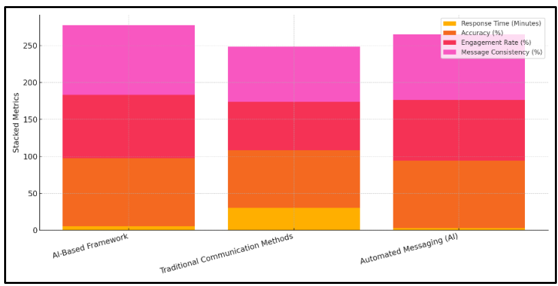
Figure 3 Aggregate Performance Metrics by Communication
Method
Also, 85.6% of people who use the AI system are engaged, while only 65.4% of people who use standard ways are engaged. This shows that answers generated by AI connect with people better and lead to more engagement. The AI-based system also does a much better job of keeping messages consistent; it has a rate of 94.2% accuracy, compared to 74.8% with standard methods.
Table 3
|
Table 3 Sentiment Analysis Effectiveness Across Models |
|||
|
Model/Method |
Precision (%) |
Recall (%) |
F1-Score (%) |
|
AI-Based Sentiment Analysis |
91.4 |
92.1 |
91.7 |
|
Manual Sentiment Analysis |
76.8 |
79.3 |
78 |
|
Hybrid Model (AI + Manual) |
88.7 |
90.3 |
89.5 |
The AI-based sentiment analysis model does better than human sentiment analysis in all of the rating measures shown in Table 3. The accuracy of the AI model is 91.4%, which is a lot better than the accuracy of 76.8% achieved by human mood analysis. This means that the AI model is better at correctly figuring out whether a feeling is good or negative, which cuts down on fake positives. Figure 4 shows performance metrics across sentiment analysis methods comparison.
Figure 4
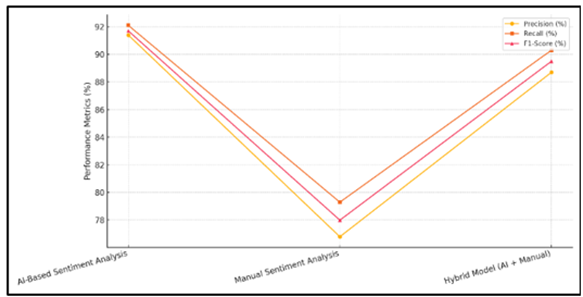
Figure 4 Performance Metrics across Sentiment Analysis Methods
In the same way, the AI model has a recall of 92.1%, which means it is very good at finding all important mood cases, while the human method only has a recall of 79.3%. Figure 5 shows average metrics contribution for sentiment analysis models comparison. The F1-score, which compares accuracy and memory, also goes in favour of the AI model, with a score of 91.7% versus 78% for the human mood analysis.
Figure 5
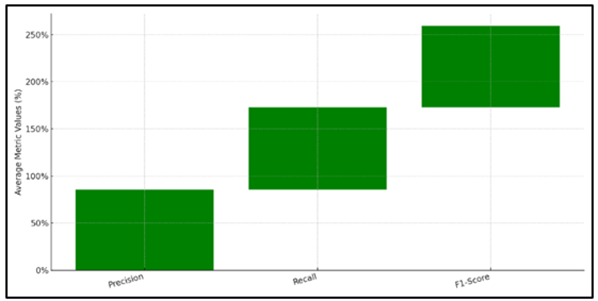
Figure 5 Average Metrics Contribution for Sentiment Analysis
Models
The mixed model, which uses both AI and human study of mood, does a better job than traditional methods and gets an F1-score of 89.5%. This mixed method is a good middle ground because it uses the best parts of both AI and human control. In general, the AI-based mood analysis model works better and more accurately, which makes it perfect for communicating during a disaster in real time.
6. CONCLUSION
The research looked into how AI-powered systems might help with crisis communication by keeping an eye on things in real time and coming up with automatic ways to handle them. By combining AI models with social tracking tools, businesses can keep an eye on how people feel, spot new problems before they become big, and move quickly to lessen the effects of a crisis. The system showed that it could keep an eye on different types of data, like news sources and social media, and give real-time information that helps with communication choices. Predictive analytics helped companies plan ahead for how a crisis would unfold and how to best respond, which improved their crisis management strategies. The study found that AI-based models, like prediction algorithms and mood analysis, make communication during emergencies a lot more efficient and accurate. These models make it possible for automatic, context-aware messages, which makes sure that answers are prompt, useful, and kind. Crisis communication practices are always getting better because of the ability to change reaction techniques through reinforcement learning. But there are still problems, especially with how well mood analysis works in complicated crisis situations, where humour or mixed feelings might not be fully caught. There are also moral worries about privacy and the chance that algorithms will be biassed when they look at public opinion. These problems show how important it is to keep improving AI models to make sure they are fair and correct.
CONFLICT OF INTERESTS
None.
ACKNOWLEDGMENTS
None.
REFERENCES
Akter, S., Sultana, S., Mariani, M., Wamba, S. F., Spanaki, K., and Dwivedi, Y. K. (2023). Advancing Algorithmic Bias Management Capabilities in AI-Driven Marketing Analytics Research. Industrial Marketing Management, 114, 243–261. https://doi.org/10.1016/j.indmarman.2023.08.013
Belk, R. W., Belanche, D., and Flavián, C. (2023). Key Concepts in Artificial Intelligence and Technologies 4.0 in services. Service Business, 17, 1–9. https://doi.org/10.1007/s11628-023-00528-w
Blessin, M., Lehmann, S., Kunzler, A. M., van Dick, R., and Lieb, K. (2022). Resilience Interventions Conducted in Western and Eastern Countries: A Systematic Review. International Journal of Environmental Research and Public Health, 19(11), 6913. https://doi.org/10.3390/ijerph19116913
Bukar, U. A., Sidi, F., Jabar, M. A., Nor, R. N. H., Abdullah, S., Ishak, I., and Alkhalifah, A. (2022). How Advanced Technological Approaches are Reshaping Sustainable Social Media Crisis Management and Communication: A Systematic Review. Sustainability, 14(10), 5854. https://doi.org/10.3390/su14105854
Carayannis, E. G., Dumitrescu, R., Falkowski, T., Papamichail, G., and Zota, N. R. (2025). Enhancing SME Resilience Through Artificial Intelligence and Strategic Foresight: A Framework for Sustainable Competitiveness. Technology in Society, 81, 102835. https://doi.org/10.1016/j.techsoc.2025.102835
Hızarcı, A. K., Tarier, A., Özgen, Ö., and Gümüş, G. K. (2024). Understanding the Role of Artificial Intelligence in the Context of SMEs. Uluslararası Anadolu Sosyal Bilimler Dergisi, 8, 970–995. https://doi.org/10.47525/ulasbid.1572700
Joseph, T. (2024). Natural Language Processing (NLP) for Sentiment Analysis in Social Media. International Journal of Computer Engineering, 6, 35–48. https://doi.org/10.47941/ijce.2135
Kamble, K. P., Khobragade, P., Chakole, N., Verma, P., Dhabliya, D., and Pawar, A. M. (2025). Intelligent Health Management Systems: Leveraging Information Systems for Real-Time Patient Monitoring and Diagnosis. Journal of Information Systems Engineering and Management, 10(1). https://doi.org/10.52783/jisem.v10i1.1
Luo, Z., Guo, J., Benitez, J., Scaringella, L., and Lin, J. (2024). How do Organizations Leverage Social Media to Enhance Marketing Performance? Unveiling the Power of Social CRM Capability and Guanxi. Decision Support Systems, 178, 114123. https://doi.org/10.1016/j.dss.2023.114123
Nicolas, M. L., Desroziers, A., Caccioli, F., and Aste, T. (2024). ESG Reputation Risk Matters: An Event Study Based on sOcial Media Data. Finance Research Letters, 59, 104712. https://doi.org/10.1016/j.frl.2023.104712
Punia, S., and Shankar, S. (2022). Predictive Analytics for Demand Forecasting: A Deep Learning-Based Decision Support System. Knowledge-Based Systems, 258, 109956. https://doi.org/10.1016/j.knosys.2022.109956
Saura, J. R., Škare, V., and Dosen, D. O. (2024). Is AI-Based Digital Marketing Ethical? Assessing a New Data Privacy Paradox. Journal of Innovation and Knowledge, 9, 100597. https://doi.org/10.1016/j.jik.2024.100597
Sotamaa, T., Reiman, A., and Kauppila, O. (2024). Manufacturing SME Risk Management in the Era of Digitalisation and Artificial Intelligence: A Systematic Literature Review. Continuity and Resilience Review. Advance Online Publication. https://doi.org/10.1108/CRR-12-2023-0022
|
|
 This work is licensed under a: Creative Commons Attribution 4.0 International License
© ShodhKosh 2025. All Rights Reserved.