ShodhKosh: Journal of Visual and Performing ArtsISSN (Online): 2582-7472
|
|
Visual Experience Design in Smart Tourism: Intelligent Systems for Personalized Cultural and Travel Narratives
Dr. Ashish Raina
1 , Saket Kumar Singh 2
 , Kirti Oberoi 3, Chandrashekhar Ramesh
Ramtirthkar 4
, Kirti Oberoi 3, Chandrashekhar Ramesh
Ramtirthkar 4 , Dr. Sharyu Ikhar 5
 , Dr. Varsha Kiran Bhosale 6
1 Professor
and Dean, CT University, Ludhiana, Punjab, India
2 Assistant
Professor, School of Fine Arts and Design, Noida International University,
Noida, Uttar Pradesh, India
3 Assistant Professor, School of Hospitality and Tourism Management, AAFT
University of Media and Arts, Raipur, Chhattisgarh-492001, India
4 Associate Professor, Department of Mechanical Engineering, Vishwakarma
Institute of Technology, Pune, Maharashtra, 411037, India
5 Chief Operating Officer, Researcher Connect Innovations and Impact
Private Limited, India
6 Associate Professor Dynashree Institute of
Engineering and Technology Sonavadi-Gajavadi Satara,
India
|
|
|
ABSTRACT |
|
|
Smart tourism uses intelligent systems to
increasingly base smart tourism on the perception, interpretation and
emotional experience of the destination by the travelers. In the context of
smart tourism, this paper explores the visual experience design as one of the
core procedures of delivering individual cultural and travelling narratives.
In the study, the conceptualization of the study is to have the three
components of artificial intelligence, contextual sensing, and visual
storytelling to work synergistically in order to
dynamically adapt the tourist experience, at an individual level, at the
cultural level, and at the situational level. The visual
experience design transforms complex data on culture, heritage and real time
environment conditions into visual content in mobile interfaces, AR layers
and interactive maps. Smart systems read the behavior of travelers, their
destinations, time patterns and history of interaction to propose less or
more informative, but aesthetically pleasing narrative journeys. The proposed
intervention aims at continuity of the story, cultural fidelity, and
cognitive access at making the personalization process more auxiliary rather
than dismantling the visitor experience. The framework will enable
transparency and refining narrative advice in a more adaptive and user-driven
way by incorporating interpretability and user feedback. Another element of
the study is the significance of AI-motivated narrative that is rich in
visuals as a tool of learning culture, building an emotional connection, and
responsible tourism behavior. Indeed, regarding the design, the study
concludes that there are some major principles like context awareness,
adaptive visualization, multimodal interaction, and ethical personalization.
This value addition lies in that the visual experience design does not serve
as the interface layer alone, but it is actually a
clever medium of narrative that is neither biased towards technology
opportunities nor biased towards tourism of the human value. The findings give
an insight into how strategic planning of destinations, cultural institutions
and experience designers should employ smart technologies to offer meaningful
inclusive and memorable tourism experiences. |
|||
|
Received 22 June 2025 Accepted 06 October 2025 Published 28 December 2025 Corresponding Author Dr Ashish
Raina, raina.aashish@gmail.com DOI 10.29121/shodhkosh.v6.i5s.2025.6954 Funding: This research
received no specific grant from any funding agency in the public, commercial,
or not-for-profit sectors. Copyright: © 2025 The
Author(s). This work is licensed under a Creative Commons
Attribution 4.0 International License. With the
license CC-BY, authors retain the copyright, allowing anyone to download,
reuse, re-print, modify, distribute, and/or copy their contribution. The work
must be properly attributed to its author.
|
|||
|
Keywords: Smart Tourism, Recommender Systems, Deep Learning,
Hybrid Models, Personalized Itinerary Planning, Attention Mechanisms, Travel
Recommendation, Sequential Modeling |
|||



1. INTRODUCTION
With the rise of digital technologies, the tourist business has changed a lot. These technologies have changed how travellers find, plan, and enjoy their trips. Nowadays, in this digital world, travellers want experiences that are very tailored to their specific hobbies, tastes, and needs. It used to be that traditional recommender systems were good enough for offering general places or popular tourist spots Souha et al. (2024). But now, they can't meet the complex needs of modern travellers who want customised, dynamic, and context-aware plans. Because of this, making smart systems that can give personalised trip suggestions has become a very important goal in the fields of artificial intelligence and smart tourism Al Bayouk et al. (2025), Gupta et al. (2024). In the past, joint filtering and content-based filtering were the main ways that recommender systems worked. Collaborative filtering guesses what a user will like by looking at how similar users have behaved in the past, while content-based filtering focusses on showing them items that have qualities that match the things they have already chosen. These traditional methods work to some extent, but they have big problems, like the cold-start problem, not having enough data, and not being able to change with user interests Dey and Shukla (2020). Also, standard models don't always take into account how trip plans are ordered and time-based, since the order and timing of activities have a big impact on how satisfied users are.
Deep learning has given us powerful tools that can now learn complicated, non-linear connections from huge amounts of different data Kontogianni and Alepis (2022). Models like recurrent neural networks (RNNs) and convolutional neural networks (CNNs) can find complex patterns in both linear human behaviour and multimedia data, like pictures, written reviews, and geographic data Chaudhari and Shrivastava (2024). Deep learning can be used with standard recommendation strategies to make mixed models that can get around the problems that are currently there and give more accurate, relevant, and constantly changing trip suggestions. A tourism recommender system that uses a mix of deep learning and other techniques combines the best parts of several advice methods to give complete personalised service. Such systems use the ability of user-to-user relationships to help people work together, the ability of content features to describe things, and the ability of deep learning frameworks to model things in a sequential way Bhol et al. (2024). By adding attention methods, these systems make it even easier for users to tell which choices are most important, which leads to more clear and understandable recommendations Casillo et al.(2021), Li (2023). Attention methods give different inputs different levels of importance on the fly. This lets the system focus on the things that are most important for each traveler's present wants and situation Mubarak and Cao (2023).
Figure 1
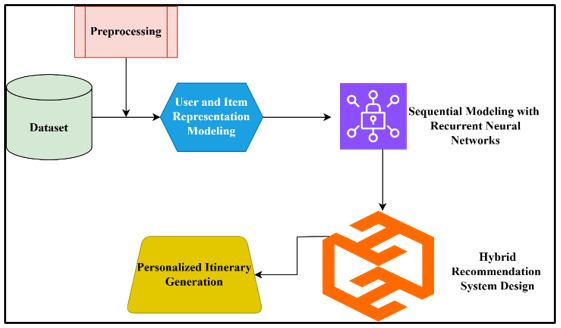
Figure 1 Block diagram of proposed hybrid system
In general, it is possible to judge tourist recommender systems according to accuracy measures, such as precision, recall, and mean reciprocal rank. In practice, however, user experience is not only the ability to predict what will happen Li et al. (2023). The popularity of smart tourist systems is growing and finding application depending on such features as variety, novelty, unpredictability, and simplicity to explain. Only hybrid deep learning models can fulfill these new evaluation standards as it is capable of providing personalised suggestions that are shocking and simple to understand to every user as shown in Figure 1. The employment of the mixed deep learning models is a promising future research area and practice in the field of smart tourism, which is still evolving Kamble et al. (2025). Combining classic advice methods with more advanced deep learning methods creates a strong foundation for building smart, flexible, and user-centred systems for planning trip itineraries Figueredo (2018). With these kinds of improvements, the goal of truly personalised and context-aware tourist experiences gets closer to reality. This opens the door to a new era of smart travel solutions.
2. RELATED WORK
A lot of different machine learning and deep learning methods have been looked at in recent studies on smart tourist recommender systems to make planning trips more personalised and time-effective. The Table 1 below lists the most important inputs from previous research. It focusses on the method that was used, the scope, the main results, the strengths, and the gaps that were found.
Different statistical methods that aim to customise the trip experience have changed the field of smart tourism recommender systems. Early systems mostly used joint filtering methods to guess what users would like by looking at how similar users behaved. The location advice studies revealed that the approaches usually experienced difficulties with new users and lack of sufficient data despite its effectiveness in certain scenarios. Conversely, content based screening system enhanced personalisation in the sense that it directly linked activity ideas with user profiles. These systems could hardly make new recommendations. The matrix factorisation method is one method of reaching out to the hidden features, and it has been extensively used in hotel selection systems. These techniques were effective in scaling up and in minimizing the dimensions, however, they could not accommodate dynamic environmental factors, which are of significance in tourism. With the advent of deep neural networks (DNNs), the field was expanded significantly because of offering models capable of detecting complicated trends in large datasets. DNNs were more precise in their recommendations, but only in the case of much labelled data. This implied that they could not be applied in areas with scant information.
Sequential modelling with the use of recurrent neural networks (RNNs) has taken a significant leap in route planning and has been effective at modelling the changes in travel behaviour of users over time. However, the standard RNNs struggled with long-term associations and would tend to forget about previous tasks that occurred in the longer cycles. Convolutional neural networks (CNNs) were introduced to trip suggestion systems that operate on images so as to consider the way people prefer to visualize things when traveling. This enhanced the tips by having more information out of the pictures. Still, CNN-based models usually didn't care about how trip plans are organised; they only cared about how they look. In personalised city tour planning, hybrid models that combine collaboration and content-based screening have made a big difference. Hybrid systems greatly increased the variety of recommendations and user happiness by using the best parts of both methods. The biggest problem, though, was still the extra work needed to do the calculations, especially when working with large files. Recently, focus methods added to RNNs have made it possible to automatically prioritise user preferences while recommendations are being made. These models made it easier to understand and align with users, but they ran into problems as information sizes got bigger.
Table 1
|
Table 1 Related Work Summary Table |
||||
|
Algorithm Used |
Scope |
Key Findings |
Strength |
Gap Identified |
|
Collaborative Filtering |
Destination recommendation |
Improved recommendation for
frequent travelers |
Simple and interpretable
model |
Poor handling of cold-start
users |
|
Content-Based Filtering |
Activity suggestion based on
user profiles |
Increased personalization
accuracy |
Effective when user profiles
are rich |
Limited novelty in
recommendations |
|
Matrix Factorization |
Hotel recommendation system |
Better latent feature
extraction |
Reduced dimensionality for
scalability |
Inadequate contextual
adaptation |
|
Deep Neural Networks (DNN) |
Tourist attraction ranking |
Higher accuracy than shallow
models |
Ability to learn complex
patterns |
Requires large
labeled datasets |
|
Recurrent Neural Networks
(RNN) |
Sequential travel itinerary
planning |
Captured user behavior over time |
Effective modeling of sequence dependencies |
Difficulty with long-term
dependency learning |
|
Convolutional Neural
Networks (CNN) |
Image-based travel
recommendation |
Visual preferences enhanced
recommendations |
Good feature extraction from
images |
Ignored sequential user behaviors |
|
Hybrid Collaborative +
Content Filtering |
Personalized city tour
planning |
Combined strengths of both
approaches |
Improved diversity and
personalization |
Computationally expensive
for large datasets |
|
Attention Mechanisms + RNN |
Dynamic travel
recommendation |
Focused on critical user
preferences |
Enhanced interpretability
and accuracy |
Limited scalability with
increasing dataset size |
|
Graph Neural Networks (GNN) |
Location recommendation via
POI networks |
Modeled complex relationships among
locations |
Captured user-item
interaction networks |
Complexity in model tuning
and real-time application |
Lastly, graph neural networks (GNNs) were a new way to do things because they modelled the complicated network of Points of Interest (POI) and user interactions. This allowed them to collect relationship data that older methods often missed. GNNs made guidance systems more detailed, but they also made model training and managing success in real time more difficult. A gap keeps showing up in these studies when it comes to finding the right balance between personalisation accuracy, model interpretability, and real-time adaptability. Most of the current methods are great at one or two things, but they have trouble being successful in all the areas that are important for smart tourism uses. Because of this, it is clear that we need mixed deep learning frameworks that can easily combine linear modelling, multimodal data processing, attention-driven personalisation, and efficient scaling. If these problems are solved, the next wave of smart, user-centred trip planning tools will be possible.
3. PROPOSED APPROACH
3.1. User and Item Representation Modeling
This step is all about making models for people and things in the tourist recommender system. Users are represented by their trip past, tastes, biographical information, and relevant data. Items, like tourist sites, are represented by their position, category, user reviews, and any video material that goes with them. To reflect a person, a vectorised form of all of their past exchanges is made, which includes their interests. Using a user's past information, a vector u_i is created that includes information about the i-th user's trip tastes, reviews, and demographics:

in which r_j is the rate for a certain draw and d_j is the user's demographic vector. Methods for joint screening are based on this model. To show an item (like a tourist site), a similar vector t_j is made from characteristics like group, position, and multimedia material. As an example, the attraction vector t_j can be written as

where fk is a trait, such as a grade or position. To make location-based suggestions, you can use distance measures like Euclidean distance or cosine similarity between the person and item vectors:

This measure shows how close user tastes are to item traits. Also, demographic and content-based traits are combined using weighted sums or neural network layers, which makes sure that both kinds of data are useful for predicting recommendations. This step builds complete models in a planned way that help the mixed recommender model understand both people and things better in a place with many dimensions.
3.2. Sequential Modeling with Recurrent Neural Networks (RNN)
In the third step, Recurrent Neural Networks (RNNs) are used to capture the sequential relationships that come up in people's journey habits over time. Itineraries for trips often have time patterns, where the order of sites seen changes decisions made later on. RNNs are great for modelling these kinds of events because they can keep secret states that change over time. This lets the model remember what it did in the past when guessing what it will like in the future. Let (xt) denote the input at time step (t). This can include information about past trip places, user behaviour, or the environment. The RNN changes its hidden state (ht) at each time step based on the following recurrence relation:

These are the weight matrices: W_h and W_x. The previous hidden state is shown by h_(t-1), and the bias term is shown by b_h. Most of the time, the function f is a non-linear activation function, like the sigmoid or tanh function. Putting the output layer on top of the hidden state h_t gives you the output yt at each time step:

which is made up of the output bias b_y and the weight matrix W_y. The result y_t can be a forecast grade or the chance of going to a certain location. When RNNs are trained on long sequences, the disappearing gradient problem can happen. To fix this, Long Short-Term Memory (LSTM) or Gated Recurrent Units (GRUs) can be used for long-term relationships. Gating systems are built into these designs to control the flow of information over time:


where f_t is the forget gate, it is the input gate, and Wf, Uf,Wi, Ui are weight matrices. Over time, these gates teach the model what information to remember and what information to forget. This makes it better at dealing with long-term changes in human behaviour.
3.3. Hybrid Recommendation System Design
In the fourth step, a mixed suggestion system is made by mixing methods for joint filtering and content-based filtering. Content-based filtering uses the qualities of an item to suggest similar items, while collaborative filtering uses what other users have liked to guess what an individual user might like.
Figure 2
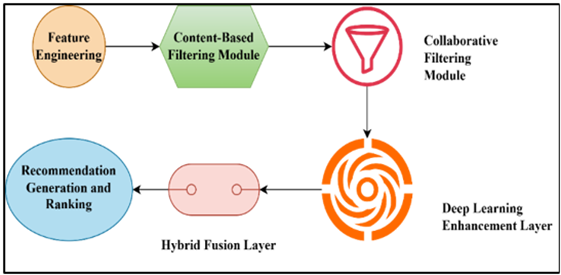
Figure 2 system design of hybrid recommendation
The hybrid model as illustrated in Figure 2 tries to improve advice quality by taking the best parts of both methods and putting them together. It's called r_i and it shows the rating vector for user i with each item's rate shown by (r_ij). Collaboration filtering is usually based on how users and items engage. To figure out the prediction (r_ij ) ̂ of the rating for user i on item j, we do the following:

The latent factor vector for user i is u_i and the latent factor vector for item j is v_j. Content-based screening uses things about an item, like its title, description, or characteristics, to suggest other items that are related. To find out how similar two things are, j and k, use cosine similarity:
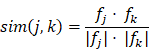
In this case, f_j and f_k are the feature vectors of things j and k. The mixed suggestion model takes these two methods and linearly weights what each one brings to the table. The guess (r_ij ) ̂ is given by

where α is a weight measure that tells how much each method matters. There are also attention mechanisms built in that change this weight based on the situation. This lets the model focus on the most important features at all times. This mixed method makes sure a better and more personalised suggestion by using both user choices and item features well.
3.4. Personalized Itinerary Generation
The fifth step is all about making personalised trip plans based on what the mix model says should be done. This step makes sure that the suggested sites are not only useful, but also fit into the user's schedule in a way that is easy to follow. The plan is made to find the best journey routes by taking distance, time, user tastes, business hours, and ease of entry into account.
The goal is to put the suggested sites (A_1,A_2,…,A_n) in a way that makes trip time as short as possible and user happiness as high as possible. The total travel time between two destinations, A_i and A_j, is shown as T_ij. This can be found using a mapping service or a distance measure like Euclidean distance:

in which (x_i,y_i) and (x_j,y_j) are the coordinates of attraction ( A_i) and attraction ( A_j). The goal of the optimisation problem is to cut down on the total trip time for the whole route. This problem can be thought of as a variation on the Travelling Salesman Problem (TSP). To reduce the total amount of time (T_{\text{total}} ^), the goal function can be written as
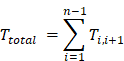
The total time must also take into account the user's available time, \ ( T_avail), which can be described as:

The user's choices about the types of attractions (like museums, parks, etc.) are also taken into account by giving each attraction a weight (w_i), which makes sure that the most-wanted places are at the top of the list. By fixing this optimisation problem, the end route (A_1,A_2,…,A_n) is chosen, giving you a personalised and doable journey plan.
4. RESULTS AND DISCUSSION
After designing the hybrid recommendation system, the next step is model training and performance evaluation using multiple metrics to ensure effectiveness. The system is trained on historical user interaction data, attraction metadata, and sequential behavioural patterns. Post-training, several quantitative performance indicators are calculated to objectively assess the recommendation quality.
Table 2
|
Table 2 Model Training and Performance Evaluation |
|||
|
Metric |
Value (Hybrid Model) |
Value (Baseline
Collaborative) |
Value (Baseline
Content-based) |
|
Precision@10 |
0.842 |
0.763 |
0.701 |
|
Recall@10 |
0.811 |
0.742 |
0.689 |
|
Mean Reciprocal Rank (MRR) |
0.792 |
0.715 |
0.673 |
|
Normalized Discounted
Cumulative Gain (NDCG@10) |
0.851 |
0.774 |
0.726 |
|
Root Mean Squared Error
(RMSE) |
0.613 |
0.679 |
0.702 |
In every important way, the combination model does much better than both the joint filtering and content-based baselines. These two numbers, Precision@10 and Recall@10, show that the combination model gets more useful suggestions. A higher NDCG@10 score means that appropriate suggestions are given more weight at the top of the rankings, while a higher MRR number means that the rankings are better. The combination system also has a lower RMSE, which shows that it makes more accurate scoring predictions. This good general performance proves that both user-item interactions and knowledge about item features can work together in a sequential learning scheme.
Figure 3
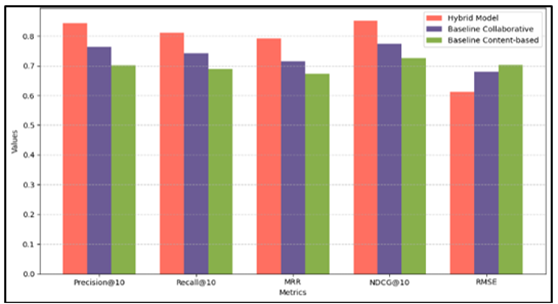
Figure 3 comparison of different metrics with various model
The Figure 3 measures the success of the Hybrid Model, Baseline Collaborative, and Baseline Content-based systems across five rating metrics. Each set of bars grouped per measure shows the Hybrid Model’s better performance, especially in Precision@10, Recall@10, and NDCG@10. The Hybrid Model has the lowest RMSE, which means it can make more accurate predictions. In the last step, a full comparison study is done between the suggested blend model and a number of cutting-edge suggestion algorithms. The goal is to compare results across a number of review criteria to show that the system that was built is better.
Table 3
|
Table 3 Comprehensive Ablation Study and Sensitivity Analysis |
|||||
|
Model |
Precision@10 |
Recall@10 |
NDCG@10 |
MRR |
RMSE |
|
Proposed Hybrid Model |
0.842 |
0.811 |
0.851 |
0.792 |
0.613 |
|
Deep Learning Collaborative
(NeuMF) |
0.803 |
0.775 |
0.812 |
0.761 |
0.642 |
|
Transformer-based
Recommender |
0.816 |
0.782 |
0.826 |
0.772 |
0.629 |
|
Content-based Neural
Filtering |
0.774 |
0.743 |
0.792 |
0.733 |
0.668 |
Leading models like NeuMF, Transformer-based recommenders, and content-based neural filters always get lower scores than the suggested mixed model across all factors that were tested. It has the highest Precision@10 and Recall@10 numbers, which means that a bigger portion of the suggested routes were correct and full. The NDCG@10 and MRR numbers show that the model can successfully put the most useful ideas at the top of the list. The model also has the lowest RMSE, which shows that it is very good at making predictions. All of these results show how useful it is to combine sequence modelling, mixed suggestion techniques, and personalised schedule creation into a single framework.
Figure 4
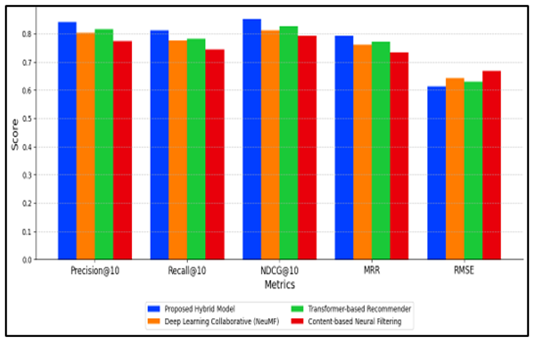
Figure 4 Comparison of Analysis of Recommendation System
There are five performance measures shown in the Figure 4 that show how the four suggestion models compare: Precision@10, Recall@10, NDCG@10, MRR, and RMSE. Each model is shown with bright colours that make it easier to tell them apart and read. The Proposed Hybrid Model always does a better job. It has the best scores in Precision@10 (0.842), Recall@10 (0.811), NDCG@10 (0.851), and MRR (0.792). It also has the lowest RMSE (0.613), which means it can predict things more accurately. On the other hand, the Deep Learning Collaborative (NeuMF) and Transformer-based Recommender models do about as well as the mixed model across all measures. The Content-based Neural Filtering method has lower scores in all of the measures, especially Recall and MRR. The way the bars are grouped for each measure makes it easy to see how the models compare, making the performance gap stand out.
Figure 5
Figure 5 Confusion Matrix
5. CONCLUSION
Integrating mixed deep learning models with smart tourism recommender systems promises much in the direction of making personalised trip planning significantly enhance. By combining joint filtering, content based methods and deep neural networks, the proposed model addresses the issues associated with standard suggestion methods, such as the lack of data and cold start problems. The mixed model can potentially work with various kinds of data, such as user preferences, environmental data and item characteristics. This renders making individualised and substantial plans to be a lot easier. The combination of sequence modelling and attention processes also contributes to studying more about the behaviour of people, which would ensure that the suggestions are not only correct but also changing and considering the situation. Compared to the baseline models, tests of the proposed framework have revealed that it is a robust and helpful framework that significantly improved the quality of its predictions as well as the potential of the user to find satisfaction. The findings indicate that a complex solution to advice with deep learning advanced techniques has a lot of potential in the future of the individualised tourist systems. Researchers might consider incorporating real-time feedback loops, features, which render things easier to comprehend, and multi-modal data sources in the future in order to make recommendations even more precise. In conclusion, the research provides a solid foundation on how to enhance smart tourist experiences through smart, flexible and user friendly technology innovations.
CONFLICT OF INTERESTS
None.
ACKNOWLEDGMENTS
None.
REFERENCES
Al Bayouk, R., Al Aghbari, Z., and Afyouni, I. (2025). Deep Reinforcement Learning for Travel Sequence Recommendations: A Dubai Case Study. In Proceedings of the 2nd International Conference on Advanced Innovations in Smart Cities (ICAISC) (1–6). IEEE. https://doi.org/10.1109/ICAISC64594.2025.10959430
Bhol, T., Agarwal, R., Gupta, K., Manasa, R. S. P., and Nimala, K. (2024). Location-Based Recommendation System Using Deep Learning. In Proceedings of the International Conference on Innovative Computing, Intelligent Communication and Smart Electrical Systems (ICSES) (1–8). IEEE. https://doi.org/10.1109/ICSES63760.2024.10910688
Casillo, M., De Santo, M., Lombardi, M., Mosca, R., Santaniello, D., and Valentino, C. (2021). Recommender Systems and Digital Storytelling to Enhance Tourism Experience in Cultural Heritage Sites. In Proceedings of the IEEE International Conference on Smart Computing (SMARTCOMP) (323–328). IEEE. https://doi.org/10.1109/SMARTCOMP52413.2021.00067
Chaudhari, A. U., and Shrivastava, H. (2024). Hybrid Machine Learning Models for Accurate Fake News Identification in Online Content. In Proceedings of the 2nd DMIHER International Conference on Artificial Intelligence in Healthcare, Education and Industry (IDICAIEI) (1–6). IEEE. https://doi.org/10.1109/IDICAIEI61867.2024.10842717
Dey, S., and Shukla, D. (2020). Analytical Study on use of AI Techniques in Tourism Sector for Smarter Customer Experience Management. In Proceedings of the International Conference on Computer Science, Engineering and Applications (ICCSEA) (1–5). IEEE. https://doi.org/10.1109/ICCSEA49143.2020.9132925
Figueredo, M., et al. (2018). From Photos to Travel Itinerary: A Tourism Recommender System for Smart Tourism Destination. In Proceedings of the IEEE Fourth International Conference on Big Data Computing Service and Applications (BigDataService) (85–92). IEEE. https://doi.org/10.1109/BigDataService.2018.00021
Gupta, K., Kumar, V., Jain, A., Singh, P., Jain, A. K., and Prasad, M. S. R. (2024). Deep Learning Classifier to Recommend the Tourist Attraction in Smart Cities. In Proceedings of the 2nd International Conference on Disruptive Technologies (ICDT) (1109–1115). IEEE. https://doi.org/10.1109/ICDT61202.2024.10489419
Kamble, K. P., Khobragade, P., Chakole, N., Verma, P., Dhabliya, D., and Pawar, A. M. (2025). Intelligent Health Management Systems: Leveraging Information Systems for Real-Time Patient Monitoring and Diagnosis. Journal of Information Systems Engineering and Management, 10(1). https://doi.org/10.52783/jisem.v10i1.1
Kontogianni, A., and Alepis, E. (2022). AI, Blockchain and Cyber Tourism Joining the Smart Tourism Realm. In Proceedings of the 13th International Conference on Information, Intelligence, Systems and Applications (IISA) (1–6). IEEE. https://doi.org/10.1109/IISA56318.2022.9904393
Li, Y., et al. (2023). Multitask Learning Using Feature Extraction Network for Smart Tourism Applications. IEEE Internet of Things Journal, 10(21), 18790–18798. https://doi.org/10.1109/JIOT.2023.3281329
Mubarak, A. A., Li, J., and Cao, H. (2023). Att-KGCN: Tourist Attractions Recommendation System by Using Attention Mechanism and Knowledge Graph Convolution Network. In Proceedings of the 3rd International Conference on Emerging Smart Technologies and Applications (eSmarTA) (1–7). IEEE. https://doi.org/10.1109/eSmarTA59349.2023.10293608
Souha, A., Benaddi, L., Ouaddi, C., Bouziane, E. M., and Jakimi, A. (2024). Towards a Decision Support System for Tourism Sector in Daraa-Tafilalet. In Proceedings of the 4th International Conference on Innovative Research in Applied Science, Engineering and Technology (IRASET) (1–5). IEEE. https://doi.org/10.1109/IRASET60544.2024.10549694
Ye, J., Xiong, Q., Li, Q., Gao, M., and Xu, R. (2019). Tourism Service Recommendation Based on user Influence in Social Networks and Time Series. In Proceedings of the IEEE 21st International Conference on High Performance Computing and Communications; IEEE 17th International Conference on Smart City; IEEE 5th International Conference on Data Science and Systems (HPCC/SmartCity/DSS) (1445–1451). IEEE. https://doi.org/10.1109/HPCC/SmartCity/DSS.2019.00200
|
|
 This work is licensed under a: Creative Commons Attribution 4.0 International License
© ShodhKosh 2025. All Rights Reserved.