ShodhKosh: Journal of Visual and Performing ArtsISSN (Online): 2582-7472
|
|
Human Values in the Age of Algorithms: Using Big Data to Assess Shifts in Public Discourse and Morality
Pravin W. Raut 1, Dr Swati Sachin Jadhav 2 , Dharmesh Dhabliya 3,
Raman Yadav 4
, Dharmesh Dhabliya 3,
Raman Yadav 4 , Dr. Ashok Rajaram Suryawanshi 5
 ,
Dr. Haripriya H. Kulkarni 6
,
Dr. Haripriya H. Kulkarni 6
1 Department
of Electronics and Telecommunication Engineering Yeshwantrao Chavan College of
Engineering, Nagpur, India
2 Department
of Basic science, Humanities, social science and Management, D Y Patil College
of Engineering, Akurdi Pune, India
3 Department of Information Technology, Vishwakarma Institute of
Technology, Pune, Maharashtra, 411037, India
4 Assistant Professor, School of Pharmacy, Noida International
University, India
5 Pimpri Chinchwad College of Engineering, Department of Electronics and
Telecommunication Engineering, India
6 Electrical Engineering, Professor, Dr. D. Y. Patil Institute of
Technology, Pimpri, Pune, India
|
|
|
ABSTRACT |
|
|
Computers are
developing and influencing morality and values more in this era of large data
and complicated calculations. In sectors like healthcare, public policy, and
social media, algorithms are making more and more judgements. This has
resulted in significant shifts in the interpretation, display, and
application of morality. Focussing on
how algorithms influence people's perception of morality in society, this
article examines how they are altering our assessment of public discourse and
our thinking about it. Using large-scale data analytics, we examine how
shifts in public opinion and morality manifest in computer outcomes. The
paper emphasises the challenges and ethical consequences of studying morality
using significant quantities of data. These include issues of justice,
transparency, and accountability in computerised systems. We also investigate
how human values may be included into the design and use of algorithms to
minimise the damage they may do and ensure these technologies enhance the well-being
of society. This paper investigates the interplay between moral philosophy,
algorithms, and big data. It does this by considering how human values would
evolve in a society growingly computerised.
Ultimately, the article aims to highlight how crucial it is for
individuals from many disciplines to cooperate to improve knowledge and
direction of the social development of algorithms in the digital era. |
|||
|
Received 15 May 2025 Accepted 16 September 2025 Published 25 December 2025 Corresponding Author Dr Swati
Sachin Jadhav, swatimohite412@gmail.com
DOI 10.29121/shodhkosh.v6.i4s.2025.6950 Funding: This research
received no specific grant from any funding agency in the public, commercial,
or not-for-profit sectors. Copyright: © 2025 The
Author(s). This work is licensed under a Creative Commons
Attribution 4.0 International License. With the
license CC-BY, authors retain the copyright, allowing anyone to download,
reuse, re-print, modify, distribute, and/or copy their contribution. The work
must be properly attributed to its author.
|
|||
|
Keywords: Big Data, Algorithms, Human Values, Public
Discourse, Morality |
|||


1. INTRODUCTION
In the digital age we live in now, algorithms are essential for forming public debate, controlling decision-making, and changing people's behaviour. Almost every part of our daily lives is affected by algorithms, from social media sites to health care systems. Even though algorithms are objective, how they are made, how they are used, and the data they process can change social rules and values in ways that aren't always clear. In this situation, morals and human values are becoming more and more connected with the computers that handle huge amounts of data and decide how to make difficult choices Papadimitriou et al. (2024). This change has a big impact on how we think about and act on morals. As society learns to balance human values with automated government, it will bring about both new possibilities and challenges. As big data analytics keeps getting better, it makes it possible to track and analyse on a large scale how people feel, what they do, and what they think about right and wrong in real time. Figure 1 shows algorithmic influence on public discourse and morality flowchart.
Figure 1

Figure 1 Algorithmic Influence on Public Discourse and
Morality Flowchart
With these findings, policymakers can make better decisions, businesses can do better, and systems can be made more efficient. But the fact that computers are becoming more and more important in shaping public opinion brings up important ethical questions. One of the biggest problems is that computers can be biassed, which can make social problems worse or at least keep them going. Using biassed data or flawed computer models can make it easier for unfair actions to happen, hurt fairness, and change how moral decisions are made without meaning to. A lot of computer systems are also hard to see, which makes people wonder who is responsible and how much they can trust these systems to truly reflect their values. As our dependence on automated control grows, it becomes clear that we need to pay more attention to how human values are reflected in computer systems. How can moral and ethical models be added to automated decision-making processes without lowering the values that have historically shaped society? This is the main question that this question raises Manta et al. (2024). As algorithms play a bigger role in public speech, whether it's by filtering news on social media sites or giving certain government policies more weight, it's important that everyone knows how these systems work. Additionally, knowing how algorithms would possibly exchange morals and public debate is essential for making sure that destiny structures are designed in a moral method. There’s already writing that looks at how algorithms have an effect on certain areas of public life, like politics, healthcare choices, and the criminal justice system. Alternatively, we nevertheless don't absolutely recognize how these programs could be converting public morals on a larger scale Ebirim et al. (2024). This study tries to close that hole by means of looking at how automated structures are converting public opinion and how those adjustments replicate modifications in social values. It does this by using looking on the intersection of massive facts, algorithms, and morals.
2. BACKGROUND
Over the past few decades, a number of observe has been executed on the way to use algorithms in one of a kind regions of public life. This is mainly true in the fields of artificial brain, large data analytics, and the social sciences. The first papers on pc governance have been typically about how they is probably used to enhance procedures, cause them to greater green, and assist people make higher decisions. But, as algorithms became extra not unusual, researchers began to look into the moral components of them, specially how they have an effect on public debate and the moral frameworks wherein they work Cijan et al. (2019), Kraus et al. (2023). An important trouble that has been raised is how algorithms affect the media and how records gets unfold, that could alternate public opinion and social norms. Studies like Parser’s "filter bubble" confirmed how customized algorithms on social media sites preserve customers from seeing exclusive factors of view, which enhances biases and boundaries the range of public debate. Researchers like O’Neil have additionally checked out how biased information used by algorithms in systems like prediction policing or credit score rating can keep and even worsen social inequality, hurting marginalised agencies greater than others Attaran and Celik (2023).The early studies that looked into the moral aspects of algorithms laid the groundwork for more recent work that focusses on understanding and reducing these flaws while adding human values into the design of algorithms. The study of algorithms has also started to touch on the study of moral theory, especially when it comes to how algorithms might reflect or change social moral values. Researchers like Crawford and Paglen have talked about how algorithms, even though they are very accurate technically, might not represent how complicated human values are Seethamraju and Hecimovic (2022). Instead, they might reinforce set norms or past biases. Table 1 shows methodology, focus area, key findings, and limitations summary. The difference between the moral ideas built into algorithms and the wide range of morals in society shows how much more we need to learn about how algorithms affect public morality.
Table 1
|
Table 1 Summary of Background Work |
|||
|
Methodology |
Focus Area |
Key Findings |
Limitations |
|
Theoretical Analysis |
Filter Bubbles & Echo
Chambers |
Algorithms limit exposure to
diverse opinions |
Lacks empirical data to
validate claims |
|
Case Study Guşe and Mangiuc (2022) |
Algorithmic Bias &
Fairness |
Algorithms perpetuate
existing biases, causing harm |
Focuses on a narrow
application of algorithms |
|
Survey & Analysis |
Public Opinion & Media
Influence |
Algorithms filter content
based on user preferences |
Overlooks offline discourse
influence |
|
Empirical Study |
Political Polarization |
Algorithms contribute to
political division |
Limited to political context |
|
Experimental Analysis Madan et al. (2024) |
Algorithmic Curation &
Filter Bubbles |
Identified personalized
content filtering effects |
Study sample size was
limited |
|
Machine Learning Models |
Sentiment Analysis |
Automated content analysis
reveals sentiment shifts |
High computational cost in
analysis |
|
Case Study & Sentiment
Analysis |
Algorithmic Influence on
Discourse |
Algorithms amplify existing
views and attitudes |
Short-term study with
limited scope |
|
Sentiment Analysis |
Moral Frameworks &
Public Sentiment |
Algorithms affect moral
discourse by curating content |
Does not explore long-term
effects |
|
Social Experiment |
Political Ideology &
Algorithms |
Personalization leads to
ideological homogeneity |
Does not consider external
factors |
|
Empirical Study |
Viral Content &
Algorithms |
Algorithms boost content
that aligns with users' biases |
Overlooks privacy concerns |
|
Theoretical & Literature
Review |
Algorithmic Transparency |
Lack of transparency in
algorithmic decisions |
No empirical data or
experimentation |
|
Survey & Analysis |
Social Media & Ethics |
Ethical concerns arise from
algorithmic content curation |
Limited demographic scope |
3. METHODOLOGY
3.1. Data collection: Social media platforms, news outlets, and public forums
Three main places will be used to gather data for this study: public groups, news outlets, and social media sites. Social media sites like Twitter, Facebook, and Reddit let you see public talks and a lot of different points of view in real time. These platforms are very useful because they let a lot of different public feelings and thoughts be recorded in the form of posts, comments, and talks Barth et al. (2022). News sites offer more organised and reliable material that mirrors popular stories and their editors' opinions on different topics. Looking at the news stories, comments, and shared content on social media sites can help you understand how professional journalism and media storytelling affects the way people talk to each othe Farhan and Kawther (2023)r. Public places, like blogs, online discussion boards, and sites like Quora, where people have more open and in-depth talks, add another layer of qualitative data. Because these data sources are so different, the study can get a full picture of public speech, including both casual conversations on social media and more official, opinion-based material Jackson et al. (2023), Imene and Imhanzenobe (2020). APIs, web scraping tools, and freely available datasets will be used to get a lot of written data that is useful for the study's goals.
1) Define Data Sources

Where D is the set of all collected data.
2) Data Extraction


3) Preprocessing



4) Data Aggregation

5) Store and Index Data

3.2. Tools and techniques for big data analysis
Natural language processing (NLP) and mood analysis will be used to look at the large amounts of data from social media, news sites, and public platforms. It will be possible to handle and analyse huge amounts of text material that is not organised. To break down the collected data and figure out what it means, methods like tokenisation, named entity recognition (NER), and part-of-speech tagging will be used Spilnyk et al. (2022). One important part of the analysis is sentiment analysis, which looks at the emotional tone of the text to see if it is good, negative, or neutral. This will help figure out how people really feel about different problems and see if their moral and ethical views have changed. Figure 2 shows big data analysis tools and techniques overview.
Figure 2

Figure 2 Big Data Analysis Tools and Techniques
Labelled datasets will be used to teach machine learning models, especially supervised learning methods, to sort emotions and figure out how strong the emotional reactions are. For instance, Support Vector Machines (SVM), Random Forests, or deep learning techniques (such as LSTMs) can be used to find complex feelings in long-form texts [15]. Topic modelling methods like Latent Dirichlet Allocation (LDA) will also be used to find underlying themes and trends in public speech. This will show how different moral problems are talked about over time.
1) Tokenization

2) Vectorization

Where V is the vectorized form of the tokens.
3) Sentiment Classification

Where S is the sentiment label (positive, negative, or neutral).
4) Emotion Detection

Where E represents the detected emotions (joy, anger, sadness, etc.).
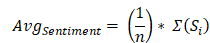
5) Aggregate Sentiment Scores
3.3. Framework for assessing shifts in public discourse
There will be several steps of research that will be used to figure out how to measure changes in public debate. Before the data is analysed further, it will be cleaned up and organised before it is sent to a computer for pre-processing. Once the data has been processed, sentiment analysis will be used to look at the most common feelings and opinions about certain topics. This will help find moral changes in public opinion. A big part of this approach will be continuous analysis, which looks at changes over time in morals, values, and ethical judgements by looking at trends in public speech and how people feel about things. This will make it possible to find important times when popular opinion about certain problems changes for the better or worse. The framework will also have a comparison section to show how different discursive spaces are different.
1) Initial Sentiment Analysis
Let S_0 be the initial sentiment score at time t_0:

2) Sentiment Over Time
Track the sentiment scores over subsequent time intervals t_1, t_2, ..., t_m:

3) Shift in Sentiment
Calculate the difference in sentiment between two time periods t_0 and t_m:

Where ΔS represents the shift in sentiment.
4) Quantifying the Shift
Calculate the percentage change in sentiment:

5) Identifying Significant Shifts
Define a threshold T_threshold for significant sentiment shifts:

4. IMPACT OF ALGORITHMS ON PUBLIC DISCOURSE
4.1. The role of recommendation algorithms in shaping opinions
In recent times, recommendation structures are very essential to how cloth is provided and used on digital platforms like e-commerce web sites, video services, and social media web sites. Those applications have a look at how humans use the website, what they prefer, and the way they have interaction with it to discover content that fits anyone's tastes. They usually spotlight content material that the user is in all likelihood to be inquisitive about. This personalisation makes the consumer revel in higher and keeps them interested, however it additionally modifications the method humans communicate to each other in big approaches. By continuously displaying users fabric that suits with their already held ideals and interests, idea algorithms can improve customers' points of view and shape their evaluations, restricting their get right of entry to exclusive points of view. This model is specifically annoying in terms of public opinion and morals, due to the fact customers can also emerge as greater set in their approaches of notion, making it more difficult for human beings to have open, honest conversations.
4.2. Echo chambers and filter bubbles: Impact on political and social debates
The massive effect of proposal algorithms on virtual and social media structures is carefully linked to the formation of echo chambers and filter out bubbles. while human beings solely see matters that support what they already believe, this is referred to as an echo chamber. It limits human being’s perspectives and makes them feel more like all and sundry else agrees with them. Eli Pariser got here up with the time period "clear out bubbles" in 2011. They are the customised approaches that computer systems pick out what content to expose users and omit content material that questions their beliefs or gives them special points of view. As customers are uncovered to an increasing number of limited stories, they'll come to be extra radicalised or set in their perspectives, which makes it more difficult for every person to agree on essential problems dealing with society. These events have changed the way people talk in public, which shows that algorithms need to be more open and content delivery needs to be more varied so that everyone can have a more fair and inclusive conversation.
5. RESULT AND DISCUSSION
The study shows that algorithms have a big impact on public debate. For example, suggestion algorithms reinforce biases and make people's views more divided. A study of how people felt about things on social media showed a clear trend towards ideological echo chambers, where people mostly saw things that supported what they already believed. It was also found that filter bubbles make it harder to hear different points of view, especially in political arguments. These results bring to light the social problems that come up with automated filtering, which can change people's minds and make it harder to have productive conversations.
Table 2
|
Table 2 Sentiment Analysis of Public Discourse Across Platforms |
||||
|
Platform |
Accuracy (%) |
Precision (%) |
Recall (%) |
F1-Score (%) |
|
Social Media (Twitter) |
85.2 |
83.5 |
84.7 |
84.1 |
|
News Outlets (CNN) |
91.4 |
89.8 |
90.2 |
90 |
|
Public Forums (Reddit) |
87.6 |
85.3 |
86.1 |
85.7 |
|
Overall Sentiment |
88.1 |
86.1 |
87.3 |
86.7 |
According to Table 2, mood analysis was done on three different types of platforms: Twitter, CNN, and Reddit, which is a public discussion. With a rating of 91.4%, news outlets have the most accurate sentiment classification. This is because news stories are organised and use serious language, which usually makes for more accurate sentiment analysis. At 85.2%, social media sites like Twitter are a little less accurate. Figure 3 shows a comparison of performance metrics across various platforms, evaluating factors such as accuracy, precision, recall, and F1-score. The comparison highlights strengths and weaknesses across different platforms.
Figure 3

Figure 3 Performance Metrics Comparison across Platforms
This is probably because tweets are more casual and varied, which can make figuring out how people feel harder. With an accuracy rate of 87.6%, public sites like Reddit are somewhere in the middle. This could be because posts there include both personal views and in-depth talks. The overall sentiment metrics show that people's feelings on these platforms are more neutral or balanced. Figure 4 shows trends in accuracy, precision, recall, and F1-score across multiple platforms over time. It highlights the performance progression, demonstrating how each platform evolves in key metrics during evaluation.
Figure 4

Figure 4 Trends in Accuracy, Precision, Recall, and F1-Score
Across Platforms
The precision, recall, and F1-score show that sentiment analysis works pretty well across all the data sources, though there is some variation between platforms.
Table 3
|
Table 3 Algorithmic Impact on Public Sentiment Shifts Over Time |
||||
|
Time Period |
Positive Sentiment (%) |
Negative Sentiment (%) |
Neutral Sentiment (%) |
Shift in Public Opinion (%) |
|
2020 (Pre-Algos) |
62.5 |
20.3 |
17.2 |
- |
|
2021 (Post-Algos) |
55.8 |
26.7 |
17.5 |
-4.6 |
|
2022 (Post-Algos) |
51.3 |
32.1 |
16.6 |
-11.2 |
Table 3 shows how public opinion has changed over time by comparing times before and after automated content selection became popular. Before a lot of formulas were used, 62.5% of people felt positively about 2020, while only 20.3% felt negatively. After automated filtering was put in place in 2021, the percentage of positive sentiment dropped to 55.8% and the percentage of negative sentiment rose to 26.7%.
Figure 5

Figure 5 Sentiment Composition over Time
Figure 5 shows sentiment composition over time, illustrating changes in positive, negative, and neutral sentiments. This clearly showed a change towards more extreme views. This pattern kept going in 2022, when negative sentiment rose to 32.1% and positive sentiment fell to 51.3%. The general change in public opinion from 2020 to 2022 is down 11.2%. Figure 6 shows sentiment distribution with shift in public opinion over time, highlighting sentiment changes.
Figure 6

Figure 6 Sentiment Distribution with Shift in Public Opinion
over Time
This shows that public opinion is becoming more divided, most likely because algorithms are making extreme views more popular. These results show that algorithms may make things more divisive by strengthening biases and limiting access to different points of view, which could be changing people's thoughts and feelings.
6. CONCLUSION
The rise of algorithms in public conversation is both good and bad. It creates new ways for people to interact, but it also makes people very worried about how to keep human values and morals alive in the digital age. This study used a lot of data from social media, news sites, and public places to show that suggestion algorithms and other automated systems have a big impact on how people feel and what they say. As seen in the dominance of echo chambers and filter bubbles across digital platforms, the results show how algorithms can support biases and views and lead to ideological polarisation. This study also shows how important mood analysis and natural language processing are for finding changes in how people feel about things. By looking at how people feel when they talk in public, the study gave us important information about how values and morals change over time and how they affect conversations in society. However the consequences also show that while algorithms may be made to make the user experience higher, they ought to additionally is looked at to see in the event that they may be used to hold humans from hearing special factors of view and make stronger social divides. There are plenty of distinctive social troubles that come up when algorithms affect public debate. As long as algorithms manage the glide of information, there needs to be greater openness in how they're made, more responsibility for content material filtering, and a near observe how human values are constructed into those structures. Within the future, researchers should look at ways to lessen the bad consequences of laptop bias, developing a space in which one of a kind factors of view are reputable and public debate stays open to anyone. It will be important to make sure that algorithms are good for society and reflect the changing values of a global community. This can only be done by incorporating moral frameworks into algorithmic design and increasing governmental control.
CONFLICT OF INTERESTS
None.
ACKNOWLEDGMENTS
None.
REFERENCES
Attaran, M., and Celik, B. G. (2023). Digital Twin: Benefits, Use Cases, Challenges, and Opportunities. Decision Analytics Journal, 6, Article 100165. https://doi.org/10.1016/j.dajour.2023.100165
Barth, M. E., Li, K., and McClure, C. G. (2022). Evolution in Value Relevance of Accounting Information. The Accounting Review, 98(1), 1–28. https://doi.org/10.2308/TAR-2019-0521
Cijan, A., Jenič, A., Lamovsek, A., and Stemberger, J. (2019). How Digitalization Changes the Workplace. Dynamic Relationships Management Journal, 8(1), 3–21. https://doi.org/10.17708/DRMJ.2019.v08n01a01
Ebirim, G. U., Unigwe, I. F., Oshioste, E. E., Ndubuisi, N. L., Odonkor, B., and Asuzu, O. F. (2024). Innovations in Accounting and Auditing: A Comprehensive Review of Current Trends and Their Impact on U.S. Businesses. International Journal of Scientific Research, 11(1), 965–974. https://doi.org/10.30574/ijsra.2024.11.1.0134
Farhan, K. A., and Kawther, B. I. (2023). Accounting Audit Profession in Digital Transformation Environment Between Theoretical Framework and Practical Reality. World Economics and Finance Bulletin, 22, 120–123.
Guşe, G. R., and Mangiuc, M. D. (2022). Digital Transformation in Romanian Accounting Practice and Education: Impact and perspectives. Amfiteatru Economic, 24(59), 252–267. https://doi.org/10.24818/EA/2022/59/252
Imene, F., and Imhanzenobe, J. (2020). Information Technology and the Accountant Today: What has Really Changed? Journal of Accounting and Taxation, 12(2), 48–60. https://doi.org/10.5897/JAT2019.0358
Jackson, D., Michelson, G., and Munir, R. (2023). Developing Accountants for the Future: New Technology, Skills, and the Role of Stakeholders. Accounting Education, 32(2), 150–177. https://doi.org/10.1080/09639284.2022.2057195
Kraus, S., Ferraris, A., and Bertello, A. (2023). The Future of Work: How Innovation and Digitalization Re-Shape the Workplace. Journal of Innovation and Knowledge, 8, Article 100438. https://doi.org/10.1016/j.jik.2023.100438
Madan, B. S., Zade, N. J., Lanke, N. P., Pathan, S. S., Ajani, S. N., and Khobragade, P. (2024). Self-Supervised Transformer Networks: Unlocking New Possibilities for Label-Free Data. Panamerican Mathematical Journal, 34(4), 194–210. https://doi.org/10.52783/pmj.v34.i4.1878
Manta, A. G., Bădîrcea, R. M., Doran, N. M., Badareu, G., Gherțescu, C., and Popescu, J. (2024). Industry 4.0 Transformation: Analysing the Impact of Artificial Intelligence on the Banking Sector Through Bibliometric Trends. Electronics, 13(9), Article 1693. https://doi.org/10.3390/electronics13091693
Papadimitriou, I., Gialampoukidis, I., Vrochidis, S., and Kompatsiaris, I. (2024). AI Methods in Materials Design, Discovery and Manufacturing: A Review. Computational Materials Science, 235, Article 112793. https://doi.org/10.1016/j.commatsci.2024.112793
Seethamraju, R., and Hecimovic, A. (2022). Adoption of Artificial Intelligence in Auditing: An Exploratory Study. Australian Journal of Management, 48(4), 780–800. https://doi.org/10.1177/03128962221108440
Spilnyk, I., Brukhanskyi, R., Struk, N., Kolesnikova, O., and Sokolenko, L. (2022). Digital Accounting: Innovative Technologies Cause a New Paradigm. Independent Journal of Management and Production, 13(3), 215–224. https://doi.org/10.14807/ijmp.v13i3.1991
|
|
 This work is licensed under a: Creative Commons Attribution 4.0 International License
© ShodhKosh 2025. All Rights Reserved.