ShodhKosh: Journal of Visual and Performing ArtsISSN (Online): 2582-7472
|
|
|
Special
Issue on Emotion-Aware AI and Digital Transformation of Visual Culture Dr.
Mithun Baswaraj Patil 1 1 Associate Professor, Department of Artificial Intelligence and Data
Science, Nagesh Karajagi Orchid College of
Engineering & Technology (NKOCET), Solapur, Maharashtra, India 2 Assistant Professor and Head, Department of Artificial
Intelligence, G H Raisoni College of Engineering, Nagpur, India 3 Associate Professor, School of Electrical Engineering and Computer
Science, SEECS National University of Sciences and Technology (NUST),
Islamabad, Pakistan 4 Associate
Professor, Faculty of Electrical & Electronics Engineering Technology,
University Malaysia Pahang Al-Sultan Abdullah, Pekan Campus, 26600 Pekan,
Pahang, Malaysia 5 Assistant Professor, Birla School of Management, Birla Global
University, Bhubaneswar, India |
|
|
|




Dear Readers and Contributors,
It is with great pleasure that we present
this special issue of ShodhKosh: Journal of
Visual and Performing Arts titled “Emotion-Aware AI and Digital
Transformation of Visual Culture.” This special issue addresses a timely
and significant shift in contemporary visual culture, where artificial
intelligence is increasingly capable of perceiving, interpreting, and
responding to human emotions, thereby reshaping artistic expression, media
practices, and cultural narratives.
The integration of emotion-aware AI
introduces affect as a central analytical dimension within visual arts
research. Digital artworks, interactive media, and visual communication systems
are no longer passive representations but emotionally
responsive environments shaped by affective computing, machine learning, and
intelligent systems. While these developments offer new creative and
pedagogical possibilities, they also raise critical questions regarding ethics,
authorship, interpretation, and cultural responsibility.
The contributions in this issue explore how
emotion-aware AI is transforming visual storytelling, artistic creation,
education, and media practices. Reflecting an interdisciplinary convergence of
visual arts, digital humanities, affective computing, education technology, and
ethics, the selected papers expand the scope of visual arts research into
emerging domains of emotional intelligence and computational creativity.
This special issue provides a scholarly
platform for visual artists, educators, researchers, and technologists to
engage critically with the ethical, cultural, and educational implications of
emotionally intelligent systems. All submissions underwent a rigorous
peer-review process to uphold the academic standards of ShodhKosh.
We extend our sincere gratitude to the authors, reviewers, and Granthaalayah Publications for their invaluable support. We hope this volume stimulates meaningful dialogue and contributes to a deeper understanding of how emotion-aware AI is redefining visual culture in the digital age.
Sincerely,
|
|
Dr. Mithun Baswaraj Patil is an Associate Professor in the
Department of Artificial Intelligence and Data Science at N. K. Orchid
College of Engineering & Technology, Solapur, Maharashtra, India. He
holds a Ph.D. in Computer Science & Information Science Engineering from Visvesvaraya
Technological University (VTU), Belagavi, completed in 2022, and is currently
pursuing Post‑Doctoral Research at the Singapore Institute of
Technology in remote mode. With over a decade of academic
experience, Dr. Patil has taught a wide range of subjects including Operating
Systems, Distributed Systems, Advanced Computer Networks, Research
Methodology, and Mobile Computing. He has also served as Head of the
Department (AI & DS) and coordinated postgraduate programs for several
years. His research contributions include
publications in Scopus‑indexed journals on IoT security, wireless
networks, reinforcement learning, and machine learning applications. He is
also a co‑supervisor for Ph.D. scholars and actively involved in academic
leadership and curriculum development. |
|
|
Dr. Mangala Madankar is an accomplished academician and researcher, currently serving as Assistant Professor and Head of the Department of Artificial Intelligence at G. H. Raisoni College of Engineering, Nagpur, India. She holds a Ph.D. in Information Technology from RTMNU, Nagpur, along with an M.E. in Wireless Communication & Computing and a B.E. in Computer Engineering. A Senior Member of IEEE and an approved Ph.D. supervisor under RTMNU, Dr. Madankar has built a strong academic profile through extensive teaching, research, and professional engagement. Her research contributions span natural language processing, wireless networks, VANETs, IoT‑based machine learning models, cybersecurity, and information retrieval, with multiple publications in international conferences and journals. Her scholarly
works include influential studies on machine translation, congestion control
in VANETs, DDoS mitigation, IoT‑based classification systems, and
deep‑learning‑based medical imaging. Dr. Madankar
continues to contribute to AI‑driven innovation through research,
mentorship, and academic leadership. |
|
|
Dr. Tahira Anwar Lashari is an Associate Professor at the
School of Electrical Engineering and Computer Science (SEECS), National
University of Sciences and Technology (NUST), Islamabad, Pakistan. She holds
a Ph.D. in Technical and Vocational Education from Universiti
Tun Hussein Onn Malaysia (UTHM), where she also completed a
post‑doctoral fellowship in 2017. Her academic background further
includes a Master’s in Applied Psychology and a Bachelor’s degree from the University of the Punjab,
Lahore. Dr. Lashari’s research spans
educational psychology, engineering education, internationalisation,
affective‑cognitive learning approaches, Web 2.0 tools, digital
learning, and assistive technologies. She has published extensively in
national and international peer‑reviewed journals, including recent
works on assistive technology integration, digital learning for autistic
children, augmented‑reality e‑learning, Web 2.0‑based skill
development, and sentiment analysis of COVID‑19‑related tweets.
|
|
|
Dr. Hamzah Bin Ahmad is an Associate Professor in the
Faculty of Electrical & Electronics Engineering Technology at Universiti Malaysia Pahang Al‑Sultan Abdullah
(UMPSA), Pekan, Pahang, Malaysia. He earned his Ph.D. in Electrical
Engineering from Kanazawa University, Japan, completing his doctoral work
between 2005 and 2011. Over the course of his academic
career, Dr. Hamzah has held several key leadership roles, including Deputy
Dean of Academic and Student Affairs (2011–2015) and Head of Program
(Academic) from 2005 to 2007. His research expertise spans mobile robot
navigation, SLAM, Kalman filtering, fuzzy logic control, state estimation,
robotics, control systems, and magnetic nanoparticle characterization. He has authored an extensive body of work, contributing to IEEE conferences, Springer’s Lecture Notes in Electrical Engineering, AIP Proceedings, TELKOMNIKA, International Journal of Integrated Engineering, and numerous other indexed venues. His publications demonstrate strong contributions to robotics, intelligent control, sensor systems, and advanced estimation techniques. |
|
|
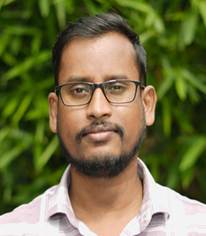
Dr. Maheshwar Kumar is an Assistant Professor in the
Birla School of Management, Birla Global University (BGU), Bhubaneswar,
India. He holds a Ph.D. in English from the National Institute of Science
Education and Research (NISER), an off‑centre campus of the Homi Bhabha
National Institute (HBNI), where he completed his doctoral thesis titled
“Performance as Cultural Text: Defamiliarizing the Performing Art Tradition
of Purulia Chhau”. His research has been published in
leading international journals, including Performance Research, The Oriental
Anthropologist, and Asian Anthropology, all indexed in Scopus and Web of
Science. Dr. Kumar’s scholarly interests span Purulia Chhau,
Cultural Studies, Theatre and Performance Studies, Dance Research, Indian
Folk Theatre, Cultural Anthropology, and Indigenous Culture. He teaches courses in Business
Communication, English Language and Communication, and Creativity,
Communication & Career Success, bringing interdisciplinary insight to
management education. |



|
|
 This work is licensed under a: Creative Commons Attribution 4.0 International License
© ShodhKosh 2024. All Rights Reserved.