ShodhKosh: Journal of Visual and Performing ArtsISSN (Online): 2582-7472
|
|
Virtual Printing Studios for Art Students
Aakash Sharma 1
 ,
Devendra Y Shahare 2
,
Devendra Y Shahare 2 , Debayan Das 3
 , Poonguzhali S 4
 , Neha 5
 , Shweta Ishwar
Gadave 6
, Shweta Ishwar
Gadave 6
1 Centre
of Research Impact and Outcome, Chitkara University, Rajpura- 140417, Punjab,
India
2 Department
of Mechanical Engineering, Yeshwantrao Chavan college of engineering Nagpur,
Maharashtra, India
3 Assistant Professor, Department of
Animation, Parul Institute of Design, Parul University, Vadodara, Gujarat,
India
4 Professor, Department of Computer
Science and Engineering, Aarupadai Veedu Institute of Technology, Vinayaka
Mission’s Research Foundation (DU), Tamil Nadu, India
5 Assistant Professor, School of
Business Management, Noida International University, India
6 Department of Electronics and
Telecommunication Engineering, Vishwakarma Institute of Technology, Pune,
Maharashtra, 411037 India
|
|
|
ABSTRACT |
|
|
Virtual
Printing Studios are a disruptive model of teaching printmaking in which
digital simulation, artificial intelligence, and immersive technologies are
brought into the conventional artistic processes. This paper suggests and
tests a detailed Virtual Printing Studio model that is specific to the art
students, and allows them to experience learning virtually, not being limited
by physical studios, materials, and time. It is based on a digital
representation of core printmaking methods - relief, intaglio, lithography,
and screen printing - and offers virtual means of manipulation of inks,
plates, textures and substrates at high fidelity of visual and procedural
output. Smart components operated with AI improve the learning process with
the help of intelligent design aids, layout optimization, and real-time
simulation of printing pressure, layering effects, and material behavior.
Error-detection and print preview correction can be automated to enable
iterative experimentation, which removes waste of materials and reduces the
risks of injuries that students can experiment with creative variations
without posing risks to safety. Mixed-method research methodology was used,
which is a combination of experimental comparisons with traditional print
studios, student performance measures, surveys, and portfolio-based
measurements. The findings indicate that students who studied in Virtual
Printing Studios displayed better conceptual knowledge of print processes,
were more creative in experimentation and were more engaged than students who
studied in traditional environments. The immediate feedback and repeatable
simulation were used to accelerate the acquisition of the skills whereas the
accessibility was widened to include institutions with infrastructural or
resource constraints. In spite of the issues associated with the gap in
realism, the digital literacy needs, and hardware reliance, the results
indicate high pedagogical benefits of hybrid and fully virtual printmaking
education. |
|||
|
Received 15 June 2025 Accepted 29 December 2025 Published 28 December 2025 Corresponding Author Aakash
Sharma, aakash.sharma.orp@chitkara.edu.in DOI 10.29121/shodhkosh.v6.i5s.2025.6920 Funding: This research
received no specific grant from any funding agency in the public, commercial,
or not-for-profit sectors. Copyright: © 2025 The
Author(s). This work is licensed under a Creative Commons
Attribution 4.0 International License. With the
license CC-BY, authors retain the copyright, allowing anyone to download,
reuse, re-print, modify, distribute, and/or copy their contribution. The work
must be properly attributed to its author.
|
|||
|
Keywords: Virtual Printing Studios, Digital Printmaking, AI in
Art Education, Immersive Learning, Creative Simulation, Printmaking Pedagogy |
|||



1. INTRODUCTION
Printmaking has historically held a key place in the education of visual arts, as it puts a strong emphasis on process, material consciousness, technical accuracy and experimentation. Conventional print studios whereby they have presses, plates, inks, and substrates help students get a feel of their processes and procedures. Though, such environments are usually limited by the cost and availability of materials, safety, space, and restricted studio time. With the ever-growing response of art education to the digital transformation and remote learning paradigms, there is an ever-growing necessity to redefine the concept of printmaking pedagogy in a manner that will maintain its conceptual richness and increase accessibility and innovation. Virtual Printing Studios are start-ups in reaction to these issues, providing a digitally-mediated space in which students can learn approaches to printmaking using simulation, interaction and iteration in design Kantaros et al. (2023). Virtual studios, by imitating the physical print processes, like the pressure applied, the layering of the ink, plate preparation, and substrate behavior, give learners experience based on the applied concepts without the logistical constraints of a traditional environment. This is a conceptual change, in line with larger trends of creative education, and how digital tools are no longer just considered as supplements, but as components of the artistic practice and learning. The central point of Virtual Printing Studios is a combination of simulation technologies, artificial intelligence, and cloud-based solutions To et al. (2023). Through these systems, it is possible to visualize the print results in real-time or dynamically change the design parameters and provide instant feedback about the technical errors or compositional problems. Learners have the opportunity to try relief, intaglio, lithography, and screen printing methods in a safe setting that promotes experimentation, failure, and experiment, which are major factors in promoting creative development Grigoroiu et al. (2024). Virtual environments facilitate repeatable and sustainable learning cycles, unlike in physical studios where employers tend to lose materials due to errors or the inevitability of irreversible consequences of those errors. Figure 1depicts AI enabled architecture to facilitate virtual printmaking processes and education. Pedagogically, Virtual Printing Studios is conducive to constructivist and experiential theories of learning because it enabled students to become participants and not spectators of the processes.
Figure 1
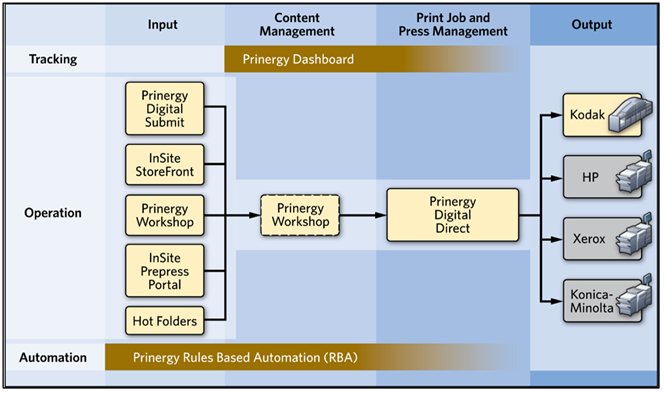
Figure 1 AI-Enabled Virtual Printing Studio Architecture for Printmaking
Education
Students are building knowledge by getting to experience hands on digital engagement, experimentation and introspection. Intelligent design support, layout optimization, and adaptive feedback on the individual level of skills are also provided with the use of AI-enabled features, which further personalize this experience. This is especially useful in multicultural classroom settings where learners are coming in at different levels of technical skills and digital literacy Cheng et al. (2021). Changing trends in the modern practice of art can also be traced in the conceptual ground of Virtual Printing Studios. A large number of professional artists are increasingly integrating conventional printmaking ideas and digital processes, hybrid products, and computational design instruments. Exposing students to a virtual print studio will make them ready to these emerging creative ecosystems, to bring them closer to the classical methods and digital studio operations. This integration breeds some transferable skills which include digital visualization, problem-solving, and interdisciplinary thinking, which are fundamental in the modern creative industries Kit et al. (2022).
2. Literature Review
2.1. Digital tools and technologies in printmaking education
The inclusion of the digital tools in the printmaking education has gradually transformed the conventional pedagogical practices through increased creative potential and technical knowledge. Digital imaging software was introduced in a very early time so that students were able to design, manipulate and preview compositions prior to moving them through physical printing methods. Tools based on vectors and raster have been extensively utilized in plate preparation, stencil generation, and layout planning which enables learners to be able to experiment with scale, repetition, and layering than by hand alone Zarestky and Vilen (2023). These tools promote the iterative design thinking, which is one of the main elements of the printmaking pedagogy, as the idea can be quickly transformed and visualized. The technology of digital fabrication, such as laser engraving and plate production by CNC also contributes to breaking the line between the traditional and digital printmaking. These technologies enable the students to transform digital designs to physical matrices which fosters an insight into how the input of digital data can affect the output of physical, tactile responses Antunes et al. (2023). Art education literature studies have pointed out that this hybrid workflow enhances technical confidence of students, and entry barriers by beginners who might not be good at manual plate-making skill. In addition, printmaking courses have also changed assessment and reflection using digital archiving and portfolio tools. Students are able to record process steps, and monitor iterations and critiquing results with time Rigopouli et al. (2025).
2.2. Virtual Studios, Simulations, and Immersive Learning Environments
Simulation-based learning spaces and virtual studios have been receiving growing interest in the field of art and design education as a tool of extending access to studios and creating experiential learning. These learning environments duplicate real-life creative processes in the virtual worlds that allow learners to respond to tools, materials, and workflow by means of virtual access. Simulations in printmaking education Simulation may recreate the mechanics of the press, the behavior of ink and overprinting, offering procedural understanding to a student that is generally challenging to visualize in physical studios Mishra (2023). The success of the virtual studios is supported by immersive learning theories, which focus on active learning, sensory learning, and contextual learning. The studies have shown that students who work in simulated settings show a better conceptual mastery and procedural memory since they are able to repeat complex tasks over and again within a time and informational limitation free environment. Collaborative learning is also assisted by virtual studios, which enable students and instructors to share workspaces, comment on designs, co-create in real-time with each other, and regardless of their physical location Ho et al. (2022). Accessibility wise, virtual studios solve accessibility issues that existed in the past in the form of insufficient availability of studios, safety policies and lack of resources.
2.3. AI, AR/VR, and Cloud Platforms in Creative Pedagogy
The concepts of artificial intelligence, augmented reality, virtual reality, and cloud computing have transformed the modern-day creative pedagogy through innovative intelligent, immersive, and scalable learning spaces. Art education AI systems have been demonstrated to aid personalized learning by providing adaptive feedback and detecting errors and offering recommendations to designers based on stylistic and procedural analysis. Such systems can inform students in composition balance, precision in registration and optimization of the process in printmaking situations, reinforcing the technical knowledge but providing creative discovery Salinas-Navarro et al. (2024). AR and VR technology also add more to the learning process by combining the digital information with the physical process or fully immersing the learners in simulated studios. AR guidance (help in design and planning) can be provided to students, whereas VR environments allow having virtual presses, plates, and tools in person. Research indicates that these immersive experiences enhance spatial understanding, procedural understanding and student engagement especially of complex and multi-step artistic procedures. Cloud platforms are very essential in facilitating these technologies through central access of software, storage and collaborative tools Hernández-Ramos et al. (2021). A summary of digital and virtual, and AI-enabled possibilities in printmaking studios is provided in Table 1 Cloud-based creative environment in printmaking studios supports remote learning, inter-institutional online collaboration, and lifelong portfolio building.
Table 1
|
Table 1 Summary on Digital, Virtual, and AI-Enabled Printmaking and Art Studios |
||||
|
Educational Domain |
Core Technology |
Studio Type |
Printmaking Focus |
Key Limitations |
|
Fine Arts Education |
Digital Imaging Tools |
Hybrid |
Relief Printing |
Limited interactivity |
|
Visual Arts |
Virtual Studio Software |
Virtual |
General Print Design |
Lack of material realism |
|
Design Education |
Simulation Engine |
Virtual |
Screen Printing |
No AI feedback |
|
Art and Design |
AR Tools |
Hybrid |
Print Layout Planning |
Limited scalability |
|
Creative Pedagogy Oyewo et al. (2022) |
VR Environment |
Virtual |
Multi-Technique |
High hardware cost |
|
Printmaking |
Digital Fabrication |
Hybrid |
Intaglio, Relief |
Equipment dependency |
|
Art Education |
AI Design Tools |
Virtual |
Print Composition |
Narrow task scope |
|
Creative Computing |
Cloud Platform |
Virtual |
General Printmaking |
Bandwidth reliance |
|
Studio Arts Kantaros et al. (2024) |
VR + Simulation |
Virtual |
Screen Printing |
Limited AI intelligence |
|
Digital Arts |
AI + Simulation |
Virtual |
Multi-Layer Printing |
High learning curve |
|
Art and Technology |
Physics-Based Models |
Virtual |
Ink and Pressure |
Computational cost |
|
Art Pedagogy |
AI Feedback System |
Hybrid |
Print Workflow |
Partial automation |
|
Creative Education Chatzoglou et al. (2019) |
Cloud + AI Studio |
Virtual |
Multi-Technique |
Infrastructure dependency |
|
Printmaking Education |
AI + Simulation + Cloud |
Virtual / Hybrid |
Relief, Intaglio, Litho, Screen |
Hybrid dependency |
3. Architecture of Virtual Printing Studios
3.1. System overview and design principles
Virtual Printing Studios is developed in the framework of the architecture, which the concepts of traditional printmaking are reproduced in terms of their concept, procedure and aesthetic basis in the digitally immersive environment. The platform is organized at the system level as a modular, cloud-enabled platform, which has user interfaces, simulation engines, AI-based analytics and data storage layers embedded. The design is scaled, accessible using cross-devices, and able to update seamlessly without interference with instructional processes. Students and teachers communicate using user-friendly dashboards which assist in designing, simulating a process, critiquing, and evaluating Slegers et al. (2022). The principles that are applied in the core design of the system comprise pedagogical alignment, realism, flexibility and sustainability. Pedagogical alignment makes sure that all digital interactions are based on real printmaking logic which can prove cause-effect in the decisions of design, material properties and final prints. The simulations are made physical and the visual rendering is rendered in high quality enabling the learners to feel the slightest change in pressure, density of ink and layering.
3.2. Digital Printmaking Modules (Relief, Intaglio, Lithography, Screen Printing)
Viral printing studios are based on digital printmaking modules that are specifically crafted to replicate the principles and processes of traditional printmaking methods.
Figure 2
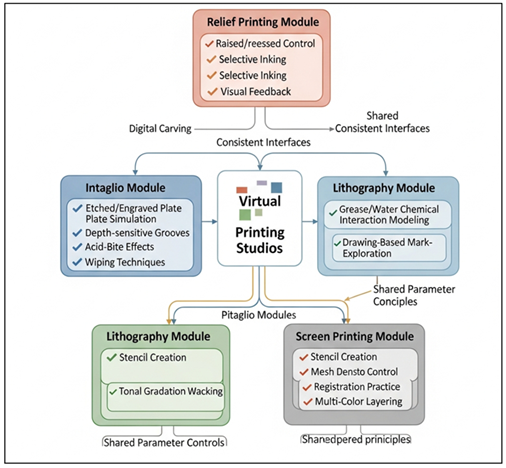
Figure 2 Modular Architecture of Virtual Printing Studios for
Digital Printmaking Education
Processes that the relief printing module models include woodcut and linocut, in which case the student can use a computer to carve his or her matrices, selectively raise and recessive areas and apply ink. Visual feedback shows the effects of carved surfaces on the transfer of ink and the ultimate impressions, which also supports the underlining principles of positive and negative space. Figure 2 presents the modular architecture that makes it possible to have flexibly and scalable education in digital printmaking. The simulated plate, intaglio module, is used to simulate etched and engraved plates, with depth sensitive grooves, acid-bite affect, as well as wiping effects. The students are able to test the density of a line, the varying of the tonality and the wearing of the plate and understand the influence of micro-level choices on macro-level visual results. Lithography modules are built on the principle of planographic printing, in which the relationships between grease and water are modeled so that learners could be able to experiment with the mark-making of drawing and tonal adjustment in a controlled virtual environment. Screen printing modules are specialized in creation of stencils, mesh density, registration and overprinting of colors in multi colors. Users are able to check the accuracy of the alignment, ink viscosity, and print sequencing without wasting the material.
3.3. Virtual Tools for Inks, Plates, Textures, and Substrates
The virtual tools of inks, plates, textures, and substrates allow exploring the materials in details in Virtual Printing Studios and fill the gap between the digital abstraction and the material knowledge. Simulation tools of ink enable the end user to control viscosity, opacity, drying characteristics and color mix and provide a visual representation of the effect of these characteristics on coverage, bleeding and achievable tonal depth. Real-time feedback is used to make the students aware of the interaction of ink consistency with the pressure and surface texture. Plate tools assist in the production and editing of matrices by means of digital carving, etching, drawing or stencil-based techniques. The plate materials include wood, metal, stone and synthetic surfaces that are modeled with different resistance, absorption and durability. Such distinction assists the learners in understanding how the choice of materials is important in the conventional printmaking procedures. The addition of texture libraries also adds to the realism through grain patterns, imperfections and surface irregularities which affect the mobility of ink and visual effects. Substrate tools represent a simulating tool of papers and fabrics, and they take into consideration the absorbency, thickness, grain direction, and elasticity. Students have the ability to measure performance in different substrates and this reinforces knowledge on material compatibility and print durability.
4. AI-Enabled Functional Components
4.1. Intelligent design assistance and layout optimization
Intelligent design assistance is an important AI-powered part of Virtual Printing Studios, which aids students during the conceptualization and the printing making process. The machine learning models based on various styles of printmaking and past layouts are used to analyze user designs to offer context-sensitive suggestions on balance, alignment, spacing, and visual hierarchy. The products can be used to optimize the layouts of complex compositions, especially when the registration precision and spatial alignment are important (Multi-plate/Multi-color print). The AI algorithms analyze the correlation among the layers, margins, and negative space, which allows students to prevent the usual problems, including overcrowding or lack of alignment. The system can provide step-by-step guidance to the novice learners, and the advanced learners can also opt to use minimal or on-demand feedback options. Another way the AI assists in exploration is with multiple variations of a layout, generated by the AI as per specified constraints, which can be scale, symmetry, tonal emphasis, or another factor. This is an ability that promotes experimenting and comparative analysis which reinforces reasoning in design. Notably, intelligent assistance is built in as an understandable and explainable functionality where students can know the reasoning behind certain recommendations. Virtual Printing Studios improve learning through the adoption of AI as an open system of design collaboration instead of an expert system that dictates the final decision, maintaining the essence of printmaking practice that is expressive and interpretive.
4.2. Simulation of Printing Pressure, Layering, and Material Behavior
The accuracy of simulation of printing pressure, layering, and material behaviour is the key to the authenticity of Virtual Printing Studios. The physics based models are AI-based physics-based models that recreate the interaction of the press mechanics, ink properties, plate surfaces and substrates. These simulations enable the students to visualize how changes in pressure affect transfer of ink, clarity of lines and tonal depth which otherwise is hard to fully understand by just looking at it. The layering simulations are also useful in the process of multi-color and multi-pass printmaking. The system simulations include ink overlap, transparency, drying sequences and registration effects and therefore learners can anticipate cumulative effects prior to printing a finished print. Due to the ability to change the parameters, including the pressure intensity or the layer order, the students are able to observe the visual outcome changes immediately once certain minor changes have been made. This is a dynamic feedback that can assist in better comprehension of the procedures and sound decision-making. Plate wear, substrate absorption and ink spread can be modeled with material behavior modeling, and this reflects the non-linear and even unpredictable nature of printmaking. These simulations keep on getting better as AI learns through interaction with users and results and becomes more realistic over time. By trial and error, students get an intuition of the material relationships without being limited to limited studio time or resources. This element converts abstract technical guidelines to learning experiences in the virtual studio environment that are visual and cognitive in nature.
4.3. Automated Error Detection and Print Preview Correction
The automatic error identification and print preview correction is very important in minimizing the technical hurdle and facilitating iterative learning in Virtual Printing Studios. These errors will be identified before they occur, which will prevent frustration and reinforce the right practice of procedures. Print preview feature creates the high quality visualization of the anticipated results prior to actual execution. These previews include lighting, texture, and scale factors where the students could determine the clarity, contrast, and fidelity of composition. In case of possible problems, the system gives remedial recommendations, including changing pressure levels, changing ink viscosity, or repositioning layers. Notably, feedback is also presented as a teaching support, not a form of automatic correction that can motivate students to participate in problem-solving. This element is also useful in the case of a novice learner who might not be sufficient in technical judgment. Automated error detection provides a non-material means of supporting risk-taking and experimentation as it provides instant non-invasive feedback. Throughout the course of time, the dependence on the corrective prompts declines when the students internalize the technical principles. These combined features of smart preview and correction features, therefore, increase the learning process, print quality, and student confidence making Virtual Printing Studios a useful and helpful place to learn printmaking in the contemporary world.
5. Methodology
5.1. Research design and experimental setup
The research design used in the study was a mixed-method research design, which tested the pedagogical effectiveness of Virtual Printing Studios in printmaking education. The quasi- experimental design was adopted which involved quantification of performance and qualitative understanding to encompass the learning outcomes and experiential aspect. The two conditions of instruction were traditional printing studio setting and Virtual Printing Studio environment with AI. The two groups were based on the same curriculum that encompassed relief, intaglio, lithography, and screen printing concepts in order to achieve consistency in the instruction. The experiment lasted a complete academic term of time which was adequate in terms of skill development, experimentation, and creation of portfolios. Students who were in the virtual condition were able to enter the platform using cloud-based interfaces with the instructors offering guided demonstrations and feedback in accordance with the course objectives. The variables were controlled such as instructional hours, complexity of assignment, and criteria of the assessment. The independent variables were centered on the type of engagement in the studio, whereas the dependent variables were centered on technical accuracy, quality of the output of creativity, and engagement of the learner. Triangulation of data was also underlined due to the inclusion of various sources of evaluation, minimizing biasness of single measure studies. Ethical approval and informed consent processes were done, as the participation was not forced and the data was kept confidential. The research design made it possible to compare traditional and virtual studio experiences systematically and to take into consideration those contextual and pedagogical factors that can affect learning outcomes in art education.
5.2. Participant Selection and Educational Context
Undergraduate art and design courses with printmaking courses but not found in higher education institutions were used to select the participants. To make sure that the different levels of past printmaking experience and digital literacy were represented, a purposive sampling strategy was employed. The last sample comprised students in introductory and intermediate rates that represent a variety of skills that can be generally encountered in the sphere of studio-based art education. The above diversity enabled meaningful analysis of how Virtual Printing Studios can be accommodating to various types of learning requirements. The instructional approach that stressed studio-based pedagogy in which experiential learning, criticism, and repetitive practice are the focal points was laid out. Respondents took courses that were long-standing and previously based on physical print studios, thus placing them in a good placement to make comparisons between virtual and traditional methods. Figure 3 illustrates that the participants were selected and educated in a virtual studio setting. The instructors used in the research were familiar with both traditional printmaking and digital art and made pedagogical sense and informed facilitation.
Figure 3

Figure 3 Participant Selection and Educational Context
Framework for Virtual Printing Studio Evaluation
All the participants had access to the necessary digital infrastructure such as computers and a reliable internet connection to reduce technological bias. The orientation sessions allowed the students to be oriented to the virtual platform, hence minimizing the learning curve effects during the experimental period. The study was located in a natural educational environment thus enabling the research to capture some realistic limitations and opportunities of introducing Virtual Printing Studios in modern art education.
5.3. Data Collection Instruments (Surveys, Performance Metrics, Portfolios)
Several data gathering tools were used to evaluate learning outcomes, engagement and creative development comprehensively. The surveys were conducted at the start and at the conclusion of the research to include the difference in student perceptions, confidence level, and attitude toward printmaking and digital tools. The usability, perceived learning effectiveness, and creative autonomy were measured with the Likert-scale items, and qualitative information about the experience of students was given by the open-ended questions. The development of technical skills was objectively assessed using performance measures. These were registration accuracy measures, tonal consistency measures, layering accuracy measures and process efficiency measures. Fair comparison was done by applying standardized rubrics in both the instructions conditions. Student outputs were scored individually by instructors and inter-rater reliability checks were done to increase the validity of the assessment. Portfolios of students acted as a longitudinal account of the evolution of design, recording design iterations, final prints and written commentary about these designs. Portfolios made it possible to perform qualitative analysis of conceptual development, the level of experimentation, and aesthetic integrity. The data collection strategy allowed the provision of a comprehensive assessment of the educational impact of Virtual Printing Studios through combining perceptual, technical and creative evidence. This triangulated research enhanced the validity and interpretability of the findings on the research of printmaking pedagogy.
6. Results and Performance Evaluation
6.1. Comparative analysis with traditional printing studios
The comparative analysis has already shown there were significant distinctions between Virtual Printing Studios and traditional printing studios in terms of technical and pedagogical aspects. Virtual studios students showed a better consistency when registering correctly, planning layout as well as reducing errors because of the real-time feedback and its print preview. Controlled capability of repeating a series of iterations without any loss of material led to accelerated conceptualization and high-efficiency of the process. Still, the tactile and material intuition, especially in the area of pressure working and in the sense of surfaces, was superior in the traditional studios. Physical environments helped people to be more attentive to their senses, whereas virtual studios were more accessible, repeatable, and risk-free in trying out. All in all, the results reveal that Virtual Printing Studios offer similar technical learning experiences with a much higher degree of flexibility and learning continuity when applied in combination with traditional studio training.
Table 2
|
Table 2 Comparative Performance Analysis Between Traditional and Virtual Printing Studios |
||
|
Performance Metric |
Traditional Printing Studio |
Virtual Printing Studio |
|
Registration Accuracy (%) |
78.6 |
91.8 |
|
Layout Planning Score (%) |
72.4 |
89.3 |
|
Error Rate per Assignment
(%) |
18.9 |
7.6 |
|
Iterations Completed per Project |
3.1 |
6.8 |
|
Process Completion Time
(Hours) |
12.6 |
8.4 |
Table 2 allows making a distinct quantitative comparison of traditional printing studios and Virtual Printing Studios in the main performance indicators. The real-time alignment feedback and preview could be quite useful as the registration accuracy was improved by more than 13.2% between traditional studios and virtual ones 78.6% and 91.8% respectively. On the same note, the layout planning scores rose by 72.4 percent to 89.3 percent, which means that AI-based design help and progressive visualization boosted the compositional decision-making of students. Figure 4 demonstrates virtual printing studios as better compared to traditional studio in respect to their educational performance measures. It was found that the error percentage per assignment significantly decreased, dropping to 7.6.
Figure 4
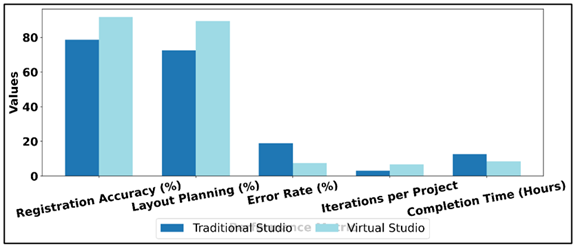
Figure 4 Performance Comparison of Traditional and Virtual
Printing Studios
This decrease is indicative of the effect of an automated error detection and corrective advice system that enables students to recognize and fix errors prior to producing end outputs. Figure 5 indicates that virtual studios enhance efficiency, creativity, as compared to traditional metrics. The iterations that were completed on each project more than doubled, rising to 6.8 instead of 3.1, which indicated that the lack of material restraint resulted in experimentation and refinement.
Figure 5
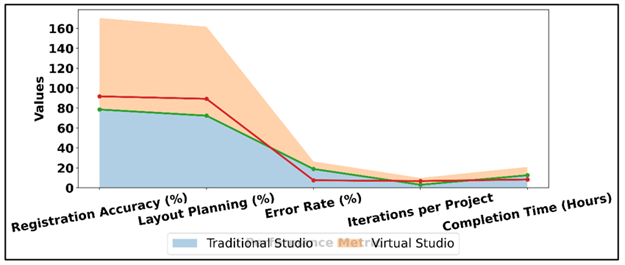
Figure 5 Analysis of Traditional Vs Virtual Printing Studio
Metrics
The time spent on completing the process also improved greatly by a margin of 12.6 hours of the traditional studios to 8.4 hours of the virtual studios. This efficiency improvement indicates that learning processes through simulation-based processes facilitate the learning process without interfering with quality. By and large, the findings suggest that Virtual Printing Studios do not only increase technical precision and planning, but also efficiency and the iterative creative practice in printmaking education.
7. Conclusion
The innovation of Virtual Printing Studios is a major move in the modern printmaking instruction by connecting the classical artistic values with the digital technology. This research has shown that well-designed digitally simulated print settings can be useful in teaching and learning of intricate printmaking processes and that these settings should be carefully structured and which should be pedagogically consistent with the learning process. Virtual Printing Studios allow students to learn in an iterative, reflective, and exploratory way that cannot be achieved through physical studios as they are able to combine AI-based design assistance, material behavior simulation, and automated error detection. The results suggest that students who worked with virtual studios demonstrated the similar and even greater technical proficiency in comparison with the traditional studio counterparts. The areas that were improved were mainly in layout planning, multi-layer registration and conceptual grasp of process-outcome associations. The higher accessibility and the decrease of the material dependence enabled the learners to rehearse more often, be more creative and assured by instant feedback and a repeatable simulation. Significantly, inclusive learning was also supported in virtual studios because of different skill levels and the speed of learning. Although these are the advantages, the study admits that the Virtual Printing Studios cannot totally substitute the tactile and sensory aspects of the physical printing.
CONFLICT OF INTERESTS
None.
ACKNOWLEDGMENTS
None.
REFERENCES
Antunes, R., Aguiar, M. L., and Gaspar, P. D. (2023). A Dynamic Stem-Driven Approach Through Mobile Robotics to Enhance Critical Thinking and Interdisciplinary Skills for Empowering Industry 4.0 Competencies. Technologies, 11, 170. https://doi.org/10.3390/technologies11060170
Chatzoglou, P. D., and Michailidou, V. N. (2019). A Survey on the 3D Printing Technology Readiness to Use. International Journal of Production Research, 57, 2585–2599. https://doi.org/10.1080/00207543.2019.1572934
Cheng, L., Antonenko, P. P., Ritzhaupt, A. D., and MacFadden, B. (2021). Exploring the Role of 3D Printing and STEM Integration Levels in Students’ STEM Career Interest. British Journal of Educational Technology, 52, 1262–1278. https://doi.org/10.1111/bjet.13077
Grigoroiu, M. C., Tescașiu, B., Constantin, C. P., Țurcanu, C., and Tecău, A. S. (2024). Extended Learning Through After-School Programs: Supporting Disadvantaged Students and Promoting Social Sustainability. Sustainability, 16, 7828. https://doi.org/10.3390/su16177828
Hernández-Ramos, J., Pernaa, J., Cáceres-Jensen, L., and Rodríguez-Becerra, J. (2021). The Effects of Using Socio-Scientific Issues and Technology in Problem-Based Learning: A Systematic Review. Education Sciences, 11, 640. https://doi.org/10.3390/educsci11100640
Ho, S.-J., Hsu, Y.-S., Lai, C.-H., Chen, F.-H., and Yang, M.-H. (2022). Applying Game-Based Experiential Learning to Comprehensive Sustainable Development-Based Education. Sustainability, 14, 1172. https://doi.org/10.3390/su14031172
Kantaros, A., Ganetsos, T., and Piromalis, D. (2023). 3D and 4D Printing as Integrated Manufacturing Methods of Industry 4.0. American Journal of Engineering and Applied Sciences, 16, 12–22. https://doi.org/10.3844/ajeassp.2023.12.22
Kantaros, A., Petrescu, F., Abdoli, H., Diegel, O., Chan, S., Iliescu, M., Ganetsos, T., Munteanu, I., and Ungureanu, L. (2024). Additive Manufacturing for Surgical Planning and Education: A Review. Applied Sciences, 14, 2550. https://doi.org/10.3390/app14062550
Kit Ng, D. T., Tsui, M. F., and Yuen, M. (2022). Exploring the Use of 3D Printing in Mathematics Education: A Scoping Review. Asian Journal of Mathematics Education, 1, 338–358. https://doi.org/10.1177/27527263221129357
Mishra, N. R. (2023). Constructivist Approach to Learning: An Analysis of Pedagogical Models of Social Constructivist Learning Theory. Journal of Research and Development, 6, 22–29. https://doi.org/10.3126/jrdn.v6i01.55227
Oyewo, O. A., Ramaila, S., and Mavuru, L. (2022). Harnessing Project-Based Learning to Enhance STEM Students’ Critical Thinking Skills Using Water Treatment Activity. Education Sciences, 12, 780. https://doi.org/10.3390/educsci12110780
Rigopouli, K., Kotsifakos, D., and Psaromiligkos, Y. (2025). Vygotsky’s Creativity Options and Ideas in 21st-Century Technology-Enhanced Learning Design. Education Sciences, 15, 257. https://doi.org/10.3390/educsci15020257
Salinas-Navarro, D. E., Da Silva-Ovando, A. C., and Palma-Mendoza, J. A. (2024). Experiential Learning Labs for the Post-Covid-19 pandemic Era. Education Sciences, 14, 707. https://doi.org/10.3390/educsci14070707
Slegers, K., Krieg, A. M., and Lexis, M. A. S. (2022). Acceptance of 3D Printing by Occupational Therapists: An Exploratory Survey Study. Occupational Therapy International, 2022, Article 4241907. https://doi.org/10.1155/2022/4241907
To, T. T., Al Mahmud, A., and Ranscombe, C. (2023). Teaching Sustainability Using 3D Printing in Engineering Education: An Observational Study. Sustainability, 15, 7470. https://doi.org/10.3390/su15097470
Zarestky, J., and Vilen, L. (2023). Adult STEM Education for Democratic Participation. Adult Learning, 34, 157–167. https://doi.org/10.1177/10451595231153133
|
|
 This work is licensed under a: Creative Commons Attribution 4.0 International License
© ShodhKosh 2025. All Rights Reserved.