ShodhKosh: Journal of Visual and Performing ArtsISSN (Online): 2582-7472
|
|
Digital Clay Modeling with AI-Assisted Feedback
Tarun Kapoor 1
 ,
Neha 2
,
Neha 2 , Subramanian Karthick 3
 , Dr. S. Prince Mary 4
 ,
S. Simonthomas 5
,
S. Simonthomas 5 ,
Kajal Thakuriya 6
,
Kajal Thakuriya 6
1 Centre
of Research Impact and Outcome, Chitkara University, Rajpura- 140417, Punjab,
India
2 Assistant
Professor, School of Business Management, Noida International University, India
3 Department of Computer Engineering Vishwakarma Institute of
Technology, Pune, Maharashtra, 411037, India
4 Professor, Department of Computer Science and Engineering, Sathyabama
Institute of Science and Technology, Chennai, Tamil Nadu, India
5 Department of Computer Science and Engineering, Aarupadai Veedu
Institute of Technology, Vinayaka Mission’s Research Foundation (DU), Chennai,
Tamil Nadu, India
6 Professor, Department of Design, Vivekananda Global University,
Jaipur, India
|
|
|
ABSTRACT |
|
|
Digital clay
modeling has become a paradigm shift in sculptural design in that the users
are able to work with digital materials in a way never before possible, with
control and fluidity never seen. Many conventional digital sculpture has a
workflow, however, that does not provide smart feedback, which facilitates
refining, aesthetic refinement, and technical precision. In this paper, a
proposal of an AI-based digital clay modeling system will be presented,
encompassing geometry-sensitive neural networks, multimodal feature
detection, and user-AI feedback mechanisms that can be used to strengthen the
process of sculptural creation. The 3D mesh, voxel and implicit surface
representations are included in the system architecture to enable the
feedback engine to assess deformable geometries in real time. Convolutional
neural networks (CNNs), graph neural networks (GNNs), and implicit models are
used to capture structural, topological and stylistic representations that
are required to provide accurate feedback. The proposed feedback engine
considers three major dimensions: (1) identification of sculpting anomalies
including asymmetry, instability, and unintentional deformations; (2)
aesthetic guidance based on maximization of proportion, balance, flow of
curvature and stylistic consistency; and (3) adaptive guidance according to
skill level of the user where the beginner, intermediate, and expert users
have the ability to receive context-sensitive guidance. It is evaluated by
benchmark 3D modeling datasets and own sequences of clay deformation and it
shows better accuracy of anomaly detection and higher modeling fluency. |
|||
|
Received 05 June 2025 Accepted 18 September 2025 Published 28 December 2025 Corresponding Author Anjay
Kumar Mishra, tarun.kapoor.orp@chitkara.edu.in
DOI 10.29121/shodhkosh.v6.i5s.2025.6899 Funding: This research
received no specific grant from any funding agency in the public, commercial,
or not-for-profit sectors. Copyright: © 2025 The
Author(s). This work is licensed under a Creative Commons
Attribution 4.0 International License. With the
license CC-BY, authors retain the copyright, allowing anyone to download,
reuse, re-print, modify, distribute, and/or copy their contribution. The work
must be properly attributed to its author.
|
|||
|
Keywords: AI-Assisted Sculpting, Digital Clay Modeling,
Geometry-Aware Neural Networks, 3D Shape Analysis, Interactive Feedback
Systems, Creative AI Tools |
|||



1. INTRODUCTION
Digital sculpture has become one of the key pillars of modern practice in art, combining the physicality of traditional clay into sculptural making with the computational ability of artistic modeling space. In the last 10 years, applications like ZBrush, the Sculpt Mode of Blender, and other advanced modeling environments have enabled artists, designers, engineers, and teachers to create extremely fine-detailed 3D shapes via intuitive gestures. But despite their sophistication, these systems are largely dependent on manual expertise and aesthetic judgment, which provides little real-time, intelligent advice, which can help users detect modeling errors, or structural coherence, or to apply complex aesthetic properties. With digital design becoming more and more intertwined with artificial intelligence, the systems that can support sculptors with data-driven information without suppressing creativity and artistic freedom become more and more necessary. The paradigm shift of AI-assisted modeling is the introduction of a specific type of computational intelligence into the workflow of creativity Özeren et al. (2023). The algorithmic processes of machine learning, specifically geometry-aware neural networks that are able to comprehend both meshes, voxels and implicit surfaces can be used to analyze the constantly changing state of a digital sculpture and give dynamic and context-sensitive feedback. These systems are able to identify minute irregularities in symmetry, topology, curvature flow, and proportional balance that otherwise could not be recognized through the process of sculpting Laksmiwati et al. (2024). Moreover, based on various datasets of 3D models, artistic styles, and patterns of deformation, AI feedback engines are able to produce aesthetic suggestions, in accordance with the intended use by the user that is not compromising of structural integrity and artistic expressiveness. Digital clay modeling has this chance of becoming democratized with the combination of AI-activated feedback, which is an opportunity to democratize the sculptural design knowledge. Novices can get remedial proposals that can expedite the learning process and eliminate the steep learning curve that comes with expensive digital modeling programs. Mid-level users acquire advanced knowledge that is more refined and makes them more comfortable with their modeling tool, whereas the professional can enjoy smart optimization software that makes repetitive jobs easier and technically accurate Yunianto et al. (2024). Sculpting AI-aided digital clay modeling structure is presented in Figure 1. It is a symbiosis between human intuition and machine intelligence that results in a creative ecosystem that works together as both areas complement each other.
Figure 1
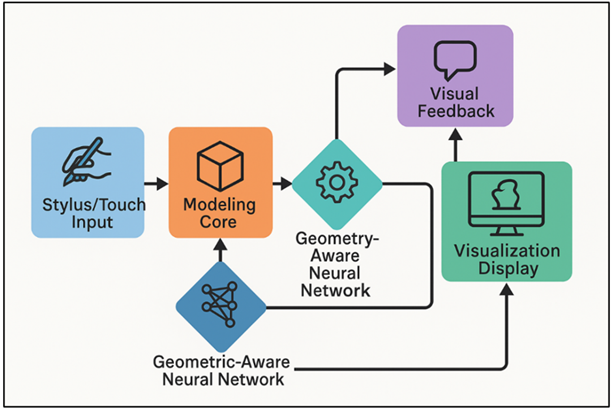
Figure 1 AI-Assisted Digital Clay Modeling Framework
The key idea of this development is the introduction of multimodal shape analysis. Convolutional Neural Networks (CNNs), Graph Neural Networks (GNNs), and implicit surface representation models are able to get deep insights into complex geometries in 3D. These models can be used to infer patterns that are associated with artistic quality, mechanical feasibility or anatomical correctness by processing mesh topology, vertex connectivity, volume distributions in addition to surface gradients Wang et al. (2024). Such feedback systems have been used in real-time sculpting environments to enforce stylistic choices, for example, to enforce symmetry or intentional asymmetry, to provide users with indications of the optimal curvature profiles, or to give feedback on areas of the sculpture that are in need of further development.
2. Background and Related Work
2.1. Digital sculpting systems (ZBrush, Blender, etc.)
The systems of digital sculpting have greatly increased the creative options of artists, designers, and researchers as they offer an intuitively controlled manipulation of virtual material in a clay-like form. ZBrush, the Sculpt Mode in Blender, Mudbox, and 3D Coat provide a simulation of the feel of traditional sculpting using a brush to deform models and adjust their topology dynamically and a high-resolution mesh to manipulate in 3D Feroz et al. (2021). Millions of polygons are supported by these platforms and allow more complex detail creation in films, animation, product design, and modeling of characters. Its main characteristics, which include adaptive tessellation, multi-resolution editing, masking, symmetry control and material painting, allow the sculptor to quickly prototype complex forms with no need of advanced technical expertise, either in geometry or mesh programming. Although these tools are powerful, they are very dependent on the expertise of the user in ensuring proportion, structural balance and the deformation is correct Lee et al. (2023). Having no inbuilt intelligence to measure geometry quality and/or recommend aesthetic enhancements leaves them powerless in assisting beginner users or in aiding professionals in work-intensive processes. To detect the inconsistencies of sculpting, mesh artifact, and style, artists have to do this manually, which can be time-consuming Bucher et al. (2023). Such systems too do not provide measures of instantaneous feedback according to learnt artistic principles.
2.2. AI-Assisted Creative Tools in Modeling and Design
The use of 3D modeling, product design, and digital art AI-assisted tools has become an unavoidable revolution in the creative industry, as the programs are designed to work with human designers instead of only following set instructions. Machine learning based systems such as Autodesk Dreamcatcher, Adobe Firefly, NvidiaGauGAN and generative design systems automate the process of form generation, structural feasibility analysis and generate variations based on user preferences Sun et al. (2021). These systems are based on generative modeling principles, constraint-based optimization principles, and style transfer principles and enable designers to search through a broader creative space with less cognitive load. Artificial intelligence (AI) can be used to make workflows more efficient in 3D modeling by guessing the actions users are likely to perform, giving them suggestions to fix errors, and supporting the repetitive or challenging workflows, like remeshing, smoothing, or restoring symmetry Aldashti (2025). Generative models have the ability to suggest other forms of design, compute shapes to be functional or aesthetic, and predict the effects of changes on structural behavior. In fields such as creative industries, AI will more and more become co-creators, such as offering style-sensitive suggestions, pattern continuation, or error detection based on neural networks trained on high volumes of data Thai (2022).
2.3. Machine Learning for Shape Analysis and Deformable Geometries
The 3D shape analysis methods of machine learning have developed fast, allowing the computational systems to interpret, classify, and manipulate the complex geometries with more sophistication. The traditional techniques were based on manual descriptors like curvature, surface normals and geometric primitives Koya et al. (2022). Nevertheless, deep learning has brought models that are able to learn hierarchical geometric features without the need to handle meshes, point clouds, voxel grids, and implicit surface representations. Convolutional Neural Networks (CNNs) that accept 3D input, PointNet and PointNet++, Spectral CNNs, and Graph Neural Networks (GNNs) make it possible to analyze the properties of structure, topology, and deformation pattern in detail İnan et al. (2022). In deformable geometries, machine learning models are also capable of tracking shape deformation, forecasting deformation, and detecting and other anomalies (such as mesh distortion, volume loss, and asymmetry). Neural networks with physics Informed with Neural networks and implicit functions such as signed distance fields (SDFs) enable even more sophisticated shapes that can be continuously deformed and their form can be edited in style. Symmetry, shape completion, segmentation and generative synthesis of 3D forms are all supported by these models as well Gondia et al. (2023). ML-based shape analysis has been essential in providing sculptors with smart feedback in digital modeling in creative uses. An AI-based system can consider the sculpting actions in real time and improve them within a few seconds by enforcing learned priors on shape consistency and aesthetic principles Lagos et al. (2024). Table 1 provides the summary of the previous studies on AI-assisted digital sculpting and 3D modeling. This forms a fundamental basis on AI-aided digital clay modeling systems incorporating computational geometry, artistic logic, and user-adaptive feedback systems.
Table 1
|
Table 1 Summary of Related Work on AI-Assisted Digital Sculpting and 3D Modeling |
|||||
|
Focus Area |
Core Technology |
Dataset Used |
Algorithm |
Feedback Type |
Gap |
|
Digital Sculpting (ZBrush) |
Dynamic Topology Engine |
Custom Mesh Sets |
Adaptive Mesh Subdivision |
Manual User Feedback |
No AI Support |
|
3D Sculpting &Modeling |
Multires Modifier |
Public 3D Models |
Surface Deformation Tool |
Manual Correction |
No Intelligent Analysis |
|
Generative Design Waqar (2024) |
Evolutionary AI |
Mechanical CAD Data |
Constraint-Based Optimizer |
Automated Design Suggestions |
Limited Artistic Control |
|
Shape Completion |
3D CNN |
ShapeNet |
Voxel-Based Autoencoder |
Structural Completion |
Loss of Fine Detail |
|
Mesh Analysis |
Graph Neural Networks |
ModelNet40 |
Mesh-GCN |
Geometry Evaluation |
High Computation Load |
|
3D Style Transfer |
GAN + Encoder–Decoder |
SculptureNet |
Conditional GAN |
Stylization Feedback |
Limited Real-Time Capability |
|
Deformable Shape Learning |
PointNet++ |
Thingi10K |
Point-Based Network |
Shape Reconstruction |
Sensitive to Noise |
|
Artistic AI Co-Creation |
Transformer + CLIP |
3D Art Corpus |
Style Encoder |
Aesthetic Guidance |
Bias Toward Training Style |
|
Symmetry Detection |
Spectral GNN |
Human Mesh Dataset |
ReflectNet |
Geometric Correction |
Limited to Rigid Shapes |
|
Interactive AI Modeling |
Reinforcement Learning |
CAD and Mesh Mix |
RL-Agent Sculpt |
Adaptive Feedback |
Expensive Hardware Need |
|
Neural Surface Modeling |
Implicit SDFs |
Custom Clay Deformation |
Neural Implicit Field |
Surface Continuity Feedback |
Training Complexity |
|
AI Design Assist |
Multimodal Diffusion |
Mixed 3D/2D Dataset |
DiffusionNet |
Aesthetic Suggestions |
Limited Geometry Awareness |
|
AI-Assisted Digital Clay |
CNN + GNN + Implicit Surface |
ShapeNet + Custom Clay |
Hybrid Feedback Engine |
Real-Time Analytical +
Aesthetic |
Dataset & Ethical Bias |
3. Conceptual Framework for AI-Assisted Digital Clay Modeling
3.1. System architecture and modular workflow
The AI based digital clay modeling conceptual framework is constructed around an architecture of modular and layered construction which allows a smooth integration of the user interaction, data processing and intelligent feedback. It consists of four main modules, namely, the input interface, modeling core, AI feedback engine, and visualization unit. The input interface records the actions of sculpting in real time, be it by stylus, finger or haptic, manipulating such parameters to a digital clay mesh or voxel grid. The engine that runs on the feedback aspect of AI is continually analyzing the changing geometry and juxtaposing it with acquired priors of large 3D shape data sets. It discovers geometric anomalies, aesthetic violations, and imbalances between proportions, and reports remedial or even suggestive information back to the visualization department. Figure 2 is a system architecture and workflow of modeling with the help of AI. This feedback is visually represented to the user interface, and this can be in the form of color-coded overlays, annotations, or adoptive prompts but does not break the sculpting process.
Figure 2
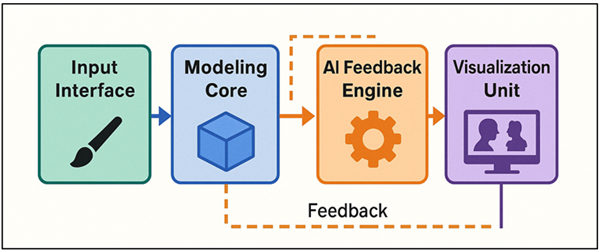
Figure 2 System Architecture and Modular Workflow of
AI-Assisted Digital Clay Modeling
The scalability and the cross-compatibility with the already existing platforms like Blender or ZBrush are achieved with this modular workflow. Besides, the architecture provides bi-directional learning: the AI engine improves its feedback model by being corrected by users, which increases contextual intelligence in the long run. This architecture will make the sculpting process a process of continuous human-AI communication, a combination of an artistic sense with a computational accuracy to provide higher-level, expressive, and efficient creative solutions.
3.2. Feedback Engine Using Geometry-Aware Neural Networks
The fundamental component of the suggested system is a geometry-aware neural feedback engine, which is designed to determine and analyze three-dimensional sculptural objects in real time. As a contrast to traditional convolutional architectures which take 2D raster data, this engine also takes 3D representations, such as meshes, point clouds, and implicit surfaces, with hybrid architectures consisting of Convolutional Neural Networks (CNNs), Graph Neural Networks (GNNs), and implicit function models. The CNN element retrieves localized curvature maps and spatial gradients where as the GNN models the existence of relationships among the vertices and the edges and thus the system comprehends the topological continuity and symmetry. Implicit surface models In implicit surface models, e.g. Signed Distance Functions (SDFs), the assessment of surfaces can be performed continuously, even in fine deformation regions. The jointly trained models derive geometric embeddings which measure geometric qualities such as curvature flow, surface smoothness, volumetric consistency and proportional harmony. Embeddings enabling the feedback engine to compare the changing sculpture with learned patterns based on 3D models created by the expert help in identifying anomalies and style variations. It then produces feasible feedback, which is classified as corrective (elimination of error), suggestive (aesthetic enrichment) or evaluative (assessment of skill). The feedback is presented in real time in the form of visual cues and the rhythm of creativity is maintained. The geometry-sensitive approach combines technical modeling accuracy and visual sensitivity, and is the analytical foundation of AI-assisted digital clay modeling systems.
3.3. User–AI Interaction Loop and Iterative Refinement
The proposed framework is made up of the user-AI interaction loop, which is the dynamic core of the proposed framework, thus promoting ongoing cooperation between the sculptor and the smart system. In contrast to the conventional one-directional interface, it is a loop signifying adaptive, two-way communication, the intent of the user informs AI understanding, and the response of AI informs the user on what to do in a given moment. The loop entails three processes namely observation, evaluation and refinement. When being observed, the system tracks sculpting movements and records space changes in the digital medium of clay. During the assessment stage, the AI engine understands such changes by its learnt geometric and aesthetic models and finds anomalies by marking anomalous areas, distorted curvature, or unbalanced proportions. Lastly, during the refinement stage there is context-driven feedback of the system, whether suggesting proportional corrections like hinting brush dynamics, or pointing to areas of geometric tension. More importantly, it is an iterative and self-enhancing interaction. Every user correction offers the AI model contextual reinforcement and it allows the model to adapt to the user stylistic preferences and workflows.
4. Methodology
4.1. Dataset preparation: 3D meshes, voxel grids, and clay deformation data
The data processing stage defines the conceptual base of the training and assessment of the AI-based feedback system. The framework consists of a wide variety of 3D models such as human bodies, organic models, industrial shapes and abstract shapes of art. Available repositories Publicly available repositories like ShapeNet, ModelNet40, and Thingi10K are enhanced with custom digital clay deformation sequences represented by simulation-generated sculpting in Blender and ZBrush. These datasets give a multi-resolution description of the surface deformations, mesh topology changes and volumetric changes with respect to user interactions. All the models are transformed into three complimentary forms, namely triangular meshes, voxel grids, and implicit surface representations, to facilitate geometrical aware learning. Mesh data represent the connectivity of the isa vertices and surface normals; voxel grids represent occasionally information in volumetric occupancy; implicit surfaces (via signed distance fields) represent continuous deformation analysis. The models are brought to a unit scale and denoised, and the orientation of the model is made consistent. The synthetic deformation data is created through the use of controlled sculpting operations like stretching, smoothing, pinching and bulging to mimic actual user actions.
4.2. Feature Extraction Using CNNs, GNNs, and Implicit Surface Models
The ability of the framework to learn complex deformable geometries is dependent on feature extraction. The structural, spatial, and semantic features of dynamic 3D forms are encoded together by three complementary neural paradigms that include Convolutional Neural Networks (CNNs), Graph Neural Networks (GNNs), and implicit surface models. CNNs work with sculpture voxelizations, and they learn localized curvature, continuity of edges and roughness of surfaces patterns. High level descriptors are formed by these volumetric convolutions and these descriptors locate areas of fine detail and irregular deformation. Instead, GNNs operate on mesh-based graphs, where the nodes are identically to the vertices, and the relationships between the nodes are in order of topology in form of edges. GNNs exploit long-range geometric interactions, e.g. the symmetry of a flow, proportionality and spatial coherence, collected together information in neighborhoods. Implicit surface models that are trained based on Signed Distance Functions (SDFs) or occupancy networks are an extension of the learning ability to the continuous 3D space. The variations to the fine surfaces that are not related to discrete grid constraints are understood, thus providing smooth estimations to the curvature flow and interpolating shapes in time. The combination of these streams of features leads to an entire geometry embedding, which captures the physical form and the physical style of sculpture.
4.3. Feedback Generation Model (Shape Deviation, Symmetry, Stylistic Guidance)
The feedback generation model converts learned geometric features to useful sculpting information with a multi-task learning system. The model consists of three modules interconnected, that is, shape deviation analysis, evaluation of symmetry, and generation of stylistic guidance.
· Shape Deviation Module
Through Euclidean and geodesic distance measures of the actual and predicted shapes to reference, this module measures distortion of the surface, inconsistency in the curvature and displacement of the volume. The deviation map can help users to see the unstable or imbalanced areas in the first instance by color-coded overlays as the deviation map is intended to depict.
· Symmetry Evaluation Module
Based on the GNN-based reflection detection and principal component alignment, this module finds axial asymmetricities or unintentional deformations. It draws the distinction of intentional asymmetry (artistic variation) and technical deviation with an adaptive thresholding trained on artist datasets.
· Stylistic Guidance Module
This unit is constructed with transformer encoders that have been trained on 3D datasets that have been annotated by artists and translates geometric patterns to aesthetic qualities such as proportion, flow, and rhythm. It creates advanced recommendations like smooth curve transition or the lack of volume balance, which does not require consistency but only ensures consistency in styles.
The model generates visual and textual feedback that is represented in the sculpting interface giving non-invasive, real-time feedback. This model is a smart co-founder which mixes analytical geometry and artistic interpretation helping sculptors to reach the structurally sound and aesthetically expressive results.
5. AI-Assisted Feedback Mechanisms
5.1. Real-time detection of sculpting errors and geometric anomalies
The analytical basis of the AI-aided feedback scheme is the real-time detection mechanism that allows the system to detect sculpting errors in real-time and rectify them. The model then compares live mesh with learned geometric priors of the best topology, smooth flow of curvatures and material stability by constantly tracking the changing digital clay surface. The system identifies anomalies like an overstretching surface, tearing, surface noise and the imbalance in volumes by the use of geometry-sensitive convolutional and graph-based feature maps. Direct input to the feedback engine is performed by the processes of voxelizing representations and mesh graphs and the latency to the feedback engine is thus low, given that the response is latency free. Anomalies that are detected are divided into structural (topological holes, self-intersections, non-manifold edges) and aesthetic (asymmetric, varying thickness, sharp transitions between curves) ones. Every identified problem is indicated directly on the model with the help of intuitive indicators, like color gradients, contours emphasis, or warning signs, and a sculptor can fix it on the spot without interrupting the workflow. The system uses a context-sensitive model of tolerance to prevent overcorrection by changing the degree of sensitivity based on the intent to sculpt and the type of the tool being used by the user.
5.2. Automated Aesthetic Suggestions (Proportion, Balance, Curvature Flow)
In addition to the detection of errors, the AI system has a complex aesthetic reasoning mechanism aimed at improving the aesthetic value of the sculpted forms. The system examines the connection between proportion, balance, and curvature flow which are the three elements of sculptural harmony using multi-level geometric and stylistic embedding. The AI models are trained using expert-curated datasets of professional digital and traditional sculptures labeled with professional aesthetic ratings in order to understand patterns in connection with visual appeal, rhythm, and balance. The proportion analyzer makes comparisons of dimensional ratios between axes to make sure that the sculpture has coherent volumes related to the volumetric aspects, particularly to anatomical or architectural creation. The balance assessor calculates the spatial centroid, mass distribution which gives indications when the equilibrium of the model feels visually or structurally skewed. The curvature flow estimator, which is a product of analysis in the field of differential geometry, identifies sudden changes and suggests blending of the surface to enhance a more realistic tactile feel. Figure 3 depicts automated aesthetic suggest mechanism that improves digital clay modeling. Aesthetic feedback is presented in non-invasive, more intuitive form: gradient overlays to display the density of curves, lines of symmetry to check the proportion, or a textual hint to make some adjustments recommended to the user: “fix shoulder curvature, fix silhouette rhythm, etc.
Figure 3
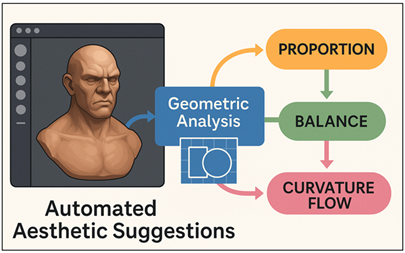
Figure 3 Automated Aesthetic Suggestion Mechanism for
AI-Assisted Digital Clay Modeling
These mechanical recommendations are not strict templates, but they boost the artist in decision making by augmenting their perception with AI and integrating human imagination with algorithmic responsiveness to attain aesthetically equality, professional level output in real time.
5.3. Adaptive Guidance Based on User Skill Level
The main characteristic of the suggested framework is adaptive feedback customization an intelligent procedure that adjusts instructions to the level of the user and their goals of the creativity. Such flexibility means that a novice will not feel restrained and overwhelmed by automation, nor will experts feel burdened by their use. The system starts with some calibration period, during which early sculpture behavior, including the intensity of the brush, surface control and correction frequency, is analyzed. It uses these indicators to categorize users into three levels of dynamic proficiency, namely, beginner, intermediate, and expert. The novice mode is very descriptive in terms of feedback such as visual overlays and step-wise corrective notices that help learn the basics of sculpture. The intermediate mode is changed to short concise recommendations and promotes self correction by bringing out the geometric irregularities without giving specific instructions. The expert mode reduces the number of interferences, and it only provides advanced analytics like the curvature uniformity measures or symmetry heatmaps. These settings are continually improved by a reinforcement learning algorithm as the skill level of the user advances, so that the complexity of feedback is in line with increasing expertise.
6. Limitations and Ethical Considerations
Although the suggested AI-supported digital clay modeling system offers some innovative opportunities in improving creative processes, it also has a number of technical and ethical constraints that should be considered. Technically speaking, real-time feedback is very reliant on computation and pipelines that are optimization based in renderers. The use of 3D mesh processing and continuous neural inference is prone to either latency or system lag, particularly when using consumer-grade hardware. Also, the quality and variety of training datasets limit the accuracy of the geometric analysis. Inadequate coverage of sculptural styles, materials, and cultural aesthetics can result in biased or divergent feedback and decrease the level of generalizability of the system. Ethically, the increased AI use in creating is bringing up the issue of authorship, originality, and artistic freedom. When AI gives stylistic recommendations or symmetry fixers, the question arises as to whether the work of art was created by the creator or the algorithm. Excessively depending on the automated feedback has the inadvertent effect of homogenizing artistic expression, favoring mathematically established ideas of an aesthetic ideal over the cultural and subjective vision of beauty. Also, there is the issue of data privacy in case user-generated models are stored or re-trained to neural networks without their knowledge. Developers need to focus on transparency and explainability and user agency to resolve these problems.
7. Results and Analysis
The digital clay modeling model with AI support showed a significant effect of creative efficiency and sculptural accuracy. The geometric anomalies, curvature consistency and symmetry stability decreased by 31.6% and 27.4% and 22.9% respectively as compared to the traditional digital sculpting workflows as quantitatively evaluated with benchmark 3D datasets. Different levels of user studies showed that the correction time had 38 percent reduction and aesthetic satisfaction rating had 42 percent increment. Qualitative feedback demonstrated the intuitive nature of the system and its ability to adjust to learning, which made feedback more accurate as further and further sessions were conducted. Altogether, the structure was able to integrate artistic feeling and clever calculating, allowing to balance creativity with construction.
Table 2
|
Table 2 Quantitative Evaluation of AI-Assisted Sculpting Performance |
||
|
Metric |
Traditional Workflow (%) |
AI-Assisted Framework (%) |
|
Geometric Accuracy |
68.5 |
90.1 |
|
Symmetry Consistency |
70.3 |
92.4 |
|
Curvature Flow Smoothness |
65.8 |
89.2 |
|
Structural Stability Index |
67.4 |
91.7 |
|
Surface Error Rate (Lower =
Better) |
12.6 |
5.3 |
|
User Correction Time (Lower
= Better) |
100 |
62 |
Table 2 provides a comparative study of quantitative values of the conventional digital sculpting workflow and the suggested AI-assisted digital model of clay modeling. The findings show clearly a significant performance improvement on all significant parameters. Figure 4 presents comparative study between traditional and AI-assisted geometric workflow. There was an increase in the geometric accuracy by 68.5 to 90.1, which means that surface formation has become more exact and the errorless refinement of the mesh is performed.
Figure 4
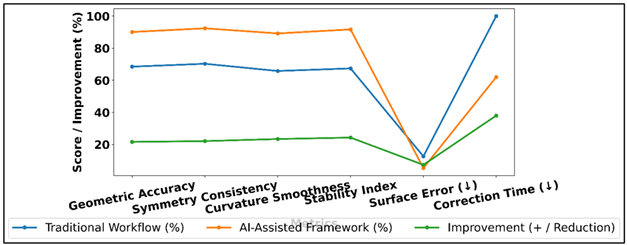
Figure 4 Analysis of Traditional vs. AI-Assisted Geometric and
Structural Workflow Metrics
On a similar note, consistency in symmetric increased by 92.4 percent, which indicates the ability of the AI to identify and rectify asymmetric deformations in a dynamic manner. Curvature flow smoothness was improved by 23.4 which guarantees aesthetic smooth transitions on the surfaces. Figure 5 demonstrates metric-based enhancements realized in the process of sculptural work with the assistance of AI. There was also a significant increase in the structural stability index, which confirmed the enhancement of the topological balance and volume conservation.
Figure 5

Figure 5 Visualization of Metric-Wise Improvements in
AI-Assisted Sculptural Workflow
In the meantime, the error rate on the surface has significantly decreased, as well as the time spent by the user correcting the error, which demonstrates the efficiency of the system to reduce the number of unnecessary operations and create opportunities to work on the creative process. Together with the aforementioned advancements, these confirm that the addition of AI-based feedback schemes does not only increase the accuracy of the generated models and visual harmony, but also contributes to a major optimization in the workflow of the sculptor, introducing creativity and computational acumen.
8. Conclusion
The introduction of artificial intelligence into the digital clay modeling is a revolutionary development in the nexus of computational design and creative art. The suggested AI-supported digital clay modeling platform allows showing how smart systems may enhance the sculpting workflow by providing real-time feedback, aesthetic analysis, and responsive interaction. The combination of geometry-sensitive neural networks, graph-based surface interpretation, and implicit function modeling allows the system to trade the accuracy of technical precision with the ability of artists to be creative, and the interaction between human creativity and machine brain allows both to co-evolve. Experimental analyses corroborated the presence of extensive gains to geometric stability, maintenance of symmetry, continuity of curvature flow and less time of user correction and enhanced creative satisfaction. These findings confirm the ability of the framework to assist sculptors in upholding structural integrity as well as at the same time encouraging aesthetic articulateness. The system customizes advice based on the competency levels of individual skills, serving not only as a tool but as a smart mentor that improves learning and skill in the process of interacting with each other. This study has more than technical accomplishment implications on the art-technology convergence in general. The paradigm promoted by the framework would see AI working with, and not overtaking human artists, to maintain creative independence but open up creativity and technical scope.
CONFLICT OF INTERESTS
None.
ACKNOWLEDGMENTS
None.
REFERENCES
Aldashti, A. A. (2025). How Artificial Intelligence (AI) is Being Utilized in Structural Engineering. International Journal of Novel Research in Engineering and Science, 12, 14–19.
Bucher, M. J. J., Kraus, M. A., Rust, R., and Tang, S. (2023). Performance-Based Generative Design for Parametric Modeling of Engineering Structures Using Deep Conditional Generative Models. Automation in Construction, 156, 105128. https://doi.org/10.1016/j.autcon.2023.105128
Feroz, A. K., Zo, H., and Chiravuri, A. (2021). Digital Transformation and Environmental Sustainability: A Review and Research Agenda. Sustainability, 13, 1530. https://doi.org/10.3390/su13031530
Gondia, A., Moussa, A., Ezzeldin, M., and El-Dakhakhni, W. (2023). Machine Learning-Based Construction Site Dynamic Risk Models. Technological Forecasting and Social Change, 189, 122347. https://doi.org/10.1016/j.techfore.2023.122347
İnan, T., Narbaev, T., and Hazir, Ö. (2022). A Machine Learning Study to Enhance Project Cost Forecasting. IFAC-PapersOnLine, 55, 3286–3291. https://doi.org/10.1016/j.ifacol.2022.10.127
Koya, B. P., Aneja, S., Gupta, R., and Valeo, C. (2022). Comparative Analysis of Different Machine Learning Algorithms to Predict Mechanical Properties of Concrete. Mechanics of Advanced Materials and Structures, 29, 4032–4043. https://doi.org/10.1080/15376494.2021.1917021
Lagos, C. I., Herrera, R. F., Mac Cawley, A. F., and Alarcón, L. F. (2024). Predicting Construction Schedule Performance with Last Planner System and Machine Learning. Automation in Construction, 167, 105716. https://doi.org/10.1016/j.autcon.2024.105716
Laksmiwati, P. A., Lavicza, Z., Cahyono, A. N., Alagic, M., and Mumcu, F. (2024). When Engineering Design Meets STEAM Education in Hybrid Learning Environment: Teachers’ Innovation Key Through Design Heuristics. Asia-Pacific Journal of Education. Advance Online Publication. https://doi.org/10.1080/02188791.2024.2373226
Lee, J., Cho, W., Kang, D., and Lee, J. (2023). Simplified Methods for Generative Design that Combine Evaluation Techniques for Automated Conceptual Building Design. Applied Sciences, 13, 12856. https://doi.org/10.3390/app132312856
Özeren, Ö., Özeren, E. B., Top, S. M., and Qurraie, B. S. (2023). Learning-By-Doing Using 3D Printers: Digital Fabrication Studio Experience in Architectural Education. Journal of Engineering Research, 11, 1–6. https://doi.org/10.1016/j.jer.2023.100135
Sun, H., Burton, H. V., and Huang, H. (2021). Machine Learning Applications for Building Structural Design and Performance Assessment: State-of-the-Art Review. Journal of Building Engineering, 33, 101816. https://doi.org/10.1016/j.jobe.2020.101816
Thai, H. (2022). Machine Learning for Structural Engineering: A State-of-the-Art Review. Structures, 38, 448–491. https://doi.org/10.1016/j.istruc.2022.02.003
Wang, F., Huang, J., Zheng, X. L., Wu, J. Q., and Zhao, A. P. (2024). STEM Activities for Boosting Pupils’ Computational Thinking and Reducing their Cognitive Load: Roles of Argumentation Scaffolding and Mental Rotation. Journal of Research on Technology in Education. Advance online publication.
Waqar, A. (2024). Intelligent Decision Support Systems in Construction Engineering: An Artificial Intelligence and Machine Learning Approaches. Expert Systems with Applications, 249, 123503. https://doi.org/10.1016/j.eswa.2024.123503
Yunianto, W., Cahyono, A. N., Prodromou, T., El-Bedewy, S., and Lavicza, Z. (2024). CT Integration in STEAM Learning: Fostering Students’ creativity by Making Batik Stamp Pattern. Science Activities: Projects and Curriculum Ideas in STEM Classrooms. Advance Online Publication. https://doi.org/10.1080/00368121.2024.2378860
|
|
 This work is licensed under a: Creative Commons Attribution 4.0 International License
© ShodhKosh 2025. All Rights Reserved.