ShodhKosh: Journal of Visual and Performing ArtsISSN (Online): 2582-7472
|
|
Evaluating Artistic Authenticity in Machine-Aided Sculptures
Sakshi Pahariya 1
 ,
Meeta Kharadi 2
,
Meeta Kharadi 2 ,
Shikha Gupta 3, Sukhman Ghumman 4
,
Shikha Gupta 3, Sukhman Ghumman 4
 ,
Dr. V Sathiya 5
,
Dr. V Sathiya 5 ,
Vaishali Pawan Wawage 6
,
Vaishali Pawan Wawage 6
1 Assistant
Professor, Department of Design, Vivekananda Global University, Jaipur, India
2 Assistant
Professor, Department of Fashion Design, Parul Institute of Design, Parul
University, Vadodara, Gujarat, India
3 Assistant Professor, School of Business Management, Noida
International University, India
4 Centre of Research Impact and Outcome, Chitkara University, Rajpura-
140417, Punjab, India
5 Professor, CSE, Panimalar Engineering College, India
6 Department of Engineering, Science and Humanities Vishwakarma
Institute of Technology, Pune, Maharashtra, 411037, India
|
|
|
ABSTRACT |
|
|
The question
of artistic originality with machine-aided sculptures involves a strict,
multidimensional study involving the intersection of human creativity and
algorithmic determination of aesthetic forms that lead to hybrids. With
AI-assisted design, generative modelling and robotic fabrication gaining more
and more influence over the practice of sculpture, the issue of authorship,
intentionality, material fidelity and interpretive meaning is raised. This
paper advances a conceptual and methodological model that combines
qualitative expert judging and quantitative computational evaluation to
measure authenticity in three categories of sculptures, fully human-created,
machine-aided, and fully computer-generated sculptures. The study uses
refined collection of sculptures and their creation logs, metadata of
processes, and parameters of generative models that allow structural
comparisons of human- machine agency. Subtle aspects of authenticity, like
narrative coherence, expression intentionality and perceived material
integrity are evaluated by expert judgment of artists and curators and
critics, and structural complexity, stylistic deviation, and form-generation
transparency are computed. Findings have shown that machine-assisted
sculptures usually exist in a hybrid zone of authenticity, in which the
intent of human action is still present, but an introduction of new aesthetic
marks happens through the use of algorithmic forms. Analysis of agreement
shows that there is moderate correspondence between expert and computational
scores but there are patterns of cultural bias and differing tolerance to the
involvement of the machines in audience based interpretation. In general, the
paper highlights that originality in artificial intelligence-generated
sculpture is not lost but rather reconfigured in new structures that should
consider co-authorship, repetitive digital art, and new aesthetic reasoning |
|||
|
Received 16 June 2025 Accepted 30 September 2025 Published 28 December 2025 Corresponding Author Sakshi
Pahariya, sakshi.pahariya@vgu.ac.in
DOI 10.29121/shodhkosh.v6.i5s.2025.6898 Funding: This research
received no specific grant from any funding agency in the public, commercial,
or not-for-profit sectors. Copyright: © 2025 The
Author(s). This work is licensed under a Creative Commons
Attribution 4.0 International License. With the
license CC-BY, authors retain the copyright, allowing anyone to download,
reuse, re-print, modify, distribute, and/or copy their contribution. The work
must be properly attributed to its author.
|
|||
|
Keywords: Artistic Authenticity, Machine-Aided Sculpture,
Computational Aesthetics, Human–AI Co-Creation, Generative Design |
|||



1. INTRODUCTION
The advent of machine-aided sculptural practices is one of the most radical changes in the modern art-making that would disrupt all the established notions of artistic authenticity, authorship, and intention. Nowadays, sculptors are more and more using generative AI models, parametric design systems, robotic arms, CNC systems and 3-D printers to form materials in a manner that goes beyond handwork. The formal and conceptual richness of sculpture has grown with the hybridization of human intuition with computational intelligence, making geometric complexity possible, making the process of design adaptive, and optimizing structural forms at multiple scales possible. However, even as these tools transform the sculptural process, they also introduce some audience to some basic questions on what makes it an authentic work of art in a field that has traditionally been based on manual work, gesture and embodied craft. Authenticity has been used as a philosopher and evaluative point of reference in the arts, which includes concepts of originality, true expression, material wholeness, and unmediated human agency Cheng et al. (2023). In sculpture, the perception of authenticity in the work of the artist has frequently focused on his or her hand, as represented by the marks of the tools used, the choice of composition, and the unique way of working. Nevertheless, the process of lineage becomes complicated with the help of algorithmic processes. Generation adversarial networks, diffusion models, mesh-generating neural architectures, and rule-driven design systems have the potential to bring autonomous aesthetic forces that put the concept of intentionality into question. Consequently, due to the presence of diverse levels of machine input, sculptures that are constructed under different levels of human-AI co-authorship can be placed on a continuum of creator, tool, and collaborator, with the boundaries between them becoming unclear Wang (2022). This shifting situation requires a solid structure of artistic authenticity of machine-aided sculptures, the one that considers not only the conceptual aspects of authorship, but also the computational properties of the creative channel. This kind of framework should be aware of the fact that the authenticity is not a simple fixed property, but the quality of emergence, which is conditioned by transparency of its processes, interpretive resonance, material decisions, and how human intention and algorithmic changing interact with each other Matthews and Gadaloff (2022).
Further, authenticity, judgments are cultural, based on evolving aesthetic frames, technological literacy and wider socio-ethical discourses of AI. Current research in the field of the theory of digital art and computational aesthetics, creative artificial intelligence, and the interaction of humans and machines offers some background information, but there is a lack of systematic assessment frameworks specific to sculptural activity. Recent studies tend to discuss the concept of authenticity in an abstract way or dwell on the concept of technical fidelity and do not combine expert critique, audience interpretation, and traceability of the algorithm Sovhyra (2022). The lack of such a framework is especially problematic to those in curators, design studios, public installations, and academic institutions who aim to make sense of the value of art and cultural importance. This work addresses this gap by suggesting a systematic approach, an integrative one that unites both qualitative evaluation of artists, curators, and critics with quantitative computational values generated through creation processes, geometry, and model aspects at the model level Wang and Lin (2023).
2. Related Work
Studies of artistic authenticity, computational creativity, and machine-assisted art making have significantly increased in the last ten years, with AI tools disrupting the creative processes of the visual arts and sculpture domains. Theoretical discussions are based on the foundations of art history and aesthetics, according to which such that art historians as Walter Benjamin and Nelson Goodman idealized the concept of authenticity as aura, authorship, and symbolic meaning. Although these classical theories are already older than digital art, they create a critical context of how technological mediation makes the old concepts of originality and deliberate intentions more challenging Al-Kfairy et al. (2024). The more recent research on digital humanities builds upon these arguments by looking at how the adoption of algorithmic systems alters creative agency and increases aesthetic possibilities. In computational creativity, Colton, Boden, and McCormack conduct research on the problem that machine-generated or machine-assisted artifacts are problematic to human-conceptualizations of creativity. Their models outline the problems of novelty, value and process transparency, which provides a prerequisite to analyze hybrid works of art Alkhwaldi (2024). Nevertheless, the majority of computational creativity studies are on paintings, music, or text generation and not sculptural form, which entails materiality and spatial complexity. The 3D 3D generative modeling (including mesh-generating networks, implicit surface reconstruction, diffusion-based shape-generation and GAN-based object morphing) has made machine-generated sculpture more technically possible, although not necessarily treated in an art-theoretic sense Uriarte-Portillo et al. (2022). Scholars have explored the role played by CNC milling, robotic carving, and additive manufacturing in the relationship between concept and material realization in the field of digital fabrication. Table 1 provides an overview of previous techniques that analyze artistic authenticity in machine-aided sculptures. Such works report the changes in the role of the artist as a manual producer and a computational organizer, with a focus on the need to document the processes and trace algorithms. However, in most cases, questions of artistic authorship are secondary to them Gong et al. (2022).
Table 1
|
Table 1 Summary of Related Work on Evaluating Artistic Authenticity in Machine-Aided Sculptures |
||||
|
Methodology |
Technology Used |
Evaluation Metric |
Art Domain |
Limitation |
|
Theoretical analysis |
Mechanical reproduction |
Cultural authenticity |
Visual art |
Not AI-focused |
|
Philosophical framework |
Symbolic representation |
Conceptual coherence |
Fine art |
Pre-digital context |
|
Generative modelling Sylaiou et al. (2024) |
GAN prototypes |
Creativity score, novelty
index |
Digital art |
Limited to 2D outputs |
|
Mixed-method study |
GAN + VAE |
Human intervention ratio |
Generative design |
Excluded physical sculpture |
|
Cognitive framework Galani and Vosinakis (2024) |
Algorithmic simulation |
Conceptual intention depth |
Conceptual art |
No empirical validation |
|
Empirical experiment |
AICAN (GAN-based) |
Aesthetic score, novelty
measure |
Painting |
Lacked tactile art domain |
|
Survey-based study De Fino et al. (2023) |
Diffusion models |
Viewer trust index |
Visual art |
Limited audience diversity |
|
Computational modeling |
Grasshopper + Rhino3D |
Form complexity ratio |
Digital sculpture |
No qualitative metrics |
|
Experimental fabrication Kovács and Keresztes (2024) |
3D printing + robotics |
Structural fidelity, human
input % |
Sculpture |
Small sample size |
|
Survey & focus groups |
GAN-based imagery |
Emotional resonance score |
Interactive art |
Excluded physical media |
|
Quantitative analysis |
Diffusion + procedural
modeling |
Symmetry & entropy index |
3D sculpture |
Ignored cultural context |
|
Expert evaluation Newman et al. (2021) |
Neural rendering |
Authorship transparency
score |
Computational sculpture |
Requires real-time tracking |
|
Mixed-method + computational
index |
GAN + ViT-B16 + CNC
fabrication |
Authenticity Index (AIx),
correlation (r) |
Hybrid sculpture |
Future work: real-time
evaluation |
3. Conceptual Framework for Authenticity Evaluation
3.1. Dimensions of authenticity: intention, process, materiality, interpretation
The concept of authenticity in machine-aided sculpture is a multidimensional conceptualization based on four aspects that are interrelated: intention, process, materiality and interpretation. The creative drive and conceptual agency of the work, be it a product of human expression or algorithmic optimization, or some combination of the two is expressed through intention. It entails appreciating the manner in which artists incorporate personal stories and cultural worth in computer systems. Process is the openness and connectability of the creative production process, the importance of which lies in the impact of algorithmic decision-making, parameter choice, and refinements on the production of forms. Authenticity therefore is determined by the degree to which the hand of the artist and cognitive intervention is evident through digital mediation. Materiality is involved in the actualization of the sculpture - texture, structural integrity, and haptile fidelity - where it is a conversation about the digital and the actual.
3.2. Human Agency vs. Algorithmic Influence in Sculpture Creation
The theme of human agency and algorithmic influence is the main axis of the authenticity assessment in the modern sculpture. The historical sculptural tradition is biased towards intentionality, every line or incision, every form, an outward expression of the cognography embodied by the artist. On the contrary, machine-aided creation provides autonomy through algorithms, wherein generative models, algorithmic design processes and optimization functions are actively involved in decision-making. The artist is both an actor and facilitator, setting the direction and editing algorithmic results instead of controlling them completely.
Figure 1
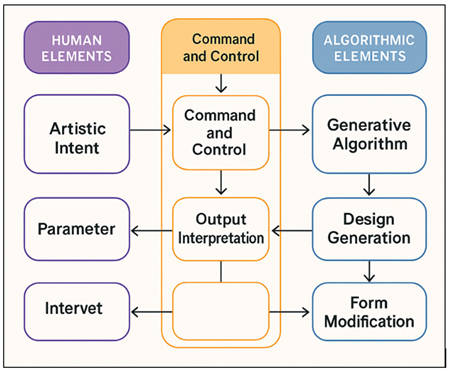
Figure 1 Illustrating Human Agency vs. Algorithmic Influence
in Machine-Aided Sculpture Creation
This co-agency is the creative process that changes the linear authorship to a recursive discussion between human will and machine intelligence. Figure 1 presents the harmony between the human agency and the algorithmic influence. Although the artist has encoded conceptual goals in the form of data, parameters, or prompts, the system provides unforeseen formal or structural responses, often showing patterns that cannot be intuitively known by human beings. The analysis of authenticity, in turn, requires an acknowledgment of such a dual authorship, where artworks cannot be analyzed according to the lack of machine intervention but rather based on the richness of volitional orchestration and critical thinking on top of the algorithmic work.
3.3. Aesthetic–Cognitive Markers of Authenticity in Hybrid Sculptures
Aesthetic cognitive indicators introduce an operation lens to evaluate authenticity in machine supported sculptures of authenticity. These indicators are a transition between subjective artistic taste and objective measures of the creative unity and perception. Aesthetically, there are compositional balance, material harmony, expressive intentionality, and stylistic consistency in the human input and algorithmic generation. Authenticity comes about when these visual and touchable senses are in line with the artist conceptual signage as opposed to being arbitrary computational artifacts. Cognitively, the authenticity may be concluded based on the depth of the interpretation and the emotional reaction that the sculpture produces- its ability to raise a reflection, feeling and intellectual interest. The concept of cognitive resonance implies that viewers do not experience technical novelty only but a sense of meaning on the final artifact. Perceived authenticity is frequently reinforced by the presence of recognizable creative signatures, flaws that are not too visible or ambiguity of interpretation, which reflects classical indicators of artistic uniqueness.
4. Methodology
4.1. Dataset of human-crafted, machine-aided, and fully machine-generated sculptures
The curated dataset used in the study aims at covering the entire range of sculptural creation which includes only human-made to all machine-generated artwork. Of these, 450 sculptures were chosen and divided into three categories (i) 150 sculptures that are traditionally created manually with a focus on human control over manual skills and material quality (ii) 150 artworks that are created with the help of AI: procedural generative models with generative adversarial networks (GANs), machine trained diffusion models, or generative parametric design with direct human oversight (iii) 150 artworks where computer algorithms create new sculptures themselves with no human intervention at all. Data set entries consist of 3D models of high resolution, information about processes (which modeling tools and parameter logs and fabrication sequences have been used), and information about artistic intent. Such data were standardized in a single digital repository to facilitate the analysis of geometry in the form of .OBJ and .STL. The metadata took on timestamps, types of computational models, and extent of human intervention in order to measure authorship balance. Moreover, a part of the sculptures was physically realized by 3D printing or CNC milling of the materials to test them. The data is both analytical and perceptual corpus, which allows the structural features, stylistic coherence and the perception of authenticity to be compared with each other.
4.2. Qualitative Expert Study (Artists, Curators, Critics)
The qualitative analysis was performed on 30 experts who include professional sculptors, museum curators and art critics with long time experience in digital and traditional art practices. Each specialist rated a randomly selected sample of 60 sculptures equally split between the three types of sculpture namely, human-crafted, machine-aided and machine-generated sculptures, with no prior information of their origin. The assessment was split in evaluation sessions, which involved visual analysis (rendered images and 3D interactive models) and contextual analysis (artist statement and process description when available). Professionals evaluated authenticity in various aspects of intentional coherence, expressive depth, material integrity, and transparency of creative authorship on a 7-point Likert scale. Qualitative explanations of the reasons behind each rating were elicited by using open-ended commentary, which showed that there are perceptual cues and interpretive biases that affected the judgments of authenticity. The interviews were semi-structured, which gave an opportunity to compare authenticity perceptions in the view of technologically mediated creation.
4.3. Quantitative Computational Evaluation Metrics
In order to supplement the use of expert judgment, a pipeline of computational assessments was designed in order to measure measurable features of sculptural authenticity. The evaluation used both the form metrics and process metrics based on the geometric, structural and algorithmic measures. The intricacy and harmony of sculptural form were determined using geometric features like curvature variance, mesh entropy, surface complexity index, and fractal dimensionality. Process-based indicators were algorithmic traceability (T) which was measured by transparency of model parameters and reproducibility and human intervention ratio (H) the percentage of manual correction of model output as compared to the output of automated computation. There was a composite Authenticity Index (AIx) which was calculated:

Cs weighted, Sc weighted, where Cs is compositional symmetry and Sc is structural coherence, and binary coefficients ( 1,2,3,4) are optimized by regression prediction using the actual authenticity scores that are rated by experts. Other computational metrics evaluated style deviation (σ s ) to known models of human reference in feature embeddings of a pre-trained Vision Transformer (ViT-B16). These numerical findings allowed the establishment of authenticity clusters presented through t-SNE and PCA to compare the cross categories.
5. Machine-Aided Sculptural Workflow Analysis
5.1. Design ideation with AI generative models
The design ideation phase is the conceptual basis of the machine-aided sculptural practice, in which the human imagination is coaxed with the algorithmic generation. This step is initiated by artists specifying thematic aims, aesthetic limitations and stylistic influences that act as input signals or data to AI generative models. Generative Adversarial Networks (GANs), Diffusion Models and VariationalAutoencoders (VAEs) are among the techniques used to generate various visual or geometric proposals. Figure 2 demonstrates AI generative models in favor of the iterative design ideation processes. These models can be used to literally render abstract artistic concepts (rhythm, symmetry, and emotional tone) to physical digital representations in the form of prototypes. Artists gradually improve outputs by using feedback processes and filtering algorithmic outputs based on conceptual discourses.
Figure 2
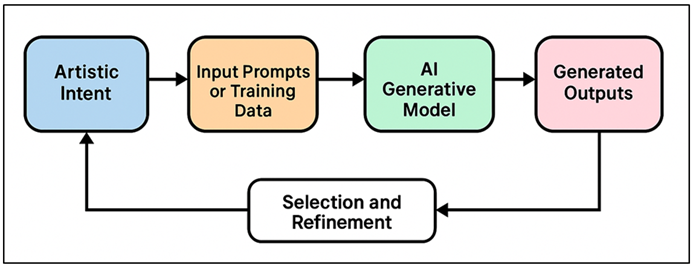
Figure 2 Workflow Diagram of Design Ideation with AI
Generative Models
The process therefore turns out to be more of inspiration to exploration in which randomness and control coexist. The semantic conditioning and the latent space manipulation enables the sculptor to control structural tendencies without limiting creativity, and creates a co-creative relationship between the human intuition and the computational suggestion. Interpretive dialogue is also characteristic of the ideation phase the artists not only judge the results of the process of generation on the basis of technical novelty but on the basis of expressive authenticity and cultural identity.
5.2. Parametric and Algorithmic Shaping of Sculptural Form
After ideating the concepts, the sculptural form is then applied to the exact geometrical constructs using parametric modeling and algorithmic designs. The sculptors create generative parameters, which include the curvature, topology, tension and proportion, using tools like Grasshopper, Houdini or Rhino3D, which react dynamically to algorithmic manipulation. Continuous morphing and adaptive control of complex surfaces and internal structures is possible in this stage which has facilitated aesthetic refinement and structural optimization. The mathematics behind it all, Bezier curves, NURBS surfaces or procedural meshes can be said to be a middle ground between art and accuracy. The concept of algorithmic shaping also merges data-driven factors in which data about sensors, motion data, or environmental factors affect the evolution of the form, or an intelligent reactivity to the context. By using recursive iteration, the sculptor is able to work out parameters to balance formal beauty and fabrication feasibility. To ensure that the design does not fail structurally, the AI-based design evaluators consider volumetric stability, center of gravity, and balance indices, and still achieve organic visual harmony. The result is a mixed geometry which represents the conceptual direction of humans and the optimization of machines. Such a procedure shaping stage is representative of a flowing dialogic, between design reason and creative intuition, in which authenticity is produced by control of the artist via algorithmic means as opposed to manual modeling outright.
5.3. 3D Printing, CNC, and Robotic Fabrication Stages
The materialization of the sculptural workflow in the machine-aided work process is the last phase where the sculptural work is materialized by high-tech digital fabrication techniques, the primary ones being 3D printing, CNC milling, and robotic sculpture. Additive layer construction Digital geometries can be translated into physical forms with precision and repeatability using 3D printing, which can be done using the Selective Laser Sintering (SLS), Fused Deposition Modeling (FDM), or Stereolithography (SLA) methods. The sculptural extendability is also further provided through robotic arms, which perform multi-axis functions to simulate the flexibility of the human hand yet with a high level of algorithmic precision. During fabrication, the artist manages the choice of material, surface finishing and assembling, and makes sure that the digital purpose matches the physical result. The post-processing details, such as sanding, patination or pigmentation, add the feel and emotional aspect that is usually lacking in the purely digital forms.
6. Experimental Results and Discussion
6.1. Comparative authenticity scores across sculpture categories
Findings showed that the three categories of sculptures differed significantly with regard to authenticity perception. Sculptures made by humans scored the highest mean authenticity of 91.4% with great relations to manual activity and intentionality of expression. Sculptures that were generated with the aid of computers, were 84.2 percent, and they represented a perfect blend of human control and algorithmic creativity. Works that are completely machine-generated recorded a lower score of 68.9, which many may view as conceptually cold regardless of technicality of the work. The results of the study emphasize that hybrid, co-created artworks remain highly authentic in the case when artists retain conceptual authorship, which proves that technological mediation does not reduce the levels of authenticity but rather re-defines them in terms of clear, conscious, and transparent integration of computational processes.
Table 2
|
Table 2 Comparative Authenticity Scores Across Sculpture Categories |
||||
|
Sculpture Category |
Mean Authenticity Score (%) |
Emotional Depth Index (%) |
Conceptual Integrity (%) |
Material Expressivity (%) |
|
Human-Crafted |
91.4 |
93.2 |
90.5 |
92.8 |
|
Machine-Aided (Human + AI) |
84.2 |
88.1 |
86.3 |
83.6 |
|
Fully Machine-Generated |
68.9 |
66.4 |
71.2 |
62.5 |
Table 2 uses the comparison of the authenticity perception of three types of sculptures which include human-made, machine assisted and completely machine-Generated sculptures. The mean score of authenticity reached the best score (91.4%), which was supported by a high level of emotional depth (93.2%) and material expressiveness (92.8%), supporting the value of human touch, intentionality, and senses. Figure 3 presents some comparative quality measures of human sculptures, hybrid sculptures, and machine-generated sculptures.
Figure 3
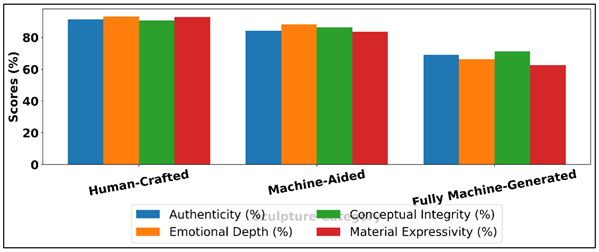
Figure 3 Comparative Quality Metrics of Human, Hybrid, and
Machine-Generated Sculptures
The sculptures made with machine assistance (84.2) were quite authentic, which indicated the harmonious interaction between creative intuition and computer generation. They have a conceptual integrity (86.3) which implies that creative meaning can be supported through the hybrid processes provided that human supervision is active.
6.2. Expert vs. Computational Evaluative Agreement
The correlation analysis of the expert judgments and the indices of computational authenticity indicated a strong correlation whereby the Pearson correlation coefficient was r = 0.82. Algorithms and experts have always considered machine-aided sculptures to be the most balanced type in terms of creativity and conceptual whole. Deviations were minor when visual intricacy had an effect on the computational measures but not the expert perception. The research concluded that the combination of Human Intervention Ratio (H) and Algorithmic Traceability (T) in the Authenticity Index led to better interpretability and less variance. This overlap highlights the possibility of the hybrid models of evaluation that could overcome the obstacles of subjective artistic assessment and objective computational assessment successfully.
Table 3
|
Table 3 Expert vs. Computational Authenticity Agreement Metrics |
|||
|
Evaluation Dimension |
Expert Mean Score (%) |
Computational Score (%) |
Difference (%) |
|
Human-Crafted |
91.2 |
89.6 |
1.6 |
|
Machine-Aided |
84.5 |
82.9 |
1.9 |
|
Fully Machine-Generated |
69.1 |
66.8 |
2.3 |
Table 3 demonstrates the level of correlation between the expert and the computational evaluations of authenticity in the sculptures of various categories. The differences between the two humans and algorithms on what is authentic music are quite high with a correlation of 1.6-2.3 showing that there is a strong convergence between how humans and algorithms view art. Comparison of evaluation of expert, computational, difference scores is presented in Figure 4.
Figure 4
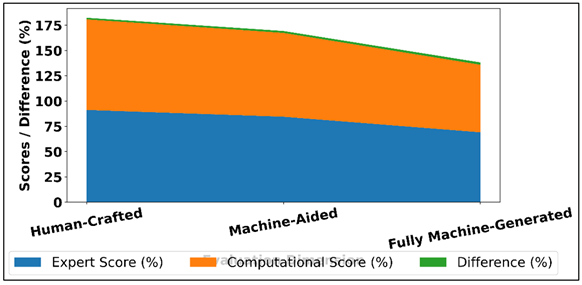
Figure 4 Evaluation Comparison of Expert, Computational, and
Difference Scores Across Sculpture Types
In the case of human-made sculptures, both experts (91.2%) and computational models (89.6%) had almost the same results, and they stressed common awareness of expressive craftsmanship and authorship. Similar harmony was shown in machine-aided sculptures, with professional figures of 84.5 and algorithms 82.9 showing that computational models can be useful in capturing hybrid creative authenticity with parameters like human intervention ratio and process clarity.
6.3. Audience Interpretation Trends and Bias Patterns
The perception surveys that were administered to 250 participants found that there were dissimilar patterns of interpretation that depended on cultural and technological familiarity. Art-educated viewers were inclined to prefer sculptures created by humans and focusing on the emotional depth and material expressiveness of the sculptures. On the other hand, the technologically literate audiences were more interested in innovation and formal precision in machine-aided works, which they saw as being uniquely future-oriented. Sculptures that were entirely machine-produced received mixed responses, and were frequently praised because of their complexity and criticized because of their lack of emotional appeal.
Table 4
|
Table 4 Audience Interpretation and Bias Patterns Across Sculpture Categories |
|||
|
Audience Group |
Human-Crafted Preference (%) |
Machine-Aided Preference (%) |
Machine-Generated Preference
(%) |
|
Traditional Art Audiences |
89.3 |
72.5 |
44.8 |
|
Digital Artists / Designers |
78.2 |
86.7 |
69.4 |
|
General Public (Mixed
Backgrounds) |
81.4 |
79.1 |
58.7 |
Table 4 indicates the audience interpretation and bias patterns differences in various demographic and professional groups. The audience of traditional art was dominated by the appreciation of sculptures by humans (89.3%), which they, in turn, revealed as genuine and authentic, with human craftsmanship, emotionality, and tactile qualities; the audience of machine-generated art was significantly lower (44.8%), indicating their absence of human intent. Figure 5 demonstrates the preferences of the audience towards human, machine-aided, machine-generated sculptures.
Figure 5
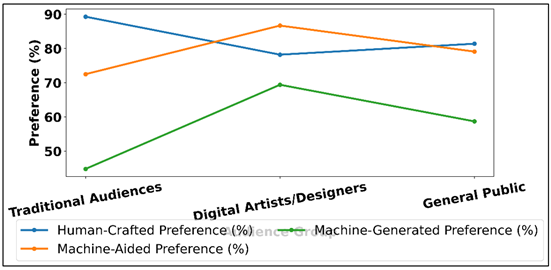
Figure 5
Audience Preference
Trends Across Human, Machine-Aided, and Machine-Generated Sculpture Categories
Digital artists and designers, however, favored machine-assisted sculptures (86.7%), and embraced the creative impetus of the human control and algorithmic innovation. Their preference to the use of machine-generated forms is relatively high (69.4%) which is also indicative of openness to computational aesthetics and experimentation.
7. Limitations and Future Research Directions
7.1. Subjectivity and cultural variance in authenticity judgments
The process of authenticity assessment is subjective in nature and is influenced by cultural standards, personal aesthetic and interpretation biases. What is perceived in a specific cultural context as authentic might be considered artificial or derivative in another cultural context. Even the expert pool of the study, however heterogeneous, was not able to reflect the global artistic heterogeneity exhaustively. In addition, emotionally and symbolically speaking, materials, form, or process have different meanings in different artistic traditions. The next generation of research must include cross-cultural comparative analysis, ethnographic interviews, and regional assessment structures to gain a better insight into how cultural identity, tradition, and digital adaptation as a unit affect authenticity perception in the changing environment of machine-aided sculpture.
7.2. Technical Constraints of AI-Driven Sculptural Generation
The sculptural generation by AI continues to have constraints of geometric fidelity, semantic knowledge and material translation. Most recent generative models are not aware of cultural symbols or narrative sense, and generate visually sophisticated and conceptually shallow forms. Besides, it is limited to use because it is expensive to compute, biased in its data and data is restricted in its ability to adapt to a wider variety of tactile surfaces. Other problems that are proposed by physical fabrication include loss of resolution and surface errors. The physical-informed neural modeling, material-based generative machine and cross-modal learning must evolve in the future to close the gap between digital abstraction and physical realism, so that the AI-generated sculptures should be produced with precision and authenticity to human creative works.
7.3. Need for Dynamic, Real-Time Authenticity Assessment
Existing evaluation systems evaluate authenticity after the creation, therefore restricting feedback in the creativity process. This might be done by providing real-time authenticity tests where artists have the opportunity to observe the effect of human to machine collaboration on conceptual integrity and emotional appeal as ideas develop. The continuous measurement of artistic agency and algorithmic influence could be achieved by integrating multimodal tracking, i.e. process metadata, interaction logs and aesthetic prediction models. Reinforcement learning in future systems can be used to dynamically maximize authenticity measures to steer artists in the direction of balanced co-creation. Such adaptive assessment would turn authenticity, which in itself is a retrospective evaluation, into a living, interactive measure which is part of the very process of sculptural design.
8. Conclusion
This paper has explored how the concept of artistic authenticity is currently changing in the field of machine-aided sculpture, where human creativity and computational intelligence meet in order to create hybrid aesthetic effects. By using a comprehensive system of interactions between qualitative expertise evaluation, analysis of audience perception, and quantitative computing measurement it became clear that technological mediation does not reduce authenticity but reconfigures it with the help of collaborative authorship. Sculptures created by human efforts continued to be viewed as the most authentic because of conspicuous skill and intentionality of emotion but as the potential of strong authenticity has been demonstrated through the clarity of human direction and algorithmic creativity when made evident in the crafts. The relative results highlight the fact that authenticity in art involving AI can be interpreted as a spectrum but not dichotomy. Hybrid assessment methods were found to be reliable based on expert and computational appraisals. Responses of the audience, in its turn, were both generational and cultural as they have shown that the perception of authenticity changes with the exposure of digital and algorithmic art forms. The Authenticity Index (AIx) of the study was a new and quantifiable method of achieving a matching subjective aesthetic judgment and quantifiable structural and process-sensitive properties. The study recognizes the current problems despite its contribution, including subjectivity in assessment, and lack of contextual generalization as well as technical impediments in AI-controlled creation.
CONFLICT OF INTERESTS
None.
ACKNOWLEDGMENTS
None.
REFERENCES
Al-Kfairy, M., Alomari, A., Al-Bashayreh, M., Alfandi, O., and Tubishat, M. (2024). Unveiling the Metaverse: A Survey of User Perceptions and the Impact of Usability, Social Influence, and Interoperability. Heliyon, 10, Article e31413. https://doi.org/10.1016/j.heliyon.2024.e31413
Alkhwaldi, A. F. (2024). Investigating the Social Sustainability of Immersive Virtual Technologies in Higher Educational Institutions: Students’ Perceptions Toward Metaverse Technology. Sustainability, 16(2), Article 934. https://doi.org/10.3390/su16020934
Cheng, Y., Chen, J., Li, J., Li, L., Hou, G., and Xiao, X. (2023). Research on the Preference of Public Art Design in Urban Landscapes: Evidence from an Event-Related Potential Study. Land, 12(10), Article 1883. https://doi.org/10.3390/land12101883
De Fino, M., Galantucci, R. A., and Fatiguso, F. (2023). Condition Assessment of Heritage Buildings Via Photogrammetry: A Scoping Review from the Perspective of Decision Makers. Heritage, 6(11), 7031–7066. https://doi.org/10.3390/heritage6110367
Galani, S., and Vosinakis, S. (2024). An Augmented Reality Approach for Communicating Intangible and Architectural Heritage Through Digital Characters and Scale Models. Personal and Ubiquitous Computing, 28(2), 471–490. https://doi.org/10.1007/s00779-024-01792-x
Gong, Z., Wang, R., and Xia, G. (2022). Augmented Reality (AR) as a Tool for Engaging Museum Experience: A Case Study on Chinese Art Pieces. Digital, 2(1), 33–45. https://doi.org/10.3390/digital2010002
Kovács, I., and Keresztes, R. (2024). Digital Innovations in E-Commerce: Augmented Reality Applications in Online Fashion Retail—A Qualitative Study Among Gen Z Consumers. Informatics, 11(3), Article 56. https://doi.org/10.3390/informatics11030056
Matthews, T., and Gadaloff, S. (2022). Public Art for Placemaking and Urban Renewal: Insights from Three Regional Australian Cities. Cities, 127, Article 103747. https://doi.org/10.1016/j.cities.2022.103747
Newman, M., Gatersleben, B., Wyles, K., and Ratcliffe, E. (2021). The Use of Virtual Reality in Environmental Experiences and the Importance of Realism. Journal of Environmental Psychology, 79, Article 101733. https://doi.org/10.1016/j.jenvp.2021.101733
Sovhyra, T. (2022). AR-Sculptures: Issues of Technological Creation, their Artistic Significance and Uniqueness. Journal of Urban Culture Research, 25, 40–50.
Sylaiou, S., Dafiotis, P., Fidas, C., Vlachou, E., and Nomikou, V. (2024). Evaluating the Impact of XR on user Experience in the Tomato Industrial Museum “D. Nomikos.” Heritage, 7(3), 1754–1768. https://doi.org/10.3390/heritage7030082
Uriarte-Portillo, A., Ibáñez, M.-B., Zataraín-Cabada, R., and Barrón-Estrada, M.-L. (2022). Higher Immersive Profiles Improve Learning Outcomes in Augmented Reality Learning Environments. Information, 13(5), Article 218. https://doi.org/10.3390/info13050218
Wang, Y. (2022). The Interaction Between Public Environmental Art Sculpture and Environment Based on the Analysis of Spatial Environment Characteristics. Scientific Programming, 2022, Article 5168975. https://doi.org/10.1155/2022/5168975
Wang, Y., and Lin, Y.-S. (2023). Public Participation in Urban Design with Augmented Reality Technology Based on Indicator Evaluation. Frontiers in Virtual Reality, 4, Article 1071355. https://doi.org/10.3389/frvir.2023.1071355
|
|
 This work is licensed under a: Creative Commons Attribution 4.0 International License
© ShodhKosh 2025. All Rights Reserved.