ShodhKosh: Journal of Visual and Performing ArtsISSN (Online): 2582-7472
|
|
Reinventing Digital Illustration with Generative AI Tools
Sonia Riyat 1
 ,
Jay Gandhi 2
,
Jay Gandhi 2 ,
Amit Kumar 3
,
Amit Kumar 3 ,
Kaberi Das 4
,
Kaberi Das 4 , Abhijeet Panigra 5
 , D. Jennifer 6
 ,
Omkar Mahesh Manav 7
,
Omkar Mahesh Manav 7
1 Professor, Department of Management, Arka Jain University, Jamshedpur, Jharkhand, India
2 Assistant Professor, Department of Computer science and Engineering, Faculty of Engineering and Technology, Parul institute of Engineering and Technology, Parul University, Vadodara, Gujarat, India
3 Centre of Research Impact and Outcome, Chitkara University, Rajpura- 140417, Punjab, India
4 Professor, Department of Computer Applications, Siksha 'O' Anusandhan (Deemed to be University), Bhubaneswar, Odisha, India
5 Assistant Professor School of Business Management Noida International University, India
6 Assistant Professor, CSE Panimalar Engineering College, India
7 Department of Engineering, Science and Humanities Vishwakarma
Institute of Technology, Pune, Maharashtra, 411037, India
|
|
|
ABSTRACT |
|
|
The
advancement of digital illustration has led to a revolution stage whereby it
entails the application of generative artificial intelligence which
integrates the human creativity and the computational creativity. In this paper, the shift
towards generative ecosystems via models such as GANs, VAEs, and diffusion
networks will be considered in relation to the transformation of the
conventional workflows of vectors and raster. It suggests an ambivalent framework
based on which the illustration is regarded as a multidimensional contact
between human mental will and machine learning inference. In
order to estimate the similarity of artwork produced with the help of
AI and human-produced artworks in terms of the aesthetic and semantic
quality, the paper proposes a Creative Performance Index (CPI) as a critical
combination of Fréchet Inception Distance (FID) and CLIP Score and the
human-based measurements of originality and emotional resonance. Through a number of case studies of applications like DALLE,
Stable Diffusion and Midjourney, it has been demonstrated in the paper that coaching of human feedback based on an iteration approach
has a profound impact on artistic containment and richness of ideas. The
findings validate that generative AI does not replace the agency of the
illustrator but expands it to make the creative process adaptive and
symbiotic system of leading to ideas, contemplating on
them, and perfecting them. |
|||
|
Received 03 June 2025 Accepted 16 September 2025 Published 28 December 2025 Sonia Riyat, dr.sonia@arkajainuniversity.ac.in DOI 10.29121/shodhkosh.v6.i5s.2025.6876 Funding: This research
received no specific grant from any funding agency in the public, commercial,
or not-for-profit sectors. Copyright: © 2025 The
Author(s). This work is licensed under a Creative Commons
Attribution 4.0 International License. With the
license CC-BY, authors retain the copyright, allowing anyone to download,
reuse, re-print, modify, distribute, and/or copy their contribution. The work
must be properly attributed to its author.
|
|||
|
Keywords: Generative AI,
Digital Illustration, Diffusion Models, Human–AI Collaboration, Aesthetic
Evaluation, Creative Performance Index (CPI) |
|||



1. INTRODUCTION
1.1. Reframing Creativity in the Age of Generative Intelligence
The digital age has mostly altered
creativity, authorship, and expression with the advent of generating artificial
intelligence. Illustration has always been defined as a reflection of the
vision of a man of art as a raw impact of the human imagination with a
masterful hand with its intuition and experience Donnici et al. (2025). But with the scalding appearance of machine learning and
neural generating technologies, things have begun to alter this perception.
These generative AI applications as Stable Diffusion, DALL•E, Midjourney, and
Firefly have become a collaborative rather than a tool capable of converting
textual, emotional, or conceptual messages into visual pictures capable of
competing with the craftsmanship of classical craftsmen. The development
discredits the evolution of creativity as a human capacity and presents it as a
dynamic interaction between the human thought and the computational reasoning Li et al. (2024). The key to this change is a novel form of creative
intelligence one that is both algorithmically precise and aesthetically
responsive in a human manner. In generative illustration, the artist does not
lose a role, he distorts the definition. Instead of letting this process be
done manually, the illustrator has now automated this process by coordinating
this process with prompt engineering, semantic control and a feedback process.
This act of directing and refining machine generated text is a shift between the
making and co-making of some form of dialogic art where imagination is
projected out in terms of computational agency. The creator of the drawing is
also a designer and supervisor of the generative procedure, and the formation
of significance through the subtle manipulation of information, models, and
purpose Zhou et al. (2023).The creative action now is a discussion of inspiration and
algorithmic suggestion where both the human and machine affect the contribution
of the other.
Generative intelligence challenges us,
philosophically speaking, to re-define the concept of originality, authorship
and authenticity. In classical aesthetics, the new was attached to
individuality of human producer. However, when machines are capable of
producing a new visual by considering learnt representations of large datasets,
there is an indistinct boundary between imitation and innovation. Authorship of
the illustrator therefore is not in the creation of each pixel of the visual
image but the conceptual organization and the expressive orientation of the
image. In place of the manual performance of creative work, is what is known as
the deliberate composition whereby the context, constraints and purpose of
narration are regulated by the artist in order to
achieve meaning as opposed to the physical performance of drawing Bhargava et al. (2021).It is this intellectual diversion, the new intellectual
ecology of digital art that creativity has become a kind of exchange between
the human action motivation, the data inference and the actions of models.
Generative AI also redefines the rhythm
of illustration in terms of time and the manner in which people think. What
would have taken hours of sketching, colouring and trial and error to develop
is now able to be generated in seconds with different versions of iterative
prompts and training of the style as shown in Figure 1 It
promotes democratization of the creative production and allows illustrators,
designers and non-artists to visualize abstract concepts instantly Bartlett and Camba (2024). But the same speed renders the profundity, conscious purpose
and artistic responsibility questionable. The illustrator must then work at the
task of determining the ethical judgment and interpretive authorship wherein
the products created are in correspondence with the cultural, contextual and
personal value rather than reducing art to a novelty machine. Lastly, the
re-invention of digital illustration through generative AI cannot be considered
just a technical breakthrough but more of an epistemic breakthrough into the
technical process of creative knowledge production, sharing, and interpretation
Baudoux (2024). It
positions the illustrator as an imaginative strategy-maker balancing between
creativeness and calculation, emotions and logic, novelty and reorganization.
The generative tools do not purport to any artistic intuition that they are
broadening its reach to a new area where it has not previously been. In this
new paradigm, creativity is interactive dialogue between human and machine
intelligence a type of augmented imagination in which code is brushstroke, data
colour, and prompts poetic stimuli of mental images Avlonitou and Papadaki (2025).
Figure 1
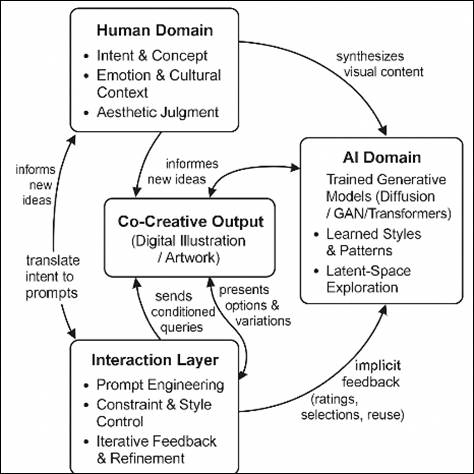
Figure 1 Human–Machine Co-Creation Ecosystem
2. Design Intelligence Framework for AI-Assisted Illustration
The nature of design intelligence when
AI based illustration is developed has changed to more of a humanized
definition that is more of a hybrid be it man-machine reasoning instead of a
man-thinking process. The intelligence in the expanded paradigm is no longer
about producing products that are appealing aesthetically but a blend of
perception, context, adaptation and feedback in a continuous mutually
supporting loop Sáez-Velasco et al. (2024).The Design Intelligence Framework (DIF), of generative
illustration, accounts of the symbiotic association between the synthetic
neural system and the aesthetic feeling of human beings to create expressive,
context-sensitive and significance-driven artworks. The framework transforms AI
into an assistant in the design thinking that will improve the creative
thinking of the illustrator rather than viewing it as a tool. This framework is
founded on the Cognitive Input Layer, as it demonstrates the conceptual and
emotional something of the artist. Here, creativity is an initial image in the
mind, which is introduced either in a form of text, drawings, or abstract
signification. Human designer contextualizes the goals, contextualization and
constraints of what the system should visualize and the reasons Relmasira et al. (2023). In this stage, the collision of language and imagination
occurs; all the sheer details or metaphors become an information processed by
the AI model as the means to decode and reform in the shape, texture and form.
Most significantly, and most
importantly, above this is the Generative Core comprising of trained AI
architectures GANs, VAEs and diffusion models that are engines of creative
synthesis. This nucleus machine intelligence encodes intent to be visualised; it
prototiles high-dimensional latent spaces in style, color
and shape as mathematical correlations. The system learns that visual coherence
has conceptual depth into which an artist in Figure 2 equally
did. It is interesting to note that this core is not deterministic, it
introduces probabilistic creativity, generating a set of readings which may be
curated or optimized by the human designer, and thus the process is
exploratory, but not prescriptive. The second layer is the Interpretive
Feedback Loop that is the focus of human-AI co-creation. Here the interaction
of the artist with the system output to change the prompts, re-weight the style
effects, or otherwise place other constraints. The AI, on the other hand,
adapts to these types of alterations and, in response to fine-tuning, alters
the pattern of its generation Albar Mansoa
(2024).The feedback cycle is one of the expressions of an adaptive
design conversation, and with each refinement, the understanding between the
artist and the AI will become deeper and deeper. This recursive learning leads
to a mutually empowering intelligence on the part of human beings which humans
learn to be competent in the facilitation and interpretative analysis, and the
system learns to be inventive in its relevance and coherence. Finally, there is
Aesthetic Evaluation Layer that incorporates cognitive, technical and emotional
evaluation. In this step, the equilibrium, symmetry, novelty and emotional
appeal are tested. Artists use visual literacy, and AI can be used to implement
such computational aesthetics principles as CLIP score, indices of color harmony or diversity Rodrigues and Rodrigues (2023). The combination of these evaluations ensures that the
generative process does not merely stand in a position to satisfy human sense,
but even algorithmic integrity.
Figure 2
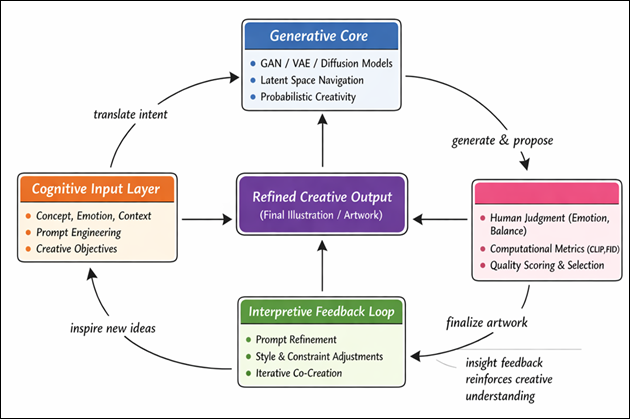
Figure 2 Design Intelligence Framework for AI-Assisted Illustration
3. The Creative Workflow Dialogue Between Human and Machine
The creative process of the AI-assisted
illustration is an interactive process between the human will and the machine
Generativity, artistic imagination and the computer intelligence merge in an
exploration and refinement process. Unlike the old workflow, where one needs to
sketch, colour and post-process the image, AI-based illustration is cyclic,
conversational, and adjustable. Each phase of the process invites the
illustrator, the AI, to read, respond, and evolve, and transform the
illustration process into a give-and-take of meaning-making process Ning et al. (2024).This discussion does not only change the shape, in which
images are shaped, but also the manner in which
artists perceive creativity as such. The initial phase is conceptual initiation
whereby the artist comes up with an idea or a perception and transforms it into
a semantic or multimodal signal. The step is similar to
traditional ideation phase supplemented by computation semantics Demartini et al. (2024). The
artist considers the impact of language, tonality and explanatory details to
the interpretation of the model. The words that can be discussed as the
language strokes and that guide the AI to a certain aesthetic area are
impression, surreal, melancholy palette, etc. This stage predicts development
of literacy in such form of innovativeness of craftsmanship whereby the artist
is instructed to distort the meaning by the use of text, parameters or
reference images. In the processing of the prompt, the generation response
stage is initiated. The semantic input is decoded by the AI system in this case
which is guided by the diffusion architecture, GAN, or VAE architecture to
generate a few visual candidates. Training data are the input of each product
of the latent-space inference and probabilistic variation Wang and Yang (2024). It is a curative process of the creative artist, he/she
considers each of the versions in its composition, feeling, and correspondence
to the idea. This is a crude inversion of the creative process, that the artist
is no longer judging what the machine is proposing, delimiting a choice,
redefining, and rethinking it, as a rudimentary creative process Morales-Chan (2023). What will be followed next is the interactive refinement
loop and the most dynamic is the human-AI dialogue. The system can only be
taught effectively by artists who adjust their prompts, variations of weights
or other constraints that may be stylistic. In its turn, the model tailors its
output distribution learning to balance between fidelity and originality. This
process of negotiation produces emergent intelligence which is neither fully
human nor fully artificial agent of collaboration which grows with each
interaction. It also is concerned with feedback as a generative process and
every cycle is a learning experience and an experiment of creation AlGerafi et al. (2023).
Figure 3
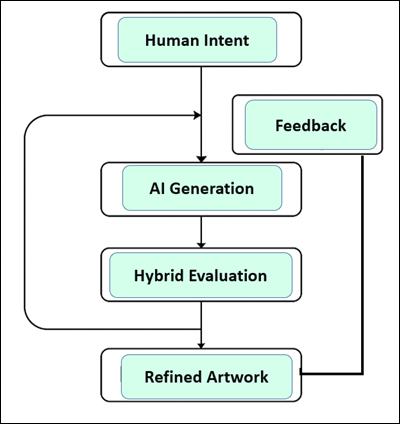
Figure 3 Human–Machine Creative Workflow Loop
The aesthetic judgment and synthesis of
the workflow results in the domination of human sensibility. The artist does
not only reproduce the constructed images as a product of creation but as an
idea a visual reenactment of how machines perceive and how they reproduce the
imagination of humans. The decisions are arrived at through emotion, narrative
fit or compositional resonance in contrast with technical perfection as in Figure 3 Here,
in the majority of cases, artists restore the use of manual intervention in the
creation of new textures, the re-balancing of tones or generations in order to
take back the human hand in the algorithmic system. What we are witnessing are
the two components of the manmade depth and machine level innovation that has
been combined in a hybrid artwork. Simply speaking, this sort of a workflow
transforms the illustrator into a player of creative interlocutor who
participates in interactive dialogue with intelligent systems AlGerafi et al. (2023). It is a conclusion of the bigger philosophy of symbiotic
authorship in which the artwork of art is not only created but it emerges as a consequence of an exchange process. The operation has
produced another form of artistic literacy which is founded on the way to talk
to be witty rather than using a machine. Not only is this workflow more
efficient and creative with diversity but also, it is a tremendous cultural
dislocation in the sphere of thinking about design intelligence, agency, and
authorship in the digital age.
4. Metrics of Creativity and Aesthetic Evaluation
The measure of creativity of the
generative illustration would require a hybrid framework in order to integrate
human aesthetic evaluation and the performance measurements of performance.
Since AI-generated art is created at the threshold between analytical thought
and visual art, it cannot be evaluated in terms of technical accuracy. Instead,
it must consider emotional appeal, conceptual coherence, stylistic freshness
and perceptual balance. The Metrics of Creativity and Aesthetic Evaluation
Framework thus a synthesis of the subjective and the objective, a combination
of the computational hints on the quality of the images and the human biases on
the meaning and the effect. Mathematically, there has been the emergence of a
variety of quantitative metrics to ascertain the level of fidelity, diversity
and semantic accuracy of AI generated images. Fréchet Inception Distance (FID)
is a distance measure that compares the quality of created imagery and the one
produced in the real world, in other words, it is a distance of realism and
consistency. The CLIP Score is a contrastive learning framework to establish
the consistency of the text prompts and the output generated to make certain
that the images created by the AI is a valid interpretation of the idea of the
artist. Meanwhile, Perceptual Path Length (PPL) and Inception Score (IS)
measure the diversity and the fluidity of the generated variations in the
latent space. These numerical measures are imperative in helping to benchmark
the generative models, though, they are only the surface-level performance that
is in many cases insensitive to the emotional presence, not to mention the
symbolic undertones. To supplement these quantitative measurements, human
aesthetic dimension introduces the qualitative measurements, which are founded
on sensory, emotional and creativity. Generative works of art are evaluated or
judged by artists and audiences through the use of novelty, structure, color structure, storytelling and emotional appeal. These
evaluations are subjective and they also happen to be personal, cultural and
contextual sensitivities. In practice, Likert scales are generally used to
assess human judgment of images using a visual attractiveness, thematic
consistency, and innovation scale. These responses can then be added up to
produce a Human Creativity Index (HCI), a summary of the factors of affective
response and conceptual relevance that are, as yet, unable to be measured by
algorithms. A combination of both dimensions forms Creative Performance Index
(CPI) which is a composite measure balancing the accuracy of algorithms and the
translation of art. Mathematically CPI can be determined as:

Where (α, β, γ) are the
weight of factors that are geared towards technical realism, semantic accuracy
and human perception respectively. This compound formula ensures that
creativity is seen as an experience in totality as something aesthetic and as
something calculated.
Table 1
|
Table
1 Hybrid Metrics Framework for Evaluating
AI-Generated Illustrations |
||||
|
Dimension |
Metric / Indicator |
Measurement Focus |
Evaluation Method |
Interpretation / Creative Relevance |
|
Computational Fidelity |
Fréchet Inception Distance (FID) |
Measures visual realism by comparing statistical
distributions between generated and real images |
Numerical score (lower = better fidelity) |
Indicates how “natural” or photographically
consistent an AI-generated illustration appears |
|
Semantic Alignment |
CLIP Score |
Quantifies correspondence between textual prompt
and visual output |
Cosine similarity between text and image embeddings |
Reflects how accurately the image conveys the
artist’s described concept or emotion |
|
Generative Diversity |
Inception Score (IS) |
Evaluates variability and clarity of generated
samples |
Model-based entropy computation |
Captures richness of visual output and resistance
to mode collapse |
|
Structural Coherence |
Perceptual Path Length (PPL) |
Measures smoothness of latent-space interpolation |
Gradient-based path analysis |
Represents continuity of form and color across
iterative variations |
|
Human Perception & Emotion |
Human Creativity Index (HCI) |
Aggregates subjective ratings on originality,
emotional resonance, and aesthetic balance |
Expert/user Likert-scale surveys (1–5 or 1–10) |
Captures affective and conceptual depth that
algorithms cannot quantify |
This Table 1puts CPI in a position of a non-sectarian benchmark in the
assessment of AI-aided illustration. The computational layer ensures
faithfulness of the evaluation of the images and time-liness
consistency and the human-centred layer maintains the genuineness of the
emotions and aesthetic values. The two coupled up contribute to a
multidimensional creative concept in which emotive sense is not the most but is
co-equal with algorithmic mastery.
5. Case Studies Illustrating with Intelligence
Generative AI in digital illustration
is most likely to find its most feasible application through case studies to
demonstrate how both computational creativity and human direction converge in
the actual working process. These examples suggest that the conceptual purpose
of translational creative performance is transformed into measurable creative
performance by the hybrid structure of assessment based on quantitative (FID,
CLIP) and qualitative (HCI) measures into the index of Creative Performance
(CPI). Another similarity in both examples is that illustrators rely on AI
models as their assistants, but not automatic, as this makes them more
creative, productive, and stylistically diverse.
Case 1] Concept-Driven Image with DALL•E 3.
The former does concept-driven
generation using DALLE 3, whereby artists generated layers of prompts,
including one prompt, which happened to be in a dreamlike city painted in
cubist geometry and bioluminescent tones of color.
The system interpreted these semantic signifiers to create a composition of
architectural abstraction and moods. The images on CLIP scored high 0.87 which
was quantitative and suggested good text image coherence.
Table 2
|
Table 2 Illustrates the Quantitative
and Qualitative Improvements Following Refinement |
||||
|
Evaluation Parameter |
Metric Type |
Pre-Refinement |
Post-Refinement |
Interpretation / Observation |
|
Fréchet Inception Distance (FID) |
Computational |
17.4 |
14.9 |
Visual realism improved after prompt re-weighting |
|
CLIP Score |
Computational |
0.86 |
0.87 |
Strong semantic alignment; minimal variance |
|
Human Creativity Index (HCI) |
Human (1–10) |
6.8 |
8.0 |
Refinement produced better aesthetic balance |
|
Creative Performance Index (CPI) |
Hybrid Composite |
0.68 |
0.83 |
Meaningful improvement through human–machine
dialogue |
However, repetition of compositional
imbalance by human assessors alerted that a high semantic fidelity is no
guarantee that artistic harmony might be achieved. The Creative Performance
Index improved, as measured by prompt adjustment and manual reworking, between
0.68 and 0.83, an important fact confirming how the development of the human
feedback increases the structure and narrative richness.
Figure 4
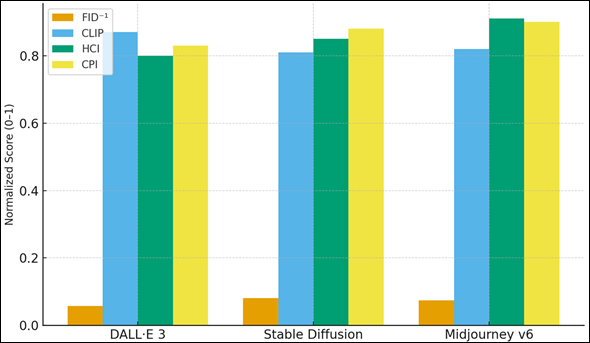
Figure 4 Comparative Creative Performance Across AI Systems
The Figure 4 has provided a comparative bar graph of three significant
systems DALL•E 3, Stable Diffusion, and Midjourney v6 measured in normalized
scores of FID -1, CLIP, HCI, and CPI. The visualization is a clear indicator
that Stable Diffusion performs best in overall technical fidelity (low FID,
high CLIP) and Midjourney v6 creates a higher perceptual creativity (HCI
≈ 0.91) and overall performance (CPI ≈ 0.90) than the rest. DALL•E
3 is less emotionally resonant, but is more
semantically accurate. The equal distribution among these metrics supports the
idea that there is no system predominant in all the dimensions, and the idea
that the creativity in AI-assisted illustration is the result of complementary
competencies can be substantiated.
Case 2] Style Fusion with Stable
Diffusion
The second example is the study of the
style emulation and transformation through a refined Stable Diffusion model
that has been trained on the modern illustration datasets. The experiment was
focused on combining Madhubani folk motifs and cyberpunk aesthetics two
aesthetics that are visually opposite to each other.
Figure 5

Figure 5 Human Feedback Impact on Creativity (DALL·E 3)
This line graph, which is presented in Figure 5, compares the phases of pre- and post-refinements of DALL•E
3 illustration generation. Both HCI and CPI scores increase significantly after
human-directed prompt correction, shifting the numbers to 0.83 in CPI. The
continuous CLIP correspondence and enhanced human ratings are pointers to the
fact that repeated interaction improves the quality of art without negatively
affecting the semantic integrity. The visual confirmation of the hypothesis
according to which human curation is a necessary enhancer of AI-generated
creativity is contained in the figure.
Table 3
|
Table 3 Summarizes the Metric Balance
within this Hybrid Style-Fusion Scenario |
||||
|
Evaluation Parameter |
Metric Type |
Result |
Weight in CPI |
Interpretation / Observation |
|
FID Score |
Computational |
12.3 |
α = 0.35 |
High fidelity to real-world distribution |
|
CLIP Score |
Computational |
0.81 |
β = 0.30 |
Accurate semantic mapping between hybrid
descriptors |
|
HCI Score |
Human (1–10) |
8.5 |
γ = 0.35 |
Evaluators praised emotional novelty and cultural
fusion |
|
CPI (αFID⁻¹ + βCLIP + γHCI) |
Hybrid |
0.88 |
Strong creative synergy across all evaluation
layers |
|
The model produced startling hybrid
compositions which were measured in terms of both algorithmic and perceptual
measures. Surprisingly, the FID outputs with highest scores did not necessarily
happen to be the most intellectually stimulating, and thus there is a need to
exercise interpretive control in the process of aesthetic judgment.
Case 3] Iterative Narrative
Illustration with Midjourney v6
The third example involves the
iterative storytelling with the help of Midjourney v6 in a series called
Metamorphosis of Memory. One prompt created on the basis of the previous
outputs, forming a chain of transforming visual themes color
fading away into abstraction, form dissolving into emotion. The continuous
cycle inculcated continuity and uniformity between iterations. Whereas there
was no change in CLIP scores (~0.82), the HCI was growing way up to 9.1 as a
result of constant human contact in that the level of emotional engagement and
the depth of the themes were getting better.
Table 4
|
Table 4 Captures the evolution of
creativity across successive iterations. |
|||||
|
Iteration |
FID ↓ |
CLIP ↑ |
HCI (1–10) |
CPI Composite |
Key Observation |
|
1 – Initial Prompt |
15.2 |
0.82 |
6.9 |
0.74 |
Early concept lacked structural cohesion |
|
2 – Refined Prompt |
14.0 |
0.82 |
8.0 |
0.83 |
Improved narrative and color harmony |
|
3 – Final Synthesis |
13.5 |
0.82 |
9.1 |
0.90 |
Achieved expressive storytelling and thematic unity |
Through these works, one similar
finding stems out: generative illustration is an aesthetic negotiation process,
a human sensibility in which the algorithmic potential is measured by the human
sensibility. The interaction between quantitative fidelity and qualitative
intuition will make sure that the creative product is not reduced to the
novelty.
Figure 6
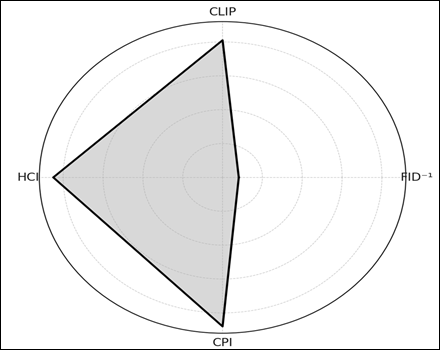
Figure 6 Cultural Fusion and Metric Balance (Stable Diffusion)
The radar (spider) chart illustrates in
Figure 6 the
balance between four measures FID -1, CLIP, HCI, and CPI of the case of fusion
of Madhubani and cyberpunk in Stable Diffusion. The almost symmetrical form is
an indication of a rounded out performance, which is
an expression of balanced realism, interpretation, and emotional appeal. The
figure highlights the unique ability of Stable Diffusion to generate high
levels of human rated creativity and be able to promote computational accuracy,
which confirms its usefulness in the synthesis of cross-cultural style.
Generative models can suggest an infinite range of variations, but it is the
critical curation of the artist, context, culture, and story purpose that will
turn the potential into valuable works of art. These case studies confirm that
in AI-assisted illustration, there is no mechanical and mystical creativity,
but rather relational, developing in a process of a long-lasting dialogue
between perception, computation, and imagination.
This is a two-line chart showing the
change of HCI and CPI scores through three iterative prompts of the
Metamorphosis of Memory series. The fact is that such an improvement of HCI
0.69 to HCI 0.91 and CPI 0.74 to CPI 0.90 is graphically demonstrated by the
trend. The user feedback is more productive in each of the iterations, which
leads to increased emotional continuity, composition structure, and narrative
coherence. The figure therefore demonstrates how refinement leads to the
development of AI away a generator to a co-creative partner.
Figure 7
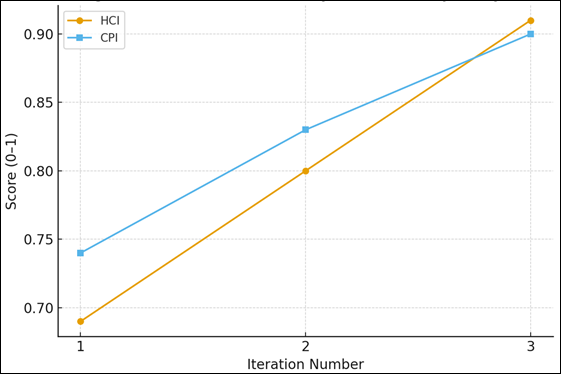
Figure 7 Iterative Narrative Improvement (Midjourney v6)
6. Conclusion
The generative AI recreation of digital
illustration is the paradigm shift of manual, crafts to collaborative
cognition. Rather than delegitimizing the authorship of artists, AI augments it
by artists being able to follow broader aesthetic paths by semantic prompting,
probabilistic generation and refinement. The given models, including the Design
Intelligence Framework, or the Creative Performance Index (CPI) prove that the
creativity in the age of AI may be defined as a never-ending compromise between
human will and the potential of algorithms. The combined method of assessment
demonstrates that quantitative indexes such as FID and CLIP ensure structural
faithfulness and semantic harmony, but indexes designed by humans such as HCI
give emotional aspects and conceptual authenticity aspects that are significant
in the art of meaning. The case studies show that not the independent
generation, but the dialogue between a human and a machine, gives the best
results and in which, via repetitive interaction, a certain aspect of common
intelligence of creation is formed. This meeting of calculability and
perception renews the work of the illustrator as runaway to express the
experience as conductor of experience where the new paradigm of creativity is
re-defined where the machine is not an instrument of work but an artistic
partner. As the AI models continue to become more environmentally and
multimodal, the symbiotic authorship of the future of digital illustration will
be the creative practice that can be defined by the technology per se, yet the
emerging conversation between the human imaginations and the machine
cognitions.
CONFLICT OF INTERESTS
None.
ACKNOWLEDGMENTS
None.
REFERENCES
Albar Mansoa, P. J. (2024). Artificial Intelligence for Image Generation in Art: How Does It Impact on the Future of Fine Art Students? Encuentros, 20, 145–164.
AlGerafi, M. A., Zhou, Y., Alfadda, H., and Wijaya, T. T. (2023). Understanding
the Factors Influencing Higher Education Students’ Intention to Adopt
Artificial Intelligence-Based Robots. IEEE Access, 11, 99752–99764. https://doi.org/10.1109/ACCESS.2023.3310109
Avlonitou,
C., and Papadaki, E. (2025). AI: An Active and Innovative Tool for
Artistic Creation. Arts, 14, 52. https://doi.org/10.3390/arts14030052
Bartlett, K. A., and Camba, J. D. (2024). Generative Artificial
Intelligence in Product Design Education: Navigating Concerns of Originality
and Ethics. International Journal of Interactive Multimedia and Artificial
Intelligence, 8, 55–64. https://doi.org/10.9781/ijimai.2024.02.004
Baudoux, G. (2024). The Benefits and Challenges of AI Image
Generators for Architectural Ideation: Study of an Alternative Human–Machine
Co-Creation Exchange Based on Sketch Recognition. International Journal of
Architectural Computing, 22, 201–215. https://doi.org/10.1177/14780771231208340
Bhargava, R., Williams, D., and D’Ignazio, C. (2021). How Learners Sketch Data Stories. In Proceedings of the 2021 IEEE Visualization Conference (VIS) (pp. 196–200). IEEE.
Demartini,
C. G., Sciascia, L., Bosso, A., and Manuri, F. (2024). Artificial
Intelligence Bringing Improvements to Adaptive Learning in Education: A Case
Study. Sustainability, 16, 1347. https://doi.org/10.3390/su16031347
De Winter, J. C. F., Dodou, D., and Stienen, A. H. A. (2023). ChatGPT
in Education: Empowering Educators Through Methods for Recognition and
Assessment. Informatics, 10, 87. https://doi.org/10.3390/informatics10040087
Donnici,
G., Galiè, G., and Frizziero, L. (2025). Rethinking Sketching:
Integrating Hand Drawings, Digital Tools, and AI in Modern Design. Designs, 9,
119. https://doi.org/10.3390/designs9050119
Li, P.,
Li, B., and Li, Z. (2024). Sketch-to-Architecture: Generative AI-Aided
Architectural Design. arXiv. https://arxiv.org/abs/2403.20186
Morales-Chan, M. A. (2023). Explorando el Potencial de ChatGPT: Una Clasificación de Prompts Efectivos para la Enseñanza. Universidad Galileo.
Ning,
Y., Zhang, C., Xu, B., Zhou, Y., and Wijaya, T. T. (2024). Teachers’
AI-TPACK: Exploring the Relationship Between Knowledge Elements.
Sustainability, 16, 978. https://doi.org/10.3390/su16030978
Relmasira,
S. C., Lai, Y. C., and Donaldson, J. P. (2023). Fostering AI Literacy in
Elementary Science, Technology, Engineering, Art, and Mathematics (STEAM)
Education in the Age of Generative AI. Sustainability, 15, 13595. https://doi.org/10.3390/su151813595
Rodrigues, O. S., and Rodrigues, K. S. (2023). A Inteligência
Artificial na Educação: Os Desafios do ChatGPT. Texto Livre, 16, e45997. https://doi.org/10.35699/1983-3652.2023.45997
Sáez-Velasco, S., Alaguero-Rodríguez, M., Delgado-Benito, V., and
Rodríguez-Cano, S. (2024). Analysing the Impact of Generative AI in Arts
Education: A Cross-Disciplinary Perspective of Educators and Students in Higher
Education. Informatics, 11, 37. https://doi.org/10.3390/informatics11020037
Wang,
Y., and Yang, S. (2024). Constructing and Testing AI International Legal
Education Coupling-Enabling Model. Sustainability, 16, 1524. https://doi.org/10.3390/su16041524
Zhou, Y., and Park, H. J. (2023). An AI-Augmented Multimodal Application for Sketching Out Conceptual Design. International Journal of Architectural Computing, 21, 565–580. https://doi.org/10.1177/14780771231170065
|
|
 This work is licensed under a: Creative Commons Attribution 4.0 International License
© ShodhKosh 2025. All Rights Reserved.