ShodhKosh: Journal of Visual and Performing ArtsISSN (Online): 2582-7472
|
|
ChatGPT as a Co-Teacher in Art Education
Dr. Manoj Kumar Pathak 1
 ,
Jenifer Patel 2
,
Jenifer Patel 2 ,
Aseem Aneja 3
,
Aseem Aneja 3 ,
Manivannan Karunakaran 4
,
Manivannan Karunakaran 4 ,
Achala Dwivedi 5
,
Achala Dwivedi 5 , Mary Praveena J 6
 ,
Tushar Jadhav 7
,
Tushar Jadhav 7
1 Associate
Professor, Department of English, Arka Jain University, Jamshedpur, Jharkhand,
India
2 Assistant
Professor, Department of Fashion Design, Parul Institute of Design Parul
University, Vadodara, Gujarat, India
3 Centre
of Research Impact and Outcome, Chitkara University, Rajpura- 140417, Punjab,
India
4 Professor
and Head, Department of Information Science and Engineering, JAIN (Deemed-to-be
University), Bengaluru, Karnataka, India
5 Assistant
Professor, School of Sciences, Noida International University, India
6 Department
of Computer Science and Engineering Aarupadai Veedu
Institute of Technology, Vinayaka Mission’s Research Foundation (DU), Tamil
Nadu, India
7 Department
of E and TC Engineering, Vishwakarma Institute of Technology, Pune,
Maharashtra, 411037 India
|
|
|
ABSTRACT |
|
|
The fast pace
of integrating artificial intelligence in the educational setting has created
new learning possibilities especially in creative subjects like art
education. In this paper, it is suggested to consider ChatGPT as a Co-Teacher
to demonstrate how generating AI may aid instructional procedures, increase
student engagement, and facilitate differentiated learning opportunities.
Being a smart assistant, ChatGPT aids in ideation, explanations of
techniques, exploration of concepts and formative critique, hence replacing
human art educators, rather than consuming them. The paper reviews the
abilities of ChatGPT in a variety of creative settings, including painting,
digital illustration, printmaking, 3D modeling, sculpting, and art history,
and how AI-guided prompts, descriptions, and judgments can support the
creative efforts of students and broaden their visual thinking. An organized
Teacher-AI Collaboration Model is provided that describes the workflow of the
art lessons that incorporate the points of ChatGPT intervention including: brainstorming, procedural guidance, assessment,
and reflective practice. The model illustrates the advantages of the
personalized coaching of learners, alternative perspectives, and trial and
error through a series of case studies. Meanwhile, the paper touches on the
most important issues concerning originality, authorship, and over-trust in
algorithmic suggestions. Ethical concerns such as biases in datasets,
cultural representation, and human creativity maintenance are taken care of
to make the implementation responsible. |
|||
|
Received 02 May 2025 Accepted 04 September 2025 Published 25 December 2025 Corresponding Author Dr. Manoj
Kumar Pathak, dr.manoj@arkajainuniversity.ac.in DOI 10.29121/shodhkosh.v6.i4s.2025.6873 Funding: This research
received no specific grant from any funding agency in the public, commercial,
or not-for-profit sectors. Copyright: © 2025 The
Author(s). This work is licensed under a Creative Commons
Attribution 4.0 International License. With the
license CC-BY, authors retain the copyright, allowing anyone to download,
reuse, re-print, modify, distribute, and/or copy their contribution. The work
must be properly attributed to its author.
|
|||
|
Keywords: ChatGPT in Education, Art Pedagogy, AI-Assisted
Creativity, Co-Teaching Models, Digital Art Learning, Human–AI Collaboration |
|||


1. INTRODUCTION
The teacher-learner dynamic has always been the cornerstone of art education the relationship created through guidance, critique and inspiration and the cultivation of the creative potential. Nevertheless, the fast development of the technologies of Artificial Intelligence (AI), especially large language models such as ChatGPT, created a new paradigm of the opportunities of generating, sharing, and personalizing artistic knowledge. In the educational setting, ChatGPT has become a smart partner who can expand the pedagogical scope of art educators through providing on-command ideation, technical support, contextual feedback, and adaptive learning systems. ChatGPT is not a replacement of human learning, but acts as a co-teacher, as an additional layer of interactive intelligence that helps students to be more creative, thoughtful and technical. The teacher in the conventional art classrooms has several roles of mentor, critic, facilitator and evaluator Rombach et al. (2022). However, the increasing differences in the learner needs and learning conditions are necessitating scalable and learning environment-specific approaches, which the traditional organization is hard pressed to provide. ChatGPT provides a channel of overcoming this divide by means of dialogue-based interaction, adaptive explanations, as well as multimodal support based on the theories of constructivist and experiential learning. As an example, when students decide to learn difficult art concepts, color theory, composition, or art movements of different eras, ChatGPT can dynamically simplify those explanations to the level of the learner, propose visual examples, or pretend to discuss interpretations Marcus et al. (2022). This is flexible and reflective of a responsive teacher and also allows independent enquiry and imaginative exploration. The co-teaching model used in the paper places ChatGPT as a secondary teacher integrated into the art teaching practice. It sees a symbiotic system in which human teachers curate, instruct and evaluate and AI assists in terms of ideation, explanation, critique and feedback. In such a hybrid model, the students get acquainted with a range of different points of view, both human and algorithmic, that provoke the critical thought process and widen the aesthetic knowledge Borji (2023). Figure 1 presents a conceptual framework of how ChatGPT can be used as a collaborative co-teaching resource in the teaching of art. Significantly, linguistic and context awareness of ChatGPT enables the robot to be used as a co-teacher that facilitates discussion of artistic purpose, methodology, and analysis in the studio-based and online classrooms of art.
Figure 1
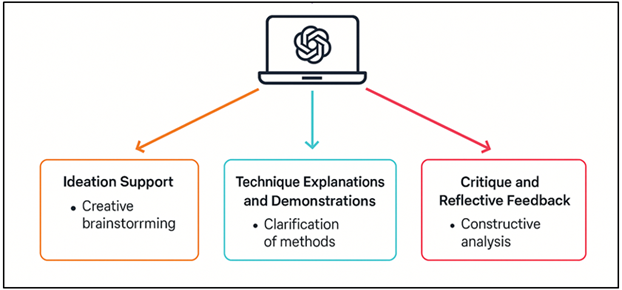
Figure 1 Conceptual Framework of ChatGPT as a Co-Teacher in
Art Education
Beyond this technical facilitation, the pedagogical benefit of ChatGPT is that it encourages metacognitive learning - allowing students to think of how they creatively make decisions, the ways in which their style is shaped, and the ways to make artistic arguments. Taking an example, on a painting activity, ChatGPT can ask learners to think about the emotional value of color or what is symbolized by form and balance. In a digital sculpture program, it may direct the learners by workflow optimization or rendering material realism in a rendering program Westermann and Gupta (2023). Combined with cross-cultural comparisons, multiple-lensed interpretation of artworks, and facilitation of critical arguments about the development of art, it can be used in art history discourse to advance a variety of goals. These kinds of interventions encourage higher levels of involvement and critical literacy in the art education.
2. Related Work
Recent research on the application of artificial intelligence (AI) in art education provides a handy basis on which ChatGPT can be viewed as co-teachers, or in general, of large language models (LLMs). Research has focused on the ways AI-based systems can assist in creativity, pedagogy, and reflective practice in the visual arts and design education field, as well as on the pillars of ethical and epistemological issues. As an illustration, the article Co -creating with AI in Art Education: On the Precipice of the Next Terrain proposes to reimagine the old art education approach by bringing AI tools in preservice education Giannini and Bowen (2023). The authors stress that this integration can transform the method by which art and design pedagogy is provided, including promoting experimentation, creative cooperation, and additional types of artistic inquiry, and take into account issues of bias, accuracy, safety and ethics. On the same note, AI in Art Education: Innovation, Ethics and the Future of Creative (2025) explores the two-sided nature of AI, which is a driver of creative growth and the origin of pedagogical and ethical dilemma. The article draws attention to how the use of AI tools (GANs, neural methods, LLMs) can create new opportunities to explore style, form, and technique, thereby enhancing the experience of teaching art, and also make one wonder about originality, authorship, and institutional responsibility. More practical studies prove that AI has the ability to assist pedagogical and educational processes Horton et al. (2023). The recent article ChatGPT-Assisted Lesson Planning in STEAM Art Education with Children appraises how ChatGPT can be useful to teachers in creating art-based lesson plans based on STEM (science, technology, engineering, art), encouraging the use of 4Cs (creativity, critical thinking, communication, collaboration) skills.
Empirical comparisons of traditional and AI-aided lesson planning demonstrated that the plan with ChatGPT-aided assistance is more likely to include prompts of divergent thinking and encouragement of creative exploration. Besides, such projects as LLaVA-Docent can be taken as one of the steps to multimodal AI learning: this multimodal large-language model (MLLM) is particularly adapted to art appreciation education, providing personalized and dialogue-centered interaction to learn how to discuss a work of art, interpret it, and understand visual literacy Liu et al. (2024). These systems demonstrate how AI might be used as a tutor or docent in visual arts (not a text-based) scenario. Other critical-theoretical approaches adopt a posthumanist position. Table 1 summarizes the literature on the integration of AI and ChatGPT, along with contributions, approaches, and drawbacks. In the essay Entanglement Art Education: Factor ARTificial Intelligence and Nonhumans into Future Art Curricula, the author claims that with the ubiquity of AI-generated content, the quality of agency, authorship, and creativity should be broadened in art education, as nonhuman (algorithmic) inputs are already contributors to the creative ecosystem Kannen et al. (2024). This is a provocation of the long-established anthropocentric standards and the need to alter the curricula to interact with AI as a partner, not an instrument.
Table 1
|
Table 1 Summary of Related Work on AI and ChatGPT Integration in Art Education |
||||
|
Study Focus |
AI Model |
Educational Context |
Key Contribution |
Outcomes |
|
Co-Creating with AI in Art
Education: On the Precipice of the Next Terrain |
ChatGPT, DALL·E |
Preservice Art Teacher
Training |
Integrates AI as creative
collaborator |
Enhanced creativity and
digital fluency |
|
AI in Art Education:
Innovation, Ethics, and the Future of Creativity Wei et al. (2024) |
Generative AI, GPT-4 |
Art and Design Pedagogy |
Theoretical framework for
AI-driven learning |
Improved conceptual learning
and engagement |
|
Creative and Critical
Entanglements with AI in Art Education Rhem (2023) |
GPT-based Systems |
Higher Education Visual Arts |
Explores AI in reflective
critique |
Broadened inclusivity and
aesthetic perspectives |
|
LLaVA-Docent: Multimodal LLM for
Art Appreciation Education |
LLaVA-MLLM |
Museum / Online Art Learning |
Interactive art
interpretation tool |
Improved engagement and
visual literacy |
|
AI as Co-Instructor: Hybrid
Learning in Design Studios |
ChatGPT, Stable Diffusion |
Architecture and Design |
Applies AI to creative
design workflows |
Accelerated ideation and
prototyping |
|
Generative Pedagogy:
Integrating AI for Visual Art Expression Santoni de Sio (2024) |
ChatGPT + Midjourney |
Visual Communication |
AI-assisted expression for
design students |
Fostered visual storytelling
and mixed-media innovation |
|
Conversational Agents in
Creative Pedagogy |
ChatGPT |
Art History and Theory |
AI as dialogic facilitator |
Enhanced discussion depth
and interpretive skills |
|
AI-Based Personalized
Learning in Digital Arts Watiktinnakorn et al. (2023) |
ChatGPT + Adaptive
Algorithms |
Online Digital Art Learning |
Personalized instruction
model |
Improved engagement and
learning retention |
|
Collaborative Creation
Between Humans and Machines |
GPT-4 + GANs |
Art Co-Creation Studio |
Human–AI creative
collaboration study |
Expanded stylistic
experimentation |
3. ChatGPT’s Co-Teacher Capabilities
3.1. Ideation Support
ChatGPT is an interactive ideation collaborator, which promotes the creative thinking and conceptual growth of art education. The conventional art classroom would strongly focus on brainstorming in the forms of discussion and peer feedback, but this process is only scalable to some degree due to time and classroom capacity. ChatGPT develops this interactive creative conversation by rephrasing or devising personalized prompts, recommending themes, and offering contextual inspiration inspired by various artistic traditions, movements and media Hall and Schofield (2025). It assists learners to overcome the state of creative paralysis by providing associative lines of thought or connecting an initial thought (say, the feeling of urban solitude) with applicable artistic methods, emotional colors, or compositional structures. Due to the ability of the AI to adjust its language and tone to the cognitive level of a learner, the AI can be used to teach beginners and advanced students. ChatGPT, for example, can be used by novices to discover baseline concepts of form, proportion or symbolism, and advanced students to develop conceptual scripts as per certain aesthetic theories. ChatGPT can be used to generate so-called creative dialogues, where students should express their artistic purpose and play with metaphors, stories, or visual symbols Oppenlaender et al. (2023). Notably, the process fosters divergent thinking- assisting students in coming up with several possible paths to take, and choosing the most interesting.
3.2. Technique Explanations and Demonstrations
The other important role that ChatGPT can play as a co-teacher is the possibility to explain techniques and recreate demonstrations with both traditional and digital art forms. In practice within the studio setting, students may need instant clarification on the material, brushwork, color mixing, effect of light or computer capabilities. ChatGPT fills this gap with real time conversation, offering step-by-step procedural information, safety protocols, and historical or stylistic information that provides a contextualization of every method Prunkl (2024). To use the example of students who asked ChatGPT questions relating to chiaroscuro or impasto painting, it can demonstrate both the theoretical background and the technical process, along with the names of artists who were one of the pioneers of the technique. ChatGPT can walk learners through the software workflow of apps like Adobe Photoshop, blender, or procreate: giving specific information related to layers and lighting in 3D modelling (or texturing). ChatGPT helps to combine visual learning with theoretical description and articulation by means of the introduction of multimodal prompts (e.g., links, references, or descriptive words).
3.3. Critique and Reflective Feedback
Art education cannot be done without a critique, which helps to develop self-awareness and aesthetic sensitivity. ChatGPT can make this process more effective by simulating dialogic critique sessions that will help the students go through self-evaluation and structured reflection.
Figure 2
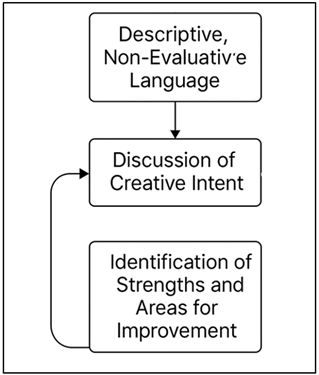
Figure 2 ChatGPT-Assisted Critique and Reflective Feedback Process
Responses of the AI are interactive and descriptive as compared with the static rubrics - asking learners to interpret composition, balance, colour balance, and thematic integrity by posing Socratic questions. Figure 2 illustrates the ChatGPT-mediated critique process of improving reflective feedback in art education. As an example, uploading or writing about an artwork, ChatGPT can provoke a student to think outlining the approach to contrast or asking the following questions: How does your use of contrast reinforced the emotional tone? Which compositional element catches the attention of the viewer first? ChatGPT builds emotional safety and emotional resilience, which are essential in the creation development by taking the approach of reframing criticism as a positive dialogue instead of condemnation. It is also able to give comparative analysis, which makes reference to styles or movements (e.g., surrealism, cubism, expressionism) to enhance critical awareness. Besides, ChatGPT may help teachers to create thought-provoking questions not only on the technical level but also on the conceptual level, including material processing, symbolism, and narrative unity. In the case of a group, peer-review exercises can be moderated by the AI, and the feedback should be objective and respectful. Moreover, it allows long-term assessment of artistic development due to its ability to follow past encounters. In combination with human feedback, the responses of ChatGPT deepen multidimensional critique, which is a combination of human intuition and computational view. Finally, this strength will promote reflective education, artistic self-confidence, and progressive learning- to convert the criticism into a conversation between the student, the teacher, and the AI co-teacher.
4. Pedagogical Model Design
4.1. Teacher–AI Collaboration Structure
The proposed pedagogical model creates a symbiotic relationship between human teachers and ChatGPT as co-teachers basing on the collaborative pedagogy and constructivist learning theory. The teacher will keep the role of mentor, evaluator, and ethical guide, and ChatGPT should be used as the dynamic facilitator, which can provide support that is scalable, adaptive, and responsive to the situation. This collaboration enables a multidimensional model of instruction that human creative efforts and AI intelligence will be complementary to each other and benefit learning. The curriculum structure, learning goals, and overall tracking of artistic development are created by teachers, but ChatGPT helps to operationalize them by communicating with the student, providing personalized advice, and creating content in real-time. As an example, ChatGPT can be used as a supplementary interlocutor during conceptual brainstorming or critique sessions so that each learner gets a constant feedback irrespective of the size or the place of a classroom. The analytics features of ChatGPT also allow teachers to measure the progress of students, detect their weak points, and optimize teaching in order to address their gaps.
4.2. Activity Flow with ChatGPT Integration
A successful activity flow will incorporate ChatGPT in the art education process in such a way that AI will become an invisible but uninterrupted partner. The learning cycle starts with Preparation in which the teachers present the project theme and the objectives. ChatGPT will help by providing prompts, reading between the lines, or even visual texts that may arouse curiosity and help students pursue their idea. ChatGPT helps in ideation and implementation during the Creation Phase that is facilitated by an iterative dialogue. It provides technical descriptions, style inspirations, or optimization tips in a workflow, according to the requirements of the student. ChatGPT can be engaged by learners to discuss the choice of materials, composition techniques, or colour colourfulness, and creative authenticity and emotional expressiveness are managed by the teachers. The Feedback Phase entails the critical reflection. In this case, ChatGPT offers a methodical feedback in a non-judgmental, descriptive form so as to promote self-evaluation. The students discuss their creative intentions, and the AI points out the strengths in composition and the ways to improve it. This feedback is then put into context by the teacher in larger aesthetic or cultural contexts. Such a formal workflow will help AI play a significant role at each phase of the process, such as development of the concepts and reflections, without dominating human mentorship. In this way, ChatGPT incorporation facilitates a creative and interactive and iterative learning process that links the creative aspect of art education with critical thinking.
4.3. AI Intervention Points in Art Lessons
Incorporation of ChatGPT into art classes must be purposeful regarding the intervention points that need to be identified in order to add value to human teaching using AI services. One can identify several of these points, namely Pre-lesson, In-lesson, and Post-lesson interactions, which have a different pedagogical role. In the Pre-lesson Phase, ChatGPT facilitates background interaction with the lesson based on contextual introduction, case study of artists, and brainstorming prompts that are specific to the goals of the lesson.
Figure 3
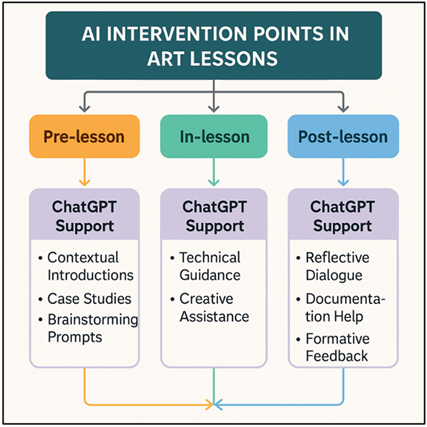
Figure 3 Flowchart Depicting AI Intervention Points in Art Lessons
As an example, introducing a course called Symbolism in Modern Art, ChatGPT has the ability to offer pertinent examples, background information, and cross-cultural insights to generate critical thinking prior to discussing the course in a classroom setting. Figure 3 is a scheme of significant intervention AI, which can support different steps of systematic art classes. The In-lesson Phase involves ChatGPT as a conversational tutor, which helps students in real time with technical questions or creative issues. It may describe the methods, trouble-shoot software problems, or offer some compositional suggestions. ChatGPT can make sure that guidance is constant even when the instructor is targeting certain learners when the students are using digital media or mixed methods
5. Case Studies / Examples
5.1. Painting and Illustration Curriculum
ChatGPT can also be used as a co-teacher in a painting and illustration course to serve as a conceptual and technical mediator of learning. In the ideation stage, the students can explain a visual image (urban melancholy) or dreamlike nature, and ChatGPT will propose compositional structures, emotional color schemes, and references to style surrealism to digital versions of impressionism. This promotes imagination and introduces the learners to the different art techniques. ChatGPT can be used to support the students as they advance to the technique development stage by describing the brushstroke technique, layering, and pigment combinations. To pick an example, the AI can define the differences in drying times, mixing and texture-forming techniques when it comes to gouache or oil paint. In computer-generated illustration, it has the ability to describe shading gradients, vectors workflows or sensitivity levels in a tablet. The reflective conversation that ChatGPT creates during the process stimulates the formation of metacognitive awareness - students should consider the tone balance, narrative expression, and symbolism. Meanwhile, teachers apply ChatGPT to create templates of critique or customized feedback. The outcome is a hybridized pedagogical approach in which AI facilitates a series of experiments, and the human teacher makes sure that there is aesthetic richness and emotional connection. The case illustrates that ChatGPT is beneficial in improving creative autonomy, technical reinforcement, as well as inquiry-based learning. Its iterative feedback loop reinforces the painting studio into a lentiform learning atmosphere in which students converse about the artistic work with human and machine instructors to intensify creativity and conceptual acuity.
5.2. Digital Sculpture or 3D Modeling Tasks
ChatGPT is applied in digital sculpture and 3D modeling courses that require the student to have a virtual studio assistant to assist in conceptualization, technical modeling, and rendering. Mesh topology, texturing, or light configuration can give difficulties to students, and the stepwise descriptions of ChatGPT have the potential to shed light on complicated processes. Considering the example, it is able to describe the influence of the density of polygons on the curvature of the surface or the depth of the texture that can be represented by the normal map without adding any additional loads to the computational process. ChatGPT can be used during project ideation as it facilitates students in converting conceptual sketches into spatial forms by proposing design references based on organic modeling (e.g., anatomy of the human body, biomorphic forms) or minimalism in architecture. It may also suggest aesthetic improvements, e.g. surface symmetry or contrast by material variation. ChatGPT assists learners when working with their syntax and render pipeline steps, as well as assisting with help to fix mistakes, with software such as Blender, ZBrush, or Maya. ChatGPT may be useful in the framework of group activities as it can be used to facilitate a discussion among peers, including a discussion about the structure critique rubric to evaluate the digital sculptures in terms of proportion, material realism, and spatial harmony. These AI-based aids can be incorporated into the flipped classroom design so that students can engage in discovery learning, which may then be refined by the teacher.
5.3. Art History Discussions
ChatGPT can be applied in the field of art history lessons, as the tool serves as a discussion board that can contextualize the artworks, movements, and philosophies in a past or present context. Scala: Conventionally, the exegesis of art periods (Renaissance, Impressionism, Postmodernism, etc.) might be based on chronological accounts. ChatGPT presents a dialogic aspect, which gives students an opportunity to participate in Socratic inquiry and ask interpretive questions and get responsive, comparative answers. As an example of this, speaking about The Persistence of Memory by Salvador Dalí, ChatGPT may share the surrealist motifs, the symbolic understanding of time, and its impact on the modern media art. It is able to contrast how Dali did it with Magritte or put the two into context in the 20 th -century psychoanalytic aesthetics. Figure 4 demonstrates that ChatGPT is helpful in facilitating structured, interactive, and contextual art history discussions. On the same note, in the case of non-Western art, ChatGPT can provide cross-cultural explanations, as the symbolism of indigenous people or the Asian tradition of ink to global art must be related to the global art discourse, thereby enhancing inclusivity and decolonial views on art education.
Figure 4
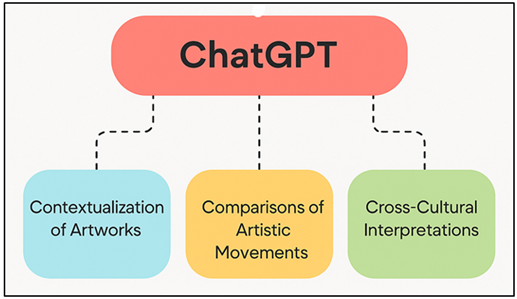
Figure 4 Conceptual Diagram of ChatGPT-Assisted Art History
Discussions
ChatGPT can also be used by students in simulating historical conversations between artists (e.g., Monet and Cézanne) and develop creative empathy and critical interaction. The flexibility of the AI also permits personalized research, since some students can specialize in stylistic research, others in sociopolitical background or philosophy.
6. Ethical and Creative Considerations
6.1. Originality & Ownership
The application of ChatGPT in art education cannot but provoke deep philosophical concerns about intellectual rights, or even authorship and ownership of a creative piece. Art in itself is a place of personal expression and human interpretation, which can be easily lost when the AI-generated recommendation or results affect the results of the creation. ChatGPT is an ideation partner and technical guide, but it neither has a subjective experience nor emotional intent, which means that any contributions made are part of a facilitative, rather than an authoritative, role. The educators should instruct students to have control of their creative activities whereby the involvement of AI augmented creativity and did not eliminate originality. This can be achieved by teachers embracing attribution frameworks that prompt learners to record the input of ChatGPT to the work, be it in brainstorming conceptually, clarifying technique, or textually. This openness develops scholarly honesty and thoughtful consideration of creative references. Moreover, the institutional policies must make a distinction between AI assisted and AI generated works of output so that the human labor and decision making in artistic assessment are recognized. This discussion, philosophically, reflects the rest of the issues in modern art about remix culture and authorship in digital media. Students should be made to believe that AI is like a continuation of their creative thinking process rather than the creator. Through encouraging conscious co-authorship, the educators maintain the wholeness of human creativity, and at the same time, learn to exploit the collaborative capabilities of AI. Ultimately, intentionally, originality continues to reside in the human ability to imagine, interpret, and embody the ideas in meaningful visual form, the ability that is uniquely human.
6.2. Over-Reliance on AI
Although ChatGPT makes access and use more accessible and engaging, excessive dependence on AI is pedagogical and cognitive. Learners can also slowly replace independent research and critical investigation with algorithmic convenience, which is against the core principles of artistic research. Art education feeds on uncertainty, errors and discovery, which the structured responses of AI would tend to limit unfortunate such as in case the learner does not question the results. In order to avoid addiction, the educators should present ChatGPT as an auxiliary partner, but not as a decision-maker. It is desirable that teachers promote questioning, altering or even dismissing AI proposals at their own aesthetic discretion. This strategy strengthens the critical thinking and fosters confidence to think in an inventive manner. Closed reflective practices, like the comparison of AI generated ideas with sketches created by humans or evaluating differences between proposed and final works, can be used to remind students that they are figuratively in control of the creative process. Psychologically, depending on AI too much may decrease intrinsic motivation because of the externalization of the reward mechanism. When creativeness is viewed not as a result of spontaneous engineering but as a part of a personal imagination, the truthfulness of the educational process is underestimated. Thus, AI literacy will need to be introduced into art curricula and teach students to approach generative tools with criticality and retain artistic instinct. ChatGPT can be used as an accelerator of learning without substituting interest, observation, and hands-on learning because this is enabled through guided balance. Responsible pedagogy can therefore be used to make sure that AI complements creativity, and to preserve the human-centered nature of exploration, emotion, and aesthetic in judgment that is a core of artistic education.
6.3. Bias in Artistic Suggestions
Discrimination in AI-generated work is a major ethical issue, especially in art education where cultural diversity and subjectivity are the most important factors. ChatGPT, just as any other language model, is trained on datasets, which could be biased in terms of history, culture, or gender. Therefore, its aesthetic prescriptions, including prescribed color schemes, subject matter, or stylistic allusions, may be applied subconsciously to support dominant cultural aesthetics at the expense of other or other non-Western traditions. This process threatens to reduce the artistic expression area and continue with the homogeneity of creative works. As an example, ChatGPT, asked to compose a portrait, may ruin the Renaissance tenets at the expense of native or modern visual expression, owing to the skew in the datasets. These biases can be implicitly reflected in the minds of students on what good art is, and restrict exposure to pluralistic creative accounts. Teachers have to embrace the tactics of critical mediation, that is, motivating students to challenge the background and context of AI products. The educators can create comparative assignments in which students compare the suggestions of ChatGPT with various cultural allusions, exposing the gaps in representation and creating cultural literacy. Moreover, the issue of data constraints of AI must be incorporated into the learning programs of art, with the students being taught to perceive AI recommendations as a guide to follow instead of a dictator.
7. Conclusion
The introduction of ChatGPT as a co-teacher in art education represents a paradigm shift in modern-day pedagogy - one that combines human creativity with the artificial intelligence and improves the learning, engagement, and reflection process. ChatGPT has been described within the framework of this paper as not superseding the human teacher but as an assistant that facilitates ideation, technical competence development, criticism, and customized training. Its talkability, ability to think contextually and responsiveness allow it to serve as a user-friendly creative helper, between the conventional teaching of art and the requirements of digitally mediated learning space. Integrating ChatGPT into the framework of structured pedagogy, a teacher will have an opportunity to make the studio experience more interactive, creative, and focused on individual learning journeys with collaborative ideation, process feedback, and personalized learning. The model supports a continuous dialogue, in other words, it invites the learners to explain their artistic intention, to experiment with the form, and to evaluate their work critics. In the meantime, the ability of AI to scale feedback, propose interdisciplinary materials, and maintain motivation among learners at various levels of creativity is useful to teachers. This change must be, however, ethically well looked after. The problems of originality, authorship, over-reliance, and bias require intentional structures to enhance human creativity, as opposed to watering it down, through the introduction of AI.
CONFLICT OF INTERESTS
None.
ACKNOWLEDGMENTS
None.
REFERENCES
Borji, A. (2023). Generated Faces in the Wild: Quantitative Comparison of Stable Diffusion, Midjourney and DALL-E 2 (arXiv preprint). arXiv.
Giannini, T., and Bowen, J. P. (2023). Generative Art and Computational Imagination: Integrating Poetry and Art. In Proceedings of EVA London 2023 (211–219). https://doi.org/10.14236/ewic/EVA2023.37
Hall, J., and Schofield, D. (2025). The Value of Creativity: Human Produced Art vs. AI-Generated Art. Art and Design Review, 13, 65–88. https://doi.org/10.4236/adr.2025.131005
Horton, C. B., Jr., White, M. W., and Iyengar, S. S. (2023). Bias Against AI Art Can Enhance Perceptions of Human Creativity. Scientific Reports, 13, 19001. https://doi.org/10.1038/s41598-023-45202-3
Kannen, N., Ahmad, A., Andreetto, M., Prabhakaran, V., Prabhu, U., Dieng, A. B., and Bhattacharyya, P. (2024). Beyond Aesthetics: Cultural Competence in Text-to-Image Models (arXiv:2407.06863). arXiv.
Liu, B., Wang, L., Lyu, C., Zhang, Y., Su, J., and Shi, S. (2024). On the Cultural Gap in Text-to-Image Generation. In Frontiers in Artificial Intelligence and Applications (Vol. 392, 930–937). https://doi.org/10.3233/FAIA240581
Marcus, G., Davis, E., and Aaronson, S. (2022). A Very Preliminary Analysis of DALL-E 2 (arXiv:2204.13807). arXiv.
Oppenlaender, J., Linder, R., and Silvennoinen, J. (2023). Prompting AI Art: An Investigation into the Creative Skill of Prompt Engineering (arXiv:2303.13534). arXiv. https://doi.org/10.1080/10447318.2024.2431761
Prunkl, C. (2024). Human Autonomy at Risk? An Analysis of the Challenges from AI. Minds and Machines, 34, 26. https://doi.org/10.1007/s11023-024-09665-1
Rhem, J. A. (2023). Ethical Use of Data in AI Applications. IntechOpen.
Rombach, R., Blattmann, A., Lorenz, D., Esser, P., and Ommer, B. (2022). High-Resolution Image Synthesis With Latent Diffusion Models. In Proceedings of the IEEE/CVF Conference on Computer Vision and Pattern Recognition (CVPR). https://doi.org/10.1109/CVPR52688.2022.01042
Santoni de Sio, F. (2024). Artificial Intelligence and the Future of Work: Mapping the Ethical Issues. Journal of Ethics, 28, 407–427. https://doi.org/10.1007/s10892-024-09493-6
Watiktinnakorn, C., Seesai, J., and Kerdvibulvech, C. (2023). Blurring the Lines: How AI is Redefining Artistic Ownership and Copyright. Discover Artificial Intelligence, 3, 3. https://doi.org/10.1007/s44163-023-00088-y
Wei, M., Feng, Y., Chen, C., Luo, P., Zuo, C., and Meng, L. (2024). Unveiling Public Perception of AI Ethics: An Exploration on Wikipedia Data. EPJ Data Science, 13, 26. https://doi.org/10.1140/epjds/s13688-024-00462-5
Westermann, C., and Gupta, T. (2023). Turning Queries into Questions: For a Plurality of Perspectives in the Age of AI and Other Frameworks with Limited (Mind)sets. Technoetic Arts: A Journal of Speculative Research, 21, 3–13. https://doi.org/10.1386/tear_00106_2
|
|
 This work is licensed under a: Creative Commons Attribution 4.0 International License
© ShodhKosh 2025. All Rights Reserved.