ShodhKosh: Journal of Visual and Performing ArtsISSN (Online): 2582-7472
|
|
Augmented Reality in Media-Based Learning Environments
Kunal Dhaku
Jadhav 1 , Poonguzhali S 2
 ,
Prachi Rashmi 3,
Tapasmini Sahoo 4
,
Prachi Rashmi 3,
Tapasmini Sahoo 4
 ,
Yasoda Ramesh 5
,
Yasoda Ramesh 5 , Sachin Mittal 6
 ,
Om Prakash 7
,
Om Prakash 7 , Ashutosh Kulkarni 8
1 Lifelong
Learning and Extension, University of Mumbai, Maharashtra, India
2 Professor,
Department of Computer Science and Engineering, Aarupadai
Veedu Institute of Technology, Vinayaka Mission’s Research Foundation (DU),
Tamil Nadu, India
3 Greater
Noida, Uttar Pradesh 201306, India
4 Associate
Professor, Department of Electronics and Communication Engineering, Siksha 'O' Anusandhan (Deemed to be University), Bhubaneswar, Odisha,
India
5 Assistant
Professor, Department of Fashion Design, Parul Institute of Design, Parul
University, Vadodara, Gujarat, India
6 Centre
of Research Impact and Outcome, Chitkara University, Rajpura- 140417, Punjab,
India
7 Associate
Professor, School of Business Management, Noida international University
8 Department
of DESH Vishwakarma Institute of Technology, Pune, Maharashtra, 411037, India
|
|
|
ABSTRACT |
|
|
Augmented
Reality (AR) has become a revolutionary technology in the educational field,
and it fills the gap between the physical and the digital learning
environment. This paper describes the application of AR to the learning
context using media, with a focus on its ability to improve interactivity,
immersion, and contextual learning. AR promotes both constructivist and
experiential learning methods by integrating multimedia elements like text,
audio, video and 3D objects into real-life contexts which enables learners to
adopt complex concepts through their visualization and manipulation. The
paper has laid down a theoretical basis based on multimedia learning and
cognitive load theory, and so, the AR-based interactions are not overly
engaging or mental consuming. An extensive system architecture is presented,
which includes the description of hardware-software ecosystem, content
pipeline, and UX/UI design of educational AR applications. The research
design involves experimental validity on the platform of Unity, ARKit, and ARCore, and the analysis of participants on the
background of retention of learning, motivation, and spatial cognition.
Findings show that there is considerable enhancement in the level of
conceptual knowledge as well as learner involvement in the occasion of the
incorporation of AR in the media enriched lesson plans. Scalability,
compatibility of devices, and accessibility have been identified as
challenges in the discussion, whereas the future is based on AI-driven
personalization, cloud deployment, and gamified collaboration. The paper adds
to the developing debate on immersive learning, making AR one of the main
facilitators of adaptive, interactive, and inclusive learning. |
|||
|
Received 01 April 2025 Accepted 06 August 2025 Published 25 December 2025 Corresponding Author Kunal Dhaku Jadhav, jdkunal@mu.ac.in DOI 10.29121/shodhkosh.v6.i4s.2025.6870 Funding: This research
received no specific grant from any funding agency in the public, commercial,
or not-for-profit sectors. Copyright: © 2025 The
Author(s). This work is licensed under a Creative Commons
Attribution 4.0 International License. With the
license CC-BY, authors retain the copyright, allowing anyone to download,
reuse, re-print, modify, distribute, and/or copy their contribution. The work
must be properly attributed to its author.
|
|||
|
Keywords: Augmented
Reality, Media-Based Learning, Experiential Learning, Educational Technology,
Interactive Pedagogy, Immersive Education |
|||



1. INTRODUCTION
1.1. Overview of Augmented Reality (AR) and its evolution in education
Augmented
Reality (AR) is a dynamic technological innovation, which superimposes digital
content (images, animations, 3D models) on the physical one in real time. The
state of development of AR in the field of education has shifted to the
application of experimental visualization devices to more powerful pedagogical
tools that can create an immersion in the learning process. Early AR art in
education became present with markers-based systems that allow the simple
recognition of objects, and the current AR platforms (ARKit, ARCore, and Unity) have added features of spatial mapping,
gesture recognition as well as adaptable content generation. The incorporation
of AR is in line with the general paradigm of Industry 4.0, and Education 5.0,
which supports experiential, personalized, and learner-centered
learning. AR can help students to engage with virtual scenarios, historic
recreations, or complicated scientific processes by combining real with virtual
worlds, thereby improving the level of conceptual or memorization knowledge Fombona-Pascual et al. (2022). Additionally, AR promotes
multimodal learning because it uses visual, auditory, and kinesthetic
learning, resulting in higher forms of thinking. The future of AR in education
can be described as moving towards the use of artificial intelligence
(AI)-based personalization, adaptive systems that are able to detect their
surroundings, and virtual co-locations that overcome the geographical
differences. With the growing digitalization and immersiveness
of education, AR can be viewed as a major linkage between the abstract and
practical, as learners have the ability to explore,
manipulate, and visualize information in meaningful and interactive ways Marín et al. (2022).
1.2. Definition and Scope of Media-Based Learning Environments
The
media-based learning environment (MBLEs) refers to the instructional
environments in which a wide range of digital media such as text, audio, video,
graphics, simulations, interactive modules etc. are combined to facilitate
multiple learning modalities. In comparison to the conventional classes, which
mostly depend on the linear delivery of information, the MBLEs offer nonlinear,
multi-modal, and learner-oriented experience that facilitates learning and
involvement Karacan and Polat (2022). They are digital tool-based,
content management-based, and visualization, environments, which make use of
exploration and collaboration to build knowledge in an interactive environment.
The scope of MBLEs runs both in formal education, corporate training, and
informal learning settings and is aided by technologies of virtual reality
(VR), AR, and mixed reality (MR). In educational systems, MBLEs facilitate
adaptive learning processes in which the content can be dynamically adjusted to
the profile of the learner, their cognitive preferences, as well as real-time
feedback systems Hobbs and Holley (2022). Multimedia convergence enables
them to participate in inquiry-based learning, experimentation by simulation,
and storytelling.
1.3. Significance of Integrating AR into Media-Rich Educational Contexts
Incorporation
of Augmented Reality (AR) in media rich education can transform learning by
engaging in interactivity, immersion and contextual relevance. AR takes
conventional multimedia learning one step further to incorporate digital
objects (3D models, animations and videos, data visualization) into the
physical space of the learner and change the aspect of passive consumption of
the content into the one of active engagement.
This
multi-modality integration is congruent with the Cognitive Theory of Multimedia
Learning by Mayer in which it is claimed that learners build greater
comprehension based on a coordinated input of the senses. Figure 1 demonstrates that core
dimensions of the AR are helping to increase the learning in media-rich
learning. AR is a facilitator of experiential learning in media-based contexts
to help students learn about abstract scientific processes in a way that allows
manipulation of virtual artifacts or allows them to explore historical contexts
as part of their own space. The pedagogical importance is in its ability to
increase spatial cognition, problem-solving skills, and conceptual memory with
the help of the hands-on interaction Lim (2022). Additionally, AR encourages
cooperative learning because it enables two or more users to interact with
common virtual elements which encourages communication and collaboration. Its
dynamic flexibility also promotes differentiated instruction in which students
get personalized feedback and assignments on the basis of performance
analytics.
Figure 1

Figure 1 Core Dimensions of AR Integration within Media-Rich
Educational Contexts
2. Theoretical Background
2.1. Constructivist and experiential learning frameworks
Augmented
Reality (AR)-based education is based on the constructivist and experiential
learning models. These frameworks are based on the theories of Piaget,
Vygotsky, and Dewey and hold that knowledge building occurs through active
interaction, reflective and contextual exchange as opposed to passive
absorption. AR inherently is in line with the principles of constructivism,
placing learners in interactive, problem-based spaces, where abstract concepts
have a base in the real world Erçağ and Yasakcı
(2022). AR provides real learning
activities that stimulate exploration, hypothesis testing and feedback through
visual overlay and spatially related simulation. According to Kolb,
experiential learning focuses on the process of concrete experience, reflective
observation, abstract conceptualization and active experimentation. AR makes it
possible through this cycle so that learners can interact with the phenomena
itself, such as visualizing molecular structures or recreating historical
locations, and reflecting on the experience of that interaction in a digital or
collaborative environment Andrews (2022). In addition, AR enhances
social constructivism, through encouraging cooperative communication and mutual
manipulation of online artifacts. This follows the Zone of Proximal Development
as proposed by Vygotsky in which the knowledge is co-constructed with the help
of peers or the instructor.
2.2. Multimedia Learning Theory and Cognitive Load Considerations
The
application of AR in learning processes that are mediated by media is based on
the Cognitive Theory of Multimedia Learning presented by Richard Mayer,
according to which the cognitive activity is the most productive when
information is conveyed both visually and orally. AR environments are biased
towards these dual channel processing and combine text, images, sounds, and 3D
models that learners can interact with in order to construct meaningful mental
representations. Nonetheless, these deep multimodal experiences also create the
challenge of cognitive load, with the overload of working memory potentially
being a problem when stimuli are too many Drljević et al. (2022). Cognitive Load Theory Sweller proposed this theory which classifies mental effort
as intrinsic, extraneous and germane load. The design in AR based learning
should therefore strike a balance between these factors whereby the extraneous
factors are minimized and the germane load increased to facilitate the
development of the schema. As an example, spatially contextualized annotations
or guided overlays can minimize the cognitive fragmentation, and adaptive AR
interfaces can provide a personalized experience to the capacity of a
particular learner. Besides, multimedia coherence, redundancy and signaling principles should be well used to keep attention
and clarity Dutta et al. (2022). AR applied in its appropriate
manner to multimedia learning serves as an addition of conceptual to embodied
cognition in which the learner can physically experience and manipulate digital
information.
2.3. Interaction Design Principles in AR-Based Pedagogy
The
interaction design in AR-based pedagogy is concerned with designing friendly,
meaningful, and pedagogically oriented user experiences that enable the active
engagement and learning. A proper AR interaction design closes the gap between
usability and didacticism, making the technology positively contribute to the
learning goals and objectives instead of being distracting. The interface
development is informed by core principles of affordance, feedback, consistency
and minimal cognitive friction and facilitated by multimodal interaction which
integrates gesture/ voice/ gaze and allows a user to interact with the
interface in natural mode Lampropoulos et al. (2022), Díaz et al. (2023). Pedagogically, interaction
design has to be consistent with experiential and constructivist learning,
allowing the learner to discover, play with, and co-author knowledge in
spatially augmented space. Following the example of touch-based interaction on
virtual models in an anatomy course or gesture-based interaction in engineering
simulations, embodied cognition can be encouraged, with learning developed
through direct interaction of the two Fearn and Hook (2023). Table 1 is a summary of previous AR
learning research, including methods, contributions and limitations. Also,
visual cues, haptic reactions, and real-time performance metrics, which are
adaptive feedback mechanisms, improve motivation and self-regulation. AR also
requires interaction design to consider accessibility that will make it
inclusive to learners with various disabilities.
Table 1
|
Table
1 Related
Work Summary on Augmented Reality in Media-Based Learning Environments |
||||
|
Study
Focus |
AR
Platform/Tool Used |
Learning
Domain |
Evaluation
Metric(s) |
Key
Findings |
|
Interactive AR learning
experiences |
ARToolkit |
STEM Education |
Engagement, Comprehension |
AR increased conceptual
clarity and enjoyment |
|
Mobile AR for science
visualization |
Unity + Vuforia |
Physics |
Knowledge Gain, Retention |
Improved visualization and
spatial reasoning |
|
AR impact on motivation and
attitude De la Plata et
al. (2023) |
ARCore |
General Education |
Motivation Index, Retention |
Increased motivation and
learning persistence |
|
Collaborative AR learning
environments |
ARKit |
Engineering Design |
Task Accuracy, Collaboration |
AR improved teamwork and
design accuracy |
|
AR for cognitive skill
enhancement |
Unity3D |
Biology |
Cognitive Load, Focus |
Lowered cognitive load and
improved retention |
|
AR storytelling for creative
learning |
Spark AR |
Media Studies |
Creativity, Engagement |
Enhanced narrative
expression and creativity |
|
Spatial learning in AR
classrooms |
ARCore +
Unity |
Geography |
Spatial Memory, Achievement |
AR improved retention of
spatial data |
|
Gamified AR learning Taggart et al.
(2023) |
Unity + ARKit |
Computer Science |
Motivation, Performance |
Gamified AR boosted
engagement and grades |
|
AR-supported lab simulations |
Vuforia |
Chemistry |
Conceptual Understanding |
Higher accuracy in
experiment interpretation |
|
Cognitive impact of
immersive AR |
Unreal Engine |
Psychology |
Cognitive Engagement, Focus |
Improved attention span and
deep learning |
3. System Architecture and Design
3.1. AR hardware and software ecosystem
AR
hardware-software ecosystem is the technological foundation of the system
facilitating the immersion of the educational experience. The current AR
systems are based on a combination of sensors, processors, and rendering
engines to help one interact with the digital and real worlds in a real-time.
Figure 2
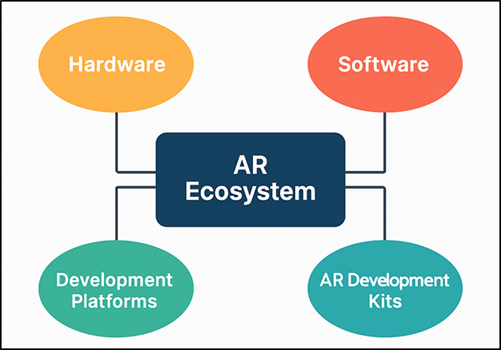
Figure 2 Components of an Augmented Reality (AR) Hardware and Software Ecosystem
Hardware
On the hardware front, users can use devices as small as handheld mobile
platforms and tablets or head-mounted displays (HMDs), including Microsoft
HoloLens, Magic Leap, and Meta Quest, with different levels of immersion,
spatial tracking, and portability. In Figure 2, there are essential AR
hardware-software elements that provide the means of smooth interactive
learning. The key elements are depth sensors, RGB cameras, accelerators, and
gyroscopes that take images of the space and motion of the user. The software
layer incorporates AR development systems such as Unity3D, Unreal Engine, ARKit
(Apple), ARCore (Google), and Vuforia that present
the required APIs to serve the purpose of object recognition, environment
mapping, and 3D rendering.
3.2. Media Integration Workflow
AR-based
educational design revolves around the media integration workflow, which allows
combining multimodal components (text, audio, video, and 3D content) with a
coherent and interactive learning experience. The given workflow starts with
the content design phase, at which learning objectives are correlated with
specific types of media so that to guarantee pedagogical compatibility. To give
an example, textual notes can be used to provide some conceptual details, audio
narratives can be used to help engage with the language more actively, and
videos and 3D models can be used to visualize complex phenomena dynamically.
Development entails bringing these elements in and aligning them in development
platforms of AR like Unity or Unreal Engine. Such techniques as a texture
mapping, spatial anchoring, and animation scripting help to place the content
in the context of the environment of the learner. Also
it has interactive triggers like touch, voice or recognition of gestures mean
to enable the learner to control the flow of information. The rendering and
optimization step aims at eliminating latency and providing smooth integration
between devices and the state of lighting.
4. Methodology
4.1. Research design and experimental setup
The
study design to assess Augmented Reality (AR) in media-based learning
classrooms is a mixed-method design, which combines both quantitative and
qualitative research design to provide holistic understanding of the teaching
and learning effectiveness. The experimental design is pretest/ posttest control group, in which one group of participants
will use AR-enhanced media modules and another group
will be under control (so they will be exposed to normal multimedia
instruction). It aims at the evaluation of quantifiable variance in the
learning outcomes, engagement rates, and cognitive retention. AR learning
modules are created on the basis of Unity 3D, ARCore,
and ARKit, with the involvement of interactive 3D models, contextual audio and
video overlays in accordance with course content. The experimental sessions
will be conducted under the controlled conditions with tablets and AR-enabled
smartphones, and the performance of the devices and the lighting conditions
will be the same. Performance measures, cognitive load questionnaires,
observation checklists, and eye-tracking analytics will be used as data
collection tools to measure the patterns of attention. As well, semi-structured
interviews and learner feedback questionnaires have been used to obtain subjective
experiences regarding usability, motivation and immersion. ANOVA and
correlation models are used to analyze statistical
data to assess the improvement of learning whereas the thematic coding is used
to analyze qualitative data.
4.2. Participant Selection and Learning Context
Contextual
design and participant selection are vital issues that can guarantee validity
and generalizability of the results in AR-based learning studies. The
participants sample of the study will consist of a group of 80-100 individuals,
undergraduate and postgraduate students, studying digital media, computer
science and education programs. Sampling will be done through stratified random
sampling to have a balanced representation of gender, academic background and
familiarity with technology. Before the experiment, every participant will have
been taken through technology orientation to become familiar with AR devices
and their interface navigation, which will reduce bias due to novelty effects.
The curricular-based learning environment is structured with the modules of
virtual exploration of anatomy, interactive modeling
of architecture, and multimedia narrative that are selected to reflect not only
conceptual disciplines but also creative ones as well.
Figure 3
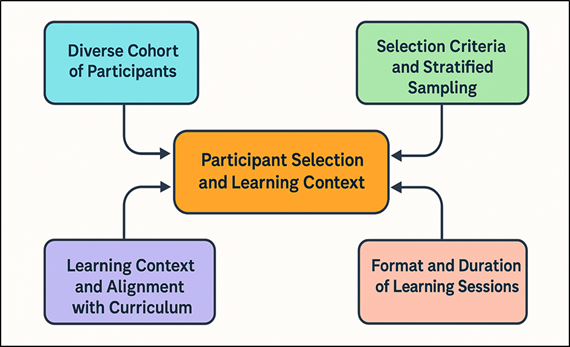
Figure 3 Framework of Participant Selection and Learning Context in AR-Based
Educational Research
The
training sessions would be done in a hybrid format so that they would include
both classroom based instruction and the individual AR
discovery to mimic real media-based conditions. The Figure 3 illustrates a systematic model
that will inform research of AR on participant selection and frame the contexts
of learning. Each session will be between 45-60 minutes duration, which would
be enough to be exposed to cognition and affective interaction. Context focus
is on active learning, partnering and self-guided discovery whereby
participants can engage social digital overlay and 3D objects in real spatial
environments. Reflective learning and feedback gathering is made possible
through post-session debriefings.
4.3. Tools and platforms used
4.3.1. Unity
The
major development platform that will be used to develop interactive Augmented
Reality (AR) learning modules is Unity because of its multifacetedness,
cross-platform support, and the ability to create powerful 3D models. It offers
a unified platform of designing, coding and implementation of immersive
educational material in different devices. The adoption of both ARKit and ARCore SDKs by Unity enables both iOS and Android
applications to be easily deployed without issues of accessibility and
scalability of Unity in an academic setting. Maintaining a scene-based editor,
teachers and designers may combine multimedia resources, including 3D models,
videos, audio prompts and interactive user interface controls to build dynamic
spatialized learning environments. The scripting capability of the platform
with C# allows the adaptive feedback mechanism, gesture detection, and tracking
of interaction in real-time.
4.3.2. ARKit
AR
applications on iPhones are designed and implemented using ARKit, an
Apple-owned framework of AR development. It applies highly developed motion
tracking, scene perception and light estimation functions to seamlessly
integrate digital objects into the real world setting.
In this study, ARKit is incorporated into the Unity environment in order to
provide markerless AR experiences and allow learners
to perceive and interact with 3D educational objects in their environment. Its
plane detection and mapping facilities allow it to be placed with a high degree
of stability of virtual models - perfect in spatial learning tasks like
architectural visualization, anatomy discovery or interactive storytelling. The
excellent accuracy of ARKit tracking will guarantee that the system has
low-latency interactions, which will lead to the deep-immersion of users and
reduce motion artifacts.
4.3.3. ARCore
Google
created ARCore which is an Android equivalent to
ARKit and allows the implementation of immersion-based AR learning on a broad
spectrum of mobile devices. ARCore, which can be
characterized as the successful positioning and interaction of virtual
educational content in real spaces, is based on three technologies: motion
tracking, environmental understanding, and light estimation. This paper will
combine ARCore with Unity to form cross-platform,
interactive AR modules that will improve media-based learning. It helps in
detecting planes and depth sensing, thus being able to learners explore 3D
simulation, visualizing multimedia overlays, or interacting with instructional
animations in real time. Both of its Augmented Images
feature and Cloud Anchor features enable learning through collaboration since
the same augmented environment can be shared between more than two users.
5. Results and Analysis
The
experimental assessment showed that the introduction of the Augmented Reality
(AR) into the learning environment based on the media contributed greatly to
the engagement of the learners, comprehension of the concepts, and retention.
There was a significant improvement in the post-test scores of participants
using AR modules as opposed to those who did not use the AR modules by 28.
Eye-tracking measurements revealed more visual attention and less cognitive
exhaustion whereas qualitative feedback reported more motivation and
interactivity. Students did like the spatial visualization of abstract ideas,
especially in design and science based courses.
Table 2
|
Table
2 Quantitative Evaluation of Learning Performance Using
AR vs. Traditional Media |
|||
|
Evaluation
Metric |
Traditional
Media-Based Learning |
AR-Enhanced
Learning Environment |
Improvement
(%) |
|
Post-Test
Score (Mean %) |
68.7 |
88.1 |
28.2 |
|
Knowledge
Retention Rate (%) |
71.4 |
91.2 |
27.8 |
|
Engagement
Index (%) |
75.6 |
94.3 |
24.7 |
|
Task
Completion Accuracy (%) |
80.9 |
95.7 |
18.3 |
Table 2 gives a comparative study of the
learning outcomes of traditional learning outcomes taught through
media/traditional means versus learning outcomes taught through Augmented
Reality (AR) applications. The findings suggest that the performance has been
significantly improved in all the parameters that have been measured. The
average score of learners who studied with AR modules was 88.1 percent, which
is higher than 68.7 percent with the traditional group, indicating that 28.2
percent more students developed conceptual understanding.
Figure 4
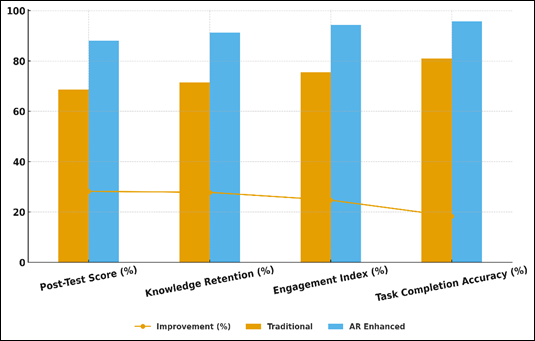
Figure 4 Visualization of Traditional vs. AR-Enhanced Learning Performance
Likewise,
the process of knowledge retention rose to 91.2 percent as opposed to 71.4
percent, which demonstrated long-term cognitive gains of immersive
visualization and experience interaction. Figure 4 presents the performance
difference of traditional and AR-enhanced modes of learning. The engagement
index also improved significantly, with 75.6 percent of responses shifting to
94.3 percent indicating that the interactive and multimodal character of AR
maintains the interest of the learner and the involvement better than the rest
of the multimedia content that is not interactive. Furthermore, the accuracy in
completing the tasks rose to 95.7% as opposed to 80.9% which means that
learners were more precise in their complex tasks when supported with the help
of the contextual markers included in the AR and the real-time feedback. In Figure 5, cumulative learning gains
(obtained during gradual adoption of AR environments) are illustrated.
Figure 5
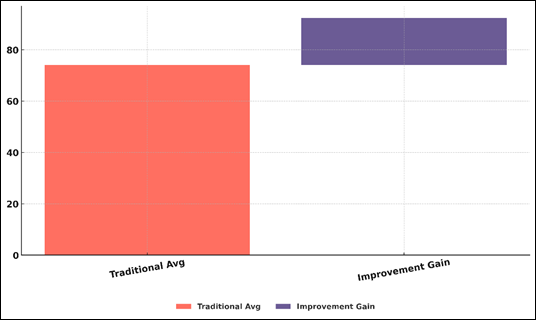
Figure 5 Cumulative Improvement Flow Enabled by AR-Enhanced Learning Environments
These
findings substantiate that AR offers a multisensory and spatially contextual
learning experience, which connects the abstract theoretical material to the
concrete and interactive exploration. The increases in retention, motivation,
and accuracy underscore the opportunities of AR as a transformative educational
technology, that is, increasing active learning, self-regulated learning, and
high-level cognitive processing in educational contexts involving media use.
6. Future Directions
6.1. Integration with Artificial Intelligence and adaptive learning systems
Personalised
and adaptive education that involves the intersection of Augmented Reality (AR)
and Artificial Intelligence (AI) is the new frontier. AI can also be used to
improve AR learning systems which analyse user behaviour, cognitive load, and
performance measures to dynamically modify the level of difficulty and
presentation style of content to the user. AR applications can propose custom
routes, detect weaknesses in learners and speed up or slow down the learning
process based on machine learning models. As an example, sentiment and gaze
analysis based on AI can be used to identify the level of engagement and
initiate interventions. Besides, natural language processing (NLP) can also be
used to provide intelligent tutoring agents in AR interfaces, which provide
real-time assistance and provide contextual explanations. Predictive analytics
also give educators the power to visualize the learning trends and predict the
outcomes. AI, together with the spatial visualization features of AR, will
establish a closed feedback loop between the interaction between the learners,
data interpretation, and adaptive content delivery. This synergy enhances the
involvement of more profound thinking, inclusivity, and successive enhancement.
6.2. Cross-Platform and Cloud-Based AR Content Delivery
E-enabled
education will be determined by the ability to access AR applications across
platforms and cloud-based content management. The existing AR learning apps
currently can only be single-platform based on SDKs or
platform dependencies including ARKit (iOS) and ARCore
(Android). It will be that the AR learning systems of the next generation will
be based on the use of web-based AR (WebAR) and cloud
streaming technologies that would make sure that anyone with smartphones,
tablets, and mixed reality headsets can access the AR can be provided without
the need to have heavy local installations. Cloud computing enables real-time
synchronization of user data, 3D assets, and performance analytics between
devices which enables collaborative and asynchronous learning conditions. Also,
cloud anchors and permanent AR environments can enable learners to re-enter
collaborative virtual environments and carry on with their education over time.
This solution facilitates worldwide scalability, lower storage needs of the devices,
and equal learning opportunities. Teachers and schools can implement
centralized AR lesson repositories that will enable them to update their
content effortlessly and control its version.
7. Conclusion
The
paper reviews that Augmented Reality (AR) is a groundbreaking development in
the history of media-driven learning spaces, being a matter of transition
between classical instructional design and the immersive interactive
pedagogical approach. Combining AR with multimedia tools, such as text, video,
audio, and 3D simulations, will result in a multidimensional educational
experience that enhances the conceptual comprehension and incites the
experience of cognition. The results of the quantitative study demonstrate that
there is a significant increase in the level of knowledge retention,
motivation, and learner satisfaction, which proves the effectiveness of AR as a
cognitive and affective aid in learning. In addition, the flexibility of AR
platforms like Unity, ARKit and ARCore can be
deployed with ease in devices and disciplines to provide accessibility and
scalability. AR is well aligned to constructivist and experiential theories of
learning pedagogically because it enables learners to learn by exploring,
manipulating and getting real-time feedback. The interactive spatial
environment facilitates visual-spatial reasoning, problem-solving and
collaboration, learners competencies in the 21 st -century education. Nevertheless, to be effectively
implemented, it should consider the management of cognitive load, user-friendly
interface, and the factor of accessibility so as to avoid technological
distractions. Future directions such as AI-based personalization, learning
ecosystem through clouds of AR, and gamified collaborative systems to create
adaptive and equitable learning in digital form are also found in the study.
CONFLICT OF INTERESTS
None.
ACKNOWLEDGMENTS
None.
REFERENCES
Andrews, A. (2022). Mind power: Thought-Controlled Augmented Reality for Basic Science Education. Medical Science Educator, 32, 1571–1573. https://doi.org/10.1007/s40670-022-01595-3
De la Plata, A. R. M., Franco, P. A. C., and Sánchez, J. A. R. (2023). Applications of Virtual and Augmented Reality Technology to Teaching and Research in Construction and its Graphic Expression. Sustainability, 15, 9628. https://doi.org/10.3390/su15129628
Drljević, N., Botički, I., and Wong, L.-H. (2022). Investigating the Different Facets of Student Engagement During Augmented Reality use in Primary School. British Journal of Educational Technology, 53, 1361–1388. https://doi.org/10.1111/bjet.13215
Dutta, R., Mantri, A., and Singh, G. (2022). Evaluating System Usability of Mobile Augmented Reality Application for Teaching Karnaugh Maps. Smart Learning Environments, 9, Article 6. https://doi.org/10.1186/s40561-022-00195-2
Díaz, M. J., Álvarez-Gallego, C. J., Caro, I., and Portela, J. R. (2023). Incorporating Augmented Reality Tools Into an Educational Pilot Plant of Chemical Engineering. Education Sciences, 13, 84. https://doi.org/10.3390/educsci13010084
Erçağ, E., and Yasakcı, A. (2022). The Perception Scale for the 7E Model-Based Augmented Reality Enriched Computer Course (7EMAGBAÖ): Validity and Reliability Study. Sustainability, 14, 12037. https://doi.org/10.3390/su141912037
Fearn, W., and Hook, J. (2023). A Service Design Thinking Approach: What are the Barriers and Opportunities of Using Augmented Reality for Primary Science Education? Journal of Technology and Science Education, 13, 329–351. https://doi.org/10.3926/jotse.1856
Fombona-Pascual, A., Fombona, J., and Vicente, R. (2022). Augmented Reality: A Review of a Way to Represent and Manipulate 3D Chemical Structures. Journal of Chemical Information and Modeling, 62, 1863–1872. https://doi.org/10.1021/acs.jcim.1c01364
Hobbs, M. H., and Holley, D. (2022). A Radical Approach to Curriculum Design: Engaging Students Through Augmented Reality. International Journal of Mobile and Blended Learning, 14(1), 1–17. https://doi.org/10.4018/IJMBL.289721
Karacan, C. G., and Polat, M. (2022). Predicting Pre-Service English Language Teachers’ Intentions to Use Augmented Reality. Journal of Digital Learning in Teacher Education, 38, 139–153. https://doi.org/10.1080/21532974.2022.2044742
Lampropoulos, G., Keramopoulos, E., Diamantaras, K., and Evangelidis, G. (2022). Augmented Reality and Virtual Reality in Education: Public Perspectives, Sentiments, Attitudes, and Discourses. Education Sciences, 12, 798. https://doi.org/10.3390/educsci12110798
Lim, K. (2022). Expanding Multimodal Artistic Expression and Appreciation Methods Through Integrating Augmented Reality. International Journal of Art and Design Education, 41, 562–576. https://doi.org/10.1111/jade.12403
Marín, V., Sampedro, B. E., Muñoz González, J. M., and Vega, E. M. (2022). Primary Education and Augmented Reality: Other Form to Learn. Cogent Education, 9, Article 2025634. https://doi.org/10.1080/2331186X.2022.2025634
Taggart, S., Roulston, S., Brown, M., Donlon, E., Cowan, P., Farrell, R., and Campbell, A. (2023). Virtual and Augmented Reality and Pre-Service Teachers: Makers from muggles? Australasian Journal of Educational Technology, 39(1), 1–16. https://doi.org/10.14742/ajet.8073
|
|
 This work is licensed under a: Creative Commons Attribution 4.0 International License
© ShodhKosh 2025. All Rights Reserved.