ShodhKosh: Journal of Visual and Performing ArtsISSN (Online): 2582-7472
|
|
Cultural Identity Management through Digital Art Tools
Biswaranjan Swain 1
 ,
Sourav Panda 2
,
Sourav Panda 2 ,
Sanjay Bhatnagar 3
,
Sanjay Bhatnagar 3 ,
Anitha Josephine 4
,
Anitha Josephine 4 ,
Shilpi Sarna 5
,
Shilpi Sarna 5 , Varun Kumar Sharma 6
 , Vijaykumar Bhanuse 7
1 Associate
Professor, Department of Centre for Internet of Things, Siksha 'O' Anusandhan (Deemed to be University), Bhubaneswar, Odisha,
India
2 Assistant
Professor, Department of Film, Parul Institute of Design, Parul University,
Vadodara, Gujarat, India
3 Centre
of Research Impact and Outcome, Chitkara University, Rajpura- 140417, Punjab,
India
4 Assistant
Professor, Department of Information Science and Engineering, JAIN
(Deemed-to-be University), Bengaluru, Karnataka, India
5 Lloyd Law College, Greater Noida, Uttar Pradesh 201306, India
6 Associate
Professor, School of Sciences, Noida International, University, 203201, India
7 Department
of Instrumentation and Control Engineering Vishwakarma Institute of Technology,
Pune, Maharashtra, 411037, India
|
|
|
ABSTRACT |
|
|
The quick
development of digital artistic means has changed the way people and
societies build, communicate and maintain cultural identity in networked
space. With the rise of digital humanities and cultural informatics, artistic
practices are becoming more and more involved with virtual spaces, in which
identity is a hybrid, fluid, and collaboratively constructed space. The
proposed study explores how digital illustration, 3D modeling, immersive
media, and AI-assisted creative systems are changing to allow
culturally-informed self-representation. The study gathers information based
on digital artists, cultural communities, and online creative platform
through a mixed-method approach that merges qualitative knowledge and
analysis of digital artifacts. The theoretical background unites the theory
of identity construction, digital heritage and transcultural hybridity models
to explore the process of digital art tools mediating cultural narratives.
The results show that digital technologies enable artists to bargain identity
between the conventional and modern experience, providing the opportunity to
reinterpret the heritage motifs, rethink the folklore, and reinforce the
diasporic connections. The examples of community-based programs like
collaborative archives, open-source cultural libraries, and participatory
storytelling show that digital platforms help to keep the cultural memory in
a dynamic form. |
|||
|
Received 02 April 2025 Accepted 07 August 2025 Published 25 December 2025 Corresponding Author Biswaranjan Swain, biswaranjanswain@soa.ac.in DOI 10.29121/shodhkosh.v6.i4s.2025.6868 Funding: This research
received no specific grant from any funding agency in the public, commercial,
or not-for-profit sectors. Copyright: © 2025 The
Author(s). This work is licensed under a Creative Commons
Attribution 4.0 International License. With the
license CC-BY, authors retain the copyright, allowing anyone to download,
reuse, re-print, modify, distribute, and/or copy their contribution. The work
must be properly attributed to its author.
|
|||
|
Keywords: Cultural
Identity Management, Digital Art Tools, AI-Driven Creativity, Digital
Heritage, Self-Representation |
|||



1. INTRODUCTION
Cultural identity has always been a dynamic phenomenon, which is formed by the social interaction, migration, historical memory, and aesthetic expression. The importation of this construction in the digital age is spread to the virtual space, where digital art tools have taken centre stage in how people and groups portray, bargain and store their cultural identity. The merging of art, technology and culture has produced more means of visual storytelling and heritage keeping that cut across physical and geographical borders. These digital practices are not just artistic experiments, but important cultural sustainability mechanisms, they provide spaces where the voices of the marginalized and indigenous stories can flourish, and where hybrid cultural practices can flourish. Cultural Identity Management in digital spaces is the concept behind the conscious construction, maintenance, and expression of identity in spaces that are mediated by technology Parrinello and Dell’Amico (2019). As opposed to the traditional ways of creating identity, which commonly depended on physical objects or oral history, the digital identity management is a multifaceted process of data-driven production, aesthetic coding, and network distribution. Online art creation tools, such as illustration software and 3D editors, along with AI-driven artificial generative systems, help the artists to create visual images that can carry individual, local, or even transnational cultural identifiers. Digital platforms are increasingly becoming more democratized, which contributes to the development of participatory culture, in which users are collectively creating heritage by means of memes, digital murals, interactive exhibitions, and augmented reality narrative Giannini and Bowen (2022b).
The increase in the use of AI-controlled creative tools has also changed the production of culture. Artists can rethink old motifs in new digital versions using machine learning algorithms that can be used to transfer styles, recognize multiple patterns and synthesize them through the use of data. As an example, AI has the ability to study native textile designs, ancient calligraphy designs or folk art styles and create new outputs that are authentic and innovative at the same time. Although these systems enable the use of artists to experiment with cultural hybridity, they also bring up serious issues of ethical concern regarding cultural appropriation, algorithmic bias, and erosion of contextual meaning. In this landscape, therefore, cultural identity must be managed with the strike of balancing technological experimentation and cultural responsibility Giannini and Bowen (2022a). Theoretically, this study places itself in the context of digital humanities, cultural informatics, and the identity construction theory. Digital humanities offer the interdisciplinary approach to understanding the mediation of cultural expression through computational means and cultural informatics approaches the issue of how the digital systems archive, retrieve and process heritage data. According to the theory of identity construction, the process of self and community negotiation within a virtual space is based on fluid and hybrid identity in the online community Lee et al. (2020). Combined, these views can be seen as showing that digital art tools are not only aesthetic, but also cognitive and social forces in identity-making.
2. Related Work
The interdisciplinary studies at the edge of digital humanities, cultural heritage and digital art have offered conceptual and empirical backgrounds to study the role of technology in mediating cultural identity and heritage preservation. At the beginning of the field, researchers in Digital Humanities and Digital Cultural Heritage (DCH) had already identified that the process of digitizing artifacts and archives was no longer solely a technical project, but a highly cultural one: the transformation of tangible and intangible heritage into digital space allowed communities to re-interpret, share and obtain cultural memories in new media space context Shehade and Stylianou-Lambert (2020). Trends that are more recent do not simply involve the digitization of the archives and passive viewing: interactive, immersive, and AI-assisted media are redefining the experience, reimagining, and even co-creating heritage. As an example, the study that examines the development of DCH demonstrates that the current endeavors centre on three key themes: applying VR/AR and interactive technologies to enhance heritage experience; creating digital heritage databases and archives; and implementing multimedia or interactive exhibits and tours Parker and Saker (2020). Concurrently, the cultural identity construction and the technological digital media as a means of self-representation, identity seeking, and cultural spread are currently being worked on. Indicatively, in one of the recent studies it is claimed that digital media (such as digital art, video, and online communities) are now essential spaces in which cultures are practiced and established, particularly, in the face of globalization and the rising cross-cultural contact Barbieri et al. (2018).
The other research direction highlights the idea that digital platforms and archives can have a beneficial effect on fostering collective belonging and cultural continuity: digital humanities can provide a middle-ground between past traditions and present identity formation, allowing visualizing heritage, creating interactive archives, and creating new identity narratives mediated by technology. Along with the development of generative technologies and AI, academic literature has started to explore the role of algorithmic art and AI-based creativity in the preservation of heritage and cultural identity Komianos and Oikonomou (2018). The study investigated the potential use of AI-generated New Year Prints to maintain intangible cultural heritage by evaluating the relationship between AI-generated cultural products and a perceived valuable understanding of the products and their effect on cultural identity and heritage long-term sustainability, discovering a positive association. The more recent developments of AI-generated cultural heritage platforms are paradigmatically shifted: passive consumption is replaced by immersive and interactive views, where the narrative design, creative involvement, and user agency play an important role in stimulating a new wave of interest and offline cultural experience Buddenbohm et al. (2021). In Table 1, the relatable research which links the cultural identity to digital art tools is summarized. Simultaneously, a body of critical scholarship is developing that challenges the ethic, political, and epistemological potential of AI and digital art to the culture. Indicatively, literature highlights the aspects of authenticity and representations, authorship, and algorithmic bias in AI-generated art- emphasizing that, although AI can become more democratic in terms of creative expression, it is equally associated with distorting cultural meaning or obliterating context.
Table 1
|
Table 1 Summary of Related Work on Cultural Identity and
Digital Art Tools |
||||
|
Focus
Area |
Methodology |
Technology |
Cultural
Dimension |
Limitations |
|
Hybrid
cultural identity theory |
Conceptual
/ Theoretical |
Cultural
hybridity models |
Postcolonial
identity |
No
digital application |
|
Cultural
identity and diaspora |
Theoretical
framework |
Media
& representation |
Diasporic
consciousness |
Lacks
digital linkage |
|
Digital
heritage visualization |
Case
study |
3D
reconstruction, VR exhibits |
Museum
informatics |
Limited
interactivity |
|
Heritage
2.0 participatory models Dimoulas (2022) |
Ethnographic
study |
Crowdsourcing,
Web 2.0 |
Community
heritage |
Fragmented
data quality |
|
Digital
cultural heritage systems |
Mixed-method |
Interactive
archives, GIS |
Cultural
memory |
High
cost, scalability |
|
AI
in creative industries Ponchio et al. (2020) |
Experimental |
GANs,
deep learning |
Visual
identity generation |
Ethical
ambiguity |
|
Digital
museums and identity Rossi et al.
(2024) |
Qualitative
+ visual analysis |
VR/AR
storytelling |
Museum-based
identity |
Limited
global access |
|
Digital
humanities in identity studies |
Mixed-method |
Data
visualization, digital archives |
Transnational
identity |
Platform
dependency |
|
AI-driven
cultural content creation |
Empirical
analysis |
StyleGAN,
deep diffusion |
Folk
art reimagination |
Bias
& authenticity risks |
|
Community-led
digital heritage |
Participatory
action research |
Blockchain,
open archives |
Collective
identity |
Requires
digital literacy |
|
Cultural
storytelling via AI tools Hosen et al.
(2019) |
Experimental |
NLP
+ image synthesis |
Narrative
identity |
Context
dilution risk |
|
Digital
art tools for identity management |
Mixed-method
+ artifact analysis |
AI-art,
3D modeling, immersive media |
Hybrid
cultural identity |
Needs
cross-cultural validation |
3. Theoretical Framework
3.1. Digital humanities and cultural informatics perspectives
Digital humanities and cultural informatics offer the theoretical background of the ways of technology that transform cultural representation and identity formation. Digital humanities represents an expansion of the humanistic interest in the field of computation to the computational environment as a crucial mediator of culture, history, and aesthetics. In such a context, cultural informatics specifically looks at the representations, storage and transmission of cultural information in the form of artifacts, narratives, and systems of symbols digitally Meier et al. (2024). It combines the humanistic interpretation to the technological innovation to change the way culture is being preserved and perceived. Figure 1 demonstrates combined digital humanities and cultural informatics paradigms that helps in cultural analysis.
Figure 1
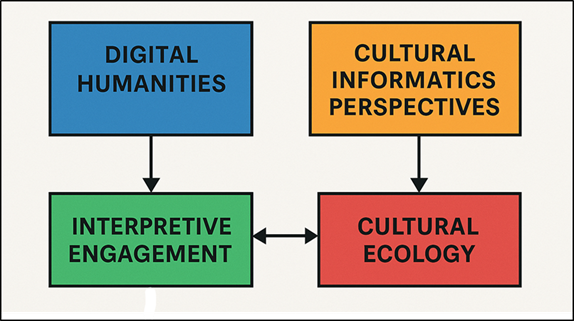
Figure 1 Conceptual Framework of Digital Humanities and Cultural Informatics Integration
The digital humanities offers methods that facilitate researchers to view digital artworks as data-rich cultural texts, whereas cultural informatics paradigms provide the opportunity to manage and retrieve cultural metadata, heritage resources, and artistic information in a systematic manner. They mutually reinforce not only digitization but interpretative participation: the construction of meaning by interfaces, algorithms and design options Fanini et al. (2021). Online platform turns into a cultural eco system with archives and AI models and virtual exhibitions in dynamic interaction with each other. These opinions therefore re-conceptualize culture as process and not product- creation, curation and communication are simultaneous.
3.2. Identity Construction Theory in Virtual Spaces
The identity construction theory describes how people and societies construct meaning of the self by interacting, reflecting, and representing. In the virtual worlds, such a process is intensified by the digital affordances of avatars, social networking sites, generative artworks and digital storytelling systems, which enable building, dismantling, and reconstituting of identity. The online space is a performative platform on which users get to play with aesthetic, cultural, and symbolic identity. Digital selfhood is a concept that focuses on the multiplicity, fluidity and agency: identities may be both authentic and constructed, local and global at the same time. The digital art tools are essential in this regard. The virtual environments help artists and communities to visualize cultural belonging, stereotype challenge, and take up representation. They engage in designing, imagery and interactivity to come up with identity narratives that develop in terms of context and audience interaction. According to the theories of symbolic interactionism and social constructivism, identity is created by means of communication, and digital spaces just expand this dialogue to the networks and culture.
3.3. Models of Hybrid and Fluid Cultural Identity
Cultural identity is becoming more and more hybrid, fluid, contextual in an age of globalization and of technological interconnection. The traditional models where identity was regarded as fixed and premised on lineage have been shifted to those that appreciate the dynamic and negotiated nature of identity. According to theories like the Third Space or Cultural Identity and Diaspora by Homi Bhabha and Stuart Hall, identity is a matter of interaction, translation and hybridity, and is a process instead of an existence. The digital media space adds to this fluidity and presents arenas in which different cultural forces interact and intertwine into new forms of expression. The hybrid models of identity underline multiplicity, intersectionality, and flexibility. The artists who work in transnational or diasporic conditions can rely on various traditions, languages, and aesthetics, mixing them with the help of digital tools into new visual languages. Such hybridity is never the watering-down; on the contrary, it is re-creation: it recreates the sense of belonging by creating syntheses. Identity of fluids, in its turn, accepts temporality the way identity changes in digital platforms, audiences and contexts. This shift is fastened by virtual spaces and AI-based systems and allows users to modulate their identities in real-time with the assistance of avatars and generative imagery and interactive narration.
4. Role of Digital Art Tools in Cultural Identity Management
4.1. Digital illustration, 3D modeling, and immersive media
Digital illustration, 3D modeling and immersive media are important tools in rethinking and maintaining culture in contemporary art practice. The tools enable artists to redesign classic motifs, rituals and stories with digital canvases that are not governed by physical constraints. DIGITAL The digital illustration programs of advertisement (e.g., Adobe Illustrator, Procreate, or Krita have made available) enable artists to restructure folk patterns, calligraphy, and symbolic color palette into contemporary visual languages. The democratization of creativity through the process allows professional and community-based artists to archive and spread cultural symbols across the world. In the meantime, 3D modeling and immersive media bring this potential of creative possibilities to the field of space and interaction. The photogrammetry and modeling software of 3D such as Blender or ZBrush can be used to digitally recreate sculptural heritage, architectural monuments, and craft traditions to produce virtual heritage experiences that can be viewed in AR and VR technologies. The further feature of the immersive media is the inclusion of sensory experience: sound, movement, and interactivity, which enable the audience to perceive cultural narratives in the multisensory contexts. Not only does such application preserve endangered traditions, but also inspires new aesthetic hybrids that appeal to younger generations, who are tech-native.
4.2. AI-Driven Tools for Cultural Content Generation
AI has become a disruptive technology in the creation of cultural content that has redefined the process of visualizing, adapting and transmitting identity and heritage. The AI-powered technologies like generative adversarial networks (GANs), diffusion models, and neural style transfer algorithms allow the creation of the new forms of culture by relying on the existing visual and linguistic data. Indicatively, an AI model trained on native textile patterns or classical art may produce new forms of modern interpretation, which still have a sense of culture but adopt a modern perspective. These systems are not only about reproduction they are also about cultural innovation. The artists do not see AI as a kind of computational partner but as an accomplice to uncover concealed forms, remake the aesthetics of the past, and build alternative cultural futures. It has been shown that AI, in combination with folk traditions, calligraphy, and ritual art, can preserve something, as well as develop it creatively. Furthermore, AI-powered translation, speech synthesis, and storytelling systems make content more inclusive to a variety of linguistic and cultural communities, and enable the global audience to consume localized storytelling.
4.3. Platforms Enabling Self-Representation and Heritage Storytelling
The digital platforms have transformed the way people and societies create, store and transfer their cultural identities. Digital artists currently have agency in the curation of their cultural narratives and this is because of online art communities, immersive galleries, and social media ecosystems. Social media, such as Behance, ArtStation, DeviantArt, and Instagram, ensures the creators document personal heritage, indigenous aesthetics, or diasporic experiences visually, with immediate access to people all over the world. These participatory spaces promote communication between the creators and the audience and promote intercultural exchange and digital solidarity. In addition to exhibition, special heritage websites like Google Arts and Culture, Sketchfab Heritage and museum-supplied virtual collections enable collective storytelling and conservation. These sites are multimedia (combination of 3D scans, digital reconstructions, and interactive timelines) to tell cultural histories in an authentic and approachable way. Digital platforms that allow self-representation and immersive heritage storytelling are represented in Figure 2. They also serve as archives of the intangible heritage where rituals, music, and oral traditions are captured by immersive documentation using digital tools.
Figure 2
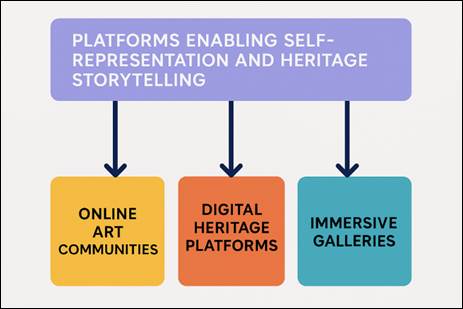
Figure 2 Digital Platforms Framework for Self-Representation and Heritage
Storytelling
More and more decentralized and AI-supported platforms take the idea of self-representation further and enhance it with individualised curation and metadata tagging, which gives creators the possibility to shape the framing and perception of their cultural identity. Storytelling, therefore, turns into participatory, and it is developed in the form of comments, remixing, and interaction with the community. This change is in line with the larger spirit of digital citizenship that is giving people control to archivize their own cultures. Digital platforms in essence make cultural storytelling a democracy and this plays the role of bridging the gap between tradition and technology by allowing communities to continue with cultural continuity and to also adapt the dynamic nature of the digital era.
5. Methodology
5.1. Mixed-methods approach: qualitative + digital artifact analysis
The study is a mixed-method study that combines qualitative research with the study of digital artifacts to determine the effectiveness of digital art tools in managing cultural identities. The qualitative aspect brings out the interpretive richness, which is based on lived experiences, motivations, and creative philosophies of artists and cultural practitioners. The semi-structured interviews, narrative reflections, and ethnographic observations form the basis of the knowledge about the way in which the digital environments influence the artistic identity. These histories tell about the sociocultural backgrounds in which creators act, and the process of their negotiation between legacy, innovation, and digital aesthetics is unearthed. Digital artifact analysis as a supplement to this research method analyzes works of art, online exhibitions, and AI-generated cultural media as the main data of the research. Any digital art object, illustration, 3D model, immersive installation or generative images are discussed in the frames of visual semiotics and content analysis. The research takes into consideration the symbolic motifs, color language, space design and narrative patterns in the interpretation of the way the cultural identity is depicted and changed with technology. The subjective interpretation of the findings is possible due to this dual approach that enables triangulation where the objective pattern recognition is combined with the subjective interpretation.
5.2. Data Collection from Artists, Communities, and Platforms
The data collection plan of the study aims at collecting varying views by digital artists, cultural groups, and internet based art portals. The participants are identified through a purposive sampling technique and they should be actively involved in the production of digital arts with a cultural or heritage orientation. Artists that are of different geographic and cultural backgrounds are interviewed, so that indigenous, diasporic and transnational communities are represented. Those talks discuss how the participants apply digital tools, like illustration software, 3D modeling applications, and AI generators, to express identity, redefine tradition and reach audiences. Community-based digital heritage projects are also examined in addition to narratives of artists. Google Arts and Culture, DeviantArt communities, and blockchain-based art communities are good sources of information about the way cultural collaboration and visibility work on the internet. It contains data on platform analytics, user engagement metrics and community-created content archives which provide a macro-level perspective on the patterns of cultural participation. Artworks, online exhibitions, and curated portfolios are also collected systematically on these platforms to put into perspective the trends of identity representation.
5.3. Evaluation Framework for Cultural Identity Expression
The analysis of the effectiveness of the digital art tools in helping to express cultural identity is measured by creating an evaluation framework based on the combination of aesthetics, semiotic, and sociocultural parameters. This framework is based on three levels of analysis, namely; (1) visual-symbolic representation, (2) participatory interaction and (3) cultural resonance. The initial one is the assessment of symbols, motifs, and stylistic elements conveying heritage stories through the lens of digital artworks: it analyzes the color scheme, iconography, and incorporation of conventional patterns. The second tier deals with participation dimensions, i.e. the impact of interactive platforms, social interaction, and co-creation on identity expression and cultural diffusion. The third level is the level of resonance, which looks at the way audiences perceive, react and feel about digital manifestations of culture. All artworks or digital projects are appraised against qualitative measures, including authenticity, inclusiveness, innovative and contextual integrity. The user feedback, engagement metrics, and the evaluation of the cultural scholars complement semiotic and visual analysis.
6. Findings and Analysis
6.1. How artists use digital tools to construct and negotiate identity
The paper uncovers that the digital artists have used creative technologies as the expressive and critical tools of constructing and negotiating identity. The artists repurpose the heritage factors of mythology, textiles, folklore and symbolism by turning them into contemporary narratives through the digital illustration, 3D modeling, generative design, and multimedia storytelling that reflect the hybrid selfhood. A number of participants said that digital tools offered autonomy and access, which enables them to dictate the way their culture is represented without relying on institutional gatekeepers. The digital art turns out to be a dialogic process, as identity is constantly being constructed in the course of experimentation and interaction with the audience. Artists are practicing cultural remixing, using traditional aesthetics in combination with world visual languages in order to respond to issues of migration, gender, colonial history or ecological issues. This multiplicity is facilitated by fluidity of digital platforms that help creators to move between authenticity and innovation. As an example, an artist can use AI-generated textures, relying on geographic patterns of art, and others can use VR environments to recreate the rituals or landscape of their ancestors.
6.2. Community-Driven Digital Heritage Initiatives
Community-based projects are essential in restoring culture in the digital world. The study finds a number of group projects such as open-access online archives to collaborative art festivals, which use technology to manage heritage and tell stories. These efforts are usually grassroots or diaspora-driven in attempting to reclaim cultural narrative, which will become marginalized or lost. Participatory documentation and inter-communal creative projects create inclusive and interactive cultural memory through digital mapping. This can be seen as the digital heritage repositories where local artisans can post 3D models of traditional crafts, virtual museums where oral histories are archived, and AI-assisted sites where endangered languages are translated. These projects indicate the fact that cultural identity is an object of shared digital property and not a singular object. They also show a change of management towards institutional heritage to a decentralized community authored archive with greater focus on representation, accessibility and contextual integrity. The study concludes that these initiatives facilitate continuity of the culture via cooperation, which empowers the youths to participate and the multigenerational exchange.
6.3. Trends in Digital Aesthetics Shaped by Cultural Roots
Digital arts are analyzed as the unique aesthetic tendencies based on the culture roots and show the way that technology mediates the development of visual works without removing the background. It gives rise to three patterns of domination: reinterpretation, fusion, and resurgence. Reinterpretation is an act of translating the old motifs, indigenous symbols, calligraphy or patterns of the textile into minimalist, futuristic or interactive forms. The stylization, the abstraction of the colors, and the digital overlaying helps the artist to bring the cultural essence, as well as to attract the ephemera of the contemporary sensibility. Fusion aesthetics is an expression of hybridity in which cross-cultural aspects co-exist. The visual markers of more than one tradition are frequently combined by artists of diasporic origin into transcultural vocabularies that take on fixed ideas of identity. This can be seen as an aesthetical approach of multimedia pieces that fuse folk symbolism with cyberpunk design or AI generated pieces that mix Eastern and Western tropes. Resurgence aesthetics focus on reclaiming - restoring the lost cultural practices by giving in to an immersive digital experience. Examples can be VR installations of traditional ceremonies or AR filters that are based on indigenous crafts. Such strategies do not only help retain authenticity, but also reintegrate the forgotten symbols into the world.
7. Result and Discussion
This paper shows that cultural identity is actively constructed, negotiated and disseminated with the help of digital art tools. Artists use digital drawing, 3D modeling, and creativity driven by AI to remake the heritage and reach people through their participatory platforms. The findings have shown that hybrid aesthetics, decentralized archives and immersive narrative facilitate cultural perpetuation and innovation. The community-based initiatives will help to become more inclusive, whereas AI technologies will bring about the issues of authenticity and bias. In general, the digital tools play the role of cultural intermediaries, they turn heritage into living, adaptable and globally available stories.
Table 2
|
Table
2 Quantitative Evaluation of Digital Tools for Cultural Identity
Representation |
||||
|
Evaluation
Parameter |
Digital
Illustration |
3D Modeling |
Immersive
Media (AR/VR) |
AI-Driven
Generation |
|
Cultural
Symbol Accuracy (%) |
87.3 |
91.5 |
88.1 |
84.2 |
|
Creative
Innovation Index (%) |
82.6 |
85.9 |
89.4 |
93.2 |
|
User
Engagement (Avg. Interaction Rate %) |
76.2 |
81.7 |
88.9 |
84.5 |
|
Heritage
Context Preservation (%) |
90.1 |
86.8 |
83.5 |
78.4 |
|
Accessibility
and Inclusivity (%) |
88.5 |
84.2 |
80.6 |
85.1 |
Table 2 gives a comparative answer to different digital art tools in the representation of cultural identities in five parameters of evaluation. The findings suggest that 3D modeling is a top choice in terms of Cultural Symbol Accuracy (91.5%), meaning that it is more accurate in terms of reproducing traditional motifs, architecture, and artifacts, using spatial realism. Figure 3 presents comparative power of cultural identity presentation of various digital art forms.
Figure 3
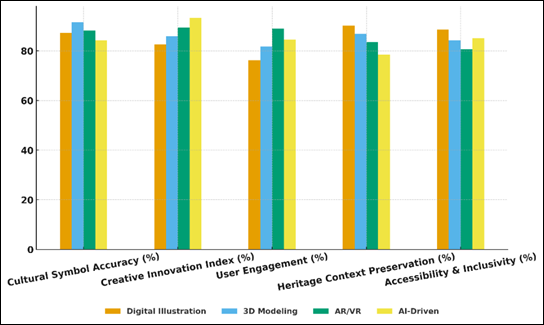
Figure 3 Comparative Cultural Identity Representation Across Digital Art Modalities
Digital illustration comes second, as it has a good capacity of symbolic depiction and accessibility through its simplicity and creative flexibility. Immersive media/AR/VR had the best User Engagement (88.9) and it is important to note that interactivity and immersion of an experience have a great impact on emotional appeal and cultural appeals of the audience.
Figure 4
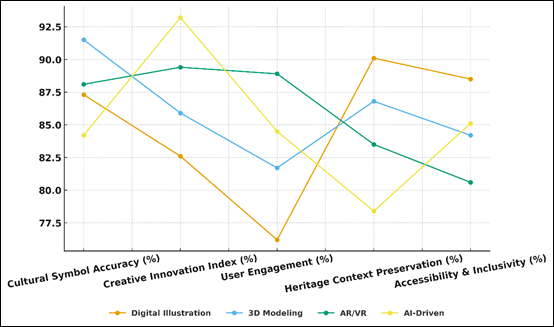
Figure 4 Trend Analysis of Cultural and Creative Metrics Across Digital Art
Technologies
In Figure 4, cultural and creative metric trends are demonstrated in changing digital art technologies. Nevertheless, it ranked average in Heritage Context Preservation (83.5%), which means that immersive experiences are highly engaging to the users, but sometimes they simplify the intricate cultural story to make it visually effective. In digital art tools evaluation patterns of cultural, creative, and engagement measures are depicted in Figure 5.
Figure 5
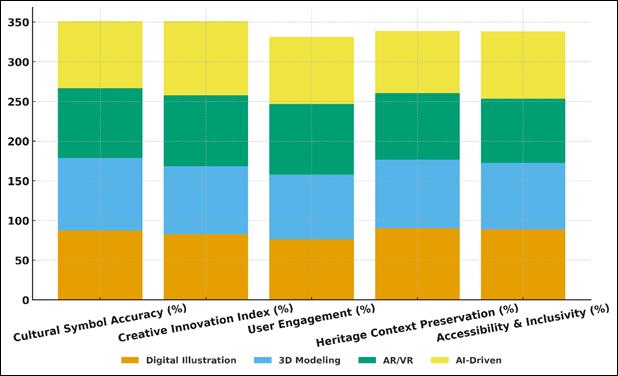
Figure 5 Evaluation of Cultural, Creative, and Engagement
Metrics in Digital Art Tools
AI-generated work is the most successful in Creative Innovation (93.2%), which demonstrates its effectiveness in the creation of new aesthetic combinations and new cultural forms. However, it demonstrates a reduced contextual preservation (78.4%), which is evidence of continued struggles to be authentic and not distorted by the algorithm.
8. Conclusion
This study highlights that cultural identity in the digital age is no longer a localized practice or physical object, it flourishes in a networked system of digital creativity, co-creation and technology. Digital art tools can be used as a transformative tool in the reimagining of cultural stories, as a tool that connects the heritage preservation and the innovation. Artists and communities can talk to each other in a more consistent dialogue between the past and the future through illustration, modeling, immersive media, and AI-assisted design to reform the expression and perception of identity. The results show that the digital platforms democratize culture participation enabling creators to reclaim representation, create inclusivity, and create global visibility of the various cultural expressions. However, the research also shows that there are issues that are crucial, including bias in algorithms, cultural appropriation, the danger of decontextualization, etc., which have to be considered with the help of ethical standards and culturally conscious AI design. Finally, digital art tools in management of cultural identity are a dynamically negotiating process, the balancing between authenticity, creativity and responsibility. Digital technologies do not only preserve culture, but also allow it to evolve, making it relevant in the changing global environment at a very high pace. Through the adoption of technological agency and preservation of cultural integrity, digital art is an archive and an innovation at the same time a living a continuum of human expression. The paper concludes that cultural ethics will be required in digital creation to create a more equitable, pluralistic, and sustainable cultural future.
CONFLICT OF INTERESTS
None.
ACKNOWLEDGMENTS
None.
REFERENCES
Barbieri, L., Bruno, F., and Muzzupappa, M. (2018). User-Centered Design of a Virtual Reality Exhibit for Archaeological Museums. International Journal of Interactive Design and Manufacturing, 12, 561–571. https://doi.org/10.1007/s12008-018-0465-y
Buddenbohm, S., de Jong, M., Minel, J. L., and Moranville, Y. (2021). Find Research Data Repositories for the Humanities: The Data Deposit Recommendation Service. International Journal of Digital Humanities, 1, 343–362.
Dimoulas, C. A. (2022). Cultural Heritage Storytelling, Engagement and Management in the Era of Big Data and the Semantic Web. Sustainability, 14, 812. https://doi.org/10.3390/su14020812
Fanini, B., Ferdani, D., and Demetrescu, E. (2021). Temporal Lensing: An Interactive and Scalable Technique for Web3D/WebXR Applications in Cultural Heritage. Heritage, 4, 710–724. https://doi.org/10.3390/heritage4010038
Giannini, T., and Bowen, J. P. (2022a). Computational Culture: Transforming Archives Practice and Education for a Post-COVID World. ACM Journal on Computing and Cultural Heritage, 15, 1–18. https://doi.org/10.1145/3493342
Giannini, T., and Bowen, J. P. (2022b). Museums and Digital Culture: From Reality to Digitality in the Age of COVID-19. Heritage, 5(1), 192–214. https://doi.org/10.3390/heritage5010011
Hosen, M. S., Ahmmed, S., and Dekkati, S. (2019). Mastering 3D Modeling in Blender: From Novice to Pro. ABC Research Alert, 7, 169–180.
Komianos, V., and Oikonomou, K. (2018). Adaptive Exhibition Topologies for Personalized Virtual Museums. IOP Conference Series: Materials Science and Engineering, 364, 012011. https://doi.org/10.1088/1757-899X/364/1/012011
Lee, H., Jung, T. H., Tom Dieck, M. C., and Chung, N. (2020). Experiencing Immersive Virtual Reality in Museums. Information & Management, 57, 103229. https://doi.org/10.1016/j.im.2019.103229
Meier, C., Saorín, J. L., Díaz Parrilla, S., Bonnet De León, A., and Melián Díaz, D. (2024). User Experience of Virtual Heritage Tours With 360° Photos: A Study of the Chapel of Dolores in Icod de Los Vinos. Heritage, 7, 2477–2490.
Parker, E., and Saker, M. (2020). Art Museums and the Incorporation of Virtual Reality: Examining the Impact of VR on Spatial and Social Norms. Convergence, 26, 1159–1173. https://doi.org/10.1177/1354856520906941
Parrinello, S., and Dell’Amico, A. (2019). Experience of Documentation for the Accessibility of Widespread Cultural Heritage. Heritage, 2, 1032–1044. https://doi.org/10.3390/heritage2010067
Ponchio, F., Callieri, M., Dellepiane, V., and Scopigno, R. (2020). Effective Annotations Over 3D Models. Computer Graphics Forum, 39, 89–105. https://doi.org/10.1111/cgf.13922
Rossi, A., Formicola, C., and Gonizzi Barsanti, S. (2024). Ingegneria Romana: Dalle Fonti ai Modelli, dai Reperti alle Ricostruzioni. Diségno, 14, 229–238.
Shehade, M., and Stylianou-Lambert, T. (2020). Virtual Reality in Museums: Exploring the Experiences of Museum Professionals. Applied Sciences, 10, 4031. https://doi.org/10.3390/app10114031
|
|
 This work is licensed under a: Creative Commons Attribution 4.0 International License
© ShodhKosh 2025. All Rights Reserved.