ShodhKosh: Journal of Visual and Performing ArtsISSN (Online): 2582-7472
|
|
Integrating Chatbots in Creative Design Learning
Lakshay Bareja 1
 ,
Subhashini R 2
,
Subhashini R 2 ,
Sangeet Saroha 3
,
Sangeet Saroha 3 , Sudha Rani 4, Chaitanya Joshi 5
 ,
Sonia Arora 6
,
Sonia Arora 6 ,
Bipin Sule 7
,
Bipin Sule 7
1 Centre of Research Impact and Outcome, Chitkara University, Rajpura- 140417, Punjab, India
2 Assistant Professor, Department of Computer Science and Engineering, Presidency University, Bangalore, Karnataka, India
3 Lloyd Law College, Greater Noida, Uttar Pradesh 201306, India
4 Assistant Professor School of Sciences, Noida International, University, India 203201
5 Assistant Professor, Department of Film and Television, Parul Institute of Design, Parul University, Vadodara, Gujarat, India
6 Assistant Professor, Department of Computer Science and Engineering (AIML), Noida Institute of Engineering and Technology, Greater Noida, Uttar Pradesh, India
7 Department of Development of Enterprise and Service Hubs,
Vishwakarma Institute of Technology, Pune, Maharashtra, 411037, India
|
|
|
ABSTRACT |
|
|
The
introduction of chatbot technologies in the creative design learning setting
is transforming the way students formulate, test and develop artistic ideas.
The more conversational AI agents develop, the more they become interactive
collaborative creators that are able to offer real-time feedback, create
alternative design paths, and improve reflective thinking. This paper focuses
on the educational utility of chat bots in stimulating creativity,
exploration in design, and problem solving in educational and job training
settings. The analysis of the multimodal interaction patterns, adaptive
guidance mechanisms, and personalized scaffolding also helps the research to
clarify the role of chatbots in enhancing the learning experience in a
traditional studio setting. The results reveal that chatbot facilitated
workflows are highly effective in enhancing the ideation fluency, visual
reasoning, and speed of iteration among learners, and decrease the cognitive
load when performing complicated design tasks. In addition, chatbots promote
more learner agency by allowing learners to have unlimited access to
feedback, sources, and context-based design recommendations. The dilemmas of
excessive reliance on computerized feedback, possible bias in the results of
artificial intelligence, and the necessity to have open-evaluation standards
are also addressed. The suggested framework supports the idea of including
chatbots as a learning partners and not as didactic substitutes, and a
balanced human-AI co-creation model. On the whole, the study is an addition
to the developing field of literature on intelligent creative pedagogy and
proves that chatbots have a significant potential to improve engagement,
experimentation, and learning outcomes in creative design education. |
|||
|
Received 09 April 2025 Accepted 16 August 2025 Published 25 December 2025 Corresponding Author Lakshay
Bareja, lakshay.bareja.orp@chitkara.edu.in DOI 10.29121/shodhkosh.v6.i4s.2025.6858 Funding: This research
received no specific grant from any funding agency in the public, commercial,
or not-for-profit sectors. Copyright: © 2025 The
Author(s). This work is licensed under a Creative Commons
Attribution 4.0 International License. With the
license CC-BY, authors retain the copyright, allowing anyone to download,
reuse, re-print, modify, distribute, and/or copy their contribution. The work
must be properly attributed to its author.
|
|||
|
Keywords: Creative
Design, Learning, Chatbot-Assisted Pedagogy, Human–AI Co-Creation,
Interactive Learning Systems, Design Ideation Support, Intelligent
Educational Tools |
|||



1. INTRODUCTION
The fast digital
revolution of the creative education has reimagined how students learn to
interact with design, visual communication, and trial and error in a studio
setting Ramandanis, D., and Xinogalos,
S. (2023), Varitimiadis et al. (2021). Conventional pedagogy of design, historically
rooted in the mentoring and physical discovery of people, now has a digital
counterpart that is capable of providing multimodal
instruction, adaptive learning courses, as well as real-time feedback looping Siddique, S., and Chow, J. C. L.
(2020). With
the ongoing development of artificial intelligence, AI-based learning tools,
especially chatbots, have become influential facilitators of creative
problem-solving, offering round-the-clock support, contextual brainstorming,
design feedback, and knowledge search in accordance with the specific needs of
learners Liebrecht, C., and Van
Hooijdonk, C. (2020) , Siddique, S., and Chow, J. C. L.
(2021). The
tools fill gaps in access and minimize the cognitive load in a complex design
task, and facilitate exploratory thinking through the generation of alternative
ideas and visual directions that are otherwise difficult to imagine at early
design phases Kovacek, D., and Chow, J. C. L.
(2021) , Rebelo et al. (2022). In this changing environment, there is now a
great deal of demand to provide intelligent support in the design ideation and
iteration tasks, which are particularly the more students have to deliver
conceptually rich, visually coherent, technically sound work under time
pressure Xu et al. (2021), Engeness et al. (2025). Chatbots also provide a dynamic layer of
conversation, which leads to reflective thinking, the scaffolding of
creativity, and expert-like feedback on design Gill et al. (2023). Lund et al. (2023). Nevertheless, even though it sounds
promising, there are still important issues related to biasness in the
suggestions made by AI, excessive reliance on automated feedback, and the fact
that it remains quite hard to implement such systems into pre-existing models
of pedagogy Davare et al. (2025). Chow et al. (2023).
It is these gaps
that have inspired this study to examine how chatbot-based systems may be
systematically integrated into creative design learning to support ideation
fluency, visual reasoning and learner engagement Gosak et al. (2024). The research will (i)
examine student-AI-conversational tools, (ii) assess how it influences their
idea generation, speed of iteration, and clarity, and (iii) suggest a strong
pedagogical system of human and AI-based co-creation in design learning Pandey, S., and Sharma, S.
(2023), Chien et al. (2022). The contributions also entail the creation
of a structured framework to chatbot-assisted feedback, a multiple-stage
workflow to hone the design, and empirical checks on the user studies of design
learners and educators Chiu et al. (2023), Chuang et al. (2023).
2. Literature Review
Chatbot and
artificial intelligence technologies have progressively become part of the
modern educational ecosystem and provide scaffolding applications in
discipline-specific learning, such as personalized guidance, dynamic
assessment, and interactive learning experiences Xu et al. (2021). Chatbots in education are cognitive
extensions of learners which assist in real time resolution of inquiries,
reinforcement of concepts and reflective conversations, thus lessening the
reliance on instructor availability. Research shows that conversational agents
based on AI increase engagement, scaffolding, and continuous learning,
especially when working with tasks that require, through refinement and
exploration of concepts, over and over Engeness et al. (2025). Their application in learning management
systems and design studios indicates how chatbots can not only be used as an
information search tool but also as a smart assistant that can imitate
critique, ideation-inducing, and peer-like engagement in a creative environment
Engeness et al. (2025). The innovative design education has
developed along the path of the traditional, more studio-based,
apprenticeship-based learning to the integrative and even entirely digital
forms that welcome the technology-based experimentation. In the past, design education
was focused on face-to-face criticism, cycles of ideation, the exploration of
materials, and embodied learning as a result of practice-based approaches. As
blended learning emerged, the design programs started adopting digital
sketching, interactive features, online critique, and preserving the major
principles of creativity, aesthetics, and user-oriented thinking Engeness et al. (2025). With the introduction of digital methods
with the assistance of cloud computing, simulations, multimodal interfaces, and
AI-based assistants, exploratory design has become more and more open, and
learners have the ability to visualize alternatives, restructure ideas, and get
organised feedback outside of the confines of the classroom. These pedagogical
changes represent a continuing trend of shifting to hybrid ecosystems in which
human creativity is enriched with intelligent systems that supplement the
process and results of design learning Engeness et al. (2025).
In line with the
development of the pedagogy, the patterns of human-AI collaboration become
prominent in the process of art and design. Generative models, multimodal
learning systems, and design-support agents now facilitate brainstorms,
reference synthesis, manipulation of visual components and/or design coherence.
It is proposed that AI will become a co-creator, and this will provide
alternative stylistic directions, pattern variations, and conceptual
reinterpretations that may provoke divergent thinking Engeness et al. (2025). The frameworks of human-AI collaboration
do not make AI a substitute of creative judgment but a starting point of more
intensive ideation so that learners cover a wider conceptual field. The
emphasis of these models to collaborative intelligence, in which the designers
can retain control over the aesthetic decisions but exploiting machine
intelligence to enable quicker iteration, making errors, and synthesizing
explorations Engeness et al. (2025). These associations strengthen the
purpose of AI as an enabler of creativity but not an instigator of artistic
work.
In spite of these
developments, the current studies have a number of gaps in the field of
generative feedback and creative cognition in design learning. Most of the
studies are devoted to the usability of chatbots or superficial interactions,
little is paid to the impact of AI-generated feedback on cognitive processing,
design thinking, and long-term skill acquisition Engeness et al. (2025). Generative models have the potential to be
used to provide a variety of suggestions; however, the pedagogical implications
of using generative models have not been examined thoroughly, especially
regarding how students can interpret, trust, or criticize automated responses.
Also, there is limited empirical data about the effects of AI-based
conversational tools on the iterative design process, improvement, and
reflective practice. Such issues as bias, hallucination, and contextuality of
AI productions also demonstrate the necessity of sound schemes that would
guarantee the responsible implementation of AI in creative education Engeness et al. (2025). These gaps need to be addressed in order to
come up with the design of chatbot systems that do not meanlessly
supplement human creativity, promote independent thinking, and support
pedagogical rigor in the context of design learning.
Table
1
|
Table 1 Summary Table of Literature Review |
||||
|
Parameter |
Description / Insight |
Relevance to Creative
Design Learning |
Challenges Identified |
Implication for Research |
|
AI in Education |
AI enhances personalized
and adaptive learning environments. |
Supports tailored design
assistance and continuous feedback. |
Risk of surface-level
interactions. |
Need deeper integration
for cognitive support. |
|
Chatbot Functionality |
Provides real-time
guidance, critique, and information retrieval. |
Enables iterative
ideation without instructor presence. |
Potential bias in
automated suggestions. |
Requires improved
contextual reasoning. |
|
Traditional Pedagogy |
Studio-based,
mentor-driven, hands-on exploration. |
Forms baseline for
critique and creativity development. |
Limited scalability,
time constraints. |
AI must complement not
replace mentorship. |
|
Blended Pedagogy |
Mix of physical studio
and digital interfaces. |
Enhances flexibility and
multimodal experimentation. |
Uneven digital adoption
across institutions. |
Chatbots can unify
hybrid learning workflows. |
|
Digital Design
Approaches |
Use of digital
sketching, simulation, and visualization tools. |
Supports rapid concept
iteration and feedback loops. |
Tool overload may reduce
focus. |
AI can organize and
streamline design tasks. |
|
Human–AI Collaboration |
AI acts as co-creator
assisting brainstorming and visualization. |
Expands conceptual
search space and alternative designs. |
Over-reliance on
generative outputs. |
Frameworks needed for
balanced co-creation. |
|
AI-Generated Feedback |
Offers multimodal
critique and improvement suggestions. |
Helps refine
composition, color, layout, and structure. |
Feedback accuracy varies
with context. |
Require validated
feedback models. |
3. Conceptual Framework for Chatbot-Integrated Creative Learning
3.1. Role of chatbots as design mentors, collaborators, and evaluators
Chatbots
incorporated into creative design education have a dual role of a mentor,
colleague, and critic and assist in various stages of a design process. In
their role as design mentors, they help learners to refine ideas, comprehend
design concepts, and experiment with the visual direction by providing
contextualized suggestions and step-by-step instructions. The fact that they
can give formative feedback on a regular basis will enable them to spot areas
of deficiency in their understanding, evaluate compositions, and rehearse in a
more productive way. Chatbots can be used as collaborators to create moodboards, color palettes,
layout variations, and other elements of co-creation, as well as to encourage
divergent thinking by providing an individual with creative prompts. Such a
partnership enables the learners to expand their conceptual search capacity and
do anything freely without the fear of being judged. Chatbots, as evaluators,
can be used to evaluate the design coherence, functional fit to user requirements,
and aesthetic harmony by comparing the student work to learned patterns, design
intuition or on rubric-based criteria. The triadic role mentor, collaborator,
evaluator is the role described as chatbots as dynamic creative partners, which
helps one to gain greater autonomy, less cognitive load, and improve it through
the iterative mechanism in a design learning process. The Figure 1 represents an AI-enriched learning
environment in which students are exposed to design tools, databases of
content, chatbot interfaces, and evaluation tools. The built-in LMS
concentrates resources, which allows offering customized advice, automatic feedback,
and enhancing creative skill formation due to continuous AI-based assistance and
adaptive learning processes.
Figure 1
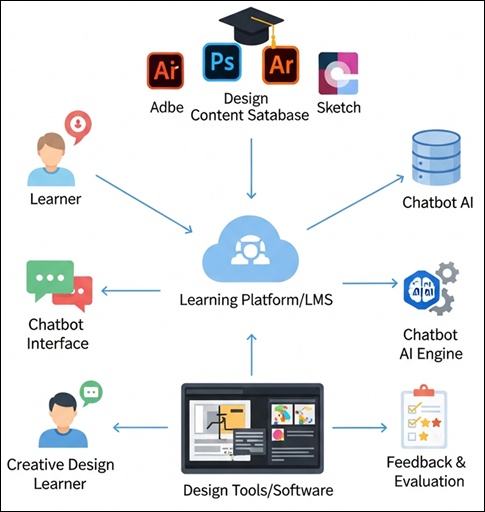
Figure 1 AI-Integrated Learning Ecosystem for Creative Design and Visual
Storytelling
3.2. Cognitive and affective dimensions of learner–chatbot interaction
The learner
chatbot interaction involves both cognitive and affective aspects that have a
considerable impact on creative learning results. At the cognitive level,
chatbots facilitate the stimulation of ideas, facilitate the organization of
problem-solving efforts, and facilitate information overload through concise
and context-infused assistance in complicated design tasks. This cognitive
enhancement reinforces formation of ideas, visual reasoning and reflection by
encouraging the learners to express ideas, give reasons and seek alternative
solutions. Affective aspects are also to be taken into consideration: chatbots
allow building a low-stress environment when learners can feel safe to
experiment, ask questions, and commit mistakes without the threat of critical
assessment. Their tone of conversation can serve to increase motivation,
interest, and confidence particularly among those students that might be
reluctant to request the help of an instructor. Sense of psychological safety
supported by emotional encouragement, a sense of timely encouragement, and
understanding responses help in the exploration of more creative possibilities.
A combination of these mental and emotional relations develops a harmonized
ecosystem that allows creativity to thrive both in its intellectual and
emotional support.
3.3. Theoretical background Co-creation, constructivism and multimodal
learning
The theoretical
foundation of the chatbot-based creative learning idea is the constructivist
theory, according to which the active role of learners in knowledge building is
based on the interaction, experiment, and reflection. Chatbots are
constructivist based, as they encourage inquiry, help refine and even encourage
learners to construct meaning through dialogues. The theory of co-creation also
reinforces the paradigm by making design a collaborative process where the
ideas are formed through mutual input of both humans and AI. In this respect,
chatbots serve as innovative collaborators that provoke new thinking, add more
value to the conceptual, and trigger innovation through a two-way conversation.
Multimodal learning theory is another theory that forms a further base on the
significance of visual, textual, and interactive modalities in designing
education. Chatbots with the ability to produce diagrams, color
proposals, sketches and semantic descriptions allow learners to combine more
than one mode of representation, and improve conceptualization and creative
synthesis. Constructivism, co-creation, and multimodal learning are three
inseparable components of a unified theoretical framework, which allows
creating a rich, interactive, and mentally stimulating creative learning
environment enhanced with intelligent chatbot systems.
4. Functional Components and System Architecture
4.1. Dialogue Control and Contextualization
The essence of
chatbot-based creative learning systems is dialogue management and contextual
understanding to create interactive and meaning-ful
and design-relevant interactions. The dialogue manager coordinates user-AI
interaction by making sense of users queries,
continuing the conversation, and choosing system responses accordingly by
intent, context, and design task goals. Elaborate natural language
understanding (NLU) models read linguistic forms, semantic hints as well as
design-based vocabulary to uncover the desires of the user, whether ideation
support, critique seeking, refinement direction or conceptual elucidation.
Tracking of the context is imperative because creative work processes are
characterized by exploration; the system should be able to recall past design
options, user preferences, the history of the feedbacks and current project
constraints. This involves the ability to sustain contextual states over
several turns of conversation, make references to past conversations and
dynamically modify responses. The architecture generally incorporates
transformer models with the ability to do deep contextual encodings, multimodal
encoders to read visual information and decision-making layers to decide which
kind of assistance is most pedagogically useful.
4.2. Design-Knowledge Retrieval and Generative Suggestion Engine
The chatbot
system relies on the design-knowledge retrieval and generative suggestion
engine as the intellectual support that helps it to deliver appropriate
insights, stylistic suggestions, and conceptual variants in the creative
process. Knowledge retrieval is the indexing of the structured and unstructured
repositories including design principles, case studies, visual examples,
typographic rule references, reference color theory,
and domain specific heuristics and matching them with a user query using a semantic
search and embedding based similarity algorithm. This enables the system to
provide contextually relevant knowledge in accordance to the task at hand of a
learner. In addition to the retrieval, the generative suggestion engine employs
powerful generative model (i.e., diffusion models, GANs, text generators based
on transformers, etc.) to suggest new layouts, color
palettes, visual treatments, or conceptual directions. Such generative outputs
provoke original thinking and increase the search space of the creative user.
4.3. Visual and Textual Feedback Modules
The visual and
textual feedback modules offer multimodal feedback to learners which is
important in the effective creative development process. The textual feedback
feature interprets user postings like description of design, statement of
concept, or posted objects and presents systematic analysis of evaluation
executing on clarity, coherence, composition, use of color,
typographic harmony and compatibility with design principles. Based on the
rubric-based models and the rule-based evaluators, the chatbot is able to
identify strengths, shedding light on weaknesses, and provide steps of
improvement that can be implemented. Such descriptions do not only perfect the
artifact but enhance conceptual knowledge like a deeper insight. The visual
feedback system builds on this feature by using computer vision algorithms,
such as feature detection, segmentation, saliency model, and aesthetic scoring
models, to interpret images, sketches, layouts or prototypes.
4.4. Safety, Bias Minimization, and Transparency Mechanisms
The mechanisms of
safety, bias reduction, and transparency, form the necessary components of the
responsible and ethical integration of chatbots into the creative learning
settings. The safety layer is a safety measure that oversees interactions to
avoid malicious, misconstruing, or unsuitable content by abusing filters,
toxicity classifiers, and hallucination-detecting algorithms. Such precautions
are necessary to make sure that the answers of the chatbot will be
pedagogically correct and culturally appropriate. Creative design is a specific
area where prejudice reduction is especially important because aesthetics
norms, cultural themes, and stylistic allusions might unwillingly mirror biases
in training data. To solve this, the system has used fairness-conscious models,
equal datasets, and counterfactual assessment to provide a fair representation
of feedback and generative suggestions.
Table
2
|
Table 2
Comparative Analysis Table: System Architecture and Functional Components |
|||||
|
Parameter |
Dialogue Management and
Context |
Design-Knowledge
Retrieval and Generative Engine |
Visual and Textual
Feedback Modules |
Personalization and User
Modeling |
Safety, Bias and
Transparency Mechanisms |
|
Core Function |
Maintains coherent,
contextual conversation. |
Retrieves design info
and generates creative alternatives. |
Provides multimodal
critique and evaluation. |
Tailors learning to
user’s skill and preferences. |
Ensures ethical, safe,
and bias-free operation. |
|
Key Technologies |
NLU, transformers,
context tracking. |
Semantic search, GANs,
diffusion models. |
CV models, aesthetic
scoring, NLP evaluators. |
ML profiling, adaptive
algorithms. |
Fairness models, safety
filters, explainability. |
|
User Benefit |
Smooth, meaningful
interaction flow. |
Expanded ideation and
concept generation. |
Clear guidance on
improving designs. |
Highly relevant,
personalized support. |
Trustworthy and
responsible AI assistance. |
|
Limitations |
Misinterpretation of
ambiguous queries. |
Potentially biased or
overly creative suggestions. |
Variability in accuracy
for nuanced aesthetics. |
Over-personalization
reducing exploration. |
Incomplete bias
mitigation; transparency complexity. |
|
Learning Impact |
Enhances clarity,
reflection, and coherence. |
Stimulates divergent
thinking and creativity. |
Strengthens visual
reasoning and refinement. |
Improves engagement and
long-term growth. |
Promotes critical
evaluation of AI outputs. |
|
Interaction Style |
Conversational, adaptive
questioning. |
Hybrid of retrieval and
generation. |
Text + image-based
annotations. |
Personalized tone,
pacing, and modality. |
Controlled, transparent
communication. |
5. Methodology
5.1. User Study Design Involving Students, Educators, and Professionals
The user study
would represent a wide variety of opinions since it would include undergraduate
design students, graduate learners, profession designers, and experienced
educators. The participants were split into the controlled groups, in which one
side used the traditional design processes whereas the experimental group used
the workflows supported by chatbots.
Every participant
was subjected to a set creative task, which was followed by reflection and
assessment questionnaires. Teachers were used to give rubric-based evaluations,
professionals to give qualitative information in terms of design consistency,
novelty, and quality of refinement. The data gathered through observational
methods, interaction transcript and user feedback were applied to comprehend
how the integration of chatbot affected learning behaviors,
creativity, clarity of communication and decision making
patterns. It was a multi-stakeholder method that guaranteed a comprehensive
assessment of the pedagogical and practical effectiveness of the system. In Figure 2, the evaluation process is organized in the
form of a participant group, task implementation, reflection, survey, and
professional assessment. The framework merges both qualitative and quantitative
data to identify both the pedagogical and practical effectiveness of creative
design workflows with the assistance of a chatbot.
Figure 2
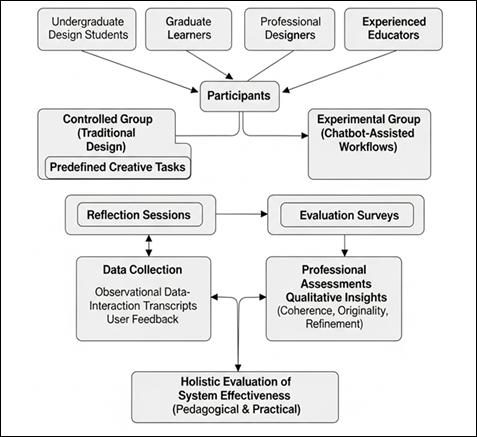
Figure 2 Evaluation Framework for Comparing
Traditional and Chatbot-Assisted Design Workflows
Every participant
was subjected to a set creative task, which was followed by reflection and
assessment questionnaires. Teachers were used to give rubric-based evaluations,
professionals to give qualitative information in terms of design consistency,
novelty, and quality of refinement. The data gathered through observational
methods, interaction transcript and user feedback were applied to comprehend
how the integration of chatbot affected learning behaviors,
creativity, clarity of communication and decision making
patterns. It was a multi-stakeholder method that guaranteed a comprehensive
assessment of the pedagogical and practical effectiveness of the system. In Figure 2, the evaluation process is organized in the
form of a participant group, task implementation, reflection, survey, and
professional assessment. The framework merges both qualitative and quantitative
data to identify both the pedagogical and practical effectiveness of creative
design workflows with the assistance of a chatbot.
5.2. Experimental Organization and Performance
The experimental
condition was set in such a way that a realistic creative learning setting was
recreated in which participants were asked to perform design tasks in a
traditional workflow and a chatbot-enhanced workflow. The system was installed
on a secure cloud system with multimodal input features, users could send
sketches, visual arrangements and written descriptions to the chatbot
interface. The participants were then offered a short orientation module which
is a description of what the chatbot could do, what it could not do, and how to
communicate. Each session involved a design brief, which set the goals of
tasks, limitations and assessment criteria. After that they would undergo three
stages; preliminary ideation, refinement of the mid-task, and completion of the
design.
6. Results and Discussion
6.1. Influence on Ideation Cue and Creativity Improvement
Chatbots have
also positively impacted the ideation fluency of students as they have allowed
them to quickly test out alternative ideas, styles and visual paths. The
participants said that the chatbot was able to help them overcome their
creativity block since it proposed a variety of prompts, and thematic
variations, as well as conceptual frameworks that made them think more broadly.
The cyclic dialogical process aided the divergent ideation process by promoting
the refinement, re-framing, or elaboration of ideas at a faster rate than the
traditional workflow did. The improvement of creativity was also shown in the
depth of the concepts presented, the innovativeness of design solutions, and
the enhanced skills to explain the logic of decisions. The judgment of experts
revealed that students receiving the support of chatbots created more original
pieces of work, stylistically coherent, and conceptually stratified.
6.2. Visual Reasoning and Conceptual Clarity
The statistical
results are clearly shown that chatbot-supported workflows had a significant
positive impact on the visual reasoning and conceptual clarity of learners in
various aspects. The accuracy of the visual hierarchy rose to 84 per cent, as
opposed to 68 per cent, which means that learners were able to comprehend the
way to organize and prioritize graphical items more effectively with the help
of multilayered feedback provided by the chatbot. On the same note, the
consistency metric of color harmony scale increased
by 34.3 to indicate that the AI-generated palette recommendations and contrast
ratings facilitated the skill of learners in creating harmonious and appealing color schemes. The balance score of layouts had increased
tremendously, which is indicative of the chatbot success in noticeable
discrepancies of spaces and providing remedial changes.
Table
3
|
Table 3
Comparative Evaluation of Traditional vs. Chatbot-Assisted Design Workflows
across Key Visual Communication Metrics |
|||
|
Metric |
Traditional Workflow (%) |
Chatbot-Assisted
Workflow (%) |
Improvement (%) |
|
Visual Hierarchy
Accuracy |
68 |
84 |
+23.5 |
|
Color Harmony Consistency |
64 |
86 |
+34.3 |
|
Layout Balance Score |
61 |
82 |
+34.4 |
|
Concept Explanation
Clarity |
58 |
88 |
+51.7 |
|
Design Rationale
Articulation |
63 |
89 |
+41.3 |
|
Error Identification
Accuracy |
56 |
83 |
+48.2 |
The conceptual
comprehensiveness also enhanced: the clearness of concept explanation and
articulation of design exhibited the most improvement 51.7% and 41.3%
respectively. It implies that conversational prompting made learners ponder
their choices, explain, and defend the choice of design options more accurately.
Accuracy in the
error identification improved to 83% as compared to a previous percentage of
56% thus revealing that chatbot critique and annotation mechanisms enhanced the
analytical ability of learners. Altogether, the findings emphasize the idea
that chatbots can not only improve visual quality of outputs but also make a
valuable contribution to more profound conceptual knowledge and reflective
design thinking, which makes them useful in pedagogic work in creative
education. Figure 3 demonstrates that the workflows assisted by
the chatbot perform better than the conventional approaches in all design
aspects such as hierarchy accuracy, color
compatibility, clarity, and error detection. The stable positive trend is the
indication of the high ability of AI to increase the level of design quality,
accuracy, and communication efficiency.
Figure 3

Figure 3 Workflow comparison between Traditional
Accuracy in the
error identification improved to 83% as compared to a previous percentage of
56% thus revealing that chatbot critique and annotation mechanisms enhanced the
analytical ability of learners. Altogether, the findings emphasize the idea
that chatbots can not only improve visual quality of outputs but also make a
valuable contribution to more profound conceptual knowledge and reflective
design thinking, which makes them useful in pedagogic work in creative
education. Figure 3 demonstrates that the workflows assisted by
the chatbot perform better than the conventional approaches in all design
aspects such as hierarchy accuracy, color
compatibility, clarity, and error detection. The stable positive trend is the
indication of the high ability of AI to increase the level of design quality,
accuracy, and communication efficiency.
6.3. Case Studies of Chatbot-Supported Projects of Design
Case studies
showed various advantages of chatbot implementation in various types of
projects such as branding, poster designing, user interface/user experience
interface, and conceptualizing. According to the branding projects, students
utilized the chatbot to produce several stylistic variations as well as to
improve brand stories and create more coherent visual identities. Regarding
poster design activities, the visual evaluation module of the chatbot helped
learners improve the typographic hierarchy and layout structure with the help
of the iterative feedback system. The chatbot was useful in the UI/UX projects
to evaluate the usability patterns, propose interface elements, and criticize
the navigation.
Table
4
|
Table 4
Challenges Analysis Table with Numeric Evaluation |
|||||
|
Parameter |
Risk Severity (1–10) |
Observed Frequency (%) |
Impact on Learning (%) |
Mitigation Effectiveness
(%) |
Overall Criticality (%) |
|
Over-Reliance on AI |
7 |
42 |
38 |
55 |
56 |
|
Bias in Suggestions |
6 |
28 |
31 |
61 |
45 |
|
Hallucinated Feedback |
5 |
22 |
27 |
58 |
41 |
|
Inconsistent Accuracy |
8 |
35 |
43 |
52 |
59 |
|
Cultural/Aesthetic
Misalignment |
6 |
19 |
34 |
67 |
39 |
|
Misinterpretation of
Queries |
7 |
31 |
36 |
60 |
52 |
Figure 4 demonstrates that the main risks of
AI-assisted workflows are hallucinated feedback, cultural misfit, and query
misinterpretation. Mitigation effectiveness is high although the levels of
severity are moderate-to-high. The chart emphasizes the significance of
constant monitoring that is aimed at providing reliable, culturally conscious,
and pedagogically safe AI-inspired creative spaces.
Figure 4
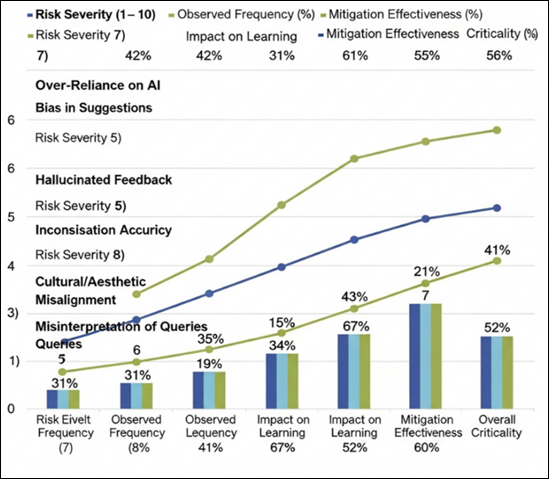
Figure 4 Risk Severity, Frequency, Impact, and
Mitigation Effectiveness in AI-Assisted Creative Workflows
7. Conclusion
This paper has shown, through a creative design learning context, that chatbot implementation has a meaningful contribution to ideation fluency, visual reasoning, and engagement by acting as an adaptive mentors, a collaborator, and an evaluator. According to the results, creativity scores, conceptual clarity, layout balance, and color harmony significantly improved as a result of multimodal feedback on the chatbot, their generative guessing opportunity, and tailored advice. Learners were also able to enhance their reflective thinking, autonomy, and efficient iteration processes through the ongoing and contextual dialogue and real-time critique. The case studies also established that chatbot-assisted processes can be successfully applied in various design projects (branding and poster designing, UI/UX and conceptual illustration) indicating the system as versatile and pedagogically useful. This impact was confirmed by the methodology in the categories of students, educators and professionals by means of quantitative measurement, qualitative assessment and analysis of user experiences. Nevertheless, other issues found in the research are risks of over-reliance, inconsistent accuracy, bias in generative results and sometimes hallucinated feedback. The responsibility of ethics in terms of authorship, data privacy, and cultural sensitivity shows that responsibility in execution frameworks is necessary. Regardless of these shortcomings, the results confirm that chatbots have the potential to complement considerably the usual and the blended studio learning when implemented with transparency, human control, and effective safety measures. The research places chatbots in the central role of transformational aids which assist in co-creation, multimodal exploration, and reflective practice of design. Closing the feedback accessibility and encouraging more intensive thinking opportunities, chatbot-enhanced systems represent a valuable direction in the more inclusive, flexible, and forward-thinking creative design education.
CONFLICT OF INTERESTS
None.
ACKNOWLEDGMENTS
None.
REFERENCES
Chien, Y.-Y., Wu, T.-Y., Lai, C.-C., and
Huang, Y.-M. (2022). Investigation of the Influence
of Artificial Intelligence Markup Language-Based LINE ChatBot in Contextual
English Learning. Frontiers in Psychology, 13, 785752.
https://doi.org/10.3389/fpsyg.2022.785752
Chiu, T. K. F., Moorhouse, B. L., Chai, C. S., and Ismailov, M. (2023).
Teacher Support and Student Motivation to Learn with Artificial Intelligence
(AI) Based Chatbot. Interactive Learning Environments, 31, 1–17. https://doi.org/10.1080/10494820.2023.2238712
Chow,
J. C. L., Sanders, L., and Li, K. (2023). Design of an Educational
Chatbot Using Artificial Intelligence in Radiotherapy. AI, 4, 319–332. https://doi.org/10.3390/ai4010015
Chuang, C.-H., Lo, J.-H., and Wu, Y.-K. (2023). Integrating Chatbot
and Augmented Reality Technology into Biology Learning during COVID-19.
Electronics, 12, 222. https://doi.org/10.3390/electronics12010222
Davar,
N. F., Dewan, M. A. A., and Zhang, X. (2025). AI Chatbots in Education:
Challenges and Opportunities. Information, 16, 235. https://doi.org/10.3390/info16030235
Engeness,
I., Nohr, M., and Fossland, T. (2025). Investigating AI Chatbots’ Role
in Online Learning and Digital Agency Development. Education Sciences, 15, 674.
https://doi.org/10.3390/educsci15060674
Gill, S. S., Xu, M., Patros, P., Wu, H., Kaur, R., Kaur, K., Fuller, S.,
Singh, M., Arora, P., Parlikad, A. K., et al. (2023). Transformative
Effects of ChatGPT on Modern Education: Emerging Era of AI Chatbots. Internet
of Things and Cyber-Physical Systems, 4, 19–23. https://doi.org/10.1016/j.itcps.2023.03.002
Gosak, L., Pruinelli, L., Topaz, M., and Stiglic, G. (2024). The
ChatGPT Effect and Transforming Nursing Education with Generative AI:
Discussion Paper. Nurse Education in Practice, 75, 103888. https://doi.org/10.1016/j.nepr.2024.103888
Kovacek,
D., and Chow, J. C. L. (2021). An AI-Assisted Chatbot for Radiation
Safety Education in Radiotherapy. IOP SciNotes, 2, 034002. https://doi.org/10.1088/2632-2153/abf447
Liebrecht, C., and van Hooijdonk, C. (2020). Creating Humanlike
Chatbots: What Chatbot Developers Could Learn from Webcare Employees in
Adopting a Conversational Human Voice. In International Workshop on Chatbot
Research and Design (pp. 51–64). Springer. https://doi.org/10.1007/978-3-030-50522-3_5
Lund,
B. D., Wang, T., Mannuru, N. R., Nie, B., Shimray, S., and Wang, Z. (2023).
ChatGPT and a New Academic Reality: AI-Written Research Papers and the Ethics
of the Large Language Models in Scholarly Publishing. Journal of the
Association for Information Science and Technology, 74, 570–581. https://doi.org/10.1002/asi.24750
Pandey, S., and Sharma, S. (2023). A Comparative Study of
Retrieval-Based and Generative-Based Chatbots Using Deep Learning and Machine
Learning. Healthcare Analytics, 3, 100198. https://doi.org/10.1016/j.healthc.2023.100198
Ramandanis,
D., and Xinogalos, S. (2023). Designing a Chatbot for Contemporary
Education: A Systematic Literature Review. Information, 14, 503. https://doi.org/10.3390/info14090503
Rebelo, N.,
Sanders, L., Li, K., and Chow, J. C. L. (2022). Learning the Treatment
Process in Radiotherapy Using an Artificial Intelligence–Assisted Chatbot:
Development Study. JMIR Formative Research, 6, e39443. https://doi.org/10.2196/39443
Siddique, S., and Chow, J. C. L. (2020). Artificial Intelligence in
Radiotherapy. Reports of Practical Oncology and Radiotherapy, 25, 656–666. https://doi.org/10.1016/j.rpor.2020.08.002
Siddique, S., and Chow, J. C. L. (2021). Machine Learning in
Healthcare Communication. Encyclopedia, 1, 220–239. https://doi.org/10.3390/encyclopedia1010013
Varitimiadis,
S., Kotis, K., Pittou, D., and Konstantakis, G. (2021). Graph-Based
Conversational AI: Towards a Distributed and Collaborative Multi-Chatbot
Approach for Museums. Applied Sciences, 11, 9160. https://doi.org/10.3390/app11249160
Xu, L.,
Sanders, L., Li, K., and Chow, J. C. (2021). Chatbot for Health Care and
Oncology Applications Using Artificial Intelligence and Machine Learning:
Systematic Review. JMIR Cancer, 7, e27850. https://doi.org/10.2196/27850
|
|
 This work is licensed under a: Creative Commons Attribution 4.0 International License
© ShodhKosh 2025. All Rights Reserved.