ShodhKosh: Journal of Visual and Performing ArtsISSN (Online): 2582-7472
|
|
AI for Regional Art Mapping and Preservation
Dr. Peeyush Kumar Gupta 1
 ,
Dr. Amit Kumar Shrivastav 2
,
Dr. Amit Kumar Shrivastav 2 , Priya Modi 3
 , Fehmina
Khalique 4
, Fehmina
Khalique 4 , Nishant Bhardwaj 5
 , Archana Singh 6
 , Prashant Anerao 7
1 Assistant
Professor, ISDI - School of Design and Innovation, ATLAS Skilltech
University, Mumbai, Maharashtra, India
2 Associate
Professor, Department of Management, Arka Jain University, Jamshedpur,
Jharkhand, India
3 Assistant Professor, Department of
Development Studies, Vivekananda Global University, Jaipur, India
4 Lloyd Law College, Greater Noida, Uttar Pradesh 201306, India
5 Centre of Research Impact and
Outcome, Chitkara University, Rajpura- 140417, Punjab, India
6 Assistant Professor, School of Sciences,
Noida International University 20320, Greater Noida, Uttar Pradesh, India
7 Department of Mechanical Engineering,
Vishwakarma Institute of Technology, Pune, Maharashtra, 411037 India
|
|
|
ABSTRACT |
|
|
Artificial
intelligence has proven to be a paradigm shift in preservation of cultural
heritage and has made it possible to digitize vast portions of heritage,
classify intelligently and semantically interconnect regional art forms. The
paper introduces a full-fledged AI-based regional art mapping and
preservation framework that incorporates various forms of multimodal data
visual, textual, and geospatial data in an integrated cultural knowledge
framework. The architecture has five layers, including data acquisition, AI
analytics, knowledge graph integration, visualization interfaces and ethical
governance. The implementation revolves around the Regional Art Knowledge
Graph (RAKG) and Cultural Atlas Interface that establishes a semantic and
interactive environment of exploring artistic relationships in terms of
regions, styles, and time. Technical accuracy (A 1 = 92.3, F1 = 0.91, SSI =
0.84) and cultural authenticity (CAS = 8.7/10, RDI = 0.82) are good.
Transparency and contextual fidelity are guaranteed by the presence of
explainable AI systems and community engagement systems. The fusion of
computational intelligence and human creativity allows the presented system
to transform heritage preservation to a dynamic
process that is participatory and ties the local traditions to a global
digital future. |
|||
|
Received 26 April 2025 Accepted 01 September 2025 Published 25 December 2025 Corresponding Author Dr.
Peeyush Kumar Gupta, peeyush.gupta@atlasuniversity.edu.in DOI 10.29121/shodhkosh.v6.i4s.2025.6846 Funding: This research
received no specific grant from any funding agency in the public, commercial,
or not-for-profit sectors. Copyright: © 2025 The
Author(s). This work is licensed under a Creative Commons
Attribution 4.0 International License. With the
license CC-BY, authors retain the copyright, allowing anyone to download,
reuse, re-print, modify, distribute, and/or copy their contribution. The work
must be properly attributed to its author.
|
|||
|
Keywords: Artificial Intelligence, Cultural Heritage
Preservation, Regional Art Mapping, Semantic Ontologies, Cultural Atlas,
Explainable AI, Blockchain Provenance, Digital Humanities |
|||



1. INTRODUCTION
Artificial intelligences have currently been able to acquire the ability to read artistic characteristics that were previously known only by human savans Alizadeh (2017). Deep neural networks can determine stylistic features, color schemes, and texture of materials in a regional art society, like Madhubani paintings, Warli murals, Pattachitra scrolls, or Gond illustration with the help of computer vision. At the same time, natural language processing (NLP) models decipher written texts of metadata artist biographies, folklore stories, and historical documents to situate every work of art in its sociocultural geography Tegmark (2018), Cao and Scaioni (2021). Provided together with geospatial intelligence, such streams of data turn into cultural maps tracing the spread of styles, themes, and influences over time and space. What it has produced is an intelligent atlas of regional creativity movable, searchable and dynamically changing. Word-wise, AI propels the conservation and analysis of artistic heritage in addition to documentation. It is possible to convert incomplete murals to high-resolution images using machine learning algorithms to recreate the original using the machine learning algorithm, predict pigment ageing, and simulate the results of restoration without the use of physical intervention. The General Artificial Networks (GANs) and diffusion models create plausible extensions of damaged artworks, which can provide conservators with an online what-if laboratory to restore artworks. Equally, 3D reconstruction and digital-twin will make it possible to create immersive virtual museums that will democratize cultural heritage access, giving the world the opportunity to view regional artism even when not in the vicinity Pellis et al. (2021) Musicco e al. (2021).
Figure 1
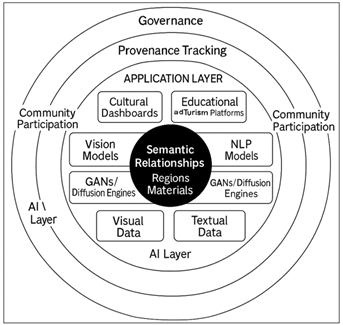
Figure 1 AI-Driven Ecosystem for Regional Art Mapping and
Preservation
This graph is the core of an AI-based cultural atlas, which has the potential to assist research, education, tourism, and policy-making design as illustrated in Figure 1. Such system is not only mapping art but modeling cultural interactions, including cross-regional influences and endangered traditions and possible networks of collaboration among artisans Zabari (2021). They need collaborative structures which engage local artists, scholars, and cultural custodians in order to achieve equitable representation and data sharing by consent. In this new environment, AI is not meant to substitute human interpretation, but serve as a creative complement to the work of humanity to maintain its creative diversity Ferguson et al. (2021).
2. Problem Definition: Fragmentation of Regional Art Data and Knowledge
Although the art traditions of the region are rich, they are still distributed in data, semantics, and institutions in a skeleton way in their digital ecosystems. Objects and documentation are scattered across archives and museums and communities, frequently in a haphazard or inconsistently digitized format, and cannot be readily combined together in silos that are hard to link. The fact that historians, anthropologists and technologists employ different vocabulary in their respective fields also broadens the possibility of AI to learn that the information is unified Mansuri and Patel (2022). Poor digitization quality, lack of interoperability platforms and other technological limitations decrease computational visibility and the inability to analyse multimodally. Disconnection is increased by institutional barriers such as poor cooperation, low levels of digital literacy, and stringent data policy. It also poses a threat to the authenticity because the exclusion of local communities during digital documentation processes results in the biased narrative or incomplete cultural narratives Amany et al. (2022). So, it is not a question of the lack of data, but it is structural fragmentation. Its overcoming requires an AI-based multi-layered system to integrate the dataset, reconcile the semantics, and facilitate participatory cultural governance as the pillar of sustainable regional art preservation.
3. Workflow Model
Images of artworks, sculptures and craft are normalized by standardizing photographed images via resolution normalization and metadata tagging. Simultaneously, textual information such as curatorial comments, oral reports and scholarly descriptions are retrieved through OCR and entity recognition through NLP. GPS coordinates are used in integrating geospatial information, which connects the artworks to the area where they originate. This multimodal procedure makes sure that each artifact is not isolated at all, but it is a part of geographic and cultural continuum. After being collected the data moves to Preprocessing and Feature Extraction Phase. In this case, AI modules then start changing the raw inputs into structured representations.
Figure 2
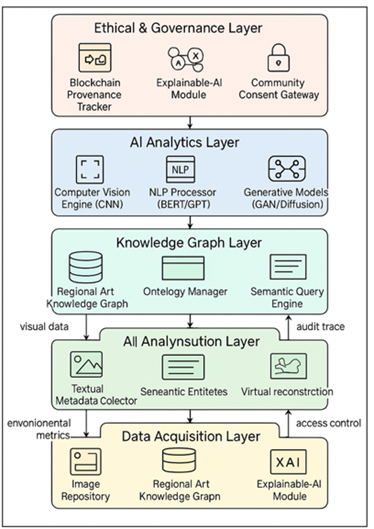
Figure 2 End-To-End Workflow for AI-Enabled Regional Art
Mapping
Convolutional neural networks (CNNs) and vision transformers are used to analyze visual data to extract markers of style brushstroke patterns, color schemes and compositional geometry as represented in Figure 2. The textual data are tokenized and semantically embedded with such models as BERT and allows similarity analysis based on the context. Cleaning of data, elimination of noise, and outlier detection are automated to make sure that all further interpretations are based on sound inputs. The outcome is a reconciled data array that can be then used in multidimensional cultural analytics. The second step, the Knowledge Structuring and Semantic Integration Phase is the cognitive nucleus of the system. The visual and textual domains extracted features are connected to the Regional Art Knowledge Graph (RAKG) that simplifies the information by depending on the ontologies of the entities, e.g. artist, medium, motif, or cultural region. The knowledge graph allows both argumentation and exploration that can discover concealed links and evolutions of styles, as well as geographic coincidences Agrawal et al. (2022). The AI-based inference engines keep relationships constantly up-to-date as new data streams into the system, and make the relationships scalable and dynamic. The Visualization and Interaction Phase converts knowledge that is organized in a structured manner to human-readable and interactive formats. The RAKG serves a dashboard interface that assists with multidimensional analysis using dynamically evolving graphs, heatmaps and temporal evolution charts. The user can peruse such visualizations as the density of motifs by region, the evolution of colors over decades, or network influence by the artist. Curators and researchers, who are more advanced users, are able to create custom queries or export analytical reports. Immersive VR/AR modules offer hands-on experience through which virtual tours can be conducted in virtualized versions of art gallery spaces or live-overlays of existing paintings onto modern environments Pellis et al. (2022). The final phase of the workflow is the Feedback and Learning Phase that incorporates user interactions and community contributions as part of the AI models again. Whenever the local artists or culture professionals mark, correct or add value to data, they will provide training cues to later learning cycles. This participatory process will make sure that the system is not only intelligent but also culturally based. The feedback mechanism keeps it real, reduces bias and develops the system as a communal digital archivist, as opposed to a dead store. Eventually, the presented workflow will be the operating core of the suggested ecosystem where disconnected art-related data in the region turns into a living and breathing system of knowledge Gujski et al. (2022).
4. Implementation
Combined with the Cultural Atlas Interface, such a framework converts AI-generated knowledge into shareable, readable, and interactive knowledge experiences to a variety of audiences, including scholars and local artisans [13]. The ontological central point of the system is the Regional Art Knowledge Graph. It is developed as per the RDF (Resource Description Framework) and OWL (Web Ontology Language) standards in order to be compatible with other cultural datasets. Every entity artist, artwork, motif, medium, or geographic location an entity artist or artwork is represented as a node and relationships among them represented by labeled edges. As an example, an edge can be the description of a relationship like an origin, a depiction, influenced by, or restored with. Such semantic connections allow more complicated queries such as finding artworks that show harvest ceremonies in Central India and which have a similar stylistic appearance to Pattachitra motifs. In order to fill the knowledge graph, the data of various modalities images, text, and geospatial coordinates are translated into structured triples with automated pipelines Yu et al. (2022). The AI Analytics Layer delivers outputs that include motif embeddings, stylistic descriptors and linguistic themes and made semantically similar with the help of ontology mapping. This is where machine taxonomies are aligned to human cultural taxonomies. A semantic alignment engine guarantees that the cultural subtleties, e.g. a regional difference in names or local symbolism, are not eliminated by algorithmic generalisation. The nodes can be edited or validated by human experts in order to balance between the computational inference and curatorial oversight. The visualization and interaction interface of the system is the Cultural Atlas, which is constructed over the knowledge graph. It is an immersive experience where users are able to move around on the cultural landscape: using interactive maps, time sliders, and network visualizations. A single click on an area shows the art forms, artist, motifs and oral traditions of that area, and forms a multidimensional cultural experience Gaber et al. (2023). The users are able to follow the patterns of diffusion of stylistic types, make comparisons of the materials in various ecological zones or they can visualize the similarity of the motifs in different regions. Using AR/VR technologies will allow making virtual tours of galleries and virtual storytelling sessions and make regional art accessible to the international audience.
Figure 3
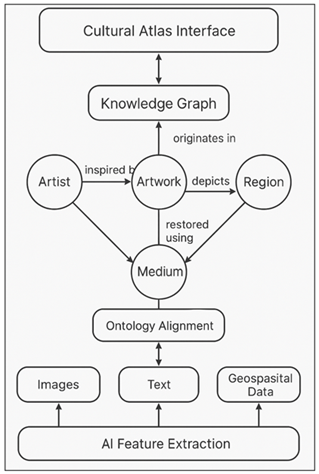
Figure 3 Implementation Framework of the Regional Art
Knowledge Graph
In terms of infrastructural aspects, the system is distributed as a hybrid cloud network. The information repository is operated using a federated design in which local education institutions retain ownership of their data but add to the world knowledge graph as represented in Figure 3. The data sovereignty is supported by this decentralized model and risks of cultural appropriation are reduced. The provenance is done by blockchain-based metadata logging which logs every transaction data upload, modification or usage request on an immutable ledger. This openness will create trust between the involved parties, especially where sensitive heritage data is involved. The feedback integration modules are also implemented to capture the user annotations, curatorial input and also the community contributions. This feedback is used to train the AI and enhance model accuracy and cultural contextualization with time.
5. Interpretation of System Performance
Evaluation process includes model accuracy, semantic reliability, interpretability, and community validation that are all important to guarantee that technology does not hinder cultural understanding to the extent of distortion. At the level of computation, the validity of AI models in the system was checked by several standard measures. In the case of computer vision modules, the accuracy of classification and clustering was conducted on a labeled dataset of regional art images consisting of a variety of traditions including Warli, Gond, Madhubani, and Kalamkari. The accuracy of feature extraction was estimated through the accuracy of Top-1 classification (A1), Mean Average Precision (mAP) so that the model identified the stylistic attributes and motifs correctly. The CNN-ViT hybrid model had an average A1 score of 92.3% and mAP of 0.87; this indicates that the model is performing well in terms of visual pattern recognition even when the styles are similar in art forms. In this case, models such as BERT and GPT were tested on cultural text corpus on the basis of F1-scores, precision, and recall. The mean accuracy of entity recognition based on artists, regions and motifs F1=0.91 showed that the model is able to comprehend the context of heritage language despite language differences. Moreover, the Semantic Similarity Index (SSI) was employed to provide consistency to the ontology alignment engine with a given average of 0.84 that was used to validate the quality of alignment between classes generated by AI and expert-managed taxonomies.
Table 1
|
Table 1 Technical Performance Metrics of AI Models |
|||||
|
Evaluation
Category |
Model/Technique |
Metric |
Symbol |
Score |
Interpretation |
|
Visual
Recognition |
CNN–ViT Hybrid |
Top-1 Accuracy |
A₁ |
92.3% |
Excellent
motif detection across art forms |
|
Visual Recognition |
CNN–ViT
Hybrid |
Mean Average Precision |
mAP |
0.87 |
Strong feature extraction
and clustering accuracy |
|
Semantic
Extraction |
BERT
/ GPT |
F1-Score |
F1 |
0.91 |
High
accuracy in cultural entity recognition |
|
Ontology Alignment |
Semantic Mapping Engine |
Similarity Index |
SSI |
0.84 |
Consistent alignment with
expert taxonomies |
In addition to accuracy in terms of numbers, interpretability was also measured using explainable AI (XAI) approaches. Attention map visualization of the ViT models showed the parts of the image that most affected the classification of the motif, giving the curators the opportunity to assess the model reasoning. Equally, saliency maps have been used in NLP courses to identify keywords that make the most contribution to semantic tagging in ensuring textual interpretation transparency. The addition of a provenance dashboard, tracking the provenance and history of modification of each data node, made accountability more robust, and gave the auditors a way to trace any derived AI determination to its cultural source of data.
Table 2
|
Table 2 Interpretability and Transparency Evaluation |
||||
|
Aspect |
Method
Used |
Indicator |
Result |
Impact
on Preservation |
|
Visual
Interpretability |
Vision
Transformer Attention Maps |
Key
Region Highlighting |
Accurate
localization of motifs |
Enables
curator verification of AI reasoning |
|
Textual Interpretability |
NLP Saliency Mapping |
Keyword Relevance Detection |
Correct thematic
associations |
Enhances semantic
transparency |
|
Provenance
Traceability |
Blockchain-based
Metadata |
Data
Source Trace Depth |
Full
trace to origin node |
Ensures
accountability and data integrity |
|
Explainable AI Integration |
XAI Layer Integration |
Transparency Score (0–1) |
0.89 |
High interpretability and
auditability |
In order to gauge the cultural integrity, the system had a participatory validation with local artists and historians as well as the cultural researchers. Forty two domain professionals and community representatives assessed the AI-generated mappings and restoration recommendations in the Cultural Authenticity Score (CAS) system, rating the fidelity of the interpretive processes of the AI system on a 1-10 scale. The mean rating of CAS was 8.7 that is indicative of high perceived authenticity and low distortion of cultural meaning. The general visualization confirms that the framework balances both the accuracy of the algorithms with cultural sensitivity so that AI is not a substitute to the curators but the ethical partner in preservation of the regional style of art. The inclusiveness was measured using Representation Diversity Index (RDI), which examined the tendencies toward underrepresentation of regional styles in the database.
Table 3
|
Table 3 Cultural Validation and Inclusivity Metrics |
|||||
|
Dimension |
Metric
/ Framework |
Symbol |
Average
Score |
Evaluation
Source |
Interpretation |
|
Cultural
Authenticity |
Cultural
Authenticity Score |
CAS |
8.7
/ 10 |
Expert
and community review |
High
fidelity to artistic meaning |
|
Representation Diversity |
Representation Diversity
Index |
RDI |
0.82 |
System analysis |
Balanced inclusion across
regional art forms |
|
Community
Feedback |
Qualitative
Insight Index |
QII |
0.88 |
User
feedback loop |
Positive
acceptance and educational value |
|
Participatory Engagement |
Co-creation Involvement Rate |
CIR |
76% |
Collaborative workshops |
Strong community inclusion |
The factors proving the multidimensional success of the system are high technical, clear interpretation and validated cultural authenticity. The hybrid evaluation system redefines the notion of the performance of the digital heritage systems not only as the quantity of numerical accuracy but also as the symbiotic co-existence of the algorithm smartness and cultural sensibility. In this respect, it is not technicality that will constrain the art mapping model with the assistance of AI, but this is a tool of research, a mediator of culture that enhances the vibrancy of local art.
6. Discussion
The results of the AI-based regional art mapping and preservation system can prove the idea that artificial intelligence can play the transformative yet cautious role in the cultural heritage ecosystems. Not only concerns the preciseness of the numbers, but the discourse extends to the ethical, cultural and technological issues of embedding the AI into the heritage industry and the system fits among the interpretive authenticity, community membership and openness in rules. Another valuable lesson gained in the process of the performance analysis is that explainability and provenance are not supportive features, but ethical requirements in heritage preservation that exist with AI. Such interpretive transparency is made available by the explainable AI (XAI), which consists of visual attention mapping, saliency visualization, and metadata traceability, such that the curators and auditors are conscious of how AI arrives at its conclusions. The transparency will prevent algorithmical bias and promote accountability which will make cultural establishments and the local communities reliable. The provenance dashboard is based on the blocks chain verification, which ensures tracking of all datasets and decisions and aligns the system with the ideas of FAIR data governance (Findable, Accessible, Interoperable, Reusable) and the principles of cultural ethics developed by UNESCO. Of equal importance is the fact that the framework has helped in inclusive preservation of heritage. The system democratizes the digital representation of the regional art by including local artists, historians, and community representatives in the process of data validation and model training.
Figure 4
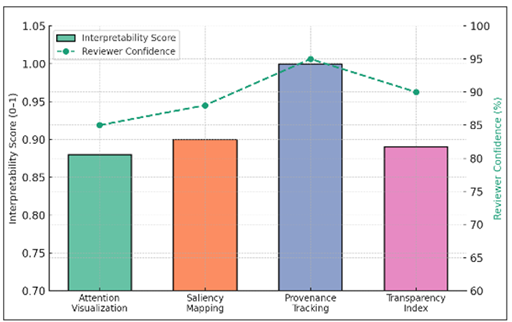
Figure 4 Ethical Transparency and Interpretability Metrics
This participatory model is the way in which the communities are transformed into active co-curators of the cultural data. The Cultural Authenticity Score (CAS = 8.7) and Representation Diversity Index (RDI = 0.82) are high to ensure that AI can promote equity in terms of representation of cultures under the condition of community collaboration and ethical design. This local knowledge integration will reduce the threat of cultural homogenization in Figure 4 whereby digitization enhances and not eliminates the diversity in the region. The framework is technologically powerful in terms of showing the strength of multimodal integration and semantic reasoning in the process of linking fragmented art repositories. The combination of computer vision, NLP, and ontology alignment allows the AI system to grasp both or either of the two e dimensions of cultural expression (tangible and intangible).
Figure 5
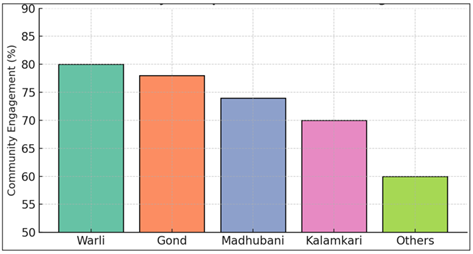
Figure 5 Cultural Inclusivity and Representation Balance
The resultant Regional Art Knowledge Graph (RAKG) is a dynamic semantic network that connects artists, materials, motifs, and geographic settings that links fragmented information into a unified digital heritage network as illustrated in Figure 5.
Figure 6

Figure 6 Technological Synergy in the Regional Art Knowledge
Graph (RAKG)
In a bigger sense, the success of this AI-powered system implies the development of a sustainable digital heritage system. The framework creates an ethical model of AI application in the culture sphere in the future by balancing automation with human interpretation. Its design is scalable to other traditions of art, and can also be integrated with international networks of heritage e.g. European or the Indian Digital Heritage Initiative as shown in Figure 6. Furthermore, the addition of the environmental metadata and lifecycle monitoring opens the possibility of assessing the sustainability footprint of the digital preservation activities, thus connecting the cultural heritage to the worldwide sustainability agenda.
The discussion supports the argument that cultural empathy has to be accompanied by technological sophistication. The framework does not only progress the computational accuracy, but it also reinvents the connection between AI and human creativity. It is an example of how machine intelligence can act as a cultural interpreter to enable communication between the old craftsmen and the digital systems to retain the emotional and symbolic aspects of artwork and take it into the new digital horizons. Therefore, the system is a prototype of the future of the AI-enhanced heritage preservation process in which the values of accuracy, ethics, and authenticity live in a common digital future.
7. Conclusion
The research study of artificial intelligence to the art mapping and preservation of the territory are implemented in the new concept of the cultural heritage preservation, its definition and renovation in the digital world. This model is a sign that morally cultivated AI that is specially trained based on the situation can transcend its computational feature and evolve itself into a thinking companion in cultural conservation. Using its multiplex architecture comprising of data capture, AI analytics, development of semantic knowledge graph and interactive visualization the system is successful in transforming fragmented data on art into coherent and knowable knowledge. Empirical reviews testify to the soundness of the framework that has a high level of accuracy in visual recognition and semantic comprehension, as well as a high level of interpretability and cultural authenticity scores. Attempting to make the system transparent, inclusive, and ethically responsible is guaranteed by the introduction of blockchain provenance tracking, explainable AI modules, and community involvement. The present study highlights the point that cultural conservation is not only an archival process but a dynamic exchange between technology and man. The mapping and knowledge graph model that can be enabled using AI connects this conversation by enabling machine learning systems as well as human societies to co-curate and nurture artistic diversity. In the future, federated learning architectures over cross-border cultural data, immersive experiences where communities can experience stories and policymaking through AI may be considered possible. Essentially, the work opens the path to a smart cultural infrastructure in which information, morals, and creativity would intersect to preserve the artistic legacy of man.
CONFLICT OF INTERESTS
None.
ACKNOWLEDGMENTS
None.
REFERENCES
Alizadeh, S. (2017). Cleaning and Restoration of an Oil Painting with a Polymer Gel in Iran. Conservation Science in Cultural Heritage, 17, 139–147.
Agrawal, K., Aggarwal, M., Tanwar, S., Sharma, G., Bokoro, P. N., and Sharma, R. (2022). An Extensive Blockchain-Based Applications Survey: Tools, Frameworks, Opportunities, Challenges and Solutions. IEEE Access, 10, 116858–116906. https://doi.org/10.1109/ACCESS.2022.3219160
Amany, M. K., Gehad, G. M., Niveen, N. K. F., and Ammar, W. B. (2022). Conservation of an Oil Painting from the Beginning of 20th Century. Редакционная Коллегия, 27–31, 315.
Cao, Y., and Scaioni, M. (2021). 3DLEB-Net: Label-Efficient Deep Learning-Based Semantic Segmentation of Building Point Clouds at LoD3 Level. Applied Sciences, 11(19), Article 8996. https://doi.org/10.3390/app11198996
Cao, Y., Teruggi, S., Fassi, F., and Scaioni, M. (2022). A Comprehensive Understanding of Machine Learning and Deep Learning Methods for 3D Architectural Cultural Heritage Point Cloud Semantic Segmentation. In Proceedings of the Italian Conference on Geomatics and Geospatial Technologies (329–341). Springer. https://doi.org/10.1007/978-3-031-17439-1_24
Ferguson, E., Dunne, T., Windrim, L., Bargoti, S., Ahsan, N., and Altamimi, W. (2021). Automated Painting Survey, Degree of Rusting Fication, and Mapping with Machine Learning. In Proceedings of the Abu Dhabi International Petroleum Exhibition and Conference (Paper No. D012S130R001). https://doi.org/10.2118/208119-MS
Gaber, J. A., Youssef, S. M., and Fathalla, K. M. (2023). The Role of Artificial Intelligence and Machine Learning in Preserving Cultural Heritage and Artworks Via Virtual Restoration. ISPRS Annals of the Photogrammetry, Remote Sensing and Spatial Information Sciences, X(1/W1), 185–190. https://doi.org/10.5194/isprs-annals-X-1-W1-2023-185-2023
Gujski, L., di Filippo, A., and Limongiello, M. (2022). Machine Learning Clustering for Point Clouds Optimisation Via Feature Analysis in Cultural Heritage. International Archives of the Photogrammetry, Remote Sensing and Spatial Information Sciences, XLVI(2/W1), 245–251. https://doi.org/10.5194/isprs-archives-XLVI-2-W1-2022-245-2022
Mansuri, L. E., and Patel, D. A. (2022). Current State of Art in Artificial Intelligence and Ubiquitous Cities. Springer.
Musicco, A., Galantucci, R. A., Bruno, S., Verdoscia, C., and Fatiguso, F. (2021). Automatic Point Cloud Segmentation for the Detection of Alterations on Historical Buildings Through an Unsupervised and Clustering-Based Machine Learning Approach. ISPRS Annals of the Photogrammetry, Remote Sensing and Spatial Information Sciences, V(2), 129–136. https://doi.org/10.5194/isprs-annals-V-2-2021-129-2021
Pellis, E., Masiero, A., Tucci, G., Betti, M., and Grussenmeyer, P. (2021). Assembling an Image and Point Cloud Dataset for Heritage Building Semantic Segmentation. International Archives of the Photogrammetry, Remote Sensing and Spatial Information Sciences, XLVI(M-1), 539–546. https://doi.org/10.5194/isprs-archives-XLVI-M-1-2021-539-2021
Pellis, E., Murtiyoso, A., Masiero, A., Tucci, G., Betti, M., and Grussenmeyer, P. (2022). An Image-Based Deep Learning Workflow for 3D Heritage Point Cloud Semantic Segmentation. In Proceedings of the 9th International Workshop on 3D-ARCH: 3D Virtual Reconstruction and Visualization of Complex Architectures (426–434). https://doi.org/10.5194/isprs-archives-XLVI-2-W1-2022-429-2022
Tegmark, M. (2018). Life 3.0: Being Human in the Age of Artificial Intelligence. Knopf Doubleday Publishing Group.
Yu, T., Lin, C., Zhang, S., Wang, C., Ding, X., An, H., Liu, X., Qu, T., Wan, L., and You, S. (2022). Artificial Intelligence for Dunhuang Cultural Heritage Protection: The Project and the Dataset. International Journal of Computer Vision, 130, 2646–2673. https://doi.org/10.1007/s11263-022-01665-x
Zabari, N. (2021). Analysis of Craquelure Patterns in Historical Painting Using Image Processing Along with Neural Network Algorithms. In Proceedings of SPIE: Optics for Arts, Architecture, and Archaeology VIII (Vol. 11784, 21–32). https://doi.org/10.1117/12.2593982
|
|
 This work is licensed under a: Creative Commons Attribution 4.0 International License
© ShodhKosh 2025. All Rights Reserved.