ShodhKosh: Journal of Visual and Performing ArtsISSN (Online): 2582-7472
|
|
Virtual Art Spaces and Machine Learning Curation
Poonam Kumari 1 , Prachi Rashmi 2, Subhash Chandra 3
 ,
Ankit Sachdeva 4
,
Ankit Sachdeva 4
 ,
Dr. Raj Kumari Ghosh 5
,
Dr. Raj Kumari Ghosh 5 ,
Harsimrat Kandhari 6,
Omkar Mahesh Manav 7
,
Harsimrat Kandhari 6,
Omkar Mahesh Manav 7
1 Assistant
Professor, School of Sciences, Noida International University, India
2 Lloyd Law College, Greater Noida, Uttar Pradesh 201306, India
3 Assistant
Professor, Department of Computer Science and Engineering (AIML), Noida
Institute of Engineering and Technology, Greater Noida, Uttar Pradesh, India
4 Centre
of Research Impact and Outcome, Chitkara University, Rajpura- 140417, Punjab,
India
5 Associate
Professor, Department of English, Arka Jain University, Jamshedpur, Jharkhand,
India
6 Chitkara Centre for Research and Development, Chitkara University,
Himachal Pradesh, Solan 174103, India
7 Department of Engineering, Science and Humanities, Vishwakarma
Institute of Technology, Pune, Maharashtra, India
|
|
|
ABSTRACT |
|
|
With the
development of machine learning (ML), the concept of virtual space in art is
becoming a reality, and it is changing the established curatorial procedures
and altering the ways in which audiences experience art. This paper explores
the dynamic overlap between ML-driven systems and immersive digital spaces to
know how curatorial decision-making, experience of audiences, and
interpretation of art is being redefined. The study
presents findings of virtual galleries, online archives and interactive display
sites based on qualitative and quantitative approaches to assessing how
algorithms predict, classify and even create visual artworks. Specific focus
is made on the recommendation engines, neural models of style analysis, and
generative networks that help to come up with new forms of curators.
Simultaneously, the paper examines virtual and augmented reality (VR/AR) as
experiential models with a particular focus on how the designs of
immersivity, interactivity, and international openness broaden the curatorial
practice. These virtual spaces give the viewer a chance to engage more,
allowing them to create their own paths in collections of art and disrupting traditional ideas of authorship and originality
as well as interpretive power. |
|||
|
Received 23 February 2025 Accepted 20 June 2025 Published 20 December 2025 Corresponding Author Poonam Kumari, poonam.kumari1@niu.edu.in DOI 10.29121/shodhkosh.v6.i3s.2025.6802 Funding: This research
received no specific grant from any funding agency in the public, commercial,
or not-for-profit sectors. Copyright: © 2025 The
Author(s). This work is licensed under a Creative Commons
Attribution 4.0 International License. With the
license CC-BY, authors retain the copyright, allowing anyone to download,
reuse, re-print, modify, distribute, and/or copy their contribution. The work
must be properly attributed to its author.
|
|||
|
Keywords: Machine Learning Curation, Virtual Art Spaces,
AI-Driven Exhibitions, Digital Curation Ethics, Immersive VR/AR Art
Experiences |
|||


1. INTRODUCTION
The situation in the sphere of the modern art presentation and curatorial practice is shifting with the blistering amalgamation of digital technologies, immersive media and artificial intelligence. As museums, galleries and independent creators are delving further into the virtual world, the long-established traditions that have dominated the process of displaying, interpreting and meditating art have been reconsidered with the aid of the computational system. The virtual spaces of art, such as a 3D gallery accessible in a web browser or full implementation of virtual reality (VR) and augmented reality (AR) are offering new possibilities of engagement that transcends geographical boundaries and ensured that art could be viewed, interacted with and experienced in a manner previously unattainable in a gallery. Machine learning (ML) as a growing digital ecosystem has already become a mandatory requirement that enables a curatorial dynamic, a more dynamic, adaptive and personal process and form than ever. Traditionally, art curation has been based upon the experience, intuition and contextual knowledge of human curators who define the thematic, aesthetic, and educative parameters of exhibitions Chen et al. (2023). This model is however challenged and supplemented by the emergence of data-driven tools. ML algorithms are able to process large volumes of visual data, identify a stylistic pattern, categorize artworks according to genre or time and make suggestions to individual users. These computing abilities open up new opportunities to the organization of exhibitions as well as the improvement of the experiences of visitors. With the rise in the number of digital art collections and the vast increase in online participation, ML-based systems are vital in navigating, interpreting and activating the cultural contents more than ever before. Virtual art spaces form an arena where the curation using ML can be most effectively implemented Barglazan et al. (2024). Virtual platforms are infinitely malleable unlike physical galleries: spatial layouts may be remodelled on the fly, artworks can be resized or made dynamic and generative components can be integrated directly into the exhibition space. In that case, ML models can become not only analytical but also creative agents, which will support generative design, augment genres as well as even generate new artworks blurring the delineations between human and machine authorship Leonarduzzi et al. (2018). Figure 1 provides a description of a workflow of virtual art space with machine-learning-based curation. This move also brings back to the question the old arguments and discussions of originality, creativity, and curatorial authority.
Figure 1

Figure 1 Process Flow of Virtual Art Spaces and ML-Driven Curation
Likewise, the very procedure of implementing AI-based systems into the cultural institutions also raises some serious ethical and philosophical concerns. ML algorithms rely on the biases of the data they were trained on, which can be helpful in the process of supporting hegemonic narratives and delegitimizing representatives of underrepresented artists or cultural histories Ajorloo et al. (2024). The concept of transparency, accountability and interpretive fairness is turning out to be an issue of concern as the opaque computing activities continue to creep into curatorial decisions. Also, the relationship of symbiosis between anthropists and robotic tools is evolving, which makes the issue of the redefinition of role, work and agency in the cultural process a prominent concern in an automated culture. This paper examines these multi-layered crossroad, but reviews how ML technologies have shaped curatorial strategies, engagement, and spatial-temporal experience of virtual exhibitions.
2. Literature Review
2.1. Evolution of art curation practices
In the early period, curation was very much associated with aristocratic collections, in which objects were exhibited to indicate wealth, status, and power instead of conveying interpretive messages. As the curatorial profession started to emerge with the emergence of public museums in the eighteenth and nineteenth centuries, curators became more and more scholars, charged with sorting out works, canonization, and coming up with ordered accounts of the exhibits based on art historical approaches Dobbs and Ras (2022). This move placed the curators as intermediaries of culture not just in the preservation but in the intellectual and aesthetic encounter of the visitor. Modern and postmodern movements of the twentieth century have posed a threat to traditional curatorial authority by prophesying experimentation, interdisciplinarity and conceptual approaches to exhibition-making. Harald Szeemann and other curators made an emphasis on the exhibition as an independent creative operation, extending the curatorial activity into an authorship. This was also amplified by the introduction of global biennials, which also diversified curatorial structures, as well as promoted cross-cultural dialogue and collaborative production Zeng et al. (2024).
2.2. Development of Virtual and Augmented Reality in Art Presentation
VR or AR have taken center stage in redefining the ways of displaying, experiencing and interpreting art works. The cultural industry has been introduced to them, in the late twentieth century, with experimental installations in which they were used to project experiments, motion tracking and computer graphics with which to expand the artistic space of the gallery. With the emergence of mature technology, VR and AR shifted out of experiments as a medium in experimental media to accessible curatorial tools especially with the proliferation of mobile devices, headsets, and 3D software Schaerf et al. (2024). VR allows a complete immersion of the setting where the audience can walk through re-created galleries, investigate unrealistic space arrangements, or experience artworks at various size and viewpoints. The British Museum and the Louvre have incorporated the use of VR tours into their museums and visitors all over the world can receive cultural heritage without any limitations imposed by geographic or physical features. AR, on the contrary, superimposes the digital information onto the physical environment, converting the mundane location into an exhibition space Messer (2024). Developments such as AR-powered Art Projector by Google enable individuals to see the masterpieces in real size in the comfort of their homes, which is building new experiences as a supplement to the traditional museum experience. Such technologies also allow curatorial experimentation, which can be used to dynamically tell stories by creating an interactive journey, 360-degree views and multisensory elements including sound and motion.
2.3. Existing Applications of AI and ML in Art Recommendation and Analysis
The digital art ecosystem continues to be influenced by artificial intelligence and machine learning, providing digital art with tools of recommendation, classification, and computational analysis. Recommendation algorithms, which are prevalent in streaming and e-commerce platforms, have been made cultural to make the artistic experience of users more personal. The systems examine viewing history, stylistic preferences, and metadata to recommend artworks, exhibitions, or artists, which are consistent with personal tastes Zaurín and Mulinka (2023). An example of such is Google Arts and Culture, which uses similarity models to suggest visually similar pieces of art, which helps users discover content in large digital collections. Semantic and stylistic analysis can also be supported by the ML models. Convolutional neural networks (CNNs) have been useful in detecting the artistic styles, genres, brushstroke patterns, as well as iconographic features. Such models can either group works of art under art historical categories, find forgeries or even trace cross-temporal influences. These analytical skills are used in academic research, collection management, and planning of collections. Further, the exhibition texts, reviews, and audience feedback are analyzed using natural language processing (NLP) tools to generate information about the interpretive trends and cultural reception Kaur et al. (2019). Table 1 gives an overview of the domains, technologies, methods, limitations, and the relevance of the thesis of projects. These systems put into question the idea of authorship and allow new types of interactive and participatory experience in the virtual world.
Table 1
|
Table 1 Summary of Literature Review |
|||||
|
Project |
Domain |
Technology Used |
ML/AI Method |
Limitations |
Relevance to Thesis |
|
AI and Art Analytics |
Digital Art Studies |
Data Visualization |
Pattern Recognition |
Limited real-time
application |
Foundation for ML-art
analysis |
|
Art Palette / Art Selfie Brauwers and Frasincar
(2023) |
Virtual Museum |
CNNs, Similarity Models |
Classification and
Recommendation |
Bias from limited datasets |
Shows ML-driven user
engagement |
|
Collection AI Experiments |
Museum Curation |
NLP + CNN |
Content Clustering |
Not fully transparent |
Demonstrates institutional
AI curation |
|
AI-Generated Art Auction |
Generative Art |
GANs |
Image Generation |
Authorship concerns |
Raises originality questions |
|
AI Exhibition Interfaces |
Interactive Curation |
User-tracking Systems |
Behavioral ML |
Limited dataset diversity |
Example of adaptive curation |
|
DeepArt Project Fu et al. (2024) |
Computational Creativity |
Deep Neural Nets |
Style Transfer |
Not curatorially contextual |
Shows generative
augmentation |
|
VR Museum Exploration |
Virtual Spaces |
VR/AR Rendering |
Minimal ML |
Not ML-integrated deeply |
Baseline for VR curation |
|
Virtual Gallery Platform Zhao et al. (2024) |
Independent Virtual Space |
WebGL, ML modules |
Recommendation Layer |
Limited scholarly validation |
Highlights personalized
curation |
|
Creative ML Toolkit Alzubaidi et al. (2023) |
Art Production |
GANs, Diffusion Models |
Generative ML |
Not exhibition-specific |
Supports ML-augmented
creativity |
|
Community Art Recommender |
Social Art Platform |
Collaborative Filtering |
Recommendation |
Privacy and bias challenges |
Shows user-focused
personalization |
|
Data-driven curation |
Digital Heritage |
CNNs, Metadata ML |
Style and object detection |
Historical bias in archives |
Demonstrates archival
automation |
|
VR Art Experiences |
Immersive Art |
VR Social Spaces |
Behavioral Analytics |
Limited curatorial depth |
Shows participatory VR
design |
|
AI-Powered Art Spaces |
Blockchain Art |
ML-driven Sorting |
Trait-based Classification |
Not academically curated |
Shows decentralized ML
curation |
|
AI-Generated Virtual
Exhibitions |
Virtual AI Space |
GANs + AR |
Generative Curation |
Experimental quality varies |
Illustrates AI-curated
virtual shows |
3. Methodology
3.1. Qualitative and quantitative methods for studying ML-driven curation
The paper is based on a mixed-method research design that uses both qualitative and quantitative designs to address the complexity of machine learning (ML)-based curation in virtual art worlds. Qualitative approaches offer understanding of the experiential, interpretive and contextual elements of Algorithmically curated exhibition Zhang et al. (2021). They involve semi-structured interviews of curators, digital artists, and platform developers to learn their opinions on the adoption of ML tools. Moreover, thematic analysis of exhibition stories, interface design and the interaction between the visitor can show how the choices of the curator and the visitor are influenced by the computational processes. Quantitative methods supplement this question with measures of the performance and interest of the algorithm. Such analytical methods as the analysis of clickstream data, mapping of virtual navigation trends, and analysis of sentiment of user comments are used to determine trends of behavior in digital exhibitions Ünal et al. (2022). Statistical measures of accuracy in style classification, recommendation precision, and content relevance of algorithmic performance are used to assess the performance of the algorithm.
3.2. Data Collection from Virtual Galleries and Digital Archives
The methodology has data collection as a major part that will facilitate the systematic analysis of the operation of machine learning in the virtual art ecosystems. The work relies on a wide selection of virtual galleries, online exhibitions, and online archives to create a database of the diverse artistic styles, approaches to curatorship, and models of interaction between users. Such platforms as 3D galleries on browsers, VR/AR museum apps, and digital repositories of various institutions allow access to art, metadata and user interaction logs. The data about artworks contain high-resolution images, stylistic features, genre name, artist details, and descriptions Nukarinen et al. (2022). These factors play a crucial role in the assessment of ML models that are required to perform classification, similarity detection, and recommendation. Curatorial information including exhibition layouts, subjective accounts, and explanation of the information is gathered in order to examine the way in which the curatorial goals are in line with or divergent of the algorithmic outputs. The data on user interaction is collected where it can be obtained, like browsing history, spending time on particular artworks, clicking on certain elements, search situations, and similar metrics as likes or comments Brambilla et al. (2022). Figure 2 represents the data pipeline that is based on the integration of virtual galleries and digital archives. The information helps to comprehend the way in which audiences traverse the virtual space and act in response to ML-generated suggestions.
Figure 2

Figure 2 Data Pipeline for Virtual Gallery and Digital Archive Integration
3.3. Evaluation Metrics for Curatorial Relevance and Audience Engagement
Testing of ML-based curation needs both computational and experiential measurements, which aim at quantifying the technical precision of algorithms and the effects on users. The metrics that are used to measure curatorial relevance are those that are typically used in information retrieval and recommender systems, such as precision, recall, F1 score, and mean average precision. These indicators are used to establish the performance of ML models related to identifying stylistically similar works of art, making suitable recommendations, and matching results with curatorial themes. More qualitative assessments by curator and domain experts are included to assess interpretive soundness, aesthetic continuity and narrative consistency in virtual exhibitions. Audience engagement metrics offer information on the way of interaction of the users with ML-curated environments. To get the richness of user experiences and determine the effectiveness of user experiences, behavioral indicators are recorded which include dwell time per artwork, depth of navigation, repetition, and frequency of interactions. The patterns of engagement in space are shown in the form of heatmaps and clickstreams, which identify the areas of the exhibition that receive the most significant attention. The comments and feedback sentiment analysis also helps in gaining knowledge of visitor satisfaction and interpretive resonance.
4. Machine Learning Models in Art Curation
4.1. Recommendation algorithms and personalization techniques
The algorithms of recommendation are at the core of the art curation with the use of ML, which makes it possible to design exhibition journeys and provide individual discovery of the content in the virtual space. These systems are based on methods mostly utilized by the digital media platforms and adjusted to the cultural and aesthetic background of presenting art. One such tool is collaborative filtering, which finds out user preferences based on patterns common to other similar viewers and may use this information to recommend artworks or exhibitions that fit collective behavioral patterns. Content-based filtering, in its turn, analyzes the intrinsic characteristics of works of art, such as visual cues, stylistic signs and labels of themes, to arrive at suggestions that would be most related to the already formed interests. A combination of these to be more precise is hybrid models which prevent limitations of limited number of user data or ambiguous stylistic categories. Figure 3 stipulates architecture of recommendations towards personalized virtual art curation. Machine learning tools of clustering and dimensionality reduction also support personalization whereby artworks are clustered in meaningfully way or latent features space.
Figure 3
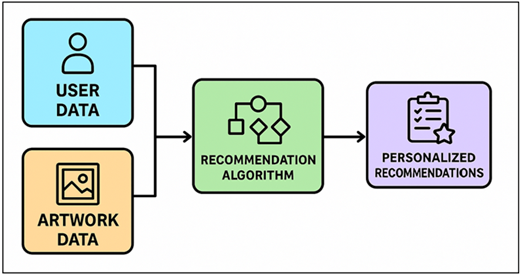
Figure 3 Recommendation System Architecture for Virtual Art Curation
Such computation methods allow dynamically changing computer-generated galleries to react to the user interactive behavior and display custom series of exhibits or interactive hints, changing as the gallery is dynamically changed in real-time. Personalization does not merely end with the artwork suggestions but it also extends to the adaptive interfaces, custom stories, and interactive tools that respond to user inputs. By using the engagement measures (dwell time, navigation and user interaction preferences) algorithms continuously enhance their performance to become more relevant and user-satisfying. Through the study of engagement metrics (dwell time, navigation, and user interaction preferences) algorithms constantly improve their results to increase relevance and user satisfaction.
4.2. Neural Networks for Style Recognition and Art Classification
Neural networks have already become an essential resource in the analysis and classification of artworks in digital and virtual art ecosystems. Convolutional Neural Networks (CNNs) specifically have a very high ability to recognize the visual patterns, which allows them to identify artistic styles, genres, the brushstroke features and compositional patterns that can be done automatically. CNNs are trained on large datasets of labeled artworks to learn hierarchical features that start with simple textures and move up to complicated stylistic signatures so that they can classify works into a movement, say Impressionism, Cubism or Abstract Expressionism, with a decreasing error margin. In addition to classification, other tasks that neural networks can be used to support include artist attribution, detection of forgers, and similarity estimation. Deep learning systems are able to detect fine grained regularities in color schemes, lines, and space structure, which might not be discerned by humans, and play a role in curatorial research and conservation. Neural networks can also be applied to different curatorial contexts by using transfer learning methods to apply larger or more general pretrained models to smaller or more specific training sets of art. These classification options are useful in virtual exhibitions in order to organise collections, direct thematic organization, and power recommendation engines. Style recognition also makes the audience more engaging, as it allows exploring options like find visually similar works or find evolution of style, giving the user more interpretive information.
4.3. Generative Models for Creating or Augmenting Curatorial Experiences
Generative models are revolutionizing the potential of curatorial practice introducing new artworks, elements of the exhibition, and interactive environments in the virtual space of art. Generative Adversarial Networks (GANs), variational autoencoders (VAEs), and diffusion models are some of the methods to enable machines to produce images that resemble an existing style in art or produce completely new forms of aesthetics. They facilitate the experimental methods of curatorship where machine generated work augments or supplements customary exhibitions. The output of generative art can be used by curators to show stylistic development, to recreate hypothetical art, or to show the creativity of algorithms as part of thematic explorations. In the virtual space, generative models can be used to generate more than just single images, to generate spatial and narrative elements. They are able to build adaptive exhibition designs, develop dynamic light effects or ambient effects or produce responsive visuals that respond to audience actions. These applications make the experience immersive and add to the multisensory, participatory experience. Generative AI is also used to facilitate audience creativity. Parameters can be altered to create individualized artworks or variations by the visitor, and the boundary between the viewer, artist and curator has been blurred.
5. Virtual Art Spaces as Experiential Platforms
5.1. Immersive exhibition design using VR/AR technologies
VR provides entirely fabricated digital environments where artworks may be shown at any scale, suspended in unusual positions, or placed in fantastic environments that support conceptual or thematic stories. AR, on the contrary, superimposes digital information on real-life spaces, which allows users to visualize artworks in their personal spaces and creates hybrid shows where virtual and physical worlds are combined. These technologies aid in experimentation of the curatorial by enabling manipulation of space, sensory and temporal dimensions that cannot be manipulated in conventional galleries. It is possible to incorporate dynamic lighting, responsive soundscapes or animated elements that react to the movement of users that create multisensory experiences that enhance engagement. These spaces enable viewers to journey through complicated curatorial discourses through first person accounts, placing viewers within interpretive embedded structures that experience as a lived-in space instead of a subjective one. VR/AR exhibitions design also supports the collaborative and participatory models by allowing the visitors to engage with paintings, and with each other in real-time. These communal virtual environments create a sense of community and co-presence, and recreate elements of the social museum-going but augment it with additional forms of interaction.
5.2. Interactive Interfaces and Audience Participation
Virtual art spaces include interactive interfaces which define the way users navigate, understand and experience digital exhibition. As a contrast to the traditional galleries with their linear or predetermined paths, virtual spaces promote non-linear approaches to discovery through the use of interactive technologies like clickable art pieces, branching stories, adjustable viewpoints, and adjustable display settings. These interfaces allow the visitors to determine how fast, what to order and in which intensity to interact and creates a sense of control that enhances the learning and enjoyment. There is also added value to the audience participation through interactive capabilities which respond to the activity of the users. Motion tracking, gesture control, and haptic point at the fact that individuals are taught to work with art objects, to start working with audio-visual effects or several layers of sense-making. Exhibitions are interactive cultural spaces rather than passive spaces due to social attributes (such as collective viewing rooms, commenting mechanisms or drawing boards). Machine learning facilitates these interactions in which the user behavior is analyzed and the interfaces are modified. Personalized experiences and help in additional aesthetic and contextual interpretation are created by using individualized guides, dynamic recommendation bars and responsive curatorial triggers. The viewer’s become able to see themselves in the digital world with the aid of these adaptation mechanisms contributing to the greater emotional appeal and involvement.
5.3. Accessibility, Inclusivity, and Global Reach of Digital Curation
De-institutionalizing most of the physical museums and galleries, virtual art spaces are an enormous means of making cultural experiences more usable and inclusive. Geographical barrier is minimized whereby individuals at varying locations within the globe can be able to attend exhibitions without spending on travelling or visa restrictions. This cross cultural communication is encouraged by this international connection, as the users are able to familiarize themselves with art and curatorial views that are otherwise shut off. Digital curation also enhances the accessibility to physically, sensually or cognitively challenged individuals. Accessibility too physically, sensually, or cognitively challenged people is also increased through digital curation. The ability to change text font size, audio description, closed captions, alternative navigation, as well as customizable viewing options, favour more inclusive interaction. VR/AR systems can be customized to the needs of the user, allowing guided experiences of users with mobility impairments or lower-motion versions of those sensitive to immersion. Inclusivity covers the aspect of artist and cultural storytelling. By removing institutional filtering of creators, digital platforms can feature artists representing marginalized groups, and diversify the range of voices artists can have in front of the world. Responsible machine learning tools have the potential to assist in bringing overlooked content to the surface and facilitating equal visibility of large collections.
6. Case Studies – Analysis of existing virtual exhibitions using ML
6.1. AI-driven art shows from major institutions
Some of the largest cultural establishments, including the Museum of Modern Art (MoMA), Rijksmuseum and Google Arts and Culture have been on the vanguard of implementing machine learning in virtual exhibitions. Those projects are the evidence that huge collections of art can be used to improve interpretation, access, and user interaction with the help of computational tools. An example of using ML models in Google Arts and Culture would be convolutional neural networks and similarity matching algorithms; through which users can browse artworks by visual characteristics, color scheme, or thematic similarities. Figure 4 illustrates the path of pipeline between digitization and exhibition of AI-curated art shows. Its experiments with Art Palette and Art Selfie demonstrate how engaging games can present people with new pieces of art, as well as demonstrate how algorithmic analysis can be used as an interpretive tool.
Figure 4
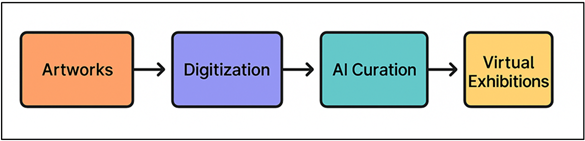
Figure 4 Digitization-to-Exhibition Pipeline for AI-Curated
Art Shows
Other leading museums including MoMA have also experimented with AI-assisted curatorial approaches by creating projects that either analyze archival data, find patterns in artist relationships, or create alternative exhibition histories. The models assist in the reorganization of large collections into dynamic virtual exhibitions which anticipate cross-temporal, cross-geographic, or cross-stylistic relationships. These exhibitions present the audience with new avenues of exploration that are beyond conventional curatorial formats.
6.2. Independent Virtual Galleries Employing ML-Based Personalization
Other trends such as independent virtual galleries and artist-run platforms have become critical pioneers of machine learning to personalized digital exhibitions. Galleries like Artsteps, Kunstmatrix and other NFT-driven galleries use ML algorithms to understand the behaviour of the user by monitoring preferences and viewing patterns, as well as interaction history to create exhibition pathways that are tailored to the interests of the user. Personalization can be dynamically rearranged galleries, dynamic storytelling elements or personalized thematic suggestions which change as the user views the space. Certain standalone platforms use clustering tools to group artworks based on hidden stylistic connections to form user-friendly, intuitively-created so-called visual neighborhoods, which assist in the unstructured exploration of collections. Others combine generative software that enables visitors to generate hybrid art pieces or to Assemble micro-exhibitions, depending on algorithmic prompts, to create an extended participatory position of the audience. These galleries are also experimenting with other curatorial philosophies and bring ML not only as an analytical instrument but as a creative partner. Their playful experiment suggests alternative possibilities of personalization to enhance engagements, support upcoming artists, and open access to curatorial experiences to democracy.
7. Conclusion
Application of machine learning to virtual art space is a pivot in the curatorial practice history and is heading towards the future of hybrid cultural ecosystems where human expertise is in coexistence with computational intelligence. As has been established in this paper, VR/AR-based virtual environment, interactive interface, and huge digital archives are offering greater levels of experimentation, accessibility and interaction with the audience than ever before. The machine learning models optimize these conditions with the help of personalized recommendations, advanced style recognition, and creation of creativity, which make it more dynamic and receptive to the alterations in the exhibitions. At the same time, the introduction OFML-based curation is accompanied by extremely pernicious ethical, philosophical, and institutional issues. Authorship, originality, algorithmic bias and interpretive transparency are only few of the problems that point to a need of responsible and thoughtful implementation. There is still a need of human curators who can mediate such processes, introduce conceptual continuity, contextualise and maintenance of cultural diversity in the online platforms. Their role in their change portrays that instead of displacing curatorial knowledge, automation changes and broadens it. The case studies discussed, both big institutional programs and personal virtual galleries describe and describe a diverse domain of innovativeness. Each of them has its own pros in the sphere of personalization, availability, or quality of education, and they also show some persisting problems in the sphere of data ethics, user trust, and technology limitations.
CONFLICT OF INTERESTS
None.
ACKNOWLEDGMENTS
None.
REFERENCES
Ajorloo, S., Jamarani, A., Kashfi, M., Haghi Kashani, M., and Najafizadeh, A. (2024). A Systematic Review of Machine Learning Methods in Software Testing. Applied Soft Computing, 162, 111805. https://doi.org/10.1016/j.asoc.2024.111805
Alzubaidi, M., Agus, M., Makhlouf, M., Anver, F., Alyafei, K., and Househ, M. (2023). Large-Scale Annotation Dataset for Fetal Head Biometry in Ultrasound Images. Data in Brief, 51, 109708. https://doi.org/10.1016/j.dib.2023.109708
Barglazan, A.-A., Brad, R., and Constantinescu, C. (2024). Image Inpainting Forgery Detection: A Review. Journal of Imaging, 10(2), 42. https://doi.org/10.3390/jimaging10020042
Brambilla, E., Petersen, E., Stendal, K., Sundling, V., MacIntyre, T. E., and Calogiuri, G. (2022). Effects of Immersive Virtual Nature on Nature Connectedness: A Systematic Review Protocol. Digital Health, 8, 20552076221120324. https://doi.org/10.1177/20552076221120324
Brauwers, G., and Frasincar, F. (2023). A General Survey on Attention Mechanisms in Deep Learning. IEEE Transactions on Knowledge and Data Engineering, 35, 3279–3298. https://doi.org/10.1109/TKDE.2021.3126456
Chen, G., Wen, Z., and Hou, F. (2023). Application of Computer Image Processing Technology in Old Artistic Design Restoration. Heliyon, 9, e21366. https://doi.org/10.1016/j.heliyon.2023.e21366
Dobbs, T., and Ras, Z. (2022). On Art Authentication and the Rijksmuseum Challenge: A Residual Neural Network Approach. Expert Systems with Applications, 200, 116933. https://doi.org/10.1016/j.eswa.2022.116933
Fu, Y., Wang, W., Zhu, L., Ye, X., and Yue, H. (2024). Weakly Supervised Semantic Segmentation Based on Superpixel Affinity. Journal of Visual Communication and Image Representation, 101, 104168. https://doi.org/10.1016/j.jvcir.2024.104168
Kaur, H., Pannu, H. S., and Malhi, A. K. (2019). A Systematic Review on Imbalanced Data Challenges in Machine Learning: Applications and solutions. ACM Computing Surveys, 52, 1–36. https://doi.org/10.1145/3343440
Leonarduzzi, R., Liu, H., and Wang, Y. (2018). Scattering Transform and Sparse Linear Classifiers for Art Authentication. Signal Processing, 150, 11–19. https://doi.org/10.1016/j.sigpro.2018.03.012
Messer, U. (2024). Co-Creating Art with Generative Artificial Intelligence: Implications for Artworks and Artists. Computers in Human Behavior: Artificial Humans, 2, 100056. https://doi.org/10.1016/j.chbah.2024.100056
Nukarinen, T., Rantala, J., Korpela, K., Browning, M. H., Istance, H. O., Surakka, V., and Raisamo, R. (2022). Measures and Modalities in Restorative Virtual Natural Environments: An Integrative Narrative Review. Computers in Human Behavior, 126, 107008. https://doi.org/10.1016/j.chb.2021.107008
Schaerf, L., Postma, E., and Popovici, C. (2024). Art Authentication with Vision Transformers. Neural Computing and Applications, 36, 11849–11858. https://doi.org/10.1007/s00521-023-08864-8
Ünal, A. B., Pals, R., Steg, L., Siero, F. W., and van der Zee, K. I. (2022). Is Virtual Reality A Valid tool for Restorative Environments Research? Urban Forestry and Urban Greening, 74, 127673. https://doi.org/10.1016/j.ufug.2022.127673
Zaurín, J. R., and Mulinka, P. (2023). Pytorch-Widedeep: A Flexible Package for Multimodal Deep Learning. Journal of Open Source Software, 8, 5027. https://doi.org/10.21105/joss.05027
Zeng, Z., Zhang, P., Qiu, S., Li, S., and Liu, X. (2024). A Painting Authentication Method Based on Multi-Scale Spatial-Spectral Feature Fusion and Convolutional Neural Network. Computers and Electrical Engineering, 118, 109315. https://doi.org/10.1016/j.compeleceng.2024.109315
Zhang, Z., Sun, K., Yuan, L., Zhang, J., Wang, X., Feng, J., and Torr, P. H. S. (2021). Conditional DETR: A Modularized DETR Framework for Object Detection (arXiv:2108.08902). arXiv. https://arxiv.org/abs/2108.08902
Zhao, S., Fan, Q., Dong, Q., Xing, Z., Yang, X., and He, X. (2024). Efficient Construction And Convergence Analysis of Sparse Convolutional Neural Networks. Neurocomputing, 597, 128032. https://doi.org/10.1016/j.neucom.2024.128032
|
|
 This work is licensed under a: Creative Commons Attribution 4.0 International License
© ShodhKosh 2025. All Rights Reserved.