ShodhKosh: Journal of Visual and Performing ArtsISSN (Online): 2582-7472
|
|
AI for Inclusive Art Education for Differently Abled Learners
Mohd Faisal 1 , Piyush Pal 2
 , Babitha B S 3
 , Himanshu Makhija 4
 , Kalpana Munjal 5
 , Abhinav Mishra 6
 ,
Vishal Ambhore 7
,
Vishal Ambhore 7
1 Lloyd Law College, Greater Noida, Uttar Pradesh 201306, India
2 Assistant Professor, School of Engineering and Technology, Noida International,
University, 203201, India
3 Assistant
Professor, Department of Management Studies, JAIN (Deemed-to-be University),
Bengaluru, Karnataka, India
4 Centre of Research Impact and Outcome, Chitkara University, Rajpura-
140417, Punjab, India
5 Associate Professor, Department of Design, Vivekananda Global
University, Jaipur, India
6 Chitkara Centre for Research and Development, Chitkara University,
Himachal Pradesh, Solan, 174103, India
7 Department of E and TC Engineering Vishwakarma Institute of
Technology, Pune, Maharashtra, 411037 India
|
|
|
ABSTRACT |
|
|
This paper
examines the change potential within Artificial Intelligence (AI) in
supporting the inclusion of the differently abled in learning art. As a form
of expression, art is very vital in the development of creativity, emotional
intelligence, and communication skills. The standard systems of art education
do not however support the diversity of needs of students with physical,
sensory or cognitive disabilities. Through the use of
AI technologies, e.g., Image-to-audio conversion, gesture recognition, speech-to-text,
and others, educators could design adaptive, accessible, and personal
learning experiences. This study is based on the principles of Universal
Design of Learning (UDL) and constructivist theories to explore the role of
AI-driven tools in promoting participation and self-expression as well as
engagement of learners with disabilities. The research clearly uses a
mixed-method design, which involves both qualitative data gained in the
process of interviews and observations and quantitative data analysis on the
level of performance and engagement of learners. It also looks at such issues
as accessibility, affordability, data privacy, as well as ethical issues in
implementing AI technologies in education. The anticipated results are that
there would be better inclusivity, increased learner autonomy, and equal
access to art learning materials. Finally, the study will seek to show how AI
can serve as an agent of social innovation, last, but not least: to fill in
the gaps in educational equity and allow learners with disabilities to take
part in creative processes to their full extent. |
|||
|
Received 10 March 2025 Accepted 15 July 2025 Published 20 December 2025 Corresponding Author Mohd
Faisal, mohd.faisal@lloydlawcollege.edu.in
DOI 10.29121/shodhkosh.v6.i3s.2025.6793 Funding: This research
received no specific grant from any funding agency in the public, commercial,
or not-for-profit sectors. Copyright: © 2025 The
Author(s). This work is licensed under a Creative Commons
Attribution 4.0 International License. With the
license CC-BY, authors retain the copyright, allowing anyone to download,
reuse, re-print, modify, distribute, and/or copy their contribution. The work
must be properly attributed to its author.
|
|||
|
Keywords: Artificial Intelligence, Inclusive Education, Art
Education, Differently Abled Learners, Universal Design for Learning (UDL),
Adaptive Learning |
|||


1. INTRODUCTION
Creativity, imagination, and emotional intelligence are some of the crucial aspects nurtured through art education among learners. It offers self-expression, appreciation of other cultures and holistic cognitive growth. Nevertheless, conventional systems of art education have not been able to meet the different needs of the differently abled learners such as the visually, audially, cognitively, and motor impaired. This segregation limits their activities and their opportunities of being creative. Over the past few years, the increased convergence of technology and pedagogy has presented creative ways of solving these inequalities. One of them is Artificial Intelligence (AI), which can redefine the concept of inclusivity in education. The AI technologies have potentials of personalizing learning experiences, automating accessibility functions, and developing adaptive learning environments that are sensitive to the specific needs of the students. When applied to the context of inclusive art education, AI may be an indispensable measure to address the lack of accessibility by facilitating speech-to-text interfaces, image-to-audio conversion, and gesture recognition interfaces. Such tools do not only increase the communication and interaction, but also enable the differently abled learners to contribute effectively in the creative processes Navas-Bonilla et al. (2025). To give an example, the visually impaired students will be able to perceive the visual art by listening to audio descriptions created by AI and mobility impaired students will be able to create the digital art using AI-driven commands (either gestures or voice). The innovations of this kind contribute to the equality of learning and artistic expression.
The principles of accessibility, diversity and equity form the philosophical base of inclusive education. Models like the Universal Design of Learning (UDL) highlight the need to have flexible instruction that addresses the various needs of the learners. Figure 1 shows how AI technology combines to enhance inclusive art education. In this context, AI provides unprecedented opportunities to execute these principles as it allows creating the functions of personalization and responsive feedback in real time.
Figure 1
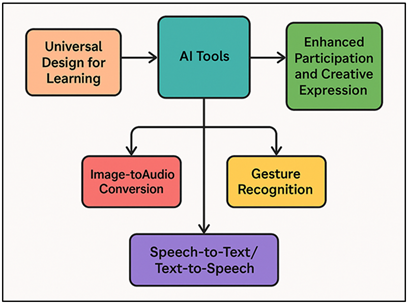
Figure 1 Integration of AI Tools in Inclusive Art Education
Framework
The systems based on AI can process the data about learners, detect personal weaknesses, and suggest specific activities to perform which will fit the strengths and preferences of each student. This flexibility will make sure that learners are not limited by their disabilities but rather, technology is used to enable them to be creative and discover themselves Adeleye et al. (2024). Additionally, AI in art education is supportive of the constructivist and experiential learning theories, which propose the involvement of active learning and building of knowledge through experience. Through intelligent tutoring systems, augmented reality interfaces and emotion-recognition algorithms, AI enables students to acquire knowledge through immersive learning that gives them a chance to have a dynamic interaction with artistic content and digital space. This does not only make the motivation and engagement more significant but also works to build cognitive and socio-emotional skills that are necessary in the lifelong learning process Ramya (2024).
2. Literature Review
2.1. Overview of inclusive education frameworks
The purpose of inclusive education is to have all learners, irrespective of their ability, background and style of learning, access meaningful education without being disadvantaged. The core of this strategy is Universal Design for Learning (UDL) a research-based model created to establish flexible educational settings that support the needs of learners with disabilities. UDL urges teachers to design the purpose of instruction, instructional approaches, materials and assessments so that they can be represented in more than one way, engaged in more than one way, and expressed in more than one way Lestari et al. (2024). In such a way, UDL would change the paradigm of teaching in a one-size-fits-all way to a more dynamic and learner-oriented environment - minimizing obstacles to students with disabilities or other special needs. In addition to UDL, other universal design ideas of education like Universal Design for Instruction (UDI) are also applicable. UDI modifies universal design concepts (originally in architecture) to pedagogy to ensure that learning environments, materials and approaches are inherently available to virtually all learners and that the individualized accommodations are minimized Khalil et al. (2024). Studies have shown that these frameworks when deliberately integrated; by being woven into curricula and through the provision of flexible teaching approaches, lead to equity, better learning outcomes in a richly diverse population, and the right of everyone to education.
2.2. Previous studies on AI applications in education
The application of artificial intelligence (AI) in education (also known as AI in Education or AIED) has found an increasing scholarly audience in the past years. A massive systematic review of more than 2,200 research articles categorized AI applications in education into four broad groups, adaptive learning and personalized tutoring; intelligent assessment and management; profiling and prediction; and new AI-driven educational products. The most researched of them are adaptive learning and individualized tutoring Gupta and Kaul (2024). These systems are AI based and deliver content, speed, and feedback according to the needs of individual learners dynamically in response to their performance, learning rate, and level of understanding. To give an example, more recent studies focus on the idea of personalized learning tracks in which AI recommends learners resources and activities based on their strengths and weaknesses and their prior knowledge. According to empirical findings, such AI systems have the potential to enhance the engagement of learners, improve their achievement, and give real-time feedback, which is particularly beneficial with heterogeneous audiences in classrooms Udvaros and Forman (2023). Table 1 includes summarization of the approaches, perceived limitations, and contextual learning of the reviewed studies. As well, AI-based intelligent assessment and management systems have been employed to automate evaluation and monitor progress and assist in administrative duties, providing educators with additional time to concentrate on pedagogy.
Table 1
|
Table 1 Summary of Literature Review |
|||
|
Focus / Context |
Approach |
Limitations / Gaps Noted |
Notes / Comments |
|
Inclusive education broadly
for students with disabilities / special needs Anshu (2025) |
Systematic literature review |
General; not specific to
art/art-education; many studies focus on mainstream academic content |
Highlights need for policy and
ethical frameworks for sustainable AI integration |
|
Students with various disabilities across educational
settings Kumar et al. (2022) |
Scoping review — mapping AI uses for inclusion |
Very general; lacks detail on modality (visual, audio,
motor) — no focus on creative/arts domains |
Useful for justifying use of AI in special-needs
education broadly |
|
Special needs / students
with disabilities in general education |
Review / conceptual article
on AI-based systems (expert systems, adaptive tutorials, dialogue-based
systems, learning analytics) |
Does not provide empirical
data; conceptual; general-purpose rather than art-specific |
Suggests AI can support
special-needs education broadly, but empirical research is needed for
specific domains |
|
Learners with disabilities (visual, auditory, cognitive
…) Jishnu and Antony (2024) |
Adaptive Learning / personalized instruction,
generative AI for accessible materials |
Focus on academic content (not specifically arts);
limited discussion of creative expression; empirical evaluation may be
limited |
Indicates scope for extending adaptive AI to creative
disciplines like art |
|
Students with visual,
hearing, mobility, intellectual disabilities Vyapari and Nimbhore (2023) |
Qualitative study:
interviews + literature review |
Focus is general; lacks
detailed analysis of art or creative learning; may rely on self-reported data |
Suggests need for more
domain-specific studies (e.g. art, music, creative expression) |
|
Inclusive education settings with diverse learners Nahar et al. (2022) |
Literature review / theoretical analysis |
Non-empirical; more broad;
does not cover domain-specific (art) applications; calls attention to
barriers like connectivity and infrastructure |
Reinforces need for context-aware, inclusive AI
deployment strategies |
|
K-12 and higher education,
including special education / learners with disabilities Ganesan et al. (2022) |
Multi-modal: assistive
technologies, adaptive learning, administrative automation, inclusive design
guidance |
Not empirical research;
broad scope; may lack fine-grained evaluation of learning outcomes or
creative domains |
Useful for institutional and
policy-level justification of inclusive AI deployment |
3. Theoretical Framework
3.1. Principles of Universal Design for Learning (UDL)
Universal Design as a Learning (UDL) model is a model of research-based education that seeks to ensure that all students including students with disabilities can have access to and be effective learners. The concept of universal design, which is a discipline within the field of architecture, has become UDL: the creation of learning environments that anticipate and accommodate the diversity of learners, primarily through proactive design instead of retrofit. It is directed by three principles, which include multiple means of representation, multiple means of action and expression and multiple means of engagement Islam and Based (2019). The former principle is representation, which considers the way information is delivered, meaning that content should be offered in a variety of forms, i.e., text, audio, multimedia, and even touch. This enables different learners to receive and process information, given that they have sensory or cognitive needs. The second principle, action and expression aims at offering a wide variety of ways in which learners can express their comprehension, in the form of writing, speaking, art, or technology-enhanced response Swarnamba and Revanna (2024). Lastly, the principle of engagement promotes the adoption of various policies to arouse interest and motivation because it is known that learners vary in their motivating and sustaining factors. The neuroscience approach of UDL is similar to inclusive pedagogy which focuses on flexibility, accessibility, and personalization Ayala (2023). Combined with AI technologies, UDL principles get even more effective: AI systems will be able to examine the behavior of the learners, offer adaptive supports, and dynamically adapt the content delivery. Therefore, UDL will give the conceptual basis of capitalizing AI in inclusive art education, where learning experiences are just, engaging, and empowering to everyone Paul et al. (2024).
3.2. Constructivist and Experiential Learning Theories
Inclusive and technology enhanced learning relies on constructivist and experiential learning theory as some of its pillars. The constructivism (founded on the contributions of Jean Piaget and Lev Vygotsky) holds that learners are active in their knowledge building process by interacting with their environment (and not passively receiving knowledge). Learning is thereby viewed as a sense-making process where previous experiences, social context and personal interpretations are important factors Mulfari et al. (2021). Constructivism is all about the need to offer physical, interactive and collaborative experiences in inclusive art education where different abled learners can experiment, explore and express themselves without restraint. This is complemented by experiential learning as described by David Kolb which is centered on the learning cycle which incorporates concrete experience, reflective observation, abstract conceptualization and active experimentation. It promotes creativity and critical thinking as the model stimulates the learner to dive deeply into the content with the help of personal experience and reflection. Experience based practices are especially empowering to the differently abled learner as these methods are able to accommodate different sensory, cognitive and emotional means of engagement [19]. These theories acquire new dimensions when they are combined with AI technologies. The AI can be used to simulate environments, monitor the interaction of the learners and offer individual feedback- improving the constructivist and experiential processes.
3.3. AI-Driven Personalization and Adaptive Learning Models
The use of AI-based personalization and adaptive learning models is a new paradigm in the contemporary educational process, facilitating responsive, data-driven, and learner-centered learning. Based on machine-learning algorithms and data analytics, these models track the interaction of learners and provide feedback and strengths and weaknesses, as well as customized content. This personalization becomes particularly important in inclusive art education, whereby the different abled learners are empowered through the ability to tailor learning instructions to their different needs and abilities. AI systems have the capability of identifying the trends in student behaviour, interest and achievement to modify the complexity, pace, and format of artistic work. As an example, a visual aid can be simplified by an AI tool to a learner with low vision or offer real-time voice support to a student with motor impairments. Figure 2 presents artificial intelligence-based personalization that helps to assist a variety of learners in an inclusive art setting. The adaptive learning platforms facilitate proper engagement and motivation by ensuring that learners do not feel overwhelmed and also not under-challenged through constant feedback loops.
Figure 2
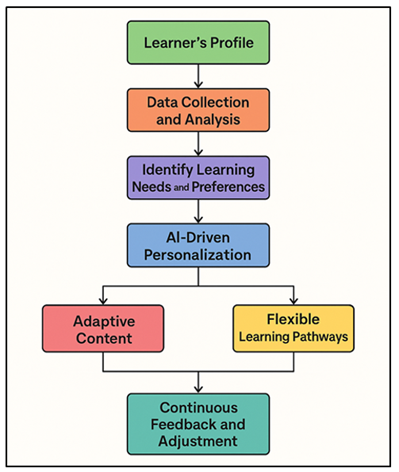
Figure 2 Model of AI-Based Personalization in Inclusive Art
Learning Environments
In addition, AI personalization can be aligned with the principles of UDL because it offers a variety of engagement and expression resources. It fosters learner autonomy where students are able to make decisions as to how they know and show creativity. Notably, adaptive learning systems may also benefit teachers by providing information-based feedback on the progress and requirements of learners to enable teachers to optimize learning.
4. Methodology
4.1. Research design (qualitative, quantitative, or mixed)
The proposed research study will use a mixed-method research design, which is a blend of qualitative and quantitative research designs, to thoroughly study the application of Artificial Intelligence (AI) in inclusive art education of learners with disabilities. The mixed-method approach allows triangulating data- data collected through various sources to confirm validity and richness of results. The quantitative part will entail organized surveys and performance analytics of engagement, accessibility, and learning results following the implementation of AI tools. The qualitative aspect will involve interviews, classroom observations and case studies to obtain lived experiences, attitudes, and perceptions of learners and educators. This design is specifically applicable in educational research where both outcomes and subjective experiences are important in comprehending the effectiveness of pedagogy and are quantifiable. It enables the research to consider not only the role of AI tools in enhancing inclusion and creativity but also their reasons and methods of influencing motivation of learners and creativity in the process of art-making. Combining quantitative data with qualitative knowledge, the mixed-method framework can give a comprehensive idea on how AI can make art education more equal and more accessible so that differently abled students can learn.
4.2. Sample Selection and Participant Profile
This study will also have a purposive sample to make sure that the sample is diverse and thus will be representing the various categories of disabilities, age and level of education. Different learners with disabilities, educators of art and advisors of the AI technology in inclusive schools and art centers will be involved in the study. The participants will be identified in cooperation with special education schools, organizations providing disability support, and art training programs, which already started implementing digital or AI-based tools. The sample size is estimated to be 40-60 learners with different disabilities: visual, hearing, mobility, and cognitive disabilities and 10-15 educators and 5 AI experts. Inclusion criteria will be based on the factors of active engagement in art related education programs by the learners and the one year experience of the educator in the field of inclusion. The versatility in the background of participants will allow conducting an enriched comparative analysis of experiences and outcomes. Such sampling strategy is representative, inclusive, and considers the ethical aspect of the participants in their needs.
4.3. Data Collection Methods
The three approaches that will be used in the collection of data are semi-structured interview, classroom observation, and testing of AI tools. Interviews - To obtain qualitative data about the experiences, challenges, and perceptions of both learners and educators, semi-structured interviews will be held about their experiences related to AI-assisted art education. These interviews will be taped (with their permission) and transcribed in order to be analyzed thematically. Observations The observations will be made directly in the classroom to record the engagement, participation, and creative output of the learners prior to the introduction of AI tools. The behavioral patterns, teacher strategies, and the accessibility improvements will be revealed in the field notes. AI Tools Testing - Art Sessions The chosen AI-based educational tools (e.g., image-to-audio converters, gesture recognition applications, and speech-to-text software) will be incorporated into the art activities. These tools will be used in interaction with the learner under strict guidance so that the researchers are able to measure the performance metrics, the usability and emotional response.
4.4. Data Analysis Techniques
The research will use both qualitative and quantitative methods of analysis in accordance with the mixed-method research design. In the case of the quantitative data, the statistical analysis will be performed with the help of SPSS or Excel to measure such variables as the level of engagement of the learners, their rates of completion, and their improvements in accessibility. Significant differences between pre- and post-intervention outcomes will be identified with the help of descriptive (mean, median, frequency) and inferential statistics (t-tests, ANOVA). The thematic analysis will be used to analyze the qualitative data obtained due to interviews and observations. It is going to include the coding of transcripts, determining the themes, and making sense of patterns associated with the experiences of the learners, their attitudes to the AI tools, and inclusion perception. NVivo or any other similar program can be used to systematize qualitative data. Triangulation will be used to provide credibility through the comparison of results achieved with the help of various sources (interviews, observations, and performance data). Reliability will also be increased with regards to researcher reflexivity and peer debriefing.
5. AI Applications in Inclusive Art Education
5.1. AI tools for visual impairment (e.g., image-to-audio conversion)
The development of the Artificial Intelligence (AI) has contributed to the increased access to visually impaired learners, especially in the field of art education. Image to audio conversion is one of the most influential innovations that allow the visually impaired to see and understand the visual art by listening to the descriptions of the visual pieces. These AI-based technologies apply computer vision and natural language processing (NLP) to visual information (colors, shapes, spatial layouts, etc.) and convert it into audio descriptions of the image. As an illustration, AI-as-you-know-it applications such as the Seeing AI by Microsoft or the Lookout by Google are capable of recognizing and describing objects, scenes, or even emotions depicted in a painting. Figure 3 presents the workflow of visual content to audio, to serve the visually impaired learners. Such technology can be used in an art classroom in which the visually impaired student can be involved in art appreciation and criticism to overcome the sensory gap between eyes and imagination.
Figure 3
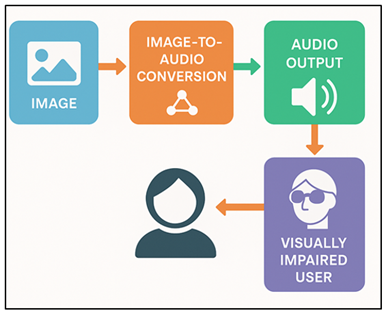
Figure 3 AI Tools for Visual Impairment: Image-to-Audio
Conversion Workflow
Moreover, to supplement these tools, tactile and multimodal feedback systems can be used to transform digital images into textured and haptic representation which encourages more in-depth sensory participation. These technologies not only make art democratized but they also enable differently abled learners to use their creativity with help of other medium like sound-based or touch-based art.
5.2. AI-Driven Gesture Recognition for Mobility-Impaired Learners
The gesture recognition technology of AI has transformed how learners with mobility issues are able to participate in creative and expressive tasks. These systems can interpret body motions, facial expressions or even subtle gestures as input commands using computer vision and machine learning algorithms allowing learners to create art digitally without necessarily using the physical tools used in conventional art production. As an illustration, motion-tracking gadgets and AI-based cameras can be used to identify head or eye movements to manipulate the brush strokes or cursor movements on virtual art environments. These tools can have a great potential in inclusive art classrooms. Young learners with poor motor skills are able to choose colors, shape or even brush size by using facial cues or voice recognition, and turn their creative thoughts into a visual piece. Such projects as the Teachable Machine created by Google or the Microsoft Kinetic-based systems have shown that these technologies are viable when it comes to assisting artistic interaction via adaptive interfaces. Gesture recognition in art education encourages autonomy, confidence, and engagement in learners having different abilities.
5.3. Speech-to-Text and Text-to-Speech Integration in Art Classrooms
AI-driven speech-to-text (STT) and text-to-speech (TTS) technologies have already become an important means of ensuring inclusiveness in contemporary classrooms. These tools are very important in art education because they make it easy to communicate, participate as well as express creativity among the differently abled learners- most of them being those who have hearing impairments, speech impairments and cognitive impairments. The speech-to-text systems are the systems that transform the spoken word to the written forms so that students with hearing challenges can use it to follow the given instructions or classroom discussions in real time. On the other hand, text-to-speech aids learners with visual or reading challenges as text is read out loud, on description pages of a project or on the feedback page. These AI systems enable learners to navigate design applications, explain visual data and use tutorials without using their hands when integrated into digital art platforms. Indicatively, technologies like Google Live Transcribe and Natural Reader allow communication between a teacher and a student to work in both directions, thus, overcoming language and sensory barriers.
6. Challenges and Ethical Considerations
6.1. Accessibility and affordability of AI technologies
Although the opportunities of Artificial Intelligence (AI) to enhance inclusivity in art education are enormous, accessibility and affordability remains a major issue, particularly in developing countries and low-income learning institutions. Numerous AI-based educational systems, i.e. adaptive learning systems or gesture-detection systems or image-to-audio translators, demand expensive hardware, stable internet connection, and expert maintenance. The financial and logistical strength of the art programs at inclusive schools and community-based art programs often falls short of such technological and infrastructural needs. Additionally, proprietary AI solutions can be expensive due to software license or subscription plans that do not allow long-term sustainability. This digital difference increases any inequities that already exist in between the resource-rich and resource-poor institutions and disrupts the principle of universal access. Another potential limitation is that educators and administrators might not have the technical knowledge to successfully implement AI tools in the classroom, thus limiting their application.
6.2. Data Privacy and Security Concerns
Artificial Intelligence (AI) integration in the educational process presents serious privacy and security concerns. The AI systems usually use large data sets that include sensitive personal data, such as the biometric data, behavioral patterns of the learners, and performance measures of the learners. This data is especially susceptible to abuse or unauthorized access in inclusive art education, where differently abused students may make use of voice recognition, facial recognition, or gesture recognition. Breach of data, identity theft, unauthorized surveillance are emerging as issues, particularly when third-party vendors control AI systems that are cloud-based. Besides, ethical breaches may arise because of poor consent tools since learners and guardians do not necessarily know how their data is gathered, stored or exchanged. This is also made complicated by the fact that there are no uniformed data protection policies in every educational institution and nation. In order to reduce these risks, schools and policymakers should adopt effective data governance models that guarantee transparency, informed consent, encryption and limited access to data. The teachers should also be provided with training in terms of ethical data handling and cybersecurity best practice.
6.3. Ethical Implications of AI Bias and Representation
AI systems are as just and non-discriminatory as data and algorithms which drive them. Algorithms bias and representational inequity can have an extensive ethical impact in art education, where creativity and cultural identity meet. The AIs that are trained with a small or biased dataset are prone to reinforce stereotypes or lock out the marginalized voices, especially that of persons with disability, gender, and ethnicity.
Figure 4
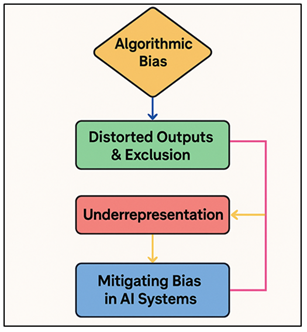
Figure 4 Model of Ethical Challenges in AI Representation for
Inclusive Learning
As an illustration, an AI image recognition application may not be able to process correctly artwork made by visually impaired students or even classify artistic work of culturally diverse individuals. Figure 4 identifies the ethical issues that come to life due to AI representation in inclusive learning scenarios These biases may contribute to the distortion of feedback, assessment, and accessibility tools, which will undermine the inclusive goals of educational programs. Also, the topic of representation in AI-generated art can tend to uphold the status quo of certain cultures, which may not consider the works of non-Western, indigenous, or disabled artists. This strengthens epistemic disparity, in which some voices or aesthetics are underrepresented in digital educational space.
7. Conclusion
The introduction of Artificial Intelligence (AI) into the inclusive educational process in arts is a revolutionary change towards the accessibility, equity, and creative empowerment of differently abled students. Students with disabilities are usually sidelined in traditional educational models which focus on standardized ways of delivering education and assessment. However, AI has the potential to break those walls through individualization of learning processes, personalization and the creation of the conditions in which all learners will be able to be creative without restrictions. AI opens up various ways of engagement and feedback with the world through various innovations, like image-to-audio conversion to support the visually impaired, gesture-recognition devices to support the mobility-challenged learners, and speech-to-text gadgets to assist the people with communication problems. The technologies are based on the principle of the Universal Design of Learning (UDL) and are supplemented by the constructivist and experiential approaches to learning, making it not only accessible but also profoundly interesting and valuable. In addition to the applications in the classroom setting, the ethical application of AI in education requires consideration of concerns about affordability, data privacy, and algorithmic fairness. By treating AI equipment and responsible governance, it will also be necessary to ensure the inclusion and credibility. It is important that policymakers, educators, and technologists should work together to make their systems innovative and socially responsible.
CONFLICT OF INTERESTS
None.
ACKNOWLEDGMENTS
None.
REFERENCES
Adeleye, O. O., Eden, C. A., and Adeniyi, I. S. (2024). Innovative Teaching Methodologies in the Era of Artificial Intelligence: A Review of Inclusive Educational Practices. World Journal of Advanced Engineering Technology and Sciences, 11(2), 69–79. https://doi.org/10.30574/wjaets.2024.11.2.0091
Anshu, A. (2025). Leveraging Internet of Things (IoT) to Enhance Accessibility and Independence for People with Disabilities. LatIA, 3, Article 114. https://doi.org/10.62486/latia2025114
Ayala, S. (2023). ChatGPT as a Universal Design for Learning Tool Supporting College Students with Disabilities. Educational Renaissance, 12, 22–41.
Ganesan, J., Azar, A., Alsenan, S., Kamal, N., Qureshi, B., and Hassanien, A. (2022). Deep Learning Reader for the Visually Impaired. Electronics, 11(20), Article 3335. https://doi.org/10.3390/electronics11203335
Gupta, M., and Kaul, S. (2024). AI in Inclusive Education: A Systematic Review of Opportunities and Challenges in the Indian Context. MIER Journal of Educational Studies, Trends and Practices, 14(2), 429–461. https://doi.org/10.52634/mier/2024/v14/i2/2702
Islam, M. Z., and Based, M. A. (2019). Speech Recognition System for Speech-to-Text and Text-to-Speech for Autistic Persons. Barrister Shameem Haider Patwary, 11, 86.
Jishnu, T., and Antony, A. (2024). LipNet: End-to-End Lipreading. Indian Journal of Data Mining, 4(1), 1–4. https://doi.org/10.54105/ijdm.A1632.04010524
Khalil, M., Slade, S., and Prinsloo, P. (2024). Learning Analytics in Support of Inclusiveness and Disabled Students: A Systematic Review. Journal of Computer Assisted Learning in Higher Education, 36(2), 202–219. https://doi.org/10.1007/s12528-023-09363-4
Kumar, L., Renuka, D., Rose, S., and Wartana, I. (2022). Deep Learning-Based Assistive Technology on Audiovisual Speech Recognition for the Hearing Impaired. International Journal of Cognitive Computing Engineering, 3, 24–30. https://doi.org/10.1016/j.ijcce.2022.01.003
Lestari, A. D. S., Murwani, F., Wardana, L., and Wati, A. (2024). Problems of Inclusive Learning in Fostering Entrepreneurial Motivation in Students with Disabilities: A Systematic Literature Review. Journal of Educational Analysis, 3(2), 161–180. https://doi.org/10.55927/jeda.v3i2.9246
Mulfari, D., Meoni, G., Marini, M., and Fanucci, L. (2021). Machine Learning Assistive Application for users with Speech Disorders. Applied Soft Computing, 103, Article 107147. https://doi.org/10.1016/j.asoc.2021.107147
Nahar, L., Sulaiman, R., and Jaafar, A. (2022). An Interactive Math Braille Learning Application to Assist Blind Students in Bangladesh. Assistive Technology, 34(2), 157–169. https://doi.org/10.1080/10400435.2020.1734112
Navas-Bonilla, C. R., Guerra-Arango, J. A., Oviedo-Guado, D. A., and Murillo-Noriega, D. E. (2025). Inclusive Education Through Technology: A Systematic Review of Types, Tools and Characteristics. Frontiers in Education, 10, Article 1527851. https://doi.org/10.3389/feduc.2025.1527851
Paul, S., Lakhani, D., Aryan, D., Das, S., and Varshney, R. (2024). Lip Reading System for Speech-Impaired Individuals. International Journal for Multidisciplinary Research, 6, Article IJFMR240218643. https://doi.org/10.36948/ijfmr.2024.v06i02.18643
Ramya, M. M. (2024). Advancing Inclusive Learning Through Systematic AI Integration for
Children with Disabilities. Innovative Research, 2, 6–10.
Swarnamba, S., and Revanna, B. (2024). Efficient Examination Method for Blind People Using MatlAB and Embedded Systems. International Journal of Engineering Research and Technology, 13, 1–4.
Udvaros, J., and Forman, N. (2023). Artificial Intelligence and Education 4.0. In Proceedings of the 17th International Technology, Education and Development Conference (6309–6317). Valencia, Spain. https://doi.org/10.21125/inted.2023.1670
Vyapari, R. R., and Nimbhore, D. S. S. (2023). Marathi Isolated Speech Recognition for Diseases Using HTK in the Healthcare Sector. International Journal of Advanced Research in Engineering and Applied Sciences, 12, 1–17.
|
|
 This work is licensed under a: Creative Commons Attribution 4.0 International License
© ShodhKosh 2025. All Rights Reserved.