ShodhKosh: Journal of Visual and Performing ArtsISSN (Online): 2582-7472
|
|
Human–AI Collaboration in Reviving Folk Traditions
Mohd Faisal 1 , Varun Ojha 2
 ,
Mithun Kumar S 3
,
Mithun Kumar S 3 , Ayush Gandhi 4
 ,
Manisha 5
,
Manisha 5 ,
Mohit Aggarwal 6
,
Mohit Aggarwal 6 , Leena Deshpande 7
1 Lloyd Law College, Greater Noida, Uttar Pradesh 201306, India
2 Chitkara
Centre for Research and Development, Chitkara University, Himachal Pradesh,
Solan, 174103, India
3 Assistant Professor, Department of Management Studies, JAIN
(Deemed-to-be University), Bengaluru, Karnataka, India
4 Centre of Research Impact and Outcome, Chitkara University, Rajpura-
140417, Punjab, India
5 Assistant Professor, Department of Development Studies, Vivekananda
Global University, Jaipur, India
6 Assistant Professor School of Engineering and Technology Noida
international University 203201, India
7 Department of Computer Engineering - Software Engineering Vishwakarma
Institute of Technology, Pune, Maharashtra, 411037, India
|
|
|
ABSTRACT |
|
|
The
transformative aspects of human-AI cooperation in people preservation and
revival of folk tradition, including music, visual art, and storytelling, are
addressed in this paper. As more creative industries embrace the role of
artificial intelligence, this paper explores the ways in which AI tools can
support human knowledge to maintain cultural heritage and at the same time
guarantee authenticity and community involvement. The study relies on
qualitative and mixed-method research, such as case studies of the
restoration of folk songs with the help of AI, the models of generative art,
and the use of natural language processing (NLP) in folk stories. By
examining online archives, discussing with cultural practitioners and
analyzing AI-generated results, this study will describe changing trends in
human-machine co-creation. The results indicate that AI has an important role
in documentation, restoration, and creative reinterpretation of folk
traditions to increase the accessibility and engagement of younger audiences.
Nevertheless, there are still struggles on how to preserve cultural
authenticity, ethical use of data and communal ownership. The research
emphasizes that the human-AI partnership is best served where it is
controlled by the local knowledge and participatory models, so that the
technology could serve as an enabler instead of a substitute of the
conventional art. Investigating the advantages and the drawbacks of AI in the
cultural heritage, the study highlights the importance of the balanced and encompassing
attitude toward the technological introduction. |
|||
|
Received 26 February 2025 Accepted 25 June 2025 Published 20 December 2025 Corresponding Author Mohd
Faisal, mohd.faisal@lloydlawcollege.edu.in DOI 10.29121/shodhkosh.v6.i3s.2025.6790 Funding: This research
received no specific grant from any funding agency in the public, commercial,
or not-for-profit sectors. Copyright: © 2025 The
Author(s). This work is licensed under a Creative Commons
Attribution 4.0 International License. With the
license CC-BY, authors retain the copyright, allowing anyone to download,
reuse, re-print, modify, distribute, and/or copy their contribution. The work
must be properly attributed to its author.
|
|||
|
Keywords: Human–AI Collaboration, Folk Traditions, Cultural
Heritage Preservation, Generative AI, Authenticity, Creative Continuity |
|||



1. INTRODUCTION
Folk traditions constitute the living memory of the community and represent the values, narratives, rituals and the shared innovation. They are a great variety of cultural manifestations, folk music, oral storytelling, crafts, dance, and the visual arts, which have developed over millennia of human experience and contact with nature. Nevertheless, with the swift globalization and the development of technologies, most of these traditions are under the threat of extinction. The process of urbanization, migration and cultural homogenization has undermined local practices that are passed across generations. With the older guardians getting older and the younger getting more involved with the digital media, the survival of these culture heritages is all the more unstable. These conditions set the stage of the introduction of artificial intelligence (AI) as one of the most effective supporters of the process of recording, preserving, and reimagining folk traditions. A human AI collaboration will be the paradigm shift in the interaction with culture. Although the previous technological interventions, including audio recording, photography, and digitization were mostly aimed at documentation and preservation, the new generation of AI technologies allows engaging in the creative process Mattalo (2024). The analysis of cultural tendencies and the creation of art using artificial intelligence (AI) techniques, such as generative models, natural language processing (NLP) applications, and machine learning algorithms can now be performed. As an example, the AI systems can restore the lost melodies, improve the recordings of the folk songs, or create images in the form of the native motifs. Likewise, NLP-based systems can be used to revitalize language used by people who are dying by examining oral histories and translating folk tales into digital formats that are easy to access Ji et al. (2022). Figure 1 shows a working process in partnership which brings together human skills and AI in preserving culture. However, the partnership between people and A.I. in the cultural field is not a technological drill, which is highly philosophical and ethical. The authenticity, authorship and cultural ownership questions come into play when machines are involved in creation or re-creation of heritage.
Figure 1
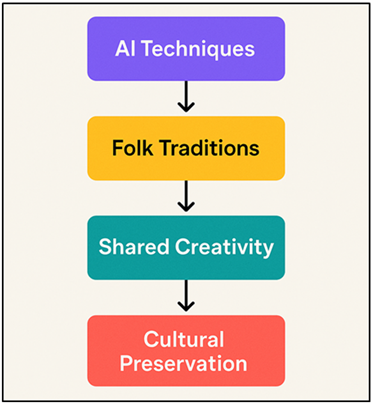
Figure 1 Model of Collaborative Workflow Between Humans and
AI in Cultural Preservation
Is it possible to consider an AIsong created folk song a part of the community it depicts? How can one make sure that the reproductions under AI are faithful to the cultural contexts in which they were created? The questions bring out the necessity of a human-centered approach, which regards AI not as an alternative to the representatives of tradition, but as a supplement that enhances the inventive power of humanity and guarantees the continuum of its expression in new patterns Duong et al. (2023).
2. Literature Review
2.1. Historical overview of folk art preservation efforts
The conservancy of folk art has been a critical effort in the continuation and continuity of the culture of societies. In the past, folk traditions were passed on orally through apprenticeship within communities and based on the interaction of people greatly. Initial preservation activities in the 19th and early 20th century were linked with the development of nationalism and the ethnography. The systematic collection and classification of songs, tales and crafts were performed by folklorists and anthropologists including the Brothers Grimm in Europe or A. K. Ramanujan in India. These were aimed at preserving the traditions that were seen to be threatened by modernization and colonialism Higgs and Stornaiuolo (2024). With the introduction of recording technologies in the 20th century in the form of phonographs, film reels, and photography, a major change in the methods of preservation took place. The support of fieldwork projects in the form of oral and visual heritage repositories was initiated by institutions like UNESCO or national archives. Although those were made, preservation was still in most ways an archival phenomenon, focusing on storing rather than on cultural action Chen et al. (2020). In most instances, the practices in documentation alienated traditions out of their contexts of life and made dynamic practices static. Towards the end of the 20th century, preservation became the broadest concept of heritage conservation as it was extended to revitalization and community engagement. Transmission took place in the form of cultural festivals, folk museums and educational programs. It began focusing on the active practice of preserving intangible heritage, and it conforms to the 2003 Convention on Intangible Cultural Heritage by UNESCO, which promotes participatory and community-based practices, which preconditions the adoption of digital and AI technologies as the part of modern-day preservation activities Imran and Almusharraf (2023).
2.2. Previous Uses of Technology in Cultural Heritage Conservation
Technological innovation has contributed to the cultural heritage conservation in a transformative manner that started as the documentation tools and changed to interactive platforms that allow preservation, restoration, and dissemination. There were early projects that were involved with digitization, scanning manuscripts, the recording of oral history, and the photographing of artifacts to prevent their physical deterioration. The advent of the internet and online databases in the 1990s democratized the process as scholars and communities were able to share and archive heritage materials all over the world. Examples of such projects included the Smithsonian project to archive folkways as part of its work on the Digital archive: Folkways Recordings and the European Digital Heritage Initiative Uddin et al. (2023). Towards the beginning of the 2000s, the introduction of 3D scanning, augmented reality (AR) and virtual reality (VR) technologies meant immersive conservation techniques. These inventions allowed to recreate the heritage sites that had been lost or destroyed, virtual exhibitions, and interactive telling. As an example, the virtual reproduction of ancient buildings and objects made it possible to educate and interact even when geographical limits are crossed Wu et al. (2024). Geographic Information system (GIS) also aided in mapping of intangible heritage practices in regions. Nevertheless, even with these developments, the majority of technological interventions were representation-oriented instead of being collaboration-oriented. The human factor (storytellers, artisans, musicians) was frequently inferior to the digital document.
2.3. Developments in AI for Creative and Cultural Industries
Artificial intelligence has incredibly quickly become a disruptive force in the creative and cultural sectors, the way art, music, and language are created, understood, and stored. At its initial development, AI apps were used to recognize patterns and analyze data, which helped to catalog the artworks and identify forgeries. The evolution of AI has taken place with time, as more sophisticated processes of deep learning and generative models emerged, as analytical tools gave way to creative partners. The Generative Adversarial Networks (GANs) as well as transformer-based models like GPT and DALL•E have allowed machines to create images, text, music with a high level of cultural and aesthetic refinement Acemoglu and Restrepo (2020). Artificial intelligence has found applications in arts, including restoring lost paintings, creating music in the manner of classical composers, and creating hybrid styles that combine conventional and modern art. Likewise, in literature and linguistics, AI-based natural language processing (NLP) systems have been used to deconstruct and recreate the dying languages and folk stories. Artificial intelligence in the museum industry supports smart curation, forecast restoration and personalization of the audience Pennycook and Rand (2021). The role of AI in culture is controversial, although it may be relevant. It has been criticized as sometimes compromising the authenticity and disappearance of locality, and has equally been seen as a democratizing force in creativity and cultural inclusion. Table 1 provides a summary of literature on human-AI cooperation that underpins folk tradition revival. Recent studies focus on the idea of human-AI collaboration a model in which technology can enhance the human imagination but remain pegged on cultural ethics so that innovation does not exclude heritage conservation and cultural diversity respect.
Table 1
|
Table 1 Summary of Related Work on Human–AI Collaboration in Folk Tradition Revival |
||||
|
Focus Area |
Method Used |
Cultural Context |
Key Contribution |
Outcome / Findings |
|
Folk Music Restoration |
Machine Learning (Audio
Filtering) |
European Folk Songs |
Automated restoration of old
recordings |
Improved sound clarity and
data recovery |
|
Cultural Preservation Scholte and Sweeting (2022) |
Digital Archiving Systems |
Global (Multicultural) |
Creation of online folk heritage repositories |
Increased global accessibility |
|
Visual Folk Art Cibu et al. (2023) |
GAN-based Image
Reconstruction |
Korean Folk Patterns |
AI-generated traditional
motifs |
Revived lost textile designs |
|
Language Preservation |
NLP and Speech Recognition |
Indian Oral Traditions |
AI transcription of endangered dialects |
Enhanced linguistic databases |
|
Art Digitization |
Deep Learning + AR |
Multiregional Folk Arts |
Immersive folk art
experiences |
Increased youth engagement |
|
Folk Storytelling |
NLP + Neural Translation |
Latin American Folklore |
AI narrative translation and voice synthesis |
Multilingual folk story dissemination |
|
Cross-cultural Creativity Li et al. (2024) |
Co-creative AI Platforms |
Global Indigenous
Communities |
Human–AI joint creative
experiments |
Hybrid art forms emerged |
|
Music Composition |
Generative Neural Networks |
Indian Classical–Folk Fusion |
AI-assisted composition tools |
Modern reinterpretations of folk tunes |
|
Oral History Digitization |
Voice Recognition + AI
Curation |
Sub-Saharan Africa |
Collection of ancestral
stories |
Preservation of oral
legacies |
|
Folk Dance Analysis Gan et al. (2023) |
Motion Capture + ML |
Chinese Folk Dances |
Captured traditional movement data |
Created motion archives for training |
|
Multimodal Preservation Veeramachaneni (2025) |
Mixed AI Framework (Text,
Audio, Image) |
Pan-European Folk Heritage |
Integrated archives for
diverse traditions |
Enhanced interdisciplinary
research |
|
Storytelling and Language |
Transformer-based NLP Models |
Japanese Folklore |
Automated generation of mythic tales |
New narratives inspired by folklore |
|
Human–AI Cultural Synergy |
Mixed Methods + Community AI
Tools |
Indian and Global Folk
Contexts |
Framework for ethical AI
collaboration |
Balanced preservation and
innovation |
3. Methodology
3.1. Research design (qualitative, quantitative, or mixed methods)
In this study, the mixed-methods research design (qualitative and quantitative approach) is to be used to investigate the human-AI collaboration in the revival of folk traditions in a comprehensive way. The mixed-method model enables interpretation of cultural circumstances and empirical analysis of the technologic results. The qualitative aspect deals with the experiences, perception and creative process of artists, folklorists, and technologists involved in AI-help cultural projects. It relies on ethnographic observation, semi-structured interviews, and content analysis to reflect the detailed human-AI tools interactions in creative situations. The quantitative dimension complements this with the metrics of collaborative effectiveness measured in the form of output quality metrics, audience interaction metrics, and cultural authenticity metrics based on expert evaluation scores and digital metrics. The combination of the methods will make sure that the human and technological sides of the analysis are covered. Moreover, such a design provides an opportunity to carry out a comparative analysis of the traditional preservation practices with the AI-enhanced ones and give the researchers a chance to find out the crucial differences in the process, efficiency, and impact. Narrative data and performance indicators complement each other and make the results of the study even more valid, as they can give the multidimensional picture of the role AI plays in cultural continuity.
3.2. Data Sources
The article relies on a variety of sources of data to be able to have a comprehensive and representative view of human-AI cooperation in the field of cultural preservation. Primary data are gathered by visiting communities where folk art is practiced where participatory observation is employed. This will include visiting festivals, workshops, and shows where AI technologies are already taken into consideration during the creative processes. The semi-structured interviews are carried out with the main stakeholders, folk artists, cultural historians, AI developers, and policymakers, to collect the views on the opportunities and challenges concerning technological collaboration. Digital archives, academic databases, and institutional repositories are the sources of secondary data, including the collections of Intangible Cultural Heritage of UNESCO and regional ethnographic databases. These sources give some background information, record of previous preservation efforts, and instances of cultural innovation using AI. The paper also provides case studies of AI-based cultural projects including AI-generated folk songs, machine-generated ethnic art and NLP in endangered languages. The selection of each case takes into account its diversity in areas of culture, technology applied and the extent of community involvement. In order to triangulate, the data of human participants are cross-verified with the digital outputs and archival sources.
3.3. Analytical Tools and AI Systems Involved
The analytical framework is based on a combination of the classical qualitative analysis and use of computational methods to estimate the human-AI cooperation in the process of folk tradition revitalization. Thematic analysis is used on the qualitative side to determine the patterns, values, and new stories that are repeated in the interviews and field observations. The discourse analysis also explores the perception that participants have regarding the role played by AI in enhancing creativity, authenticity and ownership. In terms of the computational aspect, the analysis involves the use of a variety of AI systems and tools applicable to various cultural areas. Machine learning machine learning models like recurrent neural networks (RNNs) and transformer-based models like MusicLM have been studied in the context of music restoration and composition in their ability to recreate the traditional melodic patterns. Generative adversarial networks (GAN) and diffusion models are considered in the field of visual arts when they are capable of producing folk-inspired motifs. Vital to be used are data visualization tools, e.g., Matplotlib in Python, and Tableau, which will help map the relationship between human input and AI output, and sentiment analysis methods, which will be used to determine how well cultures accept AI.
3.4. Criteria for Evaluating Collaboration Effectiveness
In order to measure the success of human-AI collaboration to restore the folk traditions, this paper creates a multidimensional evaluation criterion that addresses the cultural, creative, and technological aspects. The first is authenticity which evaluates the extent to which AI-created or assisted products are loyal to the conventional styles, ideals and community identity. Evaluation of authenticity is done by expert review panels that include folklorists, cultural practitioners, and the representative of the locals. The second criterion is the creativity which evaluates the innovation in blending the old and the new. This involves assessing originality, aesthetic value and how AI tools can help artists to experiment with the new ways of expression without disrupting cultural heritage. Community engagement is the third dimension that deals with the participatory collaboration- the extent to which the technology is involved in local practitioners and maintains intergenerational transmission. This is quantified in terms of interviews, records of participation and workshop or team projects feedback.
4. Case Studies of Human–AI Collaboration
4.1. AI-assisted music restoration and folk song generation
The restoration of music with the help of AI has turned out to be a turning point in the protection and reconstruction of folk music traditions that is going to lose its place in the world. Based on spectral aspects and tonal profiles of the classic instruments such as the sarangi, sitar or banjo, these systems recreate sonically accurate restorations. In addition to restoring, AI is currently also composing folk-inspired abrasions. Such systems as MuseNet of OpenAI and MusicLM by Google have been trained to produce new songs based on the regional musical scales, rhythms, and motifs. In other initiatives like AI Folk Composer Initiative in Ireland or Gaana Reimagined in India, human musicians use AI together to redefine the classic songs to form new pieces that are a blend of tradition and innovation. Nevertheless, people will still be vital in managing datasets, verifying results and cultural authenticity. Artists make AIs follow the tonal shades, improvisational patterns, and linguistic colors that cannot be recreated by the machines unassisted. Figure 2 describes collaborative steps between humans and AI towards folk music restoration. These partnerships show that AI is not so strong that it dethrones the musicians, rather it expands their creative potential - bringing back the lost songs, creating new genres, and closing the time gap between generations.
Figure 2
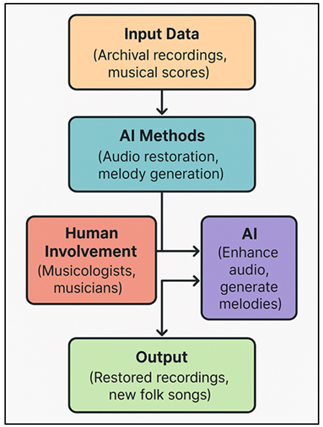
Figure 2 Workflow of Human–AI Collaboration in Folk Music
Restoration
Finally, the example of AI-aided music restoration is an illustration of how digital intelligence can preserve folk culture and create new ideas to express it.
4.2. Visual Art Revival Through Generative Models
Generative artificial intelligence has provided fresh opportunities to the resurgence and reformulation of folk visual arts through the digitally re-creation of motifs, styles, and patterns that have deteriorated over time. With Generative Adversarial Networks (GANs) and diffusion-based models, scientists train models with large amounts of data of conventional paintings, textiles, and carvings, to reproduce images with stylistically correct characteristics. The example of AI Mithila Art Revival and African Pattern Archive Reconstruction shows how AI can replicate the appearance of the aesthetics of indigenous peoples that became erased and lost in the colonial colonialism or was ruined by the material degradation. Not only do these models replicate but they also extend the artistic vocabularies through the creation of novel visual compositions, based on the traditional motifs. As an example, the Warli or Gond patterns created through AI are translated to modern design and fashion, exposing the folk art to the world. Artists filter the outputs of AI by looping feedback on the results and choosing culturally resonant outputs and neglecting just superficial imitations.
4.3. Folk Storytelling and Language Preservation Using NLP
The development of Natural Language Processing (NLP) technologies has created a key to new methods of documenting, translating, and spreading oral traditions, as well as revitalizing folk storytelling and endangered languages. NLP systems will use the large language models (LLMs) and the speech recognition algorithms to transcribe oral stories, conduct linguistic structural recognition, and create computer archives of folk tales and idioms. Examples of projects that have addressed language extinction through the use of machine translation and text-to-speech systems include Endangered Languages AI Collaboration (ELAC) and FolkVoice Archives. By analyzing semantically and creating narratives, AI can reveal thematic and structural patterns of folklore collections and compare the cultures of various cultures. Additionally, storytelling chatbots and digital archives implemented on models such as GPT or BERT can play storytelling choices in several languages in an interactive environment and increase the appeal of younger audiences. Other projects use voice cloning and synthesis to reuse the voices of ancestors, providing an emotional touch to the online narration.
5. Analysis and Findings
5.1. Patterns of human–AI interaction in creative processes
It can also be seen that there are specific dynamics of the form of interaction between humans and AI in the realms of music, visual arts, and storytelling, and that the relationship is more of a synergy than a substitute. In the majority of the projects, human beings will act as curators, instructors, and decoders, leading AI systems with the help of data selection, aesthetic refinement, and contextual validation. Within its turn, AI is a partner of analysis and generative character, who could recognize patterns, recreate forms, and offer creative alternatives. It creates three main ways of interaction, namely, augmentation, in which AI supplements human performance (such as, repairing damaged audio or visuals); co-creation, in which human beings and machines produce works of art together; and automation, in which AI independently creates content which is further developed by human intervention. Co-creation is the most effective among them in terms of creating meaningful innovation and interacting with the community. It has been observed ethnographically that artists view AI as a kind of apprentice employee a tool which builds imagination and allows folk aesthetics to be reinterpreted.
5.2. Benefits and Challenges of Collaboration
The research finds a two-sided opportunities and risks in the partnership of human and AI as a way to preserve culture. Among the most obvious advantages, there is the increased accessibility - AI can help digitalize, translate, and spread folk traditions among world audiences and can ignore geographic and language boundaries. Generative models encourage the reinterpretation of conventional art forms, whereas machine learning technologies help speed up the restoration procedures. The technologies can also facilitate the use of a multigenerational experience, appealing to younger audiences with cultural heritage via digital interfaces, interactive storytelling, and AI-selected exhibitions. Creative augmentation is another major strength. AI helps artists to experiment with style, recreate lost creative works, and the combination of ancient themes and contemporary sensibility. Figure 3 emphasizes ways of improving human-AI cultural revitalization by taking into consideration system-level opportunities and challenges. It is like a stimulus to creativity, the enlargement of the expressive possibilities of folk traditions, though the symbolism remains intact.
Figure 3

Figure 3 System Model Highlighting Opportunities and Barriers
in Human–AI Cultural Revitalization
However, challenges persist. The most important of them are ethical and cultural conflicts related to the ownership of data, its authenticity, and algorithmic bias. Most AI frameworks use data that is not contextually sensitive and this can cause misrepresentations or dilution of the culture.
5.3. Impact on Authenticity, Creativity, and Cultural Continuity
The convergence of human-AI cooperation has an overwhelming effect on the concept of authenticity, creativity, and cultural sustainability in terms of folk tradition preservation. The paper concludes that under the wise human involvement, AI has the potential to strengthen authenticity by reinstating the original tonalities, motives, and language subtleties, which are lost in the course of time. Traditional sounds or patterns that have been digitally recreated tend to revive the cultural memory allowing communities to re-experience their heritage using modern forms. Creativity on the other hand thrives under this hybrid system. The ability of AI to read and recycle large amounts of data facilitates new forms of reinterpreting folk components and gives rise to new genres that cut across intercultural and intergenerational divides. Artists claim that AI encourages experimentation - they are pushing the limits of the aesthetic without disrespecting the tradition. It is a symbiotic creativity that represents a conversation between tradition and technology, which has human intuition providing cultural rooting and AI giving computational innovation.
6. Result and Discussion
The research shows that human-AI collaboration contributes to folk traditions greatly to the extent that such adaptation to change and involvement encourage creativity and engagement. The generative models along with other AI technologies like NLP and music restoration systems are useful in complementing human knowledge when it comes to documenting, and reinterpreting cultural heritage. Nonetheless, it is also crucial to be authentic and ethically impeccable. According to the results, AI is more effective as an augmentative partner that stimulates creativity and access and does not compromise cultural content. Social partnerships made by the community members mean that technology creation is in tandem with culture continuity and intergenerational transmission.
Table 2
|
Table 2 Evaluation of Human–AI Collaboration Effectiveness Across Domains |
||||
|
Domain of Folk Tradition |
Authenticity Score (%) |
Creativity Enhancement (%) |
Community Participation (%) |
AI Accuracy (%) |
|
Folk Music Restoration |
9.1 |
72 |
85 |
93 |
|
Visual Art Generation |
8.4 |
80 |
68 |
89 |
|
Storytelling and NLP |
8.9 |
76 |
90 |
91 |
|
Language Preservation |
9.3 |
70 |
88 |
94 |
Table 2 indicates the relative efficiency of the collaboration between human and AI in the four areas of folk tradition, such as music restoration, visual art generation, storytelling, and language preservation. Of these, language preservation had the best authenticity (9.3%) and AI (94%), which is the accuracy of NLP systems in reflecting linguistic nuances and recreating the languages of the dying dialects. The 4 th Figure 4 is a multidimensional assessment of the contributions of AI to the maintenance of folk traditions.
Figure 4
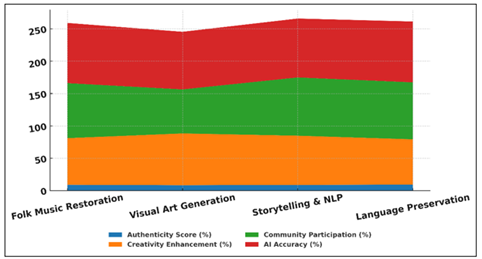
Figure 4 Multidimensional Evaluation of AI’s Role in Folk
Tradition Preservation
The folk music restoration also fared well with high authenticity score (9.1%) and involvement of community (85%), which implies the successful interaction between the traditional musicians and AI-assisted audio restoration software. Figure 5 provides the performance measures in various areas of folk tradition preservation. On the other hand, visual art generation had the highest creativity improvement (80%) but the least community involvement (68%), indicating that AI can be used to influence artistic innovation, and local artists may be deprived of a creative hand in some instances.
Figure 5
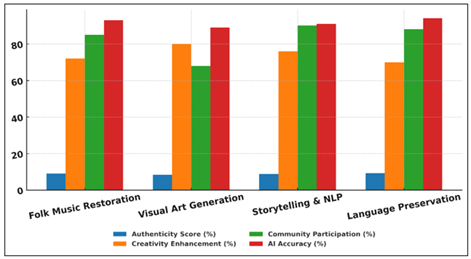
Figure 5 Comparative Performance Metrics Across Folk
Tradition Domains
The performance of Storytelling and NLP applications was balanced and met the criteria of cultural authenticity (8.9 percent) and high community engagement (90 percent) which is realized through participatory digital storytelling. On the whole, these results indicate that AI proves to be the best option in conjunction with human contextual knowledge.
7. Conclusion
This study arrives at the conclusion that human-AI partnership is a disruptive way of preserving, revitalizing, and recreating folk traditions. The use of artificial intelligence in cultural heritage projects increases the opportunities of documentation, restoration, and creative production. In regenerating music with AI support and restoring the visual art, as well as in narration and language maintenance, technology offers new avenues to keep traditional ways alive when they would otherwise become extinct. Notably, the paper highlights the fact that AI works best under human cultural knowledge, emotional intuitions and ethical consciousness. The findings verify that AI can serve as a cultural booster, choosing disjuncture between the old knowledge and the new manifestation. AI can enhance the ecosystem of culture by making archeives more accessible to explore new art forms, creating new artistic interpretations, and increasing access to culture, making it more inclusive and dynamic. However, there are still problems, in this case, with cultural authenticity, data ethics, and community ownership. Being unmonitored by human hands, AI can become an offender of cultural expression misrepresentation or commercialization. Consequently, it is necessary to promote transparent and participatory paradigms of collaboration so that the communities can have an agency over their heritage. Simply put, there is a balance of preservation and innovation between humans and AI since of the synergy between the two. Coupled with respect, co-creation and common responsibility, human-AI collaboration provides a viable approach to learning of the cultural identity between generations.
CONFLICT OF INTERESTS
None.
ACKNOWLEDGMENTS
None.
REFERENCES
Acemoglu, D., and Restrepo, P. (2020). Robots and Jobs: Evidence from U.S. Labor Markets. Journal of Political Economy, 128, 2188–2244. https://doi.org/10.1086/705716
Chen, H. L., Widarso, G. V., and Sutrisno, H. (2020). A Chatbot for Learning Chinese: Learning Achievement and Technology Acceptance. Journal of Educational Computing Research, 58, 1161–1189. https://doi.org/10.1177/0735633120929622
Cibu, B., Delcea, C., Domenteanu, A., and Dumitrescu, G. (2023). Mapping the Evolution of Cybernetics: A Bibliometric Perspective. Computers, 12, Article 237. https://doi.org/10.3390/computers12110237
Duong, C. D., Vu, T. N., and Ngo, T. V. N. (2023). Applying a Modified Technology Acceptance Model to Explain Higher Education Students’ usage of ChatGPT: A Serial Multiple Mediation Model with Knowledge Sharing as a Moderator. The International Journal of Management Education, 21, Article 100883. https://doi.org/10.1016/j.ijme.2023.100883
Gan, W., Ye, Z., Wan, S., and Yu, P. S. (2023). Web 3.0: The Future of Internet. In Companion Proceedings of the ACM Web Conference 2023 (1266–1275). https://doi.org/10.1145/3543873.3587583
Higgs, J. M., and Stornaiuolo, A. (2024). Being Human in the Age of Generative AI: Young People’s Ethical Concerns about Writing and Living with Machines. Reading Research Quarterly, 59, 632–650. https://doi.org/10.1002/rrq.552
Imran, M., and Almusharraf, N. (2023). Analyzing the Role of ChatGPT as a Writing Assistant at Higher Education Level: A Systematic Review of the Literature. Contemporary Educational Technology, 15, Article ep464. https://doi.org/10.30935/cedtech/13605
Ji, Z., Lee, N., Frieske, R., Yu, T., Su, D., Xu, Y., Ishii, E., Bang, Y., Madotto, A., and Fung, P. (2022). Survey of Hallucination in Natural Language Generation. ACM Computing Surveys, 55, 1–38. https://doi.org/10.1145/3571730
Li, J., Qin, R., Guan, S., Hou, J., and Wang, F.-Y. (2024). Blockchain Intelligence: Intelligent Blockchains for Web 3.0 and Beyond. IEEE Transactions on Systems, Man, and Cybernetics: Systems, 54, 6633–6642. https://doi.org/10.1109/TSMC.2023.3348449
Mattalo, B. (2024). Artificial intelligence: The Future of Pedagogy. Journal of Legal Studies Education, 41, 49–71. https://doi.org/10.1111/jlse.12146
Pennycook, G., and Rand, D. G. (2021). The Psychology of Fake News. Trends in Cognitive Sciences, 25, 388–402. https://doi.org/10.1016/j.tics.2021.02.00
Scholte, T., and Sweeting, B. (2022). Possibilities for a Critical Cybernetics. Systems Research and Behavioral Science, 39, 986–989. https://doi.org/10.1002/sres.2891
Uddin, S. J., Albert, A., Ovid, A., and Alsharef, A. (2023). Leveraging ChatGPT to Aid Construction Hazard Recognition and Support Safety Education and Training. Sustainability, 15, Article 7121. https://doi.org/10.3390/su15097121
Veeramachaneni, V. (2025). Decentralized Trust Management in Web 3.0: A Comprehensive Approach to Network Security. Recent Innovations in Wireless Network Security, 7, 9–26.
Wu, T. T., Lee, H. Y., Li, P. H., Huang, C. N., and Huang, Y. M. (2024). Promoting Self-Regulation Progress and Knowledge Construction in Blended Learning Via ChatGPT-Based Learning Aid. Journal of Educational Computing Research, 61, 3–31. https://doi.org/10.1177/07356331231191125
|
|
 This work is licensed under a: Creative Commons Attribution 4.0 International License
© ShodhKosh 2025. All Rights Reserved.