ShodhKosh: Journal of Visual and Performing ArtsISSN (Online): 2582-7472
|
|
Virtual Reality-Based Sculpture Education Frameworks
Dr. Salai Tamilarasan S 1 , Suhas Gupta 2
 , Fehmina Khalique 3
 , R. Thanga Kumar 4
 , Mithhil Arora 5
 , Mistry Roma Lalitchandra 6
 ,
Abhijeet Panigra 7
,
Abhijeet Panigra 7 , Ganesh Korwar 8
1 Assistant
professor, Department of Visual Communication, School of Media Studies, Faculty
of Science and Humanities, SRM Institute of Science and Technology, Ramapuram
Chennai 600089, India
2 Centre
of Research Impact and Outcome, Chitkara University, Rajpura- 140417, Punjab,
India
3 Lloyd Law College, Greater Noida, Uttar Pradesh 201306, India
4 Assistant Professor, Department of
Management Studies, JAIN (Deemed-to-be University), Bengaluru, Karnataka, India
5 Chitkara Centre for Research and
Development, Chitkara University, Himachal Pradesh,
Solan, 174103, India
6 Assistant Professor, Department of
Design, Vivekananda Global University, Jaipur, India
7 Assistant Professor, School of
Business Management, Noida International University 203201, Greater Noida,
Uttar Pradesh, India
8 Department of Mechanical Engineering,
Vishwakarma Institute of Technology, Pune, Maharashtra, 411037 India
|
|
|
ABSTRACT |
|
|
With the
emergence of Virtual Reality (VR) technologies, the field of sculpture
education has gained the opportunity to overcome the limitations of physical
materials, studio environment, and conventional teaching structures. The
proposed paper suggests a cohesive VR-based Sculpture Education Framework
consisting of the combination of immersive tools and the recognized
sculptural practices to improve learning of creativity, development of
technical skills, and a sense of engagement among learners. The research
design includes a mixed-methods approach involving the examination of how VR
platforms can be used to implement experiential learning, encourage learners
to experiment, and expand the availability of sculptural processes to various
learners. The participants (art students and educators) were invited to use a
selected VR sculpting tools to complete modelling tasks, familiarize
themselves with a three-dimensional form and reflect on the creative working
process. The gathered information was used to compare the effectiveness of
VR-based learning rooms in terms of their pedagogical efficiency using
observations, interviews, and performance measures. The research results
prove that VR improves the level of spatial knowledge, promotes riskless
exploration, and allows quick prototyping, thus supplementing the practice of
conventional sculpture but not eliminating it. The fundamental elements of
the suggested conceptual framework include immersive interaction, the
possibility of haptic feedback, multimodal guidance, and pathways of
scaffolded learning. In addition to that, the research mentions effective
pedagogical practices, such as guided discovery, iterative processes of
modelling, hybrid learning methods that integrate physical and virtual
learning. The assessment metrics of assessing the performance of learners,
creative action, and technological fluency are also described. |
|||
|
Received 17 March 2025 Accepted 21 July 2025 Published 20 December 2025 Corresponding Author Dr. Salai
Tamilarasan S, salaitamilarasanmay10@gmail.com
DOI 10.29121/shodhkosh.v6.i3s.2025.6787 Funding: This research
received no specific grant from any funding agency in the public, commercial,
or not-for-profit sectors. Copyright: © 2025 The
Author(s). This work is licensed under a Creative Commons
Attribution 4.0 International License. With the
license CC-BY, authors retain the copyright, allowing anyone to download,
reuse, re-print, modify, distribute, and/or copy their contribution. The work
must be properly attributed to its author.
|
|||
|
Keywords: Virtual Reality, Sculpture Education, Immersive
Learning, Art Pedagogy, Digital Creativity |
|||



1. INTRODUCTION
1.1. Background of Sculpture Education
There was an era when sculpture was not esteemed as an art, and the education of sculptors was scarcely comprehensive, because art schools generally avoided sculpture as an essential component of training, believing it to be a craft rather than a fine, or fine, art, as is typical of today's many art schools and academies.<|human|>A. Background of Sculpture Education There was a time when sculpture was not regarded as an art and education of sculptors was hardly an all-inclusive experience, since in the numerous art schools and academies of to-day, sculpture is discour
As a primary discipline in art and design education, sculpture education traditionally has held a central position in the curriculum, as a core discipline that enables learners to acquire spatial reasoning, material literacy and creative problem solving. With its origins dating back to millennium-old cultures, the idea of sculpture teaching has been traditionally an activity that literally deals with materials, clay, plaster, wood, stone, and metal. Such tactile operations enable the learner to discover form, volume, balance, proportion and structural integrity in the direct manipulation and experimentation. Sculpture studios operate as a collaborative model in the academic setting, with students being provided with personalized instruction, learning with each other through peer critique and slowly developing a language of self-expression. Traditional sculpture education is resource intensive in nature despite its strengths. It needs large physical spaces, special equipment, and constant availability of consumable supplies, which may create economic and logistic limitations both to the institutions and learners. The use of safety also restricts the size of the experimentation (particularly in the case of newcomers to the field operating heavy machinery or dangerous materials) Sunita (2020). Furthermore, the learning process can usually be devoid of immediate chances of un-doing errors or speedily reiterating complicated shapes. With the rise of the digital era of modern education, the field of sculpture is trying to find the means of diversifying their means and incorporating the newest technologies without compromising the tactile and experiential essence of the field. This changing situation creates a significant point of contact between classical craftsmanship and new digital practices in sculpture education, prompting new interest in hybrid pedagogical practices Mystakidis (2022).
1.2. Emergence of Virtual Reality (VR) in Art Education
Virtual Reality (VR) has become a revolutionary technological invention in art and design education in the last ten years. The growing availability of immersive technologies and their ease of use makes VR increasingly popular with teachers who use this technology to improve experiential learning and broaden creative potential, as well as facilitate multimodal pedagogy. VR allows learners to occupy fully three-dimensional virtual environments in which they can make, manipulate and interact with computerized forms with easy gestures and immersive interfaces Syamimi et al. (2020). The Figure 1 demonstrates the gradual adoption of VR in the art education practice. This change corresponds to the general trends in education towards active, student-centered educational settings and computer literacy.
Figure 1
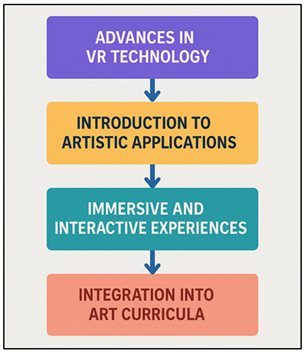
Figure 1 Progression Model of VR Integration in Art Education
VR has special advantages in teaching art, which is not easily available in conventional environments. It does not have physical constraints such as material costs, mess, and the physical constraints of real-world media that allows users to sculpt, paint, model, and prototype. Students can immediately experiment with scale, texture, and form, switching to the macro and micro perspective which would otherwise demand a lot of physical work. VR is also more democratized to the specialized art-making environment where learners in underserved or remote areas can experience something like a studio Lin (2024). In addition, VR facilitates collaborative creation in that a virtual environment is shared and more than one user can co-create in the same space, encouraging peer-to-peer learning and interdisciplinary experimentation. As VR sculpting software like Tilt Brush, Quill, Gravity Sketch and Adobe Medium (which used to be called Oculus Medium) continue to expand, art institutions are acknowledging VR possibilities as a way to supplement and expand traditional studio practices. It is a major development in the conceptualization of learning, expression and integration of technology in the field of creative disciplines Adams et al. (2019).
1.3. Problem Statement and Research Gap
Although Virtual Reality has proven to be of great potential to different fields of creativity, its use in sculpture education is still under explored and not theoretically developed. The bulk of available work revolves around the applications of VR in painting, animation, architecture or general 3D design, which does not provide a sufficient amount of information on the specific pedagogical implication of VR in sculptural education. Sculpture is one of the artistic forms that, contrary to the rest, depends very much on the tactile feedback, the nature of materials and embodied interaction, not yet effectively simulated in digital space Abusaada and Elshater (2021). This inconsistency begs the question of how VR can be significant to the development of sculptural skills without reducing the significance of physical production. More so, recent research is usually concentrating on the potential of technology instead of the educational systems, which is why there has not been a coherent set of models that can be used to determine how VR tools ought to be incorporated into sculpture programs. Very little is known about the effects of VR on the spatial cognition of learners, their creative decision-making, the iterative nature of work processes, and retention of skills in the long-term. A large number of organizations are also affected by issues of cost, usability, instructor readiness, and technology constraints in terms of latency, interface complexity, and low haptic realism Elshater (2019). The reasons behind these are unequal implementation and unstandardized measures of evaluations of VR-based learning in sculpture.
2. Literature Review
2.1. Traditional Sculpture Pedagogies and Limitations
Conventional sculpture pedagogies are based on the hands-on learning, studio-based practice, and the apprenticeship-style learning, where the emphasis is placed on the familiarity with the materials and craftsmanship as well as the immediate manipulating of the three-dimensional bodies. Traditionally, the education of sculpture focused on the observational studies, modeling, and the process of the continuous elaborations, and the instructors, who demonstrate and criticize models in the course of the lesson. Students work with a variety of materials including clay, wood, metal, plaster and stone learning fundamental skills in texture, form, proportion and space consciousness [8]. These methods help in developing creativity, problem solving and an embodied knowledge of sculpture processes. Nevertheless, conventional approaches contain inbuilt constraints that may limit the learning modules and avenues. Physical materials and equipment are expensive, need immense financial investment, and need a large studio area. Resource constraints are also common in many institutions and therefore it is not easy to offer a wide range of materials or, high quality equipment to students Nia and Olugbenga (2020). The issue of safety in sharp tools, heavy machinery and dangerous substances also limits the exploration further, particularly among novices. Moreover, physical sculptures processes are usually not flexible because mistakes cannot be always removed and complicated shapes need time to be built and rebuilt. Such limitations may make the creative process slower and prevent experimentation Cheng et al. (2023). Students are also prone to unequal access to studio facilities during outside hours, which reduces the time of practice and skill development.
2.2. Technological Advancements in Art and Design Education
With technological innovations, the art and design educational environment has undergone a major change, increasing the tools, techniques, and spaces that can be explored to develop creative abilities and skills. Furthermore, in the past twenty years, digital technologies computer-aided design (CAD), 3D modeling, animation software, interactive media and tools of digital fabrication have become part of modern curricula Wang (2022). Using such innovations, learners can see and process the complex shapes, experiment with the design variations, and create much detailed prototypes that are much more precise and faster. This has made digital literacy a very important skill among artists and designers in the contemporary creative sectors. The emergence of such technologies as augmented reality (AR), artificial intelligence (AI), and virtual worlds further expands the possibilities of pedagogy. AR superimposes the digital information in the physical environments, improving conceptualization and mixed-media experimentation. AI-based solutions assist with generative education, robotized remarks, and personalized studying journeys depending on the individual capabilities of students Matthews and Gadaloff (2022). In the meantime, there is a digital fabrication technology, including 3D printing and CNC machining, which offers a prospect of converting virtual models into real artifacts to bridge the divide between digital and physical creative processes Shih and Kung (2024). These technologies also help to create more interactive dynamic and student-oriented learning experiences that allows instructors to incorporate multimodal instruction techniques.
2.3. Existing Virtual Reality Applications in Creative Fields
Virtual Reality has gradually become a conspicuous device in many spheres of creativity as a means of providing immersion and intuitive interface to the creative process and visualization of art objects as well as collaborative work. VR applications, including Tilt Brush, Quill, and Kingspray in digital art and illustration, enable artists to paint and draw in 3D spaces with the ability to give them new spatial parameters of expression. VR in design and architecture is also applied in virtual walkthroughs, spatial planning, and immersive prototyping, and allows designers to assess scale, lighting and form with increased realism Sovhyra (2022). Likewise, VR is a tool used by both animation and film making, where it enables the creators to storyboard, set up scenes, and control characters in virtual environments. VR applications, such as Gravity Sketch and Adobe Medium, in sculptural and modeling scenarios provide a beginner-friendly method of creating shapes without needing to know how to draw or paint, instead through their interaction with gestures and gestures. Such applications enable one to work with virtual materials, carve forms and repeat quickly without the physical constraints of traditional mediums. VR further improves creativity in collaboration as it can allow more than one user to co-create in communal virtual environments; geographical boundaries are not an issue Wang and Lin (2023). Table 1 presents the summary of the previous studies conducted on VR-based art and sculpture education. In addition to production, VR can be used in the field of art education and in museum experiences. Institutions use VR to recreate historical artistic spaces, create virtual exhibitions, and produce interactive learning modules that satisfy the audiences on a deeper level.
Table 1
|
Table 1 Summary of Related Work on VR-Based Art and Sculpture Education |
||||
|
Study Focus |
VR Tool/Platform |
Participants |
Methodology |
Key Findings |
|
VR in 3D design education |
Oculus Medium |
20 students |
Experimental |
Improved spatial skills |
|
VR sculpting usability |
Tilt Brush |
15 artists |
Usability study |
High creative freedom |
|
VR vs. traditional modelling
Alkhwaldi (2024) |
Gravity Sketch |
28 learners |
Comparative |
Faster iteration |
|
Immersive art pedagogy |
HTC Vive |
32 students |
Mixed methods |
Increased motivation |
|
VR in foundational art
courses |
Quill |
18 beginners |
Case study |
Better visualization |
|
Collaborative VR sculpture |
Multi-user VR |
10 students |
Observation |
Enhanced collaboration |
|
VR prototyping workflow |
Adobe Medium |
25 designers |
Qualitative |
Efficient prototyping |
|
VR for spatial perception |
VR Sketch |
30 participants |
Experimental |
Strong spatial gains |
|
Hybrid physical–VR sculpture |
Vive + Clay |
12 artists |
Field study |
Better conceptual planning |
|
VR as creativity enhancer |
Tilt Brush |
40 students |
Survey |
Higher creativity scores |
|
VR in art education
curriculum |
Quest 2 |
22 lecturers |
Interviews |
Positive adoption interest |
|
VR for sculpture beginners |
Medium |
35 novices |
Pre/post-test |
Improved form accuracy |
|
Remote VR sculpture learning |
VR Classroom |
14 learners |
Longitudinal |
Strong remote engagement |
|
VR for 3D conceptualization |
Gravity Sketch |
26 students |
Experiment |
Enhanced visualization |
3. Methodology
3.1. Research Design and Approach
This paper will use a mixed-method research design in order to thoroughly examine the possibility of Virtual Reality (VR) as a teaching instrument in sculptural studies. Combining qualitative and quantitative methods, it will be possible to describe not only quantifiable learning outcomes but also the experiential and perceptual components of the interactions of students with VR sculpting environments. The key goal of the design is to measure the given impacts of VR in creative procedures, spatial cognition, and overall engagement of the learners compared to the traditional training in sculpture. It is an exploratory sequential research study, as the initial phase of the study is based on a qualitative inquiry to determine primary themes, issues, and opportunities of VR based learning. The preliminary observations and interviews provide an illustration which guides the further quantitative evaluations. The structure will enable the study to develop a grounded study of user experiences prior to studying performance-based information. The use of the case study elements is also presented in the research since the participants are involved in the set of VR sculpting assignments that correspond to the classical sculpting principles (form, proportion, volume and texture). To investigate peer interaction in the virtual settings, collaborative learning situations are involved.
3.2. Selection of Participants and Learning Contexts
The sample of this research was chosen strategically to reflect a wide spectrum of experience and skills level and education in the field of visual art. The sample represents undergraduate art students, postgraduate learners, students of sculpture or digital media as well as art educators who have experience of teaching in studio-based learning. This diversity will guarantee the study a wide range of points-of-view on the usability and pedagogical usefulness of VR in sculptural learning. In order to ensure relevance and authenticity, the participants were picked within institutions that provided formal course work in sculpture or other 3D related fields. Such learning environments are conventional sculpture studios, online design studios, and mixed classrooms in which real and virtual creative activities are promoted. The fact that various learning spaces are included allows to compare and contrast the way VR adds or opposes the current learning environments. The participants were informed about the purpose of the study, shown the VR tools, and offered with orientation sessions to make sure that they are familiar with the virtual sculpting interfaces. People were then instructed in a series of creative tasks which were aimed at imitating some of the common sculptural exercises like the modeling of organic shapes, making geometric constructions and abstract experiments.
3.3. Tools, Software, and VR Platforms Used
The research uses an integration of the industry standard VR equipment and the computer software applications that are specifically selected based on their relevance to the practice of sculpture, the ease of use, and the educational quality. The main VR platforms are Meta Quest headsets and HTC Vive systems, where motion tracking and an immersive display feature are necessary in three-dimensional modeling. In order to be versatile, the study combines several VR sculpting applications that provide support to various stages of creative exploration. The main sculpting programs are Adobe Medium (previously Oculus Medium) and Gravity Sketch because of their user-friendly interface and powerful modeling capabilities as well as their close resemblance to conventional sculptural processes. Adobe Medium is a clay-like virtual modeler which permits the user to push, pull, carve, and smooth shapes in a way that is a realistic simulation of working with a material. However, Gravity Sketch has precise modeling, spatial sketching, and collaborative capabilities that can be used in both artistic and design-focused work. Other applications, including Tilt Brush and Quill, are also included that can be used to experiment with gestures and volumetric drawing and help understand how VR aids cross-disciplinary creativity. Gesture-based interface Hardware accessories and VR controllers, as well as devices with stylus-based interface, provide an improved immersion. Recording software, like OBS Studio, will record the actions of the user, which can be analyzed later, and training videos and tutorials are provided to onboard the user.
3.4. Data Collection Techniques
Data collection techniques will involve observational methods, including assessing the student's on-task behavior, and recording notes during the study period.<|human|>D. Data Collection Techniques Data collection procedures will entail observation methods such as measuring the on-task behavior of the student and taking notes as the study progresses.The research utilizes a multi-method data collection approach to the research in order to measure both the qualitative and quantitative aspect of VR-based sculpture learning. The observation is a methodological instrument that allows the researcher to record the behaviours of the participants, problem solving approaches and navigation patterns of the participants in the virtual environment. Gestures, workflow sequences and difficulties in course of sculpting activities are recorded in structured observation protocols. The interviews will give more information on how the participants perceived, learned, and their attitude towards VR as an educational tool. The semi-structured types of interview format are flexible but at the same time include focus on the main themes, including usability, spatial cognition, creativity, and comparison with traditional sculpting. These are the interviews performed prior to and after VR sessions to measure the changes in perception and learning results. The creative products produced in VR are evaluated by means of assessments, and in case of need, their physical counterparts produced by means of traditional method.
4. Conceptual Framework for VR-Based Sculpture Education
4.1. Core Components of the Framework
The VR-based sculpture education conceptual framework relies on a set of mutually supportive elements that increase the learning outcomes, facilitate the creative exploration and reduce the disconnection between the physical and the virtual processes in sculpture. The framework is based on immersive interaction as the power of VR in the framework of the method is to enable learners to interact with the forms of 3D in the real time using intuitive gestures and spatial manipulators. This quality of immersion helps to gain a better insight into the volume, proportion, and structure, which are the key aspects of the development of sculptural skill. The second element is based on multimodal learning pathways, which incorporation of visual, kinesthetic and experiential modes is used to accommodate various learning styles. VR spaces allow students to change the way of thinking in a matter of seconds, explore the size, and try variations in a manner that would be hindered in physical space. With the aid of this flexibility, it is possible to do iterative learning cycles that are necessary to refine the sculpture. Another essential element is technological adaptability, and it is highly significant to make sure that VR tools should be chosen based on the pedagogical objectives and the level of the learners. Grounded scaffolding is also included in the framework, in which the assistance of the instruction is integrated into the VR environment in the form of tutorials, prompts, and layered learning tasks.
4.2. Integration of VR Tools with Traditional Sculpture Practices
The introduction of VR tools into the learning of sculpture is an aspect that needs to be approached carefully without sacrificing the sensorial, material-based quality of sculptural process but adapting to the flexibility of digital technology and its innovation. The model suggests a hybrid learning model in which virtual and physical approaches complement each other and not are competing. Those first elements of form, mass, balance, and gesture are introduced to students by way of conventional studio practice. VR then builds on these lessons by enabling the learner to quickly and easily test a variety of features that might otherwise require time and money to test physically. VR platforms will be used as sketching resources, allowing a learner to visualize forms and think about it before making a commitment to physical materials. Figure 2 illustrates the process of synergy between VR sculpting methods and traditional arts.
Figure 2

Figure 2 Model Illustrating the Synergy Between VR Sculpting and
Traditional Practices
This can be subsequently informed by physical sculptures that can be 3D printed or translated into clay, wood or metal. This integration also promotes the enhanced understanding of spatial relations as well as strengthening the bond between digital and material processes. VR can also supplement traditional critique sessions where a teacher and students discuss works and look at them in different perspectives, as well as annotate and give interactive demonstrations. Also, VR space enables students to re-create an entire artwork or installation that might be physically huge and not doable in real life.
5. Results and Discussion
The findings reinforce the idea that VR improves the spatial knowledge, creative exploration, and belief in sculptural procedures among learners significantly. Respondents said that they experienced more freedom in experimenting with forms that did not require material restrictions and could quickly experiment and get more engaged. It was noted that VR-oriented tasks became more accurate and conceptually clearer during the process of transfer to real-life sculpture. Limitations like lower level of tactile feedback and initial learning curve in interface were however observed.
Table 2
|
Table 2 Comparison of Learning Outcomes (Traditional vs. VR-Based Sculpture Education) |
||
|
Metric |
Traditional Sculpture (Mean Score) |
VR-Based Sculpture (Mean Score) |
|
Spatial Understanding |
61 |
84 |
|
Creative Exploration |
65 |
87 |
|
Iterative Speed |
48 |
86 |
|
Accuracy of Form |
62 |
83 |
|
Learner Engagement |
66 |
88 |
|
Confidence Level |
60 |
85 |
The analysis of the results of learning in the context of traditional and VR-based sculpture education shows clearly that the benefits of immersive digital space are significant. In all six measures, VR-based instruction is much superior to traditional instruction. Figure 3 will be used to compare learning results of VR-based and traditional sculpture methods.
Figure 3
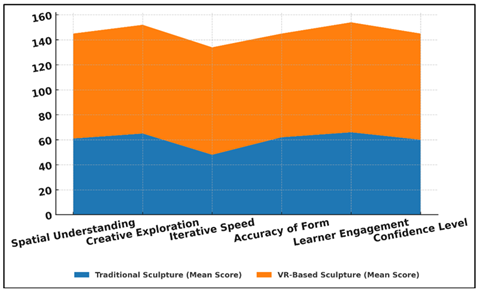
Figure 3 Comparison of Traditional Vs. VR-Based Sculpture
Learning Metrics
The results of spatial understanding reveal that there is a significant growth of 61 to 84 that implies that the immersion of the VR with the 3D representation of visuals is a very powerful tool in terms of increasing the capacity of learners to interpret and manipulate form. Creative exploration also increases between 65 and 87 and this is an indication that the open-ended low-risk environment in VR leads to more experimentation and artistic freedom. Among the most striking changes is the one in the iterative speed, which goes up by 48 to 86. It can be seen in Figure 4 that there are improved learning outcomes due to the implementation of VR-based sculpture techniques. This brings out the ability of VR to easily make a small modification, copy in real time, and have an undo option- features that are hard to replicate with material.
Figure 4

Figure 4 Improvements in Learning Outcomes from VR-Based
Sculpture Approach
Accuracy of form also tends to be much better 62 to 83 indicating that VR tools aid in precise sculpting and refinement.
Table 3
|
Table 3 Participant Feedback on VR Sculpture Tools |
|
|
Feedback Category |
Rating (%) |
|
Ease of Use |
80.2 |
|
Immersion Level |
80.6 |
|
Tool Precision |
79.1 |
|
Reduction of Material Constraints |
80.8 |
|
Learning Motivation |
80.5 |
The feedback shown in Table 3 shows that the study participants always have positive attitudes towards VR sculpture tools regarding the assessed categories. The ease of use was rated at 80.2% so that most respondents thought that the VR interfaces were intuitive when they were first introduced to them. Even though VR sculpting systems usually need a minimal amount of time to learn, users tended to become familiar with gesture-based controls and spatial interaction capabilities. The rate of immersion of 80.6 indicates the high degree of the feeling present in the virtual environment. Such a level of immersion probably resulted in a greater degree of concentration and interaction, as the participants could experience the sculptural objects more organically as compared to the conventional digital modeling systems. The tool precision with the rating of 79.1 was a little lower than other categories but also proves the overall satisfaction. Figure 5 shows the ratings of the experience quality and motivation to learn in VR sculpting by the users. Although VR tools can offer a high level of control over the formation of shapes, some participants mentioned that they could not create fine details and haptic responses as in physical materials.
Figure 5
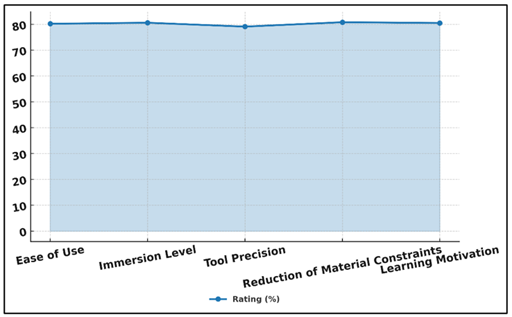
Figure 5 Feedback Ratings on User Experience and Learning
Motivation in VR Sculpting Tools
The top score of 80.8 percent is associated with material constraints reduction. The participants have found the concept of VR to eliminate costs, clean-up requirement, and safety issues related to real sculpture. Motivation to learn was also high at 80.5 which implies that novelty, interactivity and the freedom to experiment found in VR are some of the factors that motivated learners.
6. Conclusion
The current research shows that Virtual Reality may be a highly efficient and radical instrument in sculpture teaching provided that it is carefully incorporated into an already existing pedagogical framework. VR provides high-quality learning opportunities through immersive, flexible, and very interactive in-store experiences that are not limited to the limitations of traditional studio settings. The results suggest that VR can be used to increase spatial reasoning, iterative exploration, and even experimentation, which is typically constrained by material resources, financial factors, and safety precautions. The possibility to scale, refine intricate forms and try ideas quickly helped the participants to make creative choices confidently and independently. Another lesson of the study is the need to embrace a hybrid model of teaching that does not ignore the immense power of digital innovation but still allows having the unique tactile and material experience of traditional sculpting. Although VR offers a potent visualization environment and enables dynamic learning, the environment lacks the sensorial and physical feedback that sculptural craftsmanship requires. Therefore, VR is most holistically educative when implemented as a complementary but not a substitutive strategy. The paper also outlines some of the factors that need to be considered to implement the new system successfully such as training of the instructors, selection of platforms, and technical support. The inability to implement tactile realism and the initial barriers to technology will need to be addressed to be adopted in the long run.
CONFLICT OF INTERESTS
None.
ACKNOWLEDGMENTS
None.
REFERENCES
Abusaada, H., and Elshater, A. (2021). Competitiveness, Distinctiveness and Singularity in Urban Design: A Systematic Review and Framework for Smart Cities. Sustainable Cities and Society, 68, Article 102782. https://doi.org/10.1016/j.scs.2021.102782
Abusaada, H., and Elshater, A. (2021). Effect of People on Placemaking and Affective Atmospheres in City Streets. Ain Shams Engineering Journal, 12, 3389–3403. https://doi.org/10.1016/j.asej.2021.04.019
Adams, D., Smith, M., Larkham, P., and Abidin, J. (2019). Encounters with a Future Past: Navigating the Shifting Urban Atmospheres of Place. Journal of Urban Design, 25, 308–327. https://doi.org/10.1080/13574809.2019.1592668
Alkhwaldi, A. F. (2024). Investigating the Social Sustainability of Immersive Virtual Technologies in Higher Educational Institutions: Students’ Perceptions Toward Metaverse Technology. Sustainability, 16, Article 934. https://doi.org/10.3390/su16020934
Cheng, Y., Chen, J., Li, J., Li, L., Hou, G., and Xiao, X. (2023). Research on the Preference of Public Art Design in Urban Landscapes: Evidence from an Event-Related Potential Study. Land, 12, Article 1883. https://doi.org/10.3390/land12101883
Elshater, A. (2019). The Predicament of Post-Displacement Amidst Historical Sites: A Design-Based Correlation Between People and Place. Heritage and Society, 12, 85–115. https://doi.org/10.1080/2159032X.2021.1879355
Lin, H. S. (2024). A Brief Discussion on Art Therapy Based on Aesthetic Education. Journal of Crisis Management, 21, 85–94.
Matthews, T., and Gadaloff, S. (2022). Public Art for Placemaking and Urban Renewal: Insights from Three Regional Australian Cities. Cities, 127, Article 103747. https://doi.org/10.1016/j.cities.2022.103747
Mystakidis, S. (2022). Metaverse. Encyclopedia, 2, 486–497. https://doi.org/10.3390/encyclopedia2010031
Nia, H. A., and Olugbenga, F. (2020). A Quest on the Role of Aesthetics in Enhancing Functionality of Urban Planning. Civil Engineering and Architecture, 8, 873–879. https://doi.org/10.13189/cea.2020.080514
Shih, N.-J., and Kung, C.-H. (2024). grARffiti: The Reconstruction and Deployment of Augmented Reality (AR) Graffiti. Technologies, 12, Article 169. https://doi.org/10.3390/technologies12090169
Sovhyra, T. (2022). Ar-Sculptures: Issues of Technological Creation, Their Artistic Significance and Uniqueness. Journal of Urban Culture Research, 25, 40–50.
Sunita, M. L. (2020). Education in the Era of COVID-19: Innovative Solutions to Real Challenges. Education Review USA, 4, 193–198. https://doi.org/10.26855/er.2020.11.002
Syamimi, A., Gong, Y., and Liew, R. (2020). VR Industrial Applications: A Singapore Perspective. Virtual Reality and Intelligent Hardware, 2, 409–420. https://doi.org/10.1016/j.vrih.2020.06.001
Wang, Y. (2022). The Interaction Between Public Environmental Art Sculpture and Environment Based on the Analysis of Spatial Environment Characteristics. Scientific Programming, 2022, Article 5168975. https://doi.org/10.1155/2022/5168975
Wang, Y., and Lin, Y.-S. (2023). Public Participation in Urban Design with Augmented Reality Technology Based on Indicator Evaluation. Frontiers in Virtual Reality, 4, Article 1071355. https://doi.org/10.3389/frvir.2023.1071355
|
|
 This work is licensed under a: Creative Commons Attribution 4.0 International License
© ShodhKosh 2025. All Rights Reserved.