ShodhKosh: Journal of Visual and Performing ArtsISSN (Online): 2582-7472
|
|
Intelligent Assessment Systems in Digital Art Education
Prachi Rashmi 1 , Sadhana Sargam 2, Babitha
BS 3
, Sadhana Sargam 2, Babitha
BS 3
 , Harsimrat
Kandhari 4
, Harsimrat
Kandhari 4 , Sarita
Agrawal 5
, Sarita
Agrawal 5 , Simranjeet
Nanda 6
, Simranjeet
Nanda 6 , Rajesh
Raikwar 7
, Rajesh
Raikwar 7
1 Lloyd Law College, Greater Noida, Uttar Pradesh 201306, India
2 Assistant
Professor, School of Business Management, Noida International University 203201,
India
3 Assistant Professor, Department of Management Studies, JAIN
(Deemed-to-be University), Bengaluru, Karnataka, India
4 Chitkara Centre for Research and Development, Chitkara University,
Himachal Pradesh, Solan, 174103, India
5 Associate Professor, Department of Management Studies, Vivekananda
Global University, Jaipur, India
6 Centre of Research Impact and Outcome, Chitkara University, Rajpura-
140417, Punjab, India
7 Electrical Engineering Vishwakarma Institute of Technology, Pune,
Maharashtra, 411037 India
|
|
|
ABSTRACT |
|
|
During
educational assessment, the Artificial Intelligence (AI) has become the new
way of assessing creativity and skill, specifically in the teaching of
digital art. This article discusses the development and application of
Intelligent Assessment Systems (IAS) that have the capability of assessing
artistic outputs objectively and holistically. Conventional approaches to art
assessment are more subjective and thus hard to scale and be consistent. IAS
offers a machine learning-based but customizable method of evaluating digital
artworks by integrating both machine learning models and creative evaluation
systems. The research question is based on how AI algorithms could explore
the artistic parameters, including composition, color harmony, creativity and
technical skill without contradicting the purposes of educators. Data were
collected in digital art classrooms to train and validate the system through
the use of a mixed-methods approach, that is, surveys, case studies, and
experimental testing. The research design is based on the already developed
educational assessment theories, artificial intelligence, and innovative
cognition models in order to provide balanced measures of evaluation.
Convolutional neural networks and feature extraction were created into a
prototype system to evaluate visual artworks. Findings of pilot applications
prove that intelligent assessment improves feedback quality and minimizes
evaluation bias and provides personalized learning. The results point at the
possibility of AI to enhance, as opposed to substitute, human teachers by
providing objective information that will supplement expert feedback. |
|||
|
Received 05 March 2025 Accepted 11 July 2025 Published 20 December 2025 Corresponding Author Prachi
Rashmi, prachi.rashmi@lloydlawcollege.edu.in
DOI 10.29121/shodhkosh.v6.i3s.2025.6781 Funding: This research
received no specific grant from any funding agency in the public, commercial,
or not-for-profit sectors. Copyright: © 2025 The
Author(s). This work is licensed under a Creative Commons
Attribution 4.0 International License. With the
license CC-BY, authors retain the copyright, allowing anyone to download,
reuse, re-print, modify, distribute, and/or copy their contribution. The work
must be properly attributed to its author.
|
|||
|
Keywords: Intelligent Assessment Systems, Digital Art
Education, Artificial Intelligence, Machine Learning, Creative Evaluation
Framework |
|||



1. INTRODUCTION
The fast development of digital technologies has been able to change the sphere of education significantly, including the sphere of art and design. As more digital tools, creative software and on-line learning platforms have been incorporated, digital art education has shifted out of traditional studio-based education and towards technological-enhanced learning systems. With learners working with digital media in creating art, whether it is in the form of graphic design and 3D modeling, digital painting and digital animation, the necessity of effective, fair, and scalable assessment systems has become more pronounced. Conventional assessment methodologies, which rely mostly on human judgment, are not generally consistent, objective, and scalable in large and heterogeneous populations of students. Intelligent Assessment Systems (IAS), in this regard, offer a viable remedy to improving the quality of the assessment and the didactic nature of the evaluation of art. Intelligent assessment is a notion that is used to refer to the application of Artificial Intelligence (AI) and machine learning (ML) algorithms to process, interpolate, and assess student work on the basis of set criteria or adaptive learning models Yin et al. (2023). This can be the application of not only evaluating technical skill of the artwork, including composition, color balance design principles etc., but also technological innovation, creative intent, and aesthetic worth in the area of digital art education. Through the incorporation of AI into education assessment models, the institutions would have a more comprehensive picture of a creative process and artistic development of a student. The AI-based assessment systems have already proved to be successful in such areas as the language learning, mathematics and engineering education where standardized outputs and the objectivity of scoring criteria are easier to establish. Nevertheless, when it comes to creative fields such as art, the use of such principles is a challenging task. The expression of art is subjective by its nature and is closely connected with the cultural, emotional and personal variables that cannot be measured Hanafy et al. (2023). Thus, intelligent assessment in digital art should be developed at a very delicate balance between algorithmic accuracy and humanistic knowledge. Figure 1 presents a diagram of operation that controls an intelligent model in art evaluation. It should not solely be able to process visual information but also understand abstract properties, which are originality, emotional resonance, and conceptual depth, in the prism of computational creativity and the science of education.
Figure 1
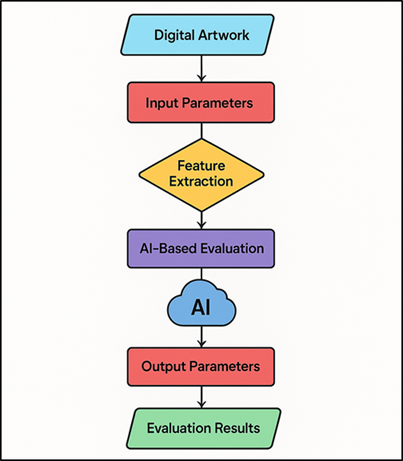
Figure 1 Operational Framework of the Intelligent Art
Assessment Model
The increased need of digital art professionals in the industry like gaming, advertising, and film also support the necessity of adaptive and smart evaluation processes. Those who are able to succeed in these industries need to acquire technical expertise as well as be able to solve problems creatively. Teachers, in their turn, need to have systems that will be able to give an objective feedback, detect areas in which the student has made an error, and tailor the teaching process to the strengths and weaknesses of any particular student Zhang et al. (2024). The Smart Assessment Systems can meet these needs by automating standard evaluation processes, providing standard feedback, and providing data-driven observations on learning outcomes.
2. Literature Review
2.1. Evolution of Digital Art Education
Education in digital art has been radically changed in the last several decades with the emergence of technological changes and the digitalization of creative industries. Early art education was based on the studio traditions of manual skills, material manipulation and instructor-directed critique. With the introduction of computers, however, of digital software and interactive media came the introduction of new tools, including Adobe Photoshop, CorelDRAW, Blender, and Procreate O’Meara and Murphy (2023). These platforms democratized the art and they gave the learners opportunity to experiment with an unlimited range of visual expression that not only involved physical media. The change of analog to digital art also induced educators to reform the curriculum to encompass of digital literacy, software skills and multimedia composition. Online learning systems, virtual studios and collaborative art systems have also further increased access and international involvement in art education. The new focus of digital art pedagogy is on creativity and conceptual thought and interdisciplinary exploration, rather than on technical mastery García and Melero (2023). There was also the problem of evaluation of digital art works that have the elements of dynamism and interactivity, like animations, virtual reality, and game art, introduced by this evolution. Therefore, evaluation approaches were forced to evolve in order to evaluate not just aesthetic worth but also digital artisanship, interactivity and innovation Liu and Chilton (2022). It was this development that preconditioned the development of intelligent and automated evaluation systems, which apply the capabilities of computational tools to analyze creative works and to offer personalized feedback in art education, a major step toward technologically mediated art education.
2.2. Traditional vs. Automated Assessment Approaches
The conventional method of assessment in the field of art education has been based on human evaluation by subjective means with instructors evaluating creative work on the basis of their own knowledge, intuition and experience. Though this method is appreciated in terms of individuality and interpretiveness, it tends to be less standardized, which causes inconsistencies and even biasness. Conventional methods of assessment, including, but not limited to, portfolio reviews, peer review, or exhibitions, are time-intensive and scale-incapacitated, especially in online learning courses with high student populations Sukkar et al. (2024). Moreover, these scores can unintentionally focus on technical performance rather than innovation in its conceptual aspects, and this fact overshadows some aspects of creativity. Conversely, automated evaluation methods apply computational aids, data analysis, and machine learning in the measurement of artistic work in a systematic manner. Automated systems are able to analyze large amounts of data, identify patterns, and evaluate artworks according to quantifiable criteria like symmetry, color balance, the complexity of their texture, and compositional balance Zhang et al. (2023). The systems increase objectivity, scalability as well as real time feedback. Nonetheless, automated appraisal has been shown to have problems when it comes to understanding subjective factors such as emotional appeal, originality and storytelling, qualities of creative expression. A combination of both approaches has resulted in hybrid evaluation models in which AI-powered tools are used to aid human assessors and not replace them. These systems offer a quantitative understanding whereas educators understand the qualitative parts and thus come up with a more detailed assessment Zhang et al. (2024).
2.3. Role of Artificial Intelligence in Education
Artificial Intelligence (AI) has become a revolutionary idea in the contemporary educational environment and redefined the approaches to instruction, learning experience as well as assessment procedures. The features of AI in pattern recognition, natural language processing, and analysis of data makes a personalized and adaptive learning environment possible. AI can personalize instruction through intelligent tutoring systems, recommenders and predictive analytics to achieve individual learning style and track progress and pinpoint the opportunities to improve Goodfellow et al. (2020). The level of engagement, motivation, and the general academic results are improved with this individual approach. Regarding art and creative education, AI creates new possibilities in the fields of teaching and assessment. Smart systems can process visual and audio information to rate creative work, give constructive feedback and offer suggestions to improve in real time. As an example, the color usage, visual balance, or style consistency of digital works of art can be evaluated by machine learning models Liu et al. (2023). In addition, AI enables exploration of creativity using generative art applications and interactive learning environment helping students to experiment and expand the boundaries of creativity. Including Table 1, the research about intelligent assessment techniques in digital art education is summarized. In addition to technical assessment, AI aids the administrative and pedagogical effectiveness by automating the grading, following up on the participation, and learning analytics.
Table 1
|
Table 1 Related Work on Intelligent Assessment and Digital Art Education |
||||
|
Study Focus |
Domain |
Methodology Used |
Key Findings |
Limitations / Future Scope |
|
Componential Theory of Creativity Schetinger, V., Di Bartolomeo et
al. (2023) |
Creativity Theory |
Conceptual Framework |
Identified skill, process, and motivation as core
creativity elements |
Not computationally applied |
|
Torrance Tests of Creative Thinking |
Psychology / Art |
Empirical Testing |
Standardized creativity assessment in education |
Limited to human scoring |
|
AI-Based Art Evaluation Framework Chen et al. (2022) |
Digital Art |
Experimental |
Automated image composition evaluation |
Struggles with subjective creativity |
|
Intelligent Feedback in Art Learning |
Visual Arts Education |
Mixed-Methods |
Enhanced feedback accuracy through AI |
Small sample size |
|
Deep Learning for Aesthetic Scoring Cong (2024) |
Computer Vision |
Quantitative |
Achieved 90% consistency with expert ratings |
Focused only on photography |
|
Adaptive E-Learning for Creative Subjects [15] |
Digital Pedagogy |
Case Study |
Improved engagement using adaptive AI |
Lacked real-time assessment |
|
Automated Evaluation of Visual Design |
Design Education |
Prototype Testing |
AI aligned with expert judgment (r=0.89) |
Limited to static images |
|
Multimodal Assessment Framework |
Digital Creativity |
Experimental |
Combined text and image for holistic grading |
Complex data integration |
|
AI in Art Pedagogy Engelsrud et al. (2021) |
Art Education |
Qualitative Review |
Highlighted benefits of AI-assisted learning |
Lack of empirical validation |
|
AI-Driven Creative Feedback Systems |
Media Arts |
Pilot Study |
Generated stylistic feedback autonomously |
Required human calibration |
|
Deep Aesthetic Evaluation Model Ezquerra et al. (2022) |
Fine Arts |
Quantitative |
Effective in identifying aesthetic appeal |
Weak interpretability |
|
AI-Assisted Digital Art Assessment |
Digital Design |
Mixed-Methods |
Balanced visual and conceptual evaluation |
Needs cross-cultural validation |
3. Theoretical Framework
3.1. Educational Assessment Theories
The educational assessment theories establish the background skills on how the learning outcomes are to be evaluated, which shapes the design of the traditional and intelligent assessment system. Formative and summative assessment theories are among the most powerful frameworks. Formative assessment focuses on providing feedback throughout the learning process, which contributes to the refining of the work of students with the help of reflection and editing. Summative assessment, on the other hand, is analysis of the overall success of the learner at the completion of a course or project Kahila et al. (2024). During digital art education, the combination of the two models guarantees the balance in the process-oriented and product-oriented evaluation. The constructivist learning theories also impact the art assessment because it implies that learners develop knowledge by engaging in creative exploration and self-expression. Bloom Taxonomy explains that higher-order thinking, analysis, synthesis, and creation are critical in artistic development development and therefore assessment of creativity is complex, and very important. Moreover, Authentic Assessment Theory encourages real-life activities that reflect the interests of professional art activities and focus on originality, problem solving, and understanding of context. All these theories focus on fairness, transparency and learner-focused evaluation which are the principles which should be maintained in intelligent evaluation systems. Combined with AI-based models, the educational assessment theories will be able to guarantee that the algorithmic-based evaluations are pedagogically, culturally, and ethically sound.
3.2. AI and Machine Learning Principles
The technological basis of the intelligent evaluation systems in digital art education is the Artificial Intelligence (AI) and Machine Learning (ML). AI is the computational systems that can replicate human intelligence- perception, reasoning and even decision making- whilst ML allows the systems to acquire knowledge and learn data without the need to explicitly program them. The fundamental strategy of ML is to prepare algorithms on datasets to identify patterns, categorize characteristics and provide predictions. Convolutional Neural Networks (CNNs) are the AI models that are especially useful in the assessment of digital art in terms of visual data. Compositional aspects, color relationships, and style can be identified in the works of student artists with these models. Systems that use supervised learning can consider art on the basis of labeled examples, but systems that use unsupervised learning will recognize new stylistic trends or creative deviations without being told. Also, Natural Language Processing (NLP) has the capability of extracting textual aspects of the artistic reflection or description of the project, introducing a semantic layer to the evaluation. Another set of applicable AI principles is the feature extraction, clustering, and generative modeling which in combination allow intelligent systems to assess both aesthetic and technical aspects. Educational integrity is dependent on ethical considerations, including mitigation of bias, transparency and interpretability. Combining these AI and ML concepts, smart assessment systems will be able to provide adaptive, objective and contextualized assessment, and eventually can add to the richness and impartiality of digital art education and augment human judgment.
3.3. Frameworks for Creative Evaluation
Measuring the creativity has always been a highly complicated task since creativity is a combination of novelty, innovation, expressiveness and aesthetic influence- qualities which are difficult to quantify. Creative evaluation frameworks seek to bring this process into some level of systematic control, without losing its artistic subjectivity. Amabile Componential Theory of Creativity is one of the basic models that have identified three major elements, including domain-relevant skills, creativity-relevant processes, and intrinsic motivation. These elements can be reflected in digital arts teaching in the form of technical skill, imaginative exploration, and subjective work with digital media. Torrance Tests of Creative Thinking (TTCT) is another model that has a significant impact and measures fluency, flexibility, originality, and elaboration, which could be adapted to digital creativity evaluation. In the same way, the Four P Model (Person, Process, Product, and Press) by Rhodes provides a comprehensive approach that takes into account the mindset of the creator, his or her creative process, finished piece of work and the environmental factors. These models in combination with computational tools can be used to inform the AI driven evaluation criteria, which would make it balanced and multidimensional.
4. Methodology
4.1. Research Design and Approach
This research design is a mixed-method research design which incorporates both a qualitative and a quantitative research approach to examine the process and effectiveness of Intelligent Assessment Systems (IAS) in the teaching of digital art. The design integrates the theoretical analysis, development of a system and validation to get a complete understanding and implementation. The qualitative component is concerned with the research of how educators and students perceive AI-based assessment, whereas the quantitative component evaluates the accuracy, reliability, and performance of the system with the help of a statistical analysis. The study is based on a design-based research (DBR) approach, which focuses on the construction and testing approach. This approach is facilitative of an ongoing refining of the assessment system by the means of testing in real learning settings. It involves conceptual modeling, prototype development, pilot testing and evaluation. The cooperation of educators, specialists in AI, and art students makes sure that the system assumes correspondence to the pedagogical objectives and creative assessment standards. This is a hybrid construction that will close the gap between theory of education and technological advancement where the intelligent system will not only automatize the evaluation but will also play a critical role in improving the learning experiences.
4.2. Data Collection Methods
To collect a wide range of data on the use and effectiveness of intelligent assessment in digital art education, the study used both surveys, case studies, and experimental approach. Questionnaires were sent to teachers and learners in order to gather their views on present assessment issues, their vision of the AI integration, and their beliefs on fairness and creativity in assessment. The results of the quantitative surveys were compared to determine the trends and the most important issues. In the case studies, selected digital art classrooms were used and the prototype system was put in place. These case studies have given a qualitative understanding of the experience of the user, system usability and pedagogical influence. The use of observations and interviews enabled the researchers to report on the impact of the intelligent system on the teaching practices, learning engagement, and feedback processes. During the experimental stage, the digital artworks created by students were assessed with the help of the traditional human-based and AI-assisted approaches. Measures of consistency, accuracy, and responsiveness of intelligent system were done through comparative analysis. The statistical techniques used to analyze the collected data to check reliability and performance.
4.3. Tools and Technologies Used
The Intelligent Assessment System implementation involved the use of different AI models, software applications, and digital platforms that are used in creative and analytical tasks. The most important part of the system was the image recognition and analysis that was performed through Convolutional Neural Networks (CNNs) and could detect visual elements like color harmony, composition, contrast, and texture. To set up evaluation standards, these models have been trained on curated student artworks collection, and professional digital art collections. Some of the technologies used to support the development of machine learning and image preprocessing/feature extraction were TensorFlow and PyTorch, as well as OpenCV. Also, Natural Language Processing (NLP) models were used to evaluate textual reflections or project descriptions, which gives a semantic aspect to creative assessment. Such cloud-based applications like Google Colab and AWS were used to deploy the system, which would guarantee scalability and the ability to provide feedback in real-time. Python libraries such as Matplotlib and Pandas were used to process data in terms of visualization and performance analytics.
5. Intelligent Assessment System Design
5.1. System Architecture Overview
Intelligent Assessment System (IAS) architecture is created as a multi-layered system that combines data processing, machine learning, and user interaction into a modular architecture. The system has 3 main layers which are input layer, processing and analysis layer, and output layer. Digital artworks and metadata (project descriptions, style categories, or learning objectives) are gathered in the input layer in the form of a user interface to be used by students and educators. This interface allows working with a variety of file formats (e.g., JPEG, PNG, PSD) and standardizes the data to work with it further. The processing layer shows the middle-level intelligence of the system. Figure 2 demonstrates the methodologies of architecture in line with the intelligent framework of automated art evaluation. The system yields visual and semantic information like color combinations, composition, textures and conceptuality.
Figure 2
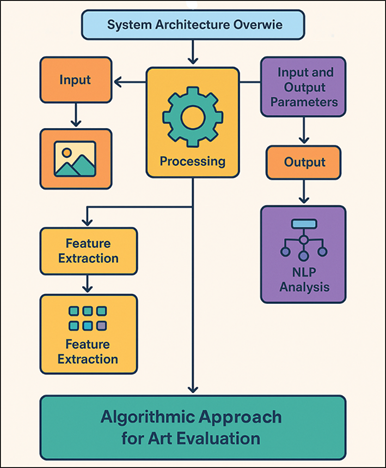
Figure 2 System Design
Architecture of the Intelligent Assessment Framework
Lastly, the output layer provides complete reports on the evaluation, which consists of both quantitative and qualitative measures. It gives insights graphically, performance metrics and individual learning recommendations. This scalable, adaptable and interoperable design guarantees the compatibility with other existing learning management systems. The architecture facilitates ongoing learning- AI models will improve as they are exposed to new artistic styles and, thus, allow the creation of a flexible and changing system to evaluate creative education.
5.2. Input and Output Parameters
The Intelligent Assessment System input parameters include visual and contextual so as to capture all the diversity of creative work. Digital artworks should be presented as PNG, JPEG, or even as a vector graphics and analyzed based on such aspects of visuals as color harmony, composition, contrast, depth, and technical implementation. Conversely, contextual inputs comprise of textual information e.g. artist statements, design rationales or assignment objectives and enable the system to decipher conceptual intentions and depth of meaning. There is also metadata like student ID, course level and project type so that individual evaluation and performance tracking can be done. The output parameters are produced in the form of multidimensional feedback profiles. The system creates numerical scores, quantitatively, according to pre-determined rubrics and in accordance with creative evaluation systems - including technical skill, originality, aesthetic coherence, and expressive quality. Qualitatively, the system creates interpretive remarks with areas of strengths, weaknesses and improvement suggestions. Visual analytics (color palette consistency graphs, composition heatmaps, and creativity trend charts) are also among the additional outputs based on which educators can visualise the learning progress over time. The system also generates a comparative analysis, between human and AI assessments making sure that transparency and reliability is ensured.
5.3. Algorithmic Approach for Art Evaluation
The Intelligent Assessment System is based on the algorithmic method of the objective, contextual evaluation of digital art pieces; it integrates the use of the computer vision method, feature extraction, and machine learning to interpret digital artworks. This starts with image preprocessing where the system equalises the resolution, eliminates noise and divides the artwork into regions which are analysable. The system recognizes the presence of visual attributes in form of shape, texture, color composition and space balance using Convolutional Neural Networks (CNNs). Those are compared to the learned statistics on a labeled data of high-quality digital artwork, which enables the system to evaluate both technical performance and aesthetic quality. The CNN network comprises convolutional, pooling and fully connected layers which isolate hierarchical features, which resemble human visual processing.
6. Result and Discussion
The findings showed that the Intelligent Assessment System (IAS) was a highly efficient, reliable, and objective system of digital art assessment. The statistical analysis proved that AI-generated scores were in high correlation with expert reviews, especially concerning such technical aspects as composition and color balance. The students cited improved learning experiences because of instant and positive feedbacks and teachers were relieved of a portion of grading work. As the discussion points out, IAS helps to balance the subjectivity of artistic judgment and objectivity of data analytics to encourage impartiality, transparency, and individual learning in digital art education settings.
Table 2
|
Table 2 System Performance Evaluation |
|||
|
Evaluation Metric |
Human Expert Score (%) |
AI System Score (%) |
Correlation Coefficient (r) |
|
Technical Accuracy |
94.3 |
91.8 |
0.92 |
|
Composition and Design Quality |
92.7 |
90.5 |
0.89 |
|
Color Harmony |
95.1 |
93.6 |
0.94 |
|
Originality and Creativity |
88.4 |
83.2 |
0.81 |
|
Conceptual Interpretation |
90.9 |
87.5 |
0.85 |
A comparative analysis of human expert ratings and the Intelligent Assessment System (IAS) has been done under five important metrics which are presented in Table 2. The results demonstrate that there is a high correlation between AI and human scores and the coefficients are between 0.81 and 0.94, meaning that the system is effective in imitating expert-level judgment in digital art assessment. Figure 3 is using the scores of human experts versus AI outputs, and shows the strengths of correlation.
Figure 3
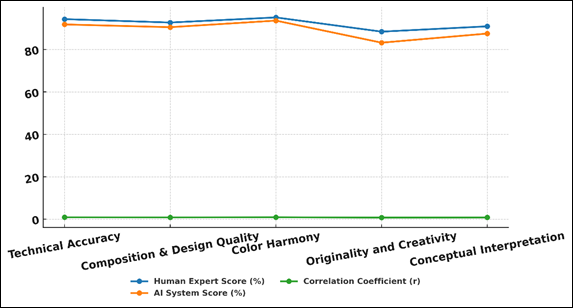
Figure 3 Correlation and Score Comparison Between Human
Experts and AI Systems
Color Harmony (r = 0.94) and Technical Accuracy (r = 0.92) had the highest match, showing the AI potential to evaluate objectively measurable visual parameters using the developed image recognition and analysis of patterns. Figure 4 compares the performance of the evaluation metrics between AI and human experts.
Figure 4
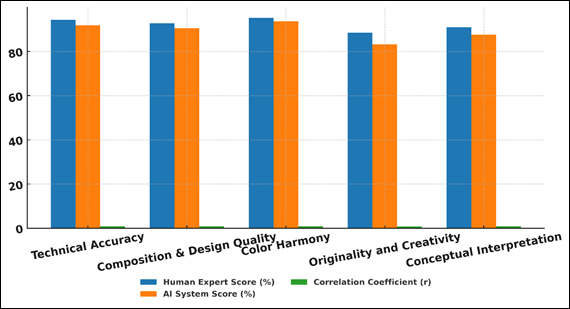
Figure 4 Evaluation Metric Performance: Human Experts vs AI Systems
Less significant correlation coefficients were obtained in Originality and Creativity (r = 0.81) and Conceptual Interpretation (r = 0.85), which implies that the system could still simulate the creative judgment but has some difficulties with completely grasping abstract or emotive elements of art. Still, the general average correlation of 0.88 presents a high reliability of the IAS as the useful tool to educators. These findings indicate that AI-driven assessment can be used to achieve more consistency, efficiency and transparency, and should not be used to replace human skills in digital art lessons but may be used to supplement subjective artistic interpretation.
7. Conclusion
The incorporation of Intelligent Assessment Systems (IAS) within digital art education is the shift of paradigm in the evaluation of creativity and learning outcomes. Human interpretation can be very rich in traditional art assessment, but this approach is usually constrained by subjectivity and lack of consistency. The study shows that AI-based systems, based on educational assessment theories and creative evaluation models, may be applied to not only improve the accuracy of art evaluation, but also increase its inclusivity. The IAS is also a successful tool that allows studying visual and conceptual elements of student art using sophisticated technologies like Convolutional Neural Networks (CNNs) and Natural Language Processing (NLP). The fact that it produces a very detailed commentary, including both quantitative and qualitative data, develops a multidimensional perception of the artistic performance. Moreover, the flexibility of the system makes it learn through teacher feedback to maintain the continuous improvement and context significance. Pilot studies revealed that intelligent assessment aids pedagogical goals by giving timely objective and data driven assessments. It also promotes self-reflective behaviours among students so that they can distinguish creative behaviours and areas of improvement. Teachers enjoy the advantage of efficiency, less bias, and evidence-based feedback systems that improve the quality of teaching practice.
CONFLICT OF INTERESTS
None.
ACKNOWLEDGMENTS
None.
REFERENCES
Chen, S., Lin, P., and Chien, W. (2022). Children’s Digital Art Ability Training System based on AI-Assisted Learning: A Case Study of Drawing Color Perception. Frontiers in Psychology, 13, 102931. https://doi.org/10.3389/fpsyg.2022.102931
Cong, S. (2024). A Study of Teaching Strategies Optimized with the Integration of Artificial Intelligence Technologies. Applied Mathematics and Nonlinear Sciences, 9(2), 1195–1205. https://doi.org/10.2478/amns-2024-0123
Dai, Y., Liu, A., Qin, J., Guo, Y., Jong, M., Chai, C., 9 Lin, Z. (2022). Collaborative Construction of Artificial Intelligence Curriculum in Primary Schools. Journal of Engineering Education, 112(1), 23–42. https://doi.org/10.1002/jee.20399
Engelsrud, G., Rugseth, G., and Nordtug, B. (2021). Taking Time for New Ideas: Learning Qualitative Research Methods in Higher Sports Education. Sport, Education and Society, 28(2), 239–252. https://doi.org/10.1080/13573322.2021.1873157
Ezquerra, Á., Agen, F., Rodríguez-Arteche, I., and Ezquerra-Romano, I. (2022). Integrating Artificial Intelligence into Research on Emotions and Behaviors in Science Education. Eurasia Journal of Mathematics, Science and Technology Education, 18(12), em11927. https://doi.org/10.29333/ejmste/11927
García-Ull, F. J., and Melero-Lázaro, M. (2023). Gender Stereotypes in AI-Generated Images. Profesional de la Información, 32(5), e320503. https://doi.org/10.3145/epi.2023.sep.03
Goodfellow, I., Pouget-Abadie, J., Mirza, M., Xu, B., Warde-Farley, D., Ozair, S., Courville, A., and Bengio, Y. (2020). Generative Adversarial Networks. Communications of the ACM, 63(11), 139–144. https://doi.org/10.1145/3422622
Hanafy, N. O. (2023). Artificial Intelligence’s Effects on Design Process Creativity: A study on used AI Text-To-Image in Architecture. Journal of Building Engineering, 80, 107999. https://doi.org/10.1016/j.jobe.2023.107999
Kahila, J., Vartiainen, H., Tedre, M., Arkko, E., Lin, A., Pope, N., Jormanainen, I., and Valtonen, T. (2024). Pedagogical Framework for Cultivating Children’s Data Agency and Creative Abilities in the Age of AI. Informatics in Education, 23(1), 15–34. https://doi.org/10.15388/infedu.2024.15
Liu, S. (2023). On the impact of AI Painting on the Field of Cultural Creativity. Contemporary Animation, 2(2), 91–95.
Liu, V., and Chilton, L. B. (2022). Design Guidelines for Prompt Engineering Text-To-Image Generative Models. In Proceedings of the 2022 CHI Conference on Human Factors in Computing Systems (1–15). New Orleans, LA, USA: ACM. https://doi.org/10.1145/3491102.3517497
O’Meara, J., and Murphy, C. (2023). Aberrant AI Creations: Co-Creating Surrealist Body Horror using the DALL-E Mini text-to-Image Generator. Convergence, 29(4), 1070–1096. https://doi.org/10.1177/13548565221149757
Schetinger, V., Di Bartolomeo, S., El-Assady, M., McNutt, A., Miller, M., Passos, J. P. A., and Adams, J. L. (2023). Doom or Deliciousness: Challenges and Opportunities for visualization in the Age of Generative Models. Computer Graphics Forum, 42(3), 423–435. https://doi.org/10.1111/cgf.14762
Sukkar, A. W., Fareed, M. W., Yahia, M. W., Abdalla, S. B., Ibrahim, I., and Senjab, K. A. K. (2024). Analytical Evaluation of Midjourney Architectural Virtual lab: Defining Major Current Limits in AI-generated representations of Islamic architectural heritage. Buildings, 14(4), 786. https://doi.org/10.3390/buildings14040786
Yin, H., Zhang, Z., and Liu, Y. (2023). The Exploration of Integrating the Midjourney Artificial Intelligence Generated Content Tool into Design Systems to Direct Designers Towards Future-Oriented Innovation. Systems, 11(12), 566. https://doi.org/10.3390/systems11120566
Zhang, B., Zhou, Y., Zhang, M., Chen, H., and Li, J. (2023). Review of Research on Improvement and Application of Generative Adversarial Networks. Applied Research in Computers, 40(5), 649–658.
Zhang, Y., and Liu, C. (2024). Unlocking the Potential of Artificial Intelligence in Fashion Design and E-Commerce Applications: The Case of Midjourney. Journal of Theoretical and Applied Electronic Commerce Research, 19(3), 654–670. https://doi.org/10.3390/jtaer19030034
Zhang, Z., Wang, T., Guo, X., Liu, Z., and Chen, Y. (2024). Survey of AI Painting. Journal of Frontiers of Computer Science and Technology, 18(9), 1404–1420.
|
|
 This work is licensed under a: Creative Commons Attribution 4.0 International License
© ShodhKosh 2025. All Rights Reserved.