ShodhKosh: Journal of Visual and Performing ArtsISSN (Online): 2582-7472
|
|
Integrating AI-Art Tools into Fine Arts Curricula
Dr. Hemalatha BS
1
 , Swati Srivastava 2
 , Rama
Choudhary 3
, Rama
Choudhary 3 , Ramesh
Saini 4
, Ramesh
Saini 4
 , Kanika
Seth 5
, Kanika
Seth 5 , Kapil
Mundada 6
, Kapil
Mundada 6
1 Professor,
Department of Management Studies, JAIN (Deemed-to-be University), Bengaluru,
Karnataka, India
2 Associate
Professor, School of Business Management, Noida international University 203201,
India
3 Assistant Professor, Department of Journalism and Mass Communication,
Vivekananda Global University, Jaipur, India
4 Centre of Research Impact and Outcome, Chitkara University, Rajpura-
140417, Punjab, India
5 Chitkara Centre for Research and Development, Chitkara University,
Himachal Pradesh, Solan, 174103, India
6 Department of Instrumentation and Control Engineering Vishwakarma
Institute of Technology, Pune, Maharashtra, 411037 India
|
|
|
ABSTRACT |
|
|
The
introduction of AI-art tools into the curriculum of the field of fine arts is
a drastic deviation of the current art education process, as it alters how
students perceive, experiment, and construct a work of visual art. As more
and more generative algorithms, diffusion models, and interactive AI systems
are made accessible, they offer novel forms of creativity through more
traditional forms of media and processes. The paper explains how AI-art tools
can be incorporated into the fine art course in an intellectual manner to
enhance the creative inquiry, diversify visual problem solving, and
interdisciplinary skills that will be used in the artistic used sectors in
the future. In accordance with the sources related to the theme of digital
art education and current tendencies in the field of creative technologies
based on AI, the paper will provide the pedagogical premises of the
curricular integration, the importance of shaping adaptability, critical
thinking, and technological fluency in art students. It is proposed to use a
hybrid creative process, and the design of a framework of integration,
specific curriculum modules, studio practices, centered around AI processes
and the workflow, and process evaluation in terms of AI processes and
approaches. The framework does not claim that AI is going to replace the
fundamental artistic abilities but, instead, it will act as an extension that
will enable the individuals to discover more, develop quicker, and
democratize numerous sophisticated creative means. The final product of the
AI-enhanced art education may be positive with more developed imagery,
cross-disciplinary interaction, and keeping up with the latest tendencies in
the sphere. |
|||
|
Received 03 March 2025 Accepted 08 July 2025 Published 20 December 2025 Corresponding Author Dr.
Hemalatha BS, hemalatha@cms.ac.in DOI 10.29121/shodhkosh.v6.i3s.2025.6780 Funding: This research
received no specific grant from any funding agency in the public, commercial,
or not-for-profit sectors. Copyright: © 2025 The
Author(s). This work is licensed under a Creative Commons
Attribution 4.0 International License. With the
license CC-BY, authors retain the copyright, allowing anyone to download,
reuse, re-print, modify, distribute, and/or copy their contribution. The work
must be properly attributed to its author.
|
|||
|
Keywords: AI-Art Integration, Fine Arts Education, Generative
Image Models, Creative Pedagogy, Digital Art Tools, Interdisciplinary
Learning |
|||



1. INTRODUCTION
The swift development of artificial intelligence has brought a new paradigm in the creative production, widening the scope of the possibilities of how art can be conceptualized, created, and experienced. Over the past few years, AI-art tools, such as image model generators or neural style transfer networks, intelligent drawing assistants and interactive computational installations have left the world of experimental labs and are now found in popular creative practice. Such technologies are no longer seen as mere technical curiosities, but what is more, they are accessible, intuitive tools, which can help in supporting and augmenting the imagination of human beings. Consequently, the fine arts scene is experiencing a drastic change and posing the essential questions of the essence of authorship, the use of technology in creativity, and competencies of the new artists Hwang and Chen (2023). This change in technology has become an opportunity and also a challenge within the art schools and university fine art programs. Although the foundation skills of drawing, painting, sculpture, and analog design have long been found in the traditional art curriculum, the new generation of students is being exposed to creative spaces in which digital literacy and conceptual flexibility are invaluable. Creative tools created by AI open up new opportunities to experiment with the visual concepts, artists are able to control more complicated visual parameters, create new aesthetic forms, and quicken the design process switching between the design direction. At the same time, the tools encourage the consideration of moral, cultural, and epistemological questions of machine-aided creativity Selwyn et al. (2022). The implementation of these technologies in the teaching of fine arts thus needs to use deliberate pedagogical interventions that would not alter or undermine the artistic practice but instead tap into the creative possibilities of the extension that AI promises. Moreover, the modern creative industries, whether animation and game design, or advertising, virtual production, and interactive media, are quickly integrating AI systems into their process. The graduates of fine arts programs are increasingly moving in the hybrid professional space in which cooperation with smart tools is no longer a recommendation but a necessity Tahiru et al. (2021). A framework of incorporating AI-art technologies in art education is presented in Figure 1 The education of students to adapt to these changing contexts requires the curricular models that can be used to encourage both technical ability and critical awareness.
Figure 1
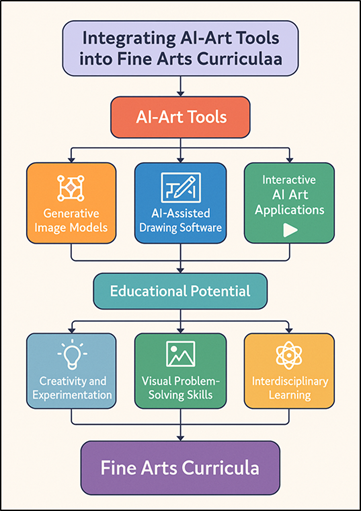
Figure 1 Structural Model for Incorporating AI-Art
Technologies into Art Education
Knowledge of AI functionality, its possibility to be controlled, and the ability to influence the results of its work or manipulate it are as significant as the conventional methods of the studio. The introduction of AI-art into the fine art programs is thus not only an education add-on, but it is the need to adapt to the changing cultural and professional environment. Simultaneously, the introduction of AI into the field of arts poses a threat to centuries-old traditions of education Limna et al. (2022). The issues related to originality, authorship and skill acquisition are usually raised whenever machines are incorporated into the creative processes. The critics fear that relying on algorithms can reduce the interest of students in working with a physical material, decrease its crafting, or introduce the aesthetic of formulas, guided by the preferences of models. These issues explain the significance of thoughtful and equal curricular integration, in which AI is presented as a supplement and not as an alternative to core practices Francis et al. (2024). The thoughtful use of AI-art tools can also help students think more deeply about the artistic identity, process, and intent, and answer some fundamental questions about what it means to make art in an automated world.
2. Literature Review
1) Definitions
and evolution of AI-art technologies
AI-art technologies are loosely defined as the computational devices that can produce, process or enhance visual artworks by using algorithms that emulate facets of human creativity. One of the earliest uses of AI-art was rule based systems and mathematical algorithms generating geometric or stochastic patterns in the middle of the 20th century Jauhiainen and Guerra (2024). They were constructed by the inventors like AARON drawing program, built by Harold Cohen, and were based on a set of explicitly coded instructions and did not possess the ability to learn adaptively as modern AI systems do. With the advent of machine learning, and subsequent development of deep learning, the creative possibilities of artificial intelligence were greatly increased Vieriu and Petrea (2025). The neural networks allowed systems to train on visual patterns based on large data, the results of which are closer to human-generated images. One of the breakthroughs was the one made by Generative Adversarial Networks (GANs), which allowed machines to generate images that appeared very realistic and stylistically diverse due to adversarial training. Most recently, diffusion models, including DALL•E, Midjourney, and Stable Diffusion, have changed things by their ability to generate complex, high-resolution images based on textual input or reference images Song et al. (2023). Based on these models, huge training corpora, sophisticated probabilistic processes, and multimodal embeddings are integrated to allow subtle creative collaboration between user and machine.
2) Historical
Integration of Digital Tools in Fine Arts Curricula
The integration of digital technologies in the curriculum of fine arts has been developing gradually during the last few decades in line with technological progress in the creative industry. The art schools started to gradually adopt computer graphics, digital imaging, and some of the first design software in the 1980s and 1990s as separate courses that complemented more conventional studio education. Software like Adobe Photoshop and Adobe Illustrator became part of the curriculum of graphic design and photography in the near future, signaling a transition to the hybrid practice of co-existing analog and digital practices Isawi et al. (2024). It was in this time that digital art became an established field of practice, with the support of dedicated labs, departments of media arts and interdisciplinary projects that were experimenting with video, animation, and interactive installations. The beginning of 2000s saw the emergence of 3D modeling, motion graphics and digital fabrication tools like laser engineering and 3D printing. These tools were steadily used in art sculptural and conceptual practices in fine arts institutions Creswell and Inoue (2025). The growth of the availability of digital cameras, editing programs and internet sites also supported the emergence of new creative expression and distribution, which led to the student experimentation with multimedia and networked art. Coding, computational design and interactive media began to take a more significant place in the curriculum in response to the growing popularity of data visualisation, algorithmic art, and creative code in the early 2010s through environments such as Processing and p5.js Haeyen and Hinz (2020). These advances made technology a primary subject of artistic education as opposed to a peripheral add-on.
3) Current
Research on AI in Creative Disciplines
The current studies of AI in the creative fields point at a fast-growing discipline that focuses on the practical uses of machine-assisted art as well as its conceptual consequences. Research on the impact of generative models on artistic processes, innovation and authorship gains more and more popularity. Human-AI co-creation research concentrates on the collaborative aspect of the system pointing to the fact that AI has the potential to be used as an ideation catalyst, allowing artists to experiment with novel visual paths, working faster, and overcoming creative stalling Zubala et al. (2025). Empirical research of the design and media arts courses indicates that AI technologies have the potential to augment divergent thinking, multi-modal experimentation, and visual literacy when wisely applied to pedagogy. Art theorists and aesthetics theorists discuss the problem of AI disrupting conventional concepts of originality, intentionality and agency in art. There are discussions on whether AI-created works are creative or simply rearrange patterns of existing data, and the issues of cultural production, work, and ethics of dataset Zhou and Lee (2024) Table 1 presents the main academic works in developing AI-art pedagogy and research. Simultaneously, the researchers in the field of education explore the pedagogic potential of AI in the classroom, outline possibilities of individualized learning, the adaptive feedback, and the extended access to the advanced visual materials.
Table 1
|
Table 1 Summary of Scholarly Contributions to AI-Art Pedagogy and Digital Arts Research |
||||
|
Technology Focus |
Methodology |
Educational Context |
Key Findings |
Limitations |
|
Rule-based AI |
Long-term system evaluation |
Digital art experimentation |
Showed AI can produce coherent drawings |
Lacked learning capabilities |
|
Digital media theory [14] |
Theoretical analysis |
Media and art studies |
Highlighted shift toward computational creativity |
Not specific to AI models |
|
GANs, ML tools [15] |
Survey and critique |
Creative tech programs |
Identified co-creative potential of AI |
Limited classroom data |
|
GAN-based painting |
Experimental model design |
Computational creativity |
Demonstrated machine-generated novelty |
Lacked educational testing |
|
AI-theory [16] |
Critical analysis |
Fine arts philosophy |
Questioned authorship and creativity |
No classroom evaluation |
|
Generative models |
Case study |
Art and design programs |
AI improved ideation processes |
Small sample size |
|
Intelligent drawing |
Usability studies |
Design education |
Tools aided beginners' accuracy |
Limited advanced user testing |
|
Co-creative systems |
Experimental workshops |
Multidisciplinary studios |
Enhanced interdisciplinary creativity |
Requires technological support |
|
Real-time AI |
Practice-based research |
Media arts |
Encouraged experiential learning |
High equipment needs |
|
Training datasets |
Dataset analysis |
Digital literacy education |
Highlighted cultural/ethical issues |
Lacks artistic focus |
|
Generative design |
Mixed-method study |
Design schools |
Increased productivity and iteration |
Limited cross-cultural samples |
|
CNC, 3D tools |
Curriculum review |
Fine arts |
Tech expanded material exploration |
Not AI-specific |
|
Diffusion AI |
Classroom trials |
Visual arts courses |
Boosted creative confidence |
Requires better guidance |
3. Pedagogical Rationale for AI Integration
1) Enhancing
creativity and experimentation
The introduction of AI-art tools into the fine art courses creates a great opportunity to improve the creative potential of students and widen the scope of the exploratory practices that can be employed in the studio context. With the help of AI systems, especially generative models, it is possible to quickly test out forms, colors, and textures, as well as compositions, which otherwise would not have occurred as fast in traditional procedures. The freedom to come up with numerous variants of an idea within several seconds is an incentive to think iteratively and decrease the mental obstacles in initiating new paths of creativity in many students. This faster ideation model results in an exploration mindset as opposed to perfectionist mindset, allowing learners to be risky, explore unconventional, and comfortably ambiguous in their work. Creative hybridisation through the use of AI-art tools is also achieved by combining unrelated visual influences, style examples, and conceptual constructs. Students are able to play around with cross-cultural themes, historical forms of art and potential futures and in many cases come up with new visual conclusions which they would not have come up with alone. These tools expand the imaginative palette and provide offers, unpredictable results and visual surprises, which raise the critical thinking and playfulness.
2) Expanding Visual Problem-Solving Skills
The AI-art tools play a significant role in the enhancement of the visual problem-solving skills as they allow the student to be able to analyze, manipulate, and reinterpret visual data in complex ways. Conventional art training is based on critical observation, composition and repetition of the same, which are vital but can be enhanced by AI-enhanced procedures. Having AI systems that produce a range of possible solutions to one visual request, students are exposed to a huge diversity of possibilities, which will allow them to think more flexibly and develop versatile problem-solving approaches. They get to judge products with critical eyes, know what is strong and what is weak and make good judgments on how to recycle or synthesize the outcomes. Moreover, AI helps learners to get more involved in the structural elements of images. Visual tools that break down visual features like lighting, relation of space and color schemes can enable the students to interpret the principles at the background. With parameter changing or prompt adjustment, the students can see the immediate visual results of any change, which makes them have a more intuitive understanding of the logic of design. These encounters develop the qualities of analytical expertise that can be complemented with the practice in the studio. AI is also used in iterative prototyping, which enables students to repeatedly evaluate a series of compositional setups or conceptual paths in a very short time.
3) Supporting
Interdisciplinary Learning
The combination of AI-art is also inherently supportive to interdisciplinary learning, as it facilitates the interconnection between fine arts and computer science, design, media studies, cultural theory, and the latest technologies. The more creative industries conduct their business at the borders of various disciplines, the more fine arts students have access to educational experiences that introduce them to different ways of thinking and working together. AI systems offer a viable point of entry to encounter the world of computational ideas and allow students to look at their approach to shaping innovative results through the use of algorithms, datasets, and machine learning methods. Figure 2 shows that the integration of AI-art enhances interdisciplinary/collaborative learning.
Figure 2
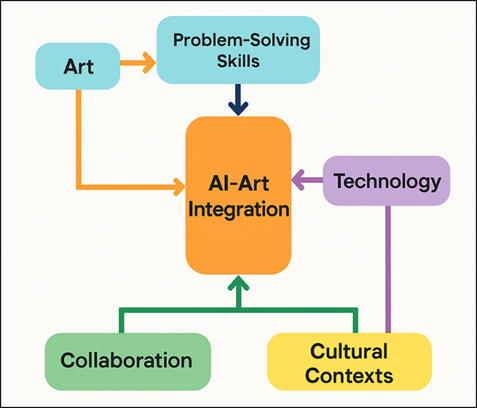
Figure 2 Conceptual Model of Interdisciplinary Learning Through AI-Art Integration
Learners can appreciate the use of technology processes in visual expression despite the absence of sophisticated knowledge in programming. This interdisciplinary interaction leads to discussion between creativity in art and science.
4. AI-Art Tools and Their Educational Potential
1) Generative
image models (e.g., diffusion, GANs)
Diffusion systems and Generative Adversarial Network (GAN) are examples of generative image models, which are now main instruments of creative practice involving AI assistance, including image synthesis, image transformation, and concept exploration. These models in the educational environment give students a rare chance of experimenting the quickly generated visual productions that question the traditional views of the artistic-creation process. Most notably, diffusion models allow a learner to generate high-fidelity images based on textual descriptions, sketches, or reference materials to provide him or her with instant feedback on conceptual ideas. This can promote fast prototyping, which will lead to the iterative refinement of the idea, and students can experiment with different iterations of an idea, which would have taken a lot of time in traditional media. GANs are also capable of exploring the style, form and composition of an image by learning aspects on the existing datasets and creating new and frequently surprising images. With the case of the fine arts students, this ability to manipulate mastered visual patterns gives a clue with regards to the way machines perceive artistic styles and cultural images. These interactions enhance knowledge of aesthetics as well as the computational procedures that encourage image generation.
2) AI-Assisted
Drawing and Design Software
AI-based drawing and design solutions broaden the prospects of conventional artistic workflows enhancing the students with a supportive system that is intuitive and is able to guide, direct, or refine the creative process.
Figure 3
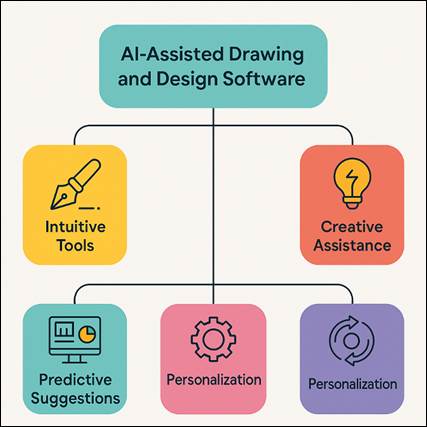
Figure 3 Visual Overview of AI-Assisted Creative Design
Functions
Intelligent sketching software, predictive drawing software, and AI-assisted design software can take in user input at a point in time and provide a recommendation on line quality, composition, perspective, and structural integrity. In Figure 3, various AI-supported applications are presented to improve the processes of creative design. These technologies do not eliminate the need to have the basic skills in drawing but rather supplement them, enabling the students to perceive more complex entities more effectively and realistically. The fact that AI-assisted tools help to minimize technical barriers that prevent creative experimentation is one of the primary educational benefits of AI-supported tools. As an example, students with difficulties in proportion, shading, or anatomy accuracy can utilize artificial intelligence to create reference material or get immediate feedback, which allows them to pay less attention to content creation and expression. Likewise, students of design are able to quickly test layout possibilities, colour selections and typographic variations, thus enhancing their visual decision-making skills by being exposed to a variety of choices. Personalized learning is also supported with the help of AI-assisted tools.
3) Interactive
and Real-Time AI Art Applications
AI art applications, which are interactive and real-time, add dynamic, participatory aspects to creative practice and provide students with a chance to interact with systems which react to gestures, movement, sound or environmental data. These technologies are used in installation art, performance, and immersive media where artistic production is redefined with an ever-changing process of human control and algorithmic action. AI-based motion capture systems, real-time generative visual engines, adaptive audiovisual platforms are considered to be the tools, which enable students to explore the aspects of art, computation, and interactivity in an engaging manner. Educationally, interactive AI apps also promote experiential learning, where students are prompted to implement their own systems, run real-time interactions and repeat through experimenting with physical systems. This approach enhances the competencies of solving problems, since learners will have to think about the behavior of algorithms, the ways in which audiences can interpret and comprehend the work, and the ways in which technical limitations influence artistic results. The instant nature of real-time feedback helps students to be able to test their decisions very quickly and motivates them to test their choices as they happen. These systems also develop collaborative learning conditions. Frequently, students perform interdisciplinary work, integrating skills in fine arts, programming, sound design, and media theory in order to create work in interactive form. The same collaboration resembles the professional work in such areas as immersive media, digital performance, and interactive installation design.
5. Proposed Integration Framework for Fine Arts Curricula
1) Curriculum
modules and learning objectives
The extensive implementation model of AI-art tools in the fine arts curriculum should start with the creation of organized modules that will gradually expose students to technical, conceptual, and critical aspects of the AI-aided creativity. These modules must be structured to suit a wide range of previous experience to make them accessible to inexperienced learners and allow more experienced learners to dig deeper. Entry-level courses could be based on the basics of AI-art technologies that include the concepts of machine learning, neural networks, datasets, and generative processes. The students must obtain the knowledge of how these systems operate and how they contrast with the conventional digital tools. In between modules can focus on practical practice and take students on a journey of applied projects that will use the generative image model, AI-assisted drawing tools and interactive systems. At this level, it is necessary to master the skills to create effective prompts, assess algorithmic results and work with parameters, and apply AI-generated aspects to overall compositions. The students are also expected to become critically aware of the ethical aspects of sourcing, authorship, and representation of databases. More advanced modules must be based on independent research and experimentation to enable the student to create works of art actively using AI to create something that resonates with his/her personal artistic interests. Examples of such objectives could be model customization, digital and analog workflow integration, or an interdisciplinary project, a combination of AI and installation or performance or mixed media. The curriculum at all levels should focus on depth of concepts to make students consider how AI can be used in modern culture. It is aimed at preparing the learners with the technical mastery as well as critical frameworks to cope with a creatively more and more AI-infused environment.
2) Studio
Practice Design Incorporating AI-Art Tools
The development of studio practices, in which AI-art tools can successfully be incorporated, needs an equal approach that will keep the primary values of the fine arts education intact and allow new opportunities of technological experimentation. Hybrid workflows: Studio settings are supposed to accommodate hybrid work processes where the traditional media (drawing, painting, sculpture, and photography) are co-existing with AI-based processes. One way of doing this is to invite the students to start exploring the analog model in the studio, with the help of AI tools, and then explore how the ideas in their first form can be expanded or even challenged by variations generated by machines. Learning could also be improved through collaborative studio work. Attribution Group workshops around the topics of prompt engineering, dataset curation, or real-time generative applications can be used to get students to exchange strategies, compare outcomes, and provide mutual analysis. These are collaborative practices that replicate professional creative settings that are becoming more often collaborative by artists with technologists and designers. Guided experimentation sessions where students are tasked to test various models, experiment with outputs and explore some unexpected visual results can also be included in studios which promotes a culture of curiosity and risk-taking. Materiality is a key element to the practice of studio. The results of AI may be integrated into physical works by the use of printing, projection, collages, or sculptural re-interpretation. In this manner, the integration makes sure that even in the technologically mediated workflows; the students do not lose tactile skills and have a sense of connection to material processes.
3) Assessment
Methods for AI-Enhanced Art Projects
To evaluate AI-enhanced art projects, one will need the evaluation techniques that can acknowledge the expanded nature of creative processes but remain rigorously academic. Conventional criteria, including the clarity of concept, technical ability, craftsmanship and originality, will still apply but have to be adjusted to the unique features of AI-related workflows. The evaluation needs to take into account the skill of the student to control, refine and contextualize the outputs of the algorithms and not only the technical complexity of the tools applying the algorithm. Process-based assessment is one of the necessary elements. The learners are expected to record their creative journey in the form of journals, screenshots, prompt logs, revision history or reflective essays explaining how AI helped them develop ideas, make decisions, and solve problems. This documentation enables the instructors to assess deliberateness, criticality, and the comprehension of the student in relation to the role of AI in the artwork. Conceptual integration is another criterion of importance. Effective AI-enhanced projects are expected to have a consistent correlation between the selected AI approach and the artistic meaning. The students need to demonstrate that the use of AI should be intentional, be it to discover aesthetic potentials, challenge cultural concerns or push material limits but not to rely on generated images blindly.
6. Benefits and Opportunities
1) Democratization
of creative resources
The introduction of AI-art activities in the fine art education curriculum plays a crucial role in the democratization of the creative means of production by making advanced artistic potentials available to a wider range of individuals due to material, technical, or economic limitations. Tools that are enhanced by AI allow students of different backgrounds to explore the more advanced image generation, digital manipulation, and compositional design without having to possess a specific hardware or undergo significant training. Such accessibility means that the creativity is not limited by socioeconomic factors because AI is able to recreate the processes that previously may need expensive materials, time-consuming labor, or even highly competent skills. In the case of students that have little access to digital media, AI is a gentle starting point, as they can learn about intricate aesthetic techniques by interacting with the user-friendly interface and prompt-driven interactions. Also, students, who might have problems with some technical elements of art making like anatomical precision, perspectival depiction, or color balancing, receive supportive systems that enable them to address their lack of abilities and devote more time to conceptual development. There are also AI tools that increase the access to diverse cultural and historical visual materials. Generative mode can be used to create imagery based on the artistic traditions of the world such that students are exposed to various aesthetic vocabularies and cultural histories.
2) Acceleration
of Idea Development and Prototyping
The concept of AI-art tools drastically increases the speed at which one may develop and prototype and create more ideas in constrained time frames, it allows students to do so more quickly and consider more creative opportunities. The traditional methods of art making may need a lot of manual work before an idea can be fully visualized resulting in many experiments may be limited or not taken up due to fear of failure. However, AI systems, and generative models in particular, enable students to generate many options of a concept in a few seconds. This pace promotes the state of iterative cognition, assists in honing artistic intent and enables a loose creative process. The creation of prototypes also boosts the conceptual development as a student is able to check the visual hypothesis at the initial stage of the creative process as a result of rapid prototyping via AI. Having created initial compositions, color schemes, or stylistic experiments, learners are able to decide which directions to follow in more detail. The process can be used especially in interdisciplinary or collaborative projects where visualization of the project is needed in time to plan as well as communicate. Also, AI is used in the hybrid workflows with physical work informed by digital prototypes. It is possible to create AI-based sketches or models which can be used as the references in painting, sculpture, installation or multimedia. Such interaction between digital experimentation and analog implementation fosters confidence, creates less uncertainty, and promotes new combinations of media.
3) Preparation
for Emerging Creative Industries
The inclusion of AI-art tools in the teaching of fine arts provides students with the necessary skills required in new fields of creative life where the use of intelligent technologies becomes more and more prominent. The industry of animation is one of the first to implement AI in fields like game design, virtual production, and digital fashion, as well as in advertising and interactive media to simplify workflow and ideation, and enlarge the aesthetic palette. The application of AI-art instruments within the academic training of the students provides them with practical training in industry-reflective practice that makes them competitive in the dynamic workforce market. AI fluency allows students to learn the process of working in generative systems in professional pipelines, such as concept development, previsualization, asset creation, and user experience design. Knowledge about the timely engineering, data sets and model tuning enables the students to work together with cross-disciplinary teams that include designers, engineers, and technical directors. This interdisciplinary literacy is becoming more and more useful as creative sectors are in need of mixed literacy that incorporates artistic knowledge with technology knowledge. Furthermore, working with AI systems allows developing flexibility, which is an essential quality in the world of fast-paced changes in the professional environment.
7. Conclusion
The introduction of AI-art instruments into the curriculum of the fine arts schools will be a landmark event in the development of the modern art education that will provide new avenues of creative discovery, technological advancement, and critical analysis. With the emerging changes in the artistic world due to generative models, AI-assisted drawing platforms and interactive systems, academic programs in fine arts need to adapt in a considered way to the usage of these technologies in instruction and the studio setting. The integration is not meant to supersede the old-fashioned artistic skills but should be used to enlarge the creative ecosystem where students study, test and develop meaningful pieces. Through creative tools of AI-art, innovation is optimized through swift ideation, wide experimentation, and exposure to a wide array of visual materials. It enhances the visual problem-solving abilities via the prototyping that is iterative and the analytic interaction with the outputs of the algorithms. Furthermore, it enhances interdisciplinary learning, which equips the students to work across disciplines in art, technology, design, and media. In addition to pedagogical benefits, AI-art applications open more opportunities to the democratization of creativity and the training of students to work in the new industries that are becoming more and more AI literate. Due to the changing nature of creative disciplines, a graduate needs to be able to critically examine the ethical, cultural, and aesthetic impacts of machine-assisted artmaking. Through cultivating these abilities, the fine arts education can be able to see to it that future artists have the ability to remain agency, willful, and creatively autonomous as the technological systems continue to take a larger stake in the visual culture.
CONFLICT OF INTERESTS
None.
ACKNOWLEDGMENTS
None.
REFERENCES
Akcil, U., Uzunboylu, H., and Kinik, E. (2021). Integration of Technology to Learning-Teaching Processes and Google Workspace tools: A Literature Review. Sustainability, 13(9), 5018. https://doi.org/10.3390/su13095018
Babb, K., and Campbell, L. (2023). Counselors in Training Value of Experiential Learning Experiences: An Exploratory Analysis. Engineering Proceedings, 6(1), 67-78. https://doi.org/10.3390/engproc2023060067
Bloch-Atefi, A. (2025). Balancing Ethics and opportunities: The Role of AI in Psychotherapy and Counselling. Psychotherapy and Counselling, 13(1), 2025. https://doi.org/10.59158/001c.129884
Creswell, J. W., and Inoue, M. (2025). A Process for Conducting Mixed Methods Data Analysis. Journal of General and Family Medicine, 26(1), 4-11. https://doi.org/10.1002/jgf2.123
Francis, N. J., Jones, S., and Smith, D. P. (2024). Generative AI in Higher Education: Balancing Innovation and iNtegrity. British Journal of Biomedical Science, 81(1), 14048. https://doi.org/10.1080/09674845.2024.14048
Haeyen, S., and Hinz, L. (2020). The First 15 min in Art Therapy: Painting a Picture from the Past. The Arts in Psychotherapy, 71, 101718. https://doi.org/10.1016/j.aip.2020.101718
Hwang, G. J., and Chen, N. S. (2023). Exploring the PotentiAl Of Generative Artificial Intelligence in Education: Applications, Challenges, and fUture Research Directions. Educational Technology and Society, 26(1), 18-30.
Isawi, D., Schoonover, T. T. J., Davis, E., and Gomez-Torres, B. (2024). Creative Pedagogy in Counselor Education: The use of play strategies. Journal of Creativity in Mental Health, 20(1), 1-14. https://doi.org/10.1080/15401383.2024.1234567
Jauhiainen, J. S., and Guerra, A. G. (2024). Generative AI and Education: Dynamic Personalization of Pupils' School Learning Material with ChatGPT. Frontiers in Education, 9, 1288723. https://doi.org/10.3389/feduc.2024.1288723
Limna, P., Jakwatanatham, S., Siripipattanakul, S., Kaewpuang, P., and
Sriboonruang, P. (2022). A review of artificial
intelligence (AI) in Education During the Digital Era. Advances in Knowledge
Execution, 1(1), 1-9.
Selwyn, N. (2022). The future of AI and Education: Some Cautionary Notes. European Journal of Education, 57(4), 620-631. https://doi.org/10.1111/ejed.12532
Song, X. (2023). Research on the Application of Expressive Art Therapy in the Teaching of Mental Health Education Courses for College Students. Pacific International Journal, 6(2), 198-201. https://doi.org/10.55014/pij.v6i3.460
Tahiru, F. (2021). AI in Education: A Systematic Literature Review. Journal of Cases on Information Technology, 23(1), 1-20. https://doi.org/10.4018/JCIT.2021010101
Vieriu, A. M., and Petrea, G. (2025). The Impact of Artificial Intelligence (AI) on Students' Academic Development. Education Sciences, 15(5), 343. https://doi.org/10.3390/educsci15050343
Zhou, E., and Lee, D. (2024). Generative Artificial Intelligence, Human Creativity, and art. PNAS Nexus, 3(5), 052. https://doi.org/10.1093/pnasnexus/052
Zubala, A., Pease, A., Lyszkiewicz, K., and Hackett, S. (2025). Art Psychotherapy Meets Creative AI: An Integrative Review Positioning the Role of Creative AI in Art Therapy Process. Frontiers in Psychology, 16, 1548396. https://doi.org/10.3389/fpsyg.2025.1548396
|
|
 This work is licensed under a: Creative Commons Attribution 4.0 International License
© ShodhKosh 2025. All Rights Reserved.