ShodhKosh: Journal of Visual and Performing ArtsISSN (Online): 2582-7472
|
|
Managing Digital Media Production through Intelligent Automation
Garima Chauhan 1
 ,
Prerak Sudan 2
,
Prerak Sudan 2 , Nitish
Vashisht 3
, Nitish
Vashisht 3 , Krishna
Reddy BN 4
, Krishna
Reddy BN 4
 , Gurpreet
Kaur 5
, Gurpreet
Kaur 5 , Ashok
Kumar S 6
, Ashok
Kumar S 6 , Bipin
Sule 7
, Bipin
Sule 7
1 Associate
Professor, Department of Development Studies, Vivekananda Global University,
Jaipur, India
2 Centre
of Research Impact and Outcome, Chitkara University, Rajpura- 140417, Punjab,
India
3 Chitkara Centre for Research and Development, Chitkara University,
Himachal Pradesh, Solan, 174103, India
4 Associate Professor, Department of Management Studies, JAIN
(Deemed-to-be University), Bengaluru, Karnataka, India
5 Associate Professor, School of Business Management, Noida International
University 203201, India
6 Assistant Professor, Department of Mechanical Engineering, Aarupadai Veedu Institute of Technology, Vinayaka Mission’s
Research Foundation (DU), Tamil Nadu, India
7 Department of Development of Enterprise and Service Hubs, Vishwakarma
Institute of Technology, Pune, Maharashtra, 411037 India
|
|
|
ABSTRACT |
|
|
The digital
media sphere of production has blistered, which has led to the increase of
the complexity of workflow, the presence of lower response time and the
quality of the obtained output. The latest addition of intelligent automation
in terms of artificial intelligence (AI) and machine learning (ML) has become
the new game changer that can change the traditional
production pipelines. The paper will also consider the application of smart
automation to every stage of production process of digital media, such as the pre-production, production and post-production and how
it can be applied to achieve the maximum efficiency,
waste minimization, and creativity. Based on an analysis of the current
automation models and systems, the paper explains how technologies such as
natural language processing, computer vision, predictive analytics, and so
forth can streamline processes, such as scriptwriting, camera control,
editing, and even visual effects. Through the case studies of films, TV
channels and content delivery websites, the paper gives examples of actual
real-life applications of such tools as Adobe Sensei, Runway ML and Synthesia to automate the processes in the media industry
without compromising the creative process. Moreover, the research touches
upon the theoretical and ethical issues, as the problem is the dilemma of
human creativity and algorithms. It also discusses the issues of intellectual
property, data security, and workforce revolution in the creative industry. |
|||
|
Received 30 February 2025 Accepted 27 June 2025 Published 20 December 2025 Corresponding Author Garima
Chauhan, garima.chauhan@vgu.ac.in
DOI 10.29121/shodhkosh.v6.i3s.2025.6778 Funding: This research
received no specific grant from any funding agency in the public, commercial,
or not-for-profit sectors. Copyright: © 2025 The
Author(s). This work is licensed under a Creative Commons
Attribution 4.0 International License. With the
license CC-BY, authors retain the copyright, allowing anyone to download,
reuse, re-print, modify, distribute, and/or copy their contribution. The work
must be properly attributed to its author.
|
|||
|
Keywords: Intelligent Automation, Digital Media Production,
Artificial Intelligence, Machine Learning, Creative Workflows, Digital
Transformation |
|||



1. INTRODUCTION
The past two decades have experienced a paradigm change in the online media landscape, and it has altered the manner in which content is being developed, created and shared. The quality, diversified, and personalized digital content is demanded several times higher with the emergence of online sources and streaming services, as well as social media. This demand boom has put a strain on the media creators to produce interesting content within a limited time remaining without reducing on the creative quality and efficiency. The traditional manufacturing procedures, which are habitually muddling, full of disjointed communication and tedious editing, are not capable of following the ever increasing complexity and magnitude of the digital media projects today. Subsequently, intelligent automation integration has come out as a key strategy of redefining the digital media production management in the 21 st century. Intelligent automation can be understood as artificial intelligence (AI), machine learning (ML), and process automation technologies combined to do tasks previously thought to rely upon human intelligence and creative thought processes. When applied to the context of digital media production, the technologies allow the systems to analyze data, make decisions based on the context and perform creative or technical processes with minimal human interference Plathottam et al. (2023). Intelligent automation augments every stage of the production pipeline, including pre-production, production, and post-production, by saving on time, cost and human error. The merging of automation and creativity is a challenge to the conventional idea that art and technology represent different spheres. Currently, AI solutions such as Adobe Sensei, Runway ML, and Synthesia prove that machine intelligence is not something that should substitute human creativity, but make it complementary. Figure 1 presents intelligent automation architecture and streamlines end-to-end digital media production. These systems also help the creators, automating repetitive and time consuming tasks, enabling the professionals to pay more attention to artistic decisions and concept development.
Figure 1
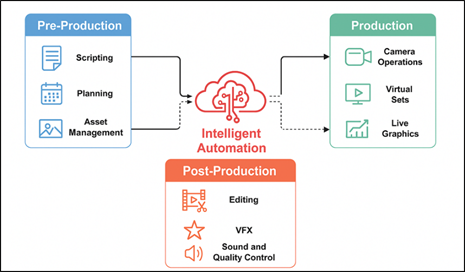
Figure 1 Architecture of Intelligent Automation in Digital
Media Production Workflow
An example of this is the use of automated asset management systems in pre-production workflows: a system will arrange and label media assets and generate visual effects and lighting changes in real-time with the help of AI-based tools in production. During the post-production, AI-based editing and sound design software are used to improve quality management and consistency among projects. Nevertheless, intelligent automation in the production of digital media is not only a tool of technical innovation, but one of the paradigm shifts in the creative management Bertolini et al. (2021). This change includes reconsidering the production cycles, re-skilling the creative teams, and redefining roles to support human-machines work. Besides, with the increasing levels of automation in the creative process, issues related to ethics, originality and authorship become increasingly popular. Is it possible that a machine can be creative? Who is the owner of AI-generated content? What is the way to automate, and still maintain the human touch that constitutes creativity? These are vital aspects in an industry that is becoming more dependent on intelligent systems Kim et al. (2022).
2. Literature Review
1) Overview
of traditional digital media production workflows
The conventional workflows of production of digital media have been traditionally linear, labor-intensive, and departmentalized in nature with lots of human expertise and manual interaction between the departments. Such workflows are usually divided into three primary stages, including pre-production, production and post-production. During pre-production, creative staff do concept development, scriptwriting, budgeting and scheduling Meddaoui et al. (2023). The process of production entails literal filming of footage, sound and images and it involves the cooperation of directors, cinematographers and technical crews. The process of post-production includes editing, color correction, sound design, and visual effects, and the final product. The traditional workflow is characterized by the reliance on steps of executing tasks and where one step has to be done before proceeding to the next Hadi et al. (2023). Although this approach allows to control the quality and be creative, it usually produces time-consuming operations and inflexibility with regard to real-time changes. Creative and technical teams might have communication gaps that cause inefficiencies, delays, and cost overruns. Additionally, in the wake of increased demand of multi-platform content, the conventional approach is not capable of responding as fast and as scalable as necessary in the digital age. The fact that technological advances in the form of digital editing suites, non-linear editing (NLE) and digital asset management tools have made the process of editing a little more efficient, does not change the fact that its fundamental structure is mostly manual Fordal et al. (2023).
2) Evolution
of Automation Technologies in Media Production
The history of automation in media production is an upward trend in the change of manual work to smart, data-oriented procedures. Initial automation can also be seen in the case of digital editing systems in the 1990s, like Avid and Adobe Premiere, which have brought about a revolution in post-production as they made it possible to create non-linear editing. These systems automated simple editing and file organization and also greatly minimized manual workload. Automation had been extended into broadcast and distribution systems via scheduling software, digital asset management and metadata tagging in the 2000s, enhancing workflow efficiency and speed of delivery of content Lu et al. (2021). The second significant jump was carried out with the introduction of computational equipment and algorithmic automation. Automated camera tracking, motion capture and rendering engines started automating stages of production and scripting and voice-over generation engines eased the job of pre-production. There was also improved coordination of the team across geographies through the use of cloud-based collaboration which has formed a single production ecosystem Guo et al. (2021). The technologies of machine learning and AI introduced in the 2010s brought adaptive automation, which is able to process creative data and make decisions based on context.
3) Integration
of AI and Machine Learning in Creative Processes
Artificial intelligence (AI) and machine learning (ML) in the creative sphere is a paradigm shift in the way digital media are thought, designed, and created. The AI-driven systems have transformed into systems that are not only capable of doing routine tasks but also actively engage in the decision-making process and content generation. Machine learning models are used to process large volumes of data, including visual aesthetics, consumer tastes, and storylines, in order to produce information that is used to make creative decisions Nunes et al. (2023). Such technologies help to automate such processes as video editing, sound mixing, and color grading which guarantees higher turnaround times and greater consistency. AI assistants like ChatGPT, Jasper, and ScriptBook, which analyse plot structure and propose ways to improve it, are used in creative writing and pre-production Scalabrini et al. (2019). The visual design systems, such as Runway ML and D-ID, create realistic images and characters, and systems, such as Synthesia, can automate the process of creating videos using the help of an AI avatar. In the post production process AI has been used to aid in recognizing scenes, tagging content and real time VFX production to cut down on the amount of manual work and human involvement. Table 1 conducts a summary of the previous research on smart automation used in the digital media production field. Notably, the human creativity is not substituted by AI and ML systems but enriched. These tools enable the artists to concentrate on idea development and emotional narration because they need to address repetitive or technical elements.
Table 1
|
Table 1 Summary of Related Work on Intelligent Automation in Digital Media Production |
||||
|
Study Focus |
Domain |
Technology |
Methodology |
Limitations |
|
Automation in Post-Production Workflows |
Film Production |
RPA, NLE Systems |
Case Study |
Limited to large studios |
|
AI in Creative Industries |
Digital Media |
Machine Learning, NLP |
Survey and Interviews |
Lacked focus on technical tools |
|
Intelligent Systems for Asset Management [11] |
Media Archives |
AI-based DAM Systems |
Experimental |
High implementation cost |
|
Virtual Production Techniques [12] |
Television |
Unreal Engine, Real-Time Rendering |
Case Analysis |
Requires advanced technical training |
|
Automated Video Editing Systems |
Digital Content |
Adobe Sensei, ML Models |
Comparative Study |
Limited creative flexibility |
|
Ethics of AI in Media [13] |
Media Ethics |
Deep Learning, GANs |
Literature Review |
Theoretical in nature |
|
Automation in Live Broadcasting |
News and Sports |
Computer Vision, Robotics |
Case Study |
Expensive hardware setup |
|
Human–AI Collaboration in Design [14] |
Creative Media |
Generative AI, HITL Models |
Empirical Study |
Dependence on training data |
|
Data Governance in AI Production |
Media Technology |
Blockchain, Smart Contracts |
Theoretical Framework |
Not widely implemented |
|
Skill Shifts in Automated Media Workflows [15] |
Workforce Studies |
AI Workflow Systems |
Survey |
Regional data bias |
|
AI-Driven Content Generation |
Digital Marketing |
NLP, Text-to-Video Models |
Experimental |
Quality control issues |
|
Intelligent Process Automation in Media [16] |
Digital Transformation |
IPA Framework |
Multi-Case Analysis |
Requires infrastructure overhaul |
3. Theoretical Framework
1) Concepts
of intelligent automation and digital transformation
Machine learning (ML) Intelligent automation is the meeting of artificial intelligence (AI), machine learning (ML), and robotic process automation (RPA) to improve and revolutionize the working processes. Intelligent automation, unlike traditional automation that is centered on fixed, predetermined and rule-based functions, involves the use of cognitive functions like learning, reasoning and adaptation. When used in the context of digital media production, it enables creative data to be analyzed, real-time decisions made and complex processes that once were handled by human judgment to be undertaken. An example of this is AI-based editing software, which can automatically identify scenes, sync audio or further visual effects depending on the analysis of the content. This change maximises efficiency but also the innovation by perpetuating the development of creative and technical processes.
2) Automation
Models and Frameworks Relevant to Media Production
Digital media production integrates intelligent automation with various automation models and frameworks to offer theoretical support to it. The Cognitive Automation Framework is one of the well-known frameworks that integrate rule-based automation and AI functions including natural language processing and predictive analytics.
Figure 2
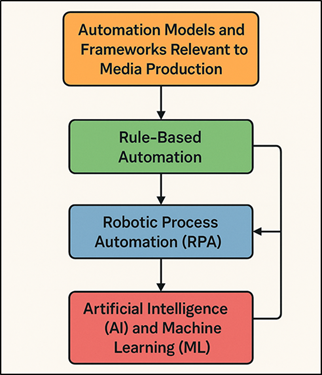
Figure 2 Flowchart of Automation Models and Frameworks
Relevant to Media Production
This model allows dynamic learning and self-enhancement, which is needed in dynamic production environments. Figure 2 shows flowchart modelling automation designs and systems of media production. Equally, the Autonomic Computing Model which is inspired by biological systems enables automated systems to sustain, optimize, and repair themselves with very little human intervention-perfect in the context of perennial media processes such as live broadcasting or streaming. Intelligent Process Automation (IPA) Framework has had a specific application to digital media, where RPA, ML, and analytics are combined to automate repetitive and cognitive tasks. During pre-production, IPA is able to deal with data tagging and scheduling, during production, it is able to control the camera movements and during post-production, it is able to automate editing and color correction.
3) Relationship
between Automation, Creativity, and Productivity
Automation, creativity and productivity of digital media production is a complex relationship. Automation improves productivity by means of minimized repetitive work, reduced human error and speeded work processes. Video rendering, files arrangement, or quality testing are some of the activities that AI systems can perform more effectively, leaving creative individuals to work on concepts and artistic creativity. Such redistribution of work creates a more fruitful and artful promising atmosphere. A traditionally human quality such as creativity can be enhanced by automation but not be substituted. AI tools offer intelligent help to the creators, proposing design patterns, narrative structures or visual styles based on the analysis of the data. Such collaboration adds to the creative palette richness through introducing new aesthetics and information which are unlikely to be detected by the human sense. To take one example, the production of design algorithms and story boarding AI opens up an opportunity to experiment on a new scale and speed. However, the interaction has difficulties as well. Overuse of automation may be homogenizing of the creative production, and less original. Therefore, it should also be remembered that the balance between the two aspects where automation will assist creativity rather than define it should be maintained.
4. Methodology
1) Research
design and approach
The research has adopted a mixed-methodology research design in which the combination of qualitative and quantitative research methods will be used to comprehensively examine the effect of intelligent automation in management of digital media production. This design will also enable the study to document not only the measurable outcomes, such as efficiency, cost reduction and time savings but also the subjective ones, such as creativity, user experience as well as ethics. The qualitative element is founded on the descriptive and exploratory research of case studies and interviews with specialists and provides the specifics of how the automation tools are implemented at various production stages. Quantitative dimension is the information of survey and performance indexes that indicate the effect in the automation in efficiency of workflow and creative outcome. The research design applied is the exploratory research design since the automation technologies in the media industry are evolving. The study will help ascertain recent trends, trends, and interrelation between automation instruments and productive creativity. It does not regard whether smart automation is transforming the media work or not but the manner and the reason why it is transforming it. The design has also incorporated aspects of comparative analysis, in comparison of the differences between the traditional and the automated production processes.
2) Data
Collection Methods (Case Studies, Surveys, Interviews)
In order to be reliable, valid and insightful, data gathering in this research will be grounded on a triangulation strategy which incorporates case study, surveys, and interviews. Major media houses and digital production studios that have implemented intelligent automation products such as Adobe Sensei, Runway ML and Synthesia are the focus of the case studies. These are some examples of how automation has been applied in real world in the pre-production, production and post-production processes. Based on the analysis of documents, the workflow mapping, and performance assessment, the case studies help comprehend the best practice, challenges, and strategic implications of automation adoption. The surveys are conducted among the community of workers of film, television, and digital content to get the quantitative data on the perception of the trend of automation, and the perceived impact of productivity and creativity. The questionnaire will consist of closed and open-ended questions; it will refer to the production managers, editors, animators, and AI technologists. Interviews with the key stakeholders, as the creative directors, the technical supervisors and the automation engineers, provide the qualitative data about the collaboration between human resources and machines, their skills change, ethical issues. The semi-structured interview designs are loose and they allow the respondents an opportunity to elaborate their experiences and perceptions.
3) Analytical
Tools and Techniques
It is a qualitative analysis combined with a quantitative analysis approach to derive logical conclusions out of data by carrying out a systematic process. Thematic analysis is embraced in the instance of qualitative data which can be collected through interviews and case studies so as to identify recurring patterns, ideas and associations. The responses will be coded into the categories of automation efficiency, improvement of creativity, ethical issues, and transformation of workflow. The procedure can be used to identify the latent themes in explaining how automation transforms the dynamics of production. This is complemented by content analysis which focuses on textual data (production reports, tool documentation, transcripts) to gain information on implementation approaches and creative outcomes. In case of quantitative data, statistical analysis is done on the basis of such software as SPSS or Microsoft Excel. Descriptive statistics provide an overview of the information about the survey, such as frequency distributions and means, whereas correlation analysis investigates the relationships between the variables, such as the level of automation adoption and productivity. Sometimes the traditional and automated workflow are their workflows compared to each other to check the efficiency improvement and cost factors.
5. Intelligent Automation in Digital Media Production
1) Automation in
pre-production (scripting, planning, asset management)
The pre-production stage is the base of any digital media project including generation of ideas, scripting, storyboarding, budgeting, and scheduling. This step has been revolutionized by intelligent automation that incorporates data and AI-supported applications that facilitate planning creative processes and administrative activities. Scriptwriting systems like ScriptBook and Jasper use audience statistics and narratives trends to recommend plot, dialogue and character development strategies. These tools do not only speed up the process of scripting, but also make the process of storytelling more exact, as it predicts the trends of audience involvement. AI-powered scheduling platforms such as StudioBinder and Celtx are useful in project planning, calculating the schedule of production, assigning resources to it, and detecting possible logistical issues. Project timelines and budgets are analyzed by machine learning algorithms that give real-time updates that enable producers to optimize the workflow efficiency. Figure 3 explains why automation simplifies the major processes in the pre-production of digital media. Another important automation invention in pre-production is digital asset management (DAM).
Figure 3
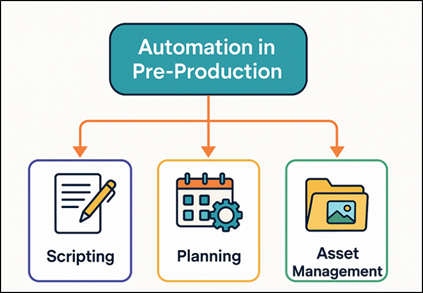
Figure 3 Automation in Pre-Production Stage of Digital Media Production
Based on computer vision and natural language processing, DAM tools automatically classify, label, and search media resources in the form of images, sound files, and video recordings. This can save the time of sorting manually and bring uniformity to the large production teams. On the whole, strategic creativity is developed through intelligent automation of the pre-production stage: less repetitive staffing and teams with more power to make creative choices are formed. It creates a logical flow of further stages of production, preconditions a harmonious cooperation, data-driven narrative, and cost-efficient implementation of projects.
2) Production
Stage Automation (Camera Operations, Virtual Sets, Live Graphics)
During the production stage, smart automation improves the real-time making of decisions, accuracy, and visual innovativeness. The recent productions have been increasingly making use of AI-enabled solutions that can be used to streamline camera work, virtual worlds, and real-time graphics and enable film creators and broadcasters to create high-quality outputs with minimal human intervention. Robotics and computer vision are used in automated camera systems to do dynamic tracking, focus controls and framing. As an illustration, AI-assisted cameras are able to recognize faces or motion and therefore can automatically adjust pan, tilt and zoom to ensure the best composition. Live sports, news, and studio productions have been one of the most adopted areas of these technologies to guarantee accuracy and minimize fatigue of the operators. Another autonomy dimension is virtual production environments. Games like Unreal Engine are provided with real time image and motion track to create engulfing virtual sets that blend the real world with the virtual world. The use of AI in lighting and texture automation allows adjusting the virtual scenes to camera perspectives and reduces the post-production load, and increases creative freedom. Live graphics automators are applied to simplify visual overlay live graphics such as lower thirds, scoreboards and interactive graphics. The integration of data and automation to create graphics in the live broadcasting process improve the visual effects and accuracy, which is facilitated by such systems as Vizrt and Avid. It is a combination of all these technologies that lessen the usage of human handwork, increase the production rates and also enable creative experimentation without loss of control.
3) Post-Production
Automation (Editing, VFX, Sound, and Quality Control)
Post-production is one of the processes in digital media production that is the most resource intensive and includes video editing, color grading, visual effects (VFX), sound mixing, and quality assurance. This step has been reshaped by smart automation and has developed the AI-driven tools that have turned the processes into quicker, regular, and innovative ones. Video editing, AI systems like adobe sensei and blackmagic DaVinci Resolve match shots with audio and give suggestions about what the film edits need to do based on the plot structure. Machine learning algorithms are used to learn user preferences and make stylistic edits and transitions recommendations, which saves much work. In visual effects (VFX), AI-based systems automate rotoscoping, object removal and motion tracking, which otherwise took hours of manual work to execute. Software like Runway ML and Autodesk Flame lets one perform real-time background replacement and compositing and lets the creators concentrate on artistic polishing instead of tedious technical labor. Automation is also applied in sound design. Intelligent robots such as iZotope’s RX and Adobe Podcast will automatically de-noise and balance, create soundscapes depending on the analysis of the scene.
6. Case Studies and Practical Applications
1) Examples
from film, television, and digital content platforms
The art of intelligent automation has become an inseparable part of contemporary film, television, and digital content creation since it allows a studio to promote both efficiency and creative richness of operations. The Lion King (2019) and The Mandalorian (2020) are examples of the industry that uses virtual production and real-time rendering using Unreal Engine. These technologies automated the lighting process, composition of scenes and rendering of the environment enabling the directors to visualize digital sets in real time without sacrificing the process of creativity. In a similar fashion, the AI-aided motion capture and facial recognition systems decreased the post-production workloads dramatically. The live production, graphics insertion and real-time analytics have become automated in networks such as BBC and CNN in the television broadcasting. Automated newsroom systems control the camera switching, lower-thirds, and scheduling of the broadcasts to allow seamless broadcasts with minimum staff involvement. In the case of digital content platforms, YouTube, Netflix and Tik Tok creators are becoming more dependent on AI use in editing, captioning and optimization of recommendations. An example of this is the Netflix project Genesis, which operates based on predictive algorithms to analyze the data of viewers and inform the content production decisions. Influencers in the social media use automated editing and thumbnail creation tools to have a consistent output.
2) Use
of AI-Based Tools (e.g., Adobe Sensei, Runway ML, Synthesia)
Diverse AI-solutions are now being used to automate the digital media production pipeline to optimize various creative and technical tasks. Adobe Sensei, built into Adobe creative cloud uses machine learning to automate intricate editing roles like object elimination, scene division, and color matching. It is also helpful in metadata tagging and content-sensitive design, makes the project completion speedy and similar quality consistent. Runway ML is an open-source end-to-end creative platform, which democratizes machine learning in media professionals. It has AI models that handle activities such as background replacement, motion tracking, and video upscaling without need of coding knowledge. The generative features of Runway also make them experiment with AI-powered compositing, style transfer and real-time VFX. Synthesia, however, is the new way to produce a video through the creation of a realistic AI avatar and automatic voiceover. It enables organizations to create high quality instruction or promotional videos using many languages without cameras or actors, highly reducing the time and the cost of production. These tools are an example of how AI can empower the creators by decreasing the amount of manual labor and increasing the creativity. They, as a whole, constitute an interdependent ecosystem wherein automation will add efficiency to the process and the aesthetics remains intact.
3) Impacts
on Efficiency, Cost, and Creative Outcomes
The implementation of intelligent automation in digital media creation has resulted in high efficiency, cost control, and creative results. The most noticeable gains are efficiency in the form of reduction of time in all stages of production. Repetitive work like rendering, tagging and synchronization is automated and turn around time is cut by as much as 60 percent. AI-based analytics provide a real-time feedback that can reduce the duration of decision-making and have faster iterations and approvals.
Figure 4
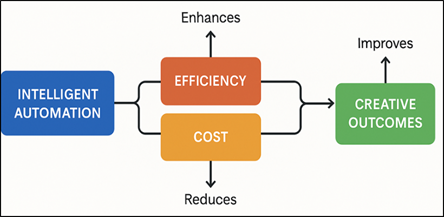
Figure 4 Architecture Diagram Illustrating the Impact of
Intelligent Automation on Efficiency, Cost, and Creative Outcomes
Automation reduces the costs of labor, equipment needs and the cost of correcting errors. Figure 4 demonstrates that intelligent automation can be used to save time and money and increase creative results For example, virtual production results in fewer physical sets and fewer reshoots, whereas automated editing tools cut down the number of hours that would be spent on post-production. Such scalability suits smaller studios and independent creators especially, who can get access to high-end features at reduced financial cost. Intelligent automation is also conducive to creativity. The load of a technical burden is removed and creators are able to put more energy into creative and narrative development. The generative AI tools suggest additional possibilities of designs and support exploration of the visual styles, soundscapes, and narration type.
7. Conclusion
Introduction of the intelligent automation into the digital media production means represents an important breakthrough in the history of creative industries. The changing conceptualization and production of media and its delivery, as the study unveils, has been redefined by the concept of automation, which is a result of artificial intelligence, machine learning, and cognitive systems. Intelligent automation improves efficiency, precision, and flexibility to creativity in pre-production to post-production to enable professionals to concentrate on ideation and innovation, instead of some technical repetitive tasks. Such resources as Adobe Sensei, Runway ML, and Synthesia are the examples of how AI can become a creative partner and enhance the capabilities of a human to guarantee the production of a high quality and quicker delivery cycles. In addition to efficiency, automation encourages a paradigm shift on the creative management and workflow design. It is an adaptive, data-informed ecosystem on the production of digital media by means of collaboration between the human and the machine. Nonetheless, there are challenges related to this technological development. Questions of creative integrity, morality, privacy of information and the transformation of the workforce are all still at the forefront. The dependency on the use of algorithmic systems is demanding open governance structures and the ongoing training of new skills to ensure a balance is maintained between automation and artistic creation.
CONFLICT OF INTERESTS
None.
ACKNOWLEDGMENTS
None.
REFERENCES
Bertolini, M., Mezzogori, D., Neroni, M., and Zammori, F. (2021). Machine Learning for lications: A Comprehensive Literature Review. Expert Systems with Applications, 175, Article 114820. https://doi.org/10.1016/j.eswa.2021.114820
Borghesi, A., Burrello, A., and Bartolini, A. (2023). ExaMon-X: A Predictive Maintenance Framework for Automatic Monitoring in Industrial IoT Systems. IEEE Internet of Things Journal, 10, 2995-3005. https://doi.org/10.1109/JIOT.2021.3125885
Fordal, J. M., Schjølberg, P., Helgetun, H., Skjermo, T. Ø., Wang, Y., and Wang, C. (2023). Application of Sensor Data-Based Predictive Maintenance and Artificial Neural Networks to enable Industry 4.0. Advanced Manufacturing, 11, 248-263. https://doi.org/10.1007/s40436-022-00433-x
Guo, D., Chen, X., Ma, H., Sun, Z., and Jiang, Z. (2021). State Evaluation Method of Robot Lubricating Oil Based on Support Vector Regression. Computational Intelligence and Neuroscience, 2021, Article 9441649. https://doi.org/10.1155/2021/9441649
Hadi, R. H., Hady, H. N., Hasan, A. M., Al-Jodah, A., and Humaidi, A. J. (2023). Improved Fault Classification for Predictive Maintenance in Industrial IoT Based on AutoML: A Case Study of Ball-Bearing Faults. Processes, 11, Article 1507. https://doi.org/10.3390/pr11051507
Kim, S. W., Kong, J. H., Lee, S. W., and Lee, S. (2022). Recent Advances of Artificial Intelligence in Manufacturing Industrial Sectors: A Review. International Journal of Precision Engineering and Manufacturing, 23, 111-129. https://doi.org/10.1007/s12541-021-00600-3
Lu, B.-L., Liu, Z.-H., Wei, H.-L., Chen, L., Zhang, H., and Li, X.-H. (2021). A Deep Adversarial Learning Prognostics Model for Remaining Useful Life Prediction of Rolling Bearing. IEEE Transactions on Artificial Intelligence, 2, 329-340. https://doi.org/10.1109/TAI.2021.3097311
Meddaoui, A., Hain, M., and Hachmoud, A. (2023). The Benefits of Predictive Maintenance in Manufacturing Excellence: A Case Study to Establish Reliable Methods for Predicting Failures. The International Journal of Advanced Manufacturing Technology, 128, 3685-3690. https://doi.org/10.1007/s00170-023-12086-6
Msakni, M. K., Risan, A., and Schütz, P. (2023). Using Machine Learning Prediction Models for Quality Control: A Case Study from the Automotive Industry. Computational Management Science, 20, Article 14. https://doi.org/10.1007/s10287-023-00448-0
Müller, D., März, M., Scheele, S., and Schmid, U. (2022). An Interactive Explanatory AI System for Industrial Quality Control. arXiv. https://doi.org/10.1609/aaai.v36i11.21530
Nunes, P., Rocha, E., Santos, J., and Antunes, R. (2023). Predictive Maintenance on Injection Molds by Generalized Fault Trees and Anomaly Detection. Procedia Computer Science, 217, 1038-1047. https://doi.org/10.1016/j.procs.2022.12.302
Pejić Bach, M., Topalović, A., Krstić, I., and Ivec, A. (2023). Predictive Maintenance in Industry 4.0 for SMEs: A Decision Support System Case Study Using Open-Source Software. Designs, 7, Article 98. https://doi.org/10.3390/designs7040098
Plathottam, S. J., Rzonca, A., Lakhnori, R., and Iloeje, C. (2023). A Review of Artificial Intelligence Applications in Manufacturing Operations. Journal of Advanced Manufacturing Processes, 5, Article e10159. https://doi.org/10.1002/amp2.10159
Scalabrini Sampaio, G., Vallim Filho, A. R. D. A., Santos da Silva, L., and Augusto da Silva, L. (2019). Prediction of Motor Failure Time Using an Artificial Neural Network. Sensors, 19, Article 4342. https://doi.org/10.3390/s19194342
Sundaram, S., and Zeid, A. (2023). Artificial Intelligence-Based Smart Quality Inspection for Manufacturing. Micromachines, 14, Article 570. https://doi.org/10.3390/mi14030570
Taşcı, B., Omar, A., and Ayvaz, S. (2023). Remaining Useful Lifetime Prediction for Predictive Maintenance in Manufacturing. Computers and Industrial Engineering, 184, Article 109566. https://doi.org/10.1016/j.cie.2023.109566
|
|
 This work is licensed under a: Creative Commons Attribution 4.0 International License
© ShodhKosh 2025. All Rights Reserved.