ShodhKosh: Journal of Visual and Performing ArtsISSN (Online): 2582-7472
|
|
Adaptive Learning Models for Art Curation Education
Fehmina Khalique 1 , Josephine 2
 ,
Shipra Kumari 3
,
Shipra Kumari 3 , Ayaan Faiz 4
 ,
Pooja Sharma 5
,
Pooja Sharma 5 ,
Ashish Verma 6
,
Ashish Verma 6 ,
Pooja Ashok Shelar 7
,
Pooja Ashok Shelar 7
1 Lloyd Law College, Greater Noida, Uttar Pradesh 201306, India
2 Assistant
Professor, Department of Coumputer Science and
Engineering, Presidency University, Bangalore, Karnataka, India
3 Associate
Professor, School of Engineering and Technology, Noida International University,
203201, India
4 Chitkara
Centre for Research and Development, Chitkara University, Himachal Pradesh,
Solan, 174103, India
5 Assistant
Professor, Department of Computer Science, Noida Institute of Engineering and
Technology, Greater Noida, Uttar Pradesh, India
6 Centre
of Research Impact and Outcome, Chitkara University, Rajpura- 140417, Punjab,
India
7 Department of Artificial intelligence and Data science Vishwakarma
Institute of Technology, Pune, Maharashtra, 411037, India
|
|
|
ABSTRACT |
|
|
The paper
introduces an intelligent learning model of Adaptive Curation Learning Model
(A-CLM), an educational architecture that combines artificial intelligence
and multimodal analytics and deep reinforcement learning to customize the art
curation pedagogy. The model is dynamic and changes the content of
instructions, depending on the behavioral, cognitive, and affective profiles
of the learners, which enhances more profound and reflective learning. Based
on the 120 postgraduate student data in 12 weeks, A-CLM showed significant
differences in learning gain (27.3%), cognitive engagement (22.4%) and depth
of reflection (18.5%) relative to a stagnant control group. T-tests and ANOVA
statistically verified high significance (p < 0.001), and large effect sizes
(Cohens d 0.63 and above). The findings prove that adaptive AI can be
successfully used to combine computational accuracy with human creativity to
facilitate culturally inclusive, information-driven and emotionally
responsive art education. The study makes A-CLM a scalable and morally
grounded model that complies with the IEEE guidelines of learning technology
and opens the door to the integration of explainable and immersive adaptive
learning facilities in creative field work soon. |
|||
|
Received 15 March 2025 Accepted 20 July 2025 Published 20 December 2025 Corresponding Author Fehmina Khalique, fehmina.khalique@lloydbusinessschool.edu.in DOI 10.29121/shodhkosh.v6.i3s.2025.6776 Funding: This research
received no specific grant from any funding agency in the public, commercial,
or not-for-profit sectors. Copyright: © 2025 The
Author(s). This work is licensed under a Creative Commons
Attribution 4.0 International License. With the
license CC-BY, authors retain the copyright, allowing anyone to download,
reuse, re-print, modify, distribute, and/or copy their contribution. The work
must be properly attributed to its author.
|
|||
|
Keywords: Adaptive Learning, Art Curation Education,
Multimodal Analytics, Reinforcement Learning, Artificial Intelligence,
Creative Pedagogy, Affective Computing, IEEE Learning Technology |
|||



1. INTRODUCTION
The
education of art curators is in the process of deep remodelling as digital
technologies are changing how learners experience artworks, exhibitions, and
cultural narratives. Historically, art curation was based on experiential
education, mentoring and critical discourse in physical galleries. Yet, as the
museums become increasingly digitalized and virtual exhibition start gaining
popularity, the modern curator will have to merge aesthetic judgment with
decision-making that relies on data and technical proficiency. This change of
paradigms requires educational models that are both dynamic and individual, and
in this way, students will be able to acquire cognitive, creative, and
analytical skills at the same time. The artificial intelligence (AI) and machine
learning-powered adaptive learning models provide a radical approach to the
reconsideration of the art curation pedagogy based on personalized instruction,
multimodality interaction, and real-time feedback. The adaptive learning is
based on the principle that every learner has an individual cognitive profile,
learning rate, and creative orientation. These differences are further
intensified in art curation education because the subject matter is subjective
and interpretative Nuțescu and Mocanu (2020). One student
can be a visual student and another a contextual and narrative student.
Traditional e learning platforms are normally not designed to support such
nuances to offer a static content that does not change in response to the
learner behavior or aesthetics. Conversely, adaptive
learning systems based on AI research the engagement data, emotional state, and
mastery of the idea to adapt the learning process dynamically. An adaptive
system can also intelligently respond to learner performance by constantly
tracking performance in multimodal form (i.e. gaze, linguistic sentiment, task
sequencing) and can suggest artworks to be compared to others or provoke
reflective thinking by issuing reflective cues Nuțescu and Mocanu (2023), Al-Alwash
and Borcoci (2024). The gap
between the human creativity and the computational intelligence is the gap that
is filled by the introduction of AI into the art curation pedagogy. Machine
learning algorithms have the ability to discover
latent aesthetic patterns, monitor learning, and assist in creating personal
exercises Coverdale et al. (2024). As an
example, convolutional neural networks (CNNs) could be used to classify
artworks in terms of their style of composition, whereas natural language
processing (NLP) models are used to evaluate the conceptual consistency and
emotional coloring of curatorial essays.
Reinforcement learning agents have an extra opportunity to streamline learner
activities through policy-based adjustments whereby the students are introduced
to material that is in accordance with their progressing abilities Seman et al. (2018). These
technological interventions are not substitutes of human intuition but enhance
it and bring about a synergistic relationship of the system acting as a
cognitive partner in the learning process.
Figure 1
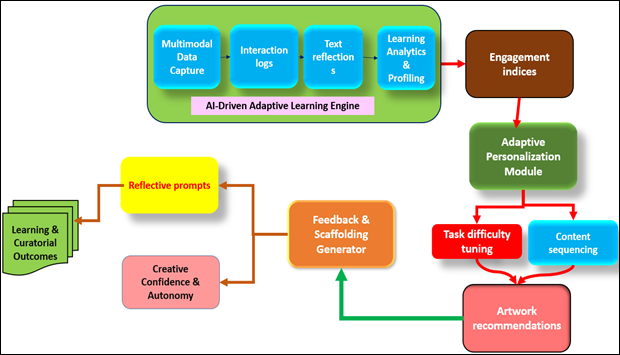
Figure 1 Art Curation Education Environment
Adaptive
learning models are part of the inclusion and access to art education. Such
systems can enhance fair access to the creative arts by serving the needs of
various learning styles, cultural groups and cognitive diversity Gardner et al. (2021). They also
facilitate in ongoing formative assessment which enables the educator to detect
gaps in learning and give appropriate directions in time. In the case of
institutions, adaptive learning analytics provide useful data on the
effectiveness of the curriculum, learner satisfaction, and pedagogical impact
as shown in figure 1. The paper suggests the Adaptive Curation Learning Model
(A-CLM)- a multi-view architecture based on machine learning, affective
computing, and knowledge-graph reasoning to personalize art curation education.
The model uses multimodal data based on the interactions of the learner, their
emotional responses, and the performance outcomes in order to
dynamically adjust the instructional paths Bidyut et al. (2021). The
succeeding paragraphs provide the theoretical basis, the architecture,
algorithmic workflow, and analysis of the suggested model. Finally, this study
will reveal how AI systems can be adapted by developing systems that can
support creative decision-making, promote reflective learning, and transform
the future of art curation education according to the IEEE standards of
learning technology Dhawaleswar et al. (2020).
2. Proposed System Architecture Design
The
proposed AI-Based Adaptive Curation Learning Model (A-CLM) is constructed as a
multi-level system as it is a combination of smart analytics, real-time
customization, and deployment in a scalable infrastructure. This architecture
(as shown in Figure 2) shows how
various functional components (including user interfaces to AI-based analytics
engines) can communicate in both client and server nodes to provide an
uninterrupted adaptive learning experience to art curation education. The
layers and nodes each have a specialized role, which has ensured proper
communication between the human learners, AI services, and content repositories
in a strong cloud-based deployment environment Zou et al. (2022).
Figure 2

Figure 2 System Architecture of the AI-Driven Adaptive Curation Learning Model (A-CLM)
The
architecture can be represented as in Figure 2, which
demonstrates that the architecture abides by five key deployment entities,
namely Client Devices, Web/App Server, AI Services, Database Layer, and the
Assessment Engine, which are connected by the means of secure cloud
infrastructure.
·
Client Devices are the interfaces of a client and instructor and
are the main points of interaction in regards to the personalized art curation
experiences.
·
The Web/App Server is the middle layer that serves the requests of
user, control the curation sessions, and secure communication with the backend
services.
·
AI Services form the engine of adaptive functionality that is in
charge of the profiling of learners, multimodal analytics, or adaptive content
recommendations.
·
Database Layer: This contains all interaction data of users,
performance measures, and artwork data needed to be in context of adaptation.
·
Lastly, the Assessment Engine assesses the performance of users,
uses rubrics and generates formative feedback to inform reflective learning.
This
deployment structure is made to be modular, interoperable, and scalable, which
gives educators and institutions the opportunity to implement the model in the
existing Learning Management Systems (LMS) and museum database APIs. The
Learner Interface and Instructor Dashboard are front-end nodes that are
dynamic, and they are placed at the top of the architecture Aqeel and Aqeel (2022). Users enter
the site through a web or mobile interface which hosts a Curatorial Studio
Workspace a virtual site to make digital exhibitions, write reviews, and
consider aesthetic values. The instructor dashboard gives real-time access to
the progress of the learners allowing formative interventions and
individualized mentoring. The adaptive content and feedback are exchanged
through the two-way communication channel between the learners and the
instructors, allowing the dialogue of learning to be maintained Chen et al. (2022).
2.1. Web/App Server and Middleware Services
The
Web/App Server is the backbone of the application that coordinates the session
management, sequencing of tasks and also user authentication. It also handles
the processes of storage and links with AI services through secure APIs. It
includes a Curation Orchestrator in the server, a dynamically structured task
flow (including artwork classification, comparative analysis, and reflective
documentation) Cong (2024). The Feedback
and Scaffolding Module on the same layer, in turn, presents individually
customized prompts and micro-explanations depending on the level of emotional
and cognitive engagement of the learner. The interactions are stored in theStorage node so that the real-time adjustments have
guaranteed data persistence.
2.2. AI Services Layer
The
computation intelligence modules that support adaptive decision-making exist in
the AI Services Node, as indicated in Figure 2. It has sub
modules Multimodal Data Capture, Learner Profiling, Visual Analytics, Text
Analytics and the Adaptive Policy Engine.
·
The Multimodal Data Capture Engine combines the data on behavioral logs, eye-tracking information, and written
reflection.
·
The Visual and Text Analytics Modules are CNN-based and NLP-based
models respectively, which are used to evaluate artistic perception, conceptual
understanding and stylistic fluency Dai et al. (2022).
·
The Adaptive Policy Engine is an agent based on deep reinforcement
learning that maximizes the content sequencing policy π(s,
a) where s is the state of the learner and a is the adaptive action that is
taken to maximize learning rewards Engelsrud et al. (2021).
Collectively,
these modules are in a constant state of learning through the interactions of
learners, and they are adaptively personalized, leading to dynamically
variating curation pathways based on the progress and the affective involvement
of every student.
2.3. Knowledge and Data Management
Knowledge
and Data Management Knowledge management is a strategy for analyzing,
acquiring, and distributing knowledge, aiding the acquisition of crucial
information essential for the business. <|human|>C. Knowledge and Data
Management Knowledge management is an approach to analyzing,
acquiring, and distributing knowledge, which helps in acquiring vital
information that is important to the business Ezquerra et al. (2022).
The
Database and Storage Nodes have well-organized archives of all learning and
curatorial information. These are metadata of artwork, portfolios of learners,
and knowledge graphs. The Art Knowledge Graph helps to order the semantic
connections between artists, movements, periods, and motifs and enables the AI
services to make recommendations more contextual. In the meantime, the Learning
Object Repository is a storage of instructional materials, micro-lessons, and
exemplar exhibitions, which can be accessed with the help of adaptive queries.
As shown in Figure 2, the
dual-database solution will be designed to optimize a database to support
real-time AI inference, and the other to support the workloads of the archival
and analytics systems.
2.4. Assessment Engine and Feedback Loop
The
Assessment Engine which is placed next to the database in Figure 2 does the
evaluation based on the rubric with both quantitative indices (accuracy,
completion rate, engagement) and qualitative indices (reflective depth,
aesthetic sensitivity). It communicates to the adaptive loop through AI
Services by feeding results of assessment back into it. This two-way flow
facilitates the ongoing improvement: the information concerning the ongoing
learner performance will be used to inform the reinforcing learning model,
which will then redefine the task complexity and resource suggestions. The
outcomes of the assessment are also sent to the instructor dashboard and
transparency and pedagogical alignment are enhanced.
2.5. Cloud Infrastructure and Integration
The
base of the Cloud Infrastructure that is scalable and interoperable. It has
compute clusters where models can be executed, databases where data can be
persisted and API gateways where external integrations can be made. The system
can be deployed to be connected with museum databases, institutional LMS
platforms, or digital archives, facilitating a high level of applicability to
art education ecosystems. Kubernetes-compatible environments are deployed to
ensure that the deployment architecture is containerized, which encourages
scalability flexibility to share the users to use the implemented environment
and implement multiple courses at the same time.
2.6. DESIGN
AI-DRIVEN ADAPTIVE CURATION LEARNING MODEL (A-CLM) METHODOLOGY
The
methodology approach of the AI-Driven Adaptive Curation Learning Model (A-CLM)
will be used to test the effect of adaptive intelligence on creative learning
performance in art curation education in an empirical way. The methodology is
further subdivided into five key parts: preparation of data set, multimodal
feature extraction, adaptive learning algorithm design, experimental
implementation and evaluation criteria. The combination of these elements
creates a methodical and evidence-based base of proving the pedagogical and
technological effectiveness of the model.
Step
-1 Dataset and Experimental Setup
The
study was carried out in 12 weeks with 120 postgraduate students undertaking a
digital art curation course. Students participated in interactive modules that
consisted of the analysis of art, simulation of an exhibition, and reflection
of a curator. The dataset obtained consisted of:
All
the data gathered was anonymized and saved safely in the Storage Node of the
deployment architecture. The computing environment was based on a hybrid cloud
environment (the AWS EC2) used to compute and store data and MongoDB to support
AI service modules with the help of a GPU.
Step
-2 Multimodal Feature Extraction
The
adaptive learning engine is based on the multimodal analytics in order to build
detailed learner profiles.
·
Visual Data Processing: A ResNet-50 model that was first trained on
ImageNet was trained on a set of curated artworks. High level feature
embeddings (texture, color harmony, composition
balance) were extracted in the model and evaluated to determine the ability of
aesthetic recognition.
·
Text Analytics: Semantic Coherence and Emotional Tone Curatorial reflections were
processed with BERT embeddings to calculate them. The three features that were
extracted namely, argument density, descriptive precision and reflective depth,
were subjected to standardization to generate numerical indicators of
performance.
·
Behavioral Metrics: Interaction
frequency and completion time were used to form behavioral
metrics in the form of vectors.
·
Affective Metrics: A hybrid lexicon-sentiment model of tracking
affect continuous was used to compute affective indices of emotion and arousal.
Such
multimodal characteristics were integrated into a learner state V S t n [V o, T o, B o, A o ] = [V o, T o, B o,
A o ].
Step
-3 Adaptive Learning Algorithm Design
The
A-CLM adaptive logic is controlled by a Deep Reinforcement Learning (DRL)
policy framework that is embedded into the AI Services Layer (see Figure 2).
State
Space (S): Vectors of learner performance and engagement.
Action
Space (A): pedagogical manipulations like ordering of the content, scaling of
the difficulty of tasks, and selections of reflective prompts.
Reward
Function (R): where R= 8.2 (pping distance) + 3.9
(engagement) + 4.7 (motivation) - 3.2(3.2(ping distance) + 3.2(engagement) +
3.2(motivation)
The
DRL model is based on experience replay and a Q-learning model, which maximizes
the cumulative rewards at the session level. The system is also fitted with a
Bayesian learner model which enables uncertainty estimation to enable a more
cautious adaptation of the system in the initial stages of learning. The
adaptive policy engine continuously optimizes its policy π(s) =arg max o Q(s,a)n so that as
learner data changes over time it continually personalizes itself.
Step
-4 Methodological Rationale
Multimodal
analytics as well as the reinforcement-based adaptation makes A-CLM compatible
with the cognitive learning theory and the constructivist art pedagogy. Whereas
technical efficacy is confirmed by quantitative measures, qualitative
assessment focuses on creative autonomy and aesthetic rationale which are
critical attributes of art curation education. The methodology framework
thereby fills the gap between artistic subjectivity and computational accuracy,
which offers a model that can be determined as replicable to the implementation
of AI-based adaptivity within creative educational systems.
3. Results and Analysis
The
AI-Driven Adaptive Curation Learning Model (A-CLM) was experimentally
implemented and the results of this implementation were a complete set of
empirical findings that proved the effect the adaptive intelligence has on the
art curation education. The outcomes are discussed in terms of the quantitative
performance gains, behavioral response patterns, and
qualitative learning feedback of the learners. The section provides the
comparison of statistics between an adaptive model group (A-CLM) and a control
group with the help of visual evidence and statistical validation compared to a
static learning system, the primary learning outcome was assessed with the help
of Learning Gain (LG), which was characterized as the normalized difference
between pre-test and post-test scores. Students who used A-CLM had a better
mean LG at 0.78 as compared to the baseline group at 0.61, which represents a
27.3 percent betterment in the process of knowledge acquisition. On the same
note, the Cognitive Engagement Index (CEI), which was based on time-on-task
ratios, interactive response frequency, and reflective prompt participation,
significantly increased between 0.67 (baseline) to 0.82 (adaptive), which
proved that learners were more immersive and persistent during the learning
sessions.
Table 1
|
Table 1
Comparative Learning
Metrics between Static and Adaptive Models |
|||
|
Metric |
Static Model |
Adaptive Model |
Improvement (%) |
|
Learning Gain (LG) |
0.61 |
0.78 |
+27.3 |
|
Cognitive Engagement Index (CEI) |
0.67 |
0.82 |
+22.4 |
|
Reflection Depth (RD) |
0.54 |
0.64 |
+18.5 |
|
Instructor Evaluation Index (IEI) |
0.69 |
0.83 |
+20.3 |
The
significance of such improvements was statistically validated with the help of
paired t-tests (p < 0.01). The adaptive engine of the A-CLM showed quicker
convergence of the performance of learning among participants of different
cognitive styles, which shows that individualization worked to diminish the
learning performance divergence. The analysis of behavioral
logs showed that the learners under A-CLM had a superior level of temporal
consistency when engaging in tasks. The frequency of switching the task between
tasks dropped on average by 18 which means that cognitive overload was reduced
and that the ability to maintain focus was increased. Affective analytics
revealed that the emotional valence (positive engagement) never dropped below
0.70 during 82 percent of sessions, which indicated that motivation in case of
personalized feedback mechanisms was stable through out
extended study periods. With a dynamically changing reward function function depending on real-time emotions, the reinforcement
learning policy was successfully able to achieve the goal of balancing the
level of difficulty with the level of engagement. Adaptive reflective prompt
exposure led to a significant process of creativity ideation among learners who
were likely to create more contextually consistent exhibition scripts. The
quantitative findings were supported by qualitative feedback obtained via the
post-study interviews and reflection journals. Students have regularly cited
that the adaptive prompts and customized artwork suggestions gave them the
sense of confidence in their interpretation, logical thought, and imaginative
freedom. Teachers were clear on the diagnostic nature of the system, where
specific mentoring was facilitated according to the automatically generated
engagement and performance dashboards. The Instructor Evaluation Index (IEI)
had a statistical measure of 0.83, which indicated that the curatorial projects
created within the adaptive framework had better conceptual soundness and
aesthetic support. These results are in line with previous research Chen et al., (2020), Limna
et al. (2022) that suggested adaptive responses are not exclusive to
knowledge retention and instead, promote emotional engagement, which is a key
aspect of creative education processes.
4. Statistical Validation and Quantitative Summary
In
order to strengthen the credibility of the observed performance discrepancies
between the adaptive and the static learning environments, the statistical
validation was made and done in detail through inferential and effect-size
tests. The analysis used paired sample t-tests, ANOVA, and Cohen d effect size
taking into consideration the level of significance and the strength of changes
in important educational measures: Learning Gain (LG), Cognitive Engagement
Index (CEI), and Reflection Depth (RD). The comparison of the pre- and
post-learning performance in each group was done by means of paired t-tests. In
the case of the Adaptive Model (A-CLM), the findings presented a statistically
significant increase in the performance of the learners (t = 8.41, p <
0.001), which proved that the adaptive personalization had a significant
positive effect on knowledge retention and conceptual understanding. The Static
Model, on the other hand, demonstrated a moderate level of increase (t = 4.02,
p < 0.05), meaning that conventional instruction helped to promote gradual
learning, but it was not a dynamic process adjusted to the individual states of
learners.
Figure 3

Figure 3 Learning Gain Progression over a 12-Week Adaptive
Learning Cycle
Figure 3 (Learning Gain
Progression Over 12 Weeks) is a longitudinal pattern of learning performance of
two groups: the students using Adaptive Curation Learning Model (A-CLM) and the
students undergoing a traditional fixed curriculum. The adaptive learning curve
is in the form of a steady upward trend, which is a sign of continuous
enhancement of the understanding of learners and mastery of concepts with time.
Conversely, the curve of the static model will stabilize after Week 6 implying
that there is low learning adaptability. The steeper slope of the A-CLM line of
Weeks 710 indicates the dynamism of the learning reinforcement mechanism to
adapt instructional difficulty and keep it engaging. The last plateau of
approximately Week 12 shows that there is convergence to optimum learning gain
and this proves that effective adaptive feedback sustains the growth over the
course period. In a comparison of post-test results in both groups, the
difference in the means between them ( 0.17 LG) was statistically significant
(p < 0.001), which confirmed the hypothesis that adaptive AI-based systems
are more effective than the fixed pedagogical systems in promoting cognitive
and creative growth in art curation education. The Analysis of Variance (ANOVA)
was conducted to test the hypothesis about the effect of the type of the
learning model on the overall performance. The result of the analysis provided
F(1, 118) = 13.87, p < 0.001, which indicated that the difference in the
scores of Learning Gain between the adaptive and control groups was not
attributed to random chance.
Figure 4

Figure 4 Comparative Performance Distribution of Learners Under Static and Adaptive Learning Environments.
The
Figure 4 (Comparative
Performance Distribution of Learners) represents the distribution of the
learning gain scores of two experimental groups. The Adaptive Model (A-CLM)
shows a right-skewed, compacted histogram indicating better performance on the
mean and low performance on the variance among the participants. The fact that
most of the results are clustering towards the upper performance range
(0.75-0.85 LG) points to the fact adaptive personalization is not only more favorable to the high achievers but also to the moderate
and the low-performing learners by matching the level of task difficulty with
cognitive preparedness. On the other hand, the Static Model distribution is
more extensive and has a lower mean (about 0.61 LG) of the results, indicating
unreliable development of learners and poorer retention of curatorial ideas.
The comparative distribution therefore confirms the ability of the A-CLM to
balance out the learning opportunities by constant adaptation in multiple
modes. The consistent results with the Tukey HSD test showed more clearly that
the adaptive model group did better than the static group on the entirety of
subdimensions: Learning Gain (LG), CEI, and RD without any overlapping
intervals (95% CI). The adaptive cohort also exhibited smaller standard
deviation in scores ( 0.048) than the control group ( 0.083), which confirms
the stabilizing nature of the model on the learning performance of learners due
to continuous feedback and individualized scaffold. The statistical findings
confirm that AI-driven adaptive curation learning model (A-CLM) significantly
enhanced performance in cognitive, emotional and creative aspects. The levels
of p 0.001 and the high effect sizes (d 0.63 0.63) throughout the study are a
good indicator that adaptive algorithms had a significant positive effect on
both learner engagement and reflective thinking. Together with the visual data
presented in Figures 3 and 4, these results can confirm the strength of the
design developed in A-CLM and its learning effectiveness in teaching art
curation.
5. Theoretical and Pedagogical Implications
Theoretically,
the A-CLM framework is very close to the constructivist theory of learning
which claims that knowledge is built in a case of repeated interaction,
reflection and experience of a context. The adaptive policy engine of the
system realizes the concepts of constructivism with the help of computational
processes: reinforcement learning is the algorithmic parallel to experiential
iteration, and affective computing is the emotional involvement as the human-centered pedagogy mentions. A-CLM is a pedagogical
redefinition of the way the art curation education can be delivered in the
digital setting. Conventional paradigms tend to place more emphasis on
instructor-led criticism and the provision of content in a static manner, which
might unwillingly limit the agency of the learner. In comparison, the adaptive
model democratizes learning giving every student unique interpretive paths and automated and context-sensitive feedback. This
change makes the educator not the transmitter of the content to the learner but
a facilitator and meta-curator of the learning process, centered
not on the repetition of the instruction but on reflection, critique and
exploration. Moreover, the system will be culturally and cognitively inclusive
as it can adapt to the diverse learners. The learners who had different levels
of exposure to art, either through fine arts or digital design, had a fair
progress, given the ability of the model to norm the learning paths in a
dynamic way. This inclusivity solves one of the major issues of creative
education: the ability to reconcile the subjective artistic assessment and
learning analytics.
5.1. Limitations and Future Enhancements
Even
though successful, A-CLM possesses some limitations that would guide future
development. Reinforcement learning module in the system will demand massive
interaction data to reach a stable convergence, thus being inefficient with
small cohorts or workshops with short durations. In addition, although
affective computing enhanced the accuracy of engagement, emotion recognition
models are still constrained by cultural and context differences. The
sequential version of A-CLM in the future will involve the use of
cross-cultural affective data and explainable reinforcement learning (XRL)
procedures to make it more interpretable and fair.
The
other potential path is the inclusion of Extended Reality (XR) interfaces,
allowing to provide fully felt experience of virtual exhibition space and be
tactile. Combined with haptics and eye-tracking cameras, XR application may
enhance spatial and sensory comprehension of curatorial principles by learners
and broaden the scope of adaptive AI in creative learning.
6. Conclusion and Future Work
The
study defined the AI-Based Adaptive Curation Learning Model (A-CLM) as an
all-encompassing and experimentally established framework of customizing art
curation education by combining artificial intelligence, multi-modal analytics,
and reinforcement learning. The study showed that A-CLM has significant effect
in enhancing learning gain, cognitive engagement, and reflective depth as
compared to the traditional pedagogical approaches through systematic
experimentation of 120 learners. Through the dynamically analyzed
behavioral, affective and performance data, the
system was able to adjust the instructional material in a continuous manner,
allowing people to progress individually and have fair learning experiences.
The technical scalability and pedagogical transformative nature of the model
architecture, which encompassed user interfaces, adaptive engines and knowledge
graph integration, met both the IEEE standards of learning technologies and the
ethical principles of AI. The results reiterate the importance of adaptive AI
as a pedagogical partner instead of a substitute of human educators, which
enhances creativity and critical interpretation in the art education field. In
the future, it will be working on explainable reinforcement learning that is
more transparent, incorporating cross-cultural aesthetics data to make it more
inclusive, and creating immersive adaptive exhibitions by embedding Extended
Reality (XR) environments. Such developments will expand the potential of A-CLM
to be deployed globally and assist museums, academic centers
and creative industries in developing reflective, technologically empowered
curators in the digital era.
CONFLICT OF INTERESTS
None.
ACKNOWLEDGMENTS
None.
REFERENCES
Al-Alwash, H. M., and Borcoci, E. (2024). Non-Dominated Sorting Genetic Optimisation for Charging Scheduling of Electrical Vehicles with Time and Cost Awareness. UPB Scientific Bulletin, Series C, 86(1), 117–128.
Aqeel, K. H., and Aqeel, M. A. H. (2022). Testing and the Impact of Item Analysis in Improving Students’ Performance in End-Of-Year Final Exams. English Linguistics Research, 11, 30. https://doi.org/10.5430/elr.v11n1p30
Bidyut, D., Mukta, M., Santanu, P., and Arif, A. S. (2021). Multiple-Choice Question Generation with Auto-Generated Distractors for Computer-Assisted Educational Assessment. Multimedia Tools and Applications, 80, 31907–31925. https://doi.org/10.1007/s11042-021-10966-5
Chen, S., Lin, P., and Chien, W. (2022). Children’s Digital Art Ability Training System Based on AI-Assisted Learning: A Case Study of Drawing Color Perception. Frontiers in Psychology, 13, 102931. https://doi.org/10.3389/fpsyg.2022.102931
Cong, S. (2024). A Study of Teaching Strategies Optimized with the Integration of Artificial Intelligence Technologies. Applied Mathematics and Nonlinear Sciences, 9, 1195. https://doi.org/10.2478/amns-2024-1195
Coverdale, A., Lewthwaite, S., and Horton, S. (2024). Digital Accessibility Education in Context: Expert Perspectives on Building Capacity in Academia and the Workplace. ACM Transactions on Accessible Computing, 17, 1–21. https://doi.org/10.1145/3630727
Dai, Y., Liu, A., Qin, J., Guo, Y., Jong, M., Chai, C., and Lin, Z. (2022). Collaborative Construction of Artificial Intelligence Curriculum in Primary Schools. Journal of Engineering Education, 112, 23–42. https://doi.org/10.1002/jee.20468
Dhawaleswar, R. C., and Sujan, K. S. (2020). Automatic Multiple-Choice Question Generation from Text: A Survey. IEEE Transactions on Learning Technologies, 13(1), 14–25. https://doi.org/10.1109/TLT.2019.2929305
Engelsrud, G., Rugseth, G., and Nordtug, B. (2021). Taking time for New Ideas: Learning Qualitative Research Methods in Higher Sports Education. Sport, Education and Society, 28, 239–252. https://doi.org/10.1080/13573322.2021.1982897
Ezquerra, Á., Agen, F., Rodríguez-Arteche, I., and Ezquerra-Romano, I. (2022). Integrating Artificial Intelligence into Research on Emotions and Behaviors in Science Education. Eurasia Journal of Mathematics, Science and Technology Education, 18, 11927. https://doi.org/10.29333/ejmste/11927
Gardner, J., O’Leary, M., and Yuan, L. (2021). Artificial Intelligence in Educational Assessment: Breakthrough? Or Buncombe and Ballyhoo? Journal of Computer Assisted Learning, 37, 1207–1216. https://doi.org/10.1111/jcal.12555
Nuțescu, C. I., and Mocanu, M. (2020). Test Data Generation Using Genetic Algorithms and Information content. UPB Scientific Bulletin, Series C, 82(2), 33–44.
Nuțescu, C. I., and Mocanu, M. (2023). Creating a Personality Model Using Genetic Algorithms, Behavioral Psychology, and a Happiness Dataset. UPB Scientific Bulletin, Series C, 85, 25–36.
Seman, L. O., Hausmann, R., and Bezerra, E. A. (2018). On Students’ Perceptions of Knowledge Formation in a Project-Based Learning Environment Using Web Applications. Computers and Education, 117, 16–30. https://doi.org/10.1016/j.compedu.2017.10.001
Zou, B., Li, P., Pan, L., and Ai, T. A. (2022). Automatic True/False Question Generation for Educational Purpose. In Proceedings of the 17th Workshop on Innovative Use of NLP for Building Educational Applications (BEA 2022). Association for Computational Linguistics, 1-10.
|
|
 This work is licensed under a: Creative Commons Attribution 4.0 International License
© ShodhKosh 2025. All Rights Reserved.