ShodhKosh: Journal of Visual and Performing ArtsISSN (Online): 2582-7472
|
|
Management of Digital Art Startups in the AI Era
Sonia Pandey 1 , Prabha Shreeraj Nair 2
 ,
Anchal Gupta 3
,
Anchal Gupta 3 ,
Charu Wadhwa 4
,
Charu Wadhwa 4 ,
Hitesh Kalra 5
,
Hitesh Kalra 5 ,
Ravina Gupta 6
,
Ravina Gupta 6 , Vijaya Ravsaheb
Khemnar 7
, Vijaya Ravsaheb
Khemnar 7
1 Lloyd Law College, Greater Noida, Uttar Pradesh 201306, India
2 Professor,
Department of Information Technology, Noida Institute of Engineering and
Technology, Greater Noida, Uttar Pradesh, India
3 Centre
of Research Impact and Outcome, Chitkara University, Rajpura- 140417, Punjab,
India
4 Associate
Professor, Department of Management, Arka Jain University, Jamshedpur,
Jharkhand, India
5 Chitkara
Centre for Research and Development, Chitkara University, Himachal Pradesh,
Solan, 174103, India
6 Assistant
Professor, School of Sciences, Noida International University, 203201, India
7 Department
of Engineering, Science and Humanities Vishwakarma Institute of Technology,
Pune, Maharashtra, 411037, India
|
|
|
ABSTRACT |
|
|
The recent
aggressive adoption of the creative economy by Artificial Intelligence (AI)
has transformed how digital art startups are run, funded, and even their
morals. The article provides a detailed pattern of how AI-driven creative
businesses should be governed and concentrates on the interplay of the
technological factor, creativity as an art, and responsible management. The
study by conceptualizing, empirically investigating and case
based evidence identifies strategic aspects that involve AI augmented creativity,
hybrid leadership, data-driven infrastructure, and sustainable financial
modelling as the key elements to establish competitiveness in digital art
industry. These findings show that the startups that apply the human-AI
cooperation are more scalable, effective in the dimension of innovation and
attract the audience in comparison with the traditional ones. However, these
benefits have been pegged on the availability of strong governance structures
to address algorithmic bias, intellectual property and cultural
sensitivities. The article proposes a single management framework, which
would align the creative procedure to the anticipatory analytics, blockchain
openness, and moral AI management. That combination of theoretical and
empirical knowledge enables the research to contribute to the existing
discourse of the sphere of digital entrepreneurship and to suggest the
practical opportunities of how the innovative businesses may evolve in the AI
age in a responsible manner. |
|||
|
Received 14 March 2025 Accepted 19 July 2025 Published 20 December 2025 Corresponding Author Sonia
Pandey, sonia.pandey@lloydlawcollege.edu.in DOI 10.29121/shodhkosh.v6.i3s.2025.6775 Funding: This research
received no specific grant from any funding agency in the public, commercial,
or not-for-profit sectors. Copyright: © 2025 The
Author(s). This work is licensed under a Creative Commons
Attribution 4.0 International License. With the
license CC-BY, authors retain the copyright, allowing anyone to download,
reuse, re-print, modify, distribute, and/or copy their contribution. The work
must be properly attributed to its author.
|
|||
|
Keywords: Digital Art
Startups, Creative Entrepreneurship, AI Governance, Hybrid Intelligence,
Predictive Analytics, Blockchain Provenance, Cultural Technology |
|||


1. INTRODUCTION
A
collision between man creative and computational intellect is historically
occurring within the 21 st century art ecosystem.
Artificial Intelligence (AI) is now an actual technological tool and a
collaborative inventive companion, which is identifying the outskirts of
digital entrepreneurship freshly. The context that is being operated in by
digital art startups is a networked environment where machine learning, cloud
computing, blockchain and generative design systems blend together to create,
share and generate artistic content at scale. This paradigm shift extends
further than the traditional ideas related to authorship and artistic agency
within which the AI-Art Nexus is introduced as a symbiotic relationship between
the algorithmic intelligence and the human creativity in which the creative
process is not replaced by the AI, but rather supplemented World Economic Forum. (2020). The change of manual
production to the generative model of GANs and diffusion models is a fresh era
of cultural production and entrepreneurship approach. The management of art
startups in the context of a digital economy shifts out of aesthetics and into
the field of data-driven decision-making and the use of AI-enhanced
functionality as a source of organizational smartness. To the extent of
automation of the process of concept generation, trends market prediction,
tailoring online experience, and complicated logistics of online art
marketplaces, creative entrepreneurs are resorting to AI Yan and Mercado (2023). As the AI tools have been
democratized, the startups can now experiment at the low overheads, optimize on
creative output through real-time analytics and create scalable business
models. The concept of AI in the work process has not only increased the efficiency
of the working procedure but also altered the creative work nature, as it
turned a product-oriented process to a process-oriented one. This change
presents a challenge to the classic management theories because new hybrid
structures, which integrate design thinking, cultural intelligence, and
computational creativity, are needed Santisteban et al. (2021).
Figure 1

Figure 1 Conceptual Framework of the AI–Art Nexus in Digital
Art Startup Management
The
AI-art synergy is revolutionizing the cultural economies on a macroeconomic
level, since it alters the manner in which art is appreciated, listened to and
distributed. The AI-based startups do not just change the style of conducting
business but also contribute to the democratization of cultural access Schwertner (2017). Online gallery platforms and
artificial intelligence-based recommendation systems allow digital artists a
chance to experience more than ever before with the implementation of
blockchain-based provenance systems as shown in Figure 1. The managerial focus, in its
turn, will be forced to shift towards creating responsive strategies, digital
capabilities, and aligning the technological possibilities with the creative
agendas. This paper seeks to explore the way digital art startup can best
function, retain talent and innovation pipeline in the AI era - place a map in
position to grow on a long term sustainable basis
within a fast-paced creative technology ecosystem Scott (2013).
2. Strategic Foundations of Digital Art Startups
The
process of strategy-making, then, is less about market positioning as it is
about harmonizing a dynamic interaction between the creative arts,
computer-like intelligence and the scale of the business enterprise Saaty (1972). The new paradigm is based on
creative capital, which is the ability of an artist to ideate and innovate, and
technological capital, which is the ability to operationalize AI and data to
generate value. Thriving startups do not see AI as a tool but as a part of the
strategy which impacts all spheres of production, marketing, and customer
experience. Managerially, a digital art startup lifecycle is similar to the
lifecycle of a technology-based business, which includes ideation, incubation,
scaling, and sustainability. During the ideation phase, the founders usually
use AI to find new aesthetic opportunities, like creating novel visual
patterns, forecasting aesthetic taste, or optimization of color
and composition based on neural feedback-looping Cheng (2022). The allocation of resources
and technological infrastructure is also critical in incubation; the
availability of cloud-based generative platforms and creative APIs is what
defines how fast a startup can prototype, test and repeat the artistic
products.
Table 1
|
Table 1 Strategic and Managerial Pillars for AI-Based Art Startup Management |
|||
|
Pillar |
Key
Components |
Operational
Objective |
Example
Tools / Methods |
|
AI-Augmented
Leadership Grba (2022) |
Data-informed
creativity, adaptive strategy |
Build
innovation culture and adaptive leadership |
Predictive
analytics, AI dashboards |
|
Networked
Collaboration Art Collection and Now Art (2024) |
Decentralized
co-creation, smart governance |
Enable
distributed creative workflows |
Blockchain,
collaborative platforms |
|
Knowledge
Integration Lee et al. (2021) |
AI-orchestrated
knowledge systems, cultural analytics |
Enhance
forecasting, insight generation |
Knowledge
graphs, cognitive analytics |
|
Ethical
and Cultural Governance Shen et al. (2023) |
Transparency,
fairness, inclusivity |
Build
trust and long-term sustainability |
XAI,
ethics audits, compliance logs |
The
concept of leadership in digital art enterprises has also transformed the
changing AI ecosystem. The executives will be supposed to be transdisciplinary:
possessing both art, technology, and business skills. The collaboration with
creative teams is connected with the establishment of
an environment that would lead to the examination of AI models and ensure that
it is implemented without any ethical and discriminatory problems Mourtzis et al. (2022). This trend of distributed
leadership is consistent with hierarchical leadership, as the philosophy of
collaborative production of digital art is based on the partnership of both
human and machine agents. Startups are in a better position to deploy network
effects when they foster such a culture of innovation, raise capital and do
sustainable scaling. In a larger scale, AI-based art startups are not lone
entities, but the nodes in some larger cultural-technological system, which is
distributed over the social network, the platform of NFTs, and online
exhibition halls Prins et al. (2018). The long-term viability of the
product is to which they are able to cope with intellectual property, maintain
cultural integrity, and devise business models that compensate the artist
creativity and the value of algorithms. The familiarity with such underpinnings
is the foundation of subsequent discourse of how AI, operational modeling, and some type of governance can be integrated
into the creative economy.
3. AI-Driven Transformation in Creative Enterprises
The
emergence of Artificial Intelligence has turned out to be the trigger of a
fundamental structural change in the digital-art ecosystem, altering the
structure of creativity, production, and business processes. Generative models,
e.g. GANs, diffusion networks, and large multimodal transformers, are used in
creative businesses as assistants and collaborators in AI contexts. They study
stylistic information and reproduce new aesthetics, create art in accordance
with changing feelings of people Qiao et al. (2019). The creative process is
modified by this algorithmic augmentation to become a process of co-evolution
between human intuit and machine cognition. Digital art startups use these
systems not just to reproduce creativity, but often push its boundaries such
that abstract ideas are digitized as computationally-optimal versions that can
be distributed as virtual or physical goods. The initial significant aspect of
this change is AI-improved pipelines of creation Li et al. (2020). The startups embed neural
design engines with capabilities of learning on past art corpora, color psychology, and human-user interactions. These tools
shorten the time taken to complete ideation and allow them to continuously
experiment at a very low cost. With the assistance of AI-driven feedback tools,
allowing artists to cycle hundreds of stylistic variations in minutes, artists are able to explore hundreds of stylistic variations Villamarín, and Menéndez (2021). Repetitive design tasks being
automated, human creators are able to concentrate on conceptual innovation
hence amplifying productivity and originality. Also, adaptive generative
networks have the advantage of inclusive co-creation, in which communities are
involved in the process of setting AI parameters to create culturally varied
art.
Figure 2

Figure 2 AI-Driven Transformation Framework for Creative Enterprises
The
second dimension is smart marketing and distribution. The artificial
intelligence of machine-learning suggests individual experiences of art based
on the sentiment of the audience, social-media dynamics, and the transaction
patterns. Predictive analytics will enable startups to schedule product
releases, make pricing changes and niche collector segments in real time.
Integration of smart-contracts in blockchain ensures the establishment of a
transparent ownership and customer retention through AI-powered recommendation
engine as is shown in Figure 2. What ensues is an ecosystem
that is self-optimizing where imagination, trade and information come together Wu (2022). The third change is within the
management of the organization. The AI tools are re-defining the workflow,
talent distribution and decision-making in the digital-art startups. The
intelligent dashboards are synthetics of operational data in design, marketing
and financial realms to make strategic decisions. Reinforcement-learning
algorithms address the uncertainty in the markets and direct the adaptive
allocation of resources. This data-centric governance minimizes managerial
biasness, efforts to become agile, and evidencing innovation. Thus, the
conventional artistic / managerial divisions dissipate, artists turn into
data-sensitive entrepreneurs and managers become algorithmic creativity
curators.
4. Financial and Strategic Modeling
The
economic, data science, and cultural entrepreneurship multidimensional
framework is the financial and strategic modeling of
digital art startups in the AI era. In contrast to the traditional creative
companies in which the revenue flow is linear and the business environment is
stable, AI-based art businesses exist in a live ecosystem, marked by the
monetization of data, platform economy and decentralized ownership. The
financial sustainability does not only depend on the sale of art anymore, it is created through the coordination of algorithmic
creativity, management of digital assets, and predictive analytics Nikolakopoulou et al. (2022). Planning, in this manner, will
have to include both hard- and soft-based assets- in which data, algorithms,
and audience engagement can be measured and quantified sources of
value.AI-enhanced financial projections is the starting point of this model. Reading
through machine learning models like the Gradient Boosting, LSTM networks, and
Bayesian models, startups are able to forecast the pattern of revenue, cost of
user acquisition, and value of the content lifecycle. Social media traction
predictor models as shown in Figure 3, NFT market volatility, and
collector behavior are predicted to help determine
the best pricing strategies. These models are capable of adopting
sentiment-driven markets with quick changes in cultural relevance unlike
traditional methods of valuation. AI therefore allows managers to predict the
liquidity requirements, manage their marketing budgets effectively, and predict
consumer trends with great accuracy. The focus on strategic agility can be
realized when financial models are not fixed spreadsheets but living systems,
which constantly learns through transactional and behavioral
information. Digitally, business architectures need to be made adaptive, where
creativity meets the decision-making systems based on data.
Figure 3
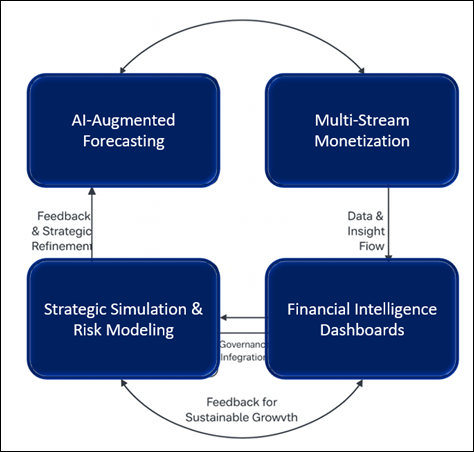
Figure 3 Financial and Strategic Modeling
Framework for AI-Driven Digital Art Startups
Three
important axes of strategic models are constructed on the capability to
innovate, the possibility of scaling, and the compliance with ethical
standards. Innovation capability is a measure of how successfully a startup
incorporates AI into its creative process, scalability potential is the ability
to grow into other platforms and markets, and ethical compliance is that growth
is not violating intellectual property and cultural standards. Reinforcement
learning and simulation make it possible to model the scenarios that a startup
could explore in the future in order to scale down or up, risky global growth,
and quantify risk exposure and returns to expect.
5. Risk, Regulation, and Governance in the AI Era
Since
digital art startups rely more on artificial intelligence to create, curate,
and commercially offer their art pieces, the intersection of risk management,
regulation, and governance becomes a critical element of sustainable growth.
Companies that engage in this sphere should thus establish effective governance
systems that could effectively mediate between innovation and accountability to
guarantee that artistic freedom does not conflict with regulatory oversight and
popular confidence.
Table 2
|
Table 2 Risk Categories, Regulatory Responses, and Mitigation Strategies |
||||
|
Risk
Type |
Description |
Example
Scenarios |
Mitigation
Strategy |
Relevant
Frameworks / Policies |
|
Technological
Risk |
Model
bias, drift, security flaws |
Inaccurate
generative outputs; dataset bias |
AI
fairness tools, continuous retraining |
ISO/IEC
42001, IEEE 7000 |
|
Ethical
Risk |
Authorship
ambiguity, cultural appropriation |
Misattribution
in AI artworks |
Authorship
tracking, bias audits |
UNESCO
AI Ethics, EU AI Act |
|
Financial
Risk |
Volatile
NFT/token markets |
Sudden
devaluation of assets |
Hybrid
asset portfolios, forecasting models |
OECD
AI Principles |
|
Regulatory
Risk |
IP
disputes, data non-compliance |
Cross-border
licensing issues |
Legal
audits, smart contracts |
GDPR,
India DPDP Act (2023) |
|
Reputational
Risk |
Public
backlash, trust erosion |
AI
plagiarism controversy |
Transparency
dashboards, explainable AI |
WIPO
Creative IP Guidelines |
Digital
art startups based on AI face various types of risk such as technological,
ethical, financial, and reputational. Algorithms bias, model drift, and
cybersecurity threats are all technological risks. Such ethical risks as vague
authorship, cultural appropriation, and data privacy are created. The ambiguous
human and algorithmic creativity puts a strain on the
issue of ownership and licensing standards. Financial risks can be apparent in
the NFT and tokenized art market, where trading on the speculative market can
disrupt revenue streams. Lastly, reputational risks occur when there is a
controversy about plagiarism, equity, or abuse of cultural symbols, via the
opaque AI systems.
5.1. Regulatory Landscape
The
issue of AI regulation in the creative industry is still disjointed and
developing. The policy frameworks worldwide, which include the AI Act of the
European Union, Ethics of Artificial Intelligence of UNESCO, and Digital
Personal Data Protection Act (2023) by India, include the foundations of
transparency, accountability, and cultural preservation. Although, these broad
regulations can and should be applied to art industry, they need to be
interpreted in context. An example is the IP-law, which should change to
acknowledge the use of algorithms as co-creators without compromising on human
authorship. On the same note, blockchain-based art economies that enforce
copyright require interoperable digital rights management systems. Startups
should actively implement its operational policies in accordance with the
developing principles of AI governance, i.e. it should be possible to explain
the creative algorithms, it should treat the data with appropriate attention and it should be unbiased in its automated decisions.
5.2. Governance Mechanisms
Successful
governance in the AI-enabled art businesses is a complex fabric comprising of
technical, organizational and ethical aspects. Technical governance is the
application of auditable, interpretable, and ethical AI benchmarking models. To
make the creative decision processes transparent to the stakeholders,
explainable AI (XAI) methods can be combined (SHAP or LIME visualizations). To
manage AI in the organization, it is necessary to develop AI ethics boards,
cross-functional oversight committees, and dynamic compliance structures. These
frameworks will make sure that strategic choices about dataset cleaning up,
generative model updates and the utilization of intellectual property will be
transparent and traceable.
6. Empirical Analysis and Case Studies
Empirical
data is very important to confirm the theoretical backgrounds and showcase the
ways in which AI-based management practices influence the work of digital art
startups. This section will focus on the practical application of AI
technologies to creative businesses in various settings through comparative
case study and field observations - it will show successful experiences, as
well as areas of difficulty in their applications. As the analysis highlights,
the businesses that are performing well during the AI times are not only the
ones that embrace the latest tools, but those who can purposefully match AI
potential to the artistic purpose, morality and business sustainability.
6.1. Case Study Insights
The
former example, Aesthetical Labs (Singapore), combines generative models with
AI-powered models to aid artists during the co-creation. Their pollution
detection engine is an adaptive learning engine, which is trained on a variety
of datasets, and helps strengthen artistic experimentation, without displacing
creative authorship. The business also experienced a 42 per cent decrease in
the time spent on production and a 60 per cent augmentation in artworks of
user-generation that illustrate how AI may trigger productivity and innovation,
keeping human supervision at the centre. The mechanisms of ethical governance
such as dataset transparency, and consent based
training were observed to strengthen user trust and brand authenticity.
VeriArt.io (Berlin) is the second example, which uses blockchain-based systems
of AI to verify, sell, and distribute digital art in NFT markets. Through
predictive analytics it can determine trends in the market and preferences of
collectors by maximizing release dates and price levels.
Table 3
|
Table 3 Comparative Summary of AI-Driven Digital Art Startup Case Studies |
||||
|
Startup
Name |
Core
Technology / Focus Area |
Key
Performance Metrics |
Managerial
/ Ethical Practices |
Observed
Impact |
|
Aesthetica Labs (Singapore) |
Generative
AI using GANs and Diffusion Models for artist co-creation |
•
Production time reduced by 42% |
•
Dataset transparency |
•
Enhanced creative productivity and authorship preservation |
|
VeriArt.io
(Berlin) |
Blockchain-integrated
AI for NFT authentication, pricing, and market prediction |
•
Forecast accuracy: 92% for NFT resale value |
•
Smart-contract based royalty management |
•
Improved transparency and financial sustainability |
|
Curato.AI
(New York) |
Computer
Vision and NLP for automated curation and audience personalization |
•
35% increase in audience engagement |
•
Inclusion of cultural consultants |
•
Higher engagement diversity |
The
hybrid AI model of the firm provided an 92-percent
prediction of resale value of NFTs, enhancing the liquidity and reducing fraud.
Nevertheless, the instability of tokenized economies and reliance on
information security outline the current threats. The experience of variation
indicates that ethical compliance with the transparency of the market and the
precision of AI analysis is the key to sustainable growth.
The
third visualization (Figure 4) is a donut chart that
represents the breakdown of the forms of revenue within a sample portfolio of
digital art enterprises that use AI-enabled functionality. Due to the
breakdown, NFT royalties (35%), subscription services (25%), AI tool licensing
(20%), exhibition commissions (15%), and miscellaneous sources (5%), are the
largest sources of revenue. Such a distribution highlights the multi-stream
monetization opportunity of AI-driven artist models in which established
revenue is enhanced by repeat digital asset and automated licensing ecosystems.
Revenue sharing and tokenization of art ownership by the community is the
paradigm shift to decentralized cultural economies. Through predictive
analytics and blockchain provenance, startups are able to maintain a consistent
revenue by distributing royalty with algorithms, despite unstable markets. The
visualisation supports the idea that AI allows economic diversification through
creative value being turned into scalable, data-informed resources that would be
extremely important concerning financial resilience in unstable digital art
markets. The third scenario is the example of Curato.AI (New York) where art
curation is transformed by the manager. Curato.AI is an automated exhibition
designer and natural language teller that uses computer vision and natural
language models to deliver the desired experience.
Figure 4
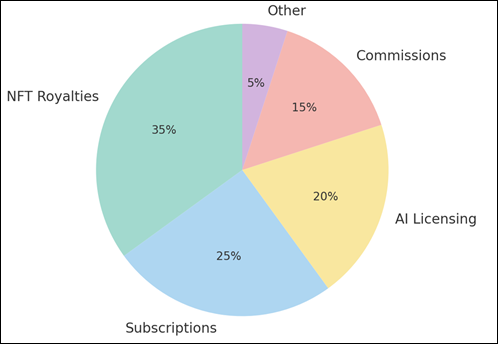
Figure 4 Revenue Stream Distribution in AI-Driven Art
Startups
Figure 5

Figure 5 Ethical Compliance vs. Consumer Trust Over Time
Figure 5, dual axis line graph,
illustrates the dynamic relationship of ethical compliance and consumer trust
across four consecutive quarters (Q1 -Q4). The trends of both of the indices
show similar pattern of growth in the upward trend as the Ethical Compliance
Index and the Consumer Trust Index grow between the years 60 and 82 and 55 to
85 respectively. Such close correspondence proves the direct causality between
the practices of transparency in AI and the formation of trust in people.
Explainable AI (XAI) and dataset disclosure protocols, as well as algorithmic
fairness audits, improved audience loyalty and brand perception in measurably
positive ways in startups. The results support the theoretical assumption that
AI ethics is not a legislative necessity but a competitive advantage that
builds on credibility, retention, and engagement. The dual axis representation
is therefore a bridge between technical governance and behavior
economics that suggests that an implementation of responsible AI will have
material market dividends in the long run. Empirically, it is demonstrated that
35% more audience engagement is achieved and 50% more recommendations accuracy
is demonstrated. Nevertheless, there are problems with preserving cultural
specifics and homogenization of aesthetic forms because of the standardization
of algorithms. Curato.AI addresses it by using cultural consultants to refine
the output of algorithms an instance of human-AI collaboration that creates
competitive creative ecosystems.
Figure 6

Figure 6 Operational Efficiency Breakdown Across Workflow
Stages
The
last figure presented in Figure 6 is the comparison of workflow
efficiency in four stages of operation, which are ideation, production,
distribution, and engagement between traditional and AI-based art startups. The
stacked column chart demonstrates that AI-driven businesses always excel in
every stage of performance, and the efficiency increase rates vary from 20 to
30 percentage points on average. Aesthetica Labs is
at the forefront of creativity and efficiency in the production of ideas
because of the incorporation of generative design instruments and adaptive
machine learning models. VeriArt.io is leadership in the distribution phase
with the use of automated blockchain validation and predictive market
analytics. Curato.AI is excellent in audience engagement, as it relies upon the
natural language processing as well as on the personalized recommendation
systems. The visual analogy shows that AI does not only streamline the task
performance but also restructures the organizational processes into
self-learning ecosystems. The traditional models, on the contrary, are still
confined with non-linear processes and human dependency. The cumulative
interpretation can ensure that digital art startups with the use of hybrid
human-AI collaboration are more agile, scalable and culturally responsive.
7. Conclusions and Implications
The
study comes to the conclusion that the optimal mode of handling digital art
startups during the AI era is to determine the equilibrium between creativity,
information shrewdness, and moral accountability. AI has transformed the
creative economy making it more automated, personalized, and predictive in its
decisions, yet its true value will be realized once it is applied together with
human imagination and cultural integrity. As soon as they adopt the hybrid
human-AI form, startups will be quick on their feet and expandable, and have
more chances to approach the audience, which will make them competitive in a
new reality of the digital market of art. As far as the managerial level is
concerned, leaders are required to inculcate AI literacy, transparency, and
design ethics into the culture of an organization. Adding explainable AI tools,
data-driven strategies and governance models can enable not only to form
responsibility, but also innovations simultaneously. Investors and policy
makers should support the systems that would encourage equitable intellectual
property rights, long term online activities and cross
country collaboration. Lastly, AI in art entrepreneurship should not
replace human inventiveness, but, on the contrary, improve it - scientifically,
via human interaction, and with ethical ground, making the artistic production
a dynamic, participative, and ecologically grounded system. Responsible
innovation will define the future of the digital art business and the cultural
impact of this sphere in the time of intelligent creativity, and this will be
defined by the open form of government and the engagement of all in this
process.
CONFLICT OF INTERESTS
None.
ACKNOWLEDGMENTS
None.
REFERENCES
Art Collection and Now Art (2024). When AI Starts Creating … Discussing the Application and Impact of Big Data in the Field of Art.
Cheng, M. (2022). The Creativity of Artificial Intelligence in Art. Proceedings, 81, Article 110. https://doi.org/10.3390/proceedings2022081110
Grba, D. (2022). Deep Else: A Critical Framework for AI art. Digital, 2, 1–32. https://doi.org/10.3390/digital2010001
Lee, L.-H., Lin, Z., Hu, R., Gong, Z., Kumar, A., Li, T., Li, S., and Hui, P. (2021). When Creators Meet the Metaverse: A Survey on Computational Arts (arXiv:2111.13486). arXiv.
Li, L., Qiao, X., Lu, Q., Ren, P., and Lin, R. (2020). Rendering Optimization for Mobile Web 3D Based on Animation Data Separation and on-Demand Loading. IEEE Access, 8, 88474–88486. https://doi.org/10.1109/ACCESS.2020.2993366
Mourtzis, D., Panopoulos, A. J. N., Wang, B., and Wang, L. (2022). Human-Centric Platforms for Personalized Value Creation in Metaverse. Journal of Manufacturing Systems, 65, 653–659. https://doi.org/10.1016/j.jmsy.2022.05.006
Nikolakopoulou, V., Printezis, P., Maniatis, V., Kontizas, D., Vosinakis, S., Chatzigrigoriou, P., and Koutsabasis, P. (2022). Conveying Intangible Cultural Heritage in Museums with Interactive Storytelling and Projection Mapping: The Case of the Mastic Villages. Heritage, 5, 1024–1049. https://doi.org/10.3390/heritage5030054
Prins, M., Gunkel, S., Stokking, H., and Niamut, O. (2018). TogetherVR: A Framework for Photorealistic Shared Media Experiences in 360-degree VR. SMPTE Motion Imaging Journal, 127, 39–44. https://doi.org/10.5594/JMI.2018.2871875
Qiao, P., Ren, P., Dustdar, S., Liu, L., Ma, H., and Chen, J. (2019). Web AR: A Promising Future for Mobile Augmented Reality—State of the Art, Challenges, and Insights. Proceedings of the IEEE, 107(4), 651–666. https://doi.org/10.1109/JPROC.2019.2895105
Saaty, T. L. (1972). An Eigenvalue Allocation Model for Prioritization and Planning. Energy Management and Policy Center, University of Pennsylvania.
Santisteban, J., Inche, J., and Mauricio, D. (2021). Critical Success Factors Throughout the Life Cycle of Information Technology Start-Ups. Entrepreneurship and Sustainability Issues, 8, 446–466. https://doi.org/10.9770/jesi.2021.8.1(30)
Schwertner, K. (2017). Digital Transformation of Business. Trakia Journal of Sciences, 15, 388–393.
Scott, W. R. (2013). Institutions and Organizations: Ideas, Interests, and Identities (4th ed.). Sage Publications.
Shen, J., Zhou, X., Wu, W., Wang, L., and Chen, Z. (2023). Worldwide Overview and Country Differences in Metaverse Research: A Bibliometric Analysis. Sustainability, 15, 3541. https://doi.org/10.3390/su15043541
Villamarín, and Menéndez, J. M. (2021). Haptic Glove TV Device for People with Visual Impairment. Sensors, 21, 2325. https://doi.org/10.3390/s21072325
World Economic Forum. (2020). The future of jobs report 2020. Centre for the New Economy and Society.
Wu, S.-C. (2022). A Case Study of the Application of 5g Technology in Museum Artifact Tours: Experimental Services Using AI and Ar Smart Glasses. Museum Quarterly, 36, 111–127.
Yan, Y., and Mercado, C. A. (2023). Analytic Hierarchy Process-Based Selection of Leaders of Start-Up Enterprises. Indonesian Journal of Economics and Management, 3, 344–353.
|
|
 This work is licensed under a: Creative Commons Attribution 4.0 International License
© ShodhKosh 2025. All Rights Reserved.