ShodhKosh: Journal of Visual and Performing ArtsISSN (Online): 2582-7472
|
|
AI in Photojournalism Ethics and Management
Vijay Kumar 1 , Anila Jayapaul 2
 ,
Tarang Bhatnagar 3
,
Tarang Bhatnagar 3 ,
Priyanshi Mathur 4
,
Priyanshi Mathur 4
 , Ashmeet Kaur 5
 ,
Vasanth Kumar Vadivelu 6
,
Vasanth Kumar Vadivelu 6
1 Assistant Professor School of Engineering and Technology Noida International University, India 203201
2 Assistant Professor, Department of Management Studies, JAIN (Deemed-to-be University), Bengaluru, Karnataka, India
3 Centre of Research Impact and Outcome, Chitkara University, Rajpura- 140417, Punjab, India
4 Assistant Professor, Department of Development Studies, Vivekananda Global University, Jaipur, India
5 Chitkara Centre for Research and Development, Chitkara University, Himachal Pradesh, Solan, 174103, India
6 Department of Information Technology Vishwakarma Institute of Technology, Pune, Maharashtra, 411037 India
|
|
|
ABSTRACT |
|
|
The present
paper is a critical discussion of the issue of Artificial Intelligence (AI)
in relation to Photojournalism Ethics and Management, it is a discussion how visual journalism is being transformed as a result of automation, data analytics and algorithmic
decision making. It examines the role of AI in changing the image-making,
image-checking, and image-editing process and posing a threat to undermine
traditional conceptions of authenticity, responsibility, and truth. The study
considers the paradigm change of the photojournalism
into the digital context and application of the AI-assisted
technology, indicating the ethical concerns that emerge as
a result of the synthetic imagery, data attitude, and algorithmic
distortion. The paper uncovers the efficiency gains and moral hazards of the
AI-powered processes, emphasizing the details of the analysis of the AI
technologies, i.e. convolutional neural networks, deepfake
detection, automated captioning, and blockchain-based provenance. As an
evaluative examination of the ethical strategies in the world, including the
one that the Society of Professional Journalists (SPJ), the National Press
Photographers Association (NPPA) and UNESCO follow, it is apparent that there
is an immediate need to modify professional codes to the world of the algorithms. The case studies of the Reuters,
Associated Press (AP) and BBC are feasible illustrations of the accountable
implementation of AI depending on human authority, editorial duty, and
openness of automated processes. The Ethical Governance Model of AI in
Photojournalism described in the paper ought to be anchored on three pillars,
namely transparency, accountability, and oversight. The model outlines the
provenance tracking systems, the algorithmic audit, and the interdisciplinary
ethics boards and AI literacy program of the media organizations. The
generative diffusion models, multimodal AI, and Explainable AI are the discussed future trends that are likely to cause more
changes to the ethical and education context of journalism. |
|||
|
Received 20 March 2025 Accepted 24 July 2025 Published 20 December 2025 Corresponding Author Vijay
Kumar, DOI 10.29121/shodhkosh.v6.i3s.2025.6767 Funding: This research
received no specific grant from any funding agency in the public, commercial,
or not-for-profit sectors. Copyright: © 2025 The
Author(s). This work is licensed under a Creative Commons
Attribution 4.0 International License. With the
license CC-BY, authors retain the copyright, allowing anyone to download,
reuse, re-print, modify, distribute, and/or copy their contribution. The work
must be properly attributed to its author.
|
|||
|
Keywords: Artificial Intelligence, Photojournalism Ethics,
Deepfake Detection, Editorial Oversight, Generative Diffusion Models,
Explainable AI, Ethical Governance |
|||



1. INTRODUCTION
One of the most radical changes in the media ethics and management of the modern world is the introduction of Artificial Intelligence (AI) in photojournalism. Having been decided in the bases of human intuition and narrative sensitivity, as well as on the moral worth of visual reality, photojournalism became a part of a hybrid environment in which algorithms can and could capture, enhance and even create images. AI systems, such as computer vision models and automated tagging tools, and deep learning-based image generators are changing the visual story creation, verification, and spread Uthman, S. (2024).It is a recent technological change that is drifting against the long-tested journalism values of authenticity, accountability and editorial control that provokes a radical review of the professional ethics in the digital newsroom. The application of AI-assisted tools to the news photography processes has become a workflow in the past couple of years. Automated caption generation systems, real-time object recognition systems and deepfake detection systems are currently being implemented in the quest to optimize efficiency and precision in the area of visual reporting. Simultaneously, diffusion networks, GANs (Generative Adversarial Networks) and other generative models have eliminated the line between realistic documentation and artificial generation Munoriyarwa et al (2023). Even though they have positive consequences, such as the acceleration of the production and management of data, they raise the questions of manipulations, loss of confidence, and bias in algorithms. The editorial decision-making process, which used to be biased by human considerations, is increasingly getting manipulated by algorithms that will select or reject pictures in accordance with predictive measures of engagement Sultan et al (2024).
Figure 1
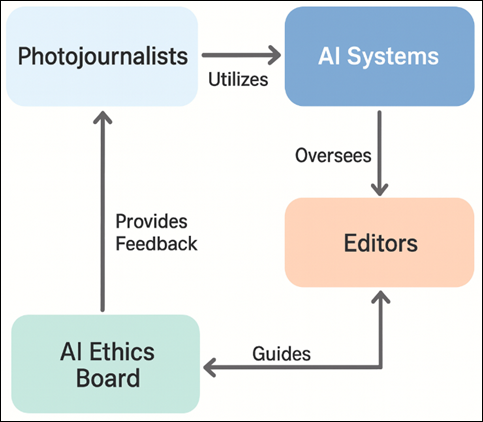
Figure 1 Governance Model for AI-Integrated Newsrooms
The ethics question has therefore become the centre of focus when it comes to discussing the implications of AI on photojournalism. The issues of consent, representation and truthfulness are now left to human photographers and are left over to machine actors and automated systems. AI application has resulted in intensification of the debate on visual misinformation in the world by the misuse of the technology particularly in the creation of misleading or deepfake images. It thus turns into a two-pronged challenge of journalists, media houses and regulators to keep enjoying the fruits of AI and simultaneously ensure that the ethical origins of visual storytelling are not compromised Makwambeni et al (2023).Introduction of AI introduces novel organizational paradigms in terms of management. Newsrooms are restructuring their activities and establishing ethical standards of using AI and training reporters to be more suspicious of algorithm-assisted work to balance automation and editorial control. These technologies are ever evolving hence there is need to have appropriate systems of governance which can integrate all three elements of transparency of technology, ethical auditing and interdisciplinary cooperation in such a way that AI can enhance the integrity of journalism rather than undermine it Braun and Clarke (2006).In the current photojournalism, this paper addresses the compatibility of AI, ethical issues, and management. It highlights the potential and the ethical dilemmas that emerge in a digital media ecosystem and gives a clue as to how AI can be employed in a responsible manner without removing the truth-telling nature of journalism in an increasingly automated world.
2. Evolution of Photojournalism in the Age of Artificial Intelligence
The history of photojournalism is the mirror of the endless communication between the truth and people and technology and the truth. As the era of the analog photography, when images served as unquestionable truths concerning reality, until the current era of algorithmic interpretation, the profession has been adapting to technological shifts in the most successful manner feasible Sukhodolov et al. (2019). The first major change came in the late twentieth century with the introduction of digital photography because it has enabled capturing, editing, and sharing images instantly. It is this digital revolution that democratized the visual medium since it allowed not only photographers but citizens to add their input to the world news. However, it had also some emerging ethical problems such as photo manipulation, digital forgery and loss of contextual authenticity Mikkonen and Kääriäinen (2020), Papadopoulou and Maniou (2024). This is the twenty-first century and it brought the era of automation and data-driven journalism because artificial intelligence began making a decisive influence on production and editorial decision-making. Such tools as the object recognition, face recognition and automated caption generation with the help of AI have simplified the tasks of newsrooms greatly and made them much more effective since the process of sorting and searching through the large data base of images can be done within several seconds. Additionally, machine learning algorithms are currently employed to assist in event detection, emotion recognition and they can even be used to make predictive decisions of images that are likely to appeal to some audiences. These developments have redefined efficiency and speed in news presentation and this makes AI a companion of modern day journalism that cannot be overlooked Verma (2024).
Figure 2

Figure 2 Collaborative Role Transformation in AI-Assisted Newsrooms
Nevertheless, there are also ethical and managerial issues
that are far reaching with this development. Even the AI systems which can be
utilized to enhance productivity can lead to the propagation of bias
accidentally due to the faultiness of the training data or algorithm black-box. One more thing that complicates the idea of
photographic truth is the emergence of generative AI and diffusion models, in
particular, GANs Tolnaiová (2023).Photos created based on
these models may also be highly realistic and, therefore, may disorient the
lines between writing and fiction. In turn, the classical role of
photojournalism as the witness has experienced an epistemological crisis, and
it needs an improved ethical control and disclosure in technologies. The media
entities, in their turn, are developing AI governance frameworks that combine
human editorial control with automated procedures. Blockchain-based provenance
tracking, watermarking, and authenticity certificates can be considered as the
possible solutions that preserve visual news integrity. What is then the
history of photojournalism is not merely the history of technological
convergence, but also the history of moral re-setting. As the new era of AI has
the capability to radically change the methods of storytelling, recording, and
reading, the challenge lies in how to ensure that the innovation values the
principles of truth, responsibility, and human perspective that the essence of
journalism and do not wipe them out Szabo
(2023).
3. AI Technologies in Photojournalism
Artificial Intelligence has been a revolution in the field of photojournalism that transformed the process of taking, analyzing, editing, and distributing images. Currently, the modern newsrooms are highly relying on AI-driven applications that operate superficially across the entire range of the visual journalism pipeline, including camera sensors with intelligence features, real-time content filtering algorithms that sort through the huge amounts of digital data. The technologies not only are efficient and accurate, but also invalidate any ethical and aesthetic value of truth about visual narration Utemissov et al. (2021).One of the most significant applications of AI in photojournalism is computer vision since it enables machines to analyze and categorize visual information in a manner that is similar to how the eye of the human brain thinks of them. Deep convolutional neural networks (CNNs) can detect objects, detect faces, recognize emotions, and even give contextual associations in images using large data sets that are trained. Such features allow photo editors to sift through thousands of pictures and label and access content with an unbelievable level of accuracy Manisha and Acharya (2023).Also, automated caption generation tools (operating on model of image-text alignment e.g. CLIP or BLIP) have been demonstrated to generate captions that are descriptive and provide context-relevant information with little human interaction in metadata generation and greater accessibility.
Table 1
|
Table 1 Key AI
Technologies and Their Journalistic Functions |
||||
|
AI Technology |
Core Functionality |
Application in Photojournalism |
Ethical Considerations |
Examples / Tools |
|
Convolutional Neural Networks (CNNs) Munoriyarwa and Chiumbu (2024). |
Deep learning models for feature extraction and visual pattern
recognition |
Automated image classification, object detection, and emotion
recognition in large photo archives |
Risk of dataset bias leading to cultural or racial
misrepresentation |
Google Cloud Vision, OpenCV, PyTorch
ImageNet models |
|
Automated Captioning Models (CLIP, BLIP, or VisualBERT)
Sandoval-Martín et al. (2018). |
Vision-language alignment for generating textual descriptions of
images |
Producing real-time captions, improving accessibility, and
reducing manual metadata creation |
Contextual inaccuracy or overgeneralization due to limited
training corpora |
OpenAI CLIP, Salesforce BLIP-2, Microsoft Azure Vision Captioning |
|
Deepfake Detection Systems |
Identifying synthetic or manipulated visual content using anomaly
detection |
Safeguarding image authenticity and public trust in visual
reporting |
Possible false positives and challenges in detecting high-quality
synthetic media |
Deepware Scanner,
Sensity AI, Deepfake Detection Challenge models |
|
Blockchain-Based Provenance Tools |
Decentralized tracking and verification of image origin and
modification history |
Ensuring transparency and traceability of photos from capture to
publication |
Privacy concerns and energy cost of blockchain operations |
Adobe Content Authenticity Initiative, TruePic,
Nikon Verified Chain |
|
AI-Based Image Enhancement Algorithms |
Super-resolution, denoising, and restoration using GANs and
diffusion models |
Reviving low-quality or archival images for investigative
storytelling |
Ethical concerns over image alteration and authenticity
preservation |
Topaz AI, ESRGAN, NVIDIA Denoiser |
|
Reinforcement Learning-Based Curation Engines |
Adaptive ranking of visuals based on audience behavior
and engagement patterns |
Automatic selection of impactful photographs for publication |
Bias toward sensational or emotionally manipulative content |
Adobe Sensei, Reuters News Tracer, AP AI Curator |
A mixture of these technologies is what makes up the heart of the AI-assisted photojournalism, as the automation and the ethical question are equalized. They strengthen the rapid visual storytelling and stress the need to have an open, human led control, as far as editorial decision making is concerned. Furthermore, AI-enhanced image-enhancing software, combined with image restoration, has turned into an invaluable resource in investigative journalism as the images in dim light or destroyed can be read. The good quality of the denoising, super-resolution and colorization algorithms enable to restore old photos or videos, and go even further into the past of the narrative. Meanwhile, AI-curation engines built upon reinforcement show the best photo sequence that will engage the audience in terms of the visual diversity, relevance, and emotional resonance.
4. Ethical Challenges and Dilemmas
The paradigm shift in the production and distribution of the visual stories has been brought about by the introduction of the Artificial Intelligence in the sphere of photojournalism. However, the ethical problems that this new technological creation breeds is a new landscape where the sanctity of journalism is questioned. Among the most significant ones, the problem of authenticity, manipulation, consent, privacy, and algorithmic bias that directly influence the degree of trust in visual media in the population should be listed.
1) Authenticity. The artificial intelligence created or edited photos removes the distinction between the actual and the digital composition. Generative Adversarial Network (GANs) or diffusion models can create hyper-realistic images which are literally indistinguishable to actual photographs.
2) The creatively potent ability of such sort is a danger to the credibility of visual journalism in the possibility to propagate misinformation and deepfakes. This is because it has to do with sources, not taking a picture, which has become as significant to journalists as the last element. The technology will offer potential guardians, including blockchain-based authentication and embedded metadata verification, however, they will also present an issue of technology dependency and unequal access to large media houses and freelance journalists.
3) Manipulation and consent. It could be the automated retouching, editing assistance, and AI-based image editing feature that can manipulate the narratives or can contribute to certain emotional responses in the most delicate manner. These changes can even be accidental, yet they may be considered to have an undesirable impact on the ethical concept of objectivity. Moreover, the AI content analysis can be linked with the information that was not given by people who were not asked to do so directly in particular, in the event of crowd-sourced or surveillance-related reports. This severely endangers good privacy, because the exposure, profiling, or misrepresentation of subjects can be carried out against his or her will or even without his or her knowledge.
4) Algorithms bias is a problem that exacerbates these issues. The studies on machine learning algorithms trained on unbalanced data sets are likely to reproduce biases on societal, racial, and cultural data. When it comes to a photojournalism, biased AI may pay more or less attention to a particular demographic or geographical region, and the influence will be hidden, yet resulting in a person reinterpreting phenomena and communities in a particular way. Such biases affect the purpose of journalism in terms of offering fair and all-inclusive reporting.
5) Accountability. The question on accountability is complicated when an AI system makes an ethical error (selecting the incorrect picture or generating obscene content). Will it be the journalist, the editor or the designer of the algorithm to answer it? In such a gray area, there must be a system of ethical management, i.e., the emphasis on transparency in the use of AI, humanizing it, and continuous audit of automated decision-making.
The matters of ethical AI-driven photojournalism, though, do not simply rely on technology but they reshape the meaning of telling the truth with pictures. It is not only necessary to be technologically savvy in this new world but also morally awake so that AI could become the instrument of truth rather than falsification.
5. Frameworks for Ethical AI in Photojournalism
The spread of Artificial Intelligence in photojournalism needs to be supported by a strong moral principle that would potentially support the core values of the profession, i.e., truth, integrity, and accountability. Because the digital and algorithmic technologies take up increasingly more roles in the image making and editorial decision-making processes, the classic codes of journalism, as elaborated upon in the Society of Professional Journalists (SPJ), as well as the National Press Photographers Association (NPPA), and the set of ethical principles established by UNESCO, must be altered critically to the terms of AI involvement. These paradigms have taken the moral code of conduct in the new machine-human partnership in the newsroom ecosystem. The SPJ Code of Ethics that relies on the idea of seeking the truth and telling it, limiting harm, acting alone, being responsible and transparent provides a template of ethics in AI integration. The principles of the AI era become the following requirements: image generating or curation algorithms are supposed to be open, their information must be ethically acquired, and the output is to be validated. Journalists are advised to expose the scenario in case of using AI tools to create or edit the content to protect the audience by ensuring that they are aware of using the machine. It is the emphasis on accountability in SPJ which makes the perspective on accountability in AI be transformed into an explainability of the algorithms, in such a way that every AI-based editorial choice, such as automated photo selection or captioning, must be confirmed as explainable by a human decision-maker.
Figure 3

Figure 3 Future Trajectories of AI in Photojournalism Ethics and Governance
Similarly, NPPA Code of Ethics that is solely about maintaining the integrity of the visual work is being redefined to cope with the opportunities of AI as a manipulative and enhancing organism. The NPPA principles emphasize that the photojournalists should not manipulate the pictures to mislead the readers and invert the subjects. This fact is transferred to AI: the use of generative models should not be to form events or falsify representations of facts. The second idea that the NPPA promotes is the importance of context i.e. any AI-generated or restored image must not lose an original informational value without losing any historical or emotional specificity. This modification is a recognition that even the slightest modification of an algorithm such as automated background correction or filters will alter the perception of a story without being explicitly stated. At the level of the international arena, the rules of artificial intelligence put forward by UNESCO in their article, Ethical Principles for Artificial Intelligence (2021), could be seen as an approximate structure of the technology management through which the relationships between technological innovation and human rights can be reconciled. The model focuses on human oversight, equality, confidentiality and authority of data all of which are central to AI-driven journalism. It is also reflected in the focus of ethical auditing and cultural inclusiveness provided by UNESCO indicating the problem of Western-centric bias in AI systems, which must be represented in other data and must have just equal access to technology on the regional level. All these shifting moral codes promote a very important shift that is AI must not replace the purpose of journalistic responsibility, but instead should strengthen it. Transparency, responsibility and respect of human dignity are the primary pillars of responsible visual journalism that is integrated into the AI-based processes through the incorporation of SPJ, NPPA, and UNESCO values. The relevant norms of disclosure, constant review of the algorithms, and human control would ensure that photojournalism at the AI does not turn into a victim of the mission that the profession has been striving to over the years that is, a true witness of the world.
6. AI-Based Image Verification and Fact-Checking Systems
As the visual misinformation becomes more sophisticated, the Artificial Intelligence has found a new indispensable ally in the quest to verify images and keep the image journalism profession intact. The AI-based systems have increasingly become a necessity in the present age of fact-checking to identify the manipulation and tracking of image source and a degree of transparency in the visual content lifecycle. They are the use of computer vision, cryptography and forensic analysis to combat the fake pictures which threatens the confidence and the journalistic accountability of individuals. Provenance tracking is one of the technologies in this field that was adopted using blockchain. The assertion of provable integrity is achieved through blockchain by capturing unalterable records of the creation, modification, or publication of an image in some kind of decentralized registration. Each picture is allocated a cryptographic hash that acts as a digital fingerprint to allow the journalists and editors to determine the entire history of that picture, its capturing device to the point of publication. Other programs such as Content Authenticity Initiative (CAI) launched by Adobe and TruePic Vision integrate metadata authentication and tamperfulf signatures and helps the media houses to ensure images are not manipulated since their original capture.
Figure 4
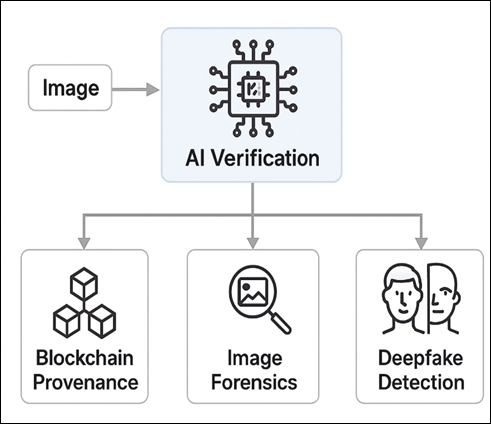
Figure 4 Verification Ecosystem in Photojournalism
Besides the provenance systems, image forensics based on AI is of great significance in image identification of manipulations. Such algorithms analyze lighting, pixel distribution, the direction of shadows and inconsistency of compression artifacts to identify digital editing. Even in the case when it is impossible to use the old method of inspection, modern forensic algorithms can detect the cloning, splicing, or retouching processes. Journalists can ensure that the technical integrity of the image is not impaired and disseminated with the help of such software as FotoForensics, Forensically and AI-based models that are trained on large sets of tampering.
7. Management of AI Workflows in Newsrooms
Introduction of Artificial Intelligence in photojournalism
has transformed the functioning of the newsroom, and it needs new models of
management to integrate robotization and human control. The effective AI
workflow management process is no longer concerned with the technology
introduction, but with the process of organizing the work and the creation of
the policy as well as with the ethical regulation that will contribute to the
integrity and transparency of the practice of journalism. It is also hard to make
human judgment the central point of editorial decision-making and maximize
efficiency because the development of the application of AI in newsrooms has
created new forms of organizational structures that involve human editors,
technologists, and AI systems, all of whom exist in an ecosystem by their side.
The editorial teams are currently working with the data scientists and AI
engineers to train and deploy and monitor machine learning models to call upon
in image curation, captioning, and verification. Special AI ethics boards and
technology governance committees that oversee the behavior
of the algorithms, bias reduction and the practice of journalism exist in news
companies that excel in their best practices such as Reuters, Associated Press
and The New York Times. It is the interdisciplinary that will enable the
editorial accountability not to be driven away by automation but will be
enhanced by more specific management jobs. The editorial control is the ethical
support of AI-assisted journalism. Even though the speed of AI systems when
tagging, filtering and recommending images is high, human professionals who are
trained to make decisions on the basis of social, cultural and ethical undertonings that AI systems lack should still make the
final editorial choices. The management policies are getting more oriented
towards the idea of the human-in-the-loop (HITL) systems in which all the
decisions that are made by the automated systems like photo selection, metadata
generation etc are revised or confirmed by an editor. These hybrid workflows
tend not to rely too much on predictive analytics that can prioritize certain
visual narratives over the rest because of the trends of algorithmic
preferences. The existence of human and AI in the management of photojournalism
extends beyond the editorial approval to jointly develop knowledge systems. The
journalists are now trained on how to be informed about the AI models limits,
understand the confidence measures, and provide feedback on how to further
improve further algorithm learning. Reporters and AI systems can communicate in
real-time by using cooperative dashboards, which results in transparency in the
process of data-driven decision making. These symbiosis of human intuition and
machine computation enhance productivity, and it will not lose the contextual
richness of the storytelling process.
Table 2
|
Table 2 Human–AI Collaboration Roles
in Modern Newsrooms |
||||
|
Role / Domain |
Primary Responsibilities |
AI Involvement |
Human Oversight Functions |
Ethical / Managerial Considerations |
|
Editorial Team |
Curating, verifying, and
contextualizing visual content; ensuring narrative integrity |
Uses AI for automated tagging, image
selection, and caption suggestion |
Validates AI recommendations; ensures
cultural and contextual accuracy; final content approval |
Maintains transparency in AI-assisted
content; prevents algorithmic distortion of narrative |
|
Photojournalists / Field Reporters |
Capturing authentic imagery and field
data; providing ground truth for AI models |
Contribute metadata and training inputs
for computer vision models |
Report on AI misclassifications;
provide qualitative corrections to datasets |
Ensure ethical sourcing of data;
protect subject consent and privacy |
|
AI Engineers / Data Scientists |
Designing, training, and optimizing AI
systems for image analysis and verification |
Develops deep learning and NLP tools
for captioning, detection, and curation |
Collaborates with editors for
feedback-driven model refinement |
Ensures fairness, bias mitigation, and
explainability in deployed models |
|
AI Ethics and Governance Committee |
Monitoring AI deployment across
newsroom operations |
Evaluates ethical compliance of AI
tools and datasets |
Conducts audits, bias testing, and
transparency reporting |
Upholds organizational accountability;
aligns AI use with journalistic codes (SPJ, NPPA, UNESCO) |
|
Legal and Policy Advisors |
Reviewing intellectual property,
copyright, and liability implications |
Uses AI-driven provenance tools for
content tracking and compliance |
Oversees adherence to data protection
and media laws |
Ensures responsible use of AI-generated
imagery under national and international law |
|
Audience Engagement / Analytics Team |
Tracking reader engagement and
optimizing visual presentation |
Employs AI-based recommender systems
and audience analytics |
Interprets algorithmic trends to
maintain balanced representation |
Prevents sensationalism or bias
amplification through engagement metrics |
The Table 2 below, illustrates the efforts of the AI-oriented newsroom management as the collaborative ecosystem with functions of the editorial, technical, ethical and legal functions that overlap each other. By ensuring that all the levels of the working organization are composed of automation and human control, the contemporary news industries can maintain journalistic accountability and innovativeness. There are also ethical governance mechanisms that are relevant in AI workflow management. The policies are to be concerned with accountability of algorithms, data privacy, and disclosure of the use of AI and demonstrate all the automated processes to the population. Conducting periodic AI ethics audits, issuing explainability reports, and designing internal review practices can be used to make sure that technology would not nullify the principles of fairness and truth. In addition, openness in communication with audiences over the application of AI in the content creation process promotes credibility and trust.
8. Conclusion
Photojournalism is an emergent area through which Artificial Intelligence has redefine, re-arrange and reconfigure the way images are taken, processed and distributed. It should be mentioned that, on the one hand, AI has enhanced performance and innovation by using CNNs, diffusion models, and multimodal systems; on the other hand, it has endangered such ethical standards of the profession as the truth, authorship, and responsibility. The key conclusion that is made is that the three pillar ethical governance model transparency, accountability, and oversight is important in the quest to reach responsible AI utilization. Transparency, which involves the disclosure of the role of AI, is one solution to these; accountability, which spreads responsibility among journalists, editors, and technologists, is another; the oversight, with its introduction of the human authority, is another one, and it has its means in ethics boards and audit cycles. The combination of these principles ensures that the people trust the journalism and that journalism is an automated set up. The case studies of Reuters, AP, and BBC indicate that ethical application of AI is not solely grounded on technological aspect but also on institutional ethics and control. A good example of how the human-AI collaboration can maintain authenticity and improve operational agility is the organizations. The convergence of the generative, multimodal, and explainable AI demands the fact that the photojournalism of the future would be anthropocentric in context with the emphasis on the ethical literacy and provenance verification alongside the ongoing transparency. The acceptable solution is to ensure that AI is the assistant of the truth, rather than that truth, by ensuring that the profession is even more committed to its long-standing mission: documenting, confirming and making the truth more human in the time of intelligent machines.
CONFLICT OF INTERESTS
None.
ACKNOWLEDGMENTS
None.
REFERENCES
Braun, V., and Clarke, V. (2006). Using Thematic Analysis in psychology. Qualitative Research in Psychology, 3, 77–101. https://doi.org/10.1191/1478088706qp063oa
Makwambeni, B., Matsilele, T., and Graham, B. J. (2023). Between Utopia and Dystopia: Investigating journalistic Perceptions of AI deployment In Community Media Newsrooms in South Africa. In C. A. Dralega (Ed.), Digitisation, AI and Algorithms in African journalism and Media Contexts. Emerald Publishing.
Manisha, M., and Acharya, K. (2023). The Impact of Artificial Intelligence on News Curation and Distribution: A Review Literature. Journal of Communication and Management, 2, 23–26.
Mikkonen, K., and Kääriäinen, M. (2020). Content Analysis in Systematic Reviews. In The Application of Content Analysis in Nursing Science Research. Springer. https://doi.org/10.1007/978-3-030-30199-6_4
Munoriyarwa, A., and Chiumbu, S. (2024). Artificial Intelligence Scepticism in News Production: The Case of South Africa’s Mainstream News Organisations. In Global Journalism in Comparative Perspective (117–131). Routledge.
Munoriyarwa, A., Chiumbu, S., and Motsaathebe, G. (2023). Artificial Intelligence Practices in Everyday News Production: The case of South Africa’s Mainstream Newsrooms. Journalism Practice, 17, 1374–1392. https://doi.org/10.1080/17512786.2022.2073004
Papadopoulou, L., and Maniou, T. A. (2024). ‘SLAPPed’ and censored? Legal Threats and Challenges to Press Freedom and Investigative Reporting. Journalism. Advance Online Publication. https://doi.org/10.1177/14648849241234567
Sandoval-Martín, M. T., and La-Rosa, L. (2018). Big Data as a Differentiating Sociocultural Element of Data Journalism: The Perception of Data Journalists and Experts. Communication and Society, 31, 193–208.
Sukhodolov, A., Bychkova, A., and Ovanesyan, S. (2019). Journalism Featuring Artificial Intelligence. Theoretical and Practical Issues of Journalism, 8(4), 647–667.
Sultan, M. I., Bhuiyan, A. J., and Amir, A. S. (2024). Reimagining journalism: Exploring the AI revolution—A thorough Analysis of Potential advantages and Challenges. Komunikator, 16(1), 1–13.
Szabo, A. (2023). ChatGPT is a breakthrough in Science and Education but Fails a Test in Sports and Exercise Psychology. Baltic Journal of Sport and Health Sciences, 1(128), 25–40.
Tolnaiová, S. G. (2023). Determinants of Journalism Using the Potential of Artificial Intelligence in Axiological-Ethical Perspectives. Marketing Identity, 122–132.
Utemissov, Z. Z., and Koshkenov, N. Z. (2021). Kazakhstan Media Challenges in the Context of Media and Government Relations in the Republic of Kazakhstan. Bulletin of L. N. Gumilyov Eurasian National University, 134(1), 37–51.
Uthman, S. (2024). The erosion of journalistic integrity: How AI-driven Fake News and Deepfakes Complicate Truth Verification in Journalism. International Journal of Innovative Science and Research Technology, 9(8).
Verma, D. (2024). Impact of Artificial Intelligence on Journalism: A Comprehensive Review of AI in Journalism. Journal of Communication and Management, 3(2), 150–156.
|
|
 This work is licensed under a: Creative Commons Attribution 4.0 International License
© ShodhKosh 2025. All Rights Reserved.