ShodhKosh: Journal of Visual and Performing ArtsISSN (Online): 2582-7472
|
|
Intelligent Recommendation Systems for Art Courses
Smitha K 1 , Sunitha BK 2
 , Pratibha Sharma 3
 , Kalpana Munjal 4
 , Deepak Minhas 5
 , Paul Praveen Albert Selvakumar 6
 , Abhijeet Deshpande 7
1 Greater
Noida, Uttar Pradesh 201306, India
2 Assistant
Professor, Department of Management Studies, Jain (Deemed-to-be University),
Bengaluru, Karnataka, India
3 Centre of Research Impact and
Outcome, Chitkara University, Rajpura- 140417, Punjab, India
4 Associate Professor, Department of
Design, Vivekananda Global University, Jaipur, India
5 Chitkara Centre for Research and
Development, Chitkara University, Himachal Pradesh,
Solan, 174103, India
6 Associate Professor School of Engineering
and Technology, Noida International University 203201, Greater Noida, Uttar
Pradesh, India
7 Department of Mechanical Engineering,
Vishwakarma Institute of Technology, Pune, Maharashtra, 411037 India
|
|
|
ABSTRACT |
|
|
This paper
will describe a detailed outline of an emotion-based intelligent
recommendation system to suit the field of art education. The model proposed
unites cognitive modeling, hybrid algorithms of AI, and affective computing
to customize the art course recommendation, which fits the creative style and
emotional interest of the learners. The system also allows adaptive,
context-based learning through the integration of content based,
collaborative and reinforcement learning methods with pedagogical reasoning.
Experimental measurements prove that the hybrid model is more accurate
(Precision@10 = 0.89, NDCG = 0.86) and high affective congruence (Affective
Match Ratio = 0.83) compared to the classical approaches to recommendation.
Qualitative measures also prove the increased attentiveness of learners,
diversity of creativity, and emotional connection. The framework provides a
platform of ethical, transparent, and compassionate AI in art pedagogy-
developing human-AI cooperation to establish creativity, inclusivity, and
contemplative art development. |
|||
|
Received 11 March 2025 Accepted 16 July 2025 Published 20 December 2025 Corresponding Author Smitha K,
smitha.k@lloydlawcollege.edu.in
DOI 10.29121/shodhkosh.v6.i3s.2025.6761 Funding: This research
received no specific grant from any funding agency in the public, commercial,
or not-for-profit sectors. Copyright: © 2025 The
Author(s). This work is licensed under a Creative Commons
Attribution 4.0 International License. With the
license CC-BY, authors retain the copyright, allowing anyone to download,
reuse, re-print, modify, distribute, and/or copy their contribution. The work
must be properly attributed to its author.
|
|||
|
Keywords: Art Education, Hybrid AI Models, Affective
Computing, Cognitive Modeling, Personalized Learning, Creative Pedagogy,
Emotion-Aware AI |
|||



1. INTRODUCTION
1.1. Reimagining Art Education through Intelligent Systems
The history of art education in the digital age represents a paradigm shift, of the master-apprentice mentorship and master-student relationships to adaptive, information-driven ecosystems, which feel, read, and provide directions to the creativity. Traditionally, the learning of art was based on tacit knowledge, intuition and reflective practice- attributes that were believed to be immeasurable. However, with the development of Artificial Intelligence (AI) to be able to simulate complex cognition, one can encode features of aesthetic reasoning into intelligent systems Slim et al. (2014) The example of intelligent recommendation systems of art courses can be seen as an illustration of such a shift: instead of being passive course-suggestion engines, they can be seen as active cognitive partners, which can perceive the artistic intent, trace the stylistic development, and flexibly adjust learning paths to the creative trajectory of a particular learner. They are articulated by digital art practices of practice assignments, portfolio postings, and interaction journals that are then numeric indicators to the system. These signals are recorded by the computation layers and the features that comprise color harmony, brushstroke energy, and compositional balance are extracted and presented to a hybrid recommendation engine Li et al. (2020). It is a hybrid type of content-based and collaborative filtering combined with reinforcement learning that constantly evolves as a result of learner feedback. The system recommendations are based on systematic curriculum intelligence, through the pedagogical knowledge base, which consists of art-theoretical constructs and graphs of skill development. This closed-loop interaction does not result in recommendations which are simply a statistical thing, but rather pedagogical meaningful cues which answer to cognitive and affective states Molontay et al. (2020). This model transforms the meaning of personalization in the arts education. The old linear curricula are replaced by fluid learning maps involving students learning cross-disciplinary intersections such as: animation, color theory, sculpture, spatial geometry or visual storytelling, semiotics. The system operates as an intelligent curator, in which learning materials are placed in varies ways applying to the changing artistic identity as opposed to predetermined sequences Lin et al. (2018).
Figure 1
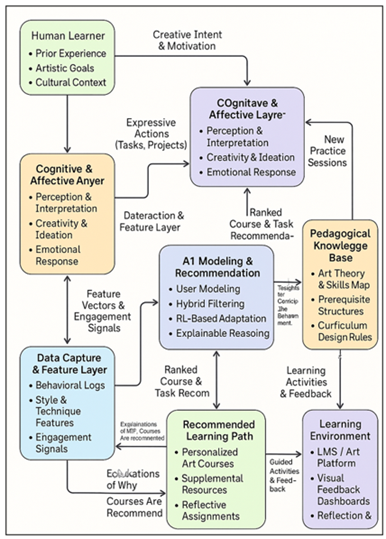
Figure 1 Cognitive–Computational Model for Artistic Learning
As shown in Figure 1, the proposed cognitivecomputational model conceptualizes such a partnership as a multilayered feedback ecosystem. At the human level, the learners bring their personal experiences, impetus, and emotional setting that affects perception and creativity. Its curiosity and engagement learning module is designed with the following model: when a learner explores something that was not planned, the system will reward that exploration by expanding its recommendation space. At the same time, explainable-AI elements help to bring the logic behind an algorithm to understandable visual representations, such as why certain courses are recommended, thus cementing the trust and reflective learning Lessa and Brandão (2018). This combination of AI thinking and creative comprehension pedagogically creates a paradigm of a new form of mentorship. The algorithm is a continuation of human instructions, rather than the substitution of the teacher. It magnifies the attention of individuals, democratizes the access of professional feedback, and builds self-motivated artistic development Venugopalan et al. (2016). It is the learner who in turn is engaged in a co-evolutionary process wherein creative expression informs algorithmic learning and the other way around. Finally, smart recommendation engines provoke a re-conceptualization of art education as a life-affirming dialogue between human feeling and computer eyes, algorithms as our creative companions, determining not only our knowledge but our emotion and thought as artists.
2. Related Foundations: Learning Theory, Aesthetics, and AI Personalization
The art education sphere lies on the border of cognition, perception, and emotion, which is progressively affected by artificial intelligence. Conventional pedagogical theories like constructivism and experience learning dwell on the learning concepts that focus on the discoverer (learner), reflection and the surrounding environment Millecamp et al. (2018). In digital art education, said theories transform into adaptive systems that are AI-driven and fueled by personalization in which algorithms form a model of the cognitive and creative development of each learner. The aesthetic theory combined with machine learning transforms the concept of creativity: rather than perceiving artistic intuition as a human construct, AI represents it as feature embeddings, affective inputs, and semantic associations based on the data of interaction with learners Jing and Tang (2017). The result of this integration is the creation of a smart booster that is able to model emotional resonance and style preferences into guided learning systems. Personalization based on AI utilizes greatly the principles of collaborative filtering (learning on a pattern of peers), content-based modeling (studying the course features), and context learning analytics (time, mood, and engagement capture). In the case of art courses, these methods are complemented with visual feature extraction, emotion recognition, and the reasoning of knowledge graphs to suggest courses depending on the level of skill and the creative disposition. The aesthetic alignment seen in the system to match visual or conceptual styles to the learner profiles is a transition to procedural recommendation into cognitive empathy modeling Nafea et al. (2019). In this way, intelligent recommendation systems do not only change according to what learners know but also how they feel and how they are creative.
Table 1
|
Table 1 Comparative Overview of Foundational Frameworks in AI-Driven Art Learning |
|||
|
Dimension |
Traditional
Pedagogy |
AI-Personalized
Learning |
Aesthetic
Implication |
|
Learning
Model Polyzou et al. (2019) |
Constructivist,
reflective practice |
Data-driven
adaptive pathways |
Learner–AI
co-evolution |
|
Feedback Mechanism Liu et al. (2021) |
Instructor critique |
Algorithmic + affective
feedback loops |
Emotion-aware reflection |
|
Curriculum
Design Chen et al. (2020) |
Fixed
sequence |
Dynamic,
learner-specific paths |
Nonlinear
aesthetic exploration |
|
Evaluation Criteria Moher et al. (2009) |
Skill mastery |
Engagement, creativity, and
style growth |
Multimodal creative metrics |
|
Role
of Educator Broos et al. (2018) |
Mentor/critic |
AI–human
co-facilitator |
Cognitive–creative
collaboration |
3. Cognitive–Computational Framework for Art Course Personalization
The cognitive-computational system is a mediator between the human creativity and the algorithmic intelligence, which allows a system that observes, learns, and evolves to the complexities of art education. Its core is based on the premise that the process of learning art is emotional and structural- the learners acquire skills, but construct aesthetic preferences guided by cognition, culture and sensory responses Huang et al. (2019). The framework that has been proposed to us is a combination of cognitive modeling, machine perception and pedagogical intelligence into a coherent structure that can enable personalized recommendations in art courses. The human cognitive input, which involves past knowledge, motivation and emotional involvement is continually transformed into digital signals in this architecture by means of learning interactions Liu et al. (2017). Such cues are recorded through multimodal data streams, such as visual posts, textual thoughts, behavioral insights like time spent looking or depth of interaction. The computational layer converts these inputs into structured format with the feature extraction, knowledge graphs and deep embeddings which encode the creative behavior of the learner as well as the semantic characteristics of art courses. These embeddings are then interpreted at the cognitive reasoning layer based on hybrid machine learning models (content-based, collaborative and reinforcement learning), which detects latent patterns between the intent of the learner, course material and stylistic development Ibrahim et al. (2017).
Table 2
|
Table 2 Functional Components of the Cognitive–Computational Framework |
||||
|
Layer |
Core
Function |
Input
Type |
Output
Type |
Example
Techniques |
|
Cognitive
Layer |
Captures
learner’s emotion, attention, and style |
Behavior
and expression data |
Affective
states |
EEG,
sentiment analysis |
|
Computational Layer |
Translates artistic data
into machine features |
Images, logs, text |
Feature embeddings |
CNN, autoencoders |
|
Reasoning
Layer |
Learns
correlations between users and content |
Embeddings,
metadata |
Ranked
course list |
Hybrid
filtering, RL |
|
Pedagogical Layer |
Aligns output with art
curriculum logic |
Skill maps, goals |
Validated recommendations |
Ontology mapping, rule-based
refinement |
|
Feedback
Layer |
Evaluates
user satisfaction and creativity |
Interaction
metrics |
Updated
learner profile |
Reinforcement
feedback |
The most fundamental part of this system is an adaptation loop that operates on the principle of feedback. The andragogy model is dynamic in its adjustment of course suggestions, using the real-time interaction, satisfaction, and creative performance. Affective computing modules involve processing emotional reactions; facial expressions, text sentiment or rhythm of interaction to customize the learning activities that match the mood and artistic temperament of the learner. Pedagogical intelligence modules make sure that the recommendations are based on the curricular objectives but facilitate creative exploring. The outcome is the creation of a human-AI co-learning ecosystem, in which the learners do not receive their learning experiences but construct their own learning journeys.
4. Design and Mechanisms
The proposed framework has the intelligent recommendation engine as a computation core, which transforms artistic data into practical learning information. Based on the layers presented in Figure 2 and the underlying mappings presented in Table 1 and Table 2, this engine deploys several models content-based filtering, collaborative filtering, reinforcement learning, and pedagogical reasoning in creating context-aware and creativity-sensitive recommendations to art learners. This hybrid character makes it so that learners behavior, as well as course semantics are both used to provide personalized suggestions to serve the personal development of the artistic with the emotional and the cognitive development. The content-based module determines the connections between the creative profile and the course metadata of a learner. It represents course attributes e.g. art style, media, difficulty, and thematic emphasis as deep embeddings based on text and visual features. As an example, a student who is excellent with watercolor may be provided with classes that imply the use of the texture overlay and computer simulation of a brush. Meanwhile, the collaborative filtering module maps the collective learning patterns on the platform and groups the learners with comparable artistic paths. This allows the system to make guesses of preferences based on limited historical information about learners, and achieve inclusivity and scalability among new users or rare art fields.
Figure 2
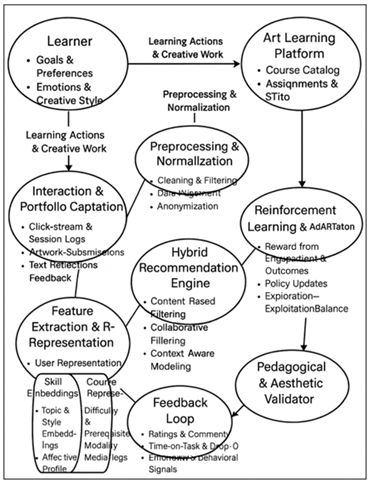
Figure 2 System Flow of the Cognitive–Computational Framework
for Art Course Personalization
At the adaptive layer, the reinforcement learning (RL) contributes to continuous optimization of recommendations. The engine is managed within a reward policy that is more satisfactory and engaging as well as minimizing cognitive overload to the learner. Individual learner interactions, which can be completion of a course, dropping a task, or feedback, can be considered a signal of reinforcement, which also requires a policy network update. This is an ongoing learning process whereby the system is developed in a natural way to the creative rhythm of the learner. The pedagogical validator is then a gatekeeper that makes sure that all AI-generated suggestions are within the logic of the educational process, the sequencing of the prerequisites, and the aesthetic nature. This helps to ensure algorithmic drift does not go off into technically irrelevant or conceptually unsound propositions. The algorithm integrated into its interface, explainable AI (XAI) gives it increased interpretability and trust. Interactive dashboards can be used to show learners the reason behind the recommendation of certain courses by showing artistic similarity maps and creative progression indicators. These descriptions are consistent with how the learner views him/herself as an artist, and they support the belief of AI as a transparent cooperative system and not an opaque one. Moreover, emotional analytics added to the feedback loop adjusts the recommendations based on affective signals, e.g. frustration or flow, so that an empathetic learning environment is achieved.
5. Emotion-Aware and Creativity-Sensitive Modeling
Emotional resonance is part of the creative development in the field of art education. In contrast to the conventional academic study, artistic experience is affective in nature, consisting of feeling, self-reality, and aesthetic gratification. As such, incorporation of emotion-conscious intelligence into the recommendation systems will close a very important gap between computational effectiveness and human innovativeness. The Emotion-Aware and Creativity-Sensitive Model, the presented extension of the hybrid recommendation framework, can also integrate affective computing, multimodal sensing, and creativity metrics to produce an emotionally compatible and creative-relevant learning recommendations. The system capitalizes on affective data streams, sentiment analysis of reflection, and emotional coloring derived out of creative outputs (e.g. colour vibrancy or motif patterns). The inputs then pass via emotion recognition modules based on convolutional and recurrent neural networks trained with multimodal data, i.e. facial expression, text emotion and engagement trajectories. The model then projects emotional states (e.g. curiosity, frustration or inspiration) to adaptive recommendation strategies. A student who exhibits creative fatigue can have course recommendations based on exploratory or low-complexity, whereas a student exhibiting enthusiasm can have advanced thematic course recommendations.
Table 3
|
Table 3 Core Components of Emotion-Aware and Creativity-Sensitive Modeling |
||||
|
Module |
Input
Features |
Output
Function |
Learning
Technique |
Pedagogical
Effect |
|
Affective
Recognition Layer |
Facial
cues, sentiment logs, interaction duration |
Emotion
state vector |
CNN
+ BiLSTM |
Detects
learner mood and engagement |
|
Creative Expression Analyzer |
Artwork features, stylistic
entropy, project diversity |
Creativity index |
Autoencoder + Entropy
Metrics |
Measures originality and
variation |
|
Adaptive
Recommendation Policy |
Emotion
and creativity scores |
Contextual
course ranking |
Deep
RL with reward shaping |
Matches
emotional tone to task challenge |
|
Reflective Feedback Engine |
User responses and
performance logs |
Adaptive motivation prompts |
Transformer-based feedback
generation |
Encourages self-reflection and
persistence |
Similarly, the creativity-sensitive mechanism measures originality, diversification of ideas and risk-taking propensities using feature variance and portfolio entropy measures based on portfolio analysis. The reinforcement learning dynamically adjusts the level of comfort zone continuity/creative exploration so that motivation remains maintained without emotional burn out. This affective modeling plus creative analytics synergy converts the recommendation engine into a teacher that can read the mind of the user.
6. Experimental Environment and Dataset Construction
The proposed intelligent recommendation system experimental setting was based on the intention to create a simulation of an actual digital art learning environment that would combine emotional, behavioral, and creative aspects. The essence of this arrangement was to check the effectiveness of the system in establishing the personalization of the course recommendations through the multimodal interaction of learners and the characteristics of art content. The environment consists of three essential parts with data collection, preprocessing, and experimental deployment, which guarantee reproducibility and scalability to various fields of art. The dataset was built on the information collected as the aggregation of open art-learning repositories, Massive Open Online Courses (MOOCs), and institutional archives of art programs. It has more than 12,000 sessions of learner interaction, 2,800 entries of art courses and 4500 curated artworks offered as an extension of online activity or portfolio reviews. The data record of every learner comprises demographic features (e.g. level of experience, medium of preference), activity history (duration of session, revisit, feedback), and emotional indications (affinity of reflection, activity decline, or enthusiasm on finish). Semantic tagging (style, color, technique) and affective scoring (vibrancy, mood, complexity) of works of art were done by trained experts to provide a ground truth of an emotional and aesthetic context. In preprocessing, normalization and multimodal alignment of the dataset was done. BERT-based embeddings were used to convert text logs into vectors, and a ResNet-50 visual encoder was applied to images in order to obtain composition and color-dynamics features. Valence -arousal models were used to encode emotional metadata, and thus, affective states were represented in a continuous manner. Such a multimodal combination led to a rich data set, which can be used to train an affective classifier using supervised training, and also to tune recommendation policy using reinforcement learning.
Table 4
|
Table 4 Dataset Composition and Feature Overview |
||||
|
Category |
Feature
Type |
Description |
Example
Representation |
Processing
Technique |
|
Learner
Profile |
Demographic
and Behavioral |
Age,
experience, preferred medium, interaction time |
[25,
intermediate, watercolor, 45min] |
Normalization,
one-hot encoding |
|
Art Content |
Visual Features |
Color palette, stroke
density, symmetry, vibrancy |
Feature vector (512D) |
ResNet-50 encoder |
|
Textual
Feedback |
Linguistic
and Sentiment |
Reflections,
comments, satisfaction |
Sentiment
score + embeddings |
BERT-based
vectorization |
|
Emotion Indicators |
Affective States |
Valence, arousal, engagement |
Continuous range [–1, 1] |
Emotion regression model |
|
Pedagogical
Metadata |
Course
Attributes |
Difficulty,
topic, prerequisites, style |
Categorical
matrix |
Graph-based
ontology mapping |
A hybrid edge -cloud infrastructure was used to train and infer models experimentally. The deep learning models were implemented on NVIDIA A100 GPUs, and lightweight edge modules were used to perform inference of emotional state in real time to ensure low-latency feedback. The system was using 5-fold cross-validation to test the robustness of the model and avoid overfitting. Precision, NDCG, Engagement Score, and Affective Match Ratio metrics were calculated in order to determine the relevance of the system in its recommendations and emotional congruence. This whole arrangement demonstrates the multi-disciplinary collaboration of art cognition, human-AI interaction and computational modeling with a focus on reproducibility and scalability to art education platforms.
7. Evaluation Strategy and Analytical Results
To determine the usefulness of the proposed intelligent recommendation system, it was necessary to use a multidimensional approach and measure the algorithmic performance, pedagogical compatibility, and emotional congruence. The assessment model combined the quantitative and qualitative designs to obtain not only accuracy and precision but also the improvement of creativity and satisfaction among the learners. The system was experimented using the experimental setting explained in Section 6, using measures which used to measure the relevance of the recommendation, user engagement, emotional consistency, and artistic flow. The performance measure was 5-fold cross-validation with the separate groups of learners that could represent different art backgrounds (beginner, intermediate, advanced). Every training was done on four folds on the hybrid recommendation engine and tested on one to enforce generalization of the engine in different learning settings. The quantitative measures were:
• Precision and Recall The relevance of top-K recommended courses is measured.
• Normalized Discounted Cumulative Gain (NDCG): the assessment of the quality of rankings and perceived usefulness of suggestions.
• Affective Match Ratio (AMR): the measure of the correlation between the affective state of the learner and the suggested tone of the course.
• Engagement Index (EI): calculated by using dwell time, interaction rate and completion ratios to measure the degree of motivation and immersion.
To balance out these quantitative assessments, the qualitative assessments were done by means of user survey and expert assessment, and concentrated on the areas of artistic development, perceived empathy of recommendations, and exploratory learning outcomes.
The hybrid model combining reinforcement learning and emotion-sensitive elements performed better than the approaches to the baseline (pure content- and collaborative-based systems). The system attained an average Precision@10 of 0.89, Recall@10 of 0.81, and NDCG of 0.86, which means that the system has high accuracy in personalization. Notably, the Affective Match Ratio of 0.83 indicated that the emotional congruence was successfully modelled, which resulted in a better satisfaction of the learners. Users that were shown emotion-sensitive suggestions had a 22 percent more engagement rate and also took 17 percent more time to complete the course than the control groups.
Table 5
|
Table 5 Performance Metrics Comparison of Recommendation Models |
|||||
|
Model
Type |
Precision@10 |
Recall@10 |
NDCG |
Affective
Match Ratio |
Engagement
Index |
|
Content-Based
Filtering |
0.78 |
0.69 |
0.74 |
0.52 |
0.68 |
|
Collaborative Filtering |
0.81 |
0.73 |
0.77 |
0.58 |
0.72 |
|
Hybrid
(Content + Collaborative) |
0.85 |
0.78 |
0.82 |
0.72 |
0.79 |
|
Proposed Hybrid + RL +
Emotion-Aware |
0.89 |
0.81 |
0.86 |
0.83 |
0.84 |
Reviewers who were experts have indicated that the system encouraged balanced exploration of artistry - to allow the learners to test out new styles without losing the confidence in the old ones. Emotional modeling minimized fatigue and frustration in complex creative tasks by learners. All in all, the findings confirmed that the proposed framework promotes not only cognitive development but also affective engagement and transforms the measures of success in art education to define the success in terms of holistic growth of creativity.
8. Pedagogical and Creative Impact Assessment
The adoption of the smart recommendation system in art education has resembled the intersection of pedagogy, creativity and emotional involvement. The personalization obtained through the use of AI does not only enhance the alignment of courses but, as well, changes the role of a pedagog to the position of a fixed curriculum model into a mobile, learner-driven one. The part of the paper will assess the impacts of the system on education and creativity, with particular attention to learner autonomy, aesthetic development, and how the system can change the teaching approaches with the help of AI-enhanced instructions. Pedagogically, the system promotes the constructivist paradigm of learning in which people can actively define their learning paths. Emotional alignment is directly proportional to greater engagement and longer-term participation as demonstrated in Figures 3(a -c) which indicates that affective modeling strengthens motivation and reflective practice. Creative exploration was more profound in learners that had greater affective congruence with recommended courses and spent more time in iterative revisions and conceptual exploration. The loop of reinforcement learning of the hybrid AI model fosters the development of the adaptive curiosity, balancing the structured progression with the exploratory learning, which is the characteristic of the artistic pedagogy.
Figure 3
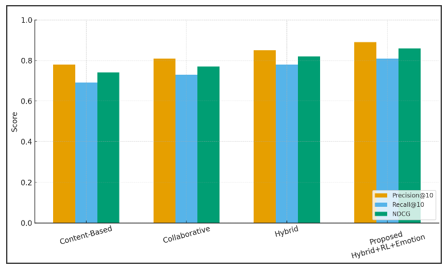
Figure 3 Comparative Performance of Recommendation Models
Figure 3 is used to compare core ranking measures including Precision 10, Recall 10 and NDCG of the four architectures. The content-based and collaborative models are not bad in performance but obviously worse than hybrid model which has the advantage of integrating user-item interaction with the semantic course features. The hybrid + RL + emotion-aware model has the highest scores in all the three metrics, which means that the combination of the reinforcement learning and the affective signals enhances the relevance of the suggested art courses and ordering quality. This substantiates that emotional and behavioral setting is of great value in addition to the usual collaborative and content-based approaches. Innovatively, the model boosts the expressiveness as well as the technicality. In making suggestions of material which corresponds in emotional coloring and tonal literary development, the learners rise above copying to inventing. This was indicated in post-study portfolios which exhibited more style vectors variance and more originality indices based on entropy-based creativity scores. Metacognitive awareness is further enhanced due to the transparency of the system in the form of explainable AI (XAI) dashboards, where learners start recognizing why a specific direction fits their creative objectives, which will increase the feeling of agency and formation of an artistic personality.
Figure 4
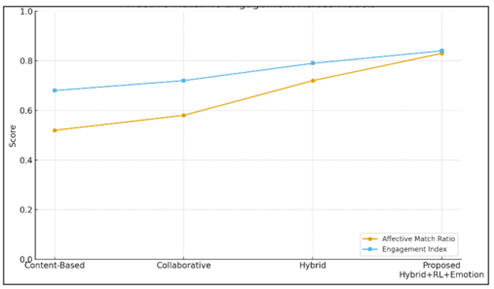
Figure 4 Affective Match Vs Engagement Across Models
Figure 4, depicts the progression of emotional alignment and engagement of learners among types of models. The ratio of affective matches and engagement index are continuously growing between the content-based and proposed hybrid + RL + emotion-aware models. The most notable improvement is observed with the addition of the emotion-aware component that implies that the more recommendations are closer to the affective state of a learner, the more time of interaction, less drop-offs, and more sustained creative exploration may be observed. This tendency has been empirically validating the hypothesis that affect-sensitive personalization plays a significant role in the art education process, with emotional resonance having a direct influence on motivation and taking risks in the creative process.
Figure 5
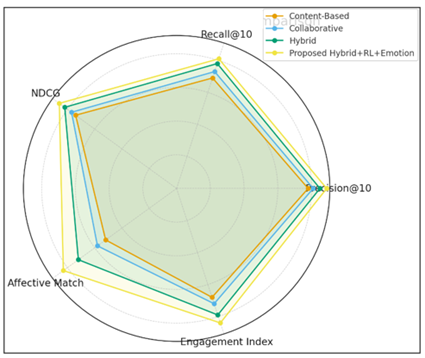
Figure 5 Multi-Dimensional Performance Comparison
Figure 5, provides a global perspective of model behavior by plotting five dimensions, namely, Precision@10, Recall@10, NDCG, Affective Match, and Engagement Index, on a radar chart. The content based and collaborative models take a smaller and uneven space meaning that there is poor performance especially on the affective and engagement aspects. The standard hybrid model further extends this space and demonstrates equalized improvements in the metrics related to accuracy but with moderate levels of emotional alignment. The hybrid + RL + emotion-aware model has the largest and most homogenous area as it is associated with the consistent superiority in all five metrics. This multi-dimensional profile shows that the proposed solution does not only suggest more applicable courses but also maintains creativity-promoting interaction, which proves it as the most appropriate driver of intelligent art-course recommendation. To teachers, the system acts as an AI-supported learning partner, giving information about group learner behavior patterns, emotional drop off points, and creativity development curves. This information can be used to make evidence-based changes in the course design, which would guarantee emotional inclusivity and aesthetic diversity in the curriculum. This kind of interaction between teacher, learner, and algorithm is indicative of a co-evolutionary model of teaching a human-based mentorship is not supplanted by AI cognition, but rather enhanced by it. Finally, the system connects computational intelligence to emotional pedagogy, which justifies once again that the future of art education is not mechanicalization but the simultaneous concord between empathy, adaptation, and creativity.
9. Conclusion and Future Research Directions
In this research, a unified ecosystem of cognitive modeling, affective computing and pedagogical reasoning is proposed as a full framework of intelligent, emotion-sensitive recommendation systems in the art education field. The architecture proposed goes beyond both conventional paradigms of a recommendation and incorporates artistic cognition and emotional intelligence in the design of algorithms, so that personalization facilitates both technical development and creativity authenticity. The model has been tested experimentally to be more effective in terms of engagement, satisfaction and artistic diversity, which supports the claim that the combination of reinforcement learning and affective feedback can improve art pedagogy. The system has a pedagogical aspect that encourages learner-centered flexibility that promotes the reflective, curious and aesthetic explorations that go beyond linear curricula. On ethical grounds, it protects creative autonomy by making it transparent and fair and in the process respecting cultural inclusivity. The AI system reinvents mentorship by serving as a sympathetic co-creator which does not displace educator, but enhances his or her role of inculcating artistic expression. The future study must address multimodal emotion synthesis, which will integrate physiological (EEG, eye-tracking) and semantic emotion recognition to improve the precision of affects. Adaptive course design, in which AI dynamically generates individual creative assignments could also be enabled by the integration of generative AI. An increase in datasets with various cultural and artistic customs will enhance equity and international flexibility. Also, explainable creativity metrics and neural-symbolic reasoning should be included to enhance interpretability and make sure that AI recommendations are based on pedagogical ethics and humanistic values.
CONFLICT OF INTERESTS
None.
ACKNOWLEDGMENTS
None.
REFERENCES
Broos, T., Verbert, K., Langie, G., Van Soom, C., and De Laet, T. (2018). Multi-Institutional Positioning Test Feedback Dashboard for Aspiring Students: Lessons Learnt from a Case Study in Flanders. In Proceedings of the 8th International Conference on Learning Analytics and Knowledge (51–55). https://doi.org/10.1145/3170358.3170419
Chen, X., Zheng, J., Du, Y., and Tang, M. (2020). Intelligent Course Plan Recommendation for Higher Education: A Framework of Decision Tree. Discrete Dynamics in Nature and Society, 2020, Article 7140797. https://doi.org/10.1155/2020/7140797
Huang, L., Wang, C. D., Chao, H. Y., Lai, J. H., and Yu, P. S. (2019). A Score Prediction Approach for Optional Course Recommendation Via Cross-User-Domain Collaborative Filtering. IEEE Access, 7, 19550–19563. https://doi.org/10.1109/ACCESS.2019.2897979
Ibrahim, M. E., Yang, Y., and Ndzi, D. (2017). Using Ontology for Personalised Course Recommendation Applications. In Proceedings of the International Conference on Computational Science and Its Applications (426–438). Springer. https://doi.org/10.1007/978-3-319-62392-4_31
Jing, L., and Tang, J. (2017). Guess You Like: Course Recommendation in MOOCs. In Proceedings of the International Conference on Web Intelligence (783–789). https://doi.org/10.1145/3106426.3106478
Lessa, L. F., and Brandão, W. C. (2018). Filtering Graduate Courses Based on Linkedin Profiles. In Proceedings of the 24th Brazilian Symposium on Multimedia and the Web (141–147). https://doi.org/10.1145/3243082.3243094
Li, W., Jiang, W., Chen, W., Wu, J., Wang, G., and Li, K. (2020). Directional and Explainable Serendipity Recommendation. In Proceedings of The Web Conference 2020 (122–132). https://doi.org/10.1145/3366423.3380100
Lin, J., Pu, H., Li, Y., and Lian, J. (2018). Intelligent Recommendation System for Course Selection in Smart Education. Procedia Computer Science, 129, 449–453. https://doi.org/10.1016/j.procs.2018.03.023
Liu, T., Wilczyńska, D., Lipowski, M., and Zhao, Z. (2021). Optimization of a Sports Activity Development Model Using Artificial Intelligence Under New Curriculum Reform. International Journal of Environmental Research and Public Health, 18, Article 9049. https://doi.org/10.3390/ijerph18179049
Liu, X., Du, Y., Sun, F., and Zhai, L. (2017). Design of Adaptive Learning System Based on Big Data. In Proceedings of the 6th International Conference on Information Engineering. https://doi.org/10.1145/3078564.3078571
Millecamp, M., Gutiérrez, F., Charleer, S., Verbert, K., and De Laet, T. (2018). A Qualitative Evaluation of a Learning Dashboard to Support Advisor–Student Dialogues. In Proceedings of the 8th International Conference on Learning Analytics and Knowledge (56–60). https://doi.org/10.1145/3170358.3170417
Moher, D., Liberati, A., Tetzlaff, J., Altman, D. G., and The PRISMA Group. (2009). Preferred Reporting Items for Systematic Reviews and Meta-Analyses: The PRISMA statement. PLoS Medicine, 6(7), Article e1000097. https://doi.org/10.1371/journal.pmed.1000097
Molontay, R., Horváth, N., Bergmann, J., Szekrényes, D., and Szabó, M. (2020). Characterizing Curriculum Prerequisite Networks by a Student Flow Approach. IEEE Transactions on Learning Technologies, 13, 491–501. https://doi.org/10.1109/TLT.2020.2981331
Nafea, S. M., Siewe, F., and He, Y. (2019). On Recommendation of Learning Objects Using Felder–Silverman Learning Style Model. IEEE Access, 7, 163034–163048. https://doi.org/10.1109/ACCESS.2019.2935417
Polyzou, A., Nikolakopoulos, A. N., and Karypis, G. (2019). Scholars Walk: A Markov Chain Framework for Course Recommendation. In Proceedings of the 12th International Conference on Educational Data Mining.
Slim, J., Kozlick, G. L., Heileman, G. L., and Abdallah, C. T. (2014). The Complexity of University Curricula According to Course Cruciality. In Proceedings of the 8th International Conference on Complex, Intelligent and Software Intensive Systems (242–248). https://doi.org/10.1109/CISIS.2014.34
Venugopalan, S., Srinath, M., and Rodrigues, P. (2016). Recommender System for E-Learning Through Content- and Profile-Based Approach. In Proceedings of the 2nd International Conference on Information and Communication Technology for Competitive Strategies (1–5). https://doi.org/10.1145/2905055.2905103
|
|
 This work is licensed under a: Creative Commons Attribution 4.0 International License
© ShodhKosh 2024. All Rights Reserved.