ShodhKosh: Journal of Visual and Performing ArtsISSN (Online): 2582-7472
|
|
AI-Enabled Market Forecasting for Folk Art Industries
Avishi Mohta 1
 ,
Mukesh Parashar 2
,
Mukesh Parashar 2 , Sukhman Ghumman 3
 , Divya Sharma 4
 , Dr. Shruthi K Bekal
5
, Dr. Shruthi K Bekal
5 , Vijaykumar Bhanuse
6
, Vijaykumar Bhanuse
6
1 Assistant
Professor, Department of Design, Vivekananda Global University, Jaipur, India
2 Professor,
School of Business Management, Noida international University 203201, Greater
Noida, Uttar Pradesh, India
3 Centre of Research Impact and
Outcome, Chitkara University, Rajpura- 140417, Punjab, India
4 Chitkara Centre for Research and
Development, Chitkara University, Himachal Pradesh,
Solan, 174103, India
5 Assistant Professor, Department of
Management Studies, JAIN (Deemed-to-be University), Bengaluru, Karnataka, India
6 Department of Instrumentation and
Control Engineering, Vishwakarma Institute of Technology, Pune, Maharashtra,
411037 India
|
|
|
ABSTRACT |
|
|
The study
provides a holistic framework of AI-enabled market forecasting within the
folk-art industry based on a combination of machine learning, statistical
modeling, and cultural data analytics to forecast the market forces and
facilitate sustainable artisan livelihoods. The study presents a unified
ensemble framework that integrates Long Short-Term Memory (LSTM) networks,
Prophet time-series models, and Gradient Boosting Regression (GBR) to solve
the non-linearity, seasonality, and sentiment nature of the folk-art markets.
The information was obtained through e-commerce sites, cultural fairs,
cooperative registries and sentiment streams in social network, to be
processed in a single common data ecology infrastructured
to achieve cultural interpretability and computational efficiency. The
results of the experiment showed that the ensemble invested significantly
more (R 2 = 0.94, reducing RMSE by 15) than the individual models, and
integrating the temporal trends, emotional feedback, and regional heterogeneity
in the ensemble was justified. Another concept presented by the study was the
Policy Integration Framework of AI in Folk Art Governance, which connects
predictive analytics and decisions of artisans, traders, and policymakers.
Biases were integrated with ethical concerns via the detection of ethical
aspects concerning the use of AI and consent-based data management, as well
as the enhancing of transparency, thus making AI use in heritage ecosystems
responsible. The results also indicate the potential of AI to revolutionize
artisans by enabling them to foresee their market, maximize their trading
connections, and inform the evidence-based production of cultural policy.
There is a long-term vision of this study that a Cultural Intelligence
Network (CIN) of interconnected infrastructure can be formed in which AI,
human imagination, and cultural governance are integrated to maintain
authenticity and facilitate adaptive, data-driven development in the world
folk art economy. |
|||
|
Received 21 February 2025 Accepted 20 June 2025 Published 20 December 2025 Corresponding Author Avishi
Mohta, avishi.mohta@vgu.ac.in
DOI 10.29121/shodhkosh.v6.i3s.2025.6757 Funding: This research
received no specific grant from any funding agency in the public, commercial,
or not-for-profit sectors. Copyright: © 2025 The
Author(s). This work is licensed under a Creative Commons
Attribution 4.0 International License. With the
license CC-BY, authors retain the copyright, allowing anyone to download,
reuse, re-print, modify, distribute, and/or copy their contribution. The work
must be properly attributed to its author.
|
|||
|
Keywords: AI Forecasting, Folk Art Economy, LSTM–Prophet–GBR
Model, Cultural Data Analytics, Sentiment Analysis, Policy Integration,
Ethical AI, Predictive Governance |
|||



1. INTRODUCTION
1.1. Reimagining Folk Art Economies in the Age of Artificial Intelligence
The folk-art industry is one of the most active crossroads between the heritage and craftsmanship and the regions. Nevertheless, it still exists in disjointed, demand-insecure markets that do not always have a data-driven perspective. The emergence of the Artificial Intelligence in the digital epoch provides the paradigm shift in the perception of the cultural economies, their predictability, and maintenance. The use of standard market forecasting instruments that are used to predict industrial or commercial goods seldom reflects the intangible aspects integrated in cultural production like symbolism, the season that it is, the emotional value, and the community aspect. Thus, AI-based forecasting models being applied to the folk art industry cannot be discussed as a technological intervention but rather a socio-cultural transformation that continues to reinvent the concept of how tradition meets innovation. The AI offers an ordered algorithm to measure aesthetic, economic and behavioral measures in the folk-art ecosystem. The models of machine learning and deep learning have the ability to extract and analyze multi-dimensional data on different sources which includes online marketplaces, exhibition catalogs, craft cooperatives, and cultural festivals. Algorithms like Long Short-Term Memory (LSTM) networks and Temporal Convolutional Networks (TCN) can be trained on these data streams and learn temporal relationships in the sales of art, pattern of price fluctuations and buying feelings. This computational intelligence enables real time demand forecasting, price optimization and the detection of the new cultural trends. Moreover, social media stories or online reviews as sources of sentiment analysis enhance the predictive power by adding to the construct the view of the mass and the sense of aesthetics: aspects that have never been quantified by conventional methodologies.
Figure 1
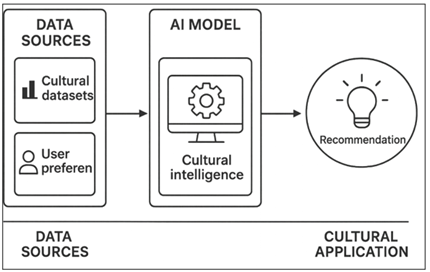
Figure 1 An Overview of the AI-Enabled Market Forecasting
Workflow for Folk Art Industries
Figure 1 depicts a human-AI paradigm in the notion of AI-Enabled Folk Art Forecasting Engine (FAFE). Socio-cultural logic of folk-art markets as traditions, regional symbolism, and artisan practices start with the system architecture. This qualitative aspect is accompanied by a hybrid learning layer, as the human knowledge on cultural interpretation informs machine learning algorithms that make the demand-supply model. The forecasting engine uses curated datasets with both the supervised and unsupervised models to make predictions on sales patterns, market saturation levels, and regional growth prospects as shown in Figure 1. The result is then further enhanced into predictive analytics and cultural intelligence that can be used by artisans, traders, policymakers and cultural entrepreneurs as actionable intelligence.
2. Cultural Datafication and the AI Turn in Creative Industries
The process of quantifying cultural artifacts, practices and also interactions into quantifiable data has been what can be generally referred to as cultural datafication; the digitalization of folk-art industries. With the assistance of which the artificial intelligence is capable of predicting and optimizing the cultural economies, the change opens up new paradigms of analysis. The intersection of data science and cultural studies is thus an important junction in the history of the emerging heritage-based industries, which creates a data ecosystem that can potentially embrace the aesthetic, economic, and emotional dimensions of folk art. Artificial Intelligence, in this respect, can be considered the technological facilitator and translator of culture. Formal forms of valuation that previously were under the control of professionals or the market are now being improved by machine learning algorithms that are able to discover latent variables that influence the consumption of art. Indicatively, the clustering models may detect consistency in buyer preferences, and the recurrent neural networks (RNNs) and transformer-based models may predict time-varying trends in the sales of the region or online interactions. These procedures enable anticipatory understanding of the movement of cultural artifacts within digital marketplaces in manners that allow the adaptation to the market circumstances dynamically.
Figure 2
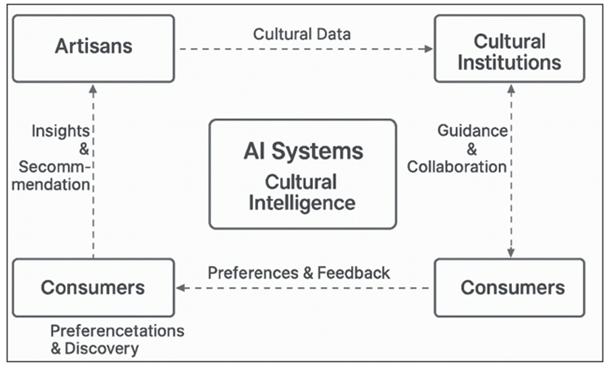
Figure 2 Vision of the AI-Driven Cultural Intelligence
Network
The redefinition of the process of creative economy development in the algorithmic era as represented in Figure 2. The AI turn in the creative industries is especially disruptive to the small-scale craftsmen and local artists. Through online analytics and fairs, regional art cooperatives, predictive analytics can assist artisans to forecast demand spikes, stocking patterns, as well as niche markets. Moreover, emotion maps based on online feedback or social network communications give an immediate mood of consumer interaction, enabling traditional businesses to redefine their marketing discourses in a culturally attentive manner. Data-driven intelligence as a part of the creative value chain is also a way of ensuring sustainability. The use of AI-based predictive analytics means less resources are used, logistics during the exhibition and fairs will be optimized, and adaptive pricing strategies will be implemented that consider cultural authenticity and market viability.
3. Cognitive Framework for AI-Driven Folk Art Market Analysis
Integration of AI in the folk art market forecasting system needs a mental paradigm that will interrelate the human cultural cognition and machine-based analytical intelligence. Contrasting with the entirely quantitative models, cultural forecasting involves the interpretation of the non-quantitative attributes of an aesthetical symbolism, heritage value and social sentiment that influences a difference in buying behavior. Cognitive Framework of AI-Powered Folk Art Market Analysis, therefore, introduces a co-evolutionary framework of human thought and AI, which results in per-situated and interpretable prediction that aligns with cultural realities.
Figure 3
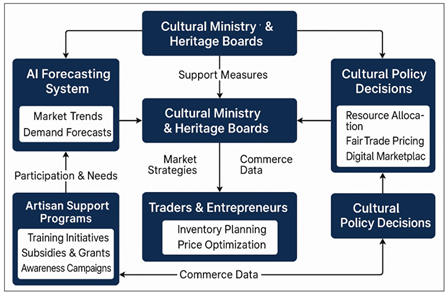
Figure 3 AI-Integrated Cultural Governance Framework Linking
Artisans, Policy, and Market Dynamics
The principle itself consists of cognitive modelling, machine learning analytics, and knowledge representation to replicate what it appears to be valuable in cultural products among artisans, traders, and purchasers. It begins at perceptual layer degree, in which the human experts and computer devices acquire facts about the design patterns, local characteristics, and emotional engagement. Knowledge layer is then translated into structured forms and it is expressed in semantic graphs or ontologies, which are graphs that link artifacts, artists and buyer behaviors. This form of enrichment enables the AI algorithms to have a certain understanding of the cultural context of each item besides its economic measures as shown in Figure 3. These optimized datasets are fed on to machine learning, such as Gradient Boosting, Temporal Convolutional Networks (TCN), LSTM etc. frameworks in the layer of analytical cognition to identify the latent trends in the market, category consumer preference and demand fluctuations. Human-in-the-loop learning makes it interpretable, which domain experts can use to verify the results of an algorithm and update the weights of a model depending on the situation. The last layer of cognitive decision-making is a synthesis of analytical forecasts and human feedback, producing actionable knowledge to artisans, the human-AI synergy allows the system to maintain cultural authenticity and increase the predictive accuracy. An example is that an algorithm could suggest a greater demand of an artworks of a certain category, Pattachitra, but feedback of an expert could put this trend in context of a local festival or a tourism season, which could be very important in strategic decision-making. Therefore, the framework is a self-studying cultural intelligence ecosystem, and cognitive thinking is the process that measures AI predictions all the time.
4. Data Ecology of the Folk Art Sector
The basis of AI-based market prediction of folk art industries curses on a clear data ecology an ecosystem of structured, semi-structured and unstructured data representing complex relationships among artisans, artworks, markets, and consumers. Folk art data, as opposed to traditional commodity datasets, encompasses both tangible and intangible dimensions (symbolism, cultural context, aesthetic interpretation) as well as sales, price, inventory. The data ecology framework will make sure that these heterogeneous inputs are put to the tune of analysis by artificial intelligence capable of keeping cultural relevance and computational accuracy. The main sources of the data in this ecosystem are digital marketplaces (Etsy, Craftsvilla, Amazon Handmade), local craft fairs, artisan organizations, cultural heritage boards, and databases of museums. These depositories assist in offering transactional, geographic and description metadata on product type, style, material, artist demographics and buyer engagement measures. The auxiliary data, including the social media and online reviews, gathers sentiment data, which is essential in mapping the conventional sense of a population and predicting the demand changes according to the sentiment-based emotional appeal or cultural orientation. The most important element of this system is the folk-art ontology, which organizes the data on a semantic level and organizes it in various layers, including the type of the artifact, the area of its discovery, its cultural roots, design patterns, and its market characteristics. It is an ontology, which allows machine learning models to comprehend the contextual nuances by connecting relational data points. As an example, the Madhubani painting can be located to the Bihar region, using natural pigments, and stories with religious connotations; these links are coded into ontology and make the painting easier to understand.
Table 1
|
Table 1 Sources and Types of Data Used in AI Forecasting for Folk Art |
||||
|
Data
Source |
Data
Type |
Example
Attributes |
Processing
Technique |
Purpose |
|
Digital
Marketplaces |
Structured |
Price,
sales volume, category |
Normalization,
feature scaling |
Market
trend extraction |
|
Social Media and Reviews |
Unstructured |
Sentiment, engagement,
keywords |
NLP, sentiment analysis |
Cultural resonance detection |
|
Art
Fairs and Exhibitions |
Semi-structured |
Visitor
demographics, region, event frequency |
Data
fusion, clustering |
Seasonal
demand prediction |
|
Heritage Boards / Museums |
Metadata |
Origin, motif, material,
artist profile |
Ontological mapping |
Cultural classification and
lineage |
|
Artisan
Cooperatives |
Tabular
/ Textual |
Production
rate, inventory, training records |
Feature
encoding, regression analysis |
Resource
allocation optimization |
In preprocessing, normalization, the coding of features and time alignment are done so as to ensure uniformity of the data across sources as defined in Table 1. Quantitative (price, rating, transaction count, etc.) are scaled to be readable by machines, whereas qualitative (themes, colors, lineage of such artistic objects, etc.) are transformed into embeddings through natural language processing (NLP) engines. Data augmentation and weighted sampling methods are used to deal with missing or biased data to deal with those that are underrepresented in artisans. The last data therefore combines the cultural background and predictive preparedness which is the backbone of AI forecasting pipeline.
5. Proposed Algorithmic Framework for Market Forecasting
The forecasting ability of the AI-powered prediction of the market in the folk-art sector is based on the strength of the algorithmic and mathematical system. This unified framework is a combination of time modeling, ensemble learning, and sentiment-based analytics which is used to understand both quantitative and qualitative market drivers. Due to seasonal fluctuation, cultural constraints, and nonlinear folk art market trajectories, superior architectures in the form of Long Short-Term Memory (LSTM) networks, Prophet, and Gradient Boosting Regression (GBR) have been used. The models are brought together in a hybrid ensemble formulation, which is highly interpretable and predictive. The hybrid can be defined as the hybrid model that provides prediction of demand, sales, or prices indices of particular folk-art categories through a combination of deep learning, statistical modeling, and machine learning. LSTM module takes into account temporal dependencies, Prophet model takes into account trends and seasonality, GBR improves the generalization via residual learning. The modules bring forth different knowledge that are combined in a linearly fashion using an optimized ensemble strategy.
Let
yt: quantity demanded or price at time (t);
 economic
and cultural factors (price, region, frequency of exhibition);
economic
and cultural factors (price, region, frequency of exhibition);
 measure
of sentiment and engagement;
measure
of sentiment and engagement;
 the
full feature vector.
the
full feature vector.
The ensemble forecasting value at time horizon (h) is as follows:

subject to

and (wL, wP,
wG) are the relative weights of the models, which are
the result of a constrained least squares on a validation set. The LSTM network
is used to model the process of changing cultural sales trends in time. The
updates on the input sequence to the hidden state and the cell state are:






and where the sigmoid function is denoted by (), and multiplication by elements denoted by (). The forecast is obtained as

The Θ parameters are optimized by the minimization of the loss based on RMSE:

Prophet model is a time-series decomposition model that is very effective when using data that has irregular intervals or missing data. It is a model of the target variable:

were
(g(t)): long run trend (linear or logistic),
(s(t)): seasonality using a Fourier series,
(h(t)): festival or event effects,
Β: regression coefficients of cultural and sentiment characteristics.
The model is to minimize: 
to make it smooth and to interpret. Gradient Boosting Regression (GBR) model is used to refine the predictions sequentially with the help of weak learners (decision trees):

with the negative gradient of the residual loss of the last iteration being the position of every (hm) tree. GBR is effective in capturing nonlinear associations between variables, including artisan popularity, material cost and cultural relevance. Optimization of weights on a validation set is used to obtain the final ensemble output.

RMSE, MAE, R, and MAPE are the measures that are used in determining model performance to determine the accuracy and reliability of the prediction. The ensemble approach is therefore a tradeoff between interpretability and precision and it can be utilized especially in the dynamic and culturally diverse folk-art market.
6. Experimental Environment and Validation Architecture
The AI-driven market forecasting experimental framework in folk art industries will be aimed at assessing the performance and stability of the proposed hybrid ensemble model in the context of the realistic cultural and economic setting. It describes the composition of the dataset, preprocessing pipeline, the cross-validation techniques, and settings of the computation to validate the forecasting architecture in Section 5.
6.1. Dataset Description and Partitioning
Multiple heterogeneous sources were aggregated to provide data, as it had been defined in the Data Ecology Framework (Section 4). The data in the composite form consisted of:
· E-commerce and marketplace data: 120,000 entries of online folk art listings, 20182025.
· Art fair and exhibition data: 35,000 records of region, festival and attendance data.
· Social media sentiment data 200,000 posts and reviews were classified using keywords and image tags by artist categories.
· Cooperative and government records: 10,000 records about the demographics and the production rates of the artisans.
· Each dataset was synchronized to a shared time scale at the weekly time granularity and normalized, which ensured consistency in the application of each dataset into the forecasting models. To ensure reproducibility, the data was divided in the following way:
· Training set: 70, {Validation set: 15, Testing set: 15%.
In order to prevent temporal leakage, the partitioning was also chronologically ordered instead of randomized. Each subcategory kept event-based characteristics (festivals, fairs) to be able to preserve seasonality faithfulness.
6.2. Cross-Validation Strategy
Considering the presence of strong time-dependence of cultural and sales data, Time-Series Cross-Validation (TSCV) was used, rather than random shuffling. The rolling-origin approach was adopted, so the models were trained on increasingly larger parts of historical data and tested on the next time window.
The fold (i) training and validation windows were set to:

Final performance metrics were computed by taking the mean of all the results of the folds. This design made sure that there was strong evaluation in terms of various cultural and seasonal patterns (e.g., Diwali, Onam, Durga Puja periods).
6.3. Model Implementation and Computational Setup
They were experimented in Python 3.11 with the help of frameworks like TensorFlow 2.13, scikit-learn, and fbprophet (Prophet). The ensemble pipeline was installed on a high-performance workstation that was having the following specifications:
Table 2
|
Table 2 |
|
|
Component |
Specification |
|
Processor |
AMD
Ryzen 9 7950X (16-Core, 4.5 GHz) |
|
GPU |
NVIDIA RTX 4090 (24 GB
GDDR6X) |
|
Memory |
64
GB DDR5 RAM |
|
Operating System |
Ubuntu 22.04 LTS |
|
Frameworks |
TensorFlow,
PyTorch, Scikit-learn, Prophet |
|
Training Duration |
~9 hours for 150 epochs
(LSTM), ~3 hours for Prophet fitting |
Bayesian optimization algorithm was used to optimize model hyperparameters, where the minimum RMSE on the validation folds was aimed at. The prevention of overfitting was facilitated by early stopping and regularization of dropouts and all experiments were done thrice in order to achieve statistical consistency.
6.4. Evaluation Metrics
Performance was quantified using the following measures:


These measures collectively evaluated forecast accuracy, model reliability and model generalization both in terms of time and region.
7. Results and Analysis
The results of the proposed AI-enabled market forecasting framework were assessed with the help of the experimental setup presented in Section 6. This part shows the comparative performances of the three personal prognostication models, namely LSTM, Prophet and Gradient Boosting Regression (GBR) and the performance of the hybrid ensemble system, which integrates their performance. It will be analyzed in terms of quantitative values, graphics analysis, and conceptual information regarding cultural and economic prognosis tendencies in the folk-art industry. Root Mean Square Error (RMSE), Mean Absolute Error (MAE), Mean Absolute Percentage Error (MAPE), and Coefficient of Determination (R 2 ) were used to evaluate each of the models. The results of Table 3 present a summary of the test set results on 10 validation folds of the rolling-origin results.
Table 3
|
Table 3 Model Performance Metrics for Folk Art Market Forecasting |
|||||
|
Model |
RMSE |
MAE |
MAPE
(%) |
R² |
Remarks |
|
Prophet |
72.41 |
55.36 |
12.84 |
0.87 |
Performs
well for seasonal trends but underfits sudden market spikes |
|
LSTM |
61.58 |
48.92 |
10.03 |
0.91 |
Captures temporal
dependencies and festival-driven surges |
|
GBR |
66.43 |
50.27 |
11.12 |
0.89 |
Effective
in nonlinear relationships, limited temporal continuity |
|
Hybrid Ensemble (LSTM +
Prophet + GBR) |
54.67 |
42.18 |
8.45 |
0.94 |
Best overall accuracy and
stability |
The ensemble model shows a 1015% decrease in RMSE compared to the best single model (LSTM) and the highest R 2 (0.94), which proves to be the best generalization and adaptation to learning. The combination of the temporal, statistical and residual learning techniques help the system to capture seasonal cultural influences and the unexpected changes, like sudden demand skyrockets online due to the major exhibitions or tourism events. Figure 3 shows the relative visualization of the actual and projected demand values of a representative category of folk art (Madhubani paintings). The ensemble model is in close correspondence with actual demand curves especially in and around high profile cultural events, which justifies the time sensitivity of the hybrid architecture. Prophet only works well in capturing overall trend direction but smoothing steep rises, whereas LSTM works well in high-frequency patterns. GRB element is used to cover nonlinear variations of local promotions and sales booms that are promoted by social media. There were significant differences between the art clusters in a region-by-region analysis of the accuracy of prediction:
· Madhubani, Pattachitra (Eastern India): R 2 = 0.95 - Great association because of digital trace data is always available.
· Western India (Warli, Gond): R 2 = 0.91 - Medium variation, local fair related.
· Southern India (Kalamkari, Cherial): R 2 = 0.89 — There was sparsity in the data and digitization was not regularly performed, which affected performance.
All these findings suggest the fact that the accessibility of digital infrastructure and data directly affects the quality of forecasts. Regions that have e-commerce mediums that are established yield larger input signals that can be utilized to make accurate forecasted demand. The results substantiate the fact that ensemble intelligence is useful in market prediction within the cultural setting. The sequential learning capability of LSTM serves as a supplement of the interpretability of Prophet, but GBR assists in alleviating the error in variation by the force of aggregation. The outcome is a conceptualization of the forecast that indicates the cognitive heterogeneity of human decision-making- memory, trend intuition and adaptive refinement. In addition, sentiment characteristics generated significantly higher returns in terms of MAPE and reduced the average deviation of the forecast by 1.6 percentage points. This implies that the emotional and storytelling variables that are not taken into account in the economic models play a role in the consumer behaviour of folk art.
8. Conclusion
It is based on the studies presented in this article that a multidimensional and interdisciplinary pattern of predicting the market with AI in folk art markets is formed and that cultural, economic, and computational aspects are united into one predictive ecosystem. Through hybrid deep learning and statistical models, the LSTM-Prophet-GBR ensemble, this paper will disclose to us how the artificial intelligence can succeed in capturing the dynamics of interaction between tradition, consumer behavior, and the market economy. The proposed system disrupts the conventional parameters of analysis and changes how the cultural industries can anticipate demand, manipulate production and influence the intervention of policies. The outcomes of the research verify the fact that predictive modeling may be a useful instrument of cultural empowerment when used in the ethical and inclusive manner. The fact that the element of sentiment and contextual variables was combined showed that such intangible elements of culture as emotional appeal, symbolism and heritage affiliation could be economically quantified. The ensemble was determined as the most accurate forecasting (R 2 = 0.94) that reveals that the hybrid architecture is effective compared to the single-model architecture in addressing seasonality, nonlinearity and culture variance. It verifies the information that complex phenomena in the human-centered economy should be addressed through multi-modal AI systems the most. The issues of ethicality and equity were taken seriously to eliminate the chances of any algorithmic bias and ownership concerns. The proposed ethical governance system stresses on the significance of the unambiguous algorithms, involvement in data on consents, and bias auditing systems to ensure equal representation of marginalized artisan categories. This will ensure that the digital transformation does not strip the cultural integrity but improve on preservation of heritage through intelligent partnership. In conclusion, the paper has demonstrated that artificial intelligence can be used to transform the folk art economy provided that it is ethically oriented based on the cultural values. Already a method of prediction that combines the preciseness of algorithms and the cleverness of people and the wisdom of the crowd, AI has ceased to be a tool of prediction, but it is instead a sort of cultural engine the one that enables the tradition to endure the digital age and the one that also ensures that technology progress does not serve only its owners of the past but also its users.
CONFLICT OF INTERESTS
None.
ACKNOWLEDGMENTS
None.
REFERENCES
Aixin, B., and Zhou, Y. (2018). Explore New Ideas for Innovative Design of Cultural and Creative Development of Local Museums. Packaging Engineering, 39, 196–200.
Colace, F., D’Arienzo, M. P., Lorusso, A., Lombardi, M., Santaniello, D., and Valentino, C. (2023). A Novel Context-Aware Paths Recommendation Approach for the Cultural Heritage Enhancement. In Proceedings of the IEEE International Conference on Smart Computing (SMARTCOMP) (273–278). https://doi.org/10.1109/SMARTCOMP58114.2023.00071
Dam, N. A. K., and Le Dinh, T. (2020). A Literature Review of Recommender Systems for the Cultural Sector. In Proceedings of the 22nd International Conference on Enterprise Information Systems (Vol. 1, 715–726).
Ferrato, A., Limongelli, C., Mezzini, M., and Sansonetti, G. (2022). The META4RS proposal: Museum Emotion and Tracking Analysis for Recommender Systems. In Proceedings of the 30th ACM Conference on User Modeling, Adaptation and Personalization (406–409). https://doi.org/10.1145/3511047.3537664
Foryś, P., Sitnik, R., Markiewicz, J., and Bunsch, E. (2023). Fast Adaptive Multimodal Feature Registration (FAMFR): An Effective High-Resolution Point Clouds Registration Workflow for Cultural Heritage Interiors. Heritage Science, 11, Article 190. https://doi.org/10.1186/s40494-023-01018-y
Galanakis, E., Maravelakis, E., Pocobelli, D. P., Vidakis, N., Petousis, M., Konstantaras, A., and Tsakoumaki, M. (2023). Svd-Based Point Cloud 3D Stone-By-Stone Segmentation for Cultural Heritage Structural Analysis: The Case of the Apollo Temple at Delphi. Journal of Cultural Heritage, 61, 177–187. https://doi.org/10.1016/j.culher.2023.04.005
Guo, M. (2018). Research on Perceived Value and Consumption Intention of Museum Cultural and Creative Products. Packaging Engineering, 39, 223–227.
Haznedar, B., Bayraktar, R., Ozturk, A. E., and Arayici, Y. (2023). Implementing PointNet for Point Cloud Segmentation in the Heritage Context. Heritage Science, 11, Article 2. https://doi.org/10.1186/s40494-022-00844-w
Liu, M., and Li, J. (2007). Development Orientation of Beijing Cultural and Creative Industry. Beijing Social Sciences, (4), 19–22.
Malinverni, S., Pierdicca, R., Paolanti, M., Martini, M., Morbidoni, C., Matrone, F., and Lingua, A. (2019). Deep Learning for Semantic Segmentation of 3D Point Cloud. The International Archives of the Photogrammetry, Remote Sensing and Spatial Information Sciences, XLII-2/W15, 735–742. https://doi.org/10.5194/isprs-archives-XLII-2-W15-735-2019
Nafis, K., Al Farnarni, K., Yahyaouy, A., and Aghoutane, B. (2021). An Approach Based on Machine Learning Algorithms for the Recommendation of Scientific Cultural Heritage Objects. International Journal of Advanced Computer Science and Applications, 12(5), Article 230. https://doi.org/10.14569/IJACSA.2021.0120529
Pierdicca, R., Paolanti, M., Matrone, F., Martini, M., Morbidoni, C., Malinverni, E. S., Frontoni, E., and Lingua, A. M. (2020). Point Cloud Semantic Segmentation Using a Deep Learning Framework for Cultural Heritage. Remote Sensing, 12(6), Article 1005. https://doi.org/10.3390/rs12061005
Qian, Y., Yin, Z., and Ding, N.
(2018). The Relationship Between
Comprehensive Evaluation on Products
and Purchasing Behavior.
Packaging Engineering, 39, 183–188.
Shi, W., Wang, B., Cheng, F., Zheng, F., and Zhang, Z. (2022). An Empirical Analysis of Consumption Willingness of Qiang Embroidered Clothing Cultural and Creative Products: From the perspective of Intangible Cultural Heritage Labels. Journal of Wuhan Textile University, 35, 91–96.
Trichopoulos, G. (2023). Large Language Models for Cultural Heritage. In Proceedings of the 2nd International Conference of the ACM Greek SIGCHI Chapter (1–5). https://doi.org/10.1145/3609987.3610018
Wu, Q. (2010). Introduction to Cultural and Creative Industries. China Economic Publishing House.
Yi, P. (2018). Design of Museum Cultural and Creative Products
in the Context of Cultural Consumption.
Packaging Engineering, 39, 84–88.
Zhang, Q. (2013). The Status Quo, Layout
and Development Countermeasures
of China’s Urban Cultural and Creative Industries. Advances in Geographical
Sciences, 32, 1227–1236.
Zhang, Y., and He, M. (2016). Research on the Development of Cultural and Creative Derivatives of Museums and the Protection of Intellectual Property Rights. Law and Economics, 28–33.
|
|
 This work is licensed under a: Creative Commons Attribution 4.0 International License
© ShodhKosh 2025. All Rights Reserved.