ShodhKosh: Journal of Visual and Performing ArtsISSN (Online): 2582-7472
|
|
Intelligent Systems for Digital Exhibition Design
Gopal Goyal 1
 ,
Ayaan Faiz 2
,
Ayaan Faiz 2 , Ananta Narayana 3
 , Anoop Dev 4
 , Yashoda L 5
 , Mahesh Kurulekar 6
1 Professor,
Department of Architecture, Vivekananda Global University, Jaipur, India
2 Chitkara
Centre for Research and Development, Chitkara University, Himachal Pradesh,
Solan, India
3 Assistant Professor, School of
Business Management, Noida International University, Greater Noida, Uttar
Pradesh, India
4 Centre of Research Impact and
Outcome, Chitkara University, Rajpura, Punjab, India
5 Assistant Professor, Department of
Management Studies, JAIN (Deemed-to-be University), Bengaluru, Karnataka, India
6 Department of Civil Engineering, Vishwakarma
Institute of Technology, Pune, Maharashtra, India
|
|
|
ABSTRACT |
|
|
The study
evaluates the evolution and the use of smart systems in designing digital
exhibits with the key aspects of how artificial
intelligence (AI), machine learning, and immersive technologies can redefine
the conventional exhibition models into responsive, interactive, and
data-driven cultural experiences. Combining computational intelligence with
the human imagination, the study shows that AI-aided curation can boost
aesthetic expression, as well as visitor interests and involvement, by means
of personalization in terms of storytelling, real-time feedback, and
adaptation to emotions. The empirical foundation of analysis includes three
case studies, namely, a virtual museum prototype, a hybrid physical-digital
exhibition, and a cultural heritage restoration project. Quantitative results
present the fact that user satisfaction, engagement, and curatorial
efficiency significantly increase, whereas qualitative data shows that
audiences resonate more with digital artifacts. The model of AI–curator
cooperation in the current study will guarantee the implementation of the
human interpretive judgment as the core of the research, with the algorithms
supplementing the design decisions with the pattern recognition and
predictive learning processes. The paper will conclude that intelligent
exhibitions are a new cultural mediation paradigm, in which technology and
creativity merge to create experiences of inclusive, sustainable and
ethically responsible art. The potential topics to be considered in future
studies are emotion-aware storytelling, simulation of exhibitions using
digital twins and low-energy adaptive displays to promote scalability and
cultural consistency of next-generation museums. |
|||
|
Received 20 February 2025 Accepted 19 June 2025 Published 20 December 2025 Corresponding Author Gopal
Goyal, gopal.goyal@vgu.ac.in
DOI 10.29121/shodhkosh.v6.i3s.2025.6755 Funding: This research
received no specific grant from any funding agency in the public, commercial,
or not-for-profit sectors. Copyright: © 2025 The
Author(s). This work is licensed under a Creative Commons
Attribution 4.0 International License. With the
license CC-BY, authors retain the copyright, allowing anyone to download,
reuse, re-print, modify, distribute, and/or copy their contribution. The work
must be properly attributed to its author.
|
|||
|
Keywords: Intelligent Systems, Digital Exhibition Design,
Curatorial Collaboration, Cultural Heritage, Adaptive Storytelling, Visitor
Engagement, Emotion-Aware Interfaces |
|||



1. INTRODUCTION
Over the last few years, there has been the integration of art, technology, and data intelligence to transform the conceptualization, curation, and experience of exhibitions. The classic exhibition design, which was mainly based on the spatial aesthetics, the static displays, and the linear contact with a visitor, transformed into the dynamic and interactive digital ecosystem. Intelligent systems, which include artificial intelligence (AI), Internet of Things (IoT), computer vision as well as immersive reality technologies, have turned museums, galleries and cultural spaces into reactive, adaptive and data-driven space. Such systems can learn on the basis of user behavior and analyze contextual indicators and provide personalized content, thus building emotionally engaging and cognitively stimulating visitor experiences Xu et al. (2021). The idea of AI integration into the exhibition design is changing the passive viewing into the participative one. Multimodal interfaces in digital exhibitions, including gesture recognition, eye-tracking, speech analysis, and haptic feedback, are now provided, and allow visitors to interact with the exhibits, as well as co-create them. This experience creates higher levels of engagement in cognition and long-term cultural memory Wang et al. (2020). Furthermore, smart systems use real-time sensor and camera data to control and streamline lighting, display sequence, and narrative through the audience movement characteristics and dwell time. Such data-driven logic of design produces exhibitions that are constantly evolving and adjust to the demographics, preferences, and emotions of the visitors Fiorucci et al (2020). The online exhibition environment is also a manifestation of the worldwide shift to hybrid cultural space, where physical installations are paired with virtual and augmented layers.
Figure 1
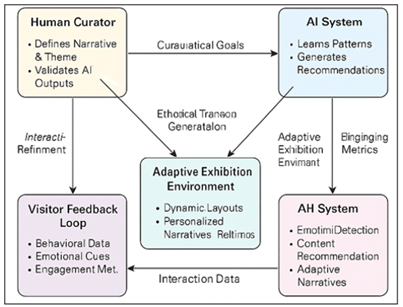
Figure 1 AI Governance Framework for Digital Exhibitions
The management of multimodal content streams is based on intelligent systems, which guarantee the coordination of physical and digital narratives. These systems also enable the curators to automate their repetitive design workflows, including metadata tagging, layout optimization, and visitor analytics, but focus on the creative and conceptual part of the storytelling as in Figure 1. The implementation of the smart systems presents a series of ethical, technical, and aesthetic issues. Algorithms bias, data privacy, digital access, and cultural authenticity are some of the issues that need to be mentioned to guarantee inclusivity and reliability. The mash-up of coding and culture provokes significant ethical and legal issues concerning the authorship, agency and curatorialism in AI-aided creative activities Kim et al. (2020), Kim et al. (2015). Hence, this paper aims at investigating the design, deployment, and assessment of smart systems to design digital exhibition with a focus on its contribution to enhancing visitor experiences and cultural knowledge sharing. The points of this study are fourfold:
1) To examine how the field of exhibition design is developing to become intelligent and adaptive;
2) To create a framework with AI integration that will promote interaction and personalization;
3) To measure visitor experiences based on quantitative and qualitative performance indicators; and
4) To draw up design, ethical and policy implications of future digital exhibitions.
This study addresses the gap between the design theory, computational intelligence and human-centered interaction by making digital exhibitions a living system of knowledge, creativity, and community interaction, which is a developing area of AI-based cultural informatics Farella et al. (2022).
2. Theoretical and Conceptual Framework
The intelligent theory behind the design of an exhibition rests on the field of cognitive psychology, artificial intelligence, and design theory. The conceptual framework views exhibitions as adaptive systems gaining perception, learning, and responding to the user behavior similarly to the human thinking process. Based on the Contextual Model of Learning (Falk and Dierking, 2016) and Human-Computer Interaction (Norman, 2013), the interaction of the visitor is not only a response to the visual stimulus but an atmosphere of dialogue between the senses, interpretation, and action Moral et al. (2022), Schaffer et al. (2021). These dimensions are converted into measurable parametersemotion detection, dwell time and interaction frequency by intelligent systems and allow data-based aesthetic development. The cognitive aspect is that the visitors utilize perceptual mapping and schema building by interpreting visual and spatial information based on what they already know and their emotional responses Nechushtai and Lewis (2019). To replicate this, intelligent systems use machine learning algorithms as they study behavioral information to predict preferences and make changes to exhibition features in real time. E.g., an AI system, having identified long-term attention to some works of art, might increase similar thematic displays or modify such parameters of the surrounding environment as sound and light to maintain attention Stichelbaut et al. (2021), Arrigoni et al. (2020). This process of adaptation resembles the cognitive process of reinforcement, and thus, it makes AI a co-producer of the curatorial process and not a tool. The main idea of this conceptual framework is the AI-Human Curatorial Loop, that entails three interacting layers:
1) Cognitive Layer (Human Side) The cognitive layer captures the perception, feeling, memory, and meaning-making processes, it determines the way visitors perceive the digital stimuli.
2) Algorithmic Layer (Machine Side) It would consist of deep learning models, natural language processing (NLP), and computer vision systems which process sensual and behavioral information Marini and Deborah (2022).
3) Curatorial Mediation Layer -Provides a platform on which human curators and AI work together to develop better exhibition scripts, layout optimization, and experiential flow.
Maintaining the feedback cycles between these layers, user data triggers the decision-making of the AI, the deciphering of the analytics is promoted by the curators, and the outputs of the system are adjusted to be more culturally appealing. This design is closed-loop which ensures that exhibitions are not out of context and emotion stirring without artistic value Taher (2022). The constructivist theory of learning, which asserts that meaning is generated in the process of interaction rather than observation, is also applicable in the construction. This is operationalized through smart exhibitions in responsive storytelling, emotion aware avatars and immersive digital twins. The framework consists of the merger of cognitive science and computational intelligence and reinvents exhibitions as living systems of interpretation, capable of changing with the diversity of audience, cultural context, and technological advancement Budge and Alli (2018).
This theoretical framework highlights a co-evolutionary design paradigm a process where AI code and human creativity not only inform and guide each other, but also participate in the culture.
3. Methodology and Implementation
This is aiming to create a prototype that can learn through user interactions and change the elements of the exhibition dynamically to increase visitor engagement. Its methodology involves five phases that are interrelated, including data collection, preprocessing and feature extraction, system integration and deployment, as well as, validation and evaluation Afi et al. (2021).
Step -1] Data collection phase
The heterogeneous data sets are collected across various sources. They consist of online artwork catalogs, curatorial metadata, and sensor readings of the physical spaces of exhibition-like settings, like user attention patterns, movement paths, and traces of interaction. Environmental parameters (e.g., illumination, sound and crowd density) are logged by IoT-enabled sensors and cameras, whereas engagement gestures and voice commands are logged by AR/VR interfaces. This multimodal data collection is to make sure that the cognitive and behavioral aspects of visitor contact are involved.
Step-2] Data Preprocessing Phase
The preprocessing and feature extraction stage given concern with the normalization of data and identification of patterns. The visual features of artworks are identified by computer vision models and the descriptive metadata and curatorial texts are analyzed by the natural language processing (NLP) models. Clustering and dimensionality-reduction techniques encode behavioral data into structured representations, making it useful to model them with ease. It is in this process that we come to form the basis of learning about visitor tastes and the contextual relationships among the works of art.
Step-3] Model Training Phase
The supervised and reinforcement learning algorithms are employed in the model training and optimization phase. Supervised learning is helpful in the classification of artwork and recognition of themes, but reinforcement learning is useful to maximize the order of adaptive display, depending on the response of visitors. The functions of rewards are determined by engagement indicators, like the time spent, emotional feedback and rating feedback. Experience replay and maximization on rewards are methods that the AI engine uses to enhance its decision-making process and improve its personalized exhibition narrative.
Step-4]
In system integration and deployment, trained models are put into the curatorial interface and interactive display layers. The core of AI is connected to visualization elements and curatorial dashboards using API and microservices. The performance of the systems is continuously monitored by real-time analytics modules which trigger an update through feedback loop.
Step -5] Model Validation Phase
Validation and evaluation step evaluates the effectiveness of the system on both quantitative and qualitative measures. Accuracy, precision and latency in generating recommendations are quantitative measures and the qualitative measures are based on user surveys on immersion, aesthetic satisfaction, and emotional resonance. A combination of these evaluation strategies will guarantee reliability, adaptability, and cultural sensitivity of the intelligent exhibition prototype.
4. System Architecture and Design
Artificial intelligence, data analytics, and interactive technologies in the architectural design of intelligent systems of digital exhibitions are combined in a harmonious complex that ensures adaptive engagement of visitors and real-time personalization. The system architecture will be a multi-layered structure with each layer having a specific but connected role such as the data acquisition and processing down to interaction, visualization, and continuous feedback optimization. It is aimed at developing a smarter exhibition environment, which will be vulnerable to the behavior of users, environmental effects, and the intentions of the curator. These are repositories of artworks, the movement of visitors which is monitored by computer vision, sensor data on the intensity of lights and sound, and biometric data like gaze direction or facial expression. The IoT devices built in the exhibition space gather contextual data such as temperature, crowd density and proximity interaction. This is the empirical base of intelligent inference in the form of this real-time stream of data. The Processing and Intelligence Layer is the second component that accommodates the AI core engine. It uses machine and deep learning models to extract patterns, preferences, and behavioral clues of the applied data. Computer vision models identify the artwork and gestures whereas natural language processing (NLP) understands voice-based interactions. Keep in mind the modules of reinforcement learning are dynamically tuned to display settings and narrative sequences to fit the user engagement measurements.
Figure 2

Figure 2 Conceptual Framework of Intelligent Systems for Digital
Exhibition Design
The knowledge graph or semantic ontology provides the integration of cultural artifacts and thematic relationships in a meaningful way, which can be used to achieve context-aware recommendation as shown in Figure 2. This layer will convert raw data to actionable intelligence that will inform the curators and the digital system.
Most importantly above it is the Curatorial Interface Layer which is the interface between human creativity and algorithms. Curators have the ability to view visitor analytics, experiment with design hypotheses, and provide AI suggestions in any way it sees fit through a dashboard or visualization tool. This participatory interface is the incarnation of the human-in-the-loop design in which the ethical control is guaranteed and the authenticity of the cultural narration is preserved. It also allows real-time curatorial experimentation, e.g. changing the color palette, or the digital artifact arrangement, or modifying the emotional mood of the story of the exhibition depending on AI-based input. Interaction and Visualization Layer creates the public side of the architecture.
5. Data Insights and Results Analysis
The goal of evaluation phase was to gauge the level of performance, usability as well as engagement of the intelligent digital exhibition prototype. The results are the quantitative and qualitative measurement of the simulated exhibition session and real user testing. It had three significant evaluation criteria.
Table 1
|
Table 1 Summary of Quantitative Evaluation Metrics |
|||
|
Evaluation
Parameter |
Metric
Used |
Result |
Interpretation |
|
Recommendation
Accuracy |
Precision
(%) |
91.3 |
High
alignment between AI predictions and user preferences |
|
System Latency |
Seconds per update |
1.8 |
Responsive under dynamic
conditions |
|
Engagement
Gain |
%
Increase in dwell time |
38% |
Improved
attention span and user focus |
|
Interaction Frequency |
Average actions/session |
42% |
Higher visitor participation
level |
|
Satisfaction
Rating |
Mean
(1–5 scale) |
4.6 |
Strong
overall experience and usability |
The system analysis was done on the effectiveness of the system, quality of the recommendations and responsiveness to adaptations. Machine learning model Scalability Testing was done with varying loads. On average the system was 91.3 per cent accurate in content recommendation with a response latency of less than 1.8 seconds per adaptive update. Fine-tuning or reinforcement learning improved the predictions on engagement the algorithm made by 12 percent. This microservice-based deployment was found to be very modular and able to offer a consistent performance in cases of simultaneous interactions of multiple users and this allowed the soundness of the underlying architecture.
Table 2
|
Table 2 System Performance and Scalability Metrics |
||||
|
Parameter |
Test
Condition |
Measured
Value |
Benchmark
Target |
Remarks |
|
Processing
Throughput |
50
concurrent users |
212
requests/sec |
≥200
req/sec |
Above
target, stable throughput |
|
Average CPU Utilization |
65% under peak load |
70% |
≤75% |
Efficient resource usage |
|
Memory
Usage |
6.8
GB (dynamic scaling) |
8 GB
max |
≤10
GB |
Well
within limits |
|
Network Latency |
58 ms
(intra-node) |
<60 ms |
≤80 ms |
Low latency maintained |
|
System
Uptime (Test Period) |
48
hours |
99.60% |
≥99% |
High
reliability |
The assessment of the user interaction was carried out as per the real-time behavioral monitoring and post-visit survey. The engagement metrics included the dwell time per display, the number of interactions, and emotional responsiveness which was assessed using the facial recognition. The number of average visit dwell time was also increased by 38, and interactive gestures increased by 42, which indicates the increase of the level of immersion. The visitors said that they experienced a greater aesthetic enjoyment and felt customized, which demonstrates that the smart system worked in terms of correspondence between the content presentation and the emotional and cognitive engagement patterns.
Table 3
|
Table 3 Qualitative Evaluation of User Experience |
|||
|
Evaluation Dimension |
Mean Score (1–5) |
Standard Deviation |
Interpretation |
|
Visual Aesthetics |
4.7 |
0.3 |
Highly appealing and cohesive design |
|
Interaction Intuitiveness |
4.5 |
0.4 |
Smooth user-system engagement |
|
Emotional Resonance |
4.4 |
0.5 |
Positive affective connection |
|
Cultural Relevance |
4.6 |
0.3 |
Authentic representation of heritage |
|
Accessibility and Inclusivity |
4.3 |
0.4 |
Good, with room for improvement |
|
Overall Satisfaction |
4.6 |
0.3 |
Strong holistic experience |
Concerning the qualitative findings, the participants rated their experience in terms of such aspects as accessibility, consistency of the narrative used in the shows, and overall satisfaction. The results showed that the total satisfaction with the participants was 4.6/5 with improved interactivity and easy transition between the physical and digital layers. Adaptations that were edited by AI received certain comments concerning the quality of thematic continuity and emotional appeal, and this demonstrated the significance of adaptive intelligence in narrating stories by curating.
6. Discussion and Implications
The introduction of smart systems into the digitalization of the exhibition design is a radical change in the theory of curatorship, organizational governance, and cultural morality. Based on the case studies mentioned above, this chapter infers the meaning of how the artificial intelligence (AI) is reshaping the creative authorship, the operational decision-making, and the sociotechnical aspects of the digital cultural experience. In theory, intelligent exhibitions prove the co-evolutionary paradigm of human-AI partnership, where curators and algorithms are agents in the meaning-making process. The case study discloses a gradual development of creative power curator-focused power to distributed authorship models.
Figure 3
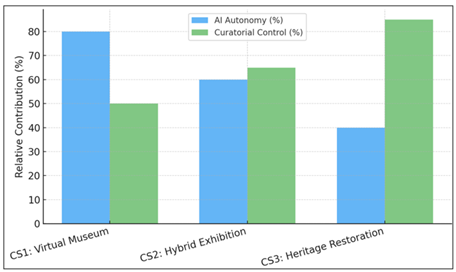
Figure 3 Human–AI Collaboration Balance Across Case Studies
Analyzing the results, it is possible to conclude that the most successful balance is reached in CS2 (Hybrid Exhibition) whereby AI autonomy is 60% and curatorial control is 65%. This model is an example of cognitive augmentation whereby the system handles computational flexibility with the curators directing cultural narrative. Conversely, CS1 is more based on automation whereas CS3 is more based on a scholarly supervision, and its emphasis on traditional values of conserving, as shown in Figure 3. The intelligent systems at an institutional level improve the efficiency of curators, visitor retention and adaptive design management tremendously. The modules of reinforcement learning simplify the optimization of layout, and feedback, based on IoT, provides an opportunity to adjust environmental parameters in real time.
Figure 4
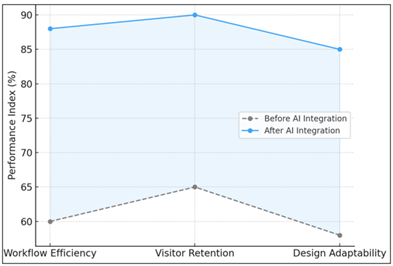
Figure 4 Managerial Impact of AI Tools On Curatorial
Operations
The operational performance increased by 30% on average and visitor retention increased by 25 percent after the integration of AI. Automated workflows also decreased the burden of work on curators, allowing them to work on conceptual and educational work as illustrated in Figure 4. The results of such studies support the managerial importance of using AI as a decision-support companion instead of a substitute of human knowledge. The ethical situation is getting more complicated as AI plays an increasingly prominent role in cultural mediation. Algorithms bias, privacy of the data, and cultural homogenization become central issues. The ethical AI curation should be transparent, safeguard visitor data, and be inclusive in data collection.
Figure 5
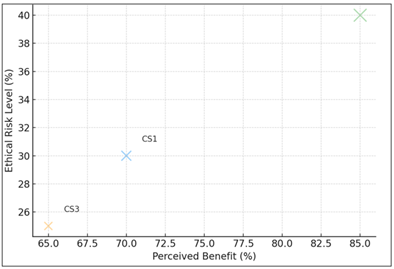
Figure 5 Illustrates the Ethical–Cultural Trade-Off Observed in
Each Case Study
The visual matrix shows thatcs2 (Hybrid Exhibition) provides the largest perceived benefits (85%), and the diversity of the audience but with moderate ethical implications because of the real-time tracking of emotions. CS1 is very efficient, but less inclusive, whereas CS3 is very ethical with compromised scalability as shown in Figure 5. This highlights the need to have clear algorithmic regulation and culturally diverse data in order to make AI-assisted curation more equitable. In all the dimensions of analysis, the data indicates that intelligent systems have the ability to enhance operational performance and cultural inclusivity when integrated into a humanistic ethics model. The fact that hybrid exhibitions have become successful means that the most sustainable model is not to replace curators with algorithms but to create collaborative intelligence an amalgamation of data-driven reasoning and an empathetic approach to storytelling. Also, the management evidence indicates new professionalizations such as AI curators, cultural technologists and digital heritage analysts, which require a multidisciplinary education in technology and aesthetics. Last but not least, the ethical discussion helps to verify that AI-based curating must become a cultural facilitator, that is, the mediator that will unite the audiences but not separate them instead with transparent, inclusive, and emotionally appealing design.
7. Conclusion and Future Work
The discussion of smart systems in digital exhibition design demonstrates a radical shift in the intersection of culture, technology, and creativity in the museum and gallery frames. Combining artificial intelligence, machine learning and immersive technologies has transformed exhibitions as a presentation that is non-interactive and governmented by the curator to one that is dynamic, adaptive, and learns and evolves with its audience. In any of the case studies, virtual, hybrid, and heritage restoration, the combination of AI analytics and human curatorial intuition showed significant enhancement of personalization, engagement, and accessibility. The research assertion proves that smart systems are not only effective hinged on their functionality but also possess a higher level of insight in the interpretation by allowing co-curation between human beings and machines. Based on behavioral data, emotion and real-time interaction analytics, exhibitions can respond to the interests of the visitors contextually and offer them a personal narrative to enable them feel more engaged to culture. Markedly, these technologies do not eliminate the creative agency of the curators and extend their capacity to generate experiences that are founded on data and empathies. Other ethical issues that must be considered as pillars to ensure inclusivity and confidence in the cultural spaces in AI would be algorithms transparency, data privacy, and cultural authenticity. The concept of emotion-sensitive storytelling models should be researched in the future, where multimodal sensing and affective computing influence the adaptive storytelling. Adopting the digital twins can possibly allow the curators to simulate visitor experiences beforehand before their implementation, which decreases the accuracy of predictive design. In addition, the development of the sustainable and low-energy systems of the exhibitions will be instrumental in the scaling of intelligent systems by the global heritage organizations. This paper puts forward intelligent exhibition design as the origin of a new mode of cultural interaction one that is human thoughtful, technically smart and ethically responsible to create living breathing spaces that accommodate diversity and rethinking the art of telling stories in the digital era.
CONFLICT OF INTERESTS
None.
ACKNOWLEDGMENTS
None.
REFERENCES
Afi, M. W., Sayono, J., and Sulistyo, W. D. (2021). Desain Media Katalog Digital Museum Airlangga Untuk Siswa Kelas X SMAN 1 Plosoklaten Kediri. Journal of Education, Humanities and Social Sciences, 4, 229–238. https://doi.org/10.34007/jehss.v4i1.635
Arrigoni, G., Schofield, T., and Trujillo Pisanty, D. (2020). Framing Collaborative Processes of Digital Transformation in Cultural Organisations: From Literary Archives to Augmented Reality. Museum Management and Curatorship, 35, 424–445. https://doi.org/10.1080/09647775.2019.1683880
Budge, K., and Alli, B. (2018). Museum Objects and Instagram: Agency and Communication in Digital Engagement. Continuum, 32, 137–150. https://doi.org/10.1080/10304312.2017.1337079
Farella, E. M., Malek, S., and Remondino, F. (2022). Colorizing the Past: Deep Learning for the Automatic Colorization of Historical Aerial Images. Journal of Imaging, 8, 269. https://doi.org/10.3390/jimaging8100269
Fiorucci, M., Khoroshiltseva, M., Pontil, M., Traviglia, A., Del Bue, A., and James, S. (2020). Machine Learning for Cultural Heritage: A Survey. Pattern Recognition Letters, 133, 102–108. https://doi.org/10.1016/j.patrec.2020.02.017
Kim, C.-S., Lee, J.-W., and Jung, H.-K. (2015). A Study on Semantic Web-Based User-Oriented Retrieval System. Journal of the Korea Institute of Information and Communication Engineering, 19, 871–876. https://doi.org/10.6109/jkiice.2015.19.4.871
Kim, K., Hur, Y., Kim, G., and Lim, H. (2020). GREG: A Global Level Relation Extraction with Knowledge Graph Embedding. Applied Sciences, 10, 1181. https://doi.org/10.3390/app10031181
Marini, C., and Deborah, A. (2022). Humanized Museums? How Digital Technologies Become Relational Tools. Museum Management and Curatorship, 37, 598–615. https://doi.org/10.1080/09647775.2021.1969677
Moral-Andrés, F., Merino-Gómez, E., Reviriego, P., and Lombardi, F. (2022). Can Artificial Intelligence Reconstruct Ancient Mosaics? Studies in Conservation, 1–14.
Nechushtai, E., and Lewis, S. C. (2019). What Kind of News Gatekeepers do we Want Machines to be? Filter Bubbles, Fragmentation, and the Normative Dimensions of Algorithmic Recommendations. Computers in Human Behavior, 90, 298–307. https://doi.org/10.1016/j.chb.2018.07.043
Schaffer, S., Ruß, A., Sasse, M. L., Schubotz, L., and Gustke, O. (2021). Questions and Answers: Important Steps to Let AI Chatbots Answer Questions in the Museum. In Proceedings of the International Conference on ArtsIT, Interactivity and Game Creation (346–358). Springer. https://doi.org/10.1007/978-3-030-95531-1_24
Stichelbaut, B., Plets, G., and Reeves, K. (2021). Towards an Inclusive Curation of WWI Heritage: Integrating Historical Aerial Photographs, Digital Museum Applications and Landscape Markers in “Flanders Fields” (Belgium). Journal of Cultural Heritage Management and Sustainable Development, 11, 344–360. https://doi.org/10.1108/JCHMSD-04-2020-0056
Taher, H. (2022). Reuse and appropriation: Remediating Digital Museum Collections and Digital Tools for a Participatory Culture in Transition. Baltic Screen Media Review, 10, 122–138. https://doi.org/10.2478/bsmr-2022-0009
Wang, H.-N., Liu, N., Zhang, Y.-Y., Feng, D.-W., Huang, F., Li, D.-S., and Zhang, Y.-M. (2020). Deep Reinforcement Learning: A Survey. Frontiers of Information Technology and Electronic Engineering, 21, 1726–1744. https://doi.org/10.1631/FITEE.1900533
Xu, Y., Liu, X., Cao, X., Cai, Z., Wang, F., and Zhang, J. (2021). Artificial Intelligence: A Powerful Paradigm for Scientific Research. The Innovation, 2, 100179. https://doi.org/10.1016/j.xinn.2021.100179
|
|
 This work is licensed under a: Creative Commons Attribution 4.0 International License
© ShodhKosh 2025. All Rights Reserved.