ShodhKosh: Journal of Visual and Performing ArtsISSN (Online): 2582-7472
|
|
AI-Enhanced Visual Editing Tools for Art Schools
Dr. Godwin Premi. M. S 1
 ,
Jagmeet Sohal 2
,
Jagmeet Sohal 2 , Sandhya L 3
 , Rashmi Manhas 4
 , Chaitrali Chaudhari
5
, Chaitrali Chaudhari
5 , Ravi Kumar 6
1 Professor,
Department of Computer Science and Engineering, Sathyabama Institute of Science
and Technology, Chennai, Tamil Nadu, India
2 Chitkara
Centre for Research and Development, Chitkara University, Himachal Pradesh,
Solan, India
3 Assistant Professor, Department of Computer Science and Engineering,
Presidency University, Bangalore, Karnataka, India
4 Assistant Professor, School of Business Management, Noida International
University, Greater Noida, Uttar Pradesh, India
5 Department of Computer Engineering, Lokmanya Tilak College of
Engineering, University of Mumbai, Maharashtra, India
6 Centre of Research Impact and Outcome, Chitkara University, Rajpura,
Punjab, India
|
|
|
ABSTRACT |
|
|
Current visual
editing tools are changing the way art is taught through the incorporation of
generative, analytical, and assistive computational analysis into studio
practice through the use of AI. The paper discusses
the effect of the diffusion networks, style-transfer systems, semantic
segmentation engines, and restorative AI workflows on the learning of art,
the development of skills, visual analysis, and exploration of concepts in
art schools. The study proves the utilization of AI tools in quick ideation,
better color and composition analysis, more available to learners with
physical and cognitive disabilities, and more intensive interaction with
stylistic experimentation. Simultaneously, the study also reveals such
ethical, cultural, and legal issues as dataset transparency, authorship,
cultural appropriation, and algorithmic bias. Four-layer integration
framework is suggested to be used to be responsible in its adoption,
including creative empowerment, skill deepening, ethical literacy, and
institutional policy. The results highlight that AI must not be used as a
replacement to the learning and practicing of basic artistic abilities but
rather as a co-creative collaborator, capable of enhancing the ability to
reflect and experiment as well as inclusive and critically informed visual
education. |
|||
|
Received 17 February 2025 Accepted 11 May 2025 Published 16 December 2025 Corresponding Author Dr.
Godwin Premi. M. S, godwin.etc@sathyabama.ac.in
DOI 10.29121/shodhkosh.v6.i2s.2025.6730 Funding: This research
received no specific grant from any funding agency in the public, commercial,
or not-for-profit sectors. Copyright: © 2025 The
Author(s). This work is licensed under a Creative Commons
Attribution 4.0 International License. With the
license CC-BY, authors retain the copyright, allowing anyone to download,
reuse, re-print, modify, distribute, and/or copy their contribution. The work
must be properly attributed to its author.
|
|||
|
Keywords: AI Visual Editing, Generative Design, Art Education,
Diffusion Models, Style Transfer, Digital Creativity, Semantic Segmentation,
Pedagogical Innovation, Cultural Ethics |
|||


1. INTRODUCTION
The terrain of art education has never stood still since the coming of the creative means, and these can be charcoal, oil paint, the printing press, the photography, and not to mention the analog film, but the digital software. With every technological change, there were new ways of creating and new concerns regarding what it is to learn, practice, and judge artistic expression. Along with creative fields, artificial intelligence has become the most powerful technology in the present-day age that redefines the creative nature. As much as the larger part of the mass media is focusing on AI-generated art, a less evident, but more pedagogically important change is taking place in visual editing software in art schools. These applications use machine-learning models in user interfaces, and enable their applications now and in the future, including automated retouching, semantic segmentation, generative fill, style transfer, intelligent color grading, and real-time composition analysis Shi et al. (2024). Changing the way students understand artistic processes, build skills, interpret visual structures, and generate creative work, their increasing influence is changing how they conceptualize these processes. The challenge that the art schools today have is how to foster human creativity in a world where a computational system can offer suggestions on style, rewrite music, and give a different interpretation of the idea of a student Park (2023). As opposed to a conventional software, which works based on fixed rules, AI-enhanced tools are adaptive in response to user intention. They are able to deduce forms, contrast aesthetic structures, and produce new visual expressions that the hand tools cannot achieve in the same amount of time. A student who used to spend hours searching through a variety of designs will be able to create a range of possibilities in a few minutes Demmer et al. (2023). It makes iterating quicker, visual experimenting more profound and make the boundary between ideation and execution more dynamic.
Figure 1
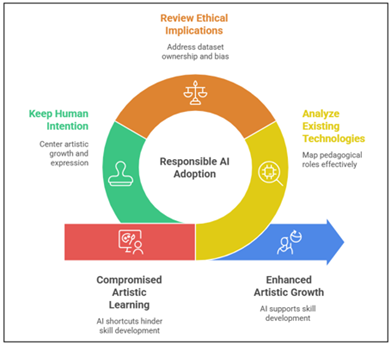
Figure 1 Responsible Integration Framework for AI in Art
Schools
Nevertheless, the swift development of AI-based editing domains has also contributed to the increased discussions related to authenticity, authorship, originality, and learning integrity. Art teachers fear that students will avoid acquiring the underlying competencies or over use AI advancements without having to develop their own purposeful choices as shown in Figure 1. Ethical issues are evaluated: in case an AI model is trained on copyrighted and culturally insensitive or stylistically recognizable art against its owners, the results can replicate the problematic patterns Zhang et al. (2021). These issues are pedagogically important in the fields where the importance of the visual heritage and cultural contexts is paramount. In such a way, the study aims to examine the multidimensionality of the AI-enhancing visual editing tools within the modern art-school ecosystem. Instead of seeing AI as an alternative to conventional skill-building, the paper explores the idea of AI being used as a stimulus to more profound thinking, increased experimentation, and more open learning endeavors Zhang et al. (2024). The analysis brings together the findings of the studies in the field of AI and digital art pedagogy, cognitive theory of learning, and the theory of visual culture. It is not just the tools of AI as it places it in the role of co-creative agent that influences the way students think about visual possibilities and define meaning and negotiate their own artistic identity. The primary purpose of this paper is to explore the ways in which art schools can be responsible, ethical and creative in incorporating AI-enhanced systems of editing. It is claimed in the paper that AI tools can be effectively used to support visual literacy, activate critical thinking, build concepts, and expand access to learners at different levels Xie et al. (2024). They have the ability to democratize high end editing practices, and to lessen the barriers that used to restrain involvement in high end visual practices. Nevertheless, these advantages demand designed pedagogical systems that focus on deliberateness rather than automaticity, ethical consciousness rather than mindless following, and critical rather than passive consumption Hitsuwari et al. (2023).
The introduction has thus positioned AI-enhanced editing tools as a potential source of interest and a challenge to be examined further in the technological context of its basis, the teaching and learning ramifications, the ethical issues arising around it, and the future directions of research. The following sections contain a comprehensive literature review of AI-art literature, human-computer creativity literature, educational technology literature, and visual pedagogy Lawan et al. (2023). It is then followed by the in-depth description of the AI technologies behind modern editing systems, discussion of the pedagogical changes, the suggested model of integration of art schools, and the analysis of the case studies where AI technologies are already transforming the creative practice. In the end, the paper emphasizes the research, policy, and curriculum design directions in the future as art schools keep changing to fit the more algorithmic visual environment Imus and Young (2023).
2. Literature Review
Fusion of Artificial Intelligence and creativity has developed through primitive systems on rules to modern deep-learning frameworks capable of acquiring aesthetic patterns, creating images and enriching human design choices. The early research on computational creativity has focused on the fact that creativity is not merely characterized in terms of the capacity to generate new results but in the way that human intent, cultural context, and the amazingness of technology interact Vargas et al. (2023). The neural networks have allowed modeling visual structures and artistic styles on a level never before seen and make digital tools not a passive tool, but a collaborator. This is the conceptual change that a tool is a collaborator, and this is the core of the concept to comprehend the impact of AI-enhanced visual editing on the learning of art. The work of GAN-based researchers has proven that neural networks can absorb the nuances of style and create coherent visual modifications of a particular work of art. Diffusion models have also significantly forwarded the research by embracing the fine-grained texture and space relationship Vargas et al. (2023). Research has shown that creative divergence, broader ideation channels, and creative approaches in artists may be stimulated by the exposure to AI-generated alternatives, which may in turn prompt artists to clarify their conceptual thinking processes. Nevertheless, researchers also note that AI generated novelty can conceal more profound mechanisms of artistic revelation and meaning-making, which cannot be removed and are based on human agency Horanyi et al. (2022).
2.1. AI Tools in Art and Design Education
There are a lot of digital tools that have been involved in the process of art education, however, with AI-driven tools, there are new dynamics. Study of design pedagogy demonstrates that intelligent assistance can increase learning rate by offering visual feedback that is compatible with the mental processes, which are involved in the act of making artistic decisions Zhu et al. (2022). Through research on augmented reality, digital drawing aids and visual-analysis software, it is revealed that students are advantaged by the use of instant corrective feedback, improved visualization of abstract ideas, and the ability to experiment quickly. These results imply that AI-based editing software could become a learning tool in the form of the scaffold to visual literacy development allowing the students to internalize composition, contrast, form, and color principles.
Table 1
|
Table 1 Overview of Core AI Technologies Used in Visual Editing Tools |
|||
|
AI
Technology |
Primary
Function in Editing |
How
Students Benefit |
Pedagogical
Value |
|
Diffusion
Models |
Remove
noise, reconstruct structure, generate new visual content through iterative
refinement. Shu et al. (2022) |
Students
obtain multiple composition variations instantly, test creative hypotheses,
and explore alternate visual worlds. |
Encourages
divergent thinking, visual experimentation, and conceptual prototyping. |
|
Semantic Segmentation
Networks |
Identify and isolate regions
such as sky, skin, foliage, architecture, or fabric. |
Students modify specific
elements without affecting the entire artwork, enabling precise corrections. |
Helps students understand
form, hierarchy, and spatial relationships in composition. |
|
Style
Transfer Models |
Apply
stylistic features—color palettes, stroke textures,
contrast patterns—from one artwork to another. Zhang et al. (2020) |
Students
explore cross-cultural aesthetics and understand stylistic lineage. |
Supports
analysis of art history, artistic style, and comparative visual studies. |
|
Generative Fill and In painting |
Predict missing visual
content and reconstruct plausible elements such as backgrounds or objects. |
Helps students explore
narrative expansion and visual storytelling. |
Strengthens conceptual
development and understanding of scene continuity. |
|
Super-Resolution
and Denoising |
Enhance
low-quality images while preserving detail and texture. |
Students
working with sketches, historical material, or low-res scans can refine
images easily. |
Improves
visual clarity for critique, documentation, and portfolio building. |
Empirical literature, however, is a source of concern with regard to tool dependency. When aesthetic decisions are reached automatically by algorithms, students might avoid the slow and deliberate processes that are important to the formation of the artistic identity. According to researchers, the digital learning environment needs to focus on critical interpretation, deconstruction, and deliberate application of AI recommendations to avoid some superficial results.
2.2. Ethical, Cultural, and Legal Debates
The democratization of AI The democratization of AI tools has ignited the world debate on copyright, cultural appropriation, the visibility of datasets, bias in algorithms, and the ownership of works created collectively. According to the scholars, the issue of art education should be raised in detail. The artificial intelligence systems are usually trained on large collections of artworks collected online, most of which belong to marginalized communities or safeguarded visual cultures. By having such imagery internalized against their will, models run the risk of recreating stylistic elements that are part and parcel of certain cultural groups. Research conducted on the Indigenous visual knowledge cautions that AI can accidentally pervert religious icons or digitize them into an online product. The ambiguity is another aspect that copyright researchers have observed with regards to the AI-modified works that casts a question on the authorship and moral rights.
3. Technology Foundations of AI-Enhanced Visual Editing
AI-powered visual editing tools are powered by deep learning models, which can perceive, create, and manipulate images in a manner that is beyond the reasoning of conventional digital editing. To process these systems, it is important to analyze the computational background that allows semantic awareness, style synthesis, content generation and structurally coherent manipulation of visual materials. The fundamental basis of the majority of modern editing systems is convolutional neural networks (CNNs), Vision Transformer (ViTs), Generative Adversarial Networks (GANs), and diffusion models. The interaction of these aspects makes the editing environment adaptive, semi-autonomous co-creative space, which can react to an intention on the part of the user.
Table 2
|
Table 2 Comparison of Popular AI-Enhanced Visual Editing Tools Used in Art Education |
||||
|
Tool
/ Platform |
Core
AI Features |
Strengths
for Art Schools |
Limitations
/ Risks |
Best
Fit for Courses |
|
Adobe
Photoshop (AI Generative Fill, Neural Filters) |
Generative
fill, style transfer, face-aware editing, background synthesis, object
removal. |
Industry-standard,
reliable quality, good for digital painting, photography, and hybrid
workflows. |
High
automation risks skill bypass; subscription cost may
limit classroom adoption. |
Digital
imaging, photography, illustration, concept art. |
|
Procreate + AI Plugins |
Gesture-aware smart
selection, AI-driven color harmony tools, generative reference shapes. |
Intuitive for beginners;
supports tablet-based sketching; ideal for foundation-level students. |
Limited advanced AI; models
dependent on third-party plugins. |
Drawing, foundations,
illustration, visual journaling. |
|
Krita
(Open-Source + AI Extensions) |
Style
transfer, super-resolution, stroke prediction, segmentation models. |
Free
and modifiable; excellent for experimental pedagogy; accessible to low-income
classrooms. |
Inconsistent
AI plugin stability; requires technical setup. |
Experimental
art, digital painting, open-source art labs. |
|
RunwayML |
Text-to-image generation,
green-screen AI, motion tracking, diffusion models. |
Ideal for multimedia,
animation, and hybrid storytelling; highly visual interface. |
Overgeneration can overwhelm
beginners; cloud-based limits offline learning. |
New media art, video
editing, digital storytelling. |
|
Canva
AI (Magic Edit, Magic Erase) |
Quick
generative edit features for simple visual tasks. |
Extremely
accessible; fast for prototyping; ideal for first-year design students. |
Shallow
depth; limited control; less suitable for advanced art practice. |
Visual
communication, design foundations, layout experimentation. |
The development of diffusion models has become the new leader in generative editing because they can create images by rebuilding them with the help of multiple denoising stages that can progressively increase the visual structure. Their refinement enables them to have a fine control over the image features hence they are highly suitable to inpainting, outpainting and generative fill tasks. It has the advantage that a student may extract an object out of an image, and ask the model to recreate the missing part of the image by contextually consistent detail-trees, buildings, shadows, clouds- he or she does not even have to know the complicated mathematics underlying texture synthesis or shading. They are based mainly on CNN based architecture such as U-Net, DeepLabV3+ or HRNet, with transformer modules enhancing global attention. Used with visual editing programs, segmentation enables students to identify specific parts of a piece of art with virtually perfect accuracy. Recoloring, relighting, or structural transformation can be more intuitively done as the system already knows where the object edges are even in cases where the human eye cannot easily define the edges.
Figure 2
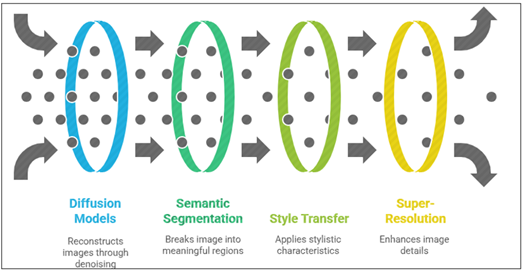
Figure 2 AI-Enhanced Visual Editing Workflow in Art Schools
Another technology, which is essential in education-based tools, is the AI-enhanced style transfer illustrated in Figure 2. Initial versions were based on Gram-matrix optimization to find a match between content and style image texture statistics but modern systems are built on encoder-decoder designs trained on large sets of art. This enables a close to instantaneous exchange of stylistic traits- brushstroke patterns, tonal palette, compositional rhythms and texture semantics. Students are able to explore other stylistic paths in the studio and do not have to recreate every variant of it manually, allowing a better interaction with artistic traditions and cross-cultural visual languages.
4. Pedagogical Implications in Art Education
The implication of AI-enhanced editing tools is transforming art education in a fundamental manner since they change the cognitive, experiential and social aspects of studio practice. Conventional pedagogy of art focused on the processes of observation, repetition, criticism, and the development of the manual skills. These processes do not become unnecessary with the help of AI tools, but they are modified to make them faster and increase the number of possibilities at each point of the creative cycle. Among the most important pedagogical implications, there is the change of the linear workflow to the branching one. In the past students used to create artworks by making small changes: sketch, refine, adjust, finish. The AI tools interfere with this linearity by providing the possibility to quickly explore a variety of variations at the same time.
Figure 3
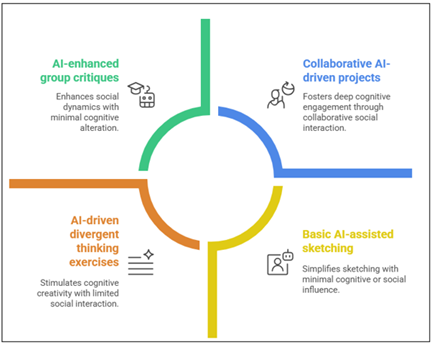
Figure 3 Impact of AI Pedagogy to Art Education
A student is able to study contrast color scheme, experiment with various compositional balances, or study various treatments of atmospheres in a few minutes. This thinking branch fosters divergent thinking; cognitive skill that is closely linked to creativity. It makes the students doubt premature assumptions, contrast aesthetic results, and develop the visual curiosity. Formative feedbacks are also improved with the help of AI tools. Visual editing tools currently offer automatic recommendations on composition balance, color harmony, tonal balance or perspective balance. These insights are similar to aspects of conventional criticism but they work in real time and in real time, thus allowing students to think about visual choices as they create and not after they creatively complete it. In combination with instructor guidance, such systems foster metacognitive awareness which enables students to express their artistic intent and be more critical towards their decision as shown in Figure 3.
The development of skills is influenced complicatedly. On the one hand, AI removes technical obstacles to inexperienced users by providing automated refinements to make initial experiments more valuable. Those students, who have a problem with drawing precision or working with pictures in digital form, can develop compositional or conceptual thoughts without frustration. This fosters a sense of security and promotes the involvement of students of different abilities or physical impairments. Conversely, students will be at risk of being overly dependent on software recommendations, and they will skip the slow, physical learning processes of learning the basic skills. Teachers will have to position AI tools as tools of analysis, and not ones that replace human handiwork, to the extent that students consider the rationale behind specific amendments, as opposed to assuming that they are right. The AI-augmented studio also develops through collaborative learning. Students tend to compare AI generated variations, and argue about the logics of interpretation of the algorithms and generally ask questions about how machine intelligences form visual meaning. This creates a culture of inquiry in the classroom as opposed to software output obedience. In addition, AI tools generate novel cross-disciplinary working possibilities among the students of art, technologists, and cultural theorists. With the visual editing becoming entangled with computational processes, it brings an understanding of how digital cultures determine aesthetic norms, ethical discussions, and artistic trends of the contemporary world.
5. Proposed Framework for Responsible AI Integration
This study will suggest a detailed four-layers model according to which art schools can incorporate AI-enhanced editing software without jeopardizing artistic integrity and ethics and without diminishing criticism and creativity. The first stratum is the Creative Empowerment that places AI as an enhancer of exploration, but not an artworks generator. AI is promoted to students to be used in ideation, variation, analysis, and speculative experimentation. The tasks are more process-oriented than product-oriented and require students to reflect on their reasons behind the selection of specific AI-generated results and how they reflect their conceptual intentions.
Figure 4
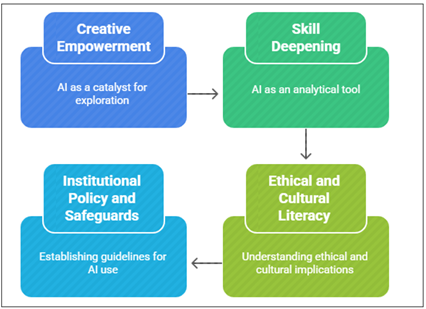
Figure 4 Human–AI Co-Creation Cycle in Artistic Learning
The second tier is Skill Deepening that involves AI-generated proposals being analytic should they assist students in perceiving visual principles. As opposed to accepting an AI-corrected composition as the better one, students put it side by side with their own and explain why the balance as described in Figure 4, or color contrast, or perspective changed. This kind of reflexivity will make AI not eclipse basic learning. The third tier is the Ethical and Cultural Literacy layer that integrates a discussion of the dataset transparency, copyright, appropriation, and algorithmic bias into the curriculum. Students also know how to interrogate the sources of the training data, recognize cultural sensitivities, and assess socio-technical circumstances that are defining their AI editing tools. This layer makes the students responsible designers who realize that visual editing exists in larger cultural ecosystems. The fourth layer is the Institutional Policy and Safeguards that contains the attribution, acceptable use, dataset compliance, and disclosure guidelines. Art schools need to come up with explicit policies on how AI-generated work should be attributed, how learners can submit AI-assisted works and how any issues regarding ethical misappropriation will be resolved. All of these four layers would assure that the integration of AI does not weaken but enhances the artistic capability, cultural accountability, and creative agency of the pupils.
6. Case Studies from Contemporary Practice
In order to see what AI-enhanced visual editing means in practice, this section analyzes the case studies that represent art institutions and creative studios that used such tools in the practice. These are some of the ways students, school professors, and artists negotiate the possibilities and contradictions brought about by AI-based editing spaces. In one of the most prestigious art academies in Europe, there was an introduction of AI tools in a course of drawing and composition. The diffusion-model-based generative fill was used by students who needed to consider other options of backgrounds to use on their sketches. The tool reinforced the culture of critique, contrary to undermining the drawing skill. Compared to the AI-generated options, students found structural flaws in their own manually made compositions, which led them to the conclusion of the structural weaknesses in their drawings. The tool transformed into an analytical reflection and not a shortcut.
Table 3
|
Table 3 Case Study Summary: Integration of AI Editing Tools in Art Schools |
||||
|
Institution
/ Region |
Integration
Approach |
Observed
Benefits |
Challenges
Reported |
Educational
Insights |
|
European
Fine Arts Academy |
AI
generative fill used in drawing and composition
studio. |
Students
compared AI variations with manual sketches, improving structural awareness. |
Students
tempted to “accept” AI’s choices without critique. |
Introduce
AI outputs as discussion prompts, not authoritative solutions. |
|
Asian Digital Arts Institute |
Multimodal AI tools used for
converting hand-drawn comics to full-color scenes. |
Greater engagement, faster
prototyping, deeper narrative exploration. |
Style-transfer occasionally
distorted character identity. |
Teach students to re-edit AI
outputs to maintain narrative coherence. |
|
North
American Art School |
AI
segmentation tools used for accessibility support in foundations. |
Neurodiverse
and motor-limited students gained confidence and creative freedom. |
Need
for AI interfaces tailored to accessibility. |
AI
can democratize creative participation when paired with inclusive pedagogy. |
|
South American Design Studio
Partnership |
AI used for collaborative
urban visual design projects. |
Students tested hundreds of
layout variations; increased critical discussion. |
Some dependence on automated
color schemes. |
Encourage students to
justify choices over multiple AI-generated options. |
Another example is a project by one of the Asian digital arts institutes in which students used multimodal editing software to render hand-drawn comics into fully digitized scenes. The colorization, texture, and lighting were left to AI models, although instructors would want students to comment on the visual choices that the algorithm performs. The project prioritized human control where students were encouraged to edit AI-generated contents to suit their narrative purposes.
Figure 5
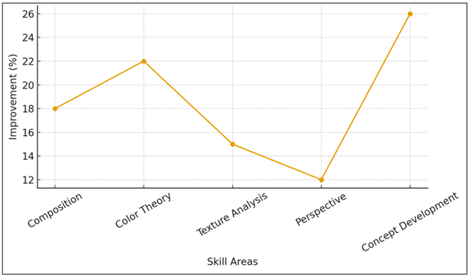
Figure 5 Skill Improvement Metrics after AI Integration
The line chart that indicates skill improvement indices following adoption of AI indicates that AI-enhanced tools make different contributions to different areas of artistic development. The most significant enhancement of this is Concept Development (26%), which means that generative AI contributes to enabling students to explore ideas, visual directions, and think divergently significantly. This coincides with the pedagogical argument, which states that AI expands the ideation space by supplying a variety of options and requiring students to further develop their conceptual thinking. There is also a significant increase in Color Theory (22%), which implies that automated palette suggestions, harmonic analysis, and real-time changes in AI allow students to have a better intuitive grasp of color relationships. Smaller yet significant improvements are observed in Composition (18% and Texture Analysis (15%), since segmentation tools, compositional hints, and texture-generative networks enable more learners to more clearly visualize structural relationships and play around with surface detail as shown in Figure 5. The slightest amelioration is in Perspective (12%), indicating that basic spatial memory is still primarily dependent on hand-performing and eye-observing tasks. Taken together, the chart can be used to prove that the strongest pedagogical contribution of AI is the one in the areas that entail conceptualizing, experimenting with styles, and providing visual feedback on analysis, rather than technical proficiency of drawing. One school of North American art applied AI-enhanced editing to help neurodiversity students. Digital manipulations were beyond the abilities of some students with motor difficulties, but with the help of AI-based segmentation and generative components, they were able to convey ideas more freely. Their tasks were devoted to conceptual experimentation, and not to technical accuracy, which proves the idea of using AI to democratize the process of participating in visual practice.
Figure 6
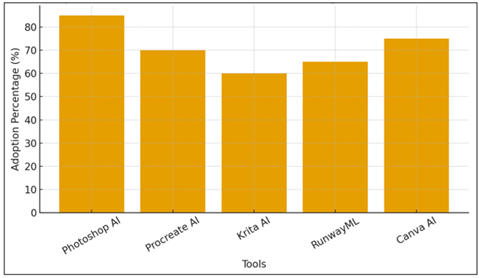
Figure 6 Adoption Rates of AI-Enhanced Visual Editing Tools
Figure, which reflects the rates of adoption of AI-supported visual editing tools by art schools offers a good insight into how educational institutions are introducing the concept of algorithmic creativity into their educational programs. Photoshop AI adoption is the highest (85 percent), owing to its position as an industry-standard application over time, and the confidence of educators in its reliability, versatility, and applicability as a professional application. Since Photoshop integrates extreme AI capabilities like generative fill, neural filters and automatic masking, it inevitably becomes the leader in the programs that are dedicated to digital imaging, concept art, and visual communication. Strong presence is also demonstrated by Canva AI (75%), Procreate AI (70%), which indicates that ease of use and accessibility are important factors in the process of institutional decision-making. The tools are especially popular in first-year classes, interdisciplinary design, and courses where portability of devices is required as shown in Figure 6. The moderate usage of Runwayml (65) and Krita AI (60) suggests that there is an upward trend in the use of open-source or experimental AI processes, particularly in animation, multimedia storytelling, and digital painting tracks. All in all, the data indicates that art schools are inclined to choose a mixed ecosystem of AI-based tools, balance between the professional-level systems and the ones that are available and can be utilized to promote innovative thinking and inclusive educational experiences. All these case studies reveal that AI-supported editing tools have the potential to enhance conceptual learning, increase accessibility, as well as enhance criticism, although the essence of art education values remains intact, when human intentionality is prioritized.
7. Conclusion and Future Directions
Artificial intelligence (AI)-enhanced image editing solutions symbolize a revolutionary introduction to the system of art education. They transform the creative processes, speed up the ideation process, increase experimentation, and improve visual analysis. However, they also present complicated pedagogical, ethical, legal, and cultural issues, which have to be handled cautiously. This paper has suggested that AI use in art schools should be under direction by purposeful frameworks that will preserve artistic autonomy, critical thinking, and cultural sensitivity. The potential effect of AI in the acquisition of foundational skills in the long-term should be also explored in further research to determine whether students operating intelligent editing systems acquire a different kind of visual reasoning. There is also a lack of studies in the area of culturally appropriated dataset governance, transparency of various models, and the role of AI in the formation of global visual cultures. With increasingly personalized models, where students are training systems on their own portfolios, new issues of creative identity and co-authorship will arise. The art schools are at the verge of a hybrid creative era as human and machine intelligence will keep coming together. AI-advanced editing tools can add to the editing experience and not destroy it with careful design, and continue to generate an artist who is not only technically empowered but also critically conscious.
CONFLICT OF INTERESTS
None.
ACKNOWLEDGMENTS
None.
REFERENCES
Demmer, T. R., Kühnapfel, C., Fingerhut, J., and Pelowski, M. (2023). Does an Emotional Connection to Art Really Require a Human Artist? Emotion and Intentionality Responses to AI- Versus Human-Created Art and Impact on Aesthetic Experience. Computers in Human Behavior, 148, 107875. https://doi.org/10.1016/j.chb.2023.107875
Hitsuwari, J., Ueda, Y., Yun, W., and Nomura, M. (2023). Does Human–AI Collaboration Lead to More Creative Art? Aesthetic Evaluation of Human-Made and AI-Generated Haiku Poetry. Computers in Human Behavior, 139, 107502. https://doi.org/10.1016/j.chb.2022.107502
Horanyi, N., Xia, K., Yi, K. M., Bojja, A. K., Leonardis, A., and Chang, H. J. (2022). Repurposing Existing Deep Networks for Caption and Aesthetic-Guided Image Cropping. Pattern Recognition, 126, 108485. https://doi.org/10.1016/j.patcog.2021.108485
Imus, S. D., and Young, J. (2023). Aesthetic mutuality: A Mechanism of Change in the Creative Arts Therapies as Applied to Dance/Movement Therapy. The Arts in Psychotherapy, 83, 102022. https://doi.org/10.1016/j.aip.2023.102022
Lawan, A. A., Muhammad, B. R., Tahir, A. M., Yarima, K. I., Zakari, A., Abdullahi, I. I. A. H., Hussaini, A., Kademi, H. I., Danlami, A. A., and Sani, M. A. (2023). Modified Flipped Learning as an Approach to Mitigate the Adverse Effects of Generative Artificial Intelligence on Education. Education Journal, 12(4), 136–143.
Park, Y. S. (2023). A Study of Co-Creativity Triggered by Human–Ai Interactivity. Journal of the Korean Society of Media Arts, 21, 45–64. https://doi.org/10.14728/KCP.2023.21.03.045
Shi, T., Chen, C., Li, X., and Hao, A. (2024). Semantic and Style Based Multiple Reference Learning for Artistic and General Image Aesthetic Assessment. Neurocomputing, 582, 127434. https://doi.org/10.1016/j.neucom.2024.127434
Shu, Y., Li, Q., Liu, L., and Xu, G. (2022). Privileged Multi-Task Learning for Attribute-Aware Aesthetic Assessment. Pattern Recognition, 132, 108921. https://doi.org/10.1016/j.patcog.2022.108921
Vargas, V. M., Gutiérrez, P. A., Rosati, R., Romeo, L., Frontoni, E., and Hervás-Martínez, C. (2023). Deep Learning Based Hierarchical Classifier for Weapon Stock Aesthetic Quality Control Assessment. Computers in Industry, 144, 103786. https://doi.org/10.1016/j.compind.2022.103786
Xie, J., Yu, M., and Liu, G. (2024). Fusing Algorithms for Intersection of Computer Science and Art: Innovations in Generative Art and Interactive Digital Installations. IEEE Access, 12, 173255–173267. https://doi.org/10.1109/ACCESS.2024.3488398
Zhang, J., Miao, Y., and Yu, J. (2021). A Comprehensive Survey on Computational Aesthetic Evaluation of Visual Art Images: Metrics and Challenges. IEEE Access, 9, 77164–77187. https://doi.org/10.1109/ACCESS.2021.3083075
Zhang, J., Miao, Y., Zhang, J., and Yu, J. (2020). Inkthetics: A Comprehensive Computational Model for Aesthetic Evaluation of Chinese Ink Paintings. IEEE Access, 8, 225857–225871. https://doi.org/10.1109/ACCESS.2020.3044573
Zhang, Y., Wang, M., He, J., Li, N., Zhou, Y., Huang, H., Cai, D., and Yin, M. (2024). AestheNet: Revolutionizing Aesthetic Perception Diagnosis in Education with Hybrid Deep Nets. IEEE Transactions on Learning Technologies, 17, 2063–2075. https://doi.org/10.1109/TLT.2024.3405966
Zhu, H., Zhou, Y., Li, Q., and Shao, Z. (2022). Personality Modeling from Image Aesthetic Attribute-Aware Graph Representation Learning. Journal of Visual Communication and Image Representation, 89, 103675. https://doi.org/10.1016/j.jvcir.2022.103675
|
|
 This work is licensed under a: Creative Commons Attribution 4.0 International License
© ShodhKosh 2025. All Rights Reserved.