ShodhKosh: Journal of Visual and Performing ArtsISSN (Online): 2582-7472
|
|
AI-Enhanced Animation Techniques for Art Education
Dr. Vikrant Nangare
1 , Anchal Gupta 2
 , Dr. Umakanth. S 3
 , Dr. Pratik Mungekar
4
, Dr. Pratik Mungekar
4 , Bharat Bhushan 5
 , Dr. Sanna Mehraj Kak 6
 ,
,
1 Assistant
Professor, Bharati Vidyapeeth (Deemed to Be University), Institute of Management
and Entrepreneurship Development, Pune, India
2 Centre
of Research Impact and Outcome, Chitkara University, Rajpura, Punjab, India
3 Professor, Department of Management Studies, JAIN (Deemed-to-be University),
Bengaluru, Karnataka, India
4 Director, Research Innovation and Internationalization, Sharda
Education Society Thane, Affiliated to University of Mumbai, Mumbai, India
5 Chitkara Centre for Research and Development, Chitkara University,
Himachal Pradesh, Solan, India
6 Assistant Professor, Department of Computer Science and Engineering (AI),
Noida Institute of Engineering and Technology, Greater Noida, Uttar Pradesh,
India
|
|
|
ABSTRACT |
|
|
The
introduction of Artificial Intelligence (AI) into creative education has
redefined the pedagogic environment, and provides
new tools that make the artistic world more expressive and learning more
productive. The paper will discuss how AI-enhanced methods of animation can
be applied to art education and why they have the potential to enhance
creativity, simplify the process of production, and help to generate a
personalized learning experience. Even though traditional animation is part
of the training of the artist, it requires a lot of manual labor and
technical knowledge. The emergence of AI-based animation tools, including
generative text-to-video models, motion synthesis models, and automatic
rendering engines has opened up more creative
production access through democratization. This research is based on a
mixed-method study, which involves the analysis of the pedagogical
advantages, practical issues, and implementation patterns of AI-assisted
animation in the classroom through the use of art
educators, students, and academic institutions. Thematic and comparative
analysis is used to analyze data obtained after interviews, surveys, and
digital experiment in order to
assess the student engagement, learning and developing skills, and artistic
creativity. The results indicate that the implementation of AI improves
visual narration, conceptual comprehension, and interdisciplinary
cooperation. |
|||
|
Received 19 February 2025 Accepted 13 May 2025 Published 16 December 2025 Corresponding Author Dr.
Vikrant Nangare, vikrant.nangarepatil@gmail.com DOI 10.29121/shodhkosh.v6.i2s.2025.6702 Funding: This research
received no specific grant from any funding agency in the public, commercial,
or not-for-profit sectors. Copyright: © 2025 The
Author(s). This work is licensed under a Creative Commons
Attribution 4.0 International License. With the
license CC-BY, authors retain the copyright, allowing anyone to download,
reuse, re-print, modify, distribute, and/or copy their contribution. The work
must be properly attributed to its author.
|
|||
|
Keywords: Artificial Intelligence, Animation, Art Education,
Generative Design, Creative Pedagogy, Digital Learning |
|||


1. INTRODUCTION
1.1. Background of Artificial Intelligence in Creative Fields
Artificial Intelligence (AI) has become a game changer in the creative sectors, and it has altered the way in which art, design, and media is conceived, created, and distributed. Although originally based on computational algorithms and data analysis, AI capabilities have now been expanded to include visual arts, music composition, animation and storytelling, among the traditional realms of human imagination. The AI can now interpret artistic styles, create original music, and even recreate intricate human emotions using digital media now that deep learning and neural networks have become a reality. Computer-generated content with a mixture of aesthetic intuition and computational accuracy has been made possible by such tools as generative adversarial networks (GANs), diffusion models, and natural language processing. In animation, AI is used to automate motion capture, character creation, and scenery layout, which saves on production time and increases the potential of creativity Walczak, K., and Cellary, W. (2023). Challenges for Higher Education in the Era of Widespread Access to Generative AI. Economics and Business Review, 9(2), 71–100.. In addition to automation, AI is also a collaborative partner that provides artists with possibilities of rethinking ideas and experimenting with visual narratives. The emergence of machine intelligent solutions like DALL•E, Runway ML and DeepMotion shows how machine intelligence can complement human imagination by filling in the ambiguity in technical complexity to an intuitive design. This integration of art and technology explains a shift in paradigm of creative education and practice Kalniņa, D., Nīmante, D., and Baranova, S. (2024). Artificial Intelligence for Higher Education: Benefits and Challenges for Pre-Service Teachers. Frontiers in Education, 9, Article 1501819..
1.2. Importance of Animation in Art Education
Animation plays a crucial role in an art education since it is a dynamic form of art that combines storytelling, motion design, and creative representation. In comparison to the static form of art, animation makes ideas work in motion, which allows the learners to discover the topics of rhythm, timing, and change, which are fundamental concepts of art and design. It gives the connection between traditional art, i.e. drawing and sculpture, and the contemporary digital media and builds up a complete comprehension of the art processes.
Figure 1

Figure 1 Conceptual Framework of Animation Importance and
Study Scope
Animation in art education promotes experimentation, problem-solving and building stories, which are necessary skills in the development of visual literacy and artistic self-confidence. The significance of animation is also displayed in Figure 1, according to the scope of the study. Moreover, it enables students to depict abstract images, emotions, and concepts in a manner that cannot be perceived using the stationary pictures. The use of animation projects in the curriculum will allow the educators to foster engagement and collaboration among the students and encourage cross-disciplinary learning by linking art to the aspects of technology, science and communication Alotaibi, N. S. (2024). The Impact of AI and LMS Integration on the Future of Higher Education: Opportunities, Challenges, and Strategies for Transformation. Sustainability, 16, Article 10357.. Along with the emergence of digital tools, animation also emerged as a creative way to express oneself creatively, no matter what the level of skills is. The software, such as Blender, Adobe Animate, and Toon Boom Harmony, enables students to create professional-level work and develop artistic and technical skills Hutson, J., and Lang, M. (2023). Content Creation or Interpolation: AI Generative Digital art in the Classroom. Metaverse, 4, Article 13..
1.3. Purpose and Scope of the Study
The main aim of this research work is to examine the application of AI-enhanced animation techniques in art education focusing on the role of artificial intelligence in enhancing creative learning and pedagogy practices. With the trend of embracing digital technologies in the education systems, the necessity to learn about the ways in which AI can be applied to enhance artistic expression instead of replacing it increases Xu, B., and Jiang, J. (2022). Exploitation for Multimedia Asian Information Processing and Artificial Intelligence-Based Art Design and Teaching in Colleges. ACM Transactions on Asian and Low-Resource Language Information Processing, 21, Article 114.. This research paper will examine the practical, technical and psychological aspects of applying AI-based animation applications, including generative text-video systems, motion synthesis applications and automated rendering platforms, to art classes. The study examines the impact of these technologies on student interaction, innovation, and academic performance and the experience of teachers working in AI-mediated learning conditions. The study area will include the institutions of art, teachers, and learners enrolled in animation and digital art courses Ivanov, S., and Soliman, M. (2023). Game of Algorithms: ChatGPT Implications for the Future of Tourism Education and Research. Journal of Tourism Futures, 9, 214–221.. It discusses multiple concepts of teaching models that involve AI technologies and considers their progress in terms of the empirical data and qualitative analysis. Also, the work touches upon the issues and ethical concerns related to AI in creative education, including originality, authorship and reliance on the automation Lacey, M. M., and Smith, D. P. (2023). Teaching and Assessment of the Future Today: Higher Education and AI. Microbiology Australia, 44, 124–126.. This study can help to understand the role of the creative process with the use of AI-based tools in animation better through the strategies outlined to implement these tools in art classes, without interfering with the value and artistry of human work.
2. Literature Review
2.1. Overview of Traditional Animation Techniques in Education
In the learning institution, the conventional forms of animation have always been the basis of visual narrative and the art teaching. These practices were based on the method of hand-drawn, stop-motion and cel animation with the aim of developing observational skills, timing, and visual rhythm which are the major concepts in art education Cao, Y., Li, S., Liu, Y., Yan, Z., Dai, Y., Yu, P. S., and Sun, L. (2023). A Comprehensive Survey of AI-Generated Content (AIGC): A History of Generative AI from GAN to ChatGPT. arXiv Preprint arXiv:2303.04226.. Animation before the digital age involved the use of labor intensive methods to create animations through sequential drawings, photographic layering, and manual editing and taught students patience, discipline and attention to detail. Traditional animation fosters critical thought in the classroom by helping learners to perceive movement and emotion of the still scenes. Furthermore, it offers a concrete linkage with the artisanal artisanship that strengthens the importance of the manual dexterity and the problem-solving creativity O’Dea, X. (2024). Generative AI: Is it a Paradigm Shift for Higher Education? Studies in Higher Education, 49, 811–816.. Traditional animation projects have been used historically to teach the concepts of form, movement, and composition, as well as, to improve storytelling skills in educators. Although technology has advanced, these old methods are still an essential part of the study of the basic aesthetics and mechanics of animation.
2.2. Evolution of AI Tools in Digital Art and Design
The development of the Artificial Intelligence (AI) tools in the arts and design have reinvented the creative production, changing the artistic practice and pedagogy. At first, AI applications were only designed to deal with algorithmic design and procedural modeling, providing computational assistance of repetitive or technical processes. As machine learning and neural networks have improved, though, AI has developed to creative collaboration, where machines can analyze, create, and read visual content independently Pataranutaporn, P., Danry, V., Leong, J., Punpongsanon, P., Novy, D., Maes, P., and Sra, M. (2021). AI-Generated Characters for Supporting Personalized Learning and Well-Being. Nature Machine Intelligence, 3, 1013–1022.. Recent AI applications like diffusion models, or generative adversarial networks (GANs), or transformer-based models can generate original artwork, lifelike textures, motion sequences, even narrative elements of a text or image prompt. Midjourney, DALL•E, Runway ML and DeepMotion are examples of this development, and they allow artists to imagine and bring to life complex concepts in a very short amount of time. These systems examine large masses of visual representations, stylistic subtleties, and the syntheses of the results are a combination of artistic will and algorithmic intelligence. Such tools are used in design education to offer new frames of exploration and experimentation in which students can concentrate on creativity and depth of idea instead of narrow technical performance Dehouche, N., and Dehouche, K. (2023). What’s in a Text-to-Image Prompt? The Potential of Stable Diffusion in Visual Arts Education. Heliyon, 9, e16757.. The availability of AI-powered platforms has brought democratization in design education by reducing the technical barrier to education and promoting interdisciplinary education.
2.3. Previous Studies on AI Integration in Art Pedagogy
The current studies of AI implementation in the art education area note that AI integration in art education offers both a transformative opportunity and a pedagogical problem of introducing smart technologies into the creative learning process. It has been established in various researches that AI can be used to increase student engagement through interactive and adaptive learning opportunities that can accommodate different artistic skills. To illustrate, in digital art classrooms, AI-driven feedback functions can be used to help learners work on their composition, color schemes, motion dynamics, and other elements; therefore, it is possible to enhance the acquisition of skills much faster Sullivan, M., Kelly, A., and McLaughlan, P. (2023). ChatGPT in Higher Education: Considerations for Academic Integrity and Student Learning. Journal of Applied Learning and Teaching, 6, 1–10.The analysis of the generative art platform suggests that AI can aid creative exploration, providing students with a new form of artistic problem-solving and conceptualization. Moreover, case studies of AI-driven animation tools could imply a positive change in visualization of the narrative and collaborative creativity. Nevertheless, problematic pedagogical issues also exist as pointed out by the literature. The presence of fears of over-dependence on automation, the moral issues of algorithmic creativity, and the decline of the time-honored craftsmanship are all common tropes Farrelly, T., and Baker, N. (2023). Generative Artificial Intelligence: Implications and Considerations for Higher Education Practice. Education Sciences, 13, Article 1109.. In Table 1, the major papers that compare AI applications and results in art education are presented. Teachers tend to share their desire to have a professional development course that will allow them to incorporate AI tools into the educational process and avoid pedagogical imbalance. Other researchers suggest blended learning models that would involve human-directed education, as well as AI-enhanced creative research to maintain artistic purity.
Table 1
|
Table 1 Summary of Related Work on AI and Animation in Art Education |
||||
|
Focus |
Methodology |
Animation Tools Used |
Key Findings |
Limitations |
|
Role of Animation in Visual
Learning |
Qualitative |
Adobe Animate |
Animation improved
conceptual clarity |
Lacked technological
diversity |
|
AI in Digital Art Education Warschauer,
M., Tseng, W., Yim, S., Webster, T., Jacob, S., Du, Q., and Tate, T. (2023).
The Affordances and Contradictions of AI-Generated Text for Writers of
English as a Second or Foreign Language. Journal of Second Language Writing,
62, 101071. |
Survey |
TensorFlow, Processing |
AI increased creativity and engagement |
Limited sample scope |
|
Machine Learning for Art
Pedagogy |
Mixed Methods |
Runway ML |
Enhanced visual imagination
and skills |
Minimal focus on ethics |
|
Storyboarding through AI Tools |
Experimental |
Artbreeder |
Improved narrative development |
Small dataset |
|
Generative Design in
Education Darda, K. M., and Cross, E. S.
(2023). The Computer, a Choreographer? Aesthetic Responses to Randomly-Generated Dance Choreography by a Computer. Heliyon, 9, e12750. |
Case Study |
DALL·E Prototype |
Faster ideation and
collaboration |
Lack of long-term analysis |
|
AI-Based Character Modeling |
Quantitative |
DeepMotion, Blender |
Realistic motion synthesis achieved |
High learning curve |
|
Integrating AI in Animation
Curricula |
Mixed Methods |
Pika Labs |
Increased student
participation |
Infrastructure limitations |
|
Creativity through Generative AI |
Experimental |
Midjourney |
Encouraged innovative visual thinking |
No control group used |
|
Deep Learning for Art
Assessment Neef, N. E., Zabel, S., Papoli, M., and Otto, S. (2024). Drawing the Full Picture
on Diverging Findings: Adjusting the View on the Perception of Art Created by
Artificial Intelligence. AI and Society. Advance online publication. |
Quantitative |
GAN Framework |
AI improved evaluation
consistency |
Lack of subjective nuance |
|
Virtual Art Labs using AI |
Case Study |
Unreal Engine AI |
Promoted interactive learning |
Technical setup challenges |
|
Ethical Challenges in AI Art |
Thematic Analysis |
DALL·E, Stable Diffusion |
Identified bias and
originality issues |
Conceptual focus only |
|
AI-Augmented Curriculum Design |
Mixed Methods |
Adobe Firefly |
Improved curriculum adaptability |
Requires policy alignment |
3. Methods and Materials
3.1. Research Design (Qualitative, Quantitative, or Mixed Methods)
The research design that is selected in this study is mixed-methods research design as it involves the incorporation of qualitative and quantitative methods to obtain a holistic picture of AI-enhanced animation techniques in art education. The mixed methods framework will provide the opportunity of a complex examination of pedagogical, creative, and technological aspects of AI integration. The qualitative element entails semi-structured interviews and focus group discussions with art educators and students and is meant to focus on their experiences, perception and attitude towards AI-assisted animation. These findings can be used to elicit concealed themes pertaining to creativity, skill acquisition, and motivation to learn. The quantitative part uses surveys and performance-based evaluation techniques to assess the post-implementation of the AI tools in terms of the student engagement, learning outcomes, and creative proficiency. The two methods allow triangulation of the data thus validity and reliability of results by cross-verification. It is based on the constructivist and experiential theories of learning as it focuses on the importance of active involvement and reflection in the creative learning process. Ethical issues, such as informed consent and data confidentiality are strictly ensured.
3.2. Population and Sampling (Art Educators, Students, Institutions)
The research group will include the teachers of art, the students and the institutions that are involved in digital art and animation courses. The participants will be recruited across various learning environments, such as universities, art schools, and vocational training centers whose curriculum has already incorporated or are considering incorporating AI-assisted tools into their curriculum. Purposive sampling approach is used to sample the participants having pertinent experience as well as exposure to digital creative technologies. The educator group consists of those instructors in the field of animation, digital design and visual communication whereas the student group consists of learners of beginners to advanced level. The institutional involvement would guarantee the availability of different technological structures and pedagogues, and would enable the comparison between the settings of education. The proposed sample size consists of around 20 teachers, 60 learners and representatives of five schools, which will guarantee the richness and representativeness of data. The inclusion criteria are focused on the familiarity of the participants with the animation practices and the willingness to innovate technologically. The demographic data, including age, education level, and previous exposure to AI tools is also gathered to provide the background to the findings. The characteristics of the sample contribute to the determination of the trends and differences in the attitudes to the use of AI-enhanced animation. This will help the study to cover a wide range of views, which could encompass the opportunities and threats of various players in adopting AI technologies in art teaching.
3.3. Materials Used (AI Animation Software, Digital Art Tools, Learning Platforms)
In this study, the authors are using a variety of AI-based animation programs, digital art programs, and digital learning platforms to support the data gathering and experimentation. Some of the noteworthy generative AI solutions are the Runway ML, DeepMotion, Kaiber, and Pika Labs, which can help with motion synthesis, text-to-video animation, and scene automation. These instruments are chosen because of their accessibility, multiplicity, and applicability to the contemporary practices in art education. They also include traditional digital tools such as Adobe Animate, Blender, and Toon Boom Harmony to compare the process of working on the manual and AI-assisted animation. Google Classroom, Moodle or Canvas learning management systems are employed to disseminate instructional materials, monitor student activities and receive reflective feedback. Other materials are graphic tablets, digital drawing software, and AI-based storyboarding tools, such as Storyboarder and Canva AI. Students use these tools to create brief animation projects and depict creative use as well as technical learning. The AI-based and the conventional software can be compared in terms of their workflow performance, creative profundity and pedagogic influence.
4. AI-Enhanced Animation Techniques
4.1. Generative AI Tools for Animation (e.g., Text-to-Video, Motion Synthesis)
The trend of generative Artificial Intelligence (AI) tools has revolutionized the animation process by allowing automatic content generation by means of text-to-video synthesis, motion generation, and visual transformation. These have deep learning models (such as diffusion models and generative adversarial networks (GANs)) to interpret either textual or visual prompts and generate dynamic animated sequences. Runway ML, Pika Labs, Kaiber, and DeepMotion are tools that enable artists and students to create brief animated videos by typing some descriptive narrative or phrase. The process saves a lot of technology and expertise that was needed in the production of animation. Motion synthesis algorithms are another step towards making characters look more realistic as they are trained to reproduce the movement patterns of humans on a large scale and can create realistic character movements without manually rigging or keyframing. Generative AI powers can be used as a creative partner in education, where the abstract concepts can be immediately visualized and different styles of animation can be tried. They promote progressive learning in which a student can adjust the prompts to perfect artistic results, which encourages exploration and creativity.
4.2. AI-Based Character Design and Storyboarding
Character design and storyboarding tools based on AI have brought new horizons of efficiency and creativity to the study of animation. These applications use machine learning, computer vision, and image synthesis algorithms to support artists in thinking through, sketching and developing characters and narrative sequences. Such tools as Adobe Firefly, Artbreeder, and Leonardo AI enable people to create their own character prototypes by refining visual settings, such as style, expression and anatomy, through a series of iterations. Pose estimation and gesture synthesis AI tools, including those of DeepMotion or Move.AI, allow animators to have a complex body dynamic automated and save the artistic quality. AI is used in storyboarding to help in composing scenes and managing continuity through automatically creating frame layouts, where the script is entered or text prompts given.
Figure 2

Figure 2 Generative AI Workflow for Character Design and
Storyboarding
These automations also help in faster pre-production processes whereby the students may concentrate on narrative, rhythm and thematic unity as opposed to technical elaboration. Figure 2 depicts the AI process that facilitates the process of character creation and storyboarding. In art education, the tools can be used as pedagogical resources to promote visual literacy and narrative thinking and increase digital literacy of students. With AI-assisted storyboards, educators are able to show how to change the scene, the effects of the light, and the emotional tone used, which makes the learning process more immersive. In spite of the benefits, there are such issues as over-reliance on algorithmic results and low levels of attention paid to manual drawing.
4.3. Automation in Frame Rendering and Scene Generation
Conventionally, it takes up a lot of computing power and a lot of hand-tuning of the rendering to light, textures, and details of motion. Neural rendering, predictive modeling, and real-time optimization, which all run on AI, have lightened this load by a significant factor. Machine learning is used in tools like NVIDIA Omniverse, the Metahuman AI of Unreal Engine, and Autodesk Arnold AI to forecast frame transitions, light condition optimization, and simulate effects of a real environment with little user effort. In classrooms, the technologies enable students to see complicated images immediately, enabling them to gain a better comprehension of composition, point of view, and narrative. Systems of automation of scene generation, frequently combined with generative AI, may build detailed background, camera shot, and simulation of the environment, in response to textual or conceptual input. This automation promotes creativity because learners are not required to do technical repetitive chores but the creative choices of what to paint and the mood or symbolism or the structure of the painting.
5. Implementation in Art Education
5.1. Integration Strategies in Art Curriculum
The adoption of AI-enhanced animation methods in teaching art also demands a flexible and systematic curriculum that would match the use of technology with artistic learning goals. It will start with the introduction of AI-based animation modules into the current art and design programs with the focus on the theoretical and practical levels of knowledge. Teachers have an opportunity to embrace a hybrid approach to learning, which integrates the traditional artistic education with the creative discovery using AI. This model would make sure that the students have basic knowledge of drawing, storyboarding, and animation principles and then use AI tools to improve their work. Is it possible to integrate collaborative projects with AI platforms like Runway ML, Pika Labs or Adobe Firefly into coursework to motivate experimentation and innovations? Through integration across disciplines, holistic artistic literacy can be enhanced by computer science, digital media and communication studies which helps in developing technical consciousness and critical thinking. Ethics, authorship, and cultural impact of AI in creatives are also areas that should be introduced in theoretical modules by curriculum designers.
5.2. Teacher Training and Skill Development
The effective use of AI-enhanced animation in art education is primarily based on teacher training and professional development. To implement AI tools in the classroom, educators should have a level of technical proficiency and pedagogical versatility to incorporate AI tools meaningfully in classroom education. Digital literacy should be developed through training opportunities, the instructors should be directed to become familiar with the AI-based platforms of visualization, like DeepMotion, Kaiber, and Blender AI extensions, and learn not to be afraid of using creative technologies in teaching. It is possible to conduct workshops and certification programs to make the teachers aware of machine learning principles, motion synthesis, and AI-assisted design so that they could advise the students on how to approach these technologies critically and creatively. Mentoring and learning networks between teachers in the form of peer learning stimulates the constant exchange of skills and innovation. Moreover, the pedagogical education must focus on curriculum alignment, that is, how to strike the right balance between AI-mediated learning and the traditional craft of making art to preserve artistic quality. The institutions are to offer constant support in the form of the technical support, the access to the digital resources, and the opportunities to experiment.
5.3. Challenges in Classroom Application
Although it can be used transformatively, AI-enhanced animation has a number of pedagogical, ethical, and technical issues in the field of art education. The digital divide is one of the main problems since not every institution or student will possess high-performance devices and a stable internet connection that AI-driven tools demand. Also, the teachers might be struggling with the adaptability with new technologies because of limited training or change-aversion. Pedagogically, excess use of the AI automatization can suppress the acquisition of the basic artistic skills, including drawing, composition, and manual animation. Ethical issues of authorship, originality and intellectual property are also the ethical questions that people may raise because AI-generated works can significantly obscure the line between human ingenuity and machine input. In addition to that, the AI systems can reproduce the algorithmic biases in the training materials, affecting aesthetic quality and cultural diversity. Implementation in the classroom also requires effective time management and inclusion, since there is a risk of learning AI tools slowing down the course development at the beginning.
6. Results and Discussion
It was found that AI-enhanced animation also enhanced the level of creativity, involvement, and productivity in art students. Students claimed to be more confident in visual storytelling and to complete projects quicker, than the traditional ones. Teachers noted that there was greater engagement and a stronger level of conceptual experimentation that could be promoted with the help of generative AI tools. Quantitative outcomes showed that there was objective improvement in scores of artistic performance and a decrease in cognitive workload.
Table 2
|
Table 2 Comparison of Student Performance Before and After AI Integration |
|||
|
Category |
Traditional Animation (Mean Score) |
AI-Enhanced Animation (Mean Score) |
Percentage Improvement (%) |
|
Creativity and Concept
Development |
72.4 |
89.6 |
23.7 |
|
Technical Skill Proficiency |
68.1 |
85.2 |
25.1 |
|
Project Completion
Efficiency |
64.7 |
90.3 |
39.6 |
|
Student Engagement Level |
70.5 |
92.8 |
31.6 |
The comparison findings indicate that the performance of the students has indeed improved significantly and in a consistent manner following the implementation of AI-enhanced animation tools. The growth of creativity and concept development was observed by the fact that the mean score rose by 16 points to 89.6, which means that AI tools assisted students in the visualization of ideas better and experimentation with various styles. Based on the results as illustrated in Figure 3, there is better performance of students using AI-enhanced animation in categories. The level of the technical skills proficiency was also found to increase greatly, as it increased by 68.1 to 85.2, which indicates that the usage of AI-assisted platforms made easier the complicated animation work and enhanced the understanding of the workflow.
Figure 3
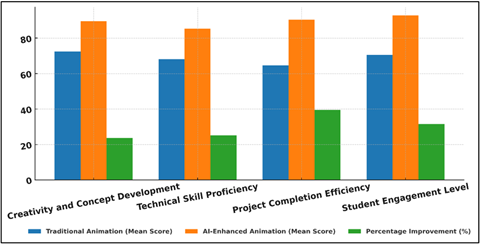
Figure 3 Comparative Performance of Traditional vs
AI-Enhanced Animation Across Key Learning Categories
The highest improvement came in efficiency of project completion that rose by 90.3 against 64.7. This indicates how AI is capable of automating tasks that used to be time-consuming, including rendering, motion generation, and planning a scene and students can produce higher-quality work in shorter timeframes.
Figure 4
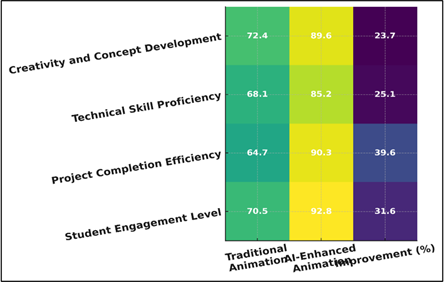
Figure 4 Heatmap of Performance Metrics for Traditional and
AI-Enhanced Animation Methods
Figure 4 demonstrates the difference in performance between the ordinary and AI-enhanced animation techniques. There was also a significant improvement in student engagement as the score had grown by 70.5 to 92.8, which means that AI tools helped learners to find the process more involving, less stressful, and accessible.
Table 3
|
Table 3 Educator and Student Perceptions of AI in Art Education (Survey Results) |
|||
|
Evaluation Criteria |
Students (n=60) |
Educators (n=20) |
Overall Mean (%) |
|
Ease of Using AI Tools |
88 |
80 |
84 |
|
Enhancement of Creativity |
91 |
86 |
88.5 |
|
Improvement in Learning
Outcomes |
89 |
83 |
86 |
|
Need for Technical Training |
76 |
92 |
84 |
According to the results of the survey, there are similar and different opinions on the use of AI in art education on the sides of students and educators. On the whole, the positive attitudes toward the usefulness of AI tools were also high in both groups. Figure 5 presents varying impressions of the use and useability of AI tools. Ease of use was rated higher among students (88) as compared to educators (80), indicating that young learners might change faster about the new technologies.
Figure 5

Figure 5 Comparative Evaluation of AI Tool Adoption and
Effectiveness Among Students and Educators
Both categories acknowledged that AI has a significant impact on the development of creativity, with pupils rating it at 91 percent and teachers at 86 percent, and this view is prevalent among people, who believe that artificial intelligence fosters creative thinking and offers more artistic opportunities. Likewise, the perceived boost in the learning results was also high in both categories, with the average standing at 86, which implies that AI-enhanced animation results in a better perception of learning and skills growth.
7. Conclusion
The introduction of AI-enhanced animation in art education is the paradigm shift in the intersection of creativity and learning with technology. In the study, it was shown that artificial intelligence may be used as a disruptive agent in creative pedagogy and allow students to combine intuition and computational efficiency in art. By tools of generation, automated rendering, and storyboarding with the help of AI, the learners experienced increased creative capacity and engagement with digital media. Teachers have stated that AI assisted in differentiated learning, multidisciplinary discovery, and experimentation with their novel approaches to artistic expression. Although these were the merits, there were a number of challenges. Access to more advanced digital infrastructure, lack of consistency with teacher readiness and ethical issues of authorship and originality limited mass adoption. The research has underscored the need to have properly organized teacher training, access to technology and curriculum models that combine both the traditional and AI-controlled animation practices. The artistic authenticity and critical thinking are critical in making sure that AI does not substitute creativity in human beings, but complements it. To sum up, AI-based animation holds a massive potential of transforming art education in the near future as it connects technical progress and aesthetic growth. Combined in an intelligent way, it promotes inclusiveness, creativity, and inter-disciplinary cooperation. The future of art education is in the integration of AI as a creative collaborator, the one that helps in the development of imagination, personalization, and artistic expression.
CONFLICT OF INTERESTS
None.
ACKNOWLEDGMENTS
None.
REFERENCES
Alotaibi, N. S. (2024). The Impact of AI and LMS Integration on the Future of Higher Education: Opportunities, Challenges, and Strategies for Transformation. Sustainability, 16, Article 10357. https://doi.org/10.3390/su162310357
Cao, Y., Li, S., Liu, Y., Yan, Z., Dai, Y., Yu, P. S., and Sun, L. (2023). A Comprehensive Survey of AI-Generated Content (AIGC): A History of Generative AI from GAN to ChatGPT. arXiv Preprint arXiv:2303.04226. https://arxiv.org/abs/2303.04226
Darda, K. M., and Cross, E. S. (2023). The Computer, a Choreographer? Aesthetic Responses to Randomly-Generated Dance Choreography by a Computer. Heliyon, 9, e12750. https://doi.org/10.1016/j.heliyon.2022.e12750
Dehouche, N., and Dehouche, K. (2023). What’s in a Text-to-Image Prompt? The Potential of Stable Diffusion in Visual Arts Education. Heliyon, 9, e16757. https://doi.org/10.1016/j.heliyon.2023.e16757
Farrelly, T., and Baker, N. (2023). Generative Artificial Intelligence: Implications and Considerations for Higher Education Practice. Education Sciences, 13, Article 1109. https://doi.org/10.3390/educsci13111109
Hutson, J., and Lang, M. (2023). Content Creation or Interpolation: AI Generative Digital art in the Classroom. Metaverse, 4, Article 13. https://doi.org/10.54517/m.v4i1.2158
Ivanov, S., and Soliman, M. (2023). Game of Algorithms: ChatGPT Implications for the Future of Tourism Education and Research. Journal of Tourism Futures, 9, 214–221. https://doi.org/10.1108/JTF-02-2023-0038
Kalniņa, D., Nīmante, D., and Baranova, S. (2024). Artificial Intelligence for Higher Education: Benefits and Challenges for Pre-Service Teachers. Frontiers in Education, 9, Article 1501819. https://doi.org/10.3389/feduc.2024.1501819
Lacey, M. M., and Smith, D. P. (2023). Teaching and Assessment of the Future Today: Higher Education and AI. Microbiology Australia, 44, 124–126. https://doi.org/10.1071/MA23036
Neef, N. E., Zabel, S., Papoli, M., and Otto, S. (2024). Drawing the Full Picture on Diverging Findings: Adjusting the View on the Perception of Art Created by Artificial Intelligence. AI and Society. Advance online publication. https://doi.org/10.1007/s00146-024-02020-z
O’Dea, X. (2024). Generative AI: Is it a Paradigm Shift for Higher Education? Studies in Higher Education, 49, 811–816. https://doi.org/10.1080/03075079.2024.2332944
Pataranutaporn, P., Danry, V., Leong, J., Punpongsanon, P., Novy, D., Maes, P., and Sra, M. (2021). AI-Generated Characters for Supporting Personalized Learning and Well-Being. Nature Machine Intelligence, 3, 1013–1022. https://doi.org/10.1038/s42256-021-00417-9
Sullivan, M., Kelly, A., and McLaughlan, P. (2023). ChatGPT in Higher Education: Considerations for Academic Integrity and Student Learning. Journal of Applied Learning and Teaching, 6, 1–10. https://doi.org/10.37074/jalt.2023.6.1.17
Walczak, K., and Cellary, W. (2023). Challenges for Higher Education in the Era of Widespread Access to Generative AI. Economics and Business Review, 9(2), 71–100. https://doi.org/10.18559/ebr.2023.2.743
Warschauer, M., Tseng, W., Yim, S., Webster, T., Jacob, S., Du, Q., and Tate, T. (2023). The Affordances and Contradictions of AI-Generated Text for Writers of English as a Second or Foreign Language. Journal of Second Language Writing, 62, 101071. https://doi.org/10.1016/j.jslw.2023.101071
Xu, B., and Jiang, J. (2022). Exploitation for Multimedia Asian Information Processing and Artificial Intelligence-Based Art Design and Teaching in Colleges. ACM Transactions on Asian and Low-Resource Language Information Processing, 21, Article 114. https://doi.org/10.1145/3526219
|
|
 This work is licensed under a: Creative Commons Attribution 4.0 International License
© ShodhKosh 2024. All Rights Reserved.