ShodhKosh: Journal of Visual and Performing ArtsISSN (Online): 2582-7472
|
|
The Future of AI-Integrated Art Education
Gurpreet Kaur 1 , Dr. Satya Ranjan Das 2
 , Tarun Kapoor 3
 , Dr. Satish Upadhyay 4
 , Dr. Prakash Divakaran
5
, Dr. Prakash Divakaran
5 , Prateek Aggarwal 6
1 Associate
Professor, School of Business Management, Noida International University,
Noida, Uttar Pradesh, India
2 Associate
Professor, Department of Computer Science and Engineering, Institute of
Technical Education and Research, Siksha 'O' Anusandhan
(Deemed to be University) Bhubaneswar, Odisha, India
3 Centre of Research Impact and
Outcome, Chitkara University, Rajpura, Punjab, India
4 Assistant Professor, UGDX School of Technology,
ATLAS Skill Tech University, Mumbai, Maharashtra, India
5 M. com, MBA, M. Phil, Ph.D.
Professor, Department of Management, Himalayan University, Itanagar, Arunachal
Pradesh, India
6
Chitkara Centre for Research and Development,
Chitkara University, Himachal Pradesh, Solan, India
|
|
|
ABSTRACT |
|
|
With
artificial intelligence (AI) and the art education together alters how
individuals are taught to be creative and express themselves using art. The
application of AI technologies in art classes changes how students create,
interpret, and discuss art due to the development of smarter technologies.
The history of AI-integrated art education is considered in this paper,
starting with the introduction of the first digital tools and ending with the
development of intelligent creative systems. This is demonstrating that AI is
emerging as a more of a creative partner and it is assisting students and
artists to experiment with new styles, methods and approaches across other
areas. The paper examines the ways machine learning algorithms can support
the appearance of new ideas and push the boundaries of the artistic practice
based on examples of artworks supported by AI. In the classes where AI is
introduced into the classroom, training techniques should be reconsidered
during art classes. Teachers are replacing the traditional skills
based lessons with concept based lessons that
are more centered on interpretation, imagination, and social responsibility.
Elements like generative design, adaptable learning environments and creative
coding software are reimagining the way AI-founded platforms work to enable
learning through giving a student-optimized, data-driven input. Nevertheless,
AI usage is not without its issues, including accessibility issues, digital
equality, writing ethics and freedom of art. The future of art education will
be AI, whereby the systems will be adaptable to all people and at the same
time balanced with human senses and computer intelligence. The paper projects
a vision of AI-powered learning environments in which AI is perceived as a
tutor to students and a colleague, which addresses the necessity of students
to understand the interrelatedness of art, technology, and society |
|||
|
Received 22 January 2025 Accepted 17 April
2025 Published 10 December 2025 Corresponding Author Gurpreet
Kaur, gurpreet.kaur@niu.edu.in DOI 10.29121/shodhkosh.v6.i1s.2025.6677 Funding: This research
received no specific grant from any funding agency in the public, commercial,
or not-for-profit sectors. Copyright: © 2025 The
Author(s). This work is licensed under a Creative Commons
Attribution 4.0 International License. With the
license CC-BY, authors retain the copyright, allowing anyone to download,
reuse, re-print, modify, distribute, and/or copy their contribution. The work
must be properly attributed to its author.
|
|||
|
Keywords: Artificial Intelligence, Art Education, Creative
Collaboration, Pedagogical Innovation, Digital Ethics |
|||


1. INTRODUCTION
Nevertheless, the swift growth of artificial intelligence (AI) in the 21st century has produced an enormous influence on virtually all spheres of life business and healthcare included as well as pleasure and communication. The most interesting and one of the most game-changing of these impacts is the growing contribution of AI to art and art education. It was once believed that human being only could be creative since they relied on their emotions, instincts and ideas. However, machine learning programs are shifting the creative process, seeking patterns, creating new structures and even mimicking aesthetic judgement. Thus, it is not merely that the AI and art meet, but also, it is a cultural and educative change, a challenge to our traditional notions about creation, ownership, and the process of learning art. Art education has evolved in the past according to the new tools available. With every new technological wave, the artist and the teacher have been presented with new tools and techniques. An example is the availability of numerous tools and techniques due to the use of photography and digital images. Nonetheless, AI is not merely a supplement of digital tools, but a fundamental shift. The difference between AI systems and regular software is that AI systems can learn, evolve and even co-create with individuals. The result of this shifting power is the opportunity to receive dynamic feedback, individualised learning courses and collaborative production between the student and the program Zhang and Aslan (2021). This brings a condition of technology not being merely a tool, but a collaborator in the creative process. The modern school is beginning to undergo a revolution in teaching, experience, and grading of art through AI. Now students are able to employ dynamic art models, study about techniques of style transfer or get AI-based feedback which evolves as they are progressing in their learning. DALL+E and DeepArt as well as Runway ML are artificial intelligence platforms that provide access to experiment with ideas that were previously beyond the reach of students of all skill levels Kong (2020). The combination of the art, data science, coding and ethics with AI is allowing teachers to find new ways to make students explore, think critically, and collaborate with individuals in other disciplines.
Conversely there are also some important questions that are raised by this merger. What is it to be art in the era when machines are capable of producing not only beautiful but also full of ideas art? What is the balance between imparting more traditional skills in art schools and digital skills that are required in an AI-driven world? These questions do not have readily available answers. The diagram below Figure 1 illustrates the evolution, integration and the way forward of AI. The creative process can be accelerated by AI and it even offers us some new ideas, but it also questions the validity and creativity that has been valued so much in art.
Figure 1
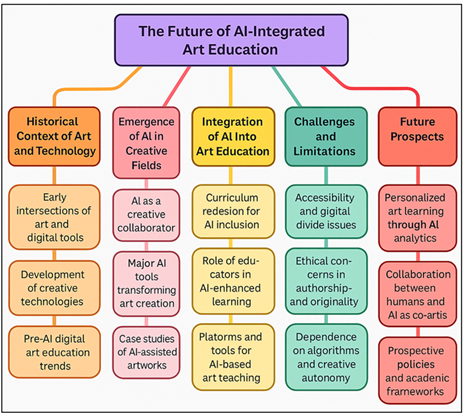
Figure 1 Framework of AI-Integrated Art Education: Evolution, Integration, and Future Pathways
The idea is not to replace the talent of humans, but to enhance it Chatterjee (2022). It's to equip the kids with the skills and knowledge that they will need to survive in the world where art and AI co-exist in harmony. In doing so, art education may transform itself from being an enterprise of skill instruction to an enterprise of idea exploration and moral question raising. This will prepare students to be intelligent, creative participants in a creative world, which is changing quickly.
2. Historical Context of Art and Technology
1) Early
intersections of art and digital tools
Art and technology have always been linked in a way such that is open to new ideas and new changes. Artists began to apply the computer to more than just science in the middle of the 20th century, when they began to view them as artistic partners as well. Frieder Nake, Vera Molnar and Harold Cohen were among the first persons who used early computers to create computational and generative art in the 1950s and 1960s Chen et al. (2022). These trials were a huge change in the way the artists worked. They were no longer confined by using just paintbrushes and modelling tools with their hands, they could now "program" creation through code. Digital media shifted the concept of ownership, as the creative process became more random, automated and mathematical. In the 1970s and 1980s computer images and digital pictures became popular methods of making art. The desktop computer opened up creative technology to more people, let some new breed of artists use images, algorithms and digital synthesis in their work Zhai et al. (2021). Nam June Paik and others were the first people to combine performance art, visual art and computer media in video art. As digital tools improved, artists came to use them increasingly to explore ideas such as modelling, virtuality and interaction.
2) Development
of creative technologies
In the late 20th century and early 21st century there was a great acceleration in the advancement of creative tools. The combination of powerful computers, new software and easy access to the internet changed the way in which art was made, resulting in the rise of digital art, multimedia displays and interactive design. Tools such as Adobe Photoshop, CorelDRAW and eventually 3D modelling tools such as Blender and Maya transformed the working lives of artists as they had greater control over colour, shape and structure in digital spaces Tahiru (2021). These tools allowed us to be more precise in experimentation than would be possible using the old methods. They altered the method of making art and the way it was taught. Technological advancements such as drawing tools and motion sensors gave a physical and digital platform to make things. As the lines between the real-world and the digital-world became even less clear with artists beginning to work with augmented and virtual realities, sound synthesis, and interactive projection mapping Chen et al. (2020). Networked art and joint online creation was made possible by the growth of the internet. These changes had an impact on the sharing, viewing and judgement of art around the world. By the turn of the century, creative technologies were not merely additional tools to be applied but essential to learning art and to making a living as an artist Deng and Wang (2023). Interdisciplinary realms such as digital media arts and interactive design were created when design, code and visual stories converged.
3) Pre-AI
digital art education trends
When artificial intelligence was initially introduced to schools, digital art education had already changed in big way. Art schools and colleges began teaching digital literacy in the 1990s and early 2000s because they understood the fact that computer-based creation was becoming more important. Students were taught how to use tools that emulated traditional methods of art used in the virtual world through digital imaging, graphic design, animation, and multimedia production classes Madan et al. (2024). The emphasis was on mastering the use of software, exploiting visual communication and making creative ideas digital. During this time teaching digital art was focused more on learning skills and less on exploring ideas. Students learnt the use of design tools, the handling of digital procedures and finished visual results as part of an organised learning process. My teachers taught about the basic skills through project-based work, but reviews were old-fashioned and focused on structure, colour theory and aesthetics. Online learning sites and open source artistic tools have simplified the access of digital art education for more people He and Sun (2021). Through lessons, discussions and group projects it was possible to try things out for themselves. Table 1 illustrates some of the most important studies on the impact of AI on art education. With these improvements, though, the way teaching was done remained centered on tools. People still believed that creativity was a process led by people and technology was more of an aid than a partner.
Table 1
|
Table 1 Related Work on AI-Integrated Art Education |
||||
|
Research Area |
Methodology |
Key Findings |
Technologies Used |
Limitations |
|
AI and Creativity |
Literature Review |
Identified AI as co-creator in digital arts |
GANs, Neural Networks |
Limited pedagogical framework |
|
Computational Creativity Fan and Li (2023) |
Experimental |
Demonstrated AI’s ability to generate original
artworks |
CAN Algorithm |
Lack of interpretive context |
|
Data Visualization and Art Tang et al. (2022) |
Case Study |
Explored immersive AI-generated installations |
Machine Learning, Big Data |
High resource dependency |
|
Robotic Art and AI |
Practice-Based |
Showed shared authorship between human and AI |
AI-driven Robotics |
Requires advanced infrastructure |
|
Art Education Fan and Li (2023) |
Qualitative |
AI enhances conceptual learning |
DeepArt, DALL·E |
Small sample size |
|
AI Philosophy |
Theoretical |
Defined creative autonomy in machines |
Rule-Based Models |
Lacks educational application |
|
Design and Cognitive Science Lateef et al. (2025) |
Comparative Analysis |
AI can simulate divergent design thinking |
ML Models |
Limited human emotional mapping |
|
Interdisciplinary Learning |
Survey |
Found positive attitudes toward AI in education |
AI Tutors, Visual Tools |
Ethical concerns underexplored |
|
AI and Music |
Practice-Based |
Demonstrated AI-assisted composition |
AIVA, Amper Music |
Limited generalizability |
|
Art and Design Pedagogy Xu and Nazir (2022) |
Mixed-Methods |
AI improves engagement and feedback |
Runway ML, Teachable Machine |
Requires technical literacy |
|
Digital Ethics |
Analytical Study |
Identified authorship and bias challenges |
Stable Diffusion |
Lacks empirical data |
|
AI and Psychology |
Conceptual |
Advocated AI as collaborator, not competitor |
NLP, GANs |
Abstract theoretical focus |
3. Emergence of AI in Creative Fields
1) AI
as a creative collaborator
Artificial intelligence can become a real collaborator in the sphere of arts, and not the computer tool. Neural networks, generative adversarial networks (GANs), and large language models now have the capability of creating original content like visual content, music and writing based on what they have learned using very large amounts of data. This is contrary to the old software that can only do what human beings tell it to do. AI now becomes a collaborator and co-creator, giving artist’s ideas, new methods of doing things and technical assistance. It is a massive shift in how individuals collaborate to become creative. AI does not replace human innovation instead it complements it by offering artists with more options of trying new things. Innovation may be offered by AI systems who are analysed on their styles and compose new songs or ideas to take new paths. As an example, the image-generation algorithms can be used to assist the artists in finding new colour palettes, whereas the AI-based sound generators can assist the musicians in creating new chords. It turns out to be the dialogue between the AI and the people, each contributing to the other mentally, and AI being able to provide creative content that allows people to gain a perspective on themselves and the world they perceive. It is a relationship that represents a post-humanist view of the creation through which art is not confined to the human intent but is the product of a collective source of human knowledge and computer intelligence.
2) Major
AI tools transforming art creation
In the last ten years, there is a huge increase in AI-powered tools that are changing the way people work creatively. These technologies leverage deep neural networks, machine learning and natural language processing to explore new avenues of expression of art in music, design, stories, and the visual arts. In the case of visual creation, programs such as DALL .E, Midjourney and Stable Diffusion receive written questions and transform them into complex pictures. This concretises meaning in language into objects. Artists use these tools to quickly test ideas, picture stories and try out new ways of looking at things that was not possible before. In the field of music and sound design, AI programs such as AIVA, Amper Music, and Magenta Studio allow artists to collaborate with algorithms in order to create symphonies, beats, and noises. In the same way, tools such as Runway ML and Deep Dream makes style transfer, motion creation and video editing easier with few technology issues. With the new technologies, people who are not studying art or design can get to be very creative. Industrial and commercial applications of AI, such as ChatGPT, DeepArt, and Artbreeder, even further break the barriers between text, image, and idea, allowing people to experiment with the fields of other disciplines. They are used by designers for creating their brands, by artists for creating characters, and by teachers to teach creativity on the computer. These tools have the power to make things different not only because they get the job done, but because they trigger new creative processes. In Figure 2, you can see how AI platforms are reshaping the creative and digital art processes. They are blurring the boundaries between thinking and mathematic by letting people and intelligent systems work together in real time.
Figure 2
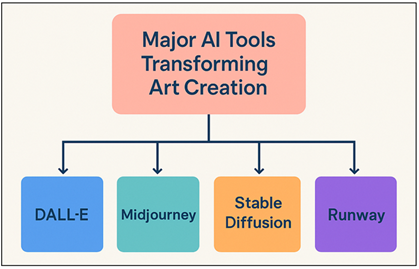
Figure 2 AI-Driven Platforms Shaping Modern Art Creation
As the technologies improve the artist's role will shift from creating AI experiences to assembling them. This establishes a new channel of communication between humans and computers.
3) Case
studies of AI-assisted artworks
Several excellent works of art were created using AI to demonstrate the synergy between human thinking and machine intelligence. One of the first and best-known examples is "Portrait of Edmond de Belamy" (2018), which was made by the French group Obvious using a Generative Adversarial Network (GAN). Trained on thousands of historical images, the piece of art sold at Christie's for $432,000. This was the official entry of AI into the world of art market. After this event they argued about who actually wrote something, what is original, and the importance of creation made by machines. Another important example is Refik Anadol's "Machine Hallucinations" (2019). It is a work that is driven by data and relies on artificial intelligence to transform the enormous picture files into mesmerising and realistic worlds. In this work by Andol, AI is employed as a tool for "data painting," i.e., the transformation of collective digital memory into physical memory through the intermediary of AI. In the same way, artist and researcher Sougwen Chung works with AI controlled robotic arms in her series "Drawing Operations" which focuses on how human movements and machine accuracy can come together to form a shared authorship. AI can be used in other forms of media besides the visual, and Taryn Southern's 2018 album I Am AI used AI writing tools to co-create lyrics and harmonies, proving AI can be used to create music.
4. Integration of AI into Art Education
1) Curriculum
redesign for AI inclusion
With the integration of artificial intelligence in art lessons, the lessons must be entirely re-created to accommodate new modes of creativity. Old art lessons, which focused on making things by hand, art history, and aesthetic theory have to be transformed to involve computer science, data ethics, and creation by AI. This change is not limited to helping students learn how to use digital tools, but also learn how smart systems function, how they learn, and how they can influence creative decision-making. A new programme would be of a theoretical and practical nature. It would involve computational aesthetics, generative art and machine learning lessons for artists as well as critical discussion about creativity, uniqueness and ethics. Students should be enlightened that AI is not just a means of production, but also a collaborator who can assist students in becoming more creative. Art and computer science schools doing projects together can help students bridge the gap between their artistic sense and technical knowledge. Incorporation of AI in the curriculum also develops students' ability to view things from various disciplines. STEM students get to know creativity, feeling and design and art students get to know how to program, visualize data and connect to computers. This combination produces a new group of artists, who are well-versed in the languages of both art and technique.
2) Role
of educators in AI-enhanced learning
In art education with AI, teacher are not only teacher, but also artist, guide and people that help student to learn With the use of intelligent tools, teachers are freed from the need to teach set skills and start to guide students to explore, consider and thoughtfully engage with technology. Teachers need to teach students not only how to use AI in a creative way, but also how to think critically about the effects, biases, and effects on art. Teachers help students to understand the results of AI-generated task and enhances their artistic style in this mixed environment by acting as go-betweens for human creation and computer processes. This means that teachers must acquire new skills, such as how to use digital platforms, how to comprehend machine learning, and how to understand issues of social problems that arise when AI is employed in artistic fields. In order for teachers to remain effective in this new world, they must continue to learn new skills, collaborate with others in different fields and keep abreast of new tools. In addition to that, the teacher must also teach the students how to be good internet citizens. Students need to learn how to review data sources, question the authority of algorithms and deal with problems that come up with intellectual property when AI makes art. Teachers can set up spaces where the imagination is cultivated through interaction between man and AI by supporting question-based learning and group experiments.
3) Platforms
and tools for AI-based art teaching
More and more platforms and tools are being developed to assist in inspiration, collaboration, and critical thinking. These make the use of AI in art education easier. These tools introduce students and teachers to generative art, automation design, and intelligent picture processing. This transforms ordinary classes into experimental labs that are constantly evolving and developing. Well-known tools of artificial intelligence such as DALL•E, Stable Diffusion and Midjourney allow students to transform the written concepts into complex visual pieces. This is beneficial to conceptual thinking and visual stories. Students can experiment with picture editing, style transfer, and real-time generative modelling using tools such as Runway ML and Artbreeder even if they don't have much knowledge of code. These tools can make it easier for anyone to use computers to be creative, so anyone can embrace AI to help them create art. When it comes to teaching, there are tools like Google's Teachable Machine, Magenta Studio, and DeepArt that will enable teachers to teach some basic AI concepts using artistic experiments. They provide students with an opportunity to work with concepts such as neural networks, dataset training, and algorithmic bias that helps students gain understanding about "why" creative results occur the way they do. AI-powered learning management systems, such as adaptable review software as well as intelligent feedback tools, also make learning more personalised by taking a look at artistic progress and also providing means for improvement.
5. Pedagogical Implications
1) Shift
from skill-based to concept-based learning
When artificial intelligence is applied in art classes, it means that the traditional skill-based learning is replaced with the concept and inquiry-based learning. In the past, art classes used to concentrate on teaching students how to use tools, methods and media correctly. But as AI does more of these things for us, it will be left to the people to think, analyze and come up with new ideas. By doing this, the students have to think about why and how they make things rather than the focus on how well they can do the skills. Indeed, the fact that AI can do tedious or technical routine tasks gives students time to exercise their creativity, to engage in projects that explore meaning or to conduct interdisciplinary research. For instance, tools designed for creative work can make immediate graphic changes that allow students to have free reign to consider thematic concerns, artistic values, and social implications. In turn, teachers are role models of thoughtful discussion rather than people who demonstrate special skills. This shift alters the meaning of what it means to be a success in art education.
2) Ethical
and cognitive considerations
When AI is used in art classes, it presents huge moral and psychological issues that need to be resolved by teachers and institutions. But when clever systems are used to co-create art, questions of authorship, creativity, and intellectual property arise from an ethical perspective. Who owns a picture made by aural prompts of a diverted by AI? The student, the algorithm, or the information that was used to build the algorithm? Because of this ambiguity, teachers need to discuss with their students creative ethics, digital rights, and openness in the creation of art. AI tools are also known to pick up biases from the material they are trained on. These biases can keep stereotypes alive, push certain points of view to the edges or change what people think is beautiful. Art teachers are morally obligated to educate their students about how to think critically about statistical findings and how to understand the social and cultural impact of computer-generated decisions. Therefore, ethical literacy, which is also technical skills and the ability to think creatively, becomes a valuable skill. AI rewrites the mindset of students in terms of creation and writing. Lacking the balance between automated generation and human-directed research, you will lack motivation for your own critical thinking. Metacognitive awareness is important for teachers to encourage because it helps students to understand how they think and also evaluate contributions made by AI and also maintain a sense of individual creativity.
6. Challenges and Limitations
1) Accessibility
and digital divide issues
Though the use of artificial intelligence in art classes has a lot of promise, it also highlights how unequal access to technology is. Different schools and students don't have the same chances to use AI-powered tools because of the differences in facilities, funds and digital skills. Advanced creative software, high performance computers, and stable internet connection are all required for AI-based learning to function. These are things that schools in sparsely-financed areas or growing regions don't have access to. There is the possibility in this digital divide of creating an order in the artistic education, in which some students can have access to the advanced use of methods whereas others will continue to be stuck with an archaic type of method, which obligates them to work manually.
Figure 3
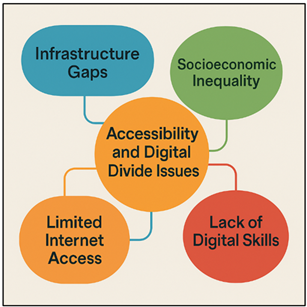
Figure 3 Key Factors Contributing to Accessibility and the Digital Divide in AI-Integrated Art Education
This kind of inequality not only prevents artists from experimenting, it also increases the gap between rich and poor in the creative industries. Mobility issues are not limited to not having the physical tools. Figure 3 presents challenges and solutions in the area of accessibility and digital inequality. Around 85 percent of AI applications only work with information in English, which means that non-Western languages and cultural expressions are excluded. Exclusion denies the existence of various forms of art, and it makes it more difficult for people worldwide to collaborate. To accommodate these problems, changes in policy and education have to be planned. AI tools, open-source systems, and cloud-based systems must be used by schools to ensure that everyone has the same access.
2) Ethical concerns in authorship and originality
The issue of ownership and creativity is one of the most discussed issues in AI art education to date. With the aid of smart programs, it is difficult to say who or what gets the original credit when art is created. AI systems rely on massive catalogues of existing pictures, styles and formations to create new ones. This makes it difficult to differentiate inspiration from plagiarism. Due to this, problems of copying, intellectual property and artistic rights become more complicated. For students, this raises some stiff moral and intellectual questions. Does a student demonstrate any real artistic ability or mental comprehension if an AI creates a piece of visually attractive artistry based on some text prompt? So, teachers have to find ways to grade not only the product, but the student's process, how they relate to AI, what data they choose to feed in, and how to interpret what the algorithm is telling them. Also, it is possible that flaws made when training datasets will lead to AI making stereotypes or perpetuating the cultural borrowing as well. What's more, teachers and artists concerned with the aesthetic and ethical aspects of their practice need to be mindful of the moral issues that are raised when they adopt pre-trained models that reflect power hierarchies in data sets.
3) Dependence
on algorithms and creative autonomy
While AI has a lot of creative potential, becoming too much dependent on formulations is very bad for artistic freedom and creativity. The more that students get accustomed to ideas generated by AI, the more there is a danger of creative laziness, when computers make the decisions about what looks good rather than encouraging students to think for themselves. Because most AI systems are trained on the same data and reinforce familiar visual trends, the reliance on such data may result in art that is too similar. It is difficult to conduct deep research and experiment when we can easily achieve good results. Learners may prioritize speed over creativity and fail to find new ways of solving problems. As a result, art education may stop promoting imagination and start focusing on automated outcomes. Also, AI systems automatically conform to the rules described by the data they were trained with. They lack that emotional intelligence, that culture complexity, that life experience that define people as artists. So, being unable to share our ideas personally or really act in social and emotional situations may be more difficult for students who rely too much on machine generated results. To stop this, teachers need to make tasks that are process-oriented rather than result-oriented and to force students to think critically about the decisions that AI makes. Technology should be a servant of creativity not a master. This can be done by promoting physical labor, thinking, and review.
7. Future Prospects
1) Personalized
art learning through AI analytics
In the future, with the help of AI-based data, art education will probably become more personalized. Machine learning programs can actually examine the student's creative process, style preference and growth over time. They can then provide each student with feedback that is personalized for his or her specific strengths and weaknesses. Traditional review systems rely on human feedback to a huge extent. AI, on the other hand, can analyze large volumes of student work to identify trends and make precise recommendations on areas they can improve on. This personalisation is not just to the level of a person's ability to use technology. Artificial intelligence (AI) systems can be used to create personalised learning experiences. AI systems can recommend lessons, reference materials or ideas for projects that are related to an artist's goals. Interactive learning systems are made to change the learning environment dynamically based on different parameters, such as engagement time, use of tools, and choice of topics. AI data can also help teachers monitor the growth and learning of their students so that students who need additional assistance are identified immediately. This method based on data makes things more open to everyone by recognising different creative paths instead of imposing standard benchmarks.
2) Collaboration
between humans and AI as co-artists
What the future of art making will be is a partnership between humans and AI that creates an innovative new way of working together rather than against each other. In this new model, AI is the smart helper, as well as creative partner. It can generate ideas, work out what artists are trying to say, and alter its mind to what the people are saying. This two-way relationship makes the act of creating a dialogue between human emotion and machine intelligence. More and more, artists will implement AI systems to explore new territories of art and combine human insight with computer accuracy. AI can look through huge collections of images to come up with new styles, but human artists put an emotional depth, story and cultural step to such creations. The artist does not die, but gains an improvement to artistic ability. In the classroom, this collaboration is likely to result in new teaching methods that are based on collaboration among humans and AI systems. Students will be guided towards talking about authorship, evaluating computer ideas and working collaboratively to produce art as a device of co-creation (i.e. who is doing the work, where, and when). Human-AI interactions may also result in new forms of art such as interactive displays, time-changing digital paintings, and self-learning pieces of art that change depending on how much people interact with them.
8. Conclusion
One of the greatest transformations in how we perceive creation, practice it and teach it is the introduction of artificial intelligence into the art educational process. With the advancement of AI technologies, the manner in which art is being created is changing, not to mention how people learn, collaborate, and ask meaningful questions. What used to be an art of craftsmanship and expression of the self is becoming a place of head-on collisions of creative thought and computer smartness. This fusion allows a more profound and more accommodative form of creation that transcends the borders of normal art. Application of AI in art classes will enable the students to cease thinking techniques and begin to think ideas. Artificial intelligence does not simply eliminate the necessity to automate the routine workload; it can also enable the learners to think out of the box when it comes to the analysis, exploration, and critical interaction with the new technologies. It assists in personalised learning with the analytics and encourages the practice of art with the help of smart recommendations and unites people in the field of art, science and ethics. Nevertheless, these opportunities have certain challenges. The research is associated with challenging questions including access, ownership, data bias, and creative necessity, and there is also a solution to enable AI to empower us and not disable us. It is yet to be known how organisations, teachers and legislators cope with this new wave of technology and future of art education will depend on the results. Establishing morality standards, promoting acceptance, and teaching digital skills are significant issues that should be carried out to ensure that creation does not get dead in an AI world. Eventually, AI-based education in art will not achieve success by eliminating human creativity, but by enhancing it and producing creative, critical, and wilful artists who will be aware of their ethical responsibilities.
CONFLICT OF INTERESTS
None.
ACKNOWLEDGMENTS
None.
REFERENCES
Chatterjee, A. (2022). Art in an Age of Artificial Intelligence. Frontiers in Psychology, 13, Article 1024449. https://doi.org/10.3389/fpsyg.2022.1024449
Chen, S. A., Lin, P., and Chien, W. (2022). Children’s Digital Art Ability Training System Based on AI-Assisted Learning: A Case Study of Drawing Color Perception. Frontiers in Psychology, 13, Article 823078. https://doi.org/10.3389/fpsyg.2022.823078
Chen, X., Xie, H., Zou, D., and Hwang, G.-J. (2020). Application And Theory Gaps During the Rise of Artificial Intelligence in Education. Computers and Education: Artificial Intelligence, 1, Article 100002. https://doi.org/10.1016/j.caeai.2020.100002
Deng, K., and Wang, G. (2023). Online Mode Development of Korean Art Learning in the Post-Epidemic Era Based on Artificial Intelligence and Deep Learning. The Journal of Supercomputing, 80, 8505–8528. https://doi.org/10.1007/s11227-023-05776-1
Fan, X., and Li, J. (2023). Artificial Intelligence-Driven Interactive Learning Methods for Enhancing Art and Design Education in Higher Institutions. Applied Artificial Intelligence, 37, Article 2225907. https://doi.org/10.1080/08839514.2023.2225907
Fan, X., and Zhong, X. (2022). Artificial Intelligence-Based Creative Thinking Skill Analysis Model Using Human–Computer Interaction in Art Design Teaching. Computers and Electrical Engineering, 100, Article 107957. https://doi.org/10.1016/j.compeleceng.2022.107957
He, C., and Sun, B. (2021). Application of Artificial Intelligence Technology in Computer Aided Art Teaching. Computer-Aided Design and Applications, 18(Suppl. S4), 118–129. https://doi.org/10.14733/cadaps.2021.S4.118-129
Kong, F. (2020). Application of Artificial Intelligence in Modern Art Teaching. International Journal of Emerging Technologies in Learning, 15, 238. https://doi.org/10.3991/ijet.v15i13.15351
Lateef, S. A., Ansari, M. A., Ansari, M., and Manwatkar, T. (2025, May). AI Image Generator Using Open Source for Text to Image. International Journal of Electrical and Electronics and Computer Science (IJEECS), 14(1), 217–220.
Madan, B. S., Zade, N. J., Lanke, N. P., Pathan, S. S., Ajani, S. N., and Khobragade, P. (2024). Self-Supervised Transformer Networks: Unlocking New Possibilities for Label-Free Data. Panamerican Mathematical Journal, 34(4), 194–210. https://doi.org/10.52783/pmj.v34.i4.1878
Tahiru, F. (2021). AI in Education. Journal of Cases on Information Technology, 23, 1–20. https://doi.org/10.4018/JCIT.2021010101
Tang, T., Li, P., and Tang, Q. (2022). New Strategies and Practices of Design Education Under the Background of Artificial Intelligence Technology: Online Animation Design Studio. Frontiers in Psychology, 13, Article 767295. https://doi.org/10.3389/fpsyg.2022.767295
Xu, Y., and Nazir, S. (2022). Ranking the Art Design and Applications of Artificial Intelligence and Machine Learning. Journal of Software: Evolution and Process, 36, Article e2486. https://doi.org/10.1002/smr.2486
Zhai, X., Chu, X., Chai, C. S., Jong, M. S. Y., Istenic, A., Spector, M., Liu, J.-B., Yuan, J., and Li, Y. (2021). A Review of Artificial Intelligence (AI) in Education from 2010 to 2020. Complexity, 2021, Article 8812542. https://doi.org/10.1155/2021/8812542
Zhang, K., and Aslan, A. B. (2021). AI Technologies for Education: Recent Research and Future Directions. Computers and Education: Artificial Intelligence, 2, Article 100025. https://doi.org/10.1016/j.caeai.2021.100025
|
|
 This work is licensed under a: Creative Commons Attribution 4.0 International License
© ShodhKosh 2025. All Rights Reserved.