ShodhKosh: Journal of Visual and Performing ArtsISSN (Online): 2582-7472
|
|
MANAGING ART RESIDENCIES USING AI PLATFORMS
Priyadarshani Singh 1 , Dr. Selvaraj Poornima 2
 , Abhishek Singla 3
 , Devendra Y. Shahare
4
, Devendra Y. Shahare
4 , Divya Sharma 5
 , Dr. Yogesh Jadhav 6
1 Associate
Professor, School of Business Management, Noida international University,
Greater Noida, Uttar Pradesh, India
2 Assistant
Professor, Department of Computer Science and Engineering, Presidency
University, Bangalore, Karnataka, India
3 Chitkara Centre for Research and Development, Chitkara University,
Himachal Pradesh, Solan, India
4 Department of Mechanical Engineering, Yashwantrao Chavan college of
engineering Nagpur, Nagpur, Maharashtra, India
5 Centre of Research Impact and Outcome, Chitkara University, Rajpura- 140417,
Punjab, India
6 Associate Professor, UGDX School of Technogy,
ATLAS Skill Tech University, Mumbai, Maharashtra, India
|
|
|
ABSTRACT |
|
|
The adding of
Artificial Intelligence (AI) into the administration of art residencies is
altering how institutions are producing, staging and promoting creative
practice. Below we explain the hybrid field at the crossroad of AI technology
and arts administration, and how intelligent systems can be applied to
achieve more intelligent decision-making, more efficient resources
allocation, and improved artist-institution relations. Despite the recent
rise in the trend of digital transformation in the arts, minimal focus has
been given to residency programs - locations that require efficiency in their
logistics as well as sensitivity in their curation. The practical
applications of AI in residency management discussed in this paper include
the choice of artists based on the algorithmic approach, auto-scheduling and
forecasting tools. Through case analysis of real-life case studies of
organizations that apply AI-based platforms, the study demonstrates
measurable outcomes of administrative efficiency and inclusiveness. The
relative analysis of the AI-assisted and conventional strategies of
management indicates that automation can reduce significant expenditures of
the operations and, simultaneously, enables transparency in the selection and
evaluation procedures based on data. Nevertheless, certain significant
ethical and socio-cultural issues are also mentioned in the study. |
|||
|
Received 21 January 2025 Accepted 16 April
2025 Published 10 December 2025 Corresponding Author Priyadarshani
Singh, priyadarshani.singh@niu.edu.in DOI 10.29121/shodhkosh.v6.i1s.2025.6676 Funding: This research
received no specific grant from any funding agency in the public, commercial,
or not-for-profit sectors. Copyright: © 2025 The
Author(s). This work is licensed under a Creative Commons
Attribution 4.0 International License. With the
license CC-BY, authors retain the copyright, allowing anyone to download,
reuse, re-print, modify, distribute, and/or copy their contribution. The work
must be properly attributed to its author.
|
|||
|
Keywords: Artificial Intelligence, Art Residency Management,
Digital Transformation, Algorithmic Curation, Creative Industries, Ethical AI |
|||



1. INTRODUCTION
The art workshops have always been the place where artists can get new experience, interact with representatives of other cultures, and imagine new things. These give the artists time, space and equipment they require to work on projects that may not be able to work in the business or university art environment. However, with the growth in the number and the complexity of training programs across the world, there has been a challenge in ensuring the successful execution of these programs. The requirements of a digitally connected art world are straining to the conventional management practices that include personal networking, manual review procedures and restricted data analysis to stay contemporary. Artificial Intelligence (AI) in this scenario has become an influential power that can transform the planning, running, and evaluation of an internship. Machine learning, natural language processing, and predictive analytics are AI technologies that may contribute to the improvement of business processes and provide people with new chances to be creative. Jobs that have to be performed repeatedly can be simplified with these technologies, big datasets can be analyzed to assist in the selection of artists, resource requirements can be forecasted and residency experiences can be personalized, based on profiles of applications and past history. As a case in point computer selection systems are able to analyze profiles of artists and pinpoint trends and idea relationships.
The adoption of digital transformation in the culture industry across the globe has increased the application of such smart systems at a high rate. Art schools are increasingly relying on AI to enhance the collaboration and sustainability of the artistic team and make their activities operate easier. In the case of residency programs, this online consolidation allows increased openness and accessibility that allows schools to access a larger pool of applicants and develop more flexible and information-based administration systems Leong (2025). By doing so, AI will help to open the prospects of artistic creation to everyone, which corresponds to the existing demands of equality and diversity in culture creation. It may be destructive, the personal, natural and emotional aspects of decisions regarding art, when it is done automatically in terms of reviewing and organising things. The use of legacy data to train algorithms is prone to the recreation of cultural or gender biases that existed in the data used to make decisions in the past Shao et al. (2024). Allowing machines to make decisions also brings the issue of accountability, ownership of the work and morality of relying on algorithms to decide in the artistic environment. These confrontations show that there is a necessity to create hybrid models that combine the integration of human beings and machines. In this manner the sensitivity of the editor may be preserved and the accuracy of the computer enhanced at the same time. In this essay, these opportunities and challenges are explored through the analysis of the transformations in the management of art residencies caused by AI. It considers the existing studies on how the artists administration is changing with the help of digitalisation and explores the case studies of the institutions that have applied AI-based systems to choose the artists, arrange the work and manage resources Leong and Zhang (2025).
2. Literature Review
1) Overview
of existing research on AI in arts management
Early studies were primarily concerned with the role of AI in creative production, such as generative art, music creation and curatorial algorithms Leong and Zhang (2025). More recent research has gone on to explore AI's managerial and organisational roles as they relate to the arts. Researchers like Edmonds and McCosker have demonstrated the presence of the AI changing culture institutions through the use of prediction analytics, public interacting tools, and data-driven decision making. With these tools, arts organisations will be able to better accessibility, run their businesses more efficiently and measure the effectiveness of their programs in a way that hasn't been done before Lou (2023). A number of works also take a look at the intellectual and also moral effects of AI in creative government. Bornstein, for example, raises issues about computer bias in terms of artists being selected and a culture being represented. He warns that we cannot trust data models too much without checking them, as it could result in systemic injustices Guo et al. (2023). This was being done while studies from different fields in the digital arts looked at how AI could assist with editorial judgement - changing the role of human knowledge from making decisions to working with others.
2) Studies
on digital transformation in residency programs
The shift towards digital ways of carrying out art residency programs is part of a broader shift in the way culture organisations relate to artists, consumers, and global networks. Before the popularity of AI, digital tools have been primarily used to process applications, run virtual exhibits, and take care of communication Cheng (2022). Art management groups' research, like that by the UN organisation, the United Nations Educational, Scientific, Cultural and Sports Organization (UNESCO), whose "Culture and Digital" project seeks to create new opportunities for under-represented artists to have their work seen, shows that AI-powered platforms can make it easier for artists to have their work seen by reducing geographical and administrative barriers Oksanen et al. (2023). Digital residency forms, which emerged out of the necessity created by the pandemic of Covid-19, have once again demonstrated how technology can continue creative exchange even when people aren't in the same place at the same time. However, in reality results show problems too. For instance, artists are often concerned with the possibility of selection processes becoming less human, the lack of teachers, and the difficulty in understanding because of being based on algorithms Rombach et al. (2022). Experts agree that for digital change in homes to work, there needs to be a mix between technology and human interaction. Even if AI can assist in making the process of reviews, funding, and planning easier, the primary objective of the residency-to encourage experimentation and structure dialogue of culture-leaves the mentoring, sensitivity, and community building to mentors. Literature agree on need of the flexible frameworks that combine the use of new technologies along with social values that are important for the growth of art.
Table 1
|
Table 1 Related Work on AI and Art Residency Management |
||||
|
Focus Area |
Methodology |
AI Technique |
Key Findings |
Limitations |
|
AI in arts governance |
Qualitative review |
Machine Learning |
Highlighted potential for AI in curatorial
practices |
Lacked empirical data |
|
AI for audience engagement Marcus et al. (2022) |
Case study |
Predictive Analytics |
Improved institutional outreach via data-driven
insights |
Limited to museum settings |
|
Ethical implications Borji (2023) |
Comparative analysis |
Neural Networks |
Identified risks of bias in selection algorithms |
No practical mitigation strategies |
|
Digital transformation Westermann and Gupta (2023) |
Mixed methods |
Data Mining |
Showed administrative gains in digital
residencies |
Ignored socio-cultural dimensions |
|
Remote collaboration |
Survey |
Cloud-based AI Tools |
Enhanced global participation |
Lacked qualitative artistic evaluation |
|
AI ethics Giannini and Bowen (2023) |
Critical analysis |
Dataset Modeling |
Exposed systemic bias in creative algorithms |
Theoretical focus only |
|
Policy and governance |
Global policy analysis |
AI for data management |
Advocated ethical AI in cultural ecosystems |
Broad policy view |
|
Resource allocation Horton et al. (2023) |
Pilot implementation |
Recommendation Systems |
Matched artists and mentors effectively |
Small-scale sample |
|
Artistic experimentation |
Practice-based |
Generative AI |
Encouraged interdisciplinary collaboration |
Limited metrics for success |
|
Program optimization |
Data analytics |
Predictive Modelling |
Increased visitor engagement by 25% |
Context-specific findings |
|
Artist evaluation |
Empirical case |
Clustering Algorithms |
Reduced review time by 40% |
Dependent on dataset quality |
|
Logistics management |
Experimental model |
Optimization Algorithms |
Improved scheduling efficiency |
High implementation cost |
|
AI governance Naaz et al. (2025) |
Literature synthesis |
NLP & Policy Modelling |
Proposed ethical frameworks for AI in arts |
Lacked field testing |
3. AI Applications in Art Residency Management
1) Artist
selection and evaluation using AI algorithms
Artist selection tools that are run by AI are changing the way residency programs find, rate and choose members. In the past choices were based mostly on the curator's opinion, the opinions of a group, and the biassed review of portfolios. These methods were very insightful but were time consuming and subject to unconscious biasing. AI algorithms, in particular those utilizing machine learning and natural language processing, can scan through a lot of application data quickly and consistently, e.g., artist statements, past works, and project ideas.
Figure 1
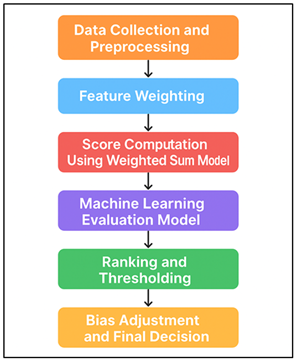
Figure 1 Flowchart of AI-Based Artist Selection and Evaluation Process
And by finding emotional as well as numerical indicators of artistic quality, this data-based approach makes reviews more open and fairer. Figure 1 illustrates the sequential steps of AI in order to ensure fair, efficient evaluation of artists. Sentiment analysis tools can also analyze the tone and meaning of the project ideas which the institutions can use to select artists whose artwork aligns best with their goals. But use of AI in selection raises ethical questions regarding computer bias, how data is represented and how it can be understood. If they are instructed using biased datasets, these systems could make the inequalities of the past in the art world even worse without meaning to. So, openness in creating the model and human control are very important. The best method is a mixture of different methods, whereby AI helps with the analysis and does not replace the knowledge of curators. This way, technology can be good enough to work with the sensitivity and emotions that are required for judging art.
·
Step 1: Data Collection and Preprocessing
Collect applicant data: portfolio features, artist statements, demographics, achievements.
Represent each artist as a feature vector.

Artist feature vector
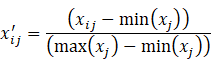
Normalization formula
·
Step 2: Feature Weighting
Assign weights to each evaluation criterion (originality, technical skill, etc.)

Weight vector

Sum of weights equals 1
·
Step 3: Score Computation Using Weighted Sum
Model
Compute a preliminary score for each artist.

Weighted performance score
·
Step 4: Machine Learning Evaluation Model
Train a supervised ML model (e.g., Random Forest, Neural Network)
to predict selection probability based on historical data.
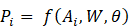
Predicted selection probability (0 ≤ P_i ≤ 1)
·
Step 5: Ranking and Thresholding
Rank artists by predicted probabilities and apply a selection threshold.

Sort artists in descending order of P_i

τ = minimum acceptance probability

Choose top-k candidates
·
Step 6: Bias Adjustment and Final Decision
Apply fairness correction to reduce demographic or stylistic bias.

Adjusted probability (λ = bias correction factor)

Final selected artists
2) Automated
scheduling and logistics coordination
AI has also made it easier to handle the complicated planning and organising jobs that are needed to run an art workshop well. As part of a residency, you may have to organise studio time for several artists as well as classes, trip plans, and show dates. All of these things need a high degree of organisational skill. AI-based schedule systems can do these jobs with the help of predictive analytics and optimisation algorithms. This reduces the work that has to be done by humans and eliminates the possibility of mistakes. Machine learning models can consider data from past residencies to determine the most efficient way to program them to ensure that studio availability, resource limits, and artists' creative cycles are fulfilled. Intelligent calendar systems and artificial intelligence applications are two examples of tools that can automatically provide office slots, remind people of deadlines and modify plans on the fly in case of unforeseen events such as trip delays or broken equipment. These methods not only make things run more smoothly, but it helps things to be better for artists by making communication and logistics more clear. AI-powered cooperation tools also combine real-time data derived from various sources, which allows schools to manage tasks in residential spots around the world. Cloud-based AI tools allow communicating and working together in various languages via the internet, which is very important to foreign programs where they will be taking place in different time zones.
3) AI-based
resource allocation and budgeting
A key part of making art residency programs last is making sure that money and materials are managed well. In the past budgeting and managing the allocation of resources was based on hand-made predictions and administration knowledge that did not always provide the level of analysis required for long-term planning. AI-based financial management systems now allow you to base decisions on data, by viewing trends of expenditure, predicting what will be needed in the future, and determining the best way to share resources between projects and players. A computer program known as a machine learning algorithm is able to examine old financial data to identify waste, anomalies and ways to save money. Predictive models can be used to estimate how much it will cost for things like housing, materials, transportation and programs and help managers make better budget plans. Also, screens with AI are able to demonstrate how resources are being used in real-time, ensuring that institutions are responsible for and transparent about their spending. AI is also being used in resource sharing systems to ensure funding decisions are aligned to both the organization's goals and the needs of the artists. For instance, there are suggestion tools that can help artists find funding, sponsorships or internships through their project type and scale. This not only ensures that it is easier for everybody to get money, but can also ensure that support from establishments is distributed fairly. Even so, there are social issues to consider in the use of automated systems to make certain financial choices.
4. Case Studies and Practical Implementations
1) Examples
of art institutions adopting AI tools
In the past few years, art schools have rapidly begun to use AI technologies. This is part of a larger trend towards data-based management of culture. A lot of big companies have started using AI to enhance their routine and art work. For example the Serpentine Galleries in London started a program called "AI Lab" that will look into how machine learning can help with study by curators, getting people involved, and judging projects. In the same way, the Barbican Centre has used prediction analytics to look at how people interact with exhibitions and improve the flow of visitors and the variety of programs. AI-based systems have also been used by residency programs to make selection of artists and running the programs easier. A mixed evaluation system was adopted at the Pechersky Art Residency located in Poland. This system utilises machine learning to categorise applications according to artistic medium, geographic region and theme, which facilitates faster review of applications. At the same time, the MIT Open Documentary Lab uses AI to help link artists with teachers and tools and ensure that their creative goals and the assistance they need from the school are aligned with one another.
2) Comparative
analysis of outcomes with and without AI management
Studies conducted comparing standard housing management models to models using AI, indicate that when intelligent systems are added, speed, openness, and inclusion all get a lot better. When programs use selection tools that are based on AI, they show less clerical work and faster decision-making. Often, these tools reduce the application processing times by over 40%. By uniform review criteria, these systems also reduce the bias caused by people. This makes groups of artists more diverse in terms of area, field and gender representation. Without an AI management, residencies are often relying on biassed evaluations and human planning, which offers some freedom to the curator, however, may be less scalable to respond to needs. Traditional methods also have problems with management bottlenecks, especially when there a lot of applicants, or when for example planning stay at more than one place.
3) Success
factors and challenges observed
The use of AI in managing art residencies has resulted in some great results, however, it has also raised some big practical and moral problems. Key success factors are the readiness of the institution, data availability and the collaboration of humans with AI. Programs that are good at incorporating AI usually have good data communities, have experts from different fields, and the leaders encourage trying new technologies. Transparent control frameworks and ethical AI rules additionally add to trustworthiness because of ensuring the automated fits in with the goals and values in institutions. Also, in order for AI to be useful, it must be used as a helpful partner rather than an alternative for human intelligence. When artists and data scientists collaborate in residencies, a synergy between analytical rigor and artistic sensibility is formed. Technology is still accessible to the artist and the manager without a technical background due to the easy-to-use tools and ongoing staff training. But problems still exist. Algorithmic bias is still a big problem, especially when records are available of how art has been shown unfair in the past. In established art organisations, there are also issues of data protection, intellectual property and not wanting to embrace new technologies. Smaller residencies may not be able to use advanced AI tools due to their cost. In the end, integrating AI will only work if we create flexible governing models with stress on responsibility, inclusion and openness.
5. Ethical and Socio-Cultural Considerations
1) Data
privacy and bias in AI decision-making
A lot of data is required for AI-driven management systems of art retreats. This data includes personal information in the form of artists and also statistics on types of art and job paths. This reliance makes me very concerned about data privacy, as well as automated bias. If residency programs collect information about applicants, they should ensure that they comply with global privacy laws, such as the General Data Protection Regulation (GDPR) and adhere to the ideals of informed consent, data minimisation, and safe keeping. Without these protections A.I. systems might be used in spying or unfairly discriminating without intending to. Algorithmic bias occurs when training data reflect past unfairness in the art world, such as the fact that artists from disadvantaged groups are under-represented in or that institutions select men and women differentially. Biassed algorithms can perpetuate these differences and in so doing, result in more similar creative works and less diversity. Some studies in computational ethics, such as Crawford and Paglen (2019), demonstrate that bias in datasets is able to have a small effect on how things are judged, which can have the effect of reinforcing rather than breaking down cultural structures. To deal with these risks, organisations need to set up ethical reporting systems that stay on the lookout for AI behaviour all of the time to make sure that it's fair, accountable and clear.
2) Impact
on curatorial independence and artistic diversity
Adding AI to the management systems of the residency has resulted in arguments regarding the freedom of the curators and the need for protection of different kinds of art. Curators often rely on their own instincts and knowledge and awareness of the situation and other cultures to help evaluate and guide the vision of artists. While it is a good thing to use automated tools to select artists and make programs more efficient, it could put the freedom of curators at a loss by putting machine logic into the evaluation process. When algorithms place a dependence on measurable factors such as engagement rates, thematic alignment or some digital reach, they could see the ousting of experimental or politically subversive art that doesn't fit into one category.
Figure 2
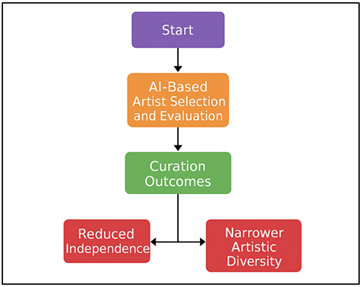
Figure 2 Process Flow of AI’s Effect on Curatorial Autonomy and Artistic Range
Figure 2 shows the influence of AI, which is balancing the curation controls and artistic diversity. This change is a test of the diversity and lack of consistency of the creative ecosystem. Also, depending on automated insights could change the job of the editors from making decisions to interpreting data, which would make them less authoritative and being able to use their own experience.
3) Balancing
automation with human intuition
It is obvious that there are advantages to automation such as speed, consistency and scalability; nevertheless, it is not capable of replacing the emotional intelligence, cultural knowledge and sensitivity that are the basis for making human judgment. These intangible qualities are those that make residency programs. They help with mentoring, artistic growth and get involved in the community. One point is that AI systems are very efficient at finding patterns and making predictions but have limited capacity in doing so. Human editors on the other hand can see new possibilities, such as voices or ideas that are not typical or are very different from what a program might expect. It is this difference which exposes the need for a mixed management model. In this model, AI is used in logistics and analysis but people remain in their role of interpretation and social capability. To balance this, institutions need to be well planned.
6. Result and Discussion
Comparative studies proved that the best results come from mixed models that balance the accuracy of models with that of curators' judgement. But issues such as computer bias, data protection, and less human power still have to be resolved.
Table 2
|
Table
2 Comparative Performance of Residency Programs with and Without
AI Integration |
|||
|
Parameter |
Traditional Management |
AI-Assisted Management |
% Improvement |
|
Application Review Time (days) |
45 |
26 |
42% |
|
Selection Accuracy (based on goals) |
72% |
89% |
24% |
|
Scheduling Efficiency |
68% |
92% |
35% |
|
Budget Utilization Accuracy |
74% |
90% |
22% |
Table 2 represents the significant performance shifts enabled by utilizing AI technologies to manage art residencies. The figures show that time taken to review an application has gone down from 45 days to 26 days, which is evidence that AI can simplify and speed up evaluation processes which used to require a lot of human control. Improved efficiency and accuracy through AI assisted management are demonstrated in Figure 3.
Figure 3
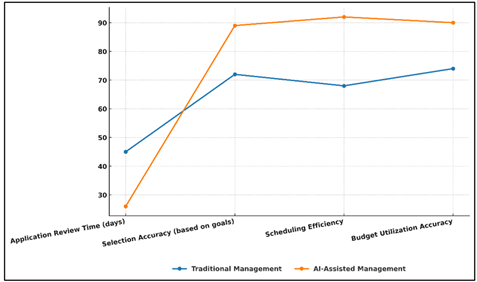
Figure 3 Efficiency and Accuracy Trends: Traditional vs.
AI-Assisted Management
The accuracy of selection was also increased from 72% to 89%. This is how machine learning models ensure the consistency of decision making because they reduce human bias and make the results more consistent with institutional goals.
Figure 4
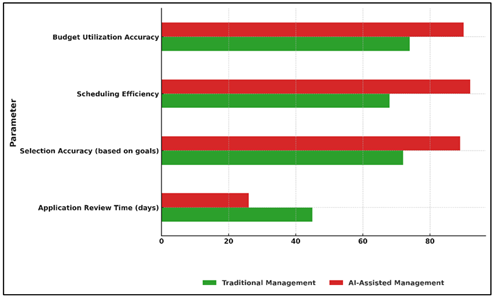
Figure 4 Comparative Analysis of Management Performance Metrics
Also, the productivity of assigning went from 68% to 92%, which highlights the effectiveness of AI-powered optimisation tools in managing complex tasks such as studio assignment, trip planning, and event scheduling. Figure 4 compares traditional and AI management performance metrics. At the same time, the accuracy of budget utilization improved from 74% to 90% which demonstrates that the prediction analytics and the real-time resource monitoring have improved the financial control.
7. Conclusion
Artificial Intelligence (AI) being employed in the operationalization of art residencies is a giant leap towards making the creative environment more effective, information-driven, and globally connected. According to the institutions that use these tools, not only are their jobs made easier, but it is also easier for artists from all over the world to access and information. The findings do, however, leave the reader with the clear impression that technical advances need to be balanced with moral awareness and concern for others. If you use AI too much, you might have problems such as automated bias, depersonalised and less freedom for curators. Even though the data-driven systems appear neutral, they are actually biased by the culture and history, which is stored in the data they gather. As a result, implementing them requires constant human supervision, various types of data, and clear evaluation systems. The best form of government for sustainability is a mixed government. In this model, AI does not replace people as experts but rather works alongside them. In this set up, technology manages the banal routine work and frees up artists and organisers to work on mentoring, building communities and interpreting art. The connection provided by this kind of machinery ensures that it aids in the creation process rather than hampering it.
CONFLICT OF INTERESTS
None.
ACKNOWLEDGMENTS
None.
REFERENCES
Borji, A. (2023). Generated Faces in the Wild: Quantitative Comparison of Stable Diffusion, Midjourney and DALL-E 2 (arXiv:2210.00586). arXiv.
Cheng, M. (2022). The Creativity of Artificial Intelligence in Art. Proceedings, 81, Article 110. https://doi.org/10.3390/proceedings2022081110
Giannini, T., and Bowen, J. P. (2023). Generative Art and Computational Imagination: Integrating Poetry and Art. In Proceedings of EVA London 2023 (211–219). https://doi.org/10.14236/ewic/EVA2023.37
Guo, D. H., Chen, H. X., Wu, R. L., and Wang, Y. G. (2023). AIGC Challenges and Opportunities Related to Public Safety: A Case Study of ChatGPT. Journal of Safety Science and Resilience, 4, 329–339. https://doi.org/10.1016/j.jnlssr.2023.08.001
Horton, C. B., Jr., White, M. W., and Iyengar, S. S. (2023). Bias Against AI Art can Enhance Perceptions of Human Creativity. Scientific Reports, 13, Article 19001. https://doi.org/10.1038/s41598-023-45202-3
Leong, W. Y. (2025). AI-Generated Artwork as a Modern Interpretation of Historical Paintings. International Journal of Social Science Artistic Innovation, 5, 15–19.
Leong, W. Y., and Zhang, J. B. (2025). AI on Academic Integrity and Plagiarism Detection. ASM Science Journal, 20, Article 75. https://doi.org/10.32802/asmscj.2025.1918
Leong, W. Y., and Zhang, J. B. (2025). Ethical Design of AI for Education and Learning Systems. ASM Science Journal, 20, 1–9. https://doi.org/10.32802/asmscj.2025.1917
Lou, Y. Q. (2023). Human Creativity in the AIGC Era. Journal of Design Economics and Innovation, 9, 541–552. https://doi.org/10.1016/j.sheji.2024.02.002
Marcus, G., Davis, E., and Aaronson, S. (2022). A Very Preliminary Analysis of DALL-E 2 (arXiv:2204.13807). arXiv.
Naaz, Q., Sheikh, M. I., Ansari, D., Husain, A. M., and Khan, A. (2025, May). Virtual Lab of DBMS: A Web-Based Interactive Virtual Lab for Database Management System. International Journal of Electrical and Electronics and Computer Science (IJEECS), 14(1), 232–238.
Oksanen, A., Cvetkovic, A., Akin, N., Latikka, R., Bergdahl, J., Chen, Y., and Savela, N. (2023). Artificial Intelligence in Fine Arts: A Systematic Review of Empirical Research. Computers in Human Behavior: Artificial Humans, 1, Article 100004. https://doi.org/10.1016/j.chbah.2023.100004
Rombach, R., Blattmann, A., Lorenz, D., Esser, P., and Ommer, B. (2022). High-Resolution Image Synthesis with Latent diffusion models (arXiv:2210.00586). arXiv. https://doi.org/10.1109/CVPR52688.2022.01042
Shao, L. J., Chen, B. S., Zhang, Z. Q., Zhang, Z., and Chen, X. R. (2024). Artificial Intelligence Generated Content (AIGC) in Medicine: A Narrative Review. Mathematical Biosciences and Engineering, 2, 1672–1711. https://doi.org/10.3934/mbe.2024073
Westermann, C., and Gupta, T. (2023). Turning Queries into Questions: For a Plurality of Perspectives in the Age of AI and Other Frameworks with Limited (mind)Sets. Technoetic Arts: A Journal of Speculative Research, 21, 3–13. https://doi.org/10.1386/tear_00106_2
|
|
 This work is licensed under a: Creative Commons Attribution 4.0 International License
© ShodhKosh 2025. All Rights Reserved.