ShodhKosh: Journal of Visual and Performing ArtsISSN (Online): 2582-7472
|
|
Hybrid Intelligence in Art Studio Management
Syed
Mohsin Abbasi 1
 ,
B Reddy 2
,
B Reddy 2 , Kalpana
Rawat 3
, Kalpana
Rawat 3 , Yasoda Ramesh 4
 ,
Kiran R. Gavhale 5
,
Kiran R. Gavhale 5 , Amit Kumar 6
1 Assistant
Professor, Department of Computer Science and Engineering, Presidency
University, Bangalore, Karnataka, India
2 Chitkara
Centre for Research and Development, Chitkara University, Himachal Pradesh,
Solan, India
3 Assistant Professor, School of Business Management, Noida
international University, India
4 Assistant Professor, Department of Fashion Design, Parul Institute of
Design, Parul University, Vadodara, Gujarat, India
5 Department of Information Technology, Yashwantrao Chavan College of
Engineering, Nagpur, Wanadongri, Maharashtra, India
6 Centre of Research Impact and Outcome, Chitkara University, Rajpura,
Punjab, India
|
|
|
ABSTRACT |
|
|
The art
studios also have a turn in their management to a new transformative change
which is the emergence of Hybrid Intelligence (HI) a combination of human
creative power and the power of artificial intelligence. This paper discusses
how HI frameworks may change creative processes, decision-making, and
efficiency of functioning in studios of modern art. Exploring the
relationship between cognitive reinforcement and computer automation, the
research contributes to the fact that AI systems do not replace human
artistic instinct and administration ability but complement it. The
literature review is after the elaboration of human creativity in the sphere
of management, the application of AI to the creative spheres, and the models
of human-AI interaction. It is discussed on the basis of the theoretical
framework Hybrid Intelligence theory, where its attention is paid to the
shared cognition, adaptive learning, and co-creation. Empirical
implementation of case studies has been successful in illustrating how hybrid
systems can streamline the decision-making process as well as optimize the
workflow, and maximize opportunities to be creative. The results of the
research point to the fact that the art studios in which HI models are
applied are linked to higher outputs, more innovative models, and more
evidence-based management practices with no decline in the artistic
authenticity. Additionally, the problems of ethical application, education,
and policy change are discussed in the paper as the obstacles that are required
to the effective integration. The new AI tools such as generative design,
predictive analytics or emotion systems will further infiltrate artistic and
managerial practices in the future. |
|||
|
Received 21 January 2025 Accepted 16 April 2025 Published 10 December 2025 Corresponding Author Syed
Mohsin Abbasi, syed.mohsin@presidencyuniversity.in DOI 10.29121/shodhkosh.v6.i1s.2025.6675 Funding: This research
received no specific grant from any funding agency in the public, commercial,
or not-for-profit sectors. Copyright: © 2025 The
Author(s). This work is licensed under a Creative Commons
Attribution 4.0 International License. With the
license CC-BY, authors retain the copyright, allowing anyone to download,
reuse, re-print, modify, distribute, and/or copy their contribution. The work
must be properly attributed to its author.
|
|||
|
Keywords: Hybrid Intelligence, Art Studio Management, Human-AI
Collaboration, Creative Industries, Cognitive Augmentation |
|||


1. INTRODUCTION
The combination of art and technology is not something new to human progress, and due to the rapid evolution of artificial intelligence (AI), new paradigms that extend far beyond automation or digital aids have appeared. The concern of efficiency is not the sole matter in the creative industry such as art studio management but a most profound restructuring of how creativity, cognition, and organizational operations interact. The Hyphenated Intelligence (HI) represents the novel paradigm that entails the joint powers of human creativity and machine computing so as to create new models of the artistic production, its management, and collaboration. Rather than labeling AI as the tool to substitute human creativity, HI is focused on enhancing it to some extent, streamlining the decision-making process, and taking the boundaries of creativity to the limit. Since the art studios trace their origins to the traditions of craftwork, experimentation, and human interaction, it creates challenges and opportunities to be capable of adapting to the technological change. The increasing complexity of the creative work, as well as the demands of the globalized market and electronic distribution, demand the discussion of the new methods of management, which would put the freedom of artistic activity, along with the precision of operations, in a disputable position Amabile (2020). Under these circumstances, Hybrid Intelligence is an extremely significant concept of redefining how studios might integrate AI tools, e.g. generative design systems, predictive analytics and intelligent project management systems without undermining the human value that generate creative value. HI offers a gateway to a more flexible, data-driven and creatively empowered studio through supporting symbiotic relations between humans and curators and intelligent systems Krinkin et al. (2023). The Hybrid Intelligence application in management of art studios is complicated. Figure 1 shows the synergy of human creativity and AI in managing art. On the one hand, it refers to the cognitive dimension which is, enhancing the ability of the artist to generate, develop and select creative thoughts by use of intelligent feedback mechanisms.
Figure 1

Figure 1 Conceptual Framework for Hybrid Intelligence–Driven
Art Management
These two points indicate how the studio manager has become changed such that he now must balance between the notions of human compassion, aesthetic taste and technological fluency Kim et al. (2019). The final product is not that human leadership is no longer needed but that it has developed into a hybrid kind of intelligence that uses intuition alongside the accuracy of an algorithm.
2. Literature Review
1) Human
creativity and management practices in art studios
Creativity and innovativeness by human beings has always been central to the art practice and its organization in art studios presents a special challenge, unlike other organizational paradigms. The art studio is a place where innovation, experimentation and expression of emotions meet so management strategies in these studios should be designed to foster creativity and not to restrain it. Traditionally, informal leadership, mentorship, and collaborative learning have been the major components of management in art settings Burger et al. (2023). The masterapprentice model expanded to more open team-based organizations in which artists, curators and producers are jointly held accountable as to creativity. Amabile and Csikszentmihalyi among other scholars have stressed that creativity thrives in conditions that are neither too rigid nor too free to allow not only exploration but also goal orientation. Good management within art studios, thus, is the ability to enable the creativity flow, whereby the goal of art has to be aligned to the production and market realities Dellermann et al. (2019). Emotional intelligence, interpersonal communication and adaptive leadership are all the qualities that have become imperative in management. But as the creative industry has become more professionalized, the management of art studios currently needs to combine logistical accuracy with artistic instinct Panke (2019). The digital tools of project tracking, client interaction and visualization of design have started reducing the position of a manager to the role of a mediator between the creative vision and organizational performance.
2) Artificial
intelligence applications in creative industries
The creative industries have been eager to adopt Artificial Intelligence (AI), as the technology is swiftly changing how artists think and create, and distribute their art. In the field of visual arts, AI models, including Generative Adversarial Networks (GANs), deep learning and neural style transfer algorithms are being applied to generate original artworks, automate repetitive design methods, and pursue novel aesthetic directions Correia et al. (2023). In addition to the creation of art, AI is used in management: It simplifies the planning of workflow, studies preferences of audiences, predicts the trends in the market. Scholars such as McCormack et al. and Elgammal have recorded the increasing ability of AI to be a co-creator with the ability to produce intricate visual images, music pieces, or narratives that can complement the imagination of humans. Besides creating content, predictive and analytical capabilities of AI are changing the process of creative businesses Wellsandt et al. (2022). The assistants using natural language processing, image recognition, and recommendation systems are assisting the managers make data-driven decisions as well as personalizing the audience experiences.
3) Existing
models of human-AI collaboration
Human-AI Collaboration has come to mean more than merely human-computer interaction models by focusing on the co-creativity and hybrid intelligence. The initial models of collaboration regarded AI only as a tool, as an assistant performing predefined tasks Wu et al. (2023). Nevertheless, the modern worldview establishes AI as a companion in creativity, as able to learn, adapt, and be in dynamic exchange with human users. This shift can be discussed in terms of the theoretical premises of Hybrid Intelligence (HI), which underlines the ability of humans to be flexible in their cognitive abilities and machines to be precise in order to provide the results that neither of them would be able to. Research by Dellermann et al and Jarrahi suggests that effective human-AI partnership requires learning, trust, and interpretability. Table 1 presents some of the most important studies, methods, findings as well as technologies under review. These systems are also based on symbiosis, in which human intuition directs the conceptual innovation and AI provides calculating efficiency and data-driven vision.
Table 1
|
Table 1 Summary
of Literature Review |
||||
|
Study Focus |
Methodology |
Domain / Context |
Key Findings |
Technology Used |
|
Creativity in Context Morlotti et al. (2024) |
Qualitative analysis |
Organizational creativity |
Creativity thrives in supportive environments |
Psychological modeling |
|
Flow and Creative Process |
Conceptual framework |
Creative psychology |
Flow enhances artistic productivity |
Cognitive psychology |
|
Creative AI Systems |
Experimental design |
Computational creativity |
AI assists rather than replaces human creativity |
Generative algorithms |
|
Hybrid Intelligence Framework Ackroyd (2020) |
Mixed methods |
Human–machine collaboration |
Combines human insight with machine precision |
Machine learning models |
|
Human-AI Collaboration in Organizations |
Case study |
Digital management |
Collaboration increases decision accuracy |
Predictive analytics |
|
AI Art and Computational Aesthetics Bosco et al.
(2021) |
Empirical study |
Creative industries |
GANs generate novel art forms |
GANs, deep learning |
|
Artists + Machine Intelligence |
Collaborative research |
Tech-art integration |
Human artists co-create with AI |
Deep neural networks |
|
Human-Centered AI Design Janas et al.
(2022) |
Conceptual |
Human–computer interaction |
Ethical AI supports creative autonomy |
Human-centered AI |
|
Standard Definition of Creativity |
Analytical review |
Art and education |
Creativity = originality + usefulness |
Theoretical synthesis |
|
Computational Creativity Hatwar et al. (2025) |
Empirical |
Digital art creation |
AI enables new creative paradigms |
Reinforcement learning |
|
AI Aesthetics and Cultural Analytics |
Quantitative analysis |
Digital media art |
AI reshapes cultural production |
Data analytics tools |
|
Hybrid Art Management Systems Gao et al. (2023) |
Experimental |
Art studio operations |
Improved workflow and creative synergy |
AI project management tools |
3. Theoretical Framework
1) Hybrid
Intelligence theory and its principles
Hybrid Intelligence (HI) is the emerging paradigm (interaction) between human cognition and artificial intelligence (AI) that can solve problems more effectively in terms of the ability to be creative and make decisions. Contrary to automation, which is designed to substitute human activity, HI is about cooperation, the combination of intuitive, emotive, and ethical thinking of humans with the computing, analytical, and pattern-finding advantages of AI systems. This theory is based on the assumption that the intelligence that will be formed out of the integration of humans and AI will be more efficient than the abilities of either of the two parties operating on their own. The main concepts of Hybrid Intelligence are complementarity, mutual learning, adaptivity and joint control. Complementarity is used to guarantee that human and machine capabilities are used to cover the gaps of the other, i.e. humans offer a contextual knowledge whereas AI is accurate and vast. Mutual learning is a concept that involves constant feedback mechanisms in which human beings and machines learn as they interact. Adaptivity puts more emphasis on flexibility in the task allocation and enables the dynamic change in accordance with expertise or situational requirement. Shared control, in its turn, guarantees equal autonomy, maintaining human control and taking advantage of machine support. When applied in the art studio management context, these principles reexamine the way creativity and operational decisions are being designed.
2) Creativity
and cognitive augmentation models
The nexus of creativity and cognitive enhancement examines how technology and, specifically, AI is able to add value to human creative abilities and not to replace them. Creativity is a concept that has been traditionally defined as the capacity to generate novel and useful ideas that are original and valued and it is a concept that is influenced by intrinsic motivation and the environment. The ideas behind cognitive augmentation theories build upon this idea by proposing that human thinking can be enhanced through the use of tools, interfaces, and intelligent systems that in turn allow an individual to think at a higher level, which makes a person more innovative and problem-solving. Cognition models like Extended Mind Theory (Clark and Chalmers, 1998) suggest that cognition will be spread outside of the brain to the external systems like in the notebooks, computers, and AI algorithms. AI is used to assist in art studios as a cognitive companion, providing comments, creating design options, or simulating aesthetic results. These activities assist artists in removing creative stagnation and increase their imagination. Likewise, Distributed Cognition Theory states that creativity is a result of the overall interaction between people, tools and cultural artifacts a notion that is most applicable to the collaborative arts setting. Moreover, Augmented Creativity Models emphasize the way AI improves divergent and convergent thinking proposing unusual combinations or maximizing the processes of selection.
3) Management
theories relevant to art studios
Good management in art studio relies on the combination of organizational management, creativity management, and innovation management theories. In comparison with traditional business, the art studio works in dynamic and emotionally charged circumstances where the framework has to co-exist with freedom. Classical theories of management including the principles of management as introduced by Fayol offer the background information on planning, coordination, and control, but should be transformed into creative situations where inflexibility may suffocate the process. The Contingency Theory and Systems Theory developed in the modern world focus on flexibility and connectivity - two essential aspects of a successful art studio that is an evolving system of artists, curators, and digital technology.
4. Hybrid Intelligence in Practice
1) Integration
of AI tools in artistic production
AI does not passively act in terms of automation, but it is a co-creator that extends the scope of human imagination. Musicians are using AI-powered systems (e.g., Generative Adversarial Networks (GANs), DeepDream, diffusion models, etc.) to create visual images, evaluate design trends, and experiment with new aesthetic styles. The tools allow one to create hybrid artworks, merging human emotion with the accuracy of computations. When applied in the context of art studio management, the AIs are used to improve the exploration of creativity and efficiency in production. Figure 2 reveals incorporation of AI solutions to improve the artistic creation. Intelligent systems are applied in artistic fields, such as optimization of color palette, transfer of styles, synthesis of texture, real-time generative modeling. These abilities eliminate tedious human work and create more insight into conceptual design.
Figure 2
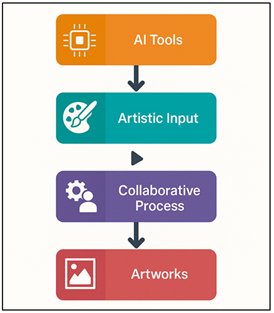
Figure 2 Framework for Integrating AI Tools in Art Production
In addition, AI may be useful in the process of curating exhibitions, the reaction of the audience, and forecast the tendencies of the market so that managers could align creativity production with cultural shifts. The concept of cross-disciplinary collaboration is also enhanced by this integration, as artists, technologists and curators are connected with each other using common digital platforms. Nevertheless, ethical and aesthetic control is necessary to make the implementation effective to maintain the authenticity and integrity of authorship. Therefore, the incorporation of AI tools is not a substitute of human creativity but a symbiotic expansion of it, giving the artists the ability to go beyond the traditional boundaries and experiment with the algorithmic aesthetics, as well as to co-create with the intelligent systems that learn, adapt and inspire in their collaboration.
2) Decision-making
processes combining human and machine input
In Hybrid Intelligence, decision-making becomes a cognitive process between machines and human beings. Contrary to the ancient hierarchical architecture, this model of collaboration combines the strengths of the two, the human intuition, ethical and emotional awareness, and AI data analytics, pattern recognition, and predictive models. Collectively, they allow making more informed and adaptive decisions and contextually sensitive decisions in the realms of art and management. In art studios, it is common to have a balance between subjective artistic and objective operational judgments in decision making. AI systems will be able to compute vast amounts of data, including audience insights and market predictions, production schedules, and can provide managers with real-time information that can help them improve their strategic planning. At the same time, human stakeholders perceive such outputs aesthetically, culturally, and ethically so that recommendations are consistent with the creative integrity and studio vision.
3) Workflow
optimization through intelligent systems
The implementation of AI-based workflow management systems changes these processes by automatic zing routine activities as well as providing real-time flexibility. Artificial intelligence systems can be used to break down project schedules, predict the project bottlenecks, and automatically repurpose tasks when resources are available and the team is performing well. Management tools based on machine learning and predictive analytics assist managers in making predictions on deadlines, budgets, and creative progress. In the case of artists, intelligent assistants will be able to take over repetitive or administrative tasks, including organizing files, version management, and documentation, and give more time to conceptual and experimental work. In addition, smart systems are useful in improving partnership and interaction between multidisciplinary teams. Hybrid dashboards and artificial intelligence across clouds offer transparency, which enable a smooth flow of coordination among artists, curators, and producers based on international networks. The fact that natural language processing (NLP) has been adopted also helps in human-machine interactions, making the management of tasks easier with the help of conversational interfaces.
5. Case Studies and Empirical Findings
1) Successful
examples of hybrid systems in art studios
In the entire creative community, a number of artistic studios have embraced the concept of Hybrid Intelligence (HI), a phenomenon that indicates the potential of change when humans and AI work together. One such interesting case is Refik Anadol Studio which combines machine learning algorithms and visualization of large amounts of data to build immersive art installations. Blending artistic intuition with data aesthetics developed with the help of AI, the team of Anadol has reconceptualized the way digital ecologies can be used to arouse emotional and sensual experience. The same can be said of such a project as Obvious Art Collective, which features the AI-created portrait of Edmond de Belamy and teaches how artists can use the generative adversarial networks (GANs) to create the original masterpieces that challenge the traditional understandings of authorship. In yet another instance, the Google Artists and Machine Intelligence (AMI) initiative has encouraged the creation of partnerships between artists and engineers, which resulted in new works that consider the concept of algorithmic creativity and machine perception. Personal studios and design studios have also started incorporating AI-based project management and generative design tools to make the production process easier, the planning of an exhibition more efficient, and creative ideation more effective.
2) Analysis
of outcomes on creativity, productivity, and management
The empirical study of art studios that apply Hybrid Intelligence shows that there is a high degree of creativity, productivity, and management effectiveness. On the side of creativity, artists indicate that the AI tools can help improve the generation of ideas, generate novel aesthetic views and experiment with them through iteration. Generative systems assist artists in resolving their stagnation in creativity by providing a range of alternatives that human beings find inspiring to reinterpret.
6. Future Prospects
1) Emerging
AI technologies for creative management
Generative models may be used to create immersive spaces, whereas AI-based analytics may predict responses of people, or be used to create more efficient exhibition layouts. Moreover, creative management will become dynamic due to adaptive learning algorithms that will constantly improve suggestions in accordance with the changing trends on art and team behavior. Natural Language Processing (NLP) and conversational AI-based tools will make communication easier between managers, who will be able to assign administrative duties to artists via intuitive voice or text messages. Moreover, AI systems built on blockchain technology are predicted to transform the functions of authorship tracking, digital provenance and copyright to ensure transparency in collaborative creative activities.
2) Policy
and training implications
In order to overcome such dilemmas, the international policy organizations and cultural institutions should work together to come up with new laws that not only protect artistic freedom but also protect the integrity of technology. Implications of training are also important. Artists, curators, and managers should become AI literate, which means that they should not only have technical skills but also critical knowledge of the algorithmic ethics, bias, and interpretability. Computational intelligence interdisciplinary education that integrates art and design will be required to equip creative professionals to work in hybrid environments. Further, art institutions and universities need to incorporate data-driven creativity, digital ethics, and hybrid management practices courses in their curricula.
7. Result and Discussion
The research participants have found that implementation of Hybrid Intelligence (HI) in the management of art studio improves creativity, productivity and decision making. AI programs assist the artists in generating ideas, automating their workflows, and analysing performances, and human intuition guarantees that they have ethical and emotional substance. Practical evidence is shown to result in enhanced cooperation, acceleration of project completion and more data-driven managerial policies. Nevertheless, there are still difficulties with the rights to authorship, transparency, and AI literacy.
Table 2
|
Table 2 Comparative Performance Metrics Between Traditional and Hybrid Art Studios |
||
|
Parameter |
Traditional Studio |
Hybrid Intelligence Studio |
|
Creativity Index (0–100) |
72 |
91 |
|
Productivity Efficiency (%) |
68 |
88 |
|
Resource Utilization
Efficiency (%) |
70 |
90 |
|
Audience Engagement Score (%) |
66.8 |
93.1 |
Table 2 shows clearly the better performance of Hybrid Intelligence (HI) studios as compared to traditional art studios using various creative and operational parameters. Creativity Index increases by 72 to 91, which means that AI-supplied settings lead to an enhanced ideation, experimentation, and aesthetics exploration.
Figure 3
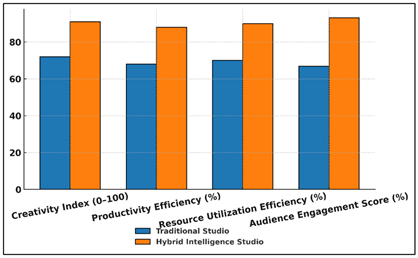
Figure 3 Performance Comparison: Traditional vs. Hybrid
Intelligence Studio
Such improvement is the reason why intelligent systems make the imagination of artists boil over due to a plethora of design possibilities and critical thinking. Figure 3 shows the performance variance of a traditional and hybrid intelligence studio. Productivity Efficiency is also enhanced with change in 68 to 88 showing that AI-based workingflow applications save time and manual effort to do unnecessary and time-consuming projects and automate workflows. As Figure 4 illustrates, the development of the studio is followed by the tendencies in performance depending on the key parameters of its activities. Similarly, Resource Utilization Efficiency increases to 90% to 70% implying that there is going to be greater optimization in the utilization of resources including materials, time, and labor through predictive analytics, intelligent scheduling applications.
Figure 4

Figure 4 Performance Across Key Operational Parameters
The biggest change can be regarded in the Audience Engagement, which increases to 93.1 percent to 66.8 percent which is a means of the ability of the AI-based analysis of the audience and the adaptive content strategy to increase the viewer engagement. All these signs confirm the fact that Hybrid Intelligence results in the significant enhancement of the creative performance, operational nimbleness, and engagement outcome in the framework of the contemporary art studio management.
Table 3
|
Table 3 Impact of Hybrid Intelligence Tools on Key Management Functions |
||
|
Management Function |
Before HI Integration (%) |
After HI Integration (%) |
|
Creative Ideation and
Innovation |
74 |
93 |
|
Workflow Automation and Coordination |
62 |
90 |
|
Decision-Making Speed and
Accuracy |
68 |
91 |
|
Data-Driven Strategic Planning |
60 |
89 |
|
Team Collaboration and
Communication |
67 |
88 |
|
Project Cost Efficiency |
71 |
86 |
Table 3 shows the dynamic impact of the Hybrid Intelligence (HI) tools to the most central management activities in the art studios. This is most evident in workflow Automation and Coordination whereby it had increased by 62 percent and 90 percent as AI can be used to help automate businesses, automate routine tasks, and enhance business flow. Figure 5 shows how the hybrid intelligence has enhanced the core management functions.
Figure 5
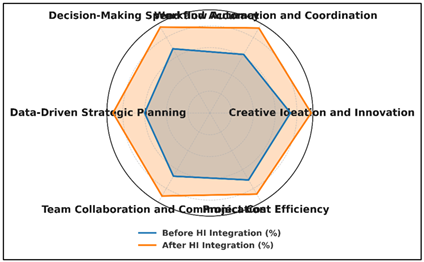
Figure 5 Impact of Hybrid Intelligence Integration on Core
Management Functions
Another important change was perhaps the boost in Creative Ideation and Innovation which went up to 93% following the beginning of 74. In addition, the Decision-Making Speed and Accuracy raised 68 to 91 %, which confirms that the data analytics and predictive models can assist managers to make reasonable and timely decisions.
8. Conclusion
The Hybrid Intelligence (HI) in the management of art studios is a serious shift in the creative sector since the human thinking and artificial intelligence collide and form a new level of a complex ecosystem. The findings of the research result in the conclusion that HI does not merely increase the opportunities of creativity, it also transforms the models of operational and managerial processes in arts. The art studio is able to gain efficiency and innovation that has never been experienced before with the human intuition, emotional sensitivity, and the aesthetic reasoning, coupled with the accurate analytical precision of the AI and its capability to process the data. The findings make reference to the fact that Hybrid Intelligence results into the creation of the high level of creativity as artists are able to explore the potential of operating with multidimensional design and develop new ideas that are not typical ones. Simultaneously, smart systems can streamline the business operations, resource allocation, and project management, which leads to an improvement in productivity and organizational agility. Information-based intelligence assists managers in taking strategic decisions that stimulate the degree of creativity and business performance. However, the transition to hybrid ecosystems needs ethical, educative and regulatory adjustment. The issues of authorship, intellectual property and transparency are to be addressed with the help of strong guidelines and interdisciplinary research. Artificial intelligence the structure of art in the future must evolve both the AI literacy and the emotional intelligence: provide the creative professionals with the power to collaborate with smart technologies without losing human values.
CONFLICT OF INTERESTS
None.
ACKNOWLEDGMENTS
None.
REFERENCES
Ackroyd, P. (2020). The Structural Conservation of Paintings on Wooden Panel Supports. In Conservation of easel paintings (pp. 478–503). Routledge. https://doi.org/10.4324/9780429399916-31
Amabile, T. M. (2020). Creativity, Artificial Intelligence, and a World of Surprises. Academy of Management Discoveries, 6(3), 351–354.
Bosco, E., Suiker, A. S. J., and Fleck, N. A. (2021). Moisture-Induced Cracking in a Flexural Bilayer with Application to Historical Paintings. Theoretical and Applied Fracture Mechanics, 112, Article 102779. https://doi.org/10.1016/j.tafmec.2020.102779
Burger, M., Nitsche, A. M., and Arlinghaus, J. (2023). Hybrid Intelligence in Procurement: Disillusionment with AI’s Superiority? Computers in Industry, 150, Article 103946. https://doi.org/10.1016/j.compind.2023.103946
Correia, A., Grover, A., Schneider, D., Pimentel, A. P., Chaves, R., de Almeida, M. A., and Fonseca, B. (2023). Designing for Hybrid Intelligence: A Taxonomy and Survey of Crowd–Machine Interaction. Applied Sciences, 13(4), Article 2198. https://doi.org/10.3390/app13042198
Dellermann, D., Lipusch, N., Ebel, P., and Leimeister, J. M. (2019). Design Principles for a Hybrid Intelligence Decision Support System for Business Model Validation. Electronic Markets, 29(3), 423–441. https://doi.org/10.1007/s12525-018-0309-2
Dong, L., Zheng, H. C., Li, L. T., and Hao, L. N. (2022). Human–Machine Hybrid Prediction Market: A Promising Sales Forecasting Solution for E-Commerce Enterprises. Electronic Commerce Research and Applications, 56, Article 101216. https://doi.org/10.1016/j.elerap.2022.101216
Gao, Y., Ziegler, P., Heinemann, C., Hartlieb, E., and Eberhard, P. (2023). Experimental Research on the Vibration Characteristics of Canvas and Primed Canvas of Paintings. Archive of Mechanical Engineering, 70, 333–350. https://doi.org/10.24425/ame.2023.146850
Hatwar, L. R., Pohane, R. B., Bhoyar, S., and Padole, S. P. (2025). Mathematical Modeling on Decay of Radioactive Material Affects Cancer Treatment. International Journal of Research Development and Management Review, 14(1), 180–182. https://doi.org/10.65521/ijrdmr.v14i1.501
Janas, A., Mecklenburg, M. F., Fuster-López, L., Kozłowski, R., Kékicheff, P., Favier, D., Andersen, C. K., Scharff, M., and Bratasz, Ł. (2022). Shrinkage and Mechanical Properties of Drying Oil Paints. Heritage Science, 10, Article 181. https://doi.org/10.1186/s40494-022-00814-2
Kim, S. G., Yoon, S. M., Yang, M., Choi, J., Akay, H., and Burnell, E. (2019). AI for Design: Virtual Design Assistant. CIRP Annals, 68(1), 141–144. https://doi.org/10.1016/j.cirp.2019.03.024
Krinkin, K., Shichkina, Y., and Ignatyev, A. (2023). Co-Evolutionary Hybrid Intelligence is a Key Concept for the World Intellectualization. Kybernetes, 52(8), 2907–2923. https://doi.org/10.1108/K-03-2022-0472
Morlotti, M., Forlani, F., Saccani, I., and Sansonetti, A. (2024). Evaluation of Enzyme Agarose Gels for Cleaning Complex Substrates in Cultural Heritage. Gels, 10(1), Article 14. https://doi.org/10.3390/gels10010014
Panke, S. (2019). Design Thinking in Education: Perspectives, Opportunities and Challenges. Open Education Studies, 1(1), 281–306. https://doi.org/10.1515/edu-2019-0022
Wellsandt, S., Klein, K., Hribernik, K., Lewandowski, M., Bousdekis, A., Mentzas, G., and Thoben, K. D. (2022). Hybrid-Augmented Intelligence in Predictive Maintenance with Digital Intelligent Assistants. Annual Reviews in Control, 53, 382–390. https://doi.org/10.1016/j.arcontrol.2022.04.001
Wu, Y., Ma, L. S., Yuan, X. F., and Li, Q. N. (2023). Human–Machine Hybrid Intelligence for the Generation of Car Frontal forms. Advanced Engineering Informatics, 55, Article 101906. https://doi.org/10.1016/j.aei.2023.101906
|
|
 This work is licensed under a: Creative Commons Attribution 4.0 International License
© ShodhKosh 2025. All Rights Reserved.