ShodhKosh: Journal of Visual and Performing ArtsISSN (Online): 2582-7472
|
|
Generative Design for Conceptual Installations
Pooja Yadav 1 , Shikhar Gupta 2
 , Sahil Suri 3
 , Dr. Yogesh Jadhav 4
 , Dr. Srinivasan T R 5
 , Dr. Nirmalrani
V 6
, Dr. Nirmalrani
V 6
1 Assistant
Professor, School of Business Management Noida International University, Uttar
Pradesh, India
2 Chitkara
Centre for Research and Development, Chitkara University, Himachal Pradesh,
Solan, India
3
Centre of Research Impact and Outcome,
Chitkara University, Rajpura, Punjab, India
4 Associate Professor, UGDX School of Technogy,
ATLAS Skill Tech University, Mumbai, Maharashtra, India
5 Professor, Department of Computer Science and Engineering, Presidency
University, Bangalore, Karnataka, India
6 Professor, Department of Computer Science and
Engineering, Sathyabama Institute of Science and Technology, Chennai, Tamil
Nadu, India
|
|
|
ABSTRACT |
|
|
Generative
design is a huge shift in the manner of thinking out conceptual works by
integrating the computer processes with the artistic instincts. The essay
examines the role of computer systems in assisting artists in producing
shifting, flexible, and information-driven physical experiences that exceed
the common boundaries of art. Generative design involves the use of factors,
chance, and rule-based reasoning, to generate forms that look like they were
not written by a person. It is grounded on computer creativity and
algorithmic aesthetics. Through AI and machine learning technologies as well
as software applications, such as Grasshopper, Processing, and Houdini,
designers have the opportunity to perform repeated research and feedback
processes to simulate how things grow, move, and interact in nature. The
analysis investigates how generative strategies transform the work of the
designer as an entity that makes to one that maintains things running. It
also puts into the limelight the interaction between human knowledge and
machine intelligence. Case studies of popular generative installations
demonstrate the way in which such works form interesting interactive
environments that evolve according to the interaction of people with them and
the information regarding the surrounding environment. Besides considering
how things appear, the issues that are raised in this study include
psychological and ethical questions regarding authorship, unpredictable, and
the sustainability of computer art over time. The given study demonstrates
that generative design can transform the process of creating future
conceptual art by addressing such issues as technological restrictions,
control over chance and material concerns. Generative design is perceived as
a form of creation and a form of thinking of how art, technology, humanexperience combine to form new modes of expressing
ourselves and telling stories in space. |
|||
|
Received 19 January 2025 Accepted 14 April 2025 Published 10 December 2025 Corresponding Author Pooja
Yadav, pooja.yadav@niu.edu.in
DOI 10.29121/shodhkosh.v6.i1s.2025.6672 Funding: This research
received no specific grant from any funding agency in the public, commercial,
or not-for-profit sectors. Copyright: © 2025 The
Author(s). This work is licensed under a Creative Commons
Attribution 4.0 International License. With the
license CC-BY, authors retain the copyright, allowing anyone to download,
reuse, re-print, modify, distribute, and/or copy their contribution. The work
must be properly attributed to its author.
|
|||
|
Keywords: Generative Design, Computational Creativity,
Algorithmic Aesthetics, Interactive Installations, Machine Intelligence |
|||


1. INTRODUCTION
Generative design is currently among the most significant new approaches as the art, building, and design evolve throughout the 21 st century. This has been a departure to the previous methods of design, which were grounded on direct writing and working with problems in a linear manner to systems-based design, where computers are used to generate, modify, and refine design outputs. The creative works of generative design, particularly of places and experiences, alters the manner in which places and experiences are conceived with emphasis being made on movement, interaction, and emergent form rather than fixed organization. This line of thought allows artists and designers to collaborate with machines in order to create things. Algorithms can help them to generate more choices of design than just human instincts. The generative design is founded on the rule-based reasoning, mathematical considerations and computer structures explaining potential design outcome rather than prescribing a form. When establishing a system of connections, be it physical, material and behavioural the creator is establishing a foundation on which the computer can generate a wide variety of variants Song et al. (2024). Not only does this process produce new and surprising results, but it also functions similar to such processes of nature as evolution, growth and self-organization. This capacity in the artistic works establishes environments that are flexible, adaptable and in many cases unexpected which contradicts traditional concepts of who made what and how to regulate its aesthetics Fu et al. (2024). Advancement in computer science and artificial intelligence has given birth to generative design. Software such as Grasshopper to Rhino, Processing, Houdini, and other mathematical modelling can now be used by artists and designers. AI and machine learning allow the systems to learn, evolve, and develop on the basis of the input data or interactions with the users, and this further expands the creative opportunities Qi et al. (2023). Using such tools, displays may become live systems that can respond to anything in the environment, the behaviour of people or real-time streams of data. Figure 1 depicts combination of data, parameters and algorithms to generate generative creative outputs. This transforms the inactive artworks into the dynamic ones.
Figure 1
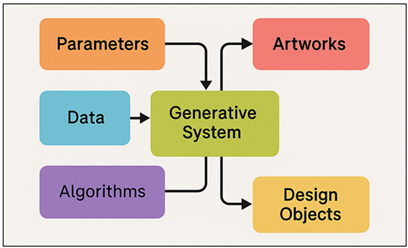
Figure 1 Architecture of Generative Systems in Art and Design
Such systems render it difficult to distinguish between the digital and real space. They make the pieces of the building alive in the form of code, light, sound, movement. Generative design is rooted in a series of concepts, not only due to new technology. It is philosophical examination of the very origin of creation involving the question of the source of inspiration and the distribution of writing among people and machine Fu et al. (2023). Since generative systems produce products over which their designer can not predict or have complete control, they introduce an element of emergence, which is the occurrence of complex patterns whereby the product is created by simple rules.
2. Theoretical Background
1) Historical
context of generative systems in art and design
Generative systems have a history in art and design dating as far back as the mid 20th century when builders and artists began to explore how mathematical reasoning, chance and technology could be applied to create new things. The 1960s saw the work of artists such as Georg Nees, FriederNake and Vera Molnara as some of the pioneers in using computer programs to create works that challenged conventional concepts of art authorship Sun et al. (2022). Their mostly plotter machine work transformed the number orders into visual images of creative compositions. This became the original computer art. Meanwhile, constructivism, and systems art were already preconditioning this by laying stress upon the structure and the method, rather than on personal expression. The 1970s and 1980s witnessed the beginning of rule-based and parametric systems which were applied by builders and designers. The generative method was further detached and became flexible with the evolution of digital tools in the 1990s Qian et al. (2023). Such computer programs as AutoCAD, Maya, and subsequent Grasshopper allowed developing complexes of shapes and models, which were informed by data. With the improvement of computers, particularly artificial intelligence and machine learning, generative design also improved. These advancements allowed the creative systems to be more adaptable and self-evolving. Generative design is presently referred to as a technique and a mindset that unites art, science and technology Lystbæk (2025). It demonstrates how the creation has evolved, the manipulation of the things using the hands directly to controlling the complex systems.
2) Computational
creativity and algorithmic aesthetics
It is sometimes believed that computers are creative when they are able to do something or generate results that people would take to be creative. It contradicts the notion that creativity is a concept that only humans can possess, that creativity can be achieved through computer processing. Generative design models brainstorming, testing and adaptability by the use of algorithms, neural networks and evolutionary computation Bölek et al. (2023). It is the way that the computer creation presents itself. These systems operate by combining features, limits and random factors and this brings about the results that no one can predict fully including those individuals who have made the systems. An equivalent concept is the algorithmic aesthetics that examines the visual and emotional characteristics of computer systems. It does not only emphasise the finished product, but rather the creative mechanism the rules, interactions and changes that constitute form. Algorithms are one of the mediums used by artists and designers and examine the possibilities of mathematical precision resulting in creative, natural, or even random outcomes Ennemoser and Mayrhofer-Hufnagl (2023). This interaction of the reasoning and the randomness defines the artistic aspect of the generative work. The human eye is not the only one that judges the aesthetics in this case, the program also contributes to the process of creating beauty and meaning.
3) Relationship
between human intuition and machine intelligence
In the generative design, the relationship between human insight and machine intelligence consists of power, teamwork and emergence. Generative design considers technology as an addition to human thought as opposed to viewing technology to take the place of human imagination. Human understanding is the source of the philosophical and visual organization. The designer determines the limits, rules, and objectives that present what the artist was attempting to communicate Limkar et al. (2023). Machine intelligence, however, investigates these variables using computing and it can help to generate a gigantic variety of choices that a human mind may not be capable of generating in its own thought. In this symbiotic relationship, the designer becomes more than a unique producer, and becomes a meta-designer, one who creates systems that provide outputs. Intuition is established and perceived to create generative systems and algorithms enhance creativity with scale, precision, and variation Li et al. (2025). It is quite crucial as well, the feedback mechanism between the machines and people: the designer examines the output, alters the parameters, and repeats and repeats the process until the solution is flawless. When individuals collaborate in such a manner, they are able to co-create and that is, intuition and logic may support one another. Machine learning is a more nuanced concept since systems are capable of learning data or creator preferences and evolve according to the changes in taste in art. Nevertheless, this reliance raises logical queries of who authored what, what it is, and what is liberty. It is the interplay between the beautiful design, not whether one is more human or machine Zhuang et al. (2023). Table 1 provides comparative studies of the generative design tools and works of art. Intuition alters intelligence and vice versa the capacities to alter human imagination and the aspects of creating, perceiving, and relating to form.
Table 1
|
Table 1 Related Work in Generative Design and Conceptual Installations |
||||
|
Project |
Medium |
Technologies Used |
Generative Principle |
Key Contribution |
|
Schotter (Gravel) |
Plotter Drawing |
ALGOL Programming |
Randomness and Rule-Based
Systems |
One of the first algorithmic
artworks exploring order and chaos. |
|
Transformations Veloso and Krishnamurti (2023) |
Computer Graphics |
Custom Algorithms |
Parametric Variation |
Early exploration of geometric abstraction through
computation. |
|
Matrix Multiplications |
Computer Art |
FORTRAN |
Mathematical Systems |
Pioneered algorithmic
aesthetics using code-generated patterns. |
|
Processing Platform Nalawade et al. (2025) |
Software Tool |
Java / Processing |
Code-Based Design |
Enabled artists to code generative visuals;
democratized algorithmic art. |
|
Rain Room |
Interactive Installation |
Sensors, Motion Tracking |
Responsive Systems |
Created immersive,
responsive spatial experience via environmental data. |
|
Machine Hallucinations Chen et al. (2023) |
Data Sculpture |
AI / GANs / Projection Mapping |
Machine Learning and Data Visualization |
Used AI to visualize machine perception of
architectural data. |
|
Momentum |
Light Installation |
Real-Time Systems, Sound
Interaction |
Temporal Algorithms |
Explored time, rhythm, and
perception in generative light structures. |
|
Arum Installation |
Architectural Installation |
Rhino + Grasshopper |
Parametric Design |
Merged computational geometry with architectural form. |
|
PostSpectacular Works |
Digital Installation |
Processing / OpenGL |
Procedural Generation |
Bridged generative design
with branding and digital expression. |
3. Generative Design Principles
1) Parametric
and algorithmic design foundations
Generative design is founded upon parametric design, algorithmic design where the design is a computer-based means of transforming hazy concepts into form that is adaptable and evolving. In parametric design the behaviour of a system and its shape is governed by the relationship among the factors, or parameters. Designers do not model a definite object, they create an evolvable model which can be modified in any manner. Entire design configurations can vary in real time with alterations of factors such as size, proportion or curve. This allows you to have a great variety of choices. The other design is referred to as algorithmic design; this design involves the utilization of logical patterns, mathematical functions or code to create shapes. By merely telling algorithms simple instructions, they become creative as they execute process rules that produce complex shapes or forms of space. This design approach corresponds to systems thought, which states that outcomes occur when input data that have been given, mathematical reasoning, and the environment interact. When parametric design is employed alongside algorithmic design, they enable designers to deal with systems rather than preset output. They simplify the experimentation with various styles of performance-based design, material-economy, and aesthetic diversity and remain consistent and manageable.
2) Use
of data, randomness, and rules in creative generation
Generative design involves the combination of data, chance and rule systems in order to create unique outputs that are difficult to predict but still make sense. Data is a substance and an initiator, which transforms the measured information into pronouncements of beauty and structure. Information on the environment, and the way humans respond to it or information on senses such as sound or movement can directly influence the way designs act, allowing displays to update in real time. Such a data-driven approach makes things closer to their context, making art objects become living systems reacting to the changes in the natural or social world. Randomness also brings about a significant aspect of uncertainty and transformation and disrupts the monotony of deterministic systems. The designers induce emergent variety by introducing the element of controlled chance to algorithms: each time a specific algorithm is repeated, there is a little variation that reminds natural patterns of complexity. Striking this equilibrium between the order and chaos results in planned and random results, and this is how natural evolution appears. However, rules are the reasoning that makes everything make sense in the fullness of this mess. They code the boundaries, relationships, and principles of the manner in which things ought to be that govern the manner in which the system evolves over periods of time.
3) Feedback
loops and emergent behavior in generative systems
The process of generative design has feedback loops as an essential component since these allow systems to self-regulate, evolve, and develop in response to ongoing input. Here, it is the feedback loop that the result of the system conveys information to the controlling factors and vice versa in a circular manner. The results of an algorithm treat the subsequent rounds and so making a process that is continually growing and improving.
Figure 2

Figure 2 Feedback Loops and Emergent Behavior
in Generative Systems
This process brings in flexibility, which enables structures to behave like live systems to evolve with time rather than being rigid objects. Emergent behaviour occurs when the combination of simple rules produces complex, and in most cases, unforeseen outcomes. The adaptive and emergent behaviors are generated in dynamic feedback cycles as illustrated in Figure 2. It entails regularities and configurations not explicitly made but as the system operates they come into being. Examples include some versions of swarm, cellular automata, or generative growth models which are modelled after the evolution of living things. Such incidences demonstrate that decentralised systems may result in coherent forms, which indicate that it is true that natural ecosystems and computer systems are alike.
4. Tools and Technologies
1) Software
platforms (e.g., Grasshopper, Processing, Houdini)
The advent of specific software tools that have the ability to render abstract formulae into the real world as shapes and interactions has greatly accelerated the development of generative design. Among them, there are such significant basic tools as Grasshopper, Processing, and Houdini. All of them are unique features that complement one another. Grasshopper Visual programming system is compatible with the Rhino 3D and allows the use of parametric modelling by providing a node-based interface. Connection between factors can also be established by designers and this allows them to create complex shapes through logic rather than by drawing them manually. It is common in the construction and outdoor artworks since it can deal with the flexible, precise, and performance-based design. Mathematical art became more available to more people through processing that was developed as an open-source code environment, combining both usability and significant computing capabilities. It allows code the designers to create dynamic displays, models, and interactive displays. This promotes generative art and design teaching practice. Houdini is however more complex in its procedural system, which it applies a lot in visual effects as well as modelling. Its node-based process allows complex particle systems, fluid dynamics and motion design that make it ideal in the creation of works changing with time or animated works.
2) Hardware
interfaces and fabrication technologies
Generative design is made possible by software, but with hardware connections and manufacturing technologies bridging the virtual and the real world, it is now possible to make imagined pieces become real experiences. When hardware is added to generating systems, they are no longer just screens, but can now communicate with the surrounding world in real time, be sensitive, and occupy space. Computer programs and the real world can communicate with one another easier due to hardware platforms such as Arduino, Raspberry PI, and Kinetic devices. They acquire data on the motion sensors, sound sensors, temperature sensors or light sensors and transmit it back to creative systems. This allows the displays to be responsive to individuals or environment. This communication makes the audience not passive people who are only watching but will be actively involved in a digital world which is evolving. The digital fabrication technologies, including 3D printing, CNC cutting and robotics manufacturing transform a computer-generated plan into the real structure. With these tools, complicated shapes and patterns which are commonly difficult to make by hand can be made with precision because they are made by computers. Manufacturing technologies allow one to produce parts in installation design that are modular, flexible, or sensitive, and physically reflect computer reasoning.
3) Integration
with AI and machine learning models
The generative design is a significant advance in creative computer use by adding artificial intelligence (AI) and machine learning (ML). The AI systems are also able to learn as opposed to the conventional mathematical approaches which are based on fixed rules. This allows them to design designs that are adaptive, predictive and self-generative. Such transformation creates a new perspective of thinking creativity, not only stashed but also cultivated by practice and repetition. AI transforms creative displays to be more innovative as systems can view, comprehend, and respond to complex patterns. An example is the neural networks which may examine inputs such as sound, sight or behaviour and generate variating artistic responses. Generative Adversarial Networks (GANs) generate novel images, designs or spatial layouts that cannot be visualized by a human being. Similarly, reinforcement learning also allows systems to advance their behaviour with time whereby they vary according to human interaction or alterations in the environment. The designers also use machine learning to be more innovative as it proposes notions, predicts or enhances the outcomes. Today anyone can use these features, because of such tools as RunwayML, TensorFlow, and PyTorch. These applications allow artists to add models driven by AI to either visual programming languages or their own programs.
5. Application in Conceptual Installations
1) Spatial
and experiential aspects of generative installations
Through the integration of computer intelligence and the sense awareness, generative works transform the space perception with the formation of settings that transform in response to space occupants and the external input. This is why generative displays are not like the traditional motionless art which does not change with time, but more so narrates a story which involves physical, mental, and intellectual involvement of people. Space is no longer a place where art is stored but is used in the creation of art. Under such circumstances, computer processes form the makeup of space rather than a combination of manual assembly. In a computer system, light, sound, motion, and the sensation of things interrelate and form realistic worlds that continuously change their shapes or behaviour. This results in a living architecture - spaces that breathe and react as well as evolve over time in an informal logic of generative systems. Dynamic displays attract experience and make people visit and participate. They dismantle the barriers between the viewer and the art and aid in the holistic interaction where the user is allowed to alter the system by touching it, moving it, or gesturing towards it. The soundscapes may vary depending on the number of individuals in the room and the light patterns may vary depending on real-time data.
2) Case
studies of notable generative installation artworks
The best examples of generative design in conceptual works are those of artists and companies that were ahead of their time in applying computers as a tool of creativity. The series of Machine Hallucinations by RefikAnadol is an excellent example of it since it works with AI and massive files to create realistic worlds that depict the dreams of machines. The work by Anadol transforms places into data-driven and moving paintings which constantly evolve, and it is difficult to see the distinction between the way computers think and the way people think. Another famous example is the Rain room by Random International. It is an adaptable environment where individuals can walk in the downpour without becoming damp. Motion sensors can pick up when individuals are moving which halts the rain in certain locations. This installation is the intelligent reaction in that the natural systems are transformed into the experience that can be experienced and taken part by people, as well as Light, Motion and Sound installed by United Visual Artists (UVA) such as Volume, Momentum that are driven by algorithms. Lighting patterns are altered depending on the movement of people within the space and they dance with the lights.
6. Design Methodology and Process
1) Concept
development through computational exploration
In generative design, idea generation relies on computer research, in which an algorithm, parameters and data take the place of strict models and conventional modelling to aid in generation of ideas. Designers do not begin with an objective in mind. They instead generate an architectural system, a rule system, a set of constraints, and relations that demonstrate how form and behaviour may manifest themselves. This method works in a way that facilitates the discovery of new things and the experiments with them, which allow the ideas to develop naturally as as the intention of people and the calculations of computers influence each other. The conceptual framework which is the first step refers to the determination of what the aesthetical, physical or experiential objectives of the installation should be. Then, the designers transform such ideas into mathematical logic, establishing factors governing such aspects as shape, movement, and interaction. Using scripts or visual computing, systems are designed to replicate numerous copies that display patterns, shapes or behaviours unanticipated. Search is more significant in computational discovery than definition. The artist considers a very large pool of potential solutions and selects the ones that best serve their artistic interests.
2) Iterative
prototyping and simulation workflows
The generative design approach has its core in iterative modelling and simulation. They allowed the designers to transform computer generated concepts into actual testable entities. Unlike direct design procedures, generative systems rely on repeated cycles of creating, assessing as well as refining designs. Every iteration is an opportunity to be able to test its functionality, the appearance of the system, and the experience that the user has. In generative design, prototyping can begin in digital space, where constructive environments are modelling the physical or sense phenomena such as sound waves propagating through space, light diffusing, or material windages. Through mathematical modelling, designers are in a position to observe the behaviour of dynamic systems with respect to various parameters or user interactions. New behaviours and real-time dynamics are usually modelled using tools such as Grasshopper, Processing, and Houdini before being created and put into practice in the real world. Physical modelling is the next step and bridges the gap between computing and real objects, using 3D printing, CNC cutting, robot manufacturing, and many others, one can easily transform the results of an algorithm into reality as a real object. These objects are treated as a test and demonstrate real boundaries such as the stability of the structure or the ease of reading by the human eye which are then used to enhance the program.
3) Evaluation
of form, function, and audience interaction
In generative design, it is not merely the opinion as to how something appears. It also encompasses the form, function as well as the interaction of people with it- all which relate to the changing behaviour of the system. The conventional appraisal variables do not work because the generative displays are fluctuating and reacting. Rather, designers consider the balance of the functionality of the system in as many sensory considerations as possible. Form is judged not only in its shape or composition, but also in its ability to transform and to compose itself. The regularities which are the results of algorithms should be attractive and at the same time should be open to variation. A typical method of doing this is to test spatial rhythm, visual balance and material expression under various conditions of creativity. Function is concerned with the way the system functions and the strength of the system on a technical level. Designers test the functionality of the program, the responsiveness of sensors or other devices, and the speed of data transfer through the dynamic network. Real Time testing and simulations assist in ensuring that the system always functions in the same manner and yet can be altered. The process of making people relate to each other is what makes judgement a reality.
7. Aesthetic and Philosophical Implications
1) Redefining
authorship and creative agency
The main idea of generative design is a challenge of the old concept of authorship, making the creative process a collaboration between a human and a computer. The artist or designer is usually the one who is considered to create the form and meaning. In the generative systems, however, the ownership is also shared among the creator, the program and in certain cases even the viewers. Designer is no longer a maker of things, but a system set-up person. This one establishes the regulations, boundaries and stipulations of creation to occur. The concept of meta-creativity emerging out of this change, where the aim is not to create an object but to create a mechanism that can create an object of an infinite variety. The author is the creator in the act of creation itself. When initiated, the creative process takes its own turn resulting in outcomes that may not have been envisioned or anticipated by the very person who initiated it. Who or what is the author of a work that is created by a program? This gives psychological concerns regarding control, purpose and creativity.
2) Aesthetics
of unpredictability and emergence
Generative design aesthetics is based on unpredictability and emergence. These are characteristics that contravene conventional concepts of order, unity and control. Form and skill in the structure are the traditional attributes of beauty. Generative art, conversely, appreciates complexity and flexibility and change and embraces the unforeseen. Interaction between randomness and rules to produce emergent aesthetics is revealed in Figure 3. The creator defines the initial conditions, including the rules, parameters, and formulas but the form which is formed is not pre-planned but the outcome of the interaction of the system over time.
Figure 3

Figure 3 Aesthetics of Unpredictability and Emergence in
Generative Design
Such a manner of doing is similar to the occurrence of growth, development, and chaos in nature: simple ideas give rise to complex patterns. The beauty lies in the appearance of shape coming into being--in the appearance of the manner of working in which chance and structure collaborate to produce individual effects. It is something new every time around, a dialogue between destiny and accident. Generative art is therefore not beautiful in its fullness, but in its emergence, in how the complexity continues to increase. The study of beauty is subjected to time by unpredictability. Time dynamic displays are dynamic and vary at all times in response to data or user input. This dynamic quality makes things never to become monotonous and brings us into wonder since we will never have two times or two experiences that are identical.
8. Challenges and Limitations
1) Technical
and computational constraints
Although generative design can transform things, there are numerous technical and computational issues that influence the manner in which it operates, as well as the outcomes of its action. Complex generative systems can usually consume a lot of processing power, memory, and space to work with data and be slow to react in real time or scale up. High-resolution simulations, machine learning models, and iterative algorithms can be effective only with the help of advanced hardware and optimised code, so smaller companies or individual artists might not be able to access them. Software also limits creative freedom. Applications such as Grasshopper, Processing, and Houdini have powerful foundations, although their structure of sets may make it more difficult to experiment or integrate systems. The issue of digital complexity moving into real form has its own set of issues regarding accuracy, production error, and the ability to foresee performance as well. Other issues are the transparency deficiency of computer systems. In the case of AI-based algorithms, they can be viewed as black boxes meaning that creators can have no way of comprehending or comprehending the internal operations of these algorithms.
2) Balancing
control and randomness
One of the most difficult aspects of generative design is to strike an appropriate balance between the control and chance. Generative systems such as when things are impossible to predict, yet things may go awry due to accident of logic or taste. Conversely, excess control would render the job less creative, more machine like and will do something. The designer, therefore, has to balance this by having models that can be changed without having to lose the idea and the visual integrity. To maintain this balance, parameters, rules of probability, and weighted chance are frequently applied in a premeditated manner. Designers optimize to determine boundaries on the way chaos may be utilized effectively. Recurring testing and feedback loops will aid in determining whether the system is maintaining its diversity in a productive manner or it is beginning to transform into noise. On a philosophical level, the conflict is similar to the bigger debate between human will and computer agency. The creator must decide to what extent he/she will relinquish control, and the real generativity occurs when the system generates something nobody could have ever imagined.
3) Sustainability
and material considerations
As computer processing and real manufacturing converge, sustainability is increasingly becoming a relevant component of the discussion of the concept of generative design. Although generative displays are highly technological, they tend to be highly energy-consuming, generate high levels of electrical junk, and consume high levels of material, which renders them environmentally conscious. AI training, modelling and real-time simulation are all potential sources of big carbon footprints, which are the computing power that makes generativity possible. This causes designers to consider the environmental price of digital creation afresh. When it comes to the materials, transforming computer shapes into the real buildings, careful selection of materials is important. Additive manufacturing, robotic construction and moving components should be tested to determine how effectively they perform, how durable they are and whether they can be recycled. Generative systems can be used to assist the environment by redistributing the materials more effectively, reducing wastes, and testing the performance prior to the creation. These rewards are, however, dependent on prudent parameterisation and moral modes of proceeding to things.
9. Conclusion
Creating by means of generative design is an entirely new approach towards creation. It incorporates human understanding and computer intelligence to create a dynamic, flexible and changing art. Conceptual displays transcend the normal constraints of design making the physical spaces alive, breathing and speaking to one another. Generative design shifts the emphasis of creating an individual object to creating a live system. This requires that the designer collaborates with algorithms as a co-worker by deciding which possibilities he/she is interested in rather than instructing algorithms in how to work. On further examination, we realize that generative approaches not only transform the appearance of things, but they also transform the process of making things. Generative design is a form of thinking concerning how things must at all times be evolving. It has mathematical reasoning, data-driven research and emerging behaviour underpinning it. Installations may be experiences that are continuously shifting due to the possibility of the inclusion of AI, sense data, and live feedback. This can be compared to the trends of change of the digital culture today. Along with the promise of generative design, there are, however, technical, moral and environmental issues that accompany it. Designers must cope with problems of ownership, long term viability and control without compromising the balance between chance and order. These limits are not issues; they are rather valuable points of thinking that render the field to be more philosophically and culturally significant.
CONFLICT OF INTERESTS
None.
ACKNOWLEDGMENTS
None.
REFERENCES
Bölek, B., Tutal, O., and Özbaşaran, H. (2023). A Systematic Review on Artificial Intelligence Applications in Architecture. DRArch, 4, 91–104. https://doi.org/10.47818/DRArch.2023.v4i1085
Chen, J., Wang, D., Shao, Z., Zhang, X., Ruan, M., Li, H., and Li, J. (2023). Using Artificial Intelligence to Generate Master-Quality Architectural Designs from text descriptions. Buildings, 13(9), Article 2285. https://doi.org/10.3390/buildings13092285
Ennemoser, B., and Mayrhofer-Hufnagl, I. (2023). Design Across Multi-Scale Datasets by Developing a Novel Approach to 3DGANs. International Journal of Architectural Computing, 21(3), 358–373. https://doi.org/10.1177/14780771231168231
Fu, B., Gao, Y., and Wang, W. (2023). Dual Generative Adversarial Networks for Automated Component Layout Design of Steel Frame-Brace Structures. Automation in Construction, 146, Article 104661. https://doi.org/10.1016/j.autcon.2022.104661
Fu, B., Wang, W., and Gao, Y. (2024). Physical Rule-Guided Generative Adversarial Network for Automated Structural Layout Design of Steel Frame-Brace Structures. Journal of Building Engineering, 86, Article 108943. https://doi.org/10.1016/j.jobe.2024.108943
Li, C., Zhang, T., Du, X., Zhang, Y., and Xie, H. (2025). Generative AI Models for Different Steps in Architectural Design: A Literature Review. Frontiers of Architectural Research, 14, 759–783. https://doi.org/10.1016/j.foar.2024.10.001
Limkar, S., Ashok, W. V., Singh, S., Singh, A., Wagh, S. K., and Ajani, S. N. (2023). A Mechanism to Ensure Identity-Based Anonymity and Authentication for IoT infrastructure using cryptography. Journal of Discrete Mathematical Sciences and Cryptography, 26(5), 1597–1611. https://doi.org/10.47974/JDMSC-1827
Lystbæk, M. S. (2025). Machine Learning-Driven Processes in Architectural Building Design. Automation in Construction, 178, Article 106379. https://doi.org/10.1016/j.autcon.2025.106379
Nalawade, P. V., Bhandare, S., Bhole, S., Bhongale, V., and Ghayal, M. (2025). Acadlinker: Design and Evaluation a Skill-Based Student Network with a Touch of AI. International Journal of Research in Advanced Engineering and Technology (IJRAET), 14(2), 57–61.
Qi, Y., Yuan, C., Li, P., and Kong, Q. (2023). Damage Analysis and Quantification of RC Beams Assisted by Damage-T Generative Adversarial Network. Engineering Applications of Artificial Intelligence, 117, Article 105536. https://doi.org/10.1016/j.engappai.2022.105536
Qian, W., Yang, F., Mei, H., and Li, H. (2023). Artificial Intelligence-Designer for High-Rise Building Sketches with user Preferences. Engineering Structures, 275, Article 115171. https://doi.org/10.1016/j.engstruct.2022.115171
Song, Z., Zhang, C., and Lu, Y. (2024). The Methodology for Evaluating the Fire Resistance Performance of Concrete-Filled Steel Tube Columns by Integrating Conditional Tabular Generative Adversarial Networks and Random Oversampling. Journal of Building Engineering, 97, Article 110824. https://doi.org/10.1016/j.jobe.2024.110824
Sun, C., Zhou, Y., and Han, Y. (2022). Automatic Generation of Architecture Facade for Historical Urban Renovation using Generative Adversarial Network. Building and Environment, 212, Article 108781. https://doi.org/10.1016/j.buildenv.2022.108781
Veloso, P., and Krishnamurti, R. (2023). Spatial Synthesis for Architectural Design as an Interactive Simulation with Multiple Agents. Automation in Construction, 154, Article 104997. https://doi.org/10.1016/j.autcon.2023.104997
Zhuang, X., Ju, Y., Yang, A., and Caldas, L. (2023). Synthesis and Generation for 3D Architecture Volume with Generative Modeling. International Journal of Architectural Computing, 21(3), 297–314. https://doi.org/10.1177/14780771231168233
|
|
 This work is licensed under a: Creative Commons Attribution 4.0 International License
© ShodhKosh 2025. All Rights Reserved.