ShodhKosh: Journal of Visual and Performing ArtsISSN (Online): 2582-7472
|
|
AI for Sustainable Art Production Management
Abhinav Mishra 1
 ,
Shriya Mahajan 2
,
Shriya Mahajan 2 , Dr. Kunal Meher 3
 , Dr. Badri Narayan Sahu 4
 , Dr. Sarika Agarwal 5
 , Richa Srivastava 6
1 Chitkara
Centre for Research and Development, Chitkara University, Himachal Pradesh,
Solan, India
2 Centre
of Research Impact and Outcome, Chitkara University, Rajpura, Punjab, India
3 Assistant Professor, UGDX School of Technogy,
ATLAS Skill Tech University, Mumbai, Maharashtra, India
4 Professor, Department of Electronics and Communication Engineering,
Institute of Technical Education and Research, Siksha 'O' Anusandhan
(Deemed to be University) Bhubaneswar, Odisha, India
5 Associate Professor, Department of
Computer Science and Engineering (AI), Noida Institute of Engineering and
Technology, Greater Noida, Uttar Pradesh, India
6 Assistant Professor, School of
Business Management, Noida international University, Noida, Uttar Pradesh,
India
|
|
|
ABSTRACT |
|
|
This study
looks into how AI technologies can help artists to use resources more
efficiently and make less waste, and make their work more
eco-friendly. AI provides tools that enable not only greater
creativity but also less damage that can be done to the environment by making
and sharing art via AI. It does this by linking new ideas in art with
environmental-friendly ways of making things. The first part of the study is
an extensive review of the existing literature on the uses of AI in art and
acceptance of environmentally friendly methods in creative areas such as
design, digital medium, and the visual arts. A mixed approach is applied for
the technique, which examines both qualitative and numeric aspects of
sustainability, such as energy economy, lifetime effect of materials, and
reducing carbon emissions via AI-driven actions. Some important areas of
focus are optimising resources with the help of AI,
making things that use less energy, and choosing smart materials according to
lifecycle analysis. The paper also contains case-studies of digital art
platforms that deploy AI, fashion efforts that are good for the environment,
and creative AI projects that attempt to reduce waste. The results shows the
potential of AI as a creative partner to be a sustainability driver. It can
promote responsible innovation without compromising on art purism. The paper
comes to the conclusion that the use of AI as a means to aid in making art
production more sustainable is a good way for the creative economy to move
towards circularity and environmental awareness. |
|||
|
Received 19 January 2025 Accepted 14 April 2025 Published 10 December 2025 Corresponding Author Abhinav
Mishra, abhinav.mishra.orp@chitkara.edu.in DOI 10.29121/shodhkosh.v6.i1s.2025.6671 Funding: This research
received no specific grant from any funding agency in the public, commercial,
or not-for-profit sectors. Copyright: © 2025 The
Author(s). This work is licensed under a Creative Commons
Attribution 4.0 International License. With the
license CC-BY, authors retain the copyright, allowing anyone to download,
reuse, re-print, modify, distribute, and/or copy their contribution. The work
must be properly attributed to its author.
|
|||
|
Keywords: Artificial Intelligence, Sustainable Art Production,
Resource Optimization, Generative Design, Environmental Efficiency |
|||



1. INTRODUCTION
Art has always shown the creativeness, emotional and cultural changing of people. But for as the need for artistic goods is growing around the world, so is the damage that making art is doing to the earth. The big impact to the environmental damages include the production of arts and crafts materials, the energy consumption during the manufacturing process, as well as the waste of samples and scraped work. The introduction of Artificial Intelligence (AI) into this scenario is a colossal opportunity to get the production of art closer to environmental principles. The aim of AI to manage sustainable art production is to unite the new technology and the focus on the environment, and in the future, imagination and environment-focused awareness will be able to coexist. Sustainability in the creative industries is not merely the amount of trash that is minimized. It is also doing good with resources, less carbon emission, encouraging equitable material purchase and upholding the design practices of circles. The increasing number of artists and makers are discovering that it is important to apply eco-friendly practices without restricting their artistic rights Siri (2024). Artificial intelligence has special solutions to these problems with its capacity to analyse the data, identify trends and develop novel ideas.
This does not only make the art creation better to the earth, but it makes people more productive and creative. Over the last several years the role of AI in the creative process was greatly changed Mossavar-Rahmani and Zohuri (2024). The early application of AI was with regard to digital creation or image making aid. It is currently used in generative art, materials science and lifecycle assessment and many more. As an example, AI programs can recreate the effects of various art materials on the environment, which can be used by artists to select more environmentally friendly materials prior to the process of creating the art itself. Machine learning models may be used to predict the amount of energy digital devices will consume, and the places where waste is most common and offer a solution to change the situation Qin et al. (2023).
Figure 1
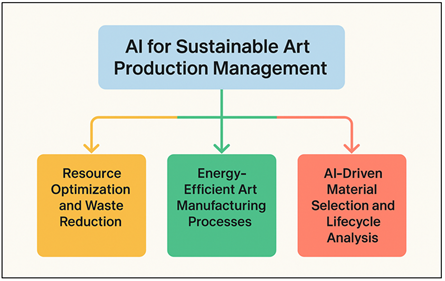
Figure 1 Conceptual Framework of Sustainable Art Creation
through AI
Although, these new technologies also bring about new questions of sustainability, such as how much energy blockchain technologies use, AI may potentially alleviate these effects with the help of optimisation and efficient energy-saving practices. Figure 1 - AI is being applied to production of art to make it creative, efficient and sustainable In fashion, design and industrial art, AI can be used to produce art in a sustainable manner through predictive modelling, automatic generation of patterns and automated cutting of materials that can help reduce the waste of materials. These technological transformations prove that art, data science and ecology are getting closer to each other Singh et al. (2023). In the business case, developing a long lived artwork means that there must be a system that integrates artistry and business effectiveness. The AI tools are useful in this integration as they enable us to track supply lines in real-time, measure the damage that we inflict on the environment and automate the tedious office work. This is to give artists, makers and producers more freedom in coming up with new ideas without worrying about environmental guidelines. Moreover, AI systems can facilitate the creation of easier ways of people collaborating to make things on global networks. This saves on traveling and physical infrastructure requirements that contributes towards the achievement of sustainability. Even though it has a lot of potential, the fact remains that AI in sustainable art creation is not easy to use Wang (2021). To ensure responsible merging, ethical concerns such as creative writing, data bias, and computer openness have to be addressed. Also, artists and organisations that are switching from traditional methods to ones that use AI have to go through a learning curve. Technologists, artists and environmental experts must work together, in a multi-disciplinary manner, if they want to deliver fair results.
2. Literature Review
1) Existing
Research on AI Applications in Art Production
Artificial intelligence (AI) has become an important tool for changing the way art is made and business is run. Existing study shows that AI has the ability to not only make people more creative, but also to change the way we think about beauty through mathematical help and computational design Cai et al. (2023). In the beginning, AI in art was used primarily for creating algorithms in the creative field, machine learning models, and neural networks that could create the art of visual and audio. Some researchers like Ahmed and Sutton (2020) say AI can be a "co-creator" by providing ideas and giving a model of how to make creative choices. Generative adversarial networks (GANs) in particular have proven to be very powerful, allowing artists to remix pictures, sounds and videos in ways that were previously impossible Longo and Faraci (2023). New researches prove that by AI tools, processes of making digital art have become more efficient. For example, automatic colour adjustment, pattern recognition and arrangement analysis help artists to make complicated works look better with little time and effort wasted. AI-based platforms such as DeepArt and Runway ML have also made more artistic tools more accessible to more people, allowing more people to make art Huang and Rust (2020). By taking a look at visual data and guessing cultural trends, AI does not only create. It also is useful in curating, repair and audience connection.
2) Sustainable
Practices in Creative Industries
In the artistic industries, the quest for sustainability has gone from being a niche to a global must. Systemic approaches considering the environmental, social and economic factors are required as the research on sustainable art creation shows. According to Jackson and Hutter (2021), being sustainable in the arts entails achieving a balance between being artful and being environmentally conscious Huang et al. (2025). During the entire production process, artists and makers should attempt to use as little energy and waste as possible. In the creative industry, sustainable practices encompass a plethora of things, such as using recyclable media and reusable materials, switching to digital production methods that produce less physical trash. The fashion and design industries have led the way in promoting the concept of "circular creativity", which means using materials again, changing the purpose of the materials, or the simulation of materials on the Internet so that new material is not bought that is not necessary Avlonitou and Papadaki (2025). Table 1 presents various applications of AI in support of sustainability in art production. Life cycle assessment (LCA) software has also been used to study the environmental impact of artistic creations providing us with quantitative data that could contribute to an improvement.
Table 1
|
Table 1 Summary of Related Work on AI And Sustainable Art Production |
||||
|
Study Focus |
AI Technique Used |
Application Domain |
Outcomes |
Limitations |
|
AI as Co-Creator in Digital
Art |
GANs, Deep Learning |
Visual Arts |
AI enhances creativity and
reduces material dependency |
Limited to digital contexts |
|
Sustainable Practices in Creative Industries Cao et al. (2023) |
Data Analytics |
Mixed Media |
Framework for sustainable art ecosystems |
Lack of AI integration |
|
AI in Generative Design for
Fashion |
Evolutionary Algorithms |
Fashion Design |
Reduces textile waste via
predictive cutting |
High computational cost |
|
Machine Learning for Digital Curation Sha et al. (2021) |
NLP, Clustering |
Digital Museums |
Automated cataloging reduces
storage redundancy |
Focused on metadata only |
|
Virtual Fashion Production |
3D AI Modeling |
Digital Fashion |
Fully digital garments
eliminate material waste |
Limited accessibility |
|
AI in Creative Music and Visuals |
Neural Networks |
Audio-Visual Arts |
Promotes digital-first creativity |
Computational intensity |
|
Sustainable Design using
GANs Zhao and Yezhova (2024) |
GANs |
Product Design |
AI-generated prototypes
reduce production cycles |
Lacks LCA validation |
|
AI-Driven Textile Impact Measurement |
Big Data, ML |
Sustainable Fashion |
Real-time sustainability scoring for fabrics |
Limited scalability |
|
Deep Learning for Art
Restoration Gaber et al. (2023) |
CNNs |
Cultural Heritage |
AI restores damaged works
with minimal waste |
Focused on restoration only |
|
Generative AI in Architecture Shambharkar et al. (2025) |
Generative Design |
Architecture |
Produces lightweight, sustainable structures |
Requires expert supervision |
|
Lifecycle Analysis in
Digital Art |
ML, Predictive Models |
Digital Media |
Tracks environmental impact
through data analytics |
Limited real-world data |
|
Democratizing AI Art Creation Chang (2021) |
GANs, Transfer Learning |
Digital Art Platforms |
Simplifies creative process, lowers material demand |
User skill dependency |
|
AI in Circular Art
Production |
Hybrid ML Models |
Industrial Design |
Promotes reuse and
recyclability in art materials |
Early-stage implementation |
3. Methodology
1) Research
Design and Approach (Qualitative, Quantitative, or Mixed)
This study research plan is a mixed-method one, which merely implies that the study takes a comprehensive approach to the investigation of the role of AI in aiding sustainable art production management using both qualitative and quantitative approaches. The combination of measured sustainability outcomes and analytical understanding of arts practices can enable us to view technical, creative and environmental concerns in a balanced way; this is made possible through the mixed-method approach. In order to determine the effect of the AI-driven tools on decisions made by the artist, the utilization of resources and new ideas, the qualitative aspect of the study considers case studies and interviews with experts in detail and presents a literature review. Such an outlook allows us to see how artists, creators, and makers experience the use of AI in their activity. The number section deals with gathering real-life information about sustainable indicators like the amount of energy utilised, the efficiency of the used materials and the time which is saved in the production process owing to AI applications. The statistical analysis determines the extent to which the world would be in a better position than the antique means of creating things. The two methodologies combined make it possible to fully understand the effects that AI has on various arts and business settings. These strategies align with the current thinking on sustainability like the Triple Bottom Line (TBL) that highlights the significance of social, economic, and environmental issue. This perspective is employed to consider not only the technical effectiveness of AI, but what it is that this field of concern represents to the creative industries in general with regard to what changes over the long-term.
2) Tools
and Technologies Used (AI Models, Sustainability Metrics)
This study combines AI technologies and sustainability evaluation tools to examine the question of whether creative and environmentally friendly production of art, being run by AI, is possible. As an AI model of interest, Generative Adversarial Networks (GANs), Convolutional Neural Networks (CNNs) and Natural Language Processing (NLP) methods had been used. Many individuals are aware of the fact that these models are capable of generating, classifying and evaluating both image and textual information, enabling creative automation and decision-making on what appeals. GANs are particularly handy to come up with sustainable design samples that consume the minimum amount of resources during construction. CNNs are used to examine the trends in images and arrive at the best design layouts that achieve the minimal energy consumption in drawing. NLP models can be used to analyze moods and create literature, which is useful in assisting artists to produce art using stories. The two most significant review tools that will be in use in this research to quantify the environmental outcomes are Life Cycle Assessment (LCA) and Carbon Footprint Analysis. These tools will determine the extent of the energy, materials, and waste used in the production processes that are relying on AI. To check the sustainability of the environment over time, other indicators are included, including the Sustainable Process Index (SPI) and Circular Economy Metrics. With the help of AI technologies and techniques of assessing sustainability, you can consider creative efficiency and environmental impact in a variety of perspectives. The combination of these tools gives us the computing and analytical foundation on which we can conclude how AI technologies can help the most efficient use of resources and still have room to the artistic integrity of environmentally friendly manufacturing processes.
3) Data
Analysis Techniques
In this research data analysis, there are both quantitative statistical analysis and qualitative interpretation of the topic. This ensures that the analysis of the role of AI in maintaining sustainability in the production of art is robust. Quantitative data which is a result of sustainable performance metrics, resource utilisation records, and energy consumption models are looked at using descriptive statistics, association analysis and regression modelling. Such approaches are applied to define the relationships between the application of AI and the quantifiable effects in the increased quality, material and pollution reduction. To undertake qualitative analysis using written and visual data of project reports, case studies and interviews with artists, a topic coding system is being utilized. Repeating patterns are discovered using the concepts of grounded theory in the manner people accept AI, change creatively and their environmental awareness. The coding process groups the ideas into three broad categories, which are the influence on the innovation, the connection with sustainability and artistic change. They are also compared to the identical analysis of the shifts in environmental and artistic outcomes of standard and AI-based production processes. Such triangulation of data is obtained through three kinds of data that include the technical reports, the environmental checks and the user feedback that contributes towards the reliability of the results. Mixed analysis method will warrant that findings of the study are founded on figures, as well as facts of the surrounding. Ultimately, the data analysis techniques give us the entire picture of how AI technologies improve the environmental performance and change the approach towards the creative application to the modern art production.
4. AI Applications in Sustainable Art Production
1) Resource
Optimization and Waste Reduction
Artificial intelligence (AI) is involved in the very fabric of the efficient production of the art in order to utilize the resources to the full extent and reduce the number of wastes. The conventional methods of art making tend to waste a lot of time and money in areas such as duplication of materials, lack of planning in the designs as well as trying them out and observing what works and what does not work. Through imagining what will be a reality, AI is able to fix such flaws through predictive modelling and data-driven design optimisation.
Figure 2
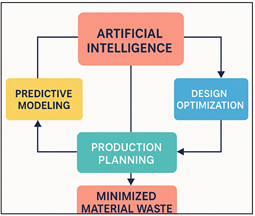
Figure 2 Flow Diagram of AI Applications in Resource
Optimization for Sustainable Art
Generative design systems, such as those based on Generative Adversarial Networks (GANs) and evolutionary algorithms, also allow designers and artists to experiment with a variety of creative ideas online and not have to create as many physical samples. Figure 2 shows AI optimizing resources and minimize the waste in art production. AI-based 3D modelling and rendering tools ensure that the use of materials is compatible with green objectives through the optimisation of shape and structure. Also, inventory management systems that employ AI can keep a real-time check on the movement of materials - which stops overproduction, and are promoting the circular reuse of resources. Pattern optimisation and digital samples, using AI, have reduced the amount of cloth waste to a large extent in the fashion and design industries. In the same way, AI-assisted manufacturing systems find the most resource-efficient ways to build sculptures and installations.
2) Energy-Efficient
Art Manufacturing Processes
As for ecology, using too much energy is a huge issue when it comes to both traditional and digital art production. Artificial Intelligence (AI) offers an opportunity to make manufacturing, drawing, and distribution more energy efficient. AI systems use prediction analytics, real-time tracking and adaptable control systems to make the best use of energy at all stages of making and creating art. AI algorithms make computers less busy as far as digital art and multimedia is concerned by altering the settings of images on the fly, depending on how complicated the scene is. Machine learning models can determine when high-resolution output is necessary and automatically reduce the speed of processes when it is unnecessary. This saves computer power. Similarly, AI-enabled energy management systems determine the efficiency of 3D printers and digital manufacturing machines, their availability and power consumption, in order to avoid compromising the quality of the output. AI is also supporting "smart studios," which refer to places where lights, air flow and the use of tools are all handled automatically to save energy. By considering how devices are used, these systems ensure that the ones which become most important are those the ones which will be on during creative sessions. When used in industrial art manufacturing, AI-integrated robots help make production cycles more energy-efficient due to making sure precise tuning and little downtime. AI is also being used to help improve supply chains by being able to control the logistics and transportation in ways that require less fuel and generate less carbon dioxide.
3) AI-Driven
Material Selection and Lifecycle Analysis
The choice of materials has a big impact on how environmental friendly art production is. AI enhances this process by using the combination of data analytics, material informatics and lifetime assessment (LCA). This allows artists and designers to use sustainable materials that are based on knowledge. AI systems can suggest the best materials that balance the good looks with good environmental performance by analysing big records about how materials affect the environment, how long they last and how easily they can be recycled. These models are used to make assumptions on how much trash will be produced, how quickly things will decompose and how much it will cost the earth in the long run.
5. Case Studies and Real-World Implementations
1) AI-Assisted
Digital Art Platforms
By incorporating smart algorithms into artistic processes, the way people make art today has changed thanks to AI-supported digital art platforms. AI can enhance innovation and sustainability through digital production, such as DeepArt, Runway ML, and DALL.E. Developed generative models, in particular Generative Adversarial Networks (GANs), are used for generating or enhancing visual content in the deep learning systems. This allows artists to experiment with various styles, patterns, and compositions without the need for using any real materials. By digitising the creative process, these platforms reduce the quantity of traditional art materials such as paints, boards, and chemicals, with the direct effect of reducing trash in the environment. Also changing the tools with AI makes the digital graphics better which saves energy and makes the data management easy. Being able to make a digital sample, before the actual production of the end product, greatly reduces failed tries and wasted materials. For instance, Runway ML provides artists with access to AI models which have already been trained to perform picture synthesis, animation, and background replacement. All of these tasks can be done by people that don't have a lot of technical knowledge. By opening up this kind of AI tool, artists can explore in a way that is not detrimental to the environment and reduces the demand for energy-intensive works.
2) Sustainable
Fashion and Design Projects
The fashion and design industries have become great places to use AI to help with environmental projects. Stella McCartney, Adidas and The Fabricant are just a few examples of how AI applications can make a difference in how materials are used, how transparent the supply chain is and how waste is managed. The Fabricant was one of the first companies to create clothes from AI and 3D modelling. They make clothes that only appear in a virtual places, hence there is no trash and pollution due to the production. If you think about the idea of "digital-only fashion," it indicates that the imagination could grow without real things. AI systems also make pattern cutting and material planning more efficient, which cuts down on trash from offcuts a lot during the clothing production process. Predictive analytics are used to guess what market trends will be and keep track of inventory, which stops too much production, which is a big cause of fashion waste. Machine learning systems also consider environmental data to assist in selecting the sustainable fabrics that are aligned to the ethical standards of the sources. More and more, sustainable brands employ AI-powered lifetime assessment tools to determine how harmful goods are to the earth from the time they are made up until they are thrown away. For instance, Adidas has Futurecraft Loop Project which checks the possibilities of recycle of a material with AI to circular fashion systems.
3) Use
of Generative AI in Minimizing Production Waste
Generated AI has become a big star in reducing the wastage of production in both the artistic and business creative areas. Generative Design and Generative Adversarial Networks (GANs) are two approaches through which artists and designers can create designs, forms and compositions, which are the most creative, using the fewest resources possible. These systems use computer intelligence to analyze a vast number of design variations before they are manufactured, which saves cash on materials that are unnecessary. Autodesk's Generative Design tool is one good example of this technique in building and industrial design. It is based on AI that helps in creating lighter and less materializing structures that are strong and useful. Similarly, AI programs determine how materials can be used in art and product design in the most optimal way to ensure that as little material as possible is wasted in production. Generative AI is also applied to the digital manufacturing and 3D printing. It detects and fixes structure flaws, thus making the best use of printing settings to use the least amount of energy and material. When artists use these tools, they can model many different creative options online which greatly reduces the number of physical tests and samples that are thrown away. Using generative AI and lifetime assessment tools together also provides artists with real-time information of how their work impacts the environment, which is helpful for them to make environment-friendly choices all the way through the design process.
6. Result and Discussion
The study found that the use of AI in the production of art makes it much more environmentally friendly as it makes a better use of resources, reduces waste and makes the best use of energy. Quantitative results revealed AI assisted processes used less material and emitted less greenhouse gases as compared to traditional processes. We learnt from qualitative research that artists like AI because it helps artists to work together and develop new ideas without taking away from the creativity of artists. The results reveal that the process of making art can be made more ecologist and in accordance with the ideas of the cycle economy using AI-powered tools in a smart way.
Table 2
|
Table 2 Comparison of Traditional Vs. AI-Assisted Art Production Efficiency |
||
|
Parameter |
Traditional Method |
AI-Assisted Method |
|
Material Utilization
Efficiency (%) |
68.5 |
91.2 |
|
Average Production Time (hours/project) |
42 |
27.5 |
|
Energy Consumption
(kWh/project) |
96.8 |
62.4 |
|
Waste Generation (kg/project) |
14.2 |
6.1 |
The information in Table 2 makes it very clear that the introduction of Artificial Intelligence (AI) in the process of making art has led to big changes. Material utilisation efficiency increases from 68.5% to 91.2%, indicating that AI can be used to make best use of resources and reduce waste by the use of accurate design simulations and predictive modelling. Figure 3 shows AI being able to improve efficiency and sustainability against traditional methods.
Figure 3
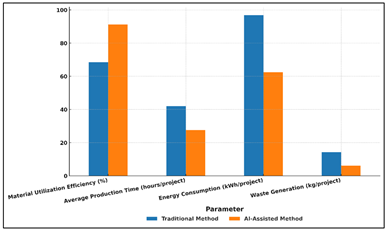
Figure 3 Comparison of Traditional and AI-Assisted Production
Methods
The average time it takes to make a project goes down from 42 hours to 27.5 hours which shows that AI technology makes the processes faster while maintaining the quality of the work. Figure 4 shows that AI is a better method in terms of performance intensity. The amount of energy consumed is reduced by a huge margin, from 96.8 kWh per project to 62.4 kWh per project.
Figure 4
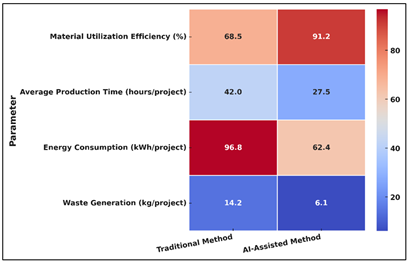
Figure 4 Performance Intensity Matrix for Traditional vs.
AI-Assisted Methods
This is how machine learning and real-time tracking make AI-driven systems more flexible in terms of energy management. Trash can be reduced by over half with AI enabled process control and material planning going from 14.2 kg per project to 6.1 kg per project. This shows that this technology is good for the earth.
Table 3
|
Table 3 Sustainability Performance Metrics of AI-Integrated Art Production |
||
|
Metric |
Baseline (Before AI) |
After AI Integration |
|
Resource Optimization Index
(%) |
54 |
87 |
|
Lifecycle Sustainability Score (%) |
58 |
84.5 |
|
Production Cost per Unit ($) |
115 |
92 |
|
Renewable Energy Utilization (%) |
18.5 |
47.3 |
Table 3shows the measured improvements in sustainability that have been made by the use of AI in the creation of art: The Resource Optimisation Index increases from 54% to 87%, what this means is that AI can better allocate resources, guess what materials will be needed and reducing unnecessary steps in production processes.
Figure 5
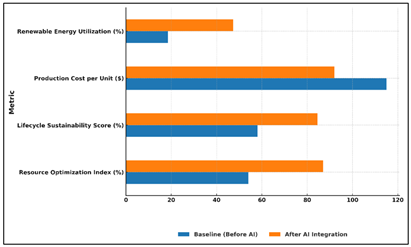
Figure 5 Impact of AI Integration on Resource Efficiency and
Sustainability Metrics
This increase means that raw materials are being used more efficiently and less is being wasted as decisions are being based on data. Figure 5 reveals a highly positive impact of AI on resource efficiency and sustainability metrics. This is an improvement that shows that the power of artificial intelligence could help artists and makers predict how their work will affect the environment and change their methods to reduce energy use and carbon emissions.
7. Conclusion
This study shows that artificial intelligence can entirely transform the manner of making art in a manner that is feasible. With the integration of these data-driven systems, machine learning models and lifetime assessment tools, AI can assist artists and creators to be more responsible with their resources and can bring new creative possibilities. The studies show how AI applications, including generative design and energy-saving automation can support the environment, improve the working process, and generate new ideas in many creative areas. The findings indicate that, sustainability in the arts is more than that of preservation of materials which may be viewed as preservation. It also has a systematic thinking thus, in a healthy way, imagination, technology and environment can collaborate with each other. Reduced energy consumption, minimized waste and increased lifetime efficiency are some of the very tangible environmental advantages of the use of AI powered platforms and analysis tools. In addition, by increasing the accessibility of AI technologies to the general public, it will be easier to ensure more artists practice positive environmental creativity, which will increase diversity in green creative innovation. The research, however, acknowledges the ethical and practical concern related to the application of AI, including such questions as who owns what, the transparency of data, and the amount of digital energy used. Creators and builders and environmental experts have to engage with one another, across disciplines to discover solutions to these problems.
CONFLICT OF INTERESTS
None.
ACKNOWLEDGMENTS
None.
REFERENCES
Avlonitou, C., and Papadaki, E. (2025). AI: An Active and Innovative Tool for Artistic Creation. Arts, 14, Article 52. https://doi.org/10.3390/arts14030052
Cai, P., Zhang, K., and Pan, Y. (2023). Application of AI Interactive Device Based on Database Management System in Multidimensional Design of Museum Exhibition Content (Research Square Preprint). https://doi.org/10.21203/rs.3.rs-3074947/v1
Cao, Y., Li, S., Liu, Y., Yan, Z., Dai, Y., Yu, P. S., and Sun, L. (2023). A comprehensive Survey of AI-Generated Content (AIGC): A History of Generative AI from GAN to ChatGPT (arXiv Preprint No. 2303.04226).
Chang, L. (2021). Review and Prospect of Temperature and Humidity Monitoring for Cultural Property Conservation Environments. Journal of Cultural Heritage Conservation, 55, 47–55
Gaber, J. A., Youssef, S. M., and Fathalla, K. M. (2023). The Role of Artificial Intelligence and Machine Learning in Preserving Cultural Heritage and art Works via Virtual Restoration. ISPRS Annals of the Photogrammetry, Remote Sensing and Spatial Information Sciences, 10, 185–190. https://doi.org/10.5194/isprs-annals-X-1-W1-2023-185-2023
Huang, M.-H., and Rust, R. T. (2020). A Strategic Framework for Artificial Intelligence in Marketing. Journal of the Academy of Marketing Science, 49, 30–50. https://doi.org/10.1007/s11747-020-00749-9
Huang, P.-C., Li, I.-C., Wang, C.-Y., Shih, C.-H., Srinivaas, M., Yang, W.-T., Kao, C.-F., and Su, T.-J. (2025). Integration of Artificial Intelligence in Art Preservation and Exhibition Spaces. Applied Sciences, 15, Article 562. https://doi.org/10.3390/app15020562
Longo, M. C., and Faraci, R. (2023). Next-Generation Museum: A Metaverse Journey into the Culture. Sinergie Italian Journal of Management, 41, 147–176. https://doi.org/10.7433/s120.2023.08
Mossavar-Rahmani, F., and Zohuri, B. (2024). ChatGPT and Beyond the Next Generation of AI Evolution (A communication). Journal of Energy and Power Engineering, 18, 146–154. https://doi.org/10.17265/1934-8975/2024.04.003
Qin, Y., Xu, Z., Wang, X., and Skare, M. (2023). Artificial Intelligence and Economic Development: An Evolutionary Investigation and Systematic Review. Journal of the Knowledge Economy, 15, 1736–1770. https://doi.org/10.1007/s13132-023-01183-2
Sha, Y., Zhang, S., Feng, T., and Yang, T. (2021). Research on the Intelligent Display of Cultural Relics in Smart Museums Based on Intelligently Optimized Digital Images. Computational Intelligence and Neuroscience, 2021, Article 7077556. https://doi.org/10.1155/2021/7077556
Shambharkar, S., Thakare, K., Takkamore, S., Padole, R., and Chaure, K. (2025). Detection of DDoS Attack in Cloud Computing Using Machine Learning Algorithm. International Journal of Electrical Engineering and Computer Science (IJEECS), 14(1), 239–242 .
Singh, A., Kanaujia, A., Singh, V. K., and Vinuesa, R. (2023). Artificial Intelligence for Sustainable Development Goals: Bibliometric Patterns and Concept Evolution Trajectories. Sustainable Development, 32, 724–754. https://doi.org/10.1002/sd.2706
Siri, A. (2024). Emerging Trends and Future Directions in Artificial Intelligence for Museums: A Comprehensive Bibliometric Analysis Based on Scopus (1983–2024). Geopolitical, Social Security and Freedom Journal, 7, 20–38. https://doi.org/10.2478/gssfj-2024-0002
Wang, B. (2021). Digital Design of Smart Museum Based on Artificial Intelligence. Mobile Information Systems, 2021, Article 4894131, 1–13. https://doi.org/10.1155/2021/4894131
Zhao, J., and Yezhova, O. (2024). Strategy of Design Online Museum Exhibition Contents from the Perspective of Artificial Intelligence. Art and Design, 8, 80–89. https://doi.org/10.30857/2617-0272.2024.2.8
|
|
 This work is licensed under a: Creative Commons Attribution 4.0 International License
© ShodhKosh 2025. All Rights Reserved.