ShodhKosh: Journal of Visual and Performing ArtsISSN (Online): 2582-7472
|
|
Educational Value of AI-Powered Folk Art Repositories
Dr. Kumod Kumar Gupta 1
 ,
Bharat Bhushan 2
,
Bharat Bhushan 2 , Pooja Goel 3
 , Dr. Jyoti Saini 4
 , Dr. Aniket Prakashrao Munshi 5
 , Amit Kumar 6
1 Associate
Professor, Department of Computer Science and Engineering (AI), Noida Institute
of Engineering and Technology, Greater Noida, Uttar Pradesh, India
2 Chitkara
Centre for Research and Development, Chitkara University, Himachal Pradesh,
Solan, India
3 Associate Professor, School of Business Management, Noida
international University, India
4 Associate Professor, ISDI - School of
Design and Innovation, ATLAS Skill Tech University, Mumbai, Maharashtra, India
5 Department of Electrical Engineering,
Yeshwantrao Chavan College of Engineering, Nagpur, Maharashtra, India
6 Centre of Research Impact and
Outcome, Chitkara University, Rajpura, Punjab, India
|
|
|
ABSTRACT |
|
|
The
application of artificial intelligence (AI) to a psychological collection of
folk art is one of the revolutionary methods for studying, preserving, and
teaching cultural history in the digital era. AI empowered folk art
repositories employ the latest technologies such as computer vision, machine
learning, and natural language processing to collect, categorize, tag, and
recommend various types of folk art. Not only are these sites used to
safeguard endangered art forms, they also provide constantly changing
accessible learning environments. AI systems can identify style trends,
regional influences and elements of themes in vast collections of folk art by
curating them intelligently. Through this, students can experience
personalised and interactive learning experiences. This essay explores the
pedagogical potential of these sorts of collections examining basic concept,
development and application in the classroom. A focus is given to how AI
tools are used to assist students and teachers to learn about other cultures,
develop creative thinking and become more culturally literate. In addition,
the study discusses how mentally and emotionally enriching it can be to
engage in communication with digitally produced content that is culturally
rich in its content and style. Case analysis of existing AI-based art
education tools is conducted in order to provide a view of how they function
and how results are realized in real-world experience. But the study also
discusses important issues, including the reliability of the data, how it can
be ethically represented, the limitations of technology, and how
computational bias can result in culture homogenization. |
|||
|
Received 14 January 2025 Accepted 06 April 2025 Published 10 December 2025 Corresponding Author Dr. Kumod
Kumar Gupta, kumodkumargupta@gmail.com DOI 10.29121/shodhkosh.v6.i1s.2025.6640 Funding: This research
received no specific grant from any funding agency in the public, commercial,
or not-for-profit sectors. Copyright: © 2025 The
Author(s). This work is licensed under a Creative Commons
Attribution 4.0 International License. With the
license CC-BY, authors retain the copyright, allowing anyone to download,
reuse, re-print, modify, distribute, and/or copy their contribution. The work
must be properly attributed to its author.
|
|||
|
Keywords: Artificial Intelligence, Folk Art, Cultural
Heritage, Art Education, Machine Learning, Digital Repositories |
|||


1. INTRODUCTION
Folk art is the soul of a community; it represents their perspective, traditions, and the inventiveness of all the people in the community. It involves many different means of self-expression such as art, sculpture, textiles, music, dance, and telling stories. All these are local traditions and are orally transmitted and action-oriented. Folk art is not just gorgeous to the eye. It's also a living record of human experience which we can learn from if we want to know what it means to be human, how to be resilient or get along with others. Folk art is very educational in terms of teaching students about history, anthropology, and how cultures express themselves. But in modern times, it is becoming more and more difficult to transfer folk art information. The changing landscape of globalisation, urbanisation and the advent of digital culture has seen traditional art forms pushed to the margins and the ability of people to learn from one generation to another hampered Wang et al. (2023). Because of this, it is very important to sustain and revive folk art in ways that are relevant to today's students. Artificial Intelligence (AI) is a revolutionary tool that can help to address this by transforming how culture information is stored, accessed, and disseminated. Machine learning, deep learning, and natural language processing are AI technologies that are already transforming several industries including education, healthcare, and the artistic industries. These technologies enable smart digital archives of folk art artefacts, whose safety is ensured but their potential for use in teaching is explained and contextualised Shehade and Stylianou-Lambert (2020). In addition to this, folk art repositories utilizing AI can automatically group artworks together based upon region, technique, or subject matter, create descriptive stories, and even recommend additional resources based on the interests of a learner. By mixing old knowledge with new technology, these types of systems enable cultural artefacts to be more accessible for everybody and motivate useful participation Chang (2021).
AI-driven libraries can be used in education as they are able to transform passive viewing into active learning. Students can relate to virtual collections, view different uses of styles in different countries, and use video tools to bring the practices to life. These libraries can allow each student to have an individualized learning journey depending on their interests and knowledge by using flexible algorithms Barath et al. (2023). For instance, a student learning about Indian tribe art may be provided with lessons that have been generated by AI that relate visual symbols to folklore or the local environment. This type of situational learning helps people to understand and care about different cultures better. Teachers can also work together to create collaborative lessons that integrate history, art, and digital literacy. Figure 1 shows the structural framework adopting AI technologies to conserve, analyze and enrich the learning of folk art through interactive adaptive learning. AI-driven folk art collections are also useful in the classroom as well as for people around the globe who just want to learn about cultural forms which were previously only present in local or physical records Albar (2024).
Figure 1
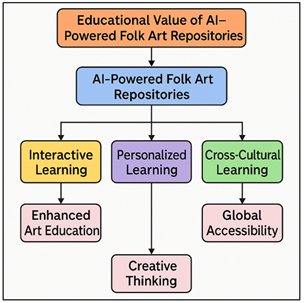
Figure 1 Architecture of AI-Powered Folk Art Repository for
Educational Enhancement
This helps people from different cultures understand each other and work together which are important skills in today's linked world. These archives can also lead to new and creative readings, which helps students come up with new ideas while still honouring traditional roots. On the other hand, AI has great potential possibilities, but it should be applied wisely in culture education. Other issues, such as data validity, computer bias, and cultural sensitivity must be carefully considered in order to ensure that the application of technology does not alter or sell tradition Rodrigues and Rodrigues (2023). Folkloric art has to be preserved only by ethical design and working with people who respect cultural heritage.
2. Conceptual Framework
1) Definition
of folk art and its educational potential
Folk art is the art created by people that are influenced by the customs, beliefs, and way of knowing of their community. It is the masterpiece of the culture, its identity, beliefs and beauty. It is handed from one generation to another through informal teaching and learning, rather than through formal training. The difference between folk art and academic or elite art is that folk art is community-based and created by the people and for the people. It appears in many forms such as in crafts, textiles, wall art, pottery, furniture, music and dance Balcombe (2023). All folk art works through pictures or performances, which inculcate morals, stories, and social mores. Folk art is an excellent method to teach because it makes learning more enjoyable and interesting. It engages students on a cognitive, affective and social level and invites students to become creative, attentive and empathetic. Folk art used in schools helps students realize ethnic diversity, survival, and people's reliance on one another. It also supports cross-curricular learning where students are able to make links between art and literature, history, geography, and outdoor learning Ning et al. (2024). Folk art also makes people think deeply about how cultures continue to evolve and remain the same in a world that is becoming more connected. Folk art not only allows people to develop their art skills, but it also allows people to more esteem the knowledge and skills of other people in the community. Folk art education not only builds students' appreciation of beauty, but their cultural awareness as well Demartini et al. (2024). It also helps them to appreciate custom as an important aspect of their modern identity and social development.
2) Overview
of AI applications in art and education
Computer software known as artificial intelligence (AI) has transformed the ways that art and education are taught, collected and used. In the art world, AI tools, such as computer vision, machine learning and generative models, make studying, copying and creating new works of art possible. AI programs are able to categorize art forms, detect counterfeit paintings, restore damaged artwork and even create their own artwork that resembles that of a human. To digitise and catalogue their collections, museums and other cultural institutions apply AI. This allows tourists the ability to explore virtually and get personalized recommendations Ivanova et al. (2024). This fusion of art and AI helps to make cultural history more open and participatory to more people. Through interactive learning, intelligent teaching systems, and data-driven curriculum design, AI applications have transformed the way we teach. These technologies tend to personalize learning to suit individual needs by analyzing progress and pinpointing learning gaps and tailoring content to meet those needs. Artificial Intelligence (AI) Self-directed learning is facilitated by the use of chatbots and virtual assistants, and augmented and virtual reality technologies which make learning more entertaining Wang and Yang (2024). Not only that, AI also promotes innovation by assisting students in design thinking, problem solving, and art making exercises.
3) Theoretical
basis for integrating AI and cultural heritage learning
The theories that support AI and learning of cultural history are multi-interrelated - constructivism, cultural learning, and digital education. According to the constructivist learning theory, people construct their own knowledge through their interactions with the environment. In the context of AI-enabled folk art repositories students engage with digital whereabouts, search for styles and develop readings of their own de et al. (2023). This makes passive observation an active knowledge construction. Another ground is offered by Lev Vygotsky's cultural historical theory. It gives an idea of the importance of social contact and cultural tools in the formation of the brain growth. So technologies such as AI systems enable trainees to learn about culture artefacts which are in other places or languages. They allow learners to interact with digital content and with their peers and create conversations, so that they can collectively learn about other cultures. The structure of digital heritage learning also contributes to the continuation of cultural identity and the search for new meanings in it through technology Hamal et al. (2022). This approach engages students in the cultural preservation by organizing, commenting or re-contextualizing digital artefacts. applying AI to cultural resources is consistent with the concept of the practical learning, which states that working with real objects helps pupils remember and better understand the content of the study. Table 1 represents previous work on incorporating AI in folktal art education. AI makes this process better by providing flexible input according to data and personalised roads of research. These various concepts do favor the concept of AI going beyond being just a technology. Finally, they also promote the position of AI as a cognitive and cultural interface between traditional knowledge and the evolving dynamics of global digital learning Timms (2016).
Table 1
|
Table 1 Related Work on AI-Powered Folk Art Repositories and Educational Applications |
||||
|
Study Focus |
AI Technique Used |
Educational Approach |
Key Findings |
Limitations / Gaps |
|
AI for Indian Folk Art
Digitization |
CNN, Image Recognition |
Digital Archiving and
Visualization |
Improved image
classification accuracy for regional art motifs |
Limited dataset diversity |
|
Intelligent Cultural Heritage Systems More and Birmule (2025) |
Deep Learning, NLP |
Virtual Museum Learning |
Enhanced contextual learning and cultural understanding |
Lack of multilingual adaptability |
|
Preserving Tribal Art using
AI |
ML, Pattern Detection |
Art Education Integration |
Automated motif
categorization improved student engagement |
Minimal community
participation |
|
AI and Folk Music Pedagogy |
NLP, Audio Classification |
Interactive Audio Learning |
Enabled adaptive listening-based education |
Cultural interpretation challenges |
|
Cross-Cultural Art Learning
via AI Williamson et al. (2020) |
Knowledge Graphs |
Cross-Cultural Education |
Promoted global
collaboration in heritage learning |
Limited evaluation metrics |
|
Smart Heritage Repositories |
CNN, Semantic Tagging |
Museum-Based Learning |
AI improved metadata accuracy and accessibility |
Infrastructure limitations |
|
AI in Cultural Education Fawns (2022) |
ML Recommender Systems |
Personalized Learning |
Increased learner motivation
via adaptive recommendations |
Lack of affective feedback |
|
Deep Learning for Folk Art Restoration |
GANs |
Visual Restoration Learning |
AI aided in image completion and style preservation |
Absence of real-time user input |
|
AI Framework for Art
Education |
ML + AR/VR |
Experiential Learning |
Provided immersive,
multisensory cultural learning |
High technological costs |
|
Integrating AI in Art Curriculum |
Reinforcement Learning |
Adaptive Pedagogy |
Promoted creativity and self-directed exploration |
Scalability concerns |
3. Development of AI-Powered Folk Art Repositories
1) Structure
and features of AI-driven repositories
Folk art digital libraries powered by AI are integrated digital intelligent systems that use intelligent technologies to preserve, organize, and disseminate digital data (traditional arts). Their system has multiple layers that work to ensure that cultural material is well managed and easily accessible.
Figure 2
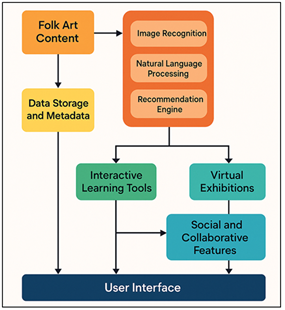
Figure 2 AI-Driven Folk Art Repository and Its Core
Functional Features
These layers are data store, processing, analysis and user interaction. The heart of its framework is a robust database which supports various items like images, movies, audio clips, written description of the folk art forms, etc. It uses metadata structures to record information such as location, art style, materials and background in culture. In the analysis layer, the artificial intelligence programs are employed to process and make sense of the material. Figure 2 shows the major components and functions in an AI-driven folk art repository for intelligent storage, analysis and interaction with education. This includes tools for recognising themes, colour patterns, and artistic methods in images as well as models for handling natural language which look at folk tales and oral histories. Parametric advice tools are also included in the system to define a user experience and to make each user unique depending on their exploration and learning. With the help of multimedia visualisation, virtual displays, and other interesting technologies such as augmented reality (AR) and virtual reality (VR), user experiences are created in ways that will promote dynamic learning.
2) Data
collection and curation of folk-art content
AI-powered Folk Art Collections: The first step in creating an AI-powered collection of folk art is to gather and organize a large amount of data that includes all types of art, from all people, in a way that ensures its authenticity. The data is from a bunch of different sources such as ethnographic records, museum collections, and contributions from communities, field notes taken by researchers and artists. This approach to the use of multiple sources allows the library to document the diversity of regional styles and artistic details that are a part of folk customs. In order to preserve the texture, colour and sound aspects of art works and events, the equipment used for digitisation is high-resolution (3D scanning, photography, audio-video recording). Each artefact has metadata labelling to inform you about how and where it originated and its cultural significance to different cultures and who created it. Natural language processing models are trained to ingest and organize material of this sort. Curation, on the contrary, is not just the gathering of facts. To be culturally sensitive and accurate, it needs critical evaluation. Expert organisers, historians and community leaders work together to ensure that the work is done in a responsible way and no one gets it wrong or uses it without permission.
3) Role
of machine learning in classification, annotation, and recommendation
ML stands for machine learning, which is the engine that Folk art websites that use AI have. This enables smart organisation, understanding and personalisation of material. In classification, the machine learning algorithms, particularly convolutional neural networks (CNNs), analyze the patterns, color schemes, and themes of works of art to automatically assign them to categories in terms of area, medium, or style of art. In the same way, Natural Language Processing (NLP) models are reading written accounts, oral histories and folktales looking for themes, buzzwords and meanings that make sense in the context. This automatic classification accelerates scanning and categorizes and searches mass collections. ML supports another important feature, that of Annotation. Thanks to computer vision and semantic analysis, algorithms generate detailed information that helps to give a name to the artefact and provides information about its theme, method or symbolic meaning. These comments make the content easier to understand and help the teachers put it in its proper context. Collaborative marking systems also allow users to enhance labels created by AI to ensure the content is correct from a cultural perspective.
4. Educational Applications
4.1. Enhancing art education through interactive learning
1) Increasing
art education by the application of interactive learning
AI-powered folk-art libraries are changing the way that art is taught by making learning a more dynamic and involved process. Traditional art education usually involves textbooks, classes and a limited number of visual aids. AI-powered platforms on the other hand, make learning an experience trip. Students can explore virtual spaces, engage with 3D models of artefacts, and utilise media analysis AI-based visualisation tools to seek patterns or themes. This type of interactive activity not only makes people grasp more, but the activity also stimulates people's imagination and curiosity. Combined with virtual reality (VR), augmented reality (AR) allows students to be immersed in the environment of a culture. For instance, they can virtually visit tribe villages, weather watching murals being made or listen to traditional music embedded into art exhibitions. In these types of situations, theory and practice will meet, learning becomes real and long-lasting. And using AI systems, they make interactions even better, enabling students to ask questions and get answers instantly and collaborate with other students in digital classes. AI data can be used by teachers to check for involvement, keep track of growth and make changes to the way they teach. Interactive storytelling lessons can also be used to develop students' understanding of the social and cultural dimensions of making through the connection between visual art and stories and community life.
4.2. Personalized learning experiences via AI algorithms
1) Collaborative
Filtering
AI-powered treasuries of folk art should be able to learn to personalize learning to each individual based on how users interact with and select from content via collaborative filtering. It considers what a student did - such as viewing artworks, selecting themes, etc. - and contrasts it with what other users did in the same manner to identify related content. This approach helps to develop active learning circles and discover through common interests. For example, if there is more than one student interested in tribe themes or folk dancing, the system will present similar resources to other students who have a profile that is comparable. Thus, collaborative filtering promotes social learning and expanded exposure to a greater variety of artistic styles through patterns of group activity.
Minimize: 
Initialize latent vectors p_u and q_i by minimizing reconstruction error with L2 regularization. Compact representations capture learner preferences and item attributes, enabling accurate personalization across varied folk art content and activities.
Prediction: 
Predict learner u’s affinity for item i through latent vector dot product. The resulting score quantifies relevance, guiding tailored recommendations for artworks, tutorials, or lessons aligned with user interests and learning goals.
Update:


Iteratively update latent factors using stochastic gradient descent. Residual errors e_ui refine the model to capture evolving learner behaviors, ensuring adaptive personalization across different folk art modules and contexts.
2) Reinforcement
Learning
The program is constantly learning from the user's interactions with it. It rewards the actions the users make to make themselves more interested or understand it, and it changes the suggestions it makes on what it learns. For instance, if a student looks at more folk crafts than art, then more similar topics will be recommended by the system in the future. This process of optimisation-on-optimisation keeps the learning flexible, effective and interesting. Folk art study can become a self-improving and learner-oriented activity that is motivated by curiosity and long-term engagement with the learning content with the reinforcement learning.
Model: M = (S, A, R, γ)
Model personalization as a Markov Decision Process with states S, actions A, rewards R, and discount factor γ. The agent seeks to maximize cumulative learning rewards through adaptive content sequencing.
Update Rule:

Update the Q-value for each learner–content interaction. The system continuously learns optimal learning paths, rewarding deeper engagement with meaningful folk art experiences.
Policy: 
Select the next educational activity by following the optimal policy π, which maximizes expected learning gain and satisfaction through adaptive, data-driven personalization.
Reward
Function: 
Define reward as a function of learner engagement e_t and content comprehension c_t. Higher values reinforce culturally meaningful, motivating learning experiences across folk art contexts.
3) Natural
Language Processing (NLP)
Natural Language Processing (NLP) is about personalised learning that reads text input by learners, such as questions, comments or phrase searches, and then responds in a manner that makes sense in the context. NLP is also used in folklore archives to allow the user to talk to virtual tutors who can instruct them in methods of art, folklore stories, or history. It also provides the international usability feature that allows people to view the art in more than one language. NLP is used to personalize the way in which information is delivered, remove barriers in trans-cultural communications, and enable us to better understand artistic expressions of people across languages and cultures, and thus enhance educational participation globally.

Convert input text into embeddings capturing semantic relationships among words. These representations enable AI tutors to interpret learner queries about folk art topics meaningfully.

Classify learner intent using neural network probabilities. This helps match questions to appropriate responses or learning modules within the repository.
Similarity: 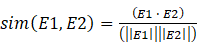
Compute cosine similarity between embeddings to retrieve semantically related artifacts, ensuring learners receive culturally relevant explanations or references.
Decoding: 
Generate natural, context-aware responses using sequence-to-sequence decoding. This facilitates conversational learning, guiding users interactively through folk art discussions and educational dialogue.
4.3. Cross-cultural learning and global accessibility
Folk art archives that are driven by AI are very important for the spread of cross-cultural learning and making art available to all those around the world. In the past, and even in some areas of the world, the education of culture was often limited by geography making it difficult to learn about local or national art forms. But these rules are broken by AI technologies through the digitization, classification, and distribution of various types of culture artifacts across the globe. Students from around the world can now look into traditional customs from India, Africa, Latin America, or Europe at one place. This allows people to understand and appreciate other cultures. Users have the opportunity to read stories and bios of artists and culture descriptions within language they choose due to AI-powered translation tools and international interfaces. This capability of incorporating people of all languages simplifies global participation, facilitating the collaboration of students, teachers and experts from various areas of the world to study cultural history.
5. Pedagogical Value and Learning Outcomes
1) Cognitive
and affective benefits for learners
AI-powered folk art archives have cognitive and emotional impacts with a positive impact on learning in general. On a mental level, they make the students think about what they see, how to recognise patterns, and how to understand the big ideas behind cultural methods and symbols. Through experiential learning, students learn to think critically as they determine what folk practice means, how it works and how it has evolved over time. The use of AI tools such as facial recognition and data analytics in conjunction with each other encourages problem-solving and comparison, which generates intellectual interest and learning across disciplines. Cultural arts help to increase emotional intelligence, increase understanding, and help people to value differences. Artistic modalities that arise from life in the community, like music, fitness, and sports, help people to accept ethnic differences and feel that they belong and are a part of the group. AI is able to create personalized and interactive learning experiences which help engage people on an emotional level in a way that traditional teaching isn't always able to. Virtual stories, live art performances, and artist stories can make people feel things that make them feel more connected to the subject.
2) Development
of cultural literacy and creative thinking
Integrating archives of folk art powered by AI into schools goes a long way in helping students learn other cultures and think creatively. Cultural knowledge refers to having knowledge and appreciation about the customs, beliefs, and symbols that compose groups of people. Learners are able to glance at patterns of cultural expression throughout places and times with the help of AI-enabled access to folk art collections all over the world. Figure 3 shows how AI is creating creativity and cultural literacy. This makes students more aware of the connection of cultures and encourages students to think about the influence that history, surroundings, and social systems have on artistic identity.
Figure 3
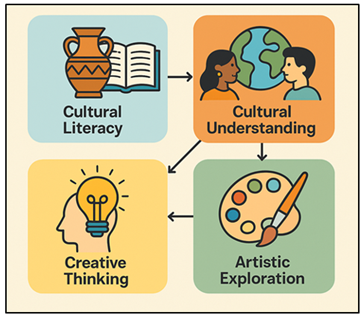
Figure 3 Process of Developing Cultural Literacy and Creative
Thinking through AI-Powered Folk Art Education
AI analytics such as image recognition and word analysis make learning about other cultures more practical by allowing students to critically compare the patterns, colours and themes from other practices. Students not only learn new things, but they also learn to appreciate art as a living record of all of humankind's experience. When students use AI-associated design tools to dish up aspects of folk art in new ways, they are better able to think creatively.
3) Case
studies of AI-based folk art learning platforms
Several recent AI-enabled folk art learning tools demonstrate how digital technology and cultural education can be implemented in reality. One such example is Google Arts and Culture. It incorporates AI-powered pictures recognition and stories to display folk practices around the globe. Learners can look through virtual shows, look for patterns and read stories that put the art in its right context, which can help them learn visual literacy and cultural knowledge. The "Art Recogniser" tool on the app allows users to scan artworks and instantly receive information, which encourages them to find things for themselves. And in the same way, the Smithsonian Learning Lab uses machine learning to create personalised learning paths using its huge collection of art and artefacts. Folk art can be connected to historical and social issues in lessons allowing the students to explore their country's identity through art. Crafts Archive India is another creative project that is using AI to catalogue local crafts and come up with design suggestions that can be used for both business and education. It facilitates cultural protection as well as artistic production in integrating old knowledge and new statistics. All these tools demonstrate how AI can be used to make learning folk art more interesting, flexible and available for people all over the world. They illustrate how intelligent systems can be applied to cultural material in order to make learning about the past more interesting, inviting to a broad audience, and future-oriented. They also highlight the fact that art has always been an important means of connecting people and inspiring creativity.
6. Challenges and Limitations
1) Data
authenticity and cultural sensitivity issues
One of the most difficult aspects of creating folk art archives that are powered by AI is ensuring that the data is accurate and sensitive to various cultures. Folk art reflects living practices which are closely linked to the identities, traditions and worldviews of communities. When these cultural statements are being digitised or analysed by AI, they may be misrepresented, taken out of context, or simplified. Incorrect labels, incomplete information, misinterpreted or automated information that alters interpretation may make the works less culturally significant. Also, the data that AI systems are trained on plays a significant role in their lives. If the sources are not varied or are biased towards certain types of practices or styles, the collection thus created may cause less prominent practices to be pushed out. Additionally, being sensitive in other cultures is important as selling sacred art or community-owned art for profit can be unethical behavior. These problems can only be addressed together with those who take care of cultures, those who make things and those who study anthropology. In addition to that, involving the community in data checking ensures that the data is authentic and that traditional values are honored. Proper moral guidelines, such as using data and giving credit where due and respecting cultural differences can also help maintain trust and acceptance. AI-driven educational repositories keep the originality and honour of traditional folk art forms; hence, a good balance between using technology and being a good caretaker is important.
2) Technological
limitations and resource constraints
Although they have a lot of promise, AI-powered folk art sites have a lot of problems with technology and resources. These systems require modern infrastructure, trained personnel, and a great deal of money to build and maintain. These are things that may be hard to come by in growing areas where many folk traditions are from. Lack of access to high-speed internet, modern computers and digitization facilities means that the kind of repositories that can be made is limited and only a few have access to them. AI systems require big and good information in order to learn well from a technical point of view. Folk art paperwork on the other hand is often broken up, irregular, or stored in non-digital forms. This gives low accuracy of the model and limited data. Differences in appearance, materials, and/or local symbols may be difficult for image recognition software to process. Similarly, the natural language processing software may not be able to understand native languages or dialects. Also, the libraries must be kept up-to-date and maintained and they require long-term investment and support by their institutions. If long-term financial plans are not made for these projects, they may become outdated or inaccessible. Transferring the abilities of educators, caretakers and neighborhood archivists is also important if the system is to be utilized correctly, and for various cultures to be incorporated.
3) Risk
of cultural homogenization through algorithmic bias
One of the big concerns about AI folk art archives is the potential for automated bias that could cause all the art in an AI to appear uniform. Machine learning models are trained on the data they get. If the datasets are skewed, in favour of powerful areas, styles or languages, then the system could overemphasise some art forms and ignore others. As a result, the dominant forms of cultural expression are strengthened while the local or minority cultural expression is marginalized. Over time, this type of bias can make the digital version of culture more homogenous, which can damage genuineness and variety. Algorithmic bias has also been known to impact suggestions, repeatedly showing users the same content and not allowing them to be introduced to less prominent practices. Also, AI-driven classes may be less understanding of complicated cultural identities, by placing them into the rigid categories that do not account for the nuances within communities. In order to reduce these effects, it is important that data collection methods are conducted with participants that are geographically distributed, and culturally and artistically diverse. AI systems must be regularly audited for biases and defects in order to identify and correct them. Getting feedback from the users and allowing the community to do the editing can help bring things back to balance and ensure that the digital image is diverse.
7. Conclusion
The digital age is a great time to save, restore, and share cultural history, and having artificial intelligence become part of the folk art collections is a big step forward. These collections combine the analytical power of AI with the richness of traditional art forms. They are a kind of bridge between technology and culture, bringing together opportunities for active learning that are not only border crossings, but also intergenerational. They are not just digital records, but also dynamic and flexible learning environments for students to explore, analyse and create art. AI-powered folk art archives can be used for education purposes as they can enhance the cognitive, emotional, and cultural dimensions of learning. By allowing students the opportunity to engage with cultural stories and artistic practices, they enable students to think critically, be creative and be kind. AI provides a personalised learning experience by developing individual learning paths based on individual wants and interests. This makes them participative and engaged in the long run. Through these archives, global understanding and cultural literacy are also promoted, and people from different cultures can interact with each other. These are important skills for living in today's world that is increasingly connected with the world. But for them to work, they must be able to overcome such big issues as fake data, unfair algorithms and unequal access to technology. Working with culture keepers and communities in an ethical way is still important for making sure that history is represented in a way that is fair and correct.
CONFLICT OF INTERESTS
None.
ACKNOWLEDGMENTS
None.
REFERENCES
Albar Mansoa, P. J. (2024). Artificial Intelligence for Image Generation in Art: How does it Impact on the Future of Fine Art Students? Encuentros, 20, 145–164.
Balcombe, L. (2023). AI Chatbots in Digital Mental Health. Informatics, 10, Article 82. https://doi.org/10.3390/informatics10040082
Barath, C.-V., Logeswaran, S., Nelson, A., Devaprasanth, M., and Radhika, P. (2023). AI in Art Restoration: A Comprehensive Review of Techniques, Case Studies, Challenges, and Future Directions. International Research Journal of Modern Engineering, Technology and Science, 5, 16–21.
Chang, L. (2021). Review and Prospect of Temperature and Humidity Monitoring for Cultural Property Conservation Environments. Journal of Cultural Heritage Conservation, 55, 47–55.
de Winter, J. C. F., Dodou, D., and Stienen, A. H. A. (2023). ChatGPT in Education: Empowering Educators Through Methods for Recognition and Assessment. Informatics, 10, Article 87. https://doi.org/10.3390/informatics10040087
Demartini, C. G., Sciascia, L., Bosso, A., and Manuri, F. (2024). Artificial Intelligence Bringing Improvements to Adaptive Learning in Education: A Case Study. Sustainability, 16, Article 1347. https://doi.org/10.3390/su16031347
Fawns, T. (2022). An Entangled Pedagogy: Looking Beyond the Pedagogy-Technology Dichotomy. Postdigital Science and Education, 4, 711–728. https://doi.org/10.1007/s42438-022-00302-7
Hamal, O., El Faddouli, N. E., Alaoui Harouni, M. H., and Lu, J. (2022). Artificial Intelligent in Education. Sustainability, 14, Article 2862. https://doi.org/10.3390/su14052862
Ivanova, M., Grosseck, G., and Holotescu, C. (2024). Unveiling Insights: A Bibliometric Analysis of Artificial Intelligence in Teaching. Informatics, 11, Article 10. https://doi.org/10.3390/informatics11010010
More, S. S., and Birmule, P. R. (2025). Technology-Based Scheduling and Event Management in Sports. International Journal of Research and Development in Management Review, 14(1), 50–54. https://doi.org/10.65521/ijrdmr.v14i1.288
Ning, Y., Zhang, C., Xu, B., Zhou, Y., and Wijaya, T. T. (2024). Teachers’ AI-TPACK: Exploring the Relationship between Knowledge Elements. Sustainability, 16, Article 978. https://doi.org/10.3390/su16030978
Rodrigues, O. S., and Rodrigues, K. S. (2023). A Inteligência Artificial na Educação: Os Desafios do ChatGPT. Texto Livre, 16, e45997. https://doi.org/10.1590/1983-3652.2023.45997
Shehade, M., and Stylianou-Lambert, T. (2020). Virtual Reality in Museums: Exploring the Experiences of Museum Professionals. Applied Sciences, 10, Article 4031. https://doi.org/10.3390/app10114031
Timms, M. J. (2016). Letting Artificial Intelligence in Education Out of the Box: Educational Cobots and Smart Classrooms. International Journal of Artificial Intelligence in Education, 26, 701–712. https://doi.org/10.1007/s40593-016-0095-y
Wang, X., Wang, W., Wang, P., Hu, H., and Li, C. (2023). A Bibliometric Analysis of Immersive Technology in Museum Exhibitions. Frontiers in Virtual Reality, 4, Article 1240562. https://doi.org/10.3389/frvir.2023.1240562
Wang, Y., and Yang, S. (2024). Constructing and Testing AI International Legal Education Coupling-Enabling Model. Sustainability, 16, Article 1524. https://doi.org/10.3390/su16041524
Williamson, B., Bayne, S., and Shay, S. (2020). The Datafication of Teaching in Higher Education: Critical Issues and Perspectives. Teaching in Higher Education, 25, 351–365. https://doi.org/10.1080/13562517.2020.1748811
|
|
 This work is licensed under a: Creative Commons Attribution 4.0 International License
© ShodhKosh 2025. All Rights Reserved.