ShodhKosh: Journal of Visual and Performing ArtsISSN (Online): 2582-7472
|
|
AI-Generated Visual Art and Its Ethical Implications in Academia
Dr. Mohammed Shamsul Hoque 1 , Dr. R. Vasanthan 2
 Dr. Khriereizhünuo
Dzüvichü 3, Dr. Jyoti Saini 4
Dr. Khriereizhünuo
Dzüvichü 3, Dr. Jyoti Saini 4
 ,
Komal Parashar 5
,
Komal Parashar 5 ,
Madhur Grover 6
,
Madhur Grover 6
1 Professor
and Former Head of English, Daffodil International University (DIU), Birulia 1216, Bangladesh
2 Associate
Professor, Department of English, Nagaland University, Kohima Campus, Meriema, Kohima, Nagaland, India
3 Associate Professor, Department of History, Central University of
Tamil Nadu, Tamil Nadu, India
4 Associate Professor, ISDI - School of Design and Innovation, ATLAS
Skill Tech University, Mumbai, Maharashtra, India
5 Centre of Research Impact and Outcome, Chitkara University, Rajpura-
140417, Punjab, India
6 Chitkara Centre for Research and Development, Chitkara University,
Himachal Pradesh, Solan, 174103, India
|
|
|
ABSTRACT |
|
|
The swift
growth of the artificial intelligence (AI) has transformed the world of art,
especially in the shape of AI-generated visual art. In academic life this
phenomenon presents very profound concerns about authorship, creativity and
social responsibility. In this paper, the author discusses the intersection
of AI-generated art and education, and addresses the potential and the
possible social implications of the intersection. It starts with significant
technical foundations of the art of AI like neural networks and generative
adversarial networks (GANs), and signals how this dichotomy of human
authorship and machine authorship has changed. On academic grounds, this
argument concerns the question of whether AI, in fact, can be called an
artist, or merely a tool that can facilitate human creativity. This study is
focused on ethical question. Authorship and intellectual property questions
are also disruptive to the conventional academic practices, because AI
systems frequently produce works, which lack a clear human provenance. Also,
creativity and imitation appear to be significant issues in the area of
education, in which students are able to produce art with minimal human
involvement via AI tools. The necessity of transparency (the explanation of
how AI helped in schoolwork and research) reveals the fact that academic
ethics should be preserved even more. The discussion continues to address
more about the higher contribution to imagination and learning. With the
introduction of AI art into school education, the dilemma of how to add it
without entering the trap of students who over-depend on technologies and
become responsible innovators will continue to gain topicality. This research
provides a mechanism through which AI art can be socialized and made productive
by universities through the examination of both controversies and successful
collaborations. In summary, it supports a moderate position that is receptive
to creative innocence, but also concedes with technological innovation as a
teaching incentive. |
|||
|
Received 10 January 2025 Accepted 03 April 2025 Published 10 December 2025 Corresponding Author Dr.
Mohammed Shamsul Hoque, hoque.eng@daffodilvarsity.edu.bd DOI 10.29121/shodhkosh.v6.i1s.2025.6617 Funding: This research
received no specific grant from any funding agency in the public, commercial,
or not-for-profit sectors. Copyright: © 2025 The
Author(s). This work is licensed under a Creative Commons
Attribution 4.0 International License. With the
license CC-BY, authors retain the copyright, allowing anyone to download,
reuse, re-print, modify, distribute, and/or copy their contribution. The work
must be properly attributed to its author.
|
|||
|
Keywords: Ai-Generated Art, Academic Integrity, Authorship
Ethics, Artificial Intelligence in Education, Creative Responsibility |
|||


1. INTRODUCTION
The use of artificial intelligence (AI) as a creative tool has completely changed the borders of artistic work and academic research. The initial experimentation of machine learning was done to generate images. It has now turned to be an intricate debate on technology, imagination and ethics. Art produced by the artificial intelligence (AI) algorithms like neural networks, deep learning and generative adversarial networks (GANs) are becoming more and more widespread in art exhibitions, courses and scholarly talks. When art and technology are joined, they disrupt the concept of authorship and creativity in the most common way. They also need to be educated in order to re-evaluate both its moral models and its modes of teaching. The application of AI in art is also not limited to the ability of this technology to automate the process. The current systems like DALL.E, Midjourney and Stable Diffusion can comprehend written clues and alter them into multifaceted and aesthetically appealing outputs. Such programs acquire patterns, textures, arrangements of vast sets of already existing works of art to bring their imaginings to resemble our own. Due to this fact, it is getting harder and harder to discern between art developed by humans and art developed by AI. This brings a question of creativity, intellectual property, and being an artist Yılmaz and Tomak (2025). The convergence creates opportunities and threats to the academic worlds where important ideals are ethical research, critical thinking, and innovation.
One of the most important social problems that are likely to emerge when the concept of AI-generated visual art is taken into account by academics is authorship. To what extent can one be said to be an artist of a product that was created by a machine under an algorithm? This is a particularly significant question in the field of education when students and professionals with their talent of producing innovative ideas and articulate themselves are judged Shahsavar et al. (2024). In addition, AI art is presenting problematic intellectual property. Since the systems are frequently trained on secured materials with the consent of the creators, the labor that they create might recreate or modify current work inadvertently, and this can be viewed as robbery or misuse. Educational issues are there, not to mention intellectual and legal ones. The application of AI tools in art classes changes the very processes: students do not create art anymore, they also collect and determine what the output of the machine is. Such change is opposite to the traditional methods of teaching that are founded on development of skills and application of hands-on techniques Bai et al. (2024). While AI has the potential to make art more accessible by reducing technical barriers, its potential to make art less familiar, and therefore more difficult to develop critical artistic judgement, may also be a result of its absence of ethical guidance and self-reflexive practice. So, universities need to strike a balance between new concepts and accountability. As AI is utilized in more creative industries, these institutions are obligated by an ethical imperative to be transparent about their use of AI. Transparency in AI assist is necessary and will make people honest and open to discuss the changes in creation Tang et al. (2024). Additionally, discussing the moral and intellectual aspects of art created by AI can help students obtain a better insight into the impact of technology on contemporary art and knowledge production.
2. Related Work
In recent years the academic discussion about AI-made art has increased greatly. It has now incorporated people from computer science, art theory, ethics, and education amongst others. Researchers who began to explore computational creativity set a foundation of knowledge as to how AI might replicate certain aspects of human creativity Barrot (2025). These studies on creativity reminded me that it is not just new and helpful, but also it is to do with purpose, which is something particularly human. There is still much debate over whether AI systems can indeed be considered creative entities or simply high-tech tools to help human beings express themselves more freely. The primary works that resulted in the generation of AI-generated art are the study of neural networks and generative adversarial networks (GANs) Sajid et al. (2025). These models can analyze enormous sets of human-created artworks and create new images that have similar visual structures or entirely new compositions. The concept behind this new invention has altered the originality of art. Art created through AI can be very realistic and come in a wide range of styles, but the issue of AI's dependence on other works, its potential to infringe on protected material, and the way it can potentially remove human artistic agency is concerning Amirjalili et al. (2024). Table 1 lists important academic articles on the ethics of AI art. The moral aspects of AI art is becoming more and more important in academic settings. When AI systems become big contributors to art, scholars and teachers have wondered what that means with regard to writing, intellectual property and academic integrity.
Table 1
|
Table 1 Summary of Related Work On AI-Generated Visual Art and Ethics in Academia |
|||||
|
Study Focus |
Methodology |
Key Findings |
Ethical Concern Highlighted |
Relevance to Academia |
Source Type |
|
Computational Creativity
Theory Salman et al. (2025) |
Conceptual Analysis |
Defined creativity in
computational systems |
Machine intentionality |
Theoretical foundation for
AI art research |
Journal Article |
|
Creativity and Artificial Intelligence |
Qualitative Review |
Explores creative cognition in machines |
Human vs. machine originality |
Philosophical underpinning for AI in education |
Book |
|
Generative Adversarial
Networks (GANs) Lombaers et al. (2024) |
Experimental Study |
Introduced GANs for image
generation |
Data ethics, originality |
Provided basis for visual AI
tools used in academia |
Conference Paper |
|
Creative Adversarial Networks (CANs) Almegren et al. (2024) |
Computational Modeling |
Generated novel artistic styles using AI |
Intellectual property |
Influenced academic research on visual creativity |
Journal Article |
|
Can Computers Create Art? |
Theoretical Inquiry |
Argued AI lacks intent and
emotion |
Authorship authenticity |
Sparked debate in art
education circles |
Essay |
|
Ethical and Creative Aspects of AI Art Su et al. (2024) |
Mixed Methods |
Highlighted collaboration between artists and AI |
Co-authorship ethics |
Applied in design and media curricula |
Journal Article |
|
The Machine Question:
Responsibility in AI Art |
Ethical Framework |
Proposed responsibility
model for AI creations |
Moral accountability |
Used in university ethics
discussions |
Book |
|
AI Aesthetics Bhattaru et al. (2024) |
Analytical Study |
Discussed AI’s impact on visual culture |
Algorithmic bias |
Influences digital art pedagogy |
Academic Monograph |
|
AI Ethics Guidelines in
Education |
Policy Review |
Stressed transparency and
fairness |
Disclosure and bias |
Framework for academic AI
ethics policies |
Report |
|
AI Art in Higher Education Williams (2024) |
Survey-Based Study |
Explored faculty attitudes toward AI tools |
Student misuse |
Showed rising acceptance with caution |
Journal Paper |
|
Plagiarism and AI-Generated
Creativity |
Case Analysis |
Examined AI art plagiarism
in coursework |
Attribution conflicts |
Raised awareness of academic
misconduct |
Conference Paper |
|
Ethical Implications of AI in Learning Patrakar et al. (2025) |
Theoretical-Policy Review |
Evaluated moral challenges in AI-based creativity |
Integrity and consent |
Recommended AI literacy in art programs |
Book Chapter |
3. Understanding AI-Generated Visual Art
1) Technological
foundations and methods (e.g., neural networks, GANs)
The basic principles behind AI generated art are based on advancements in machine learning and computer construction. This process centers around artificial neural networks (ANNs), a model of the computer which is based on the structure and functionality of the human brain. They learn patterns from extensive boxes of pictures. Such networks enable computers to perceive, interpret and replicate various kinds of visual styles, compositions, scenes, etc. Chandrasekera et al. (2024). Generate Adversarial Networks (GANs) were first used by Goodfellow et al. in 2014 and they are one of the most revolutionary techniques. GANs consist of two neural networks in the following way: one - a generator - creates new pictures, and the other - a discriminator - has the task of determining whether the images are real or not.
Figure 1
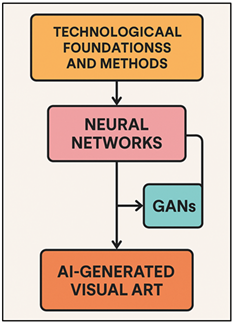
Figure 1 Flowchart of Technological Foundations and Methods
in AI-Generated Visual Art
The system improves its results over and over again, until they look a lot like art that was made by human beings. Diffusion modeling is another new, important concept that is used in models such as DALLE v3, Midjourney, and Stable Diffusion. Figure 1 is the AI process of art creation using neural networks and GANs. These models create pictures by gradually transforming random noise into meaningful pictures by using written instructions. This enables creative diversity and advances reality by allowing people to share their artistic ideas through language and not technology. In addition to that, there are some advanced style transfer algorithms that allow AI to replicate the style of existing artworks by blending the style of one image with the content of another.
2) Distinction
between human-made and AI-generated art
The main differences between human-made art and AI-founded art are purpose, process and perception. Human art is created through conscious thought, emotional experience and cultural history. Each piece represents the artist's expression, function, and vision of the world. AI-generated art, on the other hand, is that which is derived from computer processing and learning from the data. The AI doesn't know what it feels or what its intentions are; its "creativity" is based on mathematical optimisation and statistical modelling and not inspiration or real-life experience. From the perspective of the process, human artists make decisions about color, shape, and meaning by thinking about them and then taking action based upon that thought. In contrast, AI systems integrate results based on the relationship between training data. These outputs may appear to be some new thing, but are generally merely rearranged versions of previously observed visual patterns. So, AI art sits on the line between copying and coming up with something new and we start to wonder if machines can really create or just copy creating. The two are made even more disparate by the way they are interpreted. Generally, the viewers of human-made art try to understand the artist's statement or point by knowing about the artist or the culture from which the art is from. A lot of the time, meanings of AI-generated works are determined by their watchers or prompters, and not by the AI "creator" itself. Despite these differences, the lines between human and AI art are getting blurred more and more, particularly where artists are collaborating with AI tools to create art. This new mixed model implies that art may transform into a dialogue between human mind and artificial intelligence which would render the act of creation a shared one rather than an solitary one.
3) Academic
and artistic perspectives on authorship and creativity
There is a lot of debate in both the scholarly and artistic world regarding who the author of AI-generated art is and how it is created. In the past, authorship included ownership and responsibility for the artistic work. This was based on the assumption that art reveals how people think and feel. But these assumptions are challenged when AI systems are making graphic material on their own. Scholars and artists are at a loss on who should be considered the maker: the person who operated the machine, the person who created the AI, or the program. In the academic world, writing is associated with intellectual responsibility. The awarding of authorship in study and education contexts for the work created by AI makes adherence to rules about creativity, citation, and copy more challenging. There is now a drive by many organisations to be open about the use of AI and to emphasise that creativity should not be hidden by AI and that it can be a powerful tool to help, but not replace, the contributions humans make. This view is in line with ethical research, which makes sure that technology adds to human intelligence instead of taking it away. Some artists view AI as an opportunity for people to work together, a tool that makes an artistic discovery stronger rather than weaker. Their argument is that the role of the artist changes from being the sole creator to being a director, guiding the creative process of the algorithm by giving it hints for the creative process, the choice of data and aesthetic judgement. On the other hand, critics argue that AI art lacks the intentionality and emotional sincerity that are important to art.
4. Ethical Dimensions of AI Art in Academia
1) Issues
of authorship and intellectual property rights
Two of the key ethics issues that arise when academics work with AI-generated art are related to authorship and intellectual property (IP). Authorship has traditionally been a human construct, in which an artist's personal intention, originality and labour entitle them to the status of rightful ownership. On the other hand, it is difficult to identify the source of AI-made art. When we have an AI system generating an image based on the data it has already learnt and the user input, we wonder who actually created the image. Is it the scientist that created the code, the person who commanded it, or the AI itself? Copyright law, which is built on the assumption that books are actually written by people, is not very comfortable with works created by a computer. At this point, in most jurisdictions, AI is not considered a legal author. Rather, they regard the person or organisation that operates the system as the legal owner of that system. However, this brings up moral questions because AI-generated work may copy materials from training datasets without the intent to do so, making it illegal. This type of copying without citation may be illegal and unethical academic practice. Also, joint art projects using AI put the traditional sense of individual ownership into question. At the same time, more academic organisations are having to adopt regulations to clarify the authorship and ownership of AI-assisted work. By fostering transparency and acknowledging work properly, academia can ensure there is fairness and creative responsibility present.
2) Originality
and plagiarism concerns in educational contexts
Originality is an old element of evaluation of art and scholarly work. But with the development of AI-made art, the concept of originality is more complicated since it makes the line between creating something new and outdated, and taking someone else's creation. Because AI models are trained with massive files containing millions of existing images, the photos they create often resemble images that were previously created, and are made up of parts of images that were previously created. This is a serious issue when it comes to copying in schools whether intentional or accidental. If students use AI tools to create art, they may be turning in pieces that appear to be their original work that is actually based on collected data they used to train the model. AI generated pictures don't copy particular works word for word, they instead find patterns in style and structure. This makes the conventional methods of locating copying harder. Because of this, it is very difficult for teachers to distinguish between an entry that is genuine creativity and simply a program plugging in some change. Also, the ease of being able to produce quality art for little effort can cause cheating in school or relying heavily on machines. If there are no clear rules, students may exploit AI tools, which will contradict the values of independent thinking and creative training that schools are trying to instill. To correct this problem, schools should establish full regulations for the use of AI for artistic projects.
3) Transparency
and disclosure of AI use in research and coursework
That is the case for the ethical considerations of bringing AI-made art to academia: transparency and transparency should be the requirement. As AI tools are increasingly used to assist people in creating visual works, it will be crucial for students and practitioners to be transparent about the extent to which AI is being used in their creative practice. Disclosure ensures that people are being truthful, enables the proper evaluation of people's contributions, and is consistent with the broader values of the ethics of scholarship. Plagiarism using AI falsely poses as the authorship of the work and it goes on to erode trust in scholarly and artistic output. In the process, transparency also refers to the naming of the AI models, datasets, and methods which were used to obtain results. In this context, assuming that a dataset used by an AI system is copyrighted or biased, then the proper citation and sharing of datasets can help to mitigate issues related to consent and ownership as well as bias. Growingly teachers are asking students if and how AI tools have been used in their work. Such rules promote accountability and help people to be more aware of AI capabilities and limitations. Disclosure begins a dialogue on the topics of imagination, ethics and our dependence on technology. This brings AI from being a concern in the classroom, to being an opportunity to learn.
5. Impact on Academic Integrity and Creativity
1) Challenges
to traditional notions of creativity and learning
AI generated drawings are now being used in schools, and have flipped centuries-old notions of imagination and learning. Creativity is something that has always been considered very human - something that is expressed by ideas, feeling and an opinion that is shaped by experience. In turn, learning has placed a lot of emphasis on becoming better at things, critical thinking, and making your own ideas. But with the ability to create high-quality AI art from text-based instructions, those principles are up for debate. AI challenges the notion that human beings must be conscious in order to be creative.
Figure 2
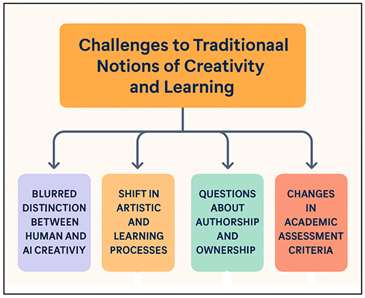
Figure 2 Challenges to Traditional Notions of Creativity and
Learning in the Age of AI Art
When computers can create images that look like human hands produced, it is challenging to distinguish between the world of digital manipulation and artistic expression. Figure 2 represents the transformation of AI on creativity, learning, and ethics. Because of this shift, practitioners and research workers are forced to reconsider what learning means in art and design schools. The direction of the lessons may change from skills to instructions on how to make things. Students are less likely to learn how to do things by hand and instead are given ideas and are told what to make. Also, art that is created by AI raise philosophical questions on who knows what and who owns knowledge. If robots can learn and create, how do we say that smart and creative people are smart and creative? The metrics of academic performance should be reformed to include both human and technology contributions and ensure that AI does not dominate the human mind. Ultimately, the task is to reimagine creation and learning as a process which has confidence in human intelligence and critical thinking. This way, AI can be used to supplement, not replace, the search for information in the classroom and new ideas in the arts.
2) The
risk of overreliance on AI in artistic education
Although AI tools have made it easier to be creative, they might also be overused in art classes. Having to be able to create complicated images in a matter of seconds can lead to students losing interest in being a part of the creative process. Drawing, design, colour theory and idea development are all the traditional ways to study art that teach students patience, critical thinking and expression. If these are replaced with automatic generation, then the students may be deprived of important opportunities to develop basic skills and creative thinking. In addition, students might also lose their ability to think for themselves if they have too much reliance on AI. If students rely on automated output too heavily, they run the risk of becoming less creative and instead of coming up with their own ideas, just taking AI's suggestions. It is often difficult for teachers to know if their students' work is innovative or if the outcomes are truly a product of learning and not simply a machine-assisted one.
3) Balancing
innovation with ethical responsibility
As university welcomes A.I. generated visual art, it is important to find a balance between new ideas and moral duty. Because of this, ethical responsibility is about being transparent about how AI is being used, understanding the work that machines have done, and being respectful of artists whose work may have been used to train AI. Also, promoting the ethical production means making people more conscious of how their actions impact others. AI art causes us to consider issues of culture bias, impacts on the environment, and just access to technology. As part of the creativity, the schools must guide the kids to think on these matters. Educations can ensure that innovation won't damage artistic and academic values by teaching ethical literacy, in addition to technology ones.
6. Case Studies and Real-World Examples
1) Academic
controversies involving AI-generated art submissions
Since its introduction into the academic practice, AI-generated work has raised numerous discussions on the legitimacy, authorship and academic ethics. Among the most notorious cases, there was an American art student who entered a digital art competition and won the first place in 2022 because of an AI-generated work created with the help of the Midjourney. The discovery that it was not produced manually caused much controversy in art and academia on whether art produced by AI could be included in the normal art exhibitions or even be evaluated as part of the schoolwork. Others said that this kind of entry contradicts the principles of originality and healthy competition, others said that it is the manifestation of new forms of digital talents that must not be ignored. Similarly, universities have been recorded where scholars presented assignments that have been completed by AI without providing the disclosure, creating the problem of academic dishonesty. Professors indicated that it was hard to notice AI-generated work since no visual elements could tell one that the work was not done by a human being. These concerns reveal why it is necessary that institutions should come up with well-defined policies about the application of AI in creative assignments sooner than ever. This is one of the ways of technology development and academic integrity being opposing. They testify to the fact that AI can make the innovation stronger, although it can also complicate the evaluation things in the state of their being. The use of AI is currently being made transparent in academic societies across the globe, with rules being written. According to them, in order to make valid artistic involvement to be acknowledged and represented, there should be a recognized awareness and ethical consciousness. Such conflicts, in this manner, are involved in changing our understanding of creation and accountability in this age of smart art-making.
2) Positive
integration models of AI art in academic programs
However, in spite of the bad news, it still remains that there are numerous schools who have managed to integrate AI art into their curriculums to serve as a form of artistic experimentation and interdisciplinary learning. To illustrate, the MIT Media Lab (USA) as well as the Royal College of Art (UK) have devised degree programs that encompass ethics, artificial intelligence and digital media. Such programs also educate students to consider AI as a companion, rather than a competitor to creation, and how to think critically about automated outputs thoughtfully and create and analyze them. These types of schools use AI tools like Stable Diffusion and Runway ML as a means of training students in generative design, data ethics, and machine aesthetics as a part of the training program. This method of teaching puts a heavier emphasis on the process than the result, and challenges students to consider the impact of the algorithm used on an artistic purpose and cultural representation. Moreover, projects that involve two schools, computer science and fine arts, joining to work on a project will be able to improve the learning process by incorporating the technical knowledge with the critical thinking skills to deal with concepts. These integrative models show that when AI is implemented in an ethical manner, creative inquiry becomes strong as opposed to being weak. The institutions foster both digital knowledge and creative liberty through focusing on openness, intellectual dialogue and critical thinking. Furthermore, such models may help learners to prepare to live in the future where AI literacy is becoming a professional requirement.
3) Lessons
learned and emerging best practices
The academics are also gaining some valuable lessons and best practices when it comes to achieving a balance between creation and morality as the world of academics becomes increasingly fascinated with AI-generated art. Among the key lessons, it is necessary to discuss the necessity of staying transparent when it comes to the application of AI tools to artistic work by students and academics. Openness like this one is friendly to responsibility and helps the teacher to make just decisions regarding the amount of human involvement in the planning and execution of a job. The introduction of AI knowledge in school curricula is another emerging best practice that is becoming popular. The lack of knowledge regarding the sources of data, biases, and drawbacks of the AI systems implies that the solution is educational institutions that equips children with appropriate skills. The knowledge helps to avoid abuse and participate actively instead of passively depending. The other curriculum development success has been achieved. Colleges that have incorporated art and computer science in their courses with ethics claim that their students have become more critical thinkers. With such performances, it becomes apparent that there is a need of a system of ethics concerning technology that fluctuate throughout the artistic process so that freedom of expression does not cross the threshold of academic honesty or copyright.
7. Result and Discussion
The research confirms that the effect of AI generated art on academic creativity and morality is rather high. The findings reveal that AI promotes usability, novelty, and makes the process of writing, originality, and academic honesty more challenging. On the case studies, the integration of such institutions that embrace openness and moral education is more responsible. Conversely, when applied without limitations, artificial intelligence has a problem with copying and less depth of learning.
Table 2
|
Table 2 Survey Results on Academic Perceptions of AI-Generated Art |
|||
|
Category |
Agree (%) |
Neutral (%) |
Disagree (%) |
|
AI-generated art should be
recognized as creative work |
62 |
18 |
20 |
|
Use of AI in coursework requires mandatory disclosure |
85 |
10 |
5 |
|
AI tools enhance creativity
and artistic exploration |
71 |
14 |
15 |
|
AI-generated works raise plagiarism risks |
78 |
12 |
10 |
|
Academic guidelines on AI
art are clearly defined |
24 |
26 |
50 |
Table 2 shows the results of the polling that creates a rather intricate yet fascinating picture of the way in which experts perceive AI-created art. A huge percentage of people (62) think that AI-generated art should be viewed as a creative work. This proves that there is an increasing number of human beings who are fine with the role played by AI in new artwork.
Figure 3
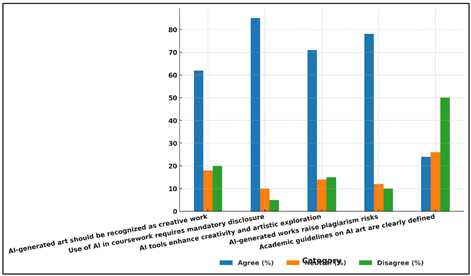
Figure 3 Perceptions of AI in Art and Academia
The sentiment of the academia in the field of AI in art is depicted in Figure 3. Naturally, the highly social responsibility component is present - 85% of the interviewees believe that the application of AI in homework should be followed by the compulsory exposure. The result of the increasing academic acceptance of AI-generated artistic practices is described in Figure 4. This shows that the issue of openness and academic honesty is still present.
Figure 4
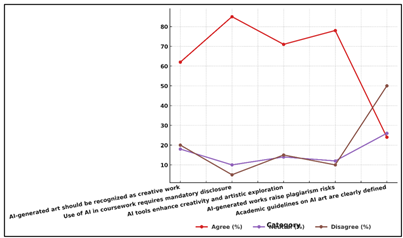
Figure 4 Trends in Attitudes Toward AI-Generated Art and
Academic Use
In addition, 71 percent confirm that AI tools stimulate innovation and discovery, which proves that AI is regarded as the means of promoting learning and experimentation. Nevertheless, 78% of those interviewed state that people can imitate due to artificial intelligence, and it shows that people fear creativity and exploitation. The most significant result is that only 24% think that rules on AI art in academic institutions are well spelt out, and 50% of the respondents do not. The Figure 5 demonstrates the diversity of the views concerning the impact of AI on creativity.
Figure 5
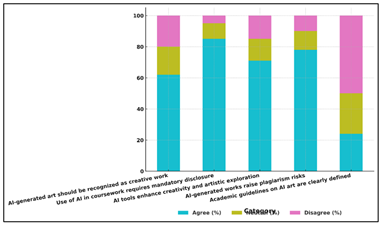
Figure 5 Overall Opinion Distribution on AI and Creativity
This is a gap that means that formal systems are failing to adjust to technological changes. In essence, the data will help to determine the significance of the existence of clear moral rules and structured guidelines on how to introduce AI art into university in a responsible manner.
8. Conclusion
Research in universities is underway regarding the effectiveness of AI application in teaching art, which also suggests the potential but also the difficulties involved in using AI by artists. With the advancement of AI tools being more enhanced and convenient, they are exerting greater and more complicated influence on art, writing and academic dishonesty. The research results indicate that, even though AI offers the possibility of new types of creative work, new rules are required on the matter of what is fair, original and responsible academic work. The capability of AI to produce works of intricate art challenges long-standing ideas regarding the way humans generate such art. Integration into the school should however not be meant to substitute the learning, but to enhance it. In line with this, schools should, therefore, teach children to be critical of AI; this implies that they should know how it works, its limitations, and the extent to which it influences society. The formation of explicit regulations concerning who, what is owned, how the information is distributed and how the creation is safeguarded is an intelligent and mindful process. Moreover, using an integration of human cognition and computer intelligence, it is possible to revolutionize the way art is taught, and new inter-disciplinary ways of learning will be created.
CONFLICT OF INTERESTS
None.
ACKNOWLEDGMENTS
None.
REFERENCES
Almegren, A., Hassan Saleh, M., Abduljalil Nasr, H., Jamal Kaid, A., and Almegren, R. M. (2024). Evaluating the Quality of AI Feedback : A Comparative Study of AI and Human Essay Grading. Innovations in Education and Teaching International. Advance online Publication.
Amirjalili, F., Neysani, M., and Nikbakht, A. (2024). Exploring the Boundaries of Authorship: A Comparative Analysis of AI-Generated Text and Human Academic Writing in English Literature. Frontiers in Education, 9, Article 1347421. https://doi.org/10.3389/feduc.2024.1347421
Bai, Y., Kosonocky, C. W., and Wang, J. Z. (2024). How our authors are using AI tools in manuscript writing. Patterns, 5, Article 101075. https://doi.org/10.1016/j.patter.2024.101075
Barrot, J. S. (2025). Leveraging Google Gemini as a Research Writing Tool in Higher Education. Technology, Knowledge and Learning, 30, 593–600. https://doi.org/10.1007/s10758-024-09774-x
Bhattaru, A., Yanamala, N., and Sengupta, P. P. (2024). Revolutionizing Cardiology with Words: Unveiling the Impact of Large Language Models in Medical Science Writing. Canadian Journal of Cardiology, 40, 1950–1958. https://doi.org/10.1016/j.cjca.2024.05.022
Chandrasekera, T., Hosseini, Z., Perera, U., and Bazhaw Hyscher, A. (2024). Generative Artificial Intelligence Tools for Diverse Learning Styles in Design Education. International Journal of Architectural Computing, 23, 358–369. https://doi.org/10.1177/14780771241287345
Lombaers, P., de Bruin, J., and van de Schoot, R. (2024). Reproducibility and Data Storage for Active Learning-Aided Systematic Reviews. Applied Sciences, 14, Article 3842. https://doi.org/10.3390/app14093842
Patrakar, S., Wadhai, S., Raghatate, H., Naitam, T., and Seloker, A. (2025). Student Safety School Bus Tracking System Using Geo-Fencing Technology with Location Alert. International Journal of Electrical and Electronic Engineering and Computer Science (IJEECS), 14(1), 160–165.
Sajid, M., Sanaullah, M., Fuzail, M., Malik, T. S., and Shuhidan, S. M. (2025). Comparative Analysis of Text-Based Plagiarism Detection Techniques. PLOS ONE, 20, Article e0319551. https://doi.org/10.1371/journal.pone.0319551
Salman, H. A., Ahmad, M. A., Ibrahim, R., and Mahmood, J. (2025). Systematic Analysis of Generative AI Tools Integration in Academic Research and Peer Review. Online Journal of Communication and Media Technologies, 15, Article e202502. https://doi.org/10.30935/ojcmt/15832
Shahsavar, Z., Kafipour, R., Khojasteh, L., and Pakdel, F. (2024). Is Artificial Intelligence for Everyone? Analyzing the Role of Chatgpt as a Writing Assistant for Medical Students. Frontiers in Education, 9, Article 1457744. https://doi.org/10.3389/feduc.2024.1457744
Su, Z., Tang, G., Huang, R., Qiao, Y., Zhang, Z., and Dai, X. (2024). Based on Medicine, the Now and Future of Large Language Models. Cellular and Molecular Bioengineering, 17, 263–277. https://doi.org/10.1007/s12195-024-00820-3
Tang, A., Li, K. K., Kwok, K. O., Cao, L., Luong, S., and Tam, W. (2024). The Importance of Transparency: Declaring the Use of Generative Artificial Intelligence (AI) in academic writing. Journal of Nursing Scholarship, 56, 314–318. https://doi.org/10.1111/jnu.12938
Williams, A. (2024). Comparison of Generative AI Performance on Undergraduate and Postgraduate Written Assessments in the Biomedical Sciences. International Journal of Educational Technology in Higher Education, 21, Article 52. https://doi.org/10.1186/s41239-024-00485-y
Yılmaz Virlan, A., and Tomak, B. (2025). AI Tools for Writing: A Q-Method Study with Turkish Instructors of English. Education and Information Technologies, 30, 16997–17021. https://doi.org/10.1007/s10639-025-13455-2
|
|
 This work is licensed under a: Creative Commons Attribution 4.0 International License
© ShodhKosh 2025. All Rights Reserved.