ShodhKosh: Journal of Visual and Performing ArtsISSN (Online): 2582-7472
|
|
CHALLENGES AND STRATEGIES OF WORK-LIFE BALANCE IN THE SOUTH INDIAN FILM INDUSTRY
Akhildev. P 1
 ,
Dr. Reshmi R Prasad 2
,
Dr. Reshmi R Prasad 2
1 Research
Scholar, Kerala University, Loyola College of Social Sciences, Srekariyam
Thiruvananthapuram, Kerala, India
2 Research
Guide and Corresponding Author, Principal, All Saints’ College,
Thiruvananthapuram, Kerala, India
|
|
|
ABSTRACT |
|
|
The ability to
balance professional and personal obligations is a skill required in every
industry. Still, the film industry places a special emphasis on it because
the outcome showcases people's creativity, which is essential in this field.
Several incidents and reports have revealed that many professionals in this
sector struggle to handle challenges and maintain a work-life balance, which
can impact their ability to manage their families and personal lives. The
combined creativity of diverse people may not always be moving in the
intended direction for achieving the desired outcomes. It will depend on
their current circumstances, such as mental stress, gender issues, long hours
at work, job insecurity, and so on. We employed a quantitative approach and a
descriptive strategy in this study. A standardised five-point Likert scale
questionnaire is used to collect statistics for the study from 210 samples
that were chosen using a straightforward random sampling method. The four
hypotheses have been determined by their conceptual variables through
correlation, regression, and chi-square analysis. Additionally, the factors
utilised in factor analysis and the linear regression model are established
along with their comprehensive relationships.
This research offers a distinctive theoretical contribution to
understanding the issues and tactics being used in the South Indian film
industry with reference to Mollywood, one of the key film production hubs in
Kerala. |
|||
|
Received 23 December 2025 Accepted 15 January 2025 Published 06 February 2026 Corresponding Author Akhildev.
P, akhildevp@gmail.com DOI 10.29121/shodhkosh.v7.i1.2026.6610 Funding: This research
received no specific grant from any funding agency in the public, commercial,
or not-for-profit sectors. Copyright: © 2026 The
Author(s). This work is licensed under a Creative Commons
Attribution 4.0 International License. With the
license CC-BY, authors retain the copyright, allowing anyone to download,
reuse, re-print, modify, distribute, and/or copy their contribution. The work
must be properly attributed to its author.
|
|||
|
Keywords: Work-Life Balance, Film Industry, Mental Stress,
Gender Issues, Long Working Hours, Job Insecurity |
|||



1. INTRODUCTION
The work in the film industry “is not always as glamorous as it seems” Royster and Vilorio (2013). Entertainment is traditionally characterized by its impact as a happy and satisfied psychological state of mind. So, it tends to be whatever invigorates, empowers, or produces a state of pleasurable preoccupation Vogel (2015). This is particularly factual in the silver screen, where people might be affected in various ways based on their work. Since the film industry, as we all know, relies heavily on human labour and bases all of its operations on planning and scheduling, the idea of work-life balance may not be successfully implemented. In this circumstance, we may discover that the majority of them are dealing with several problems, such as mental tension, burnout, headaches, muscular pain, and insomnia, including the women artists who find it too challenging to balance their individual and skilled lives. In any field, it can be difficult to strike a balance between one's individual and professional lives. Several instances in this field demonstrate how this disparity has a significant impact on the personal and professional lives of numerous well-known artists. According to the newspaper, in October 2022, the chief minister, deputy chief minister, and labor minister of Maharashtra received a letter from the film industry's trade association, the Federation of Western India Cine Employees (FWICE), expressing their disapproval of producers and production companies that compel their workers to work overtime without consent. The letter discusses the connection between sleepiness-induced car accidents or heart attacks and hectic work schedules and conditions.
"The TV, film, and OTT industry, like many others, including airline, IT, and call centers, is a high-stress industry," explains clinical psychologist and psychotherapist Narendra Kinger, who frequently works with celebrities. Individuals endure inconsistent schedules, extended travel, unforeseen postponements, subpar food served in locations, and a persistent sense of uncertainty to stay visible and relevant. They must also forfeit their sleep and leisure time to attend many events.” Examples of such incidents include the tragic deaths of well-known actors in Bollywood, particularly Mr. Sushant Singh Rajput, Mr. Prathyusha Banerji, and Mr. Manmeet Grewal. Some of them are in the Malayalam film industry, such as Ms. Silk Smitha, Mr. Santhosh Jogi, Ms. Mayoori, and Mr. Jagathi Sreekumar's accidents, and numerous other incidents in Mollywood, Sandalwood, and even Hollywood, which have also pointed out the importance of maintaining a healthy work-life balance in this sector. The present research identifies the difficulties they encounter and the methods they use to harmonize their work-life for maintaining a healthy balance between their real and reel lives in this field.
2. PROSPECTS OF THE INDIAN SILVER SCREEN SECTOR
Based on the total films produced in over 2000 in over 20 regional languages, the Indian silver screen sector stands as a major business globally. Over 379 million cinema tickets were sold in India in 2021, which was a considerable drop (-85.4%) from the 1.9 billion tickets sold before the outbreak, but an excellent increase year over year over the 278 million admissions in 2020 (and higher than the 226 million in the US in 2020). In fiscal year 2022, the Indian film and television industries are expected to create a gross production of 4,210 billion Indian rupees. During the fiscal year 2020, the Indian film business was estimated to be worth 183 billion Indian rupees. It was expected to decrease in the following years due to the coronavirus pandemic. However, projections for the fiscal year 2022 revealed a 196% increase. The largest filmmaker in the world is in India. Since 2007, India has continuously been the world's top film maker. In terms of the quantity of tickets sold, the nation is also the top movie market. A significant decrease in the number of films produced occurred in 2020 and 2021 as a result of the pandemic. Although revenue increased to INR 93 billion ($1.2 billion), it was still far less than pre-pandemic levels of INR 191 billion ($2.5 billion). By 2024, it is expected that the sector will have grown to INR212 billion ($2.7 billion). (Source Internet)
Figure 1
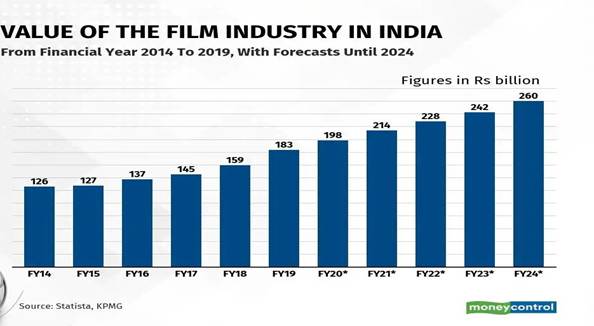
Figure 1 Value of the film industry in India
Source: Internet
Figure 2
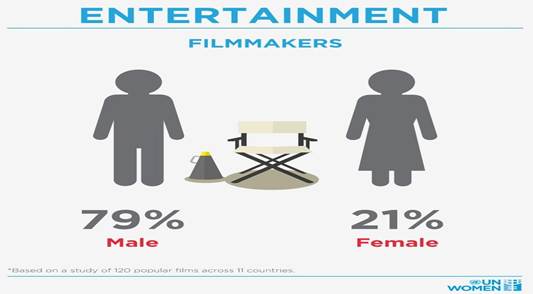
Figure 2 Involvement of filmmakers in gender perspectives
Source: Internet
According to the aforementioned economic statistics, the workforce is significantly underrepresented in massive industries like film. As a result, addressing the equilibrium of work and life issues, such as stress, gender issues, and extended working hours, has a significant impact on those who support this sector.
3. STATEMENT OF THE PROBLEM
One of South India's most dynamic creative industries, cinema, remains largely unorganized, exposing workers to gender discrimination, long hours, unpredictable schedules, and job insecurity. The absence of formal policies or institutional systems leads to stress, emotional strain, and individual coping with family-work challenges, hampering work-life balance. Despite the Indian film industry's global influence, scholarly research on these subjects is limited, predominantly focusing on Bollywood and neglecting provincial sectors like Mollywood. This lack of empirical data has created a significant knowledge gap regarding the experiences of professionals in South Indian cinema. The present research intends to address this gap by investigating work-life balance issues and potential solutions within Mollywood, contributing valuable insights for scholars, practitioners, unions, and legislators to develop sustainable welfare initiatives for the film industry.
4. SIGNIFICANCE OF THE STUDY
The article "Challenges and Strategies of Work-Life Balance in the Film Industry" discusses how to balance work and personal life in this field. Despite being referred to as an industry, this sector is still not an organised type of business in India. For this reason, the sector is facing so many problems like long working hours, lack of a fixed salary or wage, and gender concerns. The employees or artists in this sector have experienced much strain at work and in the workplace. Despite an increase in studies on work-life balance in India over the past few years, the film business has seen very little attention paid to its distinctive challenges and work-life balancing methods. Therefore, it was determined that these studies accurately reflect the realities of professionals in the film industry about work-life balance.
5. LITERATURE REVIEW
Work-life balance is an equal combination of engagement and satisfaction of an individual’s work and family roles Greenhaus (2003). Hence, the basic feature of the work-life harmony perception is the number of hours a person works. Consequently, the degree of flexibility desired and proposed by an employee and employer does not necessarily correspond to reality Fagan et al. (2012).
Dr. Lakshmi Lingam, retired professor of TISS (Tata Institute of Social Sciences), says, “Maybe the courts should take Suo moto cognizance of deaths of artistes in the entertainment industry and ask for an inquiry and a report on working conditions and other matters of concern like contractual arrangements. TV actors are often unable to demand proper working conditions because they have short shelf lives and can easily be replaced by another artist. Women and older actors are particularly anxious since the pandemic,” she says.
She highlights the emotional vulnerability that can arise from leaving one's birthplace to live alone in an expensive city, emphasizing that passion alone is insufficient for sustainability. A balance between work and personal life is crucial, along with financial stability. Davidson (2014) outlines six essential elements for achieving work-life balance: self-management, time-management, stress-management, change-management, technology-management, and leisure-management. To successfully achieve this balance, fulfilling basic physiological needs—such as adequate sleep, a healthy diet, and regular exercise—is vital. Additionally, time management between personal and professional responsibilities is necessary. The European Working Conditions Survey (EWCS, 2000) indicates that excessive work adversely affects employee health, as cited in Fagan et al. (2012).
Work-family conflict, as described by the European Agency for Safety and Health at Work (EU-OSHA), stems from workplace-induced psychological or physical stress that destabilizes family dynamics. Factors influencing the outcome of this conflict include time availability, involvement, and overall satisfaction levels. Research indicates that such conflict may lead to negative outcomes such as sadness, physical ailments, somatic complaints, and an increased incidence of hypertension, as noted in studies by Googins (1991), Frone et al. (1997), and Burke (1988), referenced in Grant-Vallone and Donaldson (2001). Notably, a study conducted by Fapohunda in 2014 revealed that 74% of participants feel they cannot allocate sufficient time to their families, highlighting a prevalent issue in work-life balance. To enhance employee satisfaction and productivity, it is imperative for companies to strategically address and manage work-family challenges.
According to Royster and Vilorio (2013), the film industry consists of high-pressure jobs that frequently lead to issues such as stress and extended working hours. The collaborative nature of filmmaking means that all personnel involved—including directors, cinematographers, editors, actors, and technicians—share responsibility for the overall quality of the final product. Additionally, Royster and Vilorio note that "stress is common for film workers, in large part because they typically face inflexible deadlines," highlighting the inherent challenges faced by professionals in this demanding field.
Stress significantly affects early and untimely mortality, either directly or indirectly, as noted by Bickford (2005). To mitigate stress, the implementation of relaxation techniques such as progressive muscle relaxation, meditation, and deep breathing is recommended to enhance both physical and emotional well-being. Additionally, a film company's production quality and worker productivity are influenced by budget constraints, personnel availability, and time management, as illustrated by DeVany and Walls (1999) and Young et al. (2008). A disorganized work-life balance may result in financial losses due to its adverse effects on the film's budget, as highlighted by Bird (2006). Therefore, addressing stress and ensuring consistency in work-life balance is essential for improving outcomes in both personal health and film industry productivity.
Plekhonov (1981) stated that a film essentially includes story systems and introduction customs which have enhanced its status as a mode of correspondence: "Each general public fundamentally develops based on certain organic results. The tasteful estimations of society additionally rise because of certain historical results of a general public or class. The tasteful qualities introduced by a film are incredibly affected by organic, recorded, social, political, and financial outcomes.
Thimmappa (1986) pointed out that film, similar to literature, is an impression of society. The human sentiments and encounters are successfully conveyed to the group of onlookers through film. The effect of film on society has been examined everywhere throughout the world for a very long time. Observational investigations have uncovered the optimistic and adverse effects of film on society. The filmmakers are required to utilize the mechanism of the film with the obligation to deliver a great impact on individuals identifying with significant occasions that matter most.
Gopalakrishnan and Banerjee (1991) observed that Film viewing is an inimitable experience. It gives stimulation and data to the group of onlookers. It teaches the group of onlookers about new subjects and encourages them to think critically. Films likewise influence individuals to respond to various life circumstances, and there is a tremendous distinction between the groups of viewers when watching the films. The group of people will undoubtedly change their minds after watching a film. Such is the enchantment intensity of film as a mechanism of communication.
The main sources of work-life balance development are the changes in demographics, technology, average income, work, and family atmosphere Sensarkar (2010).
6. RESEARCH GAP IDENTIFIED
Although extensive research has been conducted on work-life balance in sectors like IT and healthcare, there remains a significant lack of scholarly attention towards specific regions within the Indian film industry, particularly Mollywood, Kollywood, and Sandalwood. Most studies have predominantly centered around Bollywood, overlooking the influence of local cultural norms, production practices, and informal employment structures on experiences in regional film industries. Key issues such as unpredictable work schedules, gender discrimination, psychological stress, and job instability are inadequately addressed, and existing literature offers limited insights into the coping mechanisms and resilience strategies of employees. Furthermore, a crucial disconnect between work-life equilibrium and factors such as workforce sustainability, productivity, and creative quality at the industry level. This research intends to address these gaps by empirically investigating the specific challenges and adaptive strategies connected to work-life stability in the South Indian silver screen sector, with Mollywood serving as the primary case for a detailed analysis.
7. OBJECTIVES OF THE STUDY
· Identify the work-life balance challenges faced by professionals in the silver screen.
· Explore strategies for managing work-life balance in the silver screen.
· Analyse the role of the freelance nature of work, which may lead to insecurity of jobs in the silver screen.
· Investigate the role of technology in enhancing work-life equilibrium in the silver screen sector.
8. HYPOTHESIS OF THE STUDY
· H1 There are significant work-life balance challenges faced by professionals in the silver screen sector.
· H2 There are effective strategies for managing work-life balance in the silver screen.
· H3 Freelance work and job insecurity significantly impact work-life equilibrium in the silver screen sector.
· H4 Technology plays a significant role in enhancing work-life equilibrium in the silver screen sector.
9. CONCEPTUAL MODEL OF HYPOTHESIS
Figure 3
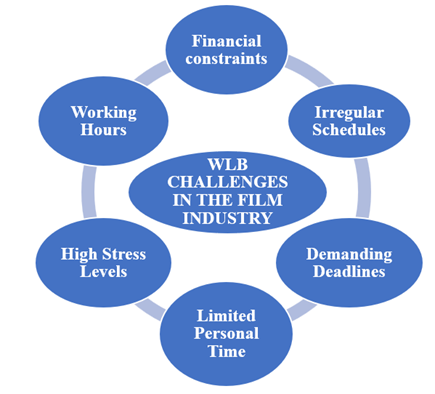
Figure 3 Conceptual Model of H1
Professionals in the film industry may face work-life challenges due to many reasons, like prolonged working hours, irregular schedules, high stress levels, limited personal space and time, and demanding deadlines, which may negatively affect their overall equilibrium in their jobs and personal life
Figure 4
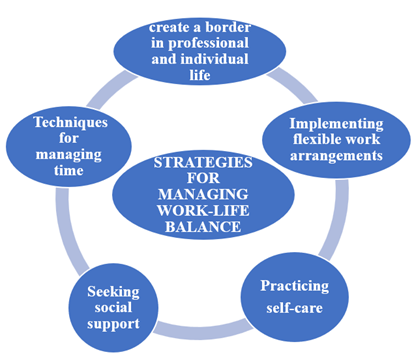
Figure 4 Conceptual Model of H2
Professionals in the film industry can benefit from employing sensible methods for managing work-life balance. These tactics might involve establishing restrictions between professional and individual life, time management skills, looking for common care, engaging in self-care, and putting forth flexible work schedules. Improved work-life balance could result from these tactics.
Figure 5
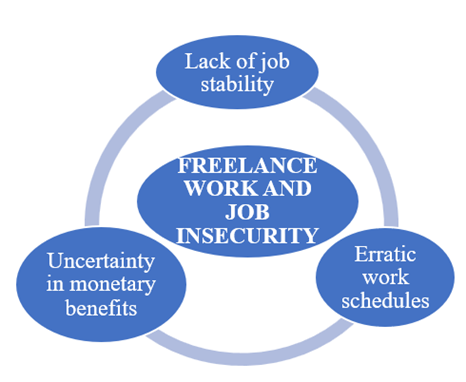
Figure 5 Conceptual Model oF H3
In the film industry, work-life balance may be greatly impacted by freelance work and job uncertainty. Uncertainty in one's finances, erratic work schedules, and a lack of professional constancy can all contribute to stress, trouble establishing work-life boundaries, and a general lack of work-life balance.
Figure 6
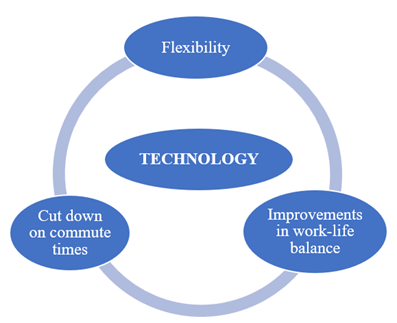
Figure 6 Conceptual Mod El of H 4
For those working in the film industry, remote work and technology have the potential to improve work-life stability significantly. A better work-life balance can be achieved through the use of digital tools for communication, collaboration, and remote work arrangements. These tools can also offer flexibility and cut down on commute times. Improvements in work-life balance may result from these variables.
10. METHODS
1) DATA
COLLECTION
This study surveyed employees of the South Indian film industry, especially focused on Mollywood, who had worked for over a year. It was not possible to provide an exhaustive list of South Indian film employees who had been working for more than a year. Therefore, this study chose to survey 225 employees working in various segments of the silver screen, which represents the current position of the South Indian film. The data collection lasted from June to August 2023. A total of 210 valid Likert Scale rating questions were collected through Google Forms and directly with a response rate of 93.5%. Five questionnaires, each under each of the four objectives of the study, were distributed along with their demographic questions. The message also guaranteed the namelessness and confidentiality of the respondent's comments and indicated that participation was voluntary. Finally, the researchers gathered all the completed surveys into various analyses through different tools and techniques like the coefficient of correlation, chi-square test, and ANOVA, and interpreted the challenges and strategies of work-life harmony in the South Indian film society.
2) DATA
ANALYSIS
The statistical analysis of data gathered from questionnaires was conducted using IBM SPSS Statistics version 20. Descriptive statistics, such as frequencies, percentages, means, and values, were employed to evaluate the respondents' backgrounds along with work-life balance issues and solutions specific to the South Indian film industry. Additionally, Chi-square and regression model (ANOVA) techniques were utilized to test the hypotheses. To ensure precision and reliability, factor analysis and linear regression model studies were also implemented.
11. FINDINGS AND HYPOTHESIS TESTING
According to the data presented in Table 1, a total of 210 respondents participated in the study, with a gender distribution showing that 115 respondents, or 54.8%, were men, while 95 respondents, accounting for 45.2%, were women. In terms of age demographics, the respondents were categorized into several age groups. The largest group consisted of individuals aged 31 to 40, comprising 64 respondents, which represents 30.5% of the total sample. This was closely followed by the 20 to 30 age group, which included 61 respondents, or 29%. Additionally, 44 respondents, representing 21% of the sample, fell into the age range of 41 to 50. The 51 to 60 age group consisted of 33 respondents, making up 15.7%, and finally, there were 8 respondents, or 3.8% of the total, who were aged over 60. This detailed breakdown provides a clear overview of the age and gender distribution among the respondents surveyed. In a survey, the distribution of respondents based on their years of experience is as follows: 13.8% (29 people) had less than five years of experience, 42.9% (90 respondents) had six to ten years, 17.6% (37 responders) had 11–15 years, 13% (32 respondents) had 16–20 years, and 5.2% (11 respondents) had between 21 and 25 years of experience. Another 11 respondents have experience in the above years of 26, and they are 5.2%. Another variable is the marital status of respondents.78 respondents (37.1%) are single status and 42.9% of respondents are married, and the number is 90. 5.2 Each percentage of respondents (11in number) is widowed and divorced, or separated. The final demographic variable used in this study is the number of children of respondents 38.6% of respondents have no children, which is 81 in number. 49 respondents (23.3%) have one child each. 29% of respondents have two children each, which is 61 in number. 7.1% and 1.9% of respondents have 3 and 4 children each, which are 15 and 4 in number.
Table 1
|
Table 1 Demographic Profile of Respondents |
|||
|
Demographic Variables |
Groups |
Frequency |
% |
|
Gender |
Male |
115 |
54.8 |
|
Female |
95 |
45.2 |
|
|
Total |
210 |
100 |
|
|
Age |
20 to 30 |
61 |
29 |
|
31 to 40 |
64 |
30.5 |
|
|
41 to 50 |
44 |
21 |
|
|
51 to 60 |
33 |
15.7 |
|
|
Above 61 Years |
8 |
3.8 |
|
|
Experience |
below 5 years |
29 |
13.8 |
|
6 to 10 |
90 |
42.9 |
|
|
11 to 15 |
37 |
17.6 |
|
|
16 to 20 |
32 |
15.2 |
|
|
21 to 25 |
11 |
5.2 |
|
|
above 26 |
11 |
5.2 |
|
|
Marital Status |
Single |
78 |
37.1 |
|
Married |
110 |
52.4 |
|
|
Widowed |
11 |
5.2 |
|
|
Divorced or separated |
11 |
5.2 |
|
|
Number of Children |
Zero |
81 |
38.6 |
|
One |
49 |
23.3 |
|
|
Two |
61 |
29 |
|
|
Three |
15 |
7.1 |
|
|
Four |
4 |
1.9 |
|
|
Source: Primary Data |
|||
11.1. DESCRIPTIVE DATA
This segment will represent the consequences of the descriptive mean analysis of the four scale-dependent variables with 17 scale-independent variables. The variables related to challenges in the film industry, such as "WLB CHALLENGES IN THE FILM INDUSTRY," "Financial Constraints," "Working hours," and others, have means that are slightly above 4, suggesting that respondents, on average, perceive these factors as moderate challenges. The variable "STRATEGIES FOR MANAGING WORK-LIFE BALANCE" has a relatively high mean of approximately 4.4286, indicating that respondents perceive these strategies as effective in managing work-life balance. “FREELANCE WORK AND JOB INSECURITY" and "TECHNOLOGY" also have relatively high means, suggesting that respondents may view these aspects positively or as valuable in terms of work-life balance. "Flexibility" has a high mean of approximately 4.486, indicating that respondents perceive flexibility as an important aspect of work-life balance. Some variables, such as "Improvements in work-life balance," "High-Stress Level," and "Uncertainty in monetary benefits," have higher standard deviations, indicating more variability in responses among respondents.
In summary, these descriptive statistics provide an overview of how respondents perceive various factors related to work-life balance in the film field, freelance work, job insecurity, and technology. The analysis highlights the primary trend and variability in the respondents' perceptions, as illustrated by the calculated means and standard deviations. This statistical approach enables a clearer understanding of how opinions differ among the respondents, reflecting both the commonalities and divergences in their perceptions.
Table 2
|
Table 2 Descriptive Data of the Variables |
|||
|
Variables |
No |
Mean |
Std. Deviation |
|
WLB Challenges in the Film
Industry |
210 |
4.2429 |
0.79054 |
|
Financial Constraints |
210 |
4.2714 |
0.84017 |
|
Working hours |
210 |
4.3762 |
0.78038 |
|
irregular Schedules |
210 |
4.1048 |
0.98723 |
|
High-Stress Level |
210 |
3.9857 |
1.06478 |
|
Demanding Deadliness |
210 |
4.2286 |
0.92034 |
|
Limited Personal Time |
210 |
4.119 |
0.98317 |
|
STRATEGIES FOR MANAGING WORK-LIFE BALANCE |
210 |
4.4286 |
0.61647 |
|
Techniques for managing time |
210 |
4.2095 |
0.89331 |
|
Create a border in Professional and Individual life |
210 |
3.9857 |
1.06478 |
|
Seeking social support |
210 |
4.2286 |
0.92034 |
|
Implementing flexible work arrangements |
210 |
4.3381 |
0.61479 |
|
Practicing |
210 |
4.3667 |
0.74103 |
|
self-care |
|||
|
FREELANCE WORK AND JOB
INSECURITY |
210 |
4.4381 |
0.64033 |
|
Lack of job stability |
210 |
4.3667 |
0.74103 |
|
Erratic work schedules |
210 |
4.3429 |
0.81056 |
|
Uncertainty in monetary benefits |
210 |
4.0286 |
1.10204 |
|
TECHNOLOGY |
210 |
3.9714 |
1.1776 |
|
Flexibility |
210 |
4.486 |
0.6357 |
|
Cut down on commute times |
210 |
4.2571 |
0.89152 |
|
Improvements in work-life balance |
210 |
3.9857 |
1.06478 |
|
Valid N (listwise) |
210 |
||
|
Source: Primary Data |
|||
Table 3
|
Table 3 Test Statistics of Conceptual Model of Hypothesis Variable VS Socio-Demographic Variables |
||||||||||
|
|
Gender |
Age of respondents |
Experience of respondents |
Marital status of respondents |
Number of children of respondents |
WLB challenges in the film Field |
Strategies for managing work-life Harmony |
Freelance work and job insecurity |
Technology |
|
|
Chi-Square |
1.905a |
49.667b |
120.743c |
140.971d |
97.714b |
279.286b |
291.095b |
289.014e |
161.810b |
|
|
df |
1 |
4 |
5 |
3 |
4 |
4 |
4 |
4 |
4 |
|
|
Asymp. Sig. |
0.168 |
0 |
0 |
0 |
0 |
0 |
0 |
0 |
0 |
|
|
a. “0 cells (0.0%) have expected frequencies less
than 5. The minimum expected cell frequency is 105.0”. |
||||||||||
|
b. “0 cells (0.0%) have
expected frequencies less than 5. The minimum expected cell frequency is
42.0”. |
||||||||||
|
c. “0 cells (0.0%) have expected frequencies less
than 5. The minimum expected cell frequency is 35.0”. |
||||||||||
|
d. “0 cells (0.0%) have
expected frequencies less than 5. The minimum expected cell frequency is
52.5”. |
||||||||||
|
e. “0 cells (0.0%) have expected frequencies less
than 5. The minimum expected cell frequency is 41.”’ |
||||||||||
|
d. “0 cells (0.0%) have
expected frequencies less than 5. The minimum expected cell frequency is
52.5”. |
||||||||||
|
e. “0 cells (0.0%) have expected frequencies less
than 5. The minimum expected cell frequency is 41.”’. |
||||||||||
|
d. “0 cells (0.0%) have expected frequencies less
than 5. The minimum expected cell frequency is 52.5”. |
||||||||||
In summary, the chi-square tests suggest that age, experience, marital status, and the number of children of respondents are all significantly related to the other variables in this dataset. Gender is not found to be significantly related. These findings indicate that when examining factors related to work-life balance challenges, strategies for managing work-life equilibrium, freelance work, job insecurity, and technology, it's important to consider the influence of age, experience, marital status, and the number of children. p-values (Sig.) for each test indicate the strength of these associations, with smaller p-values suggesting stronger associations.
11.2. TESTING OF HYPOTHESIS
Table 4
|
Table 4 Hypothesis (H1) Test Result of the Conceptual Model "WLB Challenges in the South Indian film Industry." |
||||||
|
ANOVAa |
||||||
|
Model |
Sum of Squares |
df |
Mean Square |
F |
Sig. |
|
|
1 |
Regression |
63.286 |
6 |
10.548 |
31.802 |
.000b |
|
Residual |
67.328 |
203 |
0.332 |
|||
|
Total |
130.614 |
209 |
||||
|
a. Dependent Variable: WLB Challenges in the Film
Industry b. Predictors: (Constant), Limited Personal
Time, Demanding Deadliness, High Stress Level, Financial constraints, Working
hours, irregular Schedules
|
||||||
|
Source:
Primary Data |
||||||
|
|
||||||
In summary of the above table confirms that the regression type, which contains the predictor variables "Limited Personal Time," "Demanding Deadlines," "High-Stress Level," "Financial Constraints," "Working Hours," and "Irregular Schedules," is highly statistically significant in explaining the variance in "WLB Challenges in the film Industry." The F-statistic is significantly greater than 1, indicating that the model as a whole provides valuable information for predicting the dependent variable. so, the hypothesis is significantly correlated with the work-life harmony challenges faced by professionals in the silver screen.
Table 5
|
Table 5 Hypothesis (H2) test Result of the Conceptual Model “Strategies for Managing Work-Life Balance in the South Indian Film Industry |
||||||
|
|
STRATEGIES FOR MANAGING WORK-LIFE HARMONY |
Create a border in Professional and Individual
life |
Techniques for managing time |
Implementing flexible work arrangements |
Seeking social support |
Practicing |
|
|
|
|
|
|
|
self-care |
|
Chi-Square |
291.095a |
170.238a |
164.667b |
320.524a |
230.381a |
267.429a |
|
Df |
4 |
4 |
3 |
4 |
4 |
4 |
|
Asymp. Sig. |
0 |
0 |
0 |
0 |
0 |
0 |
|
Source: Primary Data |
||||||
|
a. “0 cells (0.0%) have expected frequencies less
than 5. The minimum expected cell frequency is 42.0”. |
||||||
|
b. “0 cells (0.0%) have
expected frequencies less than 5. The minimum expected cell frequency is
52.5”. |
||||||
|
Source: Primary Data |
||||||
P-values (Asymp. Sig.): All the p-values for the chi-square tests are very close to zero (0.000). It suggests that the evidence strongly refutes the null hypothesis for each predictor variable. In other words, each predictor variable is significantly associated with the dependent variable "STRATEGIES FOR MANAGING WORK-LIFE BALANCE."
Each predictor variable exhibits a significant association with the dependent variable, as evidenced by the relatively high values in the chi-square statistic.
In summary, the outcomes of these chi-square tests indicate that there is a statistically substantial association between the dependent variable "STRATEGIES FOR MANAGING WORK-LIFE HARMONY" and each of the predictor variables: "Create a border in Professional and Individual life," "Techniques for managing time," "Implementing flexible work arrangements," "Seeking social support," and "Practicing self-care." This suggests that these predictor variables are important factors in understanding and explaining the variations in strategies for managing work-life balance.
Table 6
|
Table 6 Hypothesis (H3) test Result of the Conceptual Model “Freelance Work and Job Insecurity” in the South Indian Film Industry |
||||||
|
ANOVAa |
||||||
|
Model |
Sum of Squares |
df |
Mean Square |
F |
Sig. |
|
|
1 |
Regression |
0.106 |
3 |
0.035 |
0.085 |
.968b |
|
Residual |
85.396 |
205 |
0.417 |
|||
|
Total |
85.502 |
208 |
||||
|
a. Dependent Variable: FREELANCE
WORK AND JOB INSECURITY |
|
|
|
|
|
|
|
b. Predictors: (Constant), Uncertainty in monetary
benefits, Lack of job stability, Erratic work schedules |
||||||
|
Source: Primary Data |
||||||
According to the null hypothesis (H0) in this ANOVA study, freelance work and job insecurity are not significantly influenced by the variables of uncertain financial benefits, unstable employment, and erratic work schedules. The alternative hypothesis (H1) posits that at least one of these predictors has a significant impact. The analysis yielded an F-statistic p-value (Sig.) of 0.968, which indicates that the null hypothesis cannot be rejected. This suggests that the evidence is insufficient to conclude that uncertainty in financial benefits, lack of employment stability, and irregular work schedules significantly affect job insecurity and freelancing outcomes.
Table 7
|
Table 7 Hypothesis (H4) Test Result of the Conceptual Model: Technology Influences on WLB in the South Indian Film Industry |
||||
|
TECHNOLOGY |
Flexibility |
Cut down on commute times |
Improvements in work-life balance |
|
|
Chi-Square |
161.810a |
294.857a |
179.298b |
170.238a |
|
Df |
4 |
4 |
4 |
4 |
|
Asymp. Sig. |
0 |
0 |
0 |
0 |
|
a. “0 cells
(0.0%) have expected frequencies less than 5. The minimum expected cell
frequency is 42.0”. |
||||
|
b. “0 cells (0.0%) have expected frequencies less than 5. The minimum
expected cell frequency is 30.2”. |
||||
|
Source: Primary Data |
||||
We reject the null hypothesis due to a p-value (Sig.) of 0.000, indicating it is below the customary significance level of 0.05. This result suggests that there is a statistically significant correlation between improvements in work-life balance and technology.
In summary, for all three tests involving TECHNOLOGY and various work-related aspects (Flexibility, Cut Down on Commute Times, Improvements in Work-Life Balance), the p-values are very low (0.000), indicating strong evidence to reject the null hypothesis. This suggests that there are significant associations between TECHNOLOGY and these work-related aspects, implying that technology plays a role in influencing these aspects of work.
11.3. FACTOR ANALYSIS OF FOUR OBJECTIVE VARIABLES WITH SOCIO-DEMOGRAPHIC VARIABLES
Table 8
|
Table 8 Descriptive Statistics |
|||
|
Variables |
Mean |
Std. Deviation |
Analysis N |
|
Gender |
1.4524 |
0.49892 |
210 |
|
Age of Respondents |
2.3476 |
1.16493 |
210 |
|
Experience of Respondents |
2.7095 |
1.3184 |
210 |
|
Marital Status of Respondents |
1.7857 |
0.76826 |
210 |
|
Number of children of
Respondents |
2.1048 |
1.06195 |
210 |
|
WLB Challenges in the Film Industry |
4.2429 |
0.79054 |
210 |
|
Strategies for managing
work-life balance |
4.4286 |
0.61647 |
210 |
|
Freelance work and job insecurity |
4.4381 |
0.64033 |
210 |
|
Technology |
3.9714 |
1.1776 |
210 |
|
Source: Primary Data |
|||
11.4. Principal Component (Factor) Analysis
Nine factors were analyzed in the study using principal component analysis or factor analysis. Throughout the test exercise, the Kaiser-Meyer-Olkin measure and Bartlett's test of sphericity were crucial for preparing the dataset for factor analysis.
Table 9
|
Table 9 Total Variance Explained |
||||||
|
Component |
“Initial Eigenvalues” |
“Extraction Sums of Squared Loadings” |
||||
|
|
Total |
% of Variance |
Cumulative % |
Total |
% of Variance |
Cumulative % |
|
1 |
3.305 |
36.721 |
36.721 |
3.305 |
36.721 |
36.721 |
|
2 |
1.164 |
12.937 |
49.658 |
1.164 |
12.937 |
49.658 |
|
3 |
1.043 |
11.59 |
61.249 |
1.043 |
11.59 |
61.249 |
|
4 |
1.017 |
11.302 |
72.551 |
1.017 |
11.302 |
72.551 |
|
5 |
0.832 |
9.239 |
81.79 |
|
|
|
|
6 |
0.707 |
7.859 |
89.649 |
|
|
|
|
7 |
0.585 |
6.505 |
96.154 |
|
|
|
|
8 |
0.214 |
2.378 |
98.532 |
|
|
|
|
9 |
0.132 |
1.468 |
100 |
|
|
|
|
“Extraction Method:
Principal Component Analysis”. |
||||||
|
Source: Primary Data |
||||||
The factor investigation reveals that the first four factors are the most influential in explaining the underlying structure of the data. These factors collectively account for 72.551% of the total variance, representing that they capture a substantial portion of the variation in the original variables. Factors 1, 2, 3, and 4 have eigenvalues greater than 1 and substantial sums of squared loadings. Factor 1, in particular, is the most dominant, explaining 36.721% of the total variance. The remaining factors (5 to 9) contribute less to the variance explained and may not be as critical in understanding the data's structure.
Table 10
|
Table 10 Component Matrixa |
|
|
|
|
|
Component |
||||
|
1 |
2 |
3 |
4 |
|
|
Gender |
-0.432 |
-0.263 |
0.435 |
-0.283 |
|
Age of Respondents |
0.922 |
-0.031 |
0.082 |
-0.057 |
|
Experience of Respondents |
0.858 |
-0.063 |
0.092 |
-0.111 |
|
Marital Status of
Respondents |
0.72 |
-0.156 |
0.161 |
-0.005 |
|
Number of children of Respondents |
0.917 |
-0.108 |
0.096 |
-0.037 |
|
WLB Challenges in the Film
Field |
0.26 |
0.434 |
0.221 |
0.7 |
|
Strategies for managing work-life harmony |
-0.177 |
-0.534 |
-0.044 |
0.652 |
|
Freelance work and job
insecurity |
0.163 |
0.546 |
-0.568 |
-0.056 |
|
Technology |
-0.219 |
0.531 |
0.656 |
-0.023 |
|
“Extraction Method:
Principal Component Analysis”. |
|
|
|
|
|
a. “4 components
extracted”. |
|
|
|
|
|
Source: Primary Data |
||||
Component 1 appears to be related to demographic factors like age, experience, marital status, and the number of children, as well as certain industry-specific challenges. It may be associated with the respondents' personal and family-related attributes.
Component 2 seems to be associated with strategies for managing work-life balance and industry-related challenges, particularly freelance work and job insecurity.
Component 3 is associated with gender, marital status, some demographic factors, and technology-related aspects.
Component 4 is strongly related to industry-specific challenges and approaches for handling work-life harmony. It might capture respondents' involvement and observations regarding work-life harmony issues in the film industry.
A key metric in this analysis is the correlation coefficient R, which represents the square root of R-squared. This coefficient indicates the strength of the relationship between the independent variables (denoted as X) and the dependent variable (Y). In the context of linear regressions, it is anticipated that the values of R will range from 0 to 1, with higher values indicating a stronger correlation between the variables being analyzed.
Table 11
|
Table 11 “Model Summary” |
|
|
|
|
|
|
Model |
R |
“R Square” |
“Adjusted R Square” |
“Std. Error of the Estimate” |
|
|
1 |
.238a |
0.057 |
0.034 |
0.77711 |
|
|
Source: Primary Data |
|||||
|
Predictors: (Constant), Number of children of Respondents, Gender, |
|||||
|
Marital status of Respondents, Experience of
Respondents, Age of Respondents |
|||||
Table 12
|
Table 12 “ANOVAa” |
|
|
|
|
|
|
|
Model |
|
“Sum of Squares” |
df |
Mean Square |
F |
Sig. |
|
1 |
Regression |
7.42 |
5 |
1.484 |
2.457 |
.035b |
|
|
Residual |
123.195 |
204 |
0.604 |
|
|
|
|
Total |
130.614 |
209 |
|
|
|
|
a. Dependent Variable: WLB Challenges in the Film
Industry |
|
|
|
|
|
|
|
a. Predictors:
(Constant), Number of children of Respondents, Gender, Marital status of
Respondents, Experience of Respondents, Age of Respondents |
||||||
Table 13
|
Table 13 Coefficient |
||||||
|
“Model” |
“Unstandardized Coefficients” |
“Standardized Coefficients” |
t |
Sig. |
||
|
B |
Std. Error |
Beta |
||||
|
(Constant) |
4.243 |
0.022 |
191.548 |
0 |
||
|
“REGR factor score 1 for analysis 1.” |
0.276 |
0.024 |
0.335 |
11.385 |
0 |
|
|
“REGR factor score
2 for analysis 1.” |
-0.255 |
0.037 |
-0.201 |
-6.858 |
0 |
|
|
“REGR factor score 3 for analysis 1.” |
0.34 |
0.038 |
0.258 |
9.012 |
0 |
|
|
“REGR factor score 4 for analysis 1.” |
1.138 |
0.041 |
0.791 |
27.705 |
0 |
|
|
a. Dependent Variable: WLB Challenges in
the Film Industry |
||||||
|
Source: Primary Data |
||||||
The analysis presented in Table 12 indicates that the regression results are statistically significant with a p-value of 0.03, which is below the conventional threshold of 0.05. This suggests a strong correlation between work-life balance (WLB) in the film field and the WLB practices employed by employers in the South Indian film sector. Specifically, the correlation coefficient (R), as highlighted in Table 11, is 0.238. This allows for the conclusion that the sociodemographic characteristics of employers within the film industry positively influence work-life balance. Additionally, Table XI details the beta (β) values related to these influential factors. The regression model indicates that all the factor scores, represented by "REGR factor score 1 to 4 for analysis 1," are statistically significant predictors of "WLB Challenges in the film Industry." Factor scores 1, 3, and 4 have positive coefficients, indicating a positive relationship with "WLB Challenges in the film Industry," while factor score 2 has a negative coefficient, indicating a negative relationship. Factor score 4 (with the highest Beta value of 0.791) has the strongest positive impact on "WLB Challenges in the film Industry," followed by factor scores 1, 3, and 2.
12. DISCUSSION
The major objective of this study is to identify the work-life techniques and problems that personnel in the silver screen sector face. Except for gender, all sociodemographic factors are accepted with the hypotheses, and the remaining factors—age, experience, marital status, and the number of children—are significantly correlated with each of the four hypotheses—challenges with work-life balance, strategies for managing those challenges, freelance work and job insecurity, and technology. Through this, we can see that the WLB concerns will affect both men and women in this industry. In addition, further demographic factors have an impact on WLB.
About the first hypothesis (H1), "WLB Challenges in the Film Industry is Highly Statistically Significant with "Limited Personal Time," "Demanding Deadlines," "High-stress level," "Financial Constraints," "Working Hours," and "Irregular Schedules," Through this, we find that the issues of employees in creating WLB imbalance in the film industry include "Limited Personal Time," "Demanding Deadlines," "High-Stress Level," "Financial Constraints," "Working Hours," and "Irregular Schedules."
The second hypothesis test (H2) shows that the "STRATEGIES FOR MANAGING WORK-LIFE BALANCES" are "Setting boundaries between work and personal life," "Time Management Techniques," "Implementing flexible work arrangements," "Seeking social support," and "Practising self-care." This investigation led us to the conclusion that industry workers firmly believed these were the tactics required to keep WLB in the film industry.
In addition, the third and fourth hypothesis test variables include technology, job insecurity, and freelancing. Freelance work and job insecurity (H3) are not significantly associated with financial benefit uncertainty, job instability, or unpredictable work schedules. It implies that the job insecurity brought on by the freelance way of employment won't have an impact on WLB's difficulties in the film business. Additionally, the technology (H4) is statistically linked to gains in work-life balance, flexibility, and shorter commutes. Through this, we can see that employees may believe that technology will help them be more flexible, work less, and have a better work-life balance.
The regression model as a whole is highly statistically significant, indicating that the combination of these factor scores significantly contributes to explaining the variation in "WLB Challenges in the film Industry."
The issue of work-life balance (WLB) for workers in the film field is a concern, yet the measures implemented to tackle it have not been very effective. A successful work-life balance policy requires an integrative strategy that centers on the needs of employees.
13. FUTURE RESEARCH IMPLICATION
The main goal of this analysis of prior work on the subject is to thoroughly look into the issues surrounding work-life balance in the film business, including its difficulties and solutions. The study contributes in three ways, and the examination shows that work-life balance presents a wide range of research prospects. This study: (a) serves as a reference for what is already known in the field; (b) identifies gaps in the literature; and (c) opens up new research avenues in the background of the film field with a emphasis on unexplored problems like gender discrimination, the impact of employees' family relationships on their careers, and workplace management's impact on work-life harmony, as well as the research methods and locations which will have useful ramifications and integrate current, general management research into the study of work-life harmony in the film sector.
14. LIMITATION OF THE STUDY
Numerous constraints apply to the current investigation. Certain constraints apply to the thorough and systematic literature review. The restriction mostly focuses on the work-life harmony of employees in film journals, and it only covers a small number of pertinent journal articles from the industries and disciplines that have reported research on work-life harmony in the context of the film field. The lack of measurement of respondents' working time needs, and the incompleteness of information obtained from credible sources about respondents' workplace characteristics are two more limitations. These elements might deliver a more thorough explanation of the film industry's difficulties and tactics.
15. CONCLUSIONS AND RECOMMENDATIONS
The study highlights that professionals in the South Indian film industry face serious challenges in achieving work–life harmony due to multiple-role pressures, unpredictable and abnormal working hours, simultaneous involvement in several projects, and the absence of a system to track workload distribution, all of which strain their physical and emotional well-being. Uneven workloads, unhealthy competition, denial of opportunities, and discrimination—particularly gender-based—further disrupt their balance and reduce job satisfaction. Although experienced and well-known artists find it comparatively easier to manage personal and professional roles, less experienced workers remain vulnerable to stress and overwork. To address these issues, it is recommended that the government and welfare associations introduce a Right to Relieve (RTR) system, ensuring that artists can disengage once scheduled tasks are completed without punishment or salary cuts, along with implementing a Right to Disconnect (RTD) policy that protects workers from digital intrusion beyond working hours. Flexible work regulations, clear scheduling guidelines, and improved HR practices must be integrated into film project management to safeguard work–life balance. Providing adequate rest, relaxation, and comfort stations at work sites, offering training on modern technology, and equipping workers with stress-management skills are vital for maintaining well-being. As the industry attracts large numbers of young people, strengthening HR systems and establishing fair, inclusive, and supportive work environments will help retain talent and enhance productivity. This study, therefore, serves as a foundation for personnel strategies in the film sector, while further research is needed for more precise and comprehensive outcomes.
CONFLICT OF INTERESTS
None.
ACKNOWLEDGMENTS
None.
REFERENCES
Barathi, C., Balaji, C. D., and Meitei, C. I. (2011). Trends and Potential of the Indian Entertainment Industry: In‑Depth Analysis. Researchers World, 2(2), 286.
Bickford, M. (2005). Stress in the Workplace: A General Overview of the Causes, the Effects, and the Solutions. Canadian Mental Health Association. http://www.cmhanl.ca/pdf/Work%20Place%20Stress.pdf
Deloitte. (2016). Indywood – The Indian Film Industry. Deloitte India.
Dutta, D. (2009). Silver Screen at the Doorstep of Legal Box Office. Indian Law Journal, 2(3), 45–49.
Fagan, C., et al. (2012). The Influence of Working Time Arrangements on Work‑Life Integration or “balance” (Working 32). International Labour Organization.
Gopalakrishnan, A., and Banerjee, S. (1991). Monologue. Seagull Books.
Greenhaus, J. H., Collins, K. M., and Shaw, J. D. (2003). The Relation Between Work–Family Balance and Quality of Life. Journal of Vocational Behavior, 63, 510–531. https://www.polyu.edu.hk/mm/jason/doc/Greenhaus-Collins%20Shaw%202003%20JVB.pdf
Mishra, P. (2016). PESTEL Analysis of the Entertainment Industry. Docshare.
OSHA‑EU. (n.d.). Family Issues and Work‑Life Balance.
Plekhonov, G. (1981). Art and Social Life. Longman.
Royster, S., and Vilorio, A. (2013). From Script to Screen: Careers in Film Production. Bureau of Labor Statistics.
Sensarkar, N. (2010). How Prepared is the Indian Entertainment Industry to Tackle the
Challenges Posed by Web 2.0? Journal of Intellectual Property Law and Practice,
4(8), 592–599.
Thimmappa, M. S. (1986). Impact of Cinema on Society. March of Karnataka, Department of Information and Publicity, Bangalore, India.
Times of India. (n.d.). Actor Deaths Bring Focus on ‘High‑Stress Industry’.
Odisha Bytes. (n.d.). Mysterious Deaths that Shook Indian Film & Television Industries.
Kerala Journal of Psychiatry. (n.d.).
PwC India. (n.d.). India’s Entertainment & Media Industry Expected to Grow.
UKDiss. (n.d.). Impact of Work‑Life Balance on Productivity in the Film industry. https://ukdiss.com
Indian Mirror. (n.d.). Indian Film Industry: At a Glance 2021–2022. https://indianmirror.com
|
|
 This work is licensed under a: Creative Commons Attribution 4.0 International License
© ShodhKosh 2026. All Rights Reserved.