ShodhKosh: Journal of Visual and Performing ArtsISSN (Online): 2582-7472
|
|
NON VERBAL Communication in Punjabi Pop Music Videos: A Study of Selected AWARD WINNING Songs
Mohit Kumar 1
 ,
Dr. Pawan Singh Malik 2
,
Dr. Pawan Singh Malik 2
1 Ph.D.
Research Scholar, Makhanlal Chaturvedi National
University of Journalism & Communication, Bhopal (M.P), India
2 Associate
Professor, J.C Bose University of Science and Technology, YMCA, Faridabad,
Haryana, India
|
|
|
ABSTRACT |
|
|
This research
paper delves into the realm of non-verbal communication in Punjabi pop music
videos by analyzing selected award-winning songs. The study focuses on music
videos that received the Best Music Video or Best Music Video Direction award
at the PTC Punjabi Music Awards from 2014 to 2017, namely "Soch" by
Hardy. (2014), "Dairy" by Gill (2015), and "Time Table 2" by Billa (2016),. The analysis centers on various non-verbal communication
elements, including kinesis, proxemics, oculesics,
chronemics, physical appearance, and background music. The objectives of this
study are “To scrutinize the application of non-verbal communication elements
in Punjabi Pop Music Videos” and “To examine the utilization of background
music and sound in conveying non-verbal messages in these videos”. |
|||
|
Received 25 July 2023 Accepted 16 August 2023 Published 24 August 2023 Corresponding Author Mohit
Kumar, k.mohit21@gmail.com DOI 10.29121/shodhkosh.v4.i2.2023.626 Funding: This research
received no specific grant from any funding agency in the public, commercial,
or not-for-profit sectors. Copyright: © 2023 The
Author(s). This work is licensed under a Creative Commons
Attribution 4.0 International License. With the
license CC-BY, authors retain the copyright, allowing anyone to download,
reuse, re-print, modify, distribute, and/or copy their contribution. The work
must be properly attributed to its author.
|
|||
|
Keywords: Non-Verbal Communication, Punjabi Pop Music, Music
Videos |
|||



1. INTRODUCTION
In the digital age, music videos have become a prominent medium for artistic expression, entertainment, and communication. The fusion of music and visuals in music videos provides a unique platform for artists to communicate emotions, ideas, and cultural representations to their audiences. Non-verbal communication, which encompasses body language, gestures, facial expressions, and other non-linguistic cues, plays a crucial role in shaping the message and impact of these videos.
The Punjabi music industry has witnessed exponential growth in recent years, attracting a global audience with its vibrant and catchy pop music. Award-winning Punjabi pop music videos have garnered substantial recognition and accolades, reflecting their significance as cultural artifacts and a medium of communication. Thus, it is imperative to explore the realm of non-verbal communication within this specific genre to gain insights into the subtle and powerful ways through which messages are conveyed to the viewers.
This research paper aims to analyze selected award-winning Punjabi pop music videos to understand how non-verbal communication elements are strategically employed to enhance the overall impact and meaning of the songs. The videos under scrutiny are "Soch" by Hardy. (2014), "Dairy" by Gill (2015), and "Time Table 2" by Billa (2016). These videos have not only achieved commercial success but have also received critical acclaim for their creative direction and visual storytelling.
The study will adopt a multidimensional approach, focusing on various components of non-verbal communication, including kinesis (body movements), proxemics (use of space), oculesics (eye contact and gaze), chronemics (time-related cues), physical appearance, and background music. Each of these elements contributes uniquely to the narrative and emotional tone of the music videos.
Kinesis, as manifested through dance routines, expressions, and gestures, plays a vital role in depicting emotions and reinforcing the lyrical content. Proxemics, the arrangement of characters and objects within the frame, can convey power dynamics, intimacy, or distance between characters, influencing the viewer's perception of relationships portrayed in the videos. Oculesics, through the gaze and eye movements of performers, can intensify the emotional connection with the audience and create a sense of relatability.
Moreover, the use of background music and soundscapes significantly contributes to the non-verbal communication aspect of music videos. By carefully selecting and manipulating the background music, directors can evoke specific emotions, set the mood, and control the pacing of the video, thereby enhancing the overall impact on the audience.
2. Review of literature
Sharma (2013), in their research paper titled "Music: A Tool Of Non Verbal Communication (With Special Reference To Indian Music)," highlights the importance of music as a potent tool for non-verbal communication. Music, being an art form, allows individuals to express complex emotions and inner worlds that might be challenging to convey through words alone. Through melody, rhythm, and harmony, music becomes a vehicle for sharing stories, emotions, and ideas in symbolic or concealed ways, enabling universal connections and understanding. The paper underscores the intrinsic qualities of music that make it an effective medium for non-verbal communication, emphasizing its significance in expressing the inexpressible.
Another study by Sarkar (2022) titled "Non-verbal Communication in Cinema: A Study of the First Three National Award-winning Hindi Movies," explores the role of cinema as a powerful medium of communication in Indian society. Cinema is not merely entertainment but holds deep cultural and social significance. The study emphasizes the importance of prioritizing non-verbal communication in filmmaking to enhance the accessibility and impact of movies, especially for diverse audiences. By understanding and leveraging non-verbal cues, filmmakers can create more impactful movies that fulfill the potential of cinema as a tool for communication and social change.
In a related research paper titled "Study on Non-verbal Communication in National Award Winning Movies (with Special Reference to Mrigaya)," Sarkar (2022) discuss how non-verbal communication plays a pivotal role in human interaction and societal development. They highlight the significance of cinema as a medium for imparting valuable messages and cultural representation. However, language barriers can hinder effective message dissemination through cinema. The researchers, therefore, conducted an analysis of non-verbal cues in movies to understand their frequency of utilization and significance in conveying emotions and meanings beyond verbal language. By exploring non-verbal communication in cinema, the study aimed to enhance the reach and effectiveness of the medium in communicating with diverse audiences.
3. Objectives of this study
1) To analyze the elements of non-verbal communication employed in Punjabi Pop Music Videos: This objective seeks to identify and interpret the various non-verbal communication cues utilized in the selected award-winning videos. By understanding how these elements are integrated into the videos, we can shed light on the underlying cultural and emotional expressions.
2) To analyze the use of background music and sound to communicate non-verbally in Punjabi Pop Music Videos: This objective aims to explore the role of background music and soundscapes in enhancing non-verbal communication. By dissecting the musical choices made by the directors, we can unveil how sound complements the visual elements to create a cohesive and impactful audio-visual experience.
4. Research Methodology
This qualitative research aims to explore the utilization of non-verbal communication in Punjabi pop music videos. To achieve this objective, the research adopts the content analysis method, which involves a systematic and quantitative approach to analyze the content and meaning of communicative messages. Specifically, the selected Punjabi pop music videos will be analyzed based on various elements of non-verbal communication, including kinesis (body movements), proxemics (use of space), oculesics (eye contact and gaze), chronemics (time-related cues), physical appearance, and background music. The content analysis process follows a structured procedure as outlined by Allen (2017). The chosen parameters will be meticulously applied to the music videos to identify patterns, themes, and expressions related to non-verbal communication. By employing a qualitative content analysis, this study seeks to gain a deeper understanding of how these elements are strategically used in Punjabi pop music videos to convey emotions, cultural representations, and overall messages to the audience
5. Sampling Technique
This research paper utilizes purposive sampling as the sampling technique. The researcher purposefully selects specific Punjabi pop music videos to form the sample for analysis. The sample consists of songs that received the Best Music Video & Best Music Video Directed award at the prestigious PTC Punjabi Music Awards in the years 2014, 2015, and 2016. The four selected award-winning songs are "Soch" by Hardy. (2014), "Dairy" by Gill (2015), & "Time Table 2" by Billa (2016). The PTC Punjabi Music Awards hold significant prominence within the Punjabi music industry, enjoying a high reputation both regionally and internationally. Therefore, the Best Music Video & Best Music Video Directed award-winning songs from these awards represent the pinnacle of creativity and excellence in Punjabi pop music videos. By focusing on this specific set of award-winning videos, the study ensures a diverse and representative sample to conduct a comprehensive analysis of non-verbal communication elements and their implications in this genre.
6. Findings and Analysis
1)
Soch
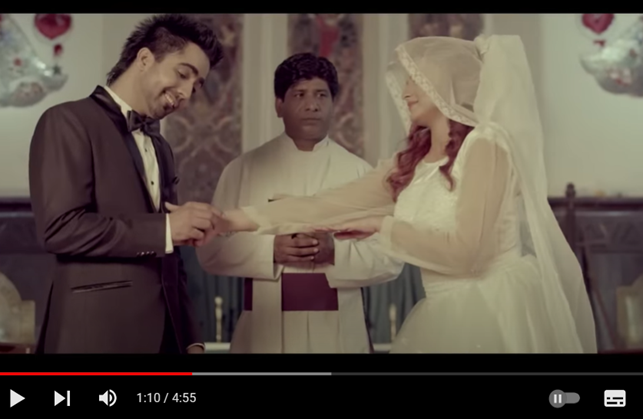
Figure 1
|
Figure 1 Still from the song “Soch” |
Song Name - Soch (2014)
Artist - Hardy Sandhu
Runtime – 4 minutes 28 Seconds
Label - T Series Apna Punjab
Awards - Best Music Video PTC Punjabi Awards 2014
Introduction - "Soch" by Hardy Sandhu,
featuring Himanshi Khurana, is a heartwarming 2014 song that weaves a poignant
tale of love and resilience. Centred on the narrative of a girl who falls in
love with a mentally unstable person, the song beautifully captures her
unwavering dedication as she embarks on a journey to support her beloved on his
path to recovery. Through the challenges and struggles, she remains steadfast
by his side, illustrating the transformative power of love in conquering even
the most daunting of obstacles.
The song's profound
themes of love, support, and perseverance resonate deeply with listeners,
striking a chord in their hearts. The lyrics and soulful melody blend
harmoniously to convey a message of hope, emphasizing the inherent strength of
love to heal and uplift. These emotional underpinnings of the song propelled it
to critical and commercial success, earning accolades such as "Most
Romantic Ballad of the Year" and "Best Music Video" at the
esteemed 2014 PTC Punjabi Music Awards. Embraced by the masses,
"Soch" garnered over 100 million views on YouTube, solidifying its
status as a beloved classic in the realm of Punjabi music. Its touching
narrative and melodic beauty continue to touch the hearts of audiences, making
it an enduring favourite. The song's impact transcended borders when it was
later adapted for the Bollywood film "Airlift" in 2016, becoming
"Soch Na Sake," sung by Arijit Singh and Tulsi Kumar. This blend of
Hindi and Punjabi lyrics retained the essence of the original song and proved
to be a massive hit with audiences, becoming one of the film's most beloved
tracks.
Analysis - In the song "Soch" by Hardy Sandhu, non-verbal
communication is expertly portrayed through various elements, enriching the
emotional narrative of love, healing, and everlasting devotion.
Kinesis: The male protagonist's body language
in the first part of the song reflects his struggles with physical and mental
issues, despite his mature appearance. His childlike behavior
and inability to perform daily tasks convey his challenges. However, as the
story unfolds, his body language evolves, indicating his recovery with the love
and care of the female protagonist, whom he eventually marries.
Proxemics: Throughout the video, the male and
female protagonists are consistently depicted in close
proximity, emphasizing their deep affection and love for each other.
This closeness is evident during their wedding ceremony, as well as in various
gestures and interactions, such as the female protagonist shaving the male
protagonist's beard and helping him dress.
Oculesics: Although there are
few instances of meaningful gazes between the protagonists, the sequence of eye
contacts towards the end of the song, when the male protagonist fully recovers,
conveys their joy and happiness, adding depth to their emotional connection.
Chronemics: The song's time jump effectively
portrays the passage of years, represented by the aging of both characters,
which signifies their growth and transformation. The male protagonist's
recovery from his medical issues is symbolized by his changed body language.
Costumes and Physical
Appearances: The elegant costumes
of both characters, along with the vintage and Catholic ambiance of the
settings, contribute to the rich non-verbal communication. The clothing and
surroundings align with their cultural background, further enhancing the
storytelling.
Background Music: The soft and emotional blend of
traditional and contemporary musical elements, including strings, piano,
guitar, and harmonium, perfectly complements the song's lyrical content and
melody. The music enhances the mellow and romantic atmosphere, evoking the
emotions associated with the characters' journey of love and healing.
Overall, the song
"Soch" adeptly incorporates non-verbal communication elements,
including kinesis, proxemics, oculesics, and
chronemics, to portray a touching tale of love's transformative power. The
combination of visual cues and background music further strengthens the
emotional impact, making "Soch" a captivating and heartwarming
musical experience.
2)
Dairy
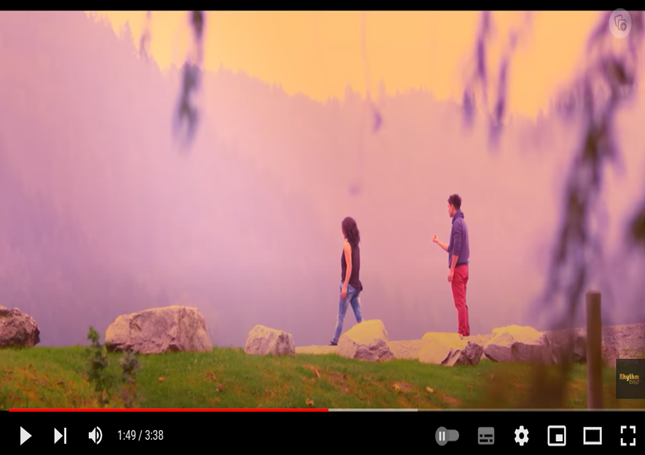
Figure 2
|
Figure 2 Still from the Song “Dairy” |
Song Name - Dairy (2014)
Album – Judaa 2
Artist – Amrinder Gill
Runtime – 03 Minutes 24 Seconds
Label - Speed Records
Awards – Best Music video PTC Punjabi Awards 2015
Introduction -"Diary" by
Amrinder Gill is a soulful Punjabi romantic song released in 2015 by Speed
Records. Penned by Jaggi Jagowal and composed by Dr.
Zeus, the song quickly captured the hearts of audiences and received acclaim
from critics alike. Its captivating music video, directed by Sukh Sanghera,
narrates a heartwarming love story set in the serene countryside. The video's
picturesque cinematography and the palpable chemistry between the actors
impeccably mirror the song's emotional depth.
The song's profound impact was duly recognized, as it clinched the prestigious PTC Punjabi Music Award for Best Music Video in 2015 & Happy Raikoti won Best Lyricist award for the same song. Furthermore, Album “Judaa 2” garnered multiple nominations & won multiple awards including Best Album of the year, solidifying its status as a remarkable piece of musical artistry.
"Diary" serves as a testament to Amrinder Gill's exceptional vocal prowess, skillfully complemented by the talents of the songwriters and music producers involved. With its heartfelt lyrics, mesmerizing melody, and enchanting visuals, "Diary" stands as an enduring ode to love, leaving an indelible mark on Punjabi music and touching the hearts of listeners worldwide.
Analysis - In Amrinder Gill's
"Diary," non-verbal communication plays a crucial role in conveying
the emotional depth of the song's love story
Kinesis: The kinesis effectively captures the
emotional journey of the characters, portrayed through their facial expressions
and body language. Their shocking reactions upon unexpectedly meeting set the
tone for the unfolding love story. As the song progresses, their emotions
intensify, culminating in a heart-wrenching moment when the female protagonist
sees the male protagonist's sickness. The sadness and care in her expression
emphasize her deep emotions towards him, conveying her love and attachment
despite challenges they may face. Overall, the kinesis complements the song's
lyrics and music, creating a poignant and moving depiction of love and
attachment.
Proxemics: Proxemics in "Diary"
showcases the emotional intensity of the love story. Close
proximity scenes in the second part of the song highlight the depth of
the characters' attachment to each other. Their physical and emotional
closeness, seen through spending time together and being close, emphasizes
their intimacy and affection, reflecting the emotional intensity of the song.
Oculesics: The oculesics play an essential role in conveying the emotional
depth of the song. A poignant moment occurs when the male and female
protagonists unexpectedly meet, and their eye contact triggers a rush of
memories and emotions. Throughout the video, their gazes reflect warmth and
tenderness, effectively conveying their emotional attachment towards each
other.
Chronemics: The use of chronemics effectively
portrays the emotional intensity of the love story. The two distinct timelines,
marked by different paces, convey the characters' feelings of longing and
happiness during their time together and apart. The convergence of timelines
during their reunion effectively conveys the emotional depth of their love.
Physical Appearances
& Costumes: The characters'
physical appearances and the scenic visuals work together to convey the
emotional depth of the song's narrative. The depiction of both characters with
a Western appearance adds a modern touch, while the beautiful landscapes enhance
the video's visual appeal. The modern Western attire worn by the characters
adds to the contemporary feel of the song. Their stylish outfits, makeup, and
hairstyles align with contemporary Western fashion trends, enhancing the song's
themes of modernity and sophistication.
Background Music: The soft, romantic background music,
with the notable sound of guitar strings and a blend of instruments,
complements the emotional tone of the song, bringing peace to the listeners'
minds. It enhances the overall emotional impact of the song, making it a
touching and captivating experience.
In summary, the
non-verbal communication elements in "Diary" work cohesively to
depict a touching and moving love story, making it a poignant and captivating
portrayal of love and attachment.
3)
Time Table 2
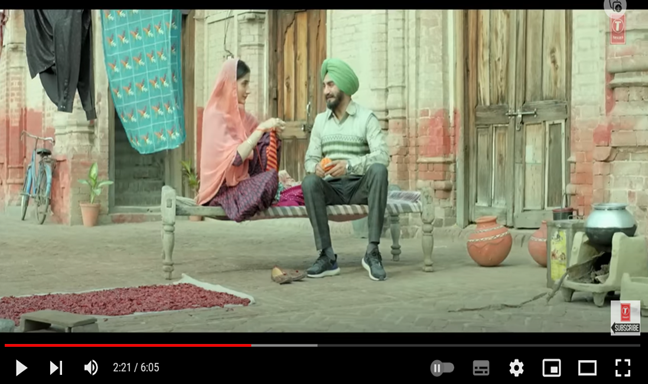
Figure 3
|
Figure 3 Still from the Song “Time Table 2” |
Song Name – Time Table 2
(2016)
Artist - Kulvinder Billa
Runtime – 4 minutes 36 Seconds
Label – T Series Apna Punjab
Awards - Best Music Video Direction PTC Punjabi Awards 2016
Introduction - "Time Table 2" by Kulwinder Billa
takes listeners on a delightful journey back in time, evoking the enchanting
love stories of the 80s and 90s. Under the prestigious label T-Series Apna
Punjab, this song garnered immense admiration and was honored
with the Best Music Video Direction award at the PTC Punjabi Awards in 2016.
This song holds a
special place in the hearts of its audience, as it beautifully encapsulates the
essence of a bygone era. The music video meticulously crafts a persona that
exudes the charm and emotions of 80s and 90s love stories in every frame. From
the fashion to the settings, every detail is thoughtfully curated to create an
authentic experience that resonates with the listeners. "Time Table 2" serves as a captivating nostalgia trip,
evoking cherished memories and emotions associated with those unforgettable
times. It captures the innocence and heartfelt love that defined that era,
instantly connecting the listeners to the heartfelt story being portrayed.
With Kulwinder
Billa's soulful vocals and the carefully crafted melodies and lyrics, the song
authentically captures the essence of the era. It weaves together a melodic
tapestry that immerses listeners in a world of love and longing. "Time Table 2" not only strikes a chord with those who
experienced that era firsthand but also introduces the magic and emotions that
defined a generation. Its ability to evoke a strong sense of nostalgia and
forge a deep emotional connection stands as a
testament to its enduring popularity.
Analysis – In Kulwinder Billa's
"Time Table 2," non-verbal communication
plays a crucial role in creating nostalgic atmosphere & conveying the
emotional depth of the song's love story
Kinesis: In "Time Table
2" by Kulwinder Billa, the use of kinesis is evident in the interactions between
the male and female protagonists. Despite their mutual liking for each other,
their shyness inhibits direct communication, leading them to rely on non-verbal
cues. Their gestures and postures convey a sense of attraction, interest, and
hesitation, adding a layer of sweetness and innocence to their interactions.
The use of kinesis captures the subtleties and nuances of their feelings,
creating a visual language of unspoken communication. Throughout the song,
their body language speaks volumes about their emotions, creating an engaging
and relatable portrayal of their relationship.
Proxemics: The song showcases instances where the
male and female protagonists come close to each other, but their shyness
hinders proper communication. Their attempts to meet privately are thwarted,
further highlighting the barriers they face in expressing their feelings. The
use of proxemics emphasizes the underlying attraction and interest between
them, while also highlighting the challenges they encounter in openly
expressing their emotions. These proxemic elements heighten the sense of
longing and anticipation within the song, contributing to its emotional impact.
Oculesics: In "Time Table 2," oculesics play
a significant role in conveying the emotional intensity of the relationship
between the protagonists. Throughout the song, they engage in numerous
instances of eye contact, relying on this non-verbal cue to communicate their
emotions. Their eye contact signifies a deep understanding, unspoken
connection, and shared emotions between them. The sustained eye contact serves
as a powerful form of non-verbal communication, reflecting the enduring bond
they have developed over time.
Chronemics: The song employs two timelines: the
present and the past story timeline. The present timeline depicts the
protagonists as aged and happily married, while the past timeline showcases
their budding romance. The use of chronemics effectively distinguishes between
the two timelines, providing context and depth to their present-day happiness.
The contrasting timelines enhance the emotional depth of the song, contributing
to its nostalgic appeal.
Physical Appearances
& Costumes: "Time Table 2" successfully captures the essence of the
1980s Punjab through the physical appearances and costumes of the characters.
The attention to detail in portraying the fashion trends, hairstyles, and overall
aesthetic of the time period adds authenticity and
creates a believable visual representation. The costumes contribute to the
nostalgic atmosphere, evoking a sense of familiarity and transporting the
audience back in time.
Background Music: The song's background music seamlessly
blends traditional instruments with contemporary sounds, creating a captivating
fusion that enthralls the listener. The use of
harmonium adds a touch of tradition to the song, complementing the contemporary
elements and enhancing the overall musical experience. The background music
adds depth and emotion to the storytelling, further immersing the audience in
the nostalgic journey of "Time Table 2."
Overall, "Time Table 2" skillfully
employs non-verbal communication elements such as kinesis, proxemics, oculesics, chronemics, physical appearances & costumes,
and background music to create a captivating and emotionally resonant portrayal
of love and relationships in the 1980s Punjab. These non-verbal cues enhance
the storytelling, allowing the audience to connect with the characters and
their emotions on a deeper level.
7. Conclusion
The research provides valuable insights into the realm of non-verbal communication in Punjabi pop music videos. Through a detailed analysis of selected award-winning songs, namely "Soch" by Hardy. (2014), "Dairy" by Gill (2015), and "Time Table 2" by Billa (2016), the study examines various non-verbal communication elements, including kinesis, proxemics, oculesics, chronemics, physical appearance, and background music.
In "Soch" by Hardy Sandhu, non-verbal communication elements are adeptly incorporated to portray a touching tale of love, healing, and everlasting devotion. The male protagonist's evolving kinesis, from reflecting struggles to expressing recovery, adds depth to the emotional narrative. The use of proxemics emphasizes the protagonists' deep affection and love for each other, while oculesics enhance the emotional connection through meaningful gazes. Chronemics effectively symbolizes the passage of time, contributing to the transformative nature of love. Physical appearances and costumes, along with the background music, further enrich the song's storytelling, creating a captivating and heartwarming musical experience.
In Amrinder Gill's "Diary," non-verbal communication plays a crucial role in conveying the emotional depth of the song's love story. The kinesis effectively captures the emotional journey of the characters, showcasing their attachment and care for each other. Proxemics emphasizes the emotional intensity of their relationship, while oculesics adds depth to their emotional connection. The use of chronemics effectively conveys the emotional depth of their reunion. Physical appearances, costumes, and background music contribute to the contemporary feel of the song, enhancing its emotional impact and making it a poignant and captivating portrayal of love and attachment.
In Kulwinder Billa's "Time Table 2," non-verbal communication creates a nostalgic atmosphere and conveys the emotional depth of the love story. The use of kinesis emphasizes the subtleties of attraction and hesitation in the protagonists' interactions. Proxemics highlights their challenges in expressing their feelings, while oculesics conveys the emotional intensity of their relationship through meaningful gazes. Chronemics effectively distinguishes between the past and present timelines, contributing to the song's nostalgic appeal. Physical appearances, costumes, and background music successfully transport the audience back to the 1980s Punjab, further enhancing the song's emotional impact.
In conclusion, the research paper sheds light on the significance of non-verbal communication in Punjabi pop music videos. The selected award-winning songs serve as exemplary case studies, showcasing how non-verbal elements enrich the emotional narratives and create captivating storytelling experiences. The findings of this study contribute to a deeper understanding of the power of non-verbal communication in music videos and its ability to resonate with the audience on an emotional level.
CONFLICT OF INTERESTS
None.
ACKNOWLEDGMENTS
None.
REFERENCES
Allen,
M. (2017). SAGE Encyclopedia of Communication. SAGE.
https://doi.org/10.4135/9781483381411
Arora, T. (2020, August 13). Kinesics : The Study of Body Language. Retrieved September 20,
2020, from scicomm.in
Billa, K.
(2016). Time Table 2.
Sarkar, D. U. (2022,
Jan - March). Study of Non Verbal
Communication in National Award Wining Movies (with Special Reference to
Mrigaya). Media Mimansa, 44-49.
Sharma, P. B. (2013, Oct). Music: A Tool of Non Verbal Communication (with Special Reference). International Journal of Communication, 3(4), 1-6.
|
|
 This work is licensed under a: Creative Commons Attribution 4.0 International License
© ShodhKosh 2023. All Rights Reserved.