ShodhKosh: Journal of Visual and Performing ArtsISSN (Online): 2582-7472
|
|
The Complementary Role and Impact of workshops on students IN FASHION Design Education at Amity University Gwalior
Twinkle Rastogi 1
 ,
Dr. Kajal Thakuriya 2, Dr. Kalpana Munjal 3
,
Dr. Kajal Thakuriya 2, Dr. Kalpana Munjal 3
1 PhD
Scholar, Fashion Design, Vivekananda Global University, Jaipur, India
2 Professor,
Faculty of Design, Interior and Product Design, Vivekananda Global University,
Jaipur, India
3 Associate Professor, Faculty of Design, Fashion Design, Vivekananda
Global University, Jaipur, India
|
|
|
ABSTRACT |
|
|
In the realm of higher
education, where academic pursuits intersect with market dynamics, the
intrinsic value of fundamental design principles becomes pronounced. This is
particularly pertinent in disciplines like fashion design, where students are
immersed in a distinctive and specialized learning environment to bolster
their efficacy and proficiency. Amidst this backdrop, workshops have emerged
as a pivotal cornerstone within fashion design education, recognized
universally as an imperative priority. Modern education calls for innovative
approaches, and workshops epitomize this evolution. Their significance
extends beyond traditional pedagogical methods, offering students a platform
to not only comprehend theoretical concepts but also apply them in practical,
industry-relevant contexts. These workshops foster a dynamic learning
atmosphere, aligning education with the ever-evolving demands of the market.
One of their key advantages lies in facilitating direct interaction between
students and industry experts, bridging the chasm between academia and
real-world design scenarios. This study delves into the essence of workshops
as a complementary facet of fashion design studies, with a specific focus on
those conducted at the renowned Amity School of Fashion Design and Technology
in Gwalior. At its core, the study seeks to unravel the multifaceted aspects
surrounding workshops, exploring their necessity, importance, and
transformative impact. To embark on this exploration, the research
methodology employs a comprehensive and multifarious approach. It encompasses
quantitative data collection techniques, through likert
scale meticulously analyzing the objective, outcomes, and feedback derived
from design students who actively participated in these workshops. The results
of this study illuminate a significant gap in traditional fashion design
education—a gap that workshops seamlessly fill. These dynamic learning
experiences empower students with practical skills and insights that
transcend conventional classroom instruction. The findings underscore the
symbiotic relationship between workshops and holistic learning, as students'
personal and professional growth experiences an unprecedented upswing.
Furthermore, the study captures the resounding endorsement from students themselves,
as their feedback substantiates the pivotal role of workshops in enhancing
their educational journey. In essence, this study
bridges the theoretical-practical divide that often hampers comprehensive
education. It spotlights the transformative potential of workshops,
redefining their status from peripheral add-ons to integral components of the
educational framework. By spotlighting the case of Amity School of Fashion
Design and Technology in Gwalior, the study provides a template for
educational institutions worldwide to infuse innovation, relevance, and
efficacy into their curriculum through the strategic integration of workshops. |
|||
|
Received 18 May 2023 Accepted 10 August 2023 Published 17 August 2023 Corresponding Author Twinkle
Rastogi, twinkle24rastogi@gmail.com DOI 10.29121/shodhkosh.v4.i2.2023.458 Funding: This research
received no specific grant from any funding agency in the public, commercial,
or not-for-profit sectors. Copyright: © 2023 The
Author(s). This work is licensed under a Creative Commons
Attribution 4.0 International License. With the
license CC-BY, authors retain the copyright, allowing anyone to download,
reuse, re-print, modify, distribute, and/or copy their contribution. The work
must be properly attributed to its author.
|
|||
|
Keywords: Fashion Design Education, Workshops, Students,
Learning, Likert Scale |
|||



1. INTRODUCTION
The primary goal of education should be to nurture students' ability to innovate and create rather than merely replicating the accomplishments of previous generations. The field of design education encompasses the teaching of both theoretical knowledge and practical skills related to product, service, and environmental design. Its goal was to allow students to use their creativity and experience to provide the most value possible while making the most efficient use of the available resources. Delivering and imparting knowledge and information, as well as facilitating students in growing, learning, and changing their own perceptions of the subject matter, is the conventional method of teaching. Workshop culture promotes empathy and real, human-centered debate of ideas. A teaching and learning approach used in this subject is the design workshop. It takes into account the students' past knowledge and views the instructor as assisting the students in learning these concepts and the relationships among them as well as assisting the students in developing their notions through additional elaboration and extension. encouraging pupils to become independent learners. Guo (2016) Facilitating workshops plays a crucial role in fostering enthusiastic engagement and active involvement among students, thereby enhancing their skills and expertise. The significance of workshops in fashion design education is widely recognized as a prominent priority. Panigrahi (n.d.)
1.1. Importance of Design Education
1.2. Design workshop for students
The selection of the theme, student team building, labour stages, specifications for the presentation of the final project, and evaluation criteria are the main topics of the article. In the essay, scenarios where issues arise—creative, motivational, and interpersonal—as well as strategies for solving them are also discussed. The purpose of the study is to provide methodological assistance to university instructors who plan this kind of intensive instruction. Regina (n.d.)
Investigating the Benefits of Problem-Based Learning (PBL) in Fashion Design Education
The study employed PBL methodologies, including "individual-specific problem-based learning," "self-directed learning," and "small-group learning with limited members," to teach practical fashion design. Over the course of one semester in a fashion design program at Amity University, the researchers conducted research using a PBL module and developed a questionnaire to establish a roadmap based on the findings. Park (2019)
Changing Design
Education for the 21st Century
Excellent advise and direction are offered by the professions of medical, law, and business, all of which have long histories of professionalization. In this essay, we draw on their experiences to suggest a design strategy. The Performance, Systemic, Contextual, and Global groupings make up the eleven Design Challenges. The four groups work together because they each rely on the abilities, information, and prerequisites of the others. Consequently, Systemic builds on Performance, Contextual builds on Performance, and Global builds on Context. Norma (2019)
Exploring a Fresh Approach to Fashion Education: Unveiling Inspirational Transformative Learning Experiences for Fashion Design Students. This research specifically focuses on the transformative learning encounters of fashion students, with a particular emphasis on sustainability. The objective of the research findings is to provide a set of recommended principles for fashion education programs seeking to revitalize their instructional approaches and enhance students' learning journeys. These conclusions are intended to provide students the knowledge and skills they need to think critically about the future of fashion and strive toward it. Sala (2019)
2. Aim and Objective
• To study the importance of workshops in fashion design education.
• To study the outcome of the students through the worskshops conducted.
• To observe and analyse the impact of these workshop on fashion design students.
3. Limitations of the Study
· This study is limited to the workshops conducted in fashion design department of Amity University Madhya Pradesh, Gwalior.
· This study is limited to the first to fourth year of students from Fashion Design Department.
· The workshops time duration is limited from March to May.
4. Materials and Methods
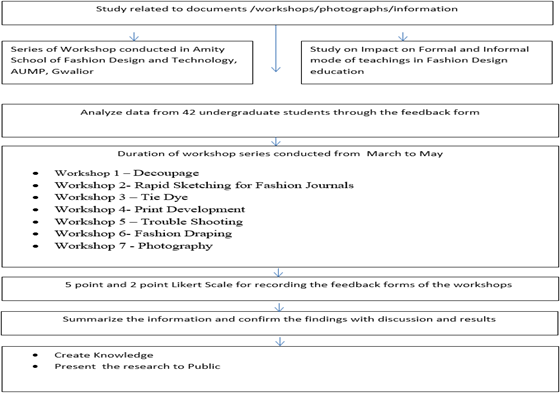
· Research was conducted in Fashion Design Department of Amity University, Gwalior Madhya Pradesh. The targeted population for this study were 42 students of fashion design.
· Experimental study was taken forward for conducting the workshops in Amity school of fashion design department, AUMP in even semester from duration 8th march to 25th may 2022.
· Quantitative study approach was implemented in the study for the collection of data through 5 point likert scale for feedback of the workshops conducted by the students.
· Primary data was collected through intensive field work and self clicked images.
· Secondary data was collected through Research papers, website, books, blogs, articles.
5. Discussion and Analysis
This study documents a series of design-focused workshops conducted in English for 42 undergraduate fashion students enrolled at Amity University (Gwalior, Madhya Pradesh) between March 8th and May 25th, 2022. The objective of the workshops was to encourage students to explore design perspectives beyond their chosen subject specialization. Each workshop comprised a 45-minute session, followed by a two-hour period for in-person discussions between students and the workshop facilitator. To demonstrate their understanding, students were required to produce relevant outcomes for each workshop. The students provided feedback through a Google Form on the same day as the workshops, which was recorded for analysis. All over three questions was asked in the feedback form with respect to the effectiveness of workshop, demonstrations and presentations and how much it inspired students through 5 point and 2 point likert scale. The Likert scale is a psychometric, unidimensional scale that allows respondents to choose the response that best captures their opinions on a given subject. This survey measure is typically used by academics to assess participants' views and perspectives regarding various topics that cannot be polarised. Likert Scale Surveys (2022)Likert scales provides quantitative value to qualitative data. 2 point likert scale's most basic version does not offer a neutral choice i.e yes/no. The number of options the person has to pick from is all that is meant by 5 point likert scale. Odd-numbered Likert scales are more common than even-numbered ones. On either side of a neutral reaction, it will have an equal number of positive and negative responses. As 5 point Likert scale templates below, poor to outstanding Likert scales are common. Mahmutovic (2020)
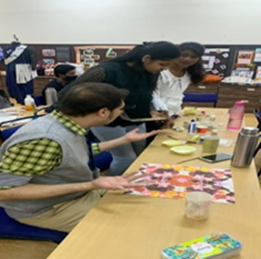
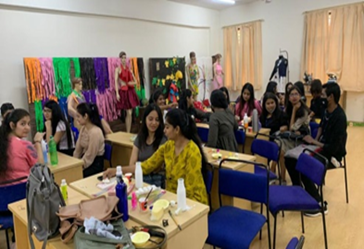
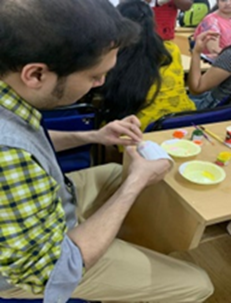
5.1. First Workshop was conducted on 8th of March 2022 on Decoupage
Objective- Decoupage is the art of using paper cut-outs and impressions to decorate the surface of an object. 'Decorative patch' is made by pasting paper cut-outs, tattered napkins, and paper textures on wooden, glass, plastic, and fibre surfaces, and then experimenting with different materials and how they interact to obtain desired creative results. Students will learn how to create backgrounds, collages, and surface decoration for portfolios and other designer objects using this craft.
Outcome- The student was asked to choose an object to decoupage and upcycled old furniture, dishes, metal buckets, trunks, cans, and bottles into magnificent pieces of décor by using decoupage techniques. This art style is being used by plenty of craftsmen to create and market useful and decorative goods for the home.
Figure 1
|
Figure 1 Image Clicked by the Author |
Figure 2
|
Figure 2 Image Clicked by the Author |
Figure 3
|
Figure 3 Image Clicked by the Author |
Feedback Result
Graph 1

|
Graph 1 59.5 % Students Found the Workshop Very Effective, N = 42 students |
Graph 2
|
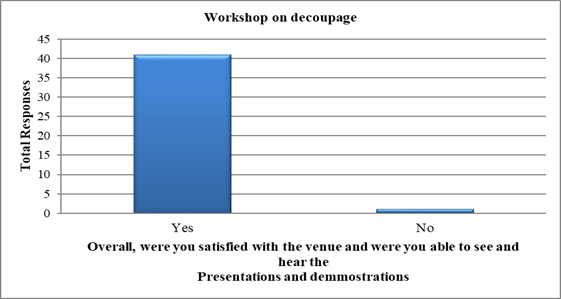
Graph 2 97.6 % Students were Satisfied with the Venue for Presentations and Demonstrations, N=42 Students |
Graph 3
|
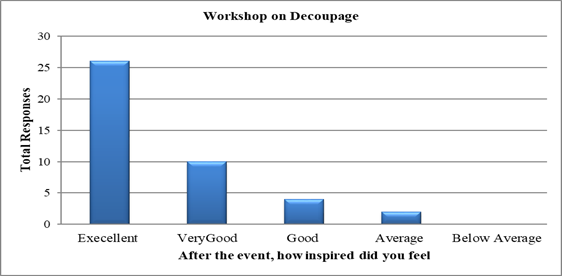
Graph 3 61.5% Students was Very Much Inspired form this Workshop, N=42 Students |
5.2. Second Workshop was conducted on Tie Dye from 15th to 16th March 2022
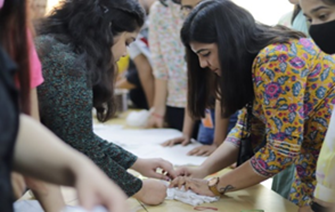
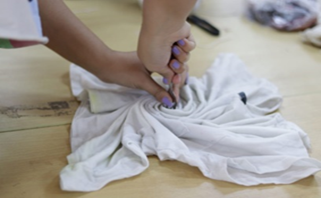
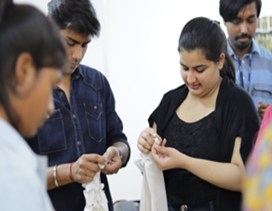
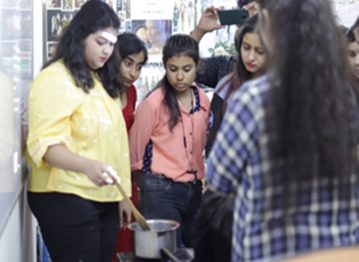
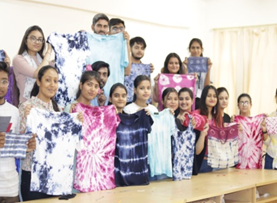
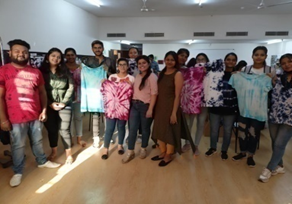
Objective- Tie-dye was a fun way to experiment with colour on fabric!. The faculty along with students was immersed in a hands-on activity session as part of the approach. Students able to learn the tie and dye process to create bright and unique effects on T-shirts, tops, sandals, dresses, cotton linen and various other product range.
Outcome-In the workshop, students learned several parts of the tie dye technique, which aided in the development of their creative abilities. Students showed their Products developed in the workshop at the end of the session, which were appreciated and admired by professors and participants.
Figure 4
|
Figure 4 Image Clicked by the Author |
Figure 5
|
Figure 5 Image Clicked by the Author |
Figure 6
|
Figure 6 Image Clicked by the Author |
Figure 7
|
Figure 7 Image Clicked by the Author |
Figure 8
|
Figure 8 Image Clicked by the Author |
Figure 9
|
Figure 9 Image Clicked by the Author |
Feedback Result
Graph 4
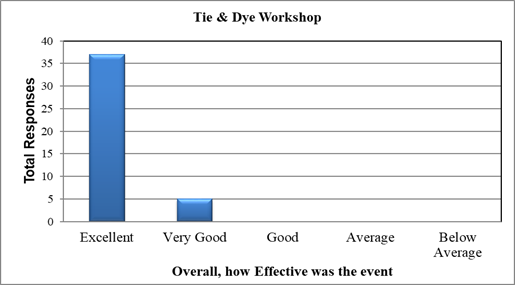
|
Graph 4 88.1 % Students Found the Workshop Very Effective, N=42 Students |
Graph 5

|
Graph 5 All the (100 %) Students were Satisfied with the Venue for Presentations and Demonstrations, N=42 students |
Graph 6
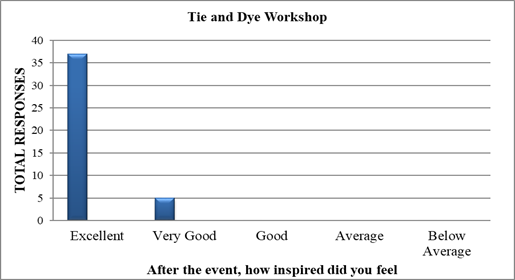
|
Graph 6 88.1 % Students was Very Much Inspired form this Workshop, N=42 Students |
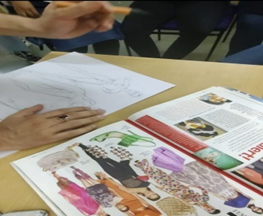
5.3. Third Workshop was conducted on 25th of March 2022 on Rapid SKETCHING FOR Fashion Journals
Objective- Rapid sketching for Fashion Journals allows a designer to show a sneak peek of a collection by creating a hypothetical pre-collection look.
Outcome: The
students learned how to render (partial & dynamic) set of costumes on
stylized croquis using mixed media to its full potential.
Figure 10
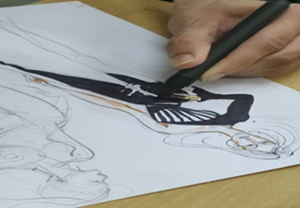
|
Figure 10 Image Clicked by the Author |
Figure 11
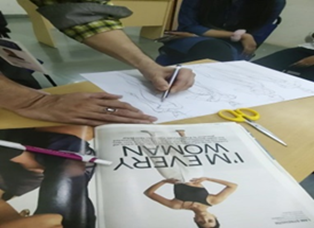
|
Figure 11 Image Clicked by the Author |
Figure 12
|
Figure 12 Image Clicked by the Author |
Feedback Result
Graph 7
|
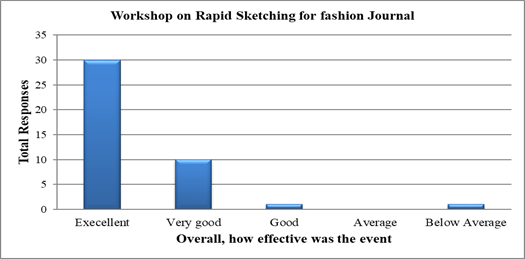
Graph 7 71.4 % Students Found the Workshop Very Effective, N=42 Students |
Graph 8

|
Graph 8 95.2 % Students were Satisfied with the Venue for Presentations and Demonstrations, N=42 students |
Graph 9

|
Graph 9 66.7 % Students was Very Much Inspired Form this Workshop, N=42 Students |
5.4. Fourth Workshop was conducted 11th April 2022 on Print Development
Objective- The Textile Printing Workshop created a learning environment for education, research, and artistic activity. Students had the opportunity to colour and pattern fabrics using both hand and digital printing processes using Adobe Photoshop in this workshop.
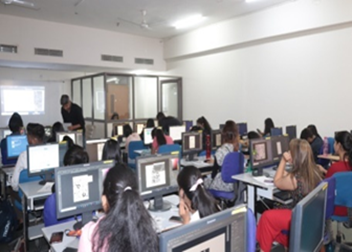
Outcome- The essence of Morris’s work reflected in the students prints which they have created digitally. Students learned creating motifs by hand as well as digitally in adobe Photoshop which helped them to enhance their skills. At the end of the workshop, students displayed their hand drawn and digital prints indifferent colour ways which they created in the workshop and were cherished and admire by the faculty members and participants.
Figure 13
|
Figure 13 Image Clicked by the Author |
Figure 14

|
Figure 14 Image Clicked by the Author |
Figure 15

|
Figure 15 Image Clicked by the Author |
Figure 16
|
Figure 16 Image
Clicked by the Author |
Figure 17

|
Figure 17 Image Clicked by the Author |
Figure 18
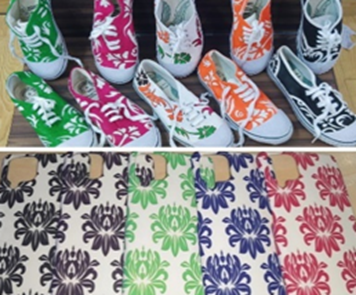
|
Figure 18 Image
Clicked by the Author |
Feedback Result
Graph 10
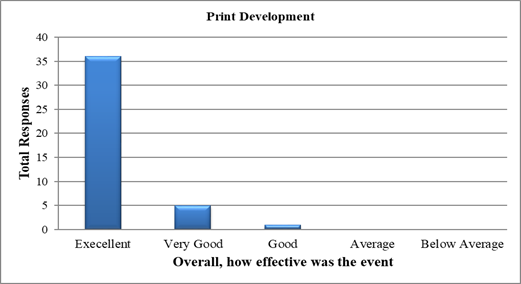
|
Graph 10 85.7 % Students Found the Workshop Very Effective, N=42 Students |
Graph 11

|
Graph 11 97.6% Students Were Satisfied with the Venue for Presentations and Demonstrations, N=42 Students |
Graph 12

|
Graph 12 76.2 % Students was Very Much Inspired form this Workshop, N=42 Students |
5.5. Fifth Workshop was conducted on 12th April 2022 on Sewing Machine Troubleshoot
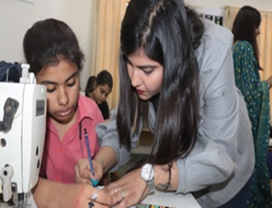
Objective- The objective of the workshop was to make students understand how to rectify the common trouble during stitching and also introduce new advance model of Usha machine.
Outcome- Through this workshop students has learnt the various features of a sewing machine, the Wonder Stitch-it with hands on practical training on features like automatic needle threading, triple strength stitch, feed drop lever to facilitate embroidery. Learning of nine applications that includes stretch stitching, button fixing, rolled hemming, blind stitch hemming, smocking, and zip fixing and 13 built in stitches including the button hole which helped students to use to use the same in the product development.
Figure 19

|
Figure 19 Image Clicked by the Author |
Figure 20
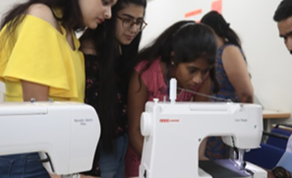
|
Figure 20 Image Clicked by the Author |
Figure 21

|
Figure 21 Image Clicked by the Author |
Feedback Result
Graph 13
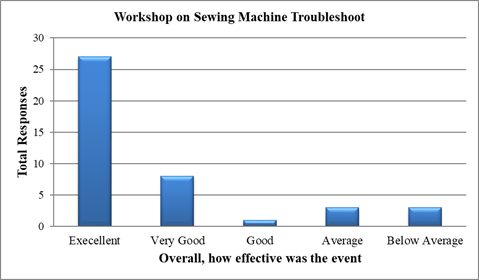
|
Graph 13 64.3 % Students Found the Workshop Very Effective, N=42 Students |
Graph 14
|
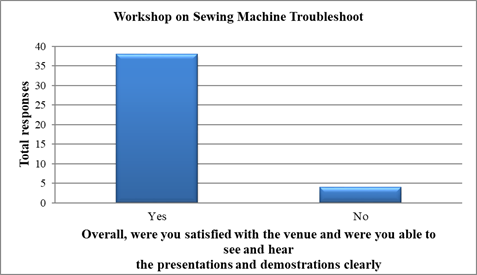
Graph 14 90.5 % Students were Satisfied with the Venue for Presentations and Demonstrations, N=42 Students |
Graph 15

|
Graph 15 69 % Students was Very Much Inspired form this Workshop, N=42 Students |
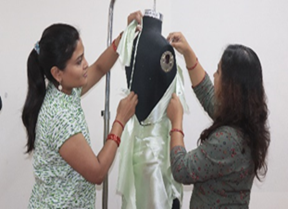
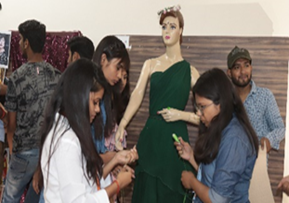
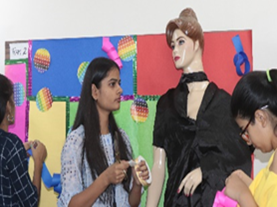
5.6. Sixth Workshop was conducted on 20th April 2022 on Fashion Draping Techniques
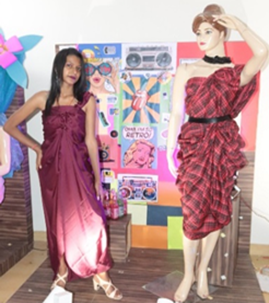
Objective- The goal of the course was to teach students that they can accomplish their desired look by first hand manipulating cloth with the help of a dress form figure or actual model.
Outcome - In this workshop, students discovered the art of draping fabric to create a dress design. They learned that a design sketch can serve as a foundation for draping, allowing fashion designers to explore various ways the fabric falls and manipulate it to generate new designs. The draping techniques taught during the workshop emphasized the importance of understanding the unique characteristics of different fabrics.
Figure 22
|
Figure 22 Image Clicked by the Author |
Figure 23
|
Figure 23 Image Clicked by the Author |
Figure 24
|
Figure 24 Image Clicked by the Author |
Figure 25

|
Figure 25 Image Clicked by the Author |
Figure 26

|
Figure 26 Image Clicked by the Author |
Figure 27
|
Figure 27 Image Clicked by the Author |
Feedback Result
Graph 16
|
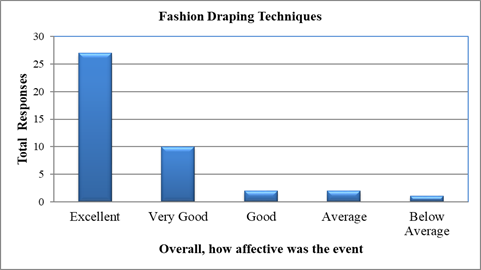
Graph 16 64.3 % Students Found the Workshop Very Effective, N=42 Students |
Graph 17
|
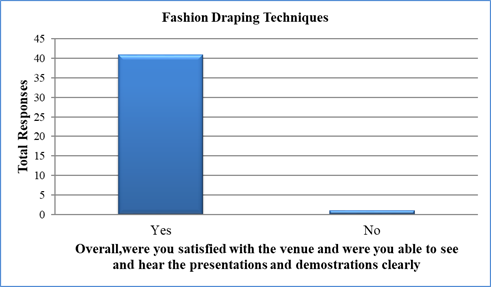
Graph 17 97.6 % Students were Satisfied with the Venue for Presentations and Demonstrations, N=42 Students |
Graph 18
|
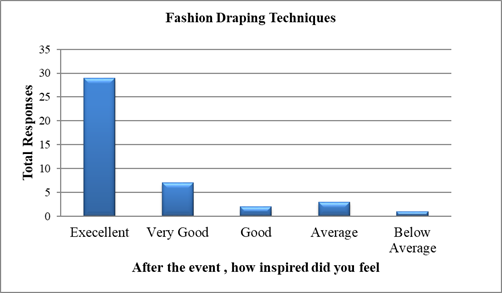
Graph 18 69 % Students was Very Much Inspired form this Workshop, N=42 Students |
5.7. Seventh Workshop was conducted on 25th may on topic Basics of Photography
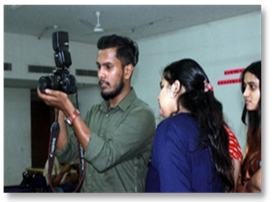
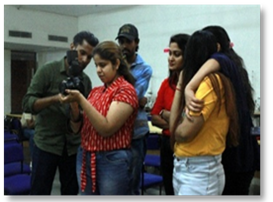
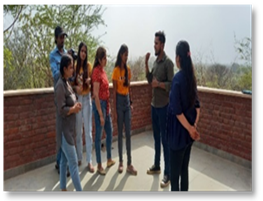
Objective - This workshop was planned with an aim to enhance skills towards Fashion Photography/Photoshoot for Souvenir and presentation. The workshop focused on the points to be kept in mind during photography such as light management and background selection with the detailed presentation on the role of light for photography & usage of DSLR camera. Hand on experience was also given to all students for a photo session (indoor & outdoor) through the demonstration they explained the importance of light in photoshoot.
Outcome- Students learnt about the proper uses of props model pose of model. Students will also mastered one or more mediums to the point that they can meet the formal and technical requirements for a body of original work.
Figure 28
|
Figure 28 Image Clicked by the Author |
Figure 29
|
Figure 29 Image Clicked by the Author |
Figure 30
|
Figure 30 Image Clicked by the Author |
Feedback Result
Graph 19

|
Graph 19 71.4 % Students Found the Workshop Very Effective, N=42 Students |
Graph 20

|
Graph 20 95.2 % Students were Satisfied with the Venue for Presentations and Demonstrations, N=42 Students |
Graph 21
|
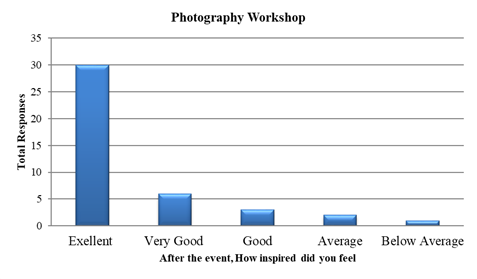
Graph 21 71.4 % Students was Very Much Inspired form this Workshop, N=42 Students |
6. Conclusion
The majority of students showed a strong interest in attending the workshop, recognizing its significant value in their lives. Workshops serve as crucial platforms for students, offering not only the opportunity to acquire new knowledge, gain insights from different perspectives, and stay updated with the latest information but also a means of establishing valuable connections. Participating in workshops allows students to explore unfamiliar topics, engage with industry leaders, and be inspired by their experiences. By listening to prominent personalities during these workshops, students can gain valuable insights into their work processes and understand the dynamics of their respective fields. Moreover, workshops facilitate awareness of professional institutions and emerging discoveries in their areas of interest. For individuals who may occasionally struggle with motivation or enthusiasm towards their studies or work, attending workshops relevant to their subjects is highly recommended. This involvement leads to heightened productivity and the realization of personal goals.
CONFLICT OF INTERESTS
None.
ACKNOWLEDGMENTS
Completing this research study has been a journey enriched by the contributions, guidance, and support of numerous individuals and institutions. We express our deepest gratitude to those who have played a pivotal role in the fruition of this endeavor. First and foremost, I extend my heartfelt appreciation to the faculty members and administrators of the Amity School of Fashion Design and Technology in Gwalior for their unwavering support and collaboration. Their dedication to fostering a conducive learning environment and their willingness to engage in insightful discussions have significantly contributed to the success of this study. I am indebted to the industry experts and professionals who graciously shared their time, expertise, and insights during the workshops, allowing us to gain valuable perspectives that shaped the research's trajectory. Their willingness to impart their knowledge underscores the symbiotic relationship between academia and the real-world industry, which forms the cornerstone of this study. My profound gratitude extends to the participating fashion design students, whose enthusiasm and engagement have been instrumental in generating invaluable data and feedback. Their candid responses have provided a comprehensive understanding of the impact of workshops on their educational journey, validating the study's purpose.
REFERENCES
Guo, F. (2016). Switching from Lecture to Design Workshop. https://doi.org/10.21125/inted.2016.1503
Likert Scale Surveys (2022, March) : Why & How to Create Them (With Examples).
Mahmutovic, J. (2020). What is a Likert Scale ? Definition, Examples, and How To Use One. Survey Legend.
Norma, M. W. (2019, December). Changing Design Education in 21st Century.
Panigrahi, S. (n.d.). Importance of Seminars and Workshops for Students in Higher Education.
Park, H. (2019, October). Effects of Problem-Based Learning (PBL) in Fashion Design Classes. International Journal of Advanced Culture Technology.
Regina, R., V. J. (n.d.). Design Workshop for Students.
Sala, K. (2019). Revisiting Fashion Education : Inspiring Transformative Learning Experiences for. Global Fashion 2016.
|
|
 This work is licensed under a: Creative Commons Attribution 4.0 International License
© ShodhKosh 2023. All Rights Reserved.